
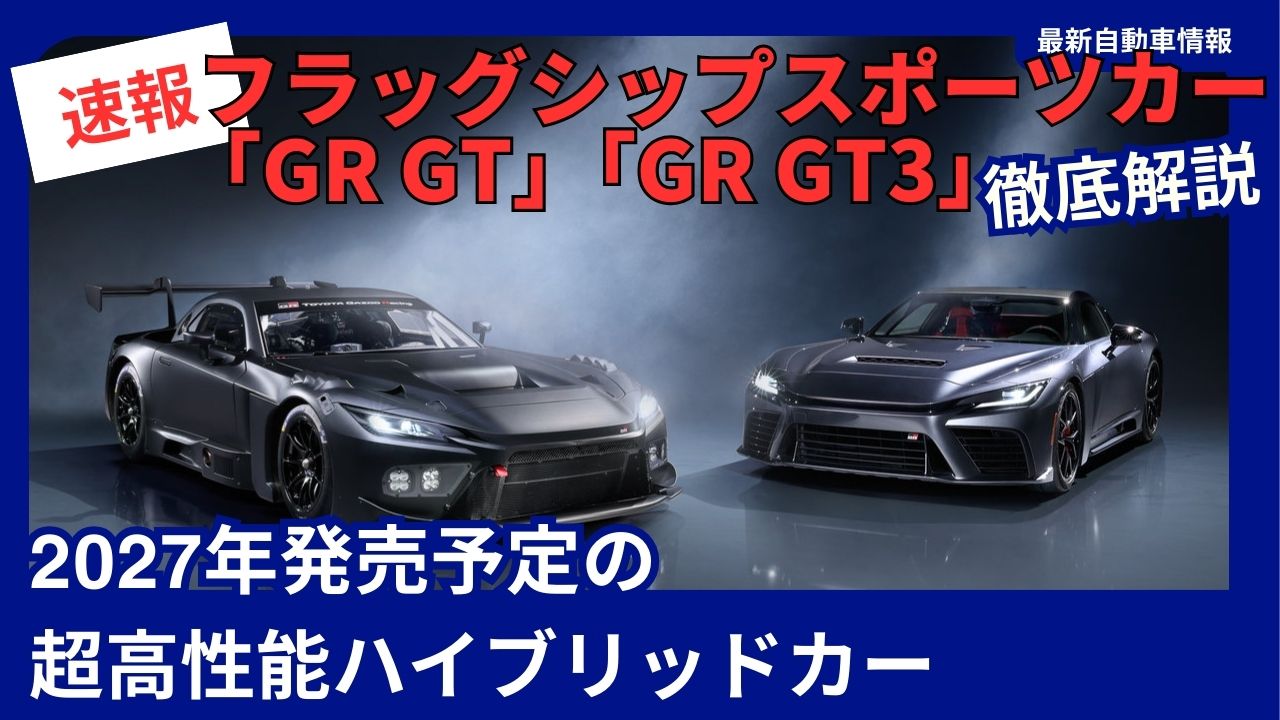
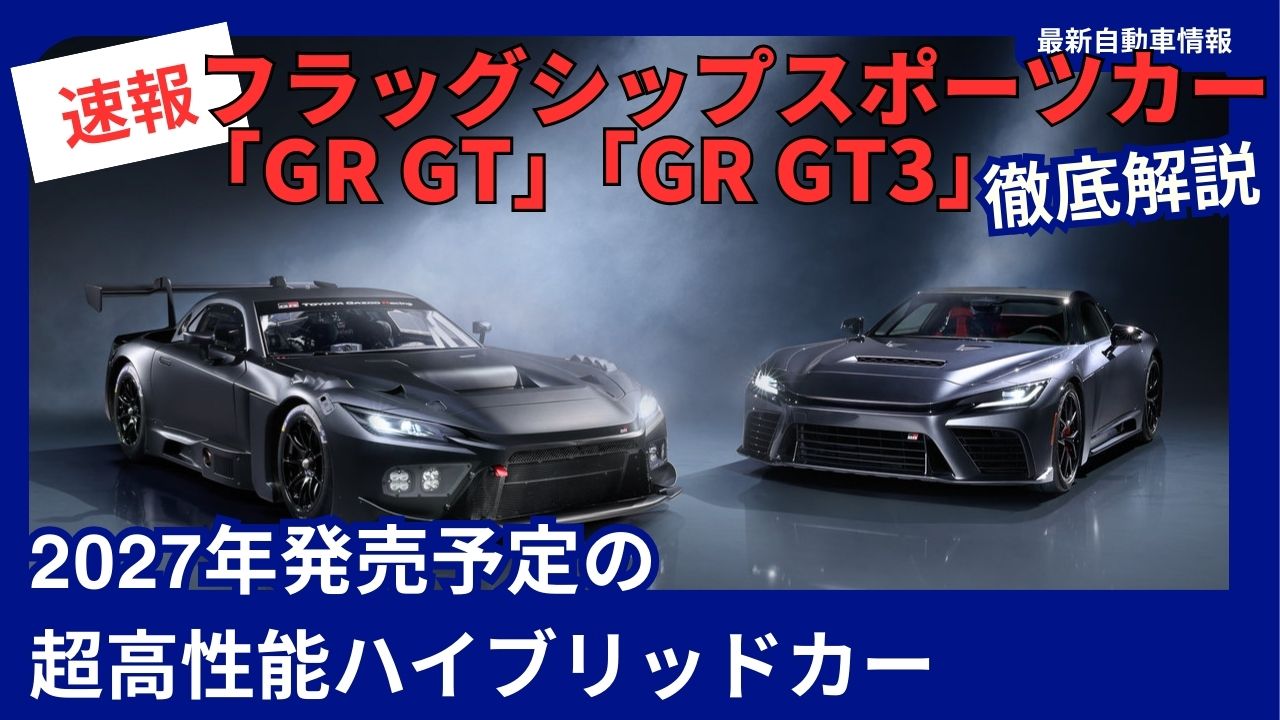
On December 5, 2024, two of TOYOTA GAZOO Racing’s latest super sports cars and Lexus’ next-generation BEV concept car will make their world premieres.
On December 5, 2024, Toyota Motor Corporation and TOYOTA GAZOO Racing simultaneously unveiled three vehicles at the Inventor Garage within Toyota Woven City in Susono City, Shizuoka Prefecture: the long-awaited new flagship sports car, the GR GT, its racing version, the GR GT3, and the Lexus LFA Concept, a concept model for Lexus’ next-generation electric sports car. This historic unveiling marks an important milestone in Toyota’s sports car history, positioning it as the third in the lineage following the TOYOTA 2000GT and Lexus LFA.
1. What is the “GR GT”? Concept and development philosophy

Racing car on public roads
The GR GT’s concept is clear: “A racing car for public roads .” Based on this philosophy, it was developed as the culmination of TOYOTA GAZOO Racing’s long-standing approach to “making ever-better cars with a focus on motorsports.”
Achieving a high level of compatibility as a sports car
More than just a high-performance supercar, we aim to achieve a high level of balance between the following:
- Extreme performance : chasing lap times on the track
- Easy to handle : predictable behavior even at the limits
- Everyday comfort : practicality and exhilaration on the road
- Dialogue with the car : a sense of unity with the driver
This concept of a “car you can interact with” shows a commitment to pursuing the essence of driving, setting it apart from the electronically-controlled supercars of recent years.
2. Innovative powertrain: V8 twin-turbo hybrid with over 650 PS
Newly developed 4.0-liter V8 twin-turbo engine
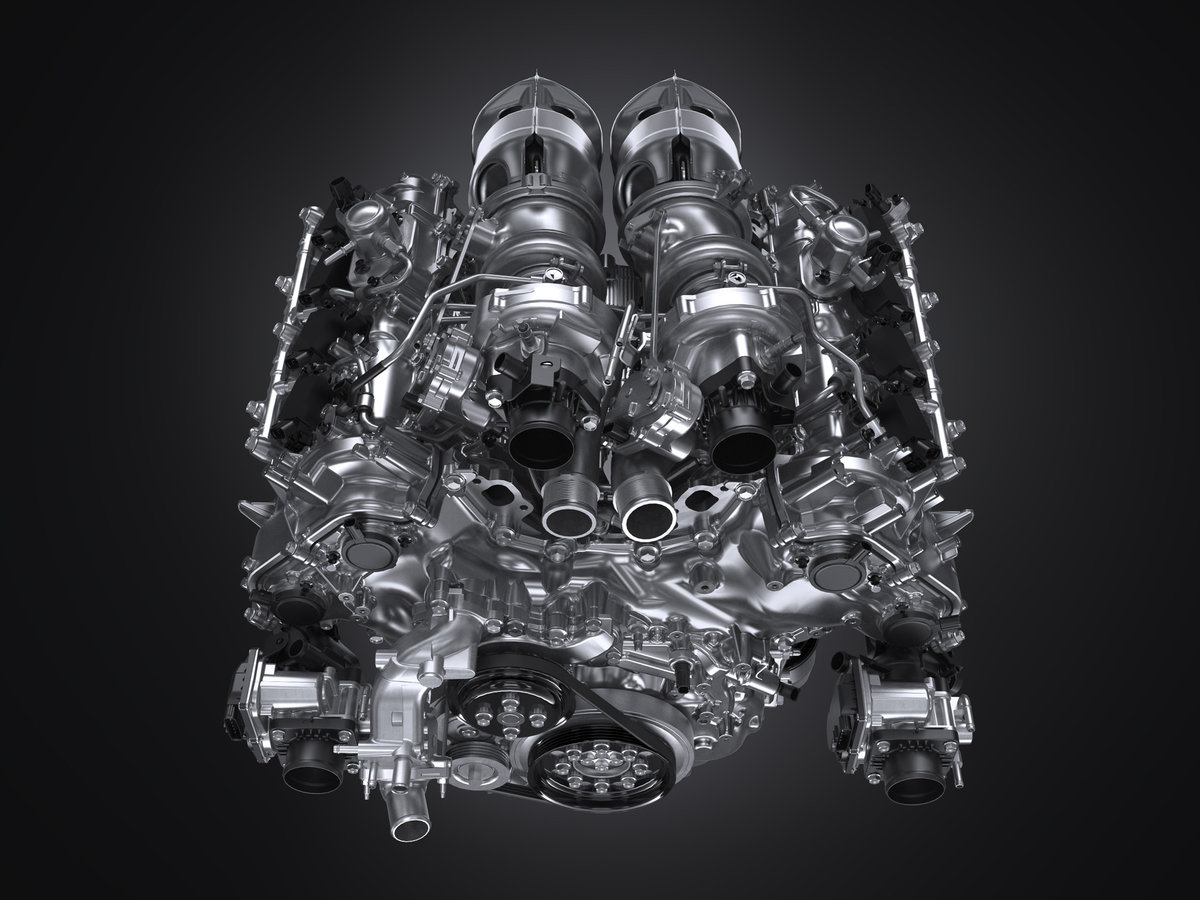
At the heart of the GR GT is an all-new 4.0-liter V8 twin-turbo engine. Key specifications of this engine are as follows:
Powertrain main specifications (development target values)
- Engine type : V8 4.0 liter twin turbo
- Maximum system output : 650PS or more
- Maximum system torque : 850Nm or more (approximately 86.7kgf・m)
- Hybrid system : 1 motor + 8-speed AT
- Drive system : FR (front engine, rear drive)
- Lubrication method : Dry sump
Strategic deployment of hybrid systems
This powertrain, which produces an impressive power output of over 650 PS, incorporates Toyota’s renowned hybrid technology. By incorporating a single motor into the rear transaxle, the following benefits are realized:
- Low center of gravity : The motor is positioned at the rear to optimize the front-to-rear weight distribution
- Improved instantaneous power : The motor’s instant torque supply improves acceleration response
- Efficiency : Hybrid system improves fuel economy
Reasons for adopting the dry sump system
By adopting the dry sump system commonly used in racing cars, the overall engine height has been significantly reduced, lowering the center of gravity of the entire vehicle and dramatically improving cornering performance.
3. Ultimate low center of gravity design: driver and car become one
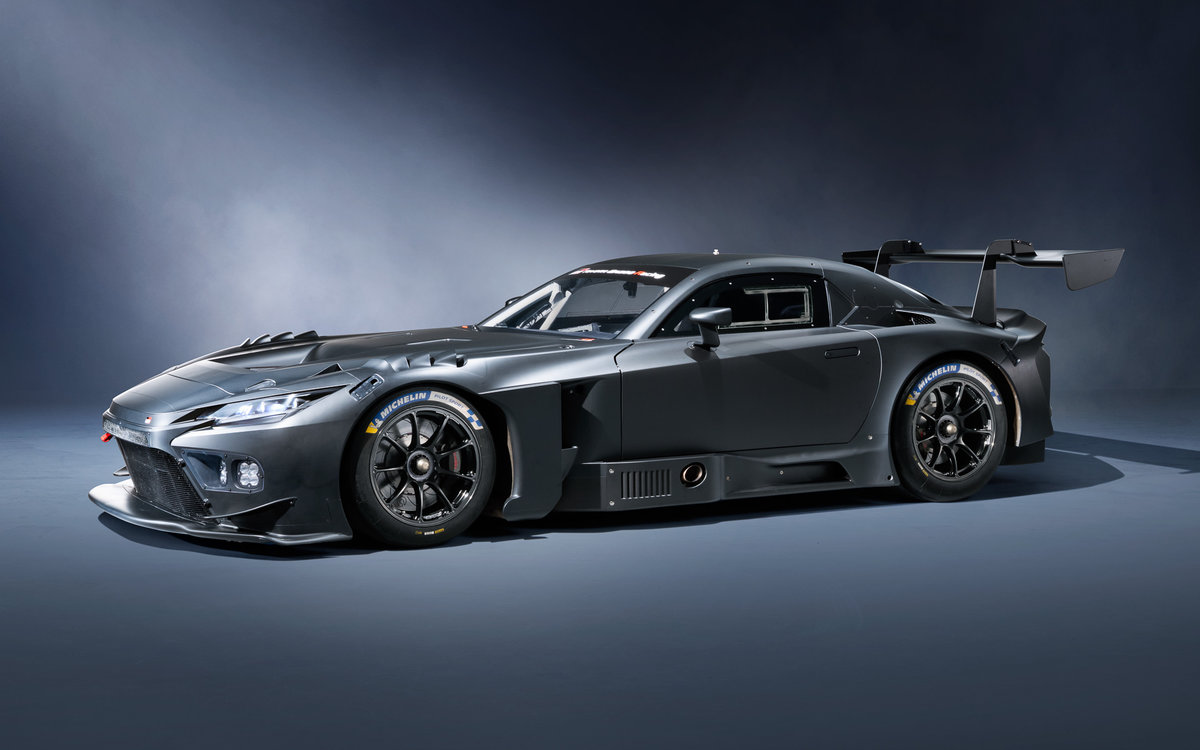
The starting point of development was to “lower it to the limit”
The development of the GR GT began with a clear goal: to thoroughly lower the center of gravity. The development team focused on lowering the following elements to the utmost:
- Vehicle height
- Driver’s hip point
- Engine mounting position
- Center of gravity of heavy objects
Aligning the center of gravity between the driver and the car
Most notably, the innovative approach places the driver’s centre of gravity at nearly the same position as the car’s centre of gravity , which:
- You can directly feel the car’s behavior
- Natural response to steering and pedal operation
- Increased predictability when driving at the limit
- Maximizes the sense of unity between driver and car
Reasons for choosing the FR layout
The reason for adopting the FR (front engine, rear drive) drive system is to emphasize “ease of handling up to the limit.” By choosing FR rather than midship or AWD,
- Natural steering feel
- Optimized front-rear weight distribution
- Ease of drift control
- Improved maintainability
We have achieved this.
4. Toyota’s first all-aluminum frame structure
Pursuing lightweight and high rigidity
The GR GT is Toyota’s first car to use an all-aluminium frame. This innovative chassis structure allows for:
- Lightweight : Significant weight reduction compared to steel
- High rigidity : Strength is ensured by combining aluminum extrusions and cast parts
- Improved vibration characteristics : Utilizing the unique damping properties of aluminum
Multi-material strategy
The frame is made of aluminum, but the body panels are made of a variety of materials, with the right material for the right place:
- Carbon fiber (CFRP) : bonnet, roof, rear wing, etc.
- Resin panels : exterior parts such as fenders
- Aluminum panels : structural parts such as doors
This multi-material approach maximizes weight while maintaining strength.
CFRP torque tube
Of particular note is the use of carbon fiber reinforced plastic (CFRP) for the torque tube that connects the engine and transaxle. This allows:
- Lighter torque tube
- High rigidity for improved power transmission efficiency
- Improved torsional rigidity
5. Exterior design prioritizes aerodynamic performance
A reverse design process
The design and development of the GR GT took an approach that was the polar opposite of conventional car manufacturing:
Traditional Development Process
- Designer decides on exterior design
- Adding aerodynamic performance to the design
GR GT development process
- Aerodynamic designers define ideal aerodynamic performance
- Designers create designs that achieve this aerodynamic performance
Design as functional beauty
As a result, the GR GT’s exterior is not just beautiful, but beautiful through function :
- Large front air intakes : Maximum cooling for the engine and brakes
- Flat underbody : smooth airflow
- Rear diffuser : Downforce generation and drag reduction
- Active aero device : Optimizing aerodynamic characteristics according to driving conditions
Downforce and drag balance
Downforce ensures stability during high-speed driving, while reducing air resistance increases the car’s maximum speed. To achieve a high level of balance between these conflicting elements, CFD (computational fluid dynamics) simulations and wind tunnel tests were conducted hundreds of times.
6. Driver-first interior design
Ergonomic driving position
The interior design also prioritized creating the best driving position for professional drivers . Specifically:
- Extremely low hip point : A seating position that allows you to feel close to the road
- Optimal pedal placement : Pedal layout that makes heel-and-toe easy
- Ensuring visibility : slim A-pillars and maximized window area
- Steering position : Angle and distance that allows arms to be stretched naturally
Visibility design that supports limit driving
Thorough consideration has been given to ensuring visibility when driving on a circuit:
- Visibility of clipping points when cornering
- Optimizing the placement of rearview and side mirrors
- Wide forward visibility due to low dashboard
Racing car-inspired cockpit
The interior is filled with TOYOTA GAZOO Racing’s motorsports expertise:
- Bucket seats (fixed or adjustable)
- Multifunction steering wheel
- Digital meter (customizable display)
- Concentrated placement of controls
7. “GR GT3”: FIA GT3 standard racing car
The pinnacle of customer motorsport
The GR GT3 is a racing car based on the GR GT that complies with FIA GT3 standards. The GT3 category is a popular customer racing class around the world:
- Super GT (GT300 class)
- Nürburgring 24 Hours
- Blancpain GT Series
- IMSA GTD class
It is used in many major races, including:
“The car of choice for people who want to win”
The development concept for the GR GT3 is clear:
- Fast enough for professional drivers : absolute performance
- Easy to handle for gentlemen drivers : predictable behavior
- Race-winning competitiveness : a balance of reliability and performance
- Optimal customer support : Full support from TOYOTA GAZOO Racing
Commonalities with GR GT
The GR GT3 shares many parts with the production GR GT:
- All-aluminum chassis
- Double wishbone suspension
- 4.0-liter V8 twin-turbo engine (GT3 standard compliant)
This high level of commonality reduces development costs and improves reliability.
Aiming for race debut around 2027
The GR GT3 is currently under development with the aim of being introduced into actual competition around 2027. The arrival of a full-fledged GT3 machine, the first for the Toyota/Lexus brand since the LFA, is sure to have a major impact on the global motorsports scene.
8. “Toyota’s Shikinen Sengu”: The philosophy of technological succession
A philosophy of technology succession modeled on Ise Shrine
The three cars announced this time (GR GT, GR GT3, and Lexus LFA Concept) are part of a technology transfer project that Toyota calls ” Shikinen Sengu .”
Shikinen Sengu is a traditional rebuilding ceremony held at Ise Grand Shrine approximately every 20 years to replace the shrine buildings. This traditional event has the important significance of passing on architectural techniques to the next generation .
Toyota follows suit by developing a flagship sports car approximately every 20 years:
- Protecting the fundamental technologies of car manufacturing
- Adopt new technologies and evolve
- Passing on the “secret sauce” to the next generation
We aim to do the following.
Lineage with past flagships
- 1967 TOYOTA 2000GT : Japan’s first full-scale sports car
- 2010 Lexus LFA : Ultra-high-performance carbon fiber sports car
- 2027 GR GT / Lexus LFA Concept : Next-generation flagship
At these intervals of approximately 15 to 20 years, Toyota continues to hone its sports car manufacturing technology.
9. The involvement of master driver Morizo
Chairman Akio Toyoda’s deep involvement
Chairman and CEO Akio Toyoda has been deeply involved in the development of the GR GT from the very beginning, serving as ” Master Driver Morizo .”
“I want you to go all out” “I want you to break through”
Morizo frequently said the following to the development team:
- “I want you to go all out.”
- “I want you to break through”
- “Don’t compromise”
In response to these words, Toyota’s engineers embarked on a challenging development project, incorporating a succession of new technologies that were a first for Toyota.
An impressive lineup of development drivers
Morizo and a diverse range of other drivers participated in the development of the GR GT:
Professional Driver
- Tatsuya Kataoka : Active in Super GT and Super Formula
- Hiroaki Ishiura : Experienced in the Nürburgring 24 Hours race
- Naoya Gamou : Young top driver
Gentleman Driver
- Daisuke Toyoda : Akio Toyoda’s son, with extensive racing experience
In-house evaluation driver
- Many experienced test drivers within Toyota
This diverse group of drivers provides feedback from their own perspectives, further improving the car’s quality.
10. Innovative Development Methodology: Combining Simulators and Real-World Testing
Early adoption of driving simulators
In developing the GR GT, we actively utilized driving simulators , which are commonly used in racing car development, from the early stages of development.
Benefits of the simulator
- Driving evaluation possible without a prototype vehicle
- Parameter changes can be made instantly
- You can safely try out dangerous limit driving
- Significant reduction in development costs and time
Real-world testing on circuits around the world
In parallel with the development using the simulator, thorough testing was also carried out using the actual car:
Main circuits where the test was conducted
- Fuji Speedway (Japan)
- Toyota Technical Center Shimoyama (Japan)
- Nürburgring (Germany): A grueling endurance test on the Nordschleife
- Other circuits around the world
The importance of public road testing
Thorough testing carried out not only on the track but also on public roads :
- Checking comfort in everyday use
- Verification of ease of handling on public roads
- Evaluation of practical performance
- Checking reliability and durability
Public road testing is an essential process in order to realize the concept of a “racing car that can be driven on public roads.”
Repeated cycle of “run, break, fix”
TOYOTA GAZOO Racing’s development method of ” run, break, fix ” has been thoroughly implemented in the GR GT. Through this method:
- Early detection of weaknesses
- Understanding performance limits
- Improved reliability
- Pursuit of true performance
This will make it possible.
11. Release Date and Price Expectations
Aiming for release around 2027
According to the official announcement, the GR GT is currently under development with the aim of being released around 2027. The estimated release schedule is as follows:
- December 2024 : Prototype announcement
- 2025-2026 : Continued development, detailed information released in stages
- Around 2027 : Commercial model release
Expected price range
Official pricing has yet to be announced, but based on the competing models and the technology installed, we can expect the following price range:
GR GT (commercial model)
- Estimated price: 20 million to 30 million yen
- Reason: The Lexus LFA costs about 37.5 million yen, while its rivals, the Porsche 911 Turbo and Ferrari 296 GTB, cost around 25 million yen.
GR GT3 (racing car)
- Estimated price: 50 million to 70 million yen
- Reason: GT3 cars are generally priced in the 50 to 80 million yen range.
Is production limited?
Considering that the Lexus LFA was limited to 500 units, it is highly likely that the GR GT will also be limited in production. Estimated production numbers:
- Approximately 100 to 200 units per year
- Made-to-order production method
- Plenty of customization options
12. Comparison with competing models
Let’s compare the GR GT to the main super sports cars it will be competing against:
Porsche 911 Turbo S
| item | GR GT | Porsche 911 Turbo S |
|---|---|---|
| engine | V8 4.0L twin turbo + motor | Horizontally opposed 6-cylinder 3.7L twin turbo |
| Maximum power | Over 650PS | 650PS |
| Drive system | FR | AWD |
| price | Approximately 25 million yen (estimated) | Approximately 27 million yen |
Advantages of the GR GT : Efficiency from the hybrid system, driving feel unique to FR
Ferrari 296 GTB
| item | GR GT | Ferrari 296 GTB |
|---|---|---|
| engine | V8 4.0L twin turbo + motor | V6 3.0L twin turbo + motor |
| Maximum power | Over 650PS | 830PS |
| Drive system | FR | MR |
| price | Approximately 25 million yen (estimated) | Approximately 42 million yen |
Advantages of the GR GT : Price advantage, support system from TOYOTA GAZOO Racing
McLaren 750S
| item | GR GT | McLaren 750S |
|---|---|---|
| engine | V8 4.0L twin turbo + motor | V8 4.0L twin turbo |
| Maximum power | Over 650PS | 750PS |
| Drive system | FR | MR |
| price | Approximately 25 million yen (estimated) | Approximately 46 million yen |
GR GT’s advantages : Hybrid technology and reliability unique to Japanese manufacturers
13. Summary: The dawn of a new era for Japanese super sports cars
The direction shown by GR GT
The GR GT, which TOYOTA GAZOO Racing has been eagerly awaiting, is more than just a super sports car. It is:
- Fusion of motorsports and production cars : Direct feedback of technology cultivated in racing
- Driver First : Developed from the driver’s perspective
- Technology inheritance : Passing on car-making skills to the next generation
- Japanese Technology : Japanese-made Supercars that Can Compete on the World Stage
This is a project with multifaceted significance.
Towards a release in 2027
More information about the GR GT will be released in stages. Key points to note:
- Exact performance figures : 0-100km/h acceleration, top speed, etc.
- Price and production volume : factors that determine affordability
- Customization options : options that allow you to express your individuality
- GR GT3 race schedule : Which races can you see it in?
Influence on the Japanese motorsports scene
With the arrival of the GR GT3, we can expect new success for the Toyota/Lexus brand in races such as Super GT and the Nürburgring 24 Hours.
- Revitalizing Japanese motorsports
- Expanding customer racing
- Increased opportunities for training young drivers
This will lead to:
A true sports car for car enthusiasts
Finally, the GR GT is not just about speed. It is about:
- The joy of interacting with your car
- Pursuit of driving pleasure
- Satisfaction of ownership
This is the essential value provided to car enthusiasts.
In an automotive industry where the wave of electrification is sweeping across the globe, Toyota’s choice of a high-performance hybrid sports car that combines an internal combustion engine and an electric motor is a manifestation of its strong determination to “preserve the joy of cars for the future.”
Related Information