
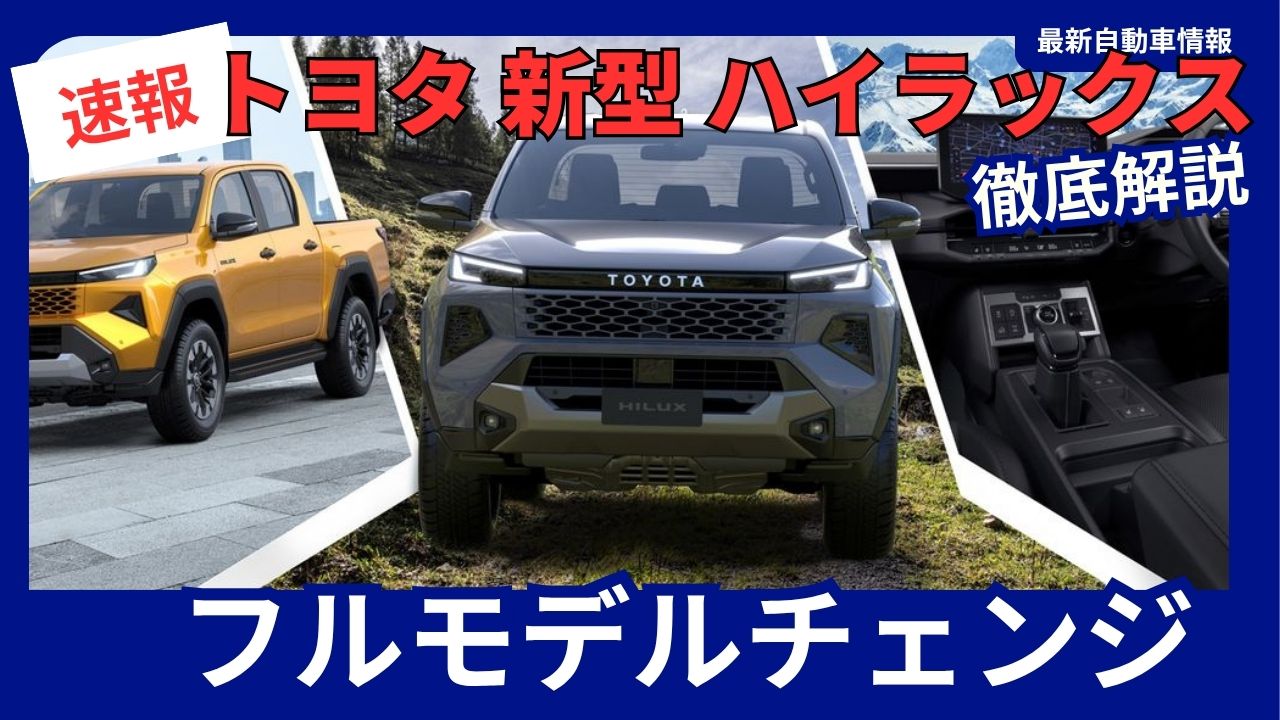
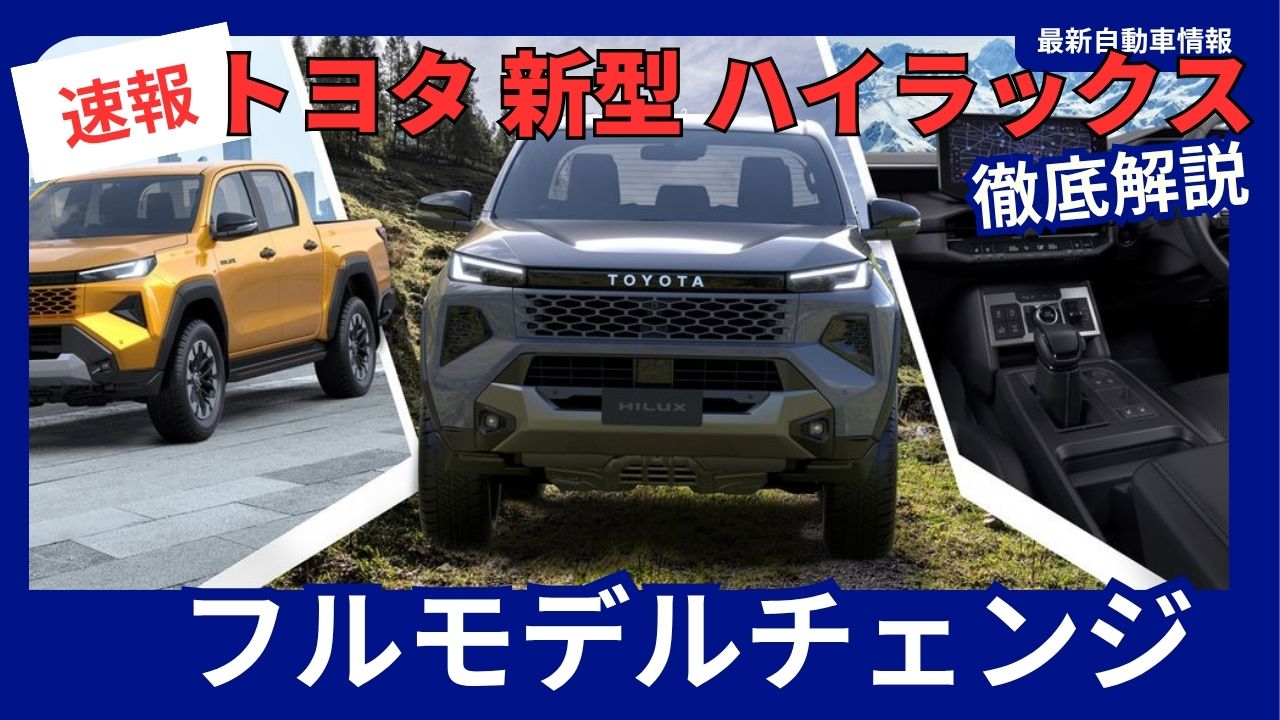
On November 10, 2025, Toyota Motor Corporation unveiled the new ninth-generation Hilux for the first time in the world at a new car launch event held in Bangkok, Thailand.
First complete overhaul in 10 years! The 9th generation Hilux makes its world debut
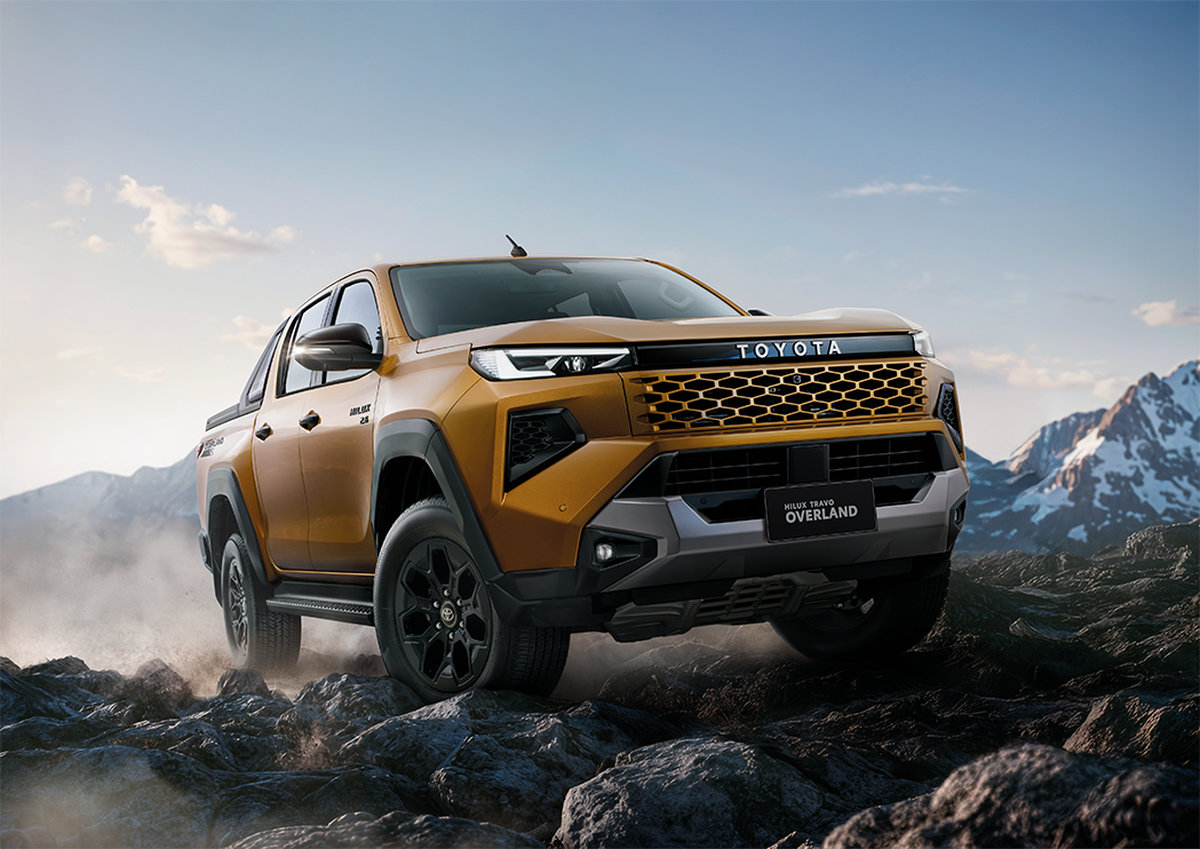
Toyota Hilux
This full model change marks the first in about 10 years since the current eighth-generation model debuted in 2015, and in addition to the conventional diesel engine, a battery electric vehicle (BEV) model has been added to the lineup. The new model is attracting attention as an embodiment of Toyota’s “Multi-Pathway” strategy to realize a carbon-neutral society.
Toyota Hilux
A diesel model is scheduled to be released for the Japanese market in mid-2026.
The event was attended by Toyota’s Chief Branding Officer Simon Humphries as well as former yokozuna Hakuho, creating a huge buzz.
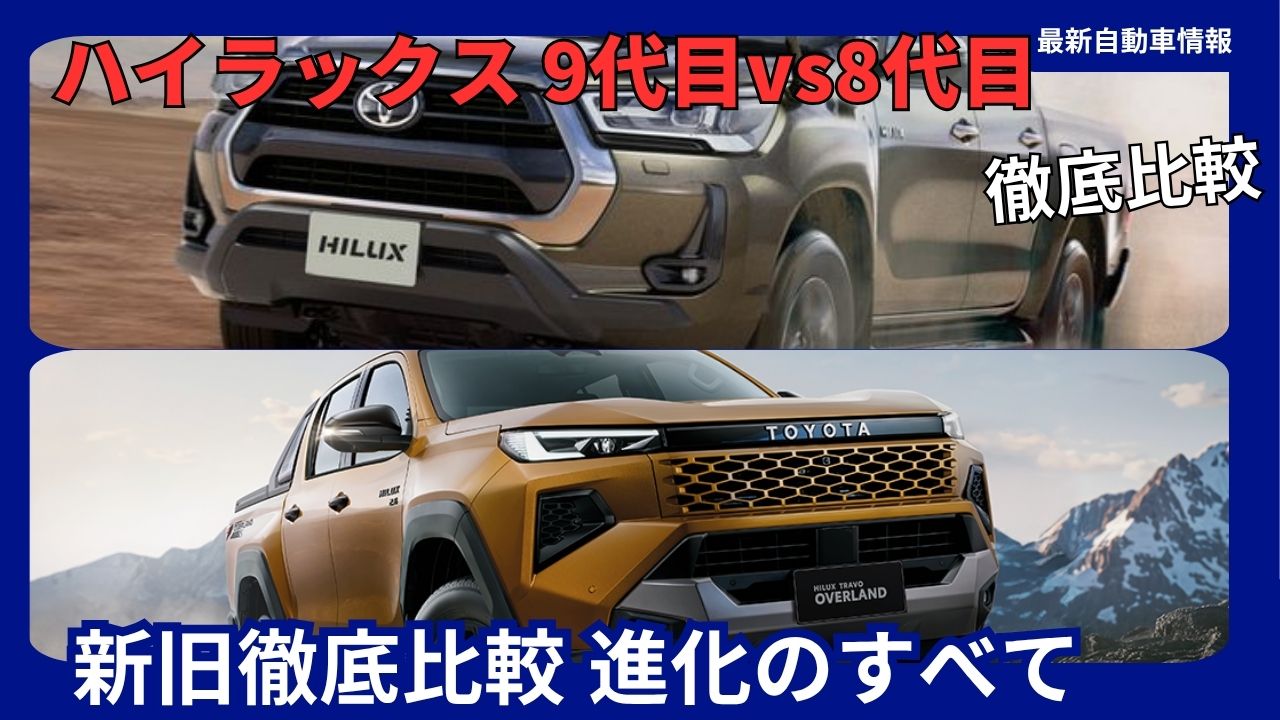
Completely renewed interior and exterior design
2026-toyota-hilux
Exterior: Corolla Cross-style grille in the same color as the body
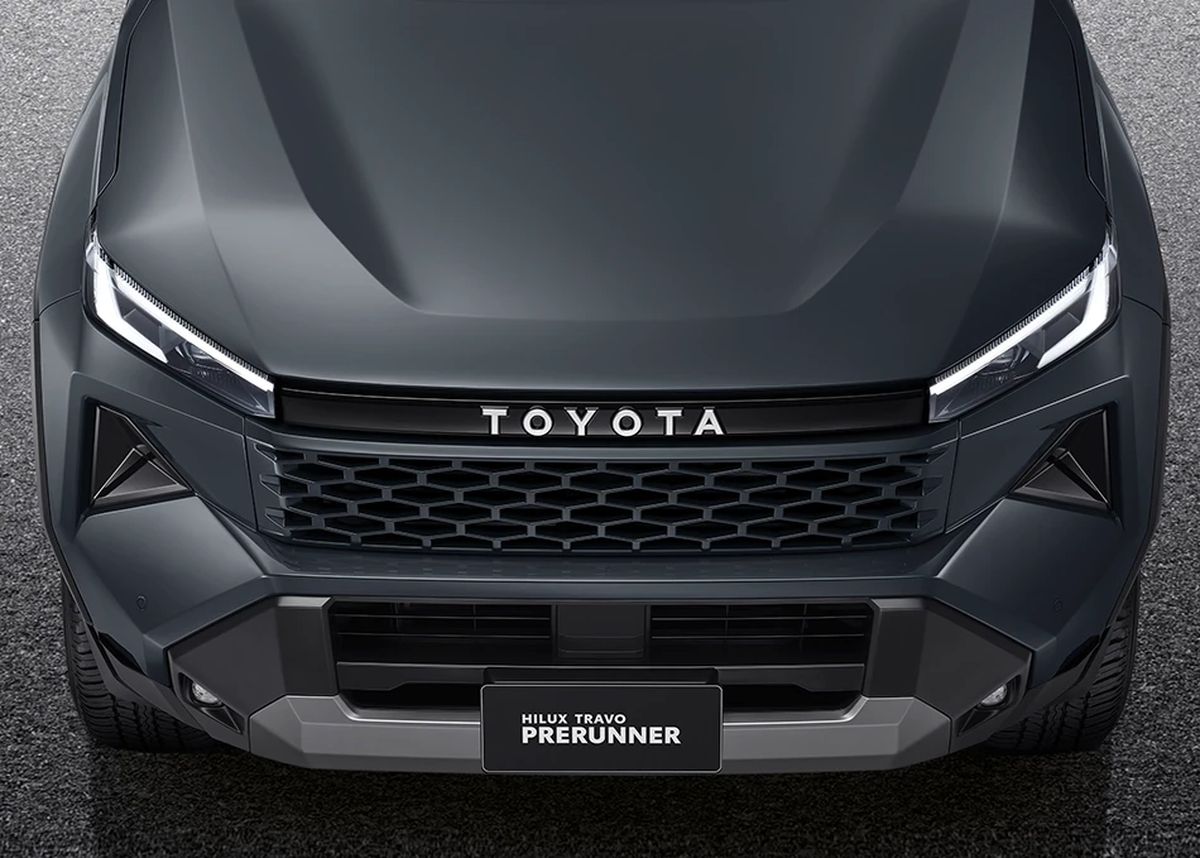

The design of the new Hilux was developed around the theme of “tough and agile,” an approach that sets it apart from the hammerhead styling seen on other Toyota models.
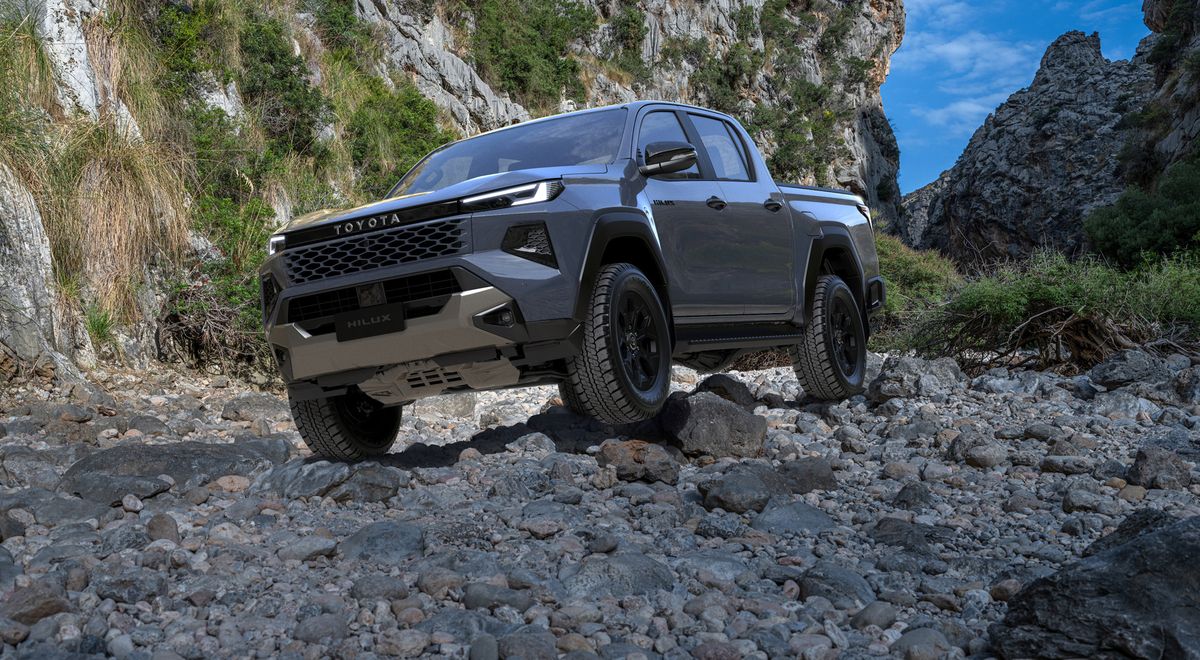
The front mask features slim LED headlights, a body-colored honeycomb grille, angular bumper intakes, and a sturdy skid plate. Like the new Corolla Cross and Crown Estate, the grille is body-colored and features a “TOYOTA” lettering badge above it.
The front turn signals are expected to be reversible LED daytime running lights, giving the car a sleek and modern design.
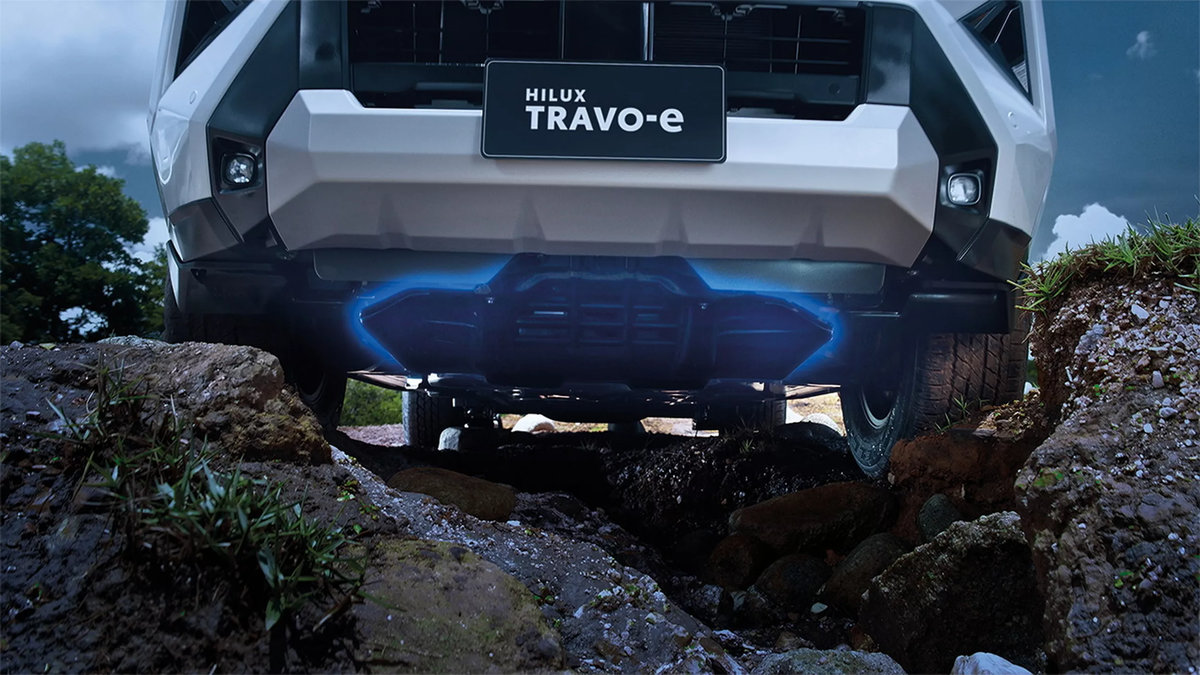
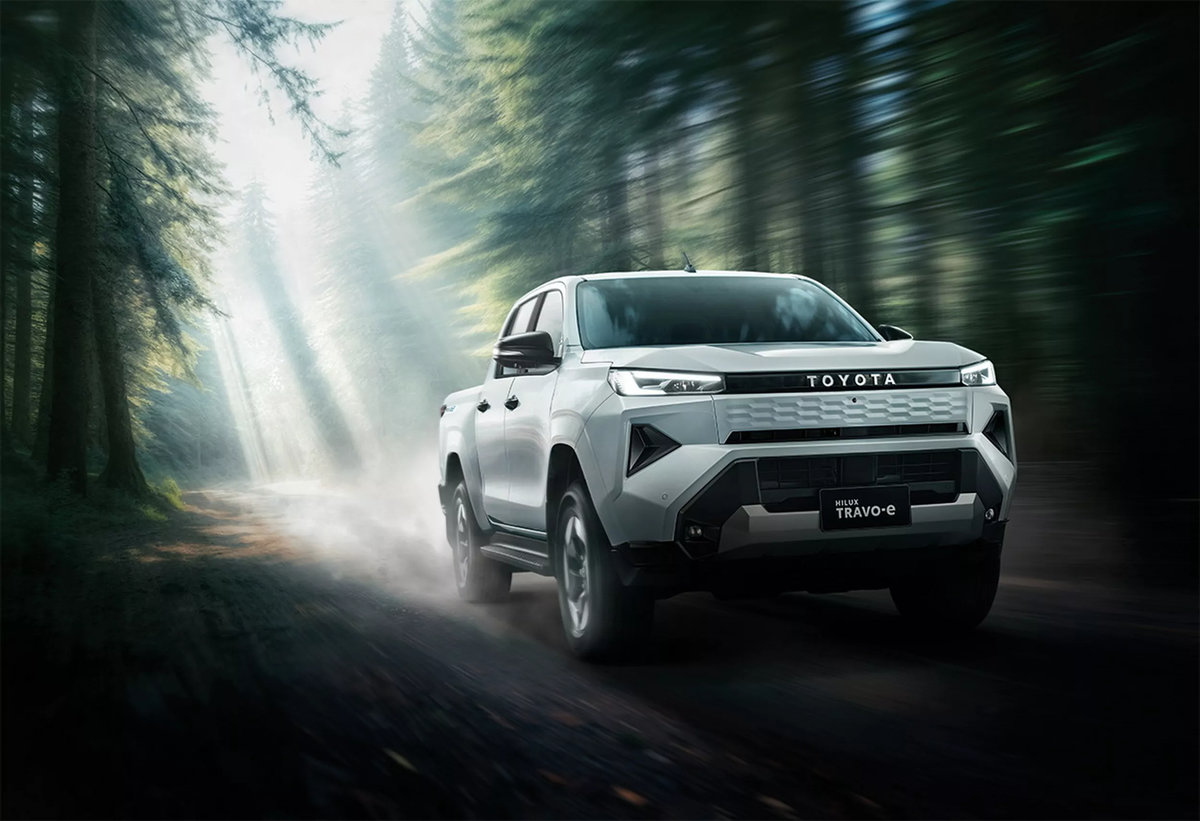
The BEV model’s exterior features clearly differentiate it from the internal combustion engine model with a unique front bumper, blocked grille and revised intakes.
Body style changes: Concentrated on double cab only
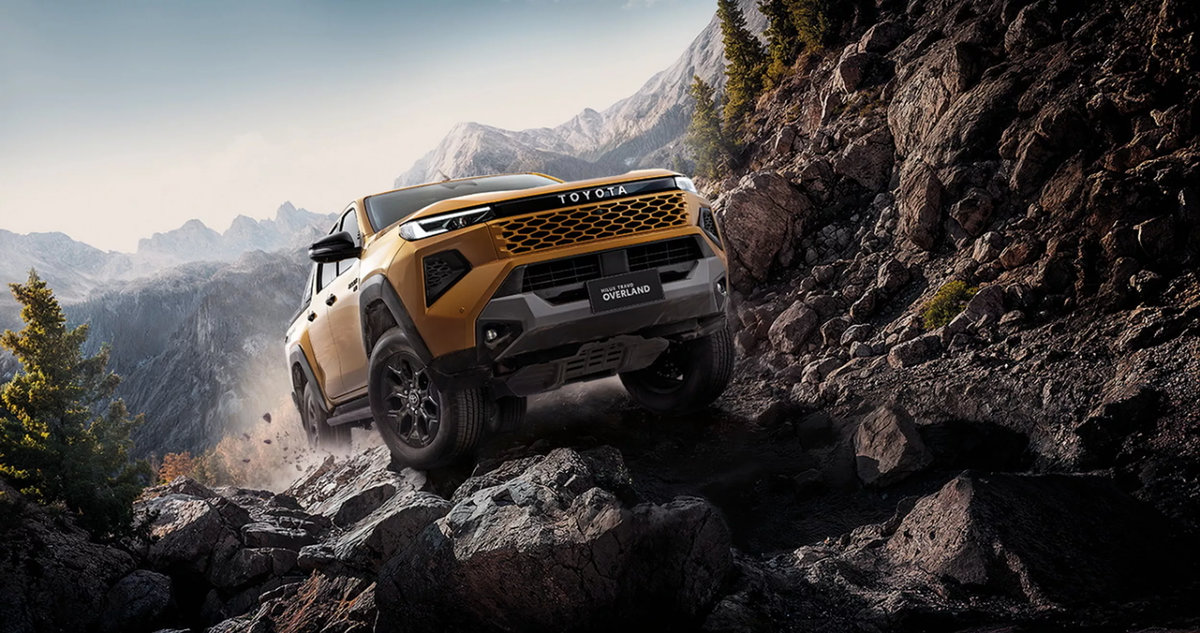
Interestingly, Toyota has decided to discontinue the single-cab and extended-cab body styles , meaning the double-cab version revealed this time around will be the only option available to buyers.
This will result in a more practical specification for family use.
Rear design: Sharper, more sculpted style
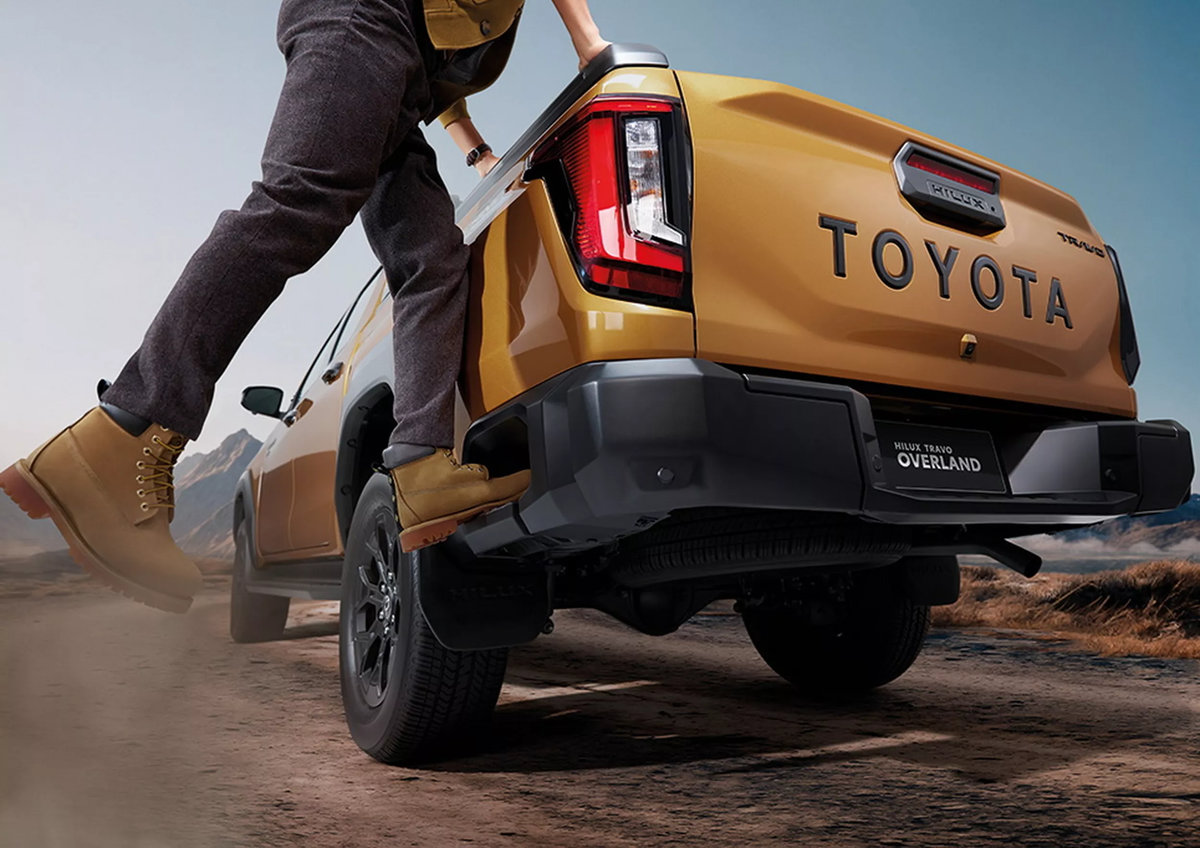
The rear end is more sculpted than before, with sharp LED taillights and a modern bumper, while the side profile looks familiar, with the greenhouse, pillars and doors carried over from the previous model, but freshened up with redesigned front and rear fenders, boxy wheel arches and new wheels.
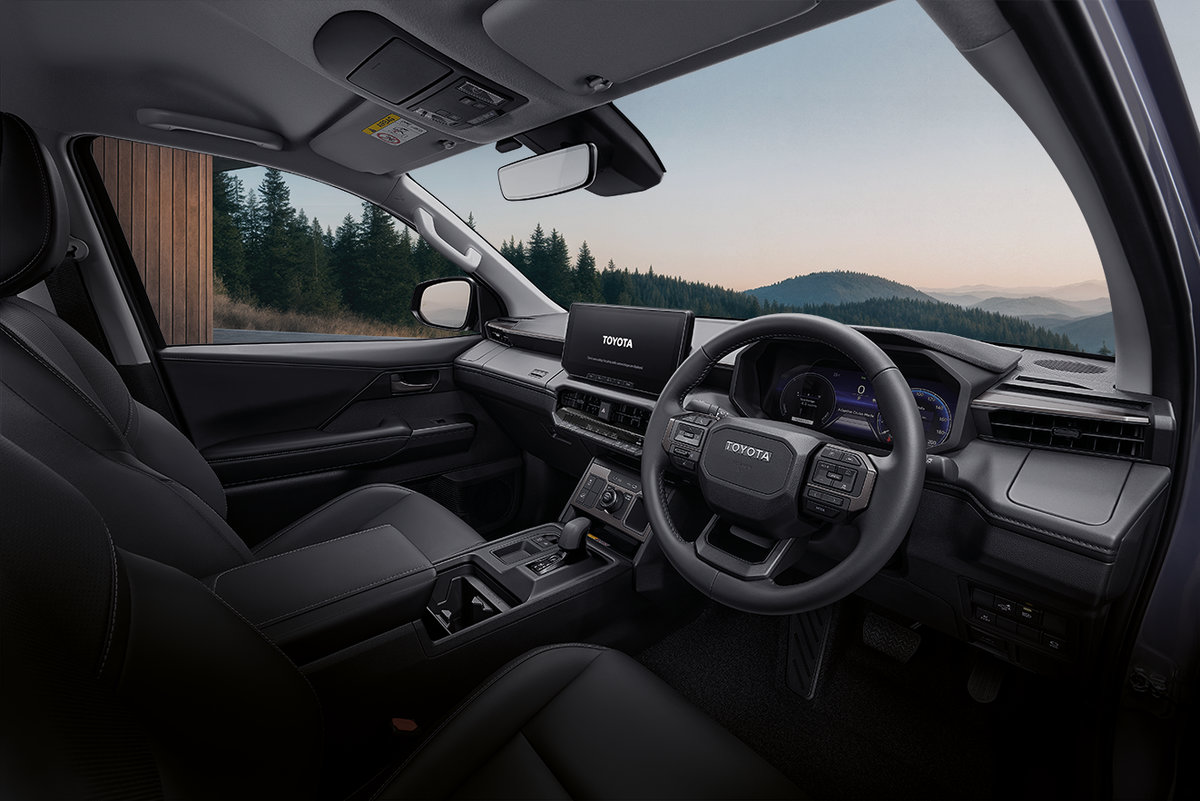
Interior: Evolved to a rugged design reminiscent of the Land Cruiser 250
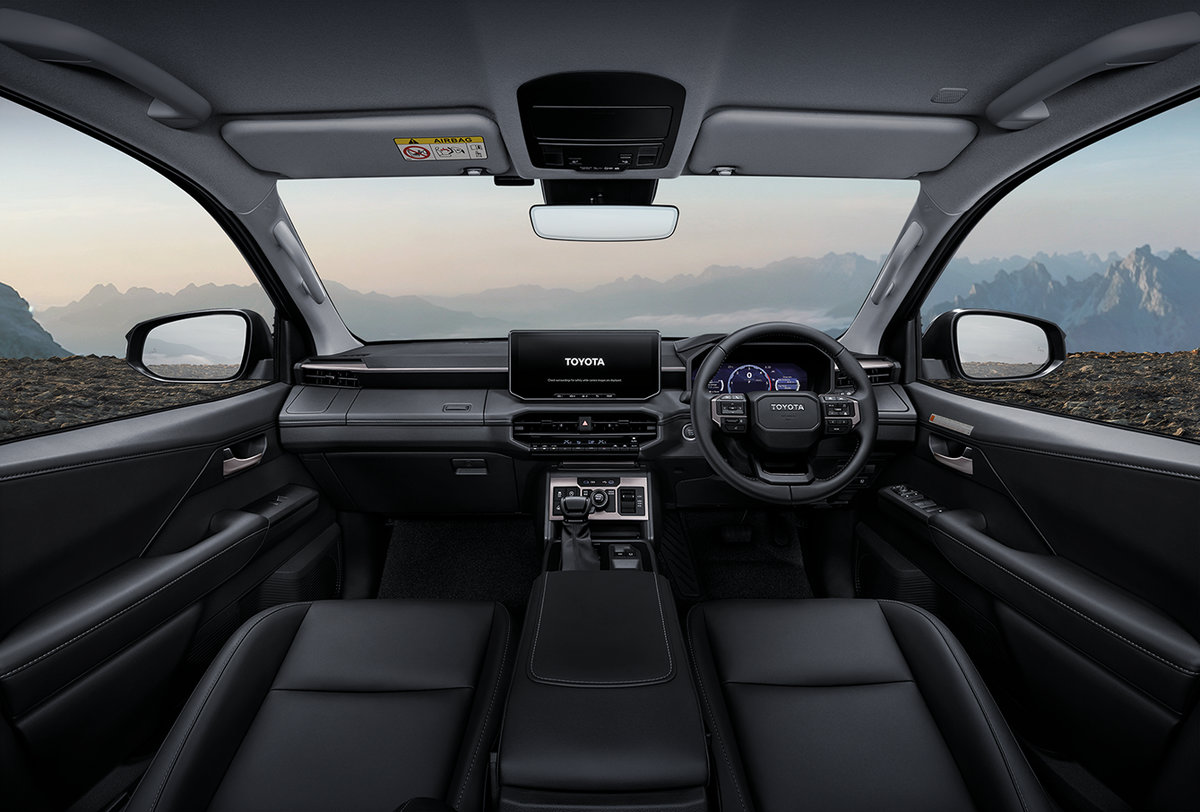
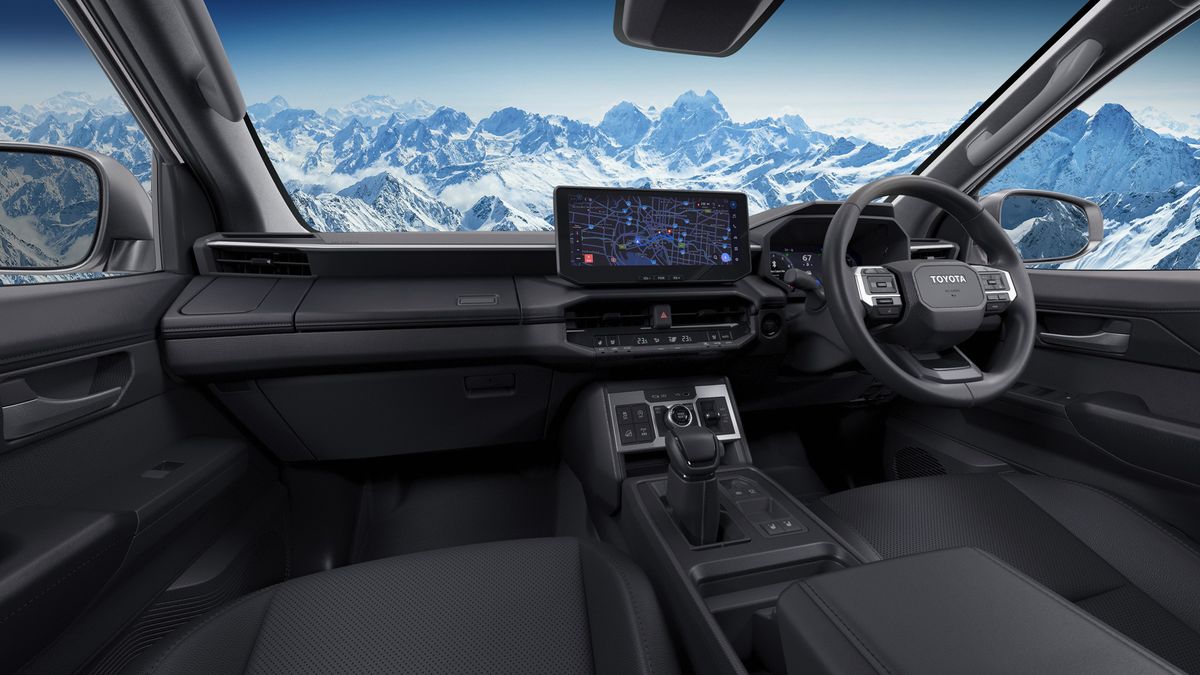
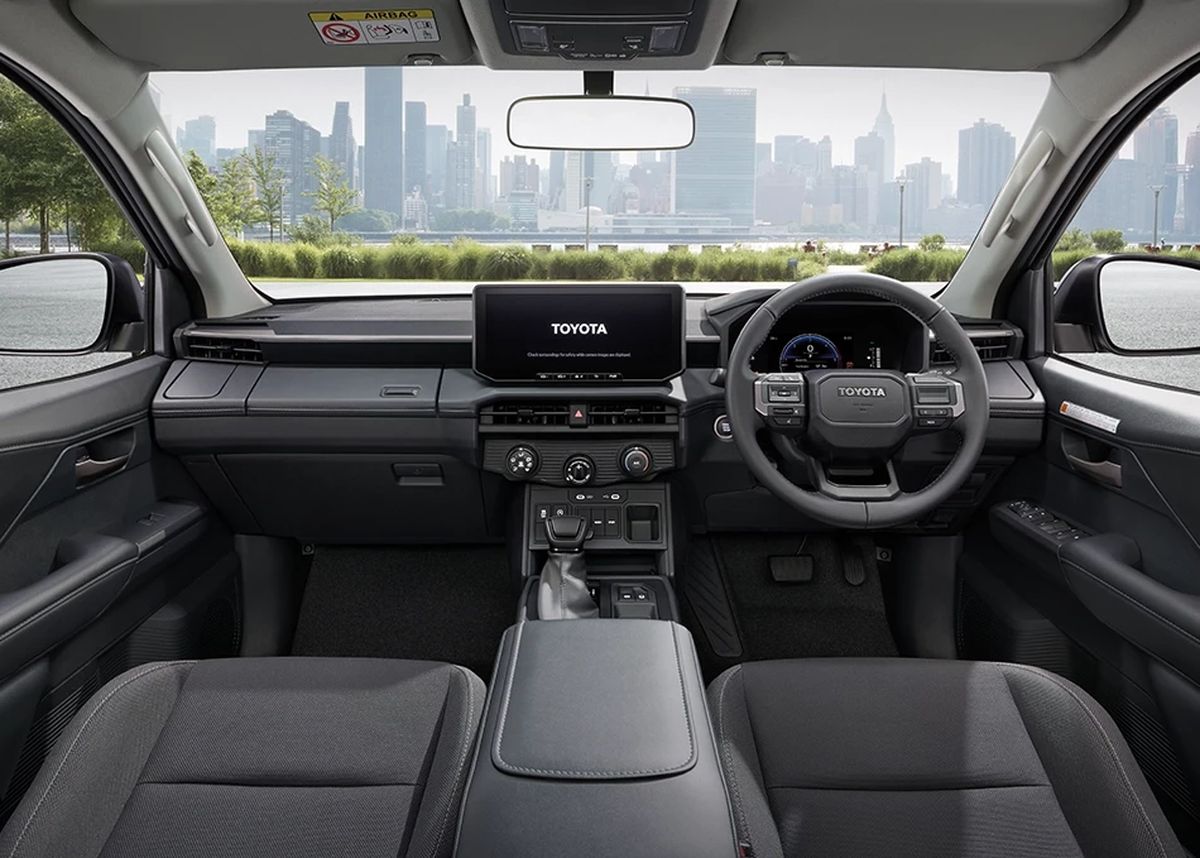
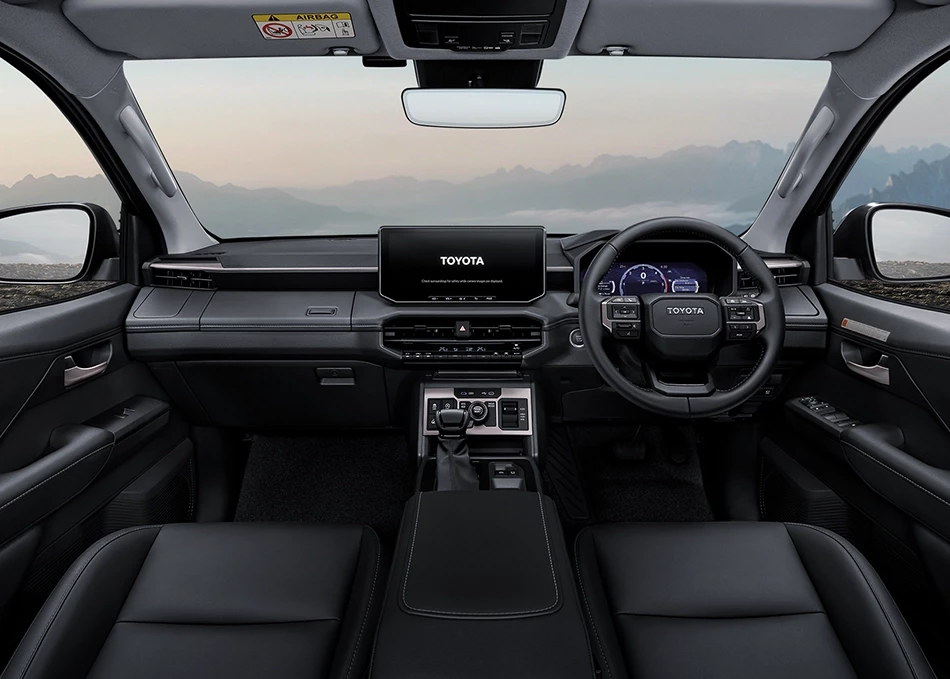
The interior has also undergone significant evolution. The interior of the new Hilux has been redesigned to incorporate Toyota’s latest technology and styling elements, giving it a rugged, tough impression similar to that of the Land Cruiser 250 and Land Cruiser FJ.
Latest cockpit equipment
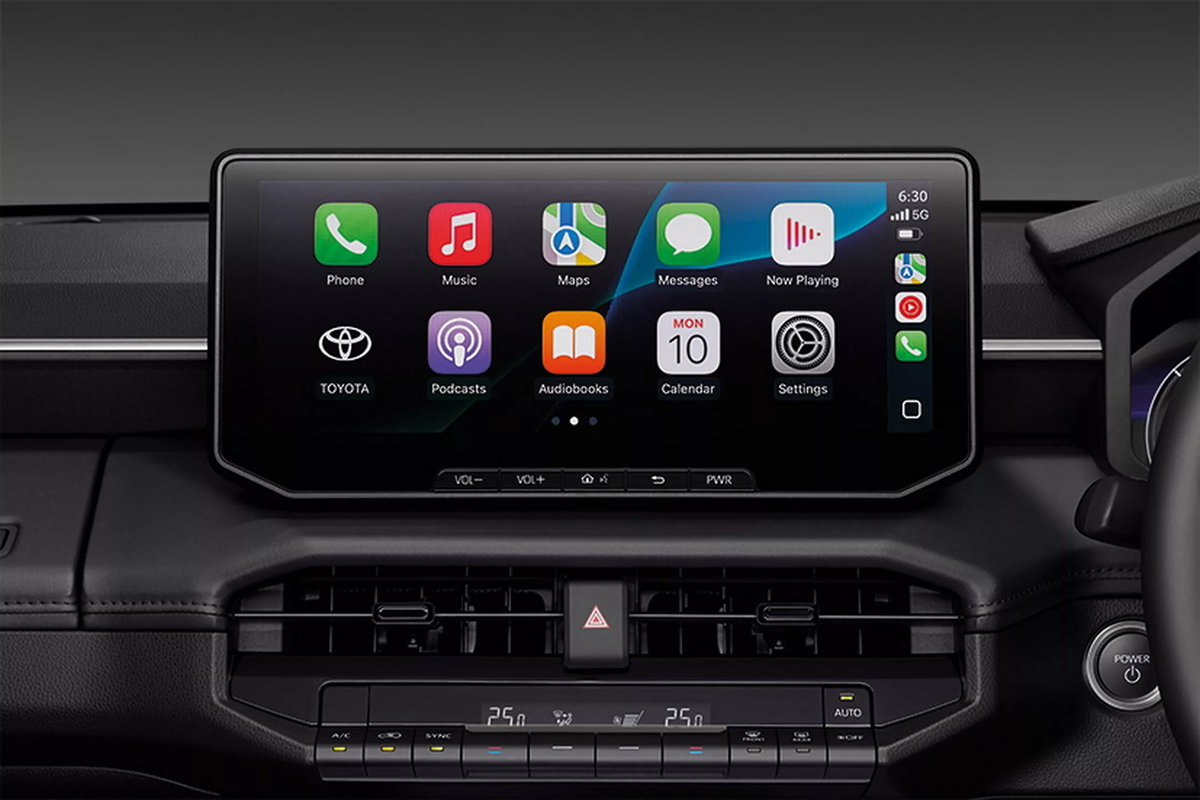
The boxy dashboard is equipped with the latest features, including:
- 12.3-inch freestanding infotainment display
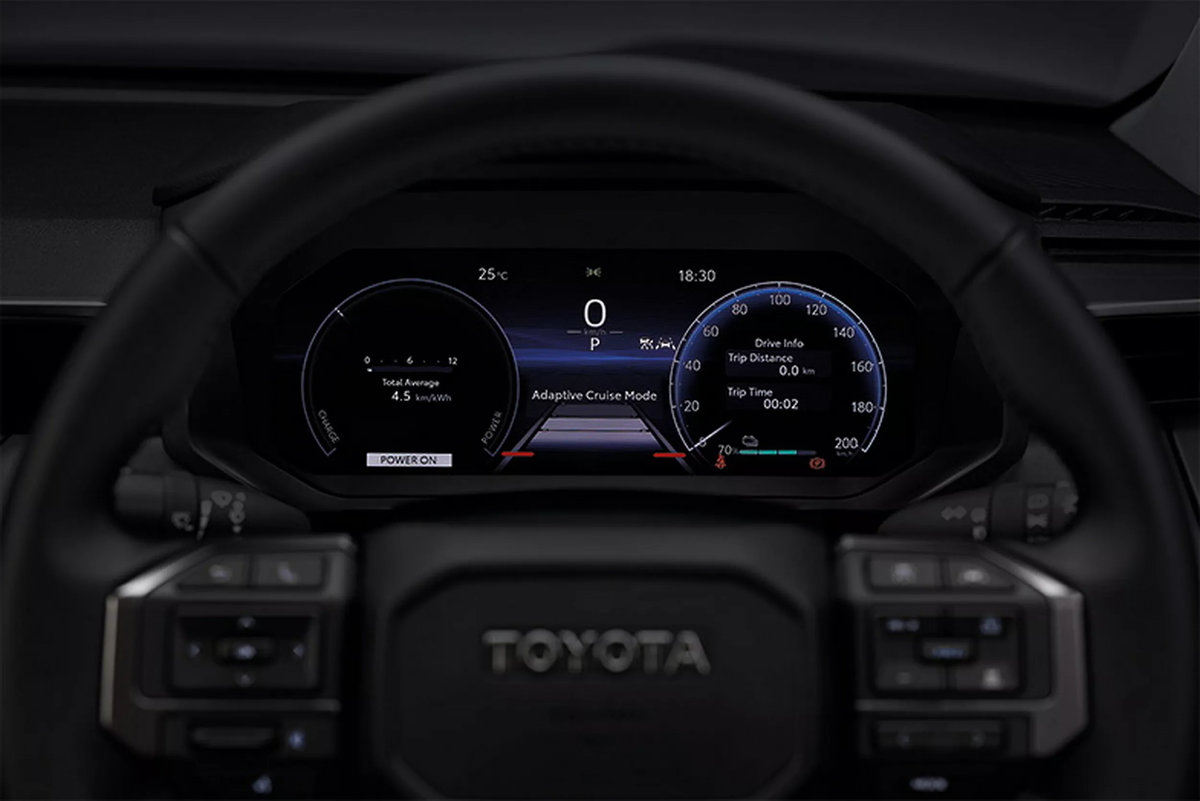
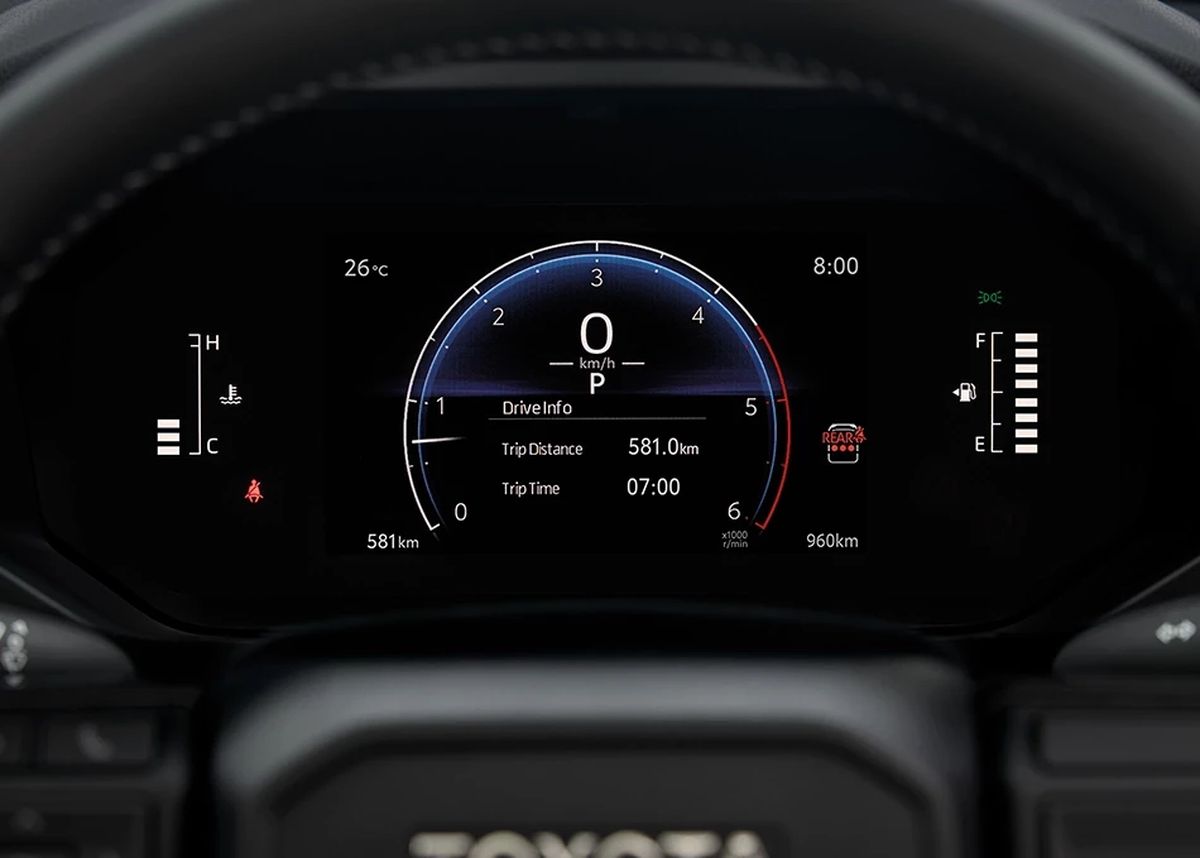
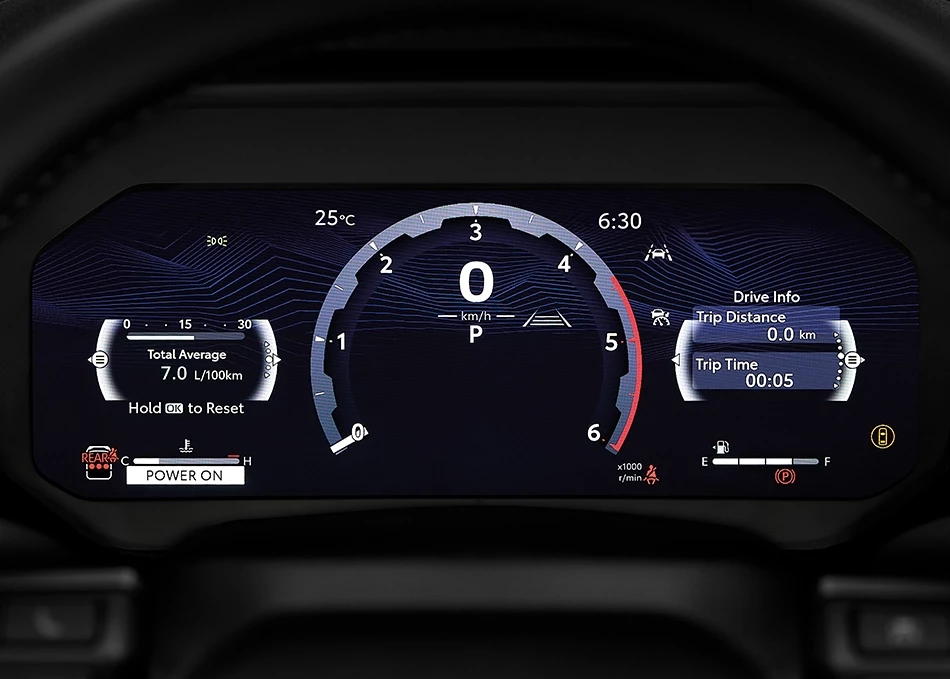
- 12.3-inch digital instrument cluster (7-inch on lower grades)
- Physical controls for climate control and basic functions
- Chunky steering wheel derived from the Land Cruiser (with click buttons)
- Compact shift knob
- Drive mode selector in the center console
- Double storage compartment on passenger side
- Dashboard-mounted cup holder
The significance of adopting an electric parking brake
2025-toyota-hilux
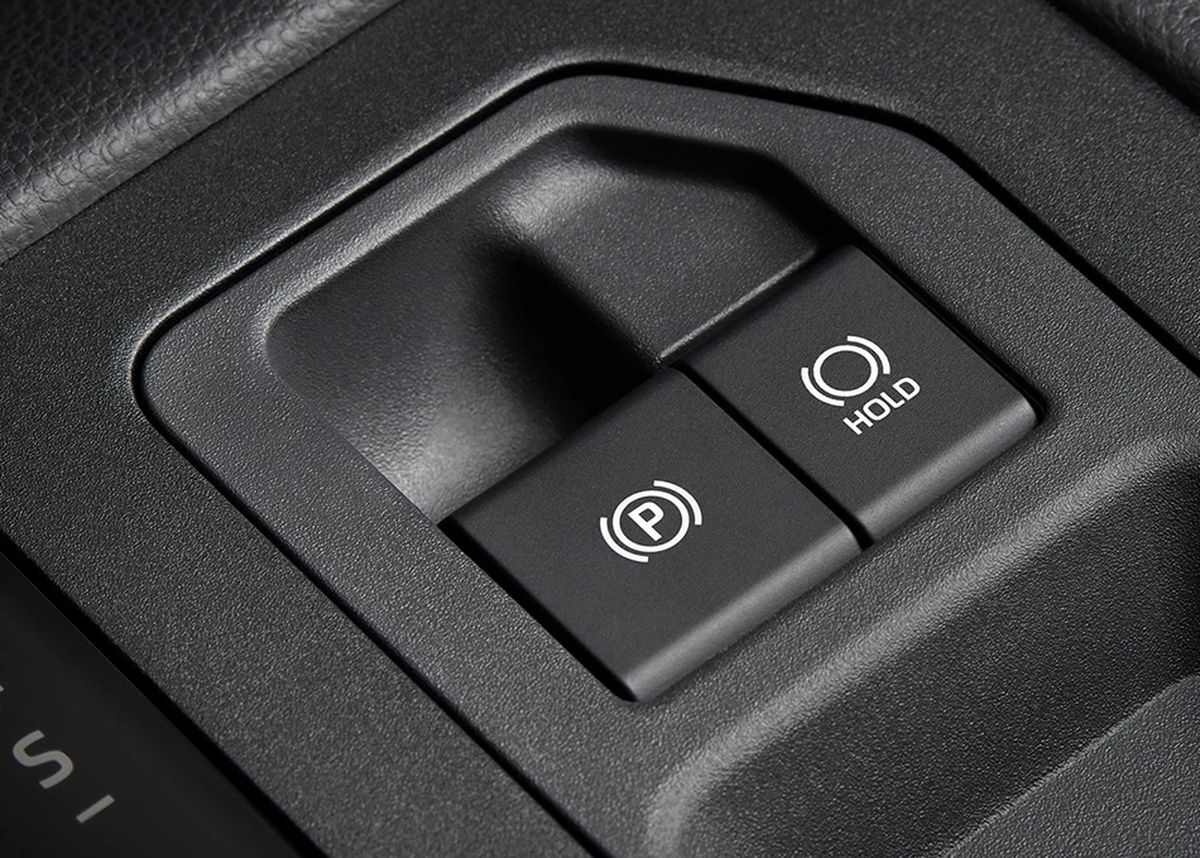
The biggest highlight is the adoption of an electric parking brake . Previously, the Hilux used a manual handbrake, but the new model is equipped with an electric parking brake (EPB) and auto brake hold (ABH). This differentiates it from the Land Cruiser FJ and Hilux Champ, and greatly improves usability.
This equipment provides a more comfortable and modern driving experience.
Significant expansion of safety equipment
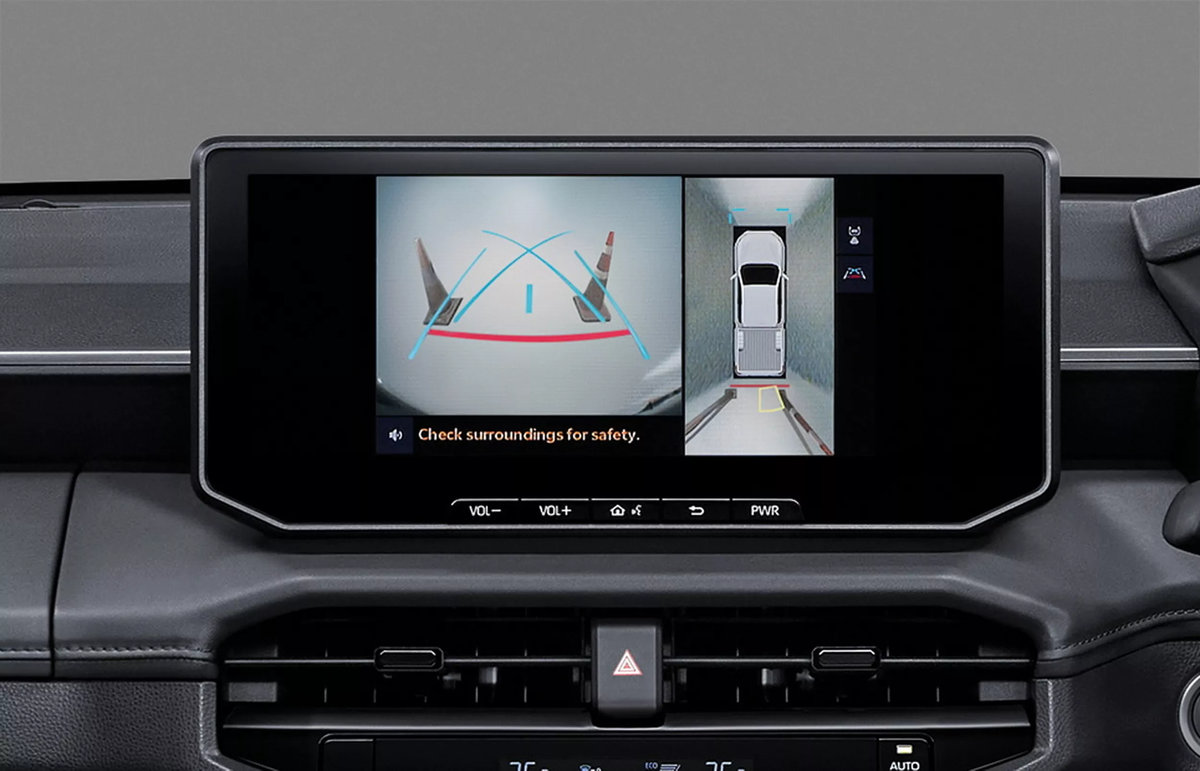
In terms of safety equipment, the Hilux is equipped with a “significantly expanded” suite of Advanced Driver Assistance Systems (ADAS), bringing it on par with passenger car lineups. The latest active safety technology, Toyota Safety Sense 3.0, is standard, and the Panoramic View Monitor and Multi-Terrain Monitor improve safety when maneuvering in tight spaces and on rough roads.
Three key evolution points of the new Hilux
Toyota’s regional chief engineer explained that in developing the new Hilux, research was conducted in harsh environments around the world, from the deserts of the Middle East to the highlands of South America, taking into account the company’s track record of selling more than 28 million units in over 195 countries.
As a result, the new model has undergone significant evolution in the following three areas:
1. Further strengthening reliability
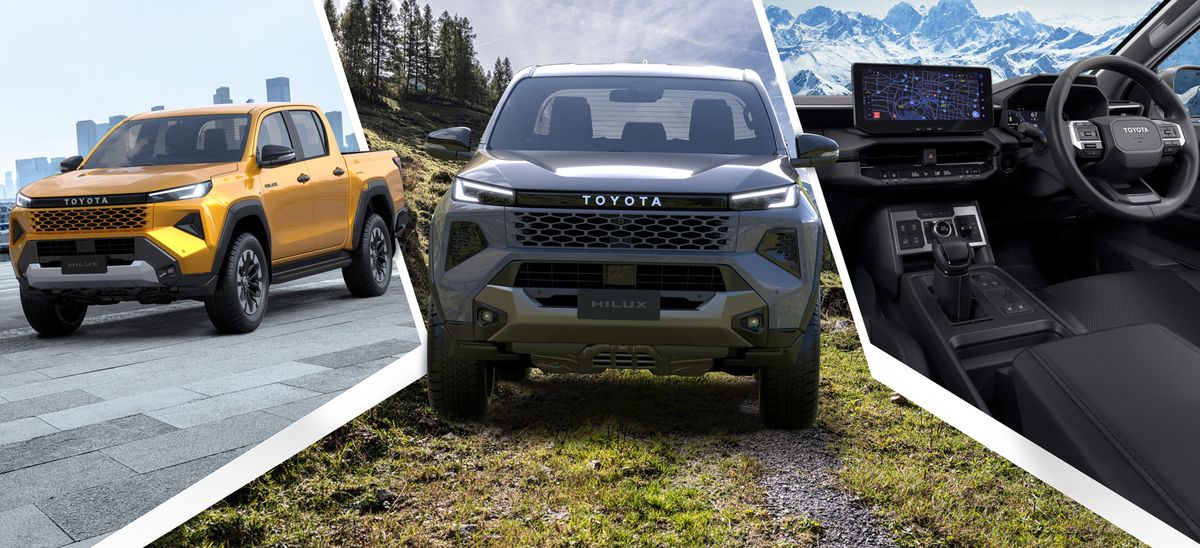
Body rigidity has been strengthened to further enhance the Hilux’s traditional “toughness.” The adoption of a newly designed suspension system improves off-road performance while also providing comfort on the road. The new model also features electric power steering (EPS), providing a more precise steering feel and driving confidence.
2. Equipped with smart technology
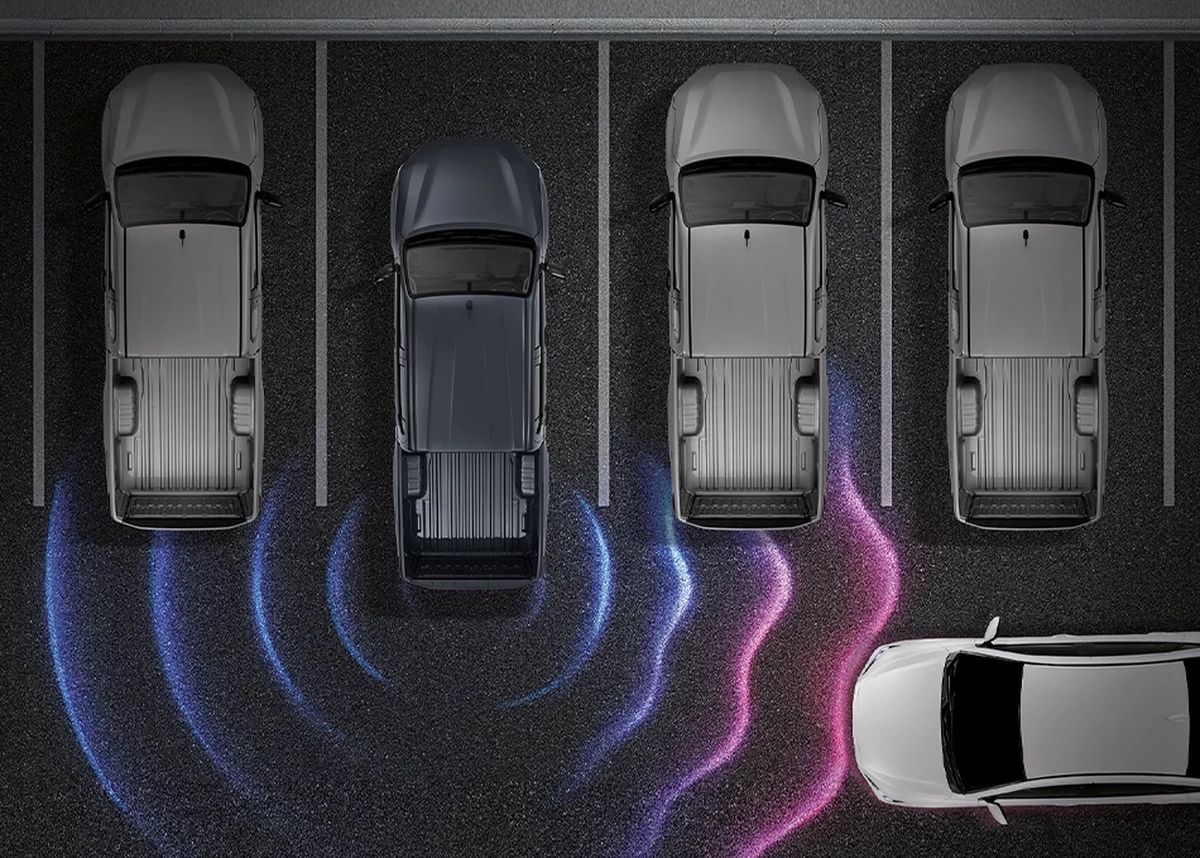
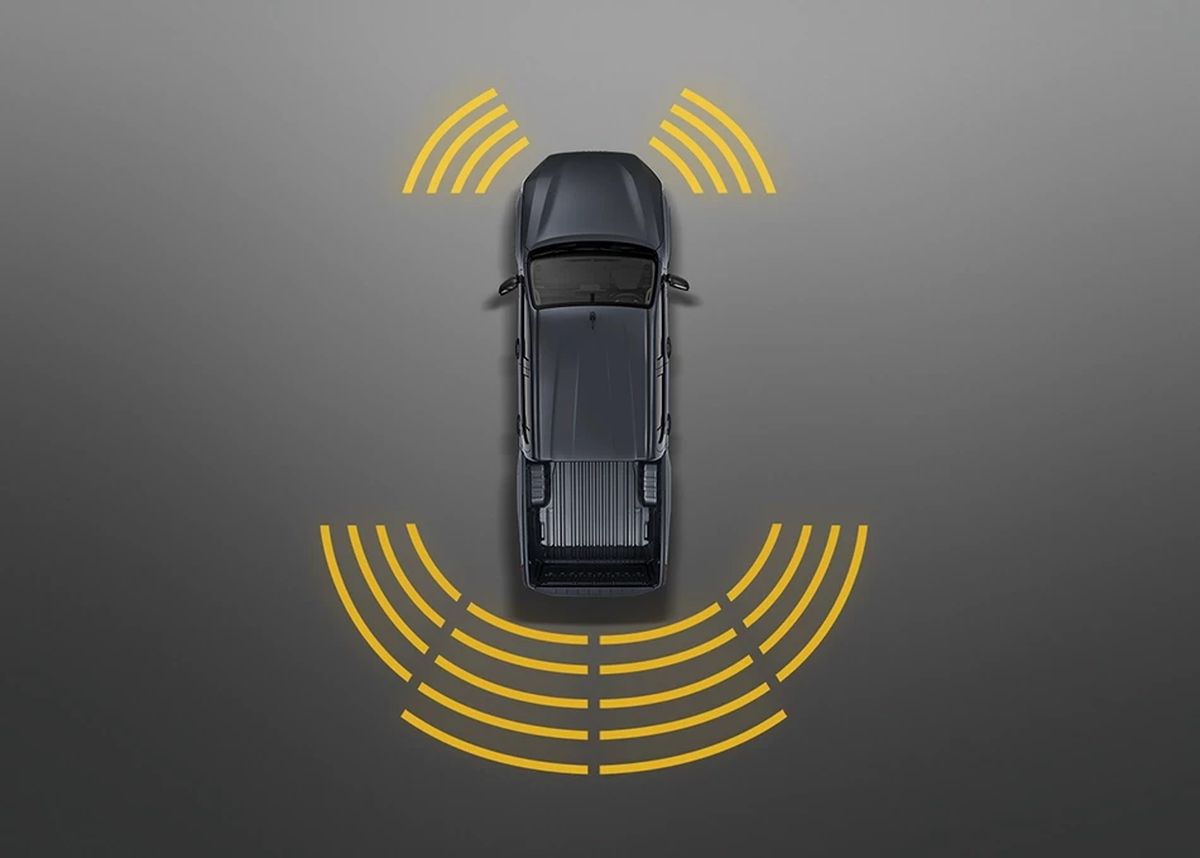
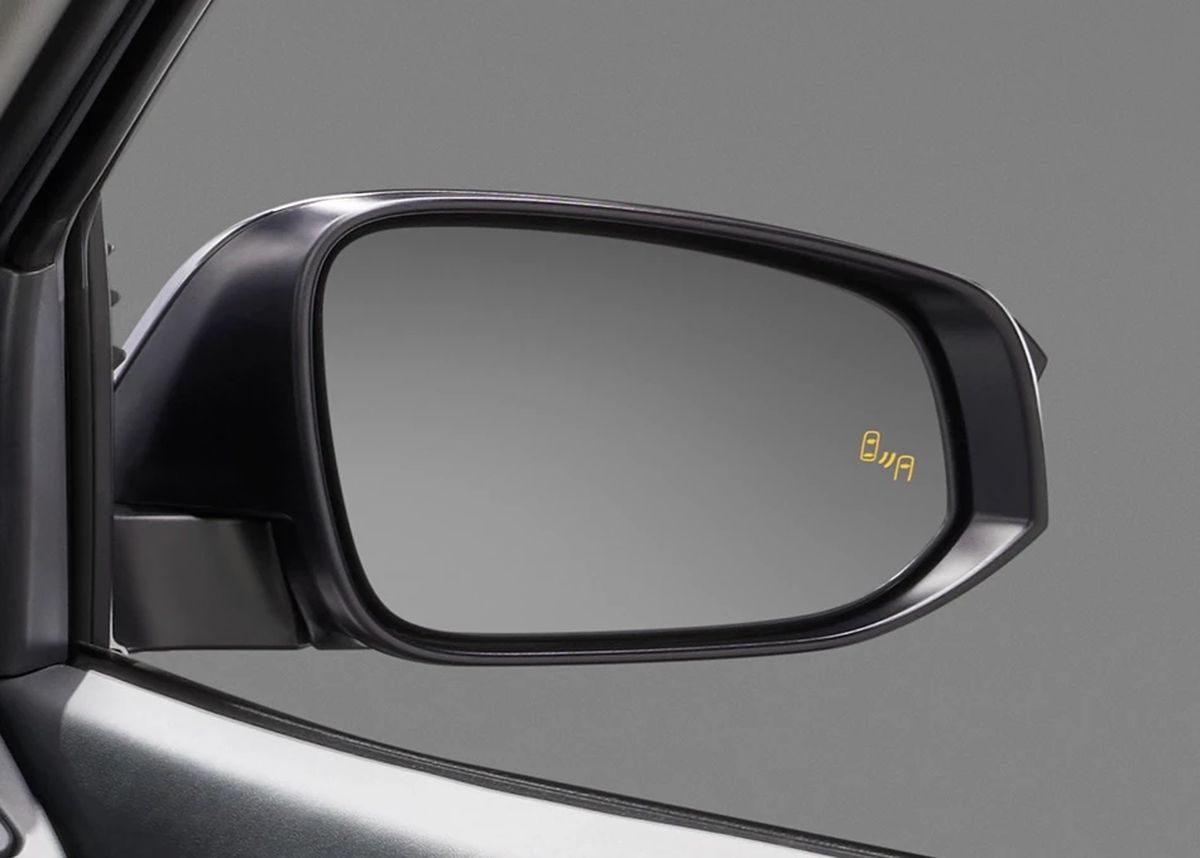
The car is equipped with a full range of advanced features to meet modern needs. The interior and exterior design has been completely redesigned to achieve a more refined style. In terms of safety, the latest preventive safety technology, “Toyota Safety Sense 3.0,” is installed as standard. Furthermore, the “Panoramic View Monitor” and “Multi-Terrain Monitor,” which support visibility, have improved maneuverability in tight spaces and safety when driving on rough roads.
We have also strengthened our ability to provide customized accessories to meet the diverse needs of our customers.
3. Preparing for an electrified future
The biggest highlight of this model change is the expansion of the electrified lineup. Based on Toyota’s “multi-pathway” approach, the company aims to realize mobility that “leaves no one behind.”
Upgraded chassis structure
Adopts an evolved version of the IMV ladder frame
Beneath the surface, the Hilux rides on an upgraded version of the previous generation IMV ladder-frame architecture, but still benefits from new electric power steering and an improved suspension set-up across the range, with independent coil spring front suspension and rigid axle leaf spring rear suspension .
According to Toyota Australia, two different tunes will be available.
- Tuned for heavy hauling and towing
- Tuning that emphasizes a comfortable ride for everyday use
Improved off-road performance
Off-road capability is further improved on the 4×4 version by using a part-time 4WD system with high/low range ratios, and by the standard fitment of a rear locking differential and optional Multi-Terrain Select system.
Grade lineup details
TRAVO 4 TREX: Off-road oriented grade
The TRAVO 4 TREX, which emphasizes off-road performance, features different equipment than the standard model.
- Front grill painted gloss black
- Black decal attached to front hood bonnet
- Front and rear fender moldings are made of unpainted black resin
- All-terrain tires as standard
- The headlight design is an LED reflector type
- Small bulb-type front turn signals
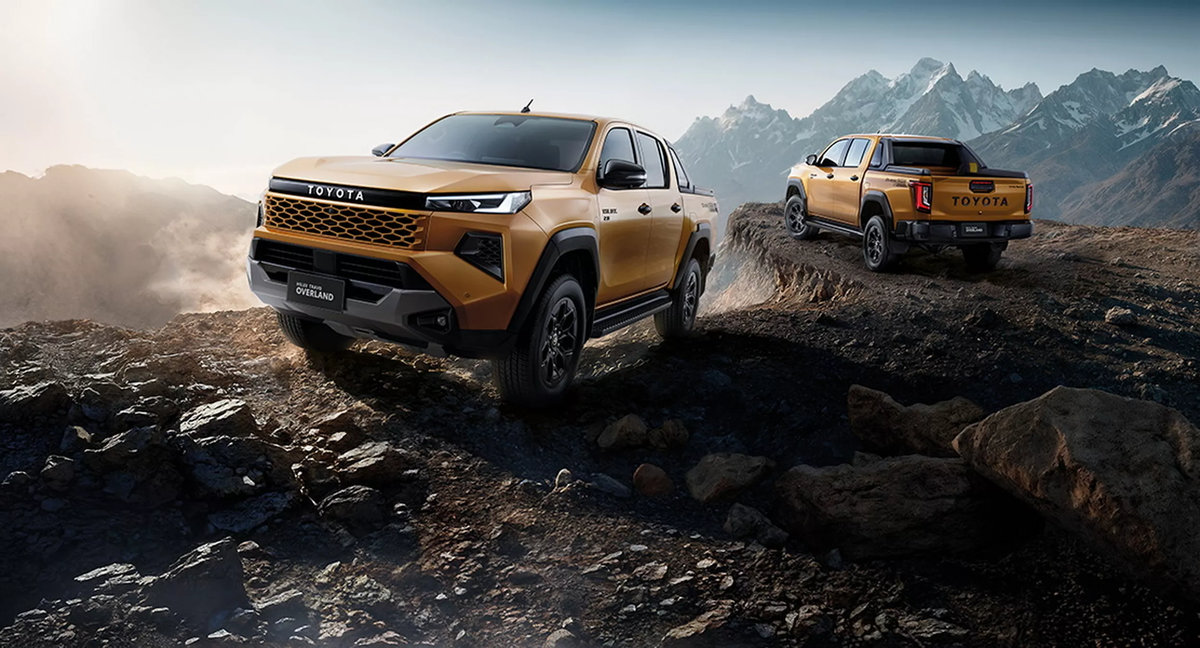
OVERLAND: The highest grade off-road model
The top-of-the-line OVERLAND model is an even more sophisticated off-road model.
- Front upper grille finished in gloss black
- The headlight design has been changed to all LED
- Front and rear fender moldings finished in gloss black
- Aluminum wheels also painted gloss black
- Equipped with all-terrain tires
- Price range: 1,102,000 to 1,366,000 baht (Thailand model)
The body size maintains the same long, flowing side view that is characteristic of the Hilux, and when sold in Japan it is expected to be registered as a “1” number.
Hilux Travo Prerunner & 4TREX series
- Double cab/smart cab available
- Equipped with a 2.8L diesel engine
- MT (manual) / AT (automatic) can be selected
- Smart and Premium grades available
- Price range: 1,029,000 – 1,090,000 baht
Powertrain lineup
Diesel engine model (Japanese model)
Toyota-Hilux-Travo-Overland-Thailand
The internal combustion engine models are available with the following engines:
- Total length : 5,320mm
- Overall width : 1,855mm
- Overall height : 1,800mm
- Wheelbase : 3,085mm
- Minimum ground clearance : 224mm
- Minimum turning radius : 6.3m
- 2.8L inline 4-cylinder diesel turbo engine
- Maximum output: 150kW (204PS) / 3,000-3,400rpm
- Maximum torque: 500Nm / 1,600 – 2,800rpm
- Drive system: rear-wheel drive
- Transmission: 6AT
The mild hybrid system achieves both fuel efficiency and acceleration performance.

Toyota-Hilux-Travo-e
Detailed specifications of the new BEV model
The battery electric vehicle (BEV) model “TRAVO-e” being added to the new Hilux is designed to enable zero-emission driving in urban areas without compromising the toughness and practicality that are the essence of the Hilux.
Key specifications of the battery EV (BEV) model “TRAVO-e” (Thailand-spec prototype)
Toyota-Hilux-Travo-e
- Total length : 5,320mm
- Overall width : 1,855mm
- Overall height : 1,800mm
- Wheelbase : 3,085mm
- Minimum ground clearance : 224mm
- Minimum turning radius : 6.3m
- Battery capacity : 59.2kWh (total power)
- Range :
- 240km (WLTP mode)
- Over 300km (NEDC mode, development target value)
- Front motor : 205Nm
- Rear motor : 269Nm
- Total system output : 196ps (144kW)
- Drive system : 4WD (dual motor)
Toyota-Hilux-Travo-e
External features of the BEV model
- Clean grill-less front end (blocked grille)
- Charging port on the left front fender
- Aerodynamic wheel design with fairings
- Unique front bumper design
- Sleek, modern styling
Toyota-Hilux-Travo-e
Technical features of the BEV model
Toyota-Hilux-Travo-e
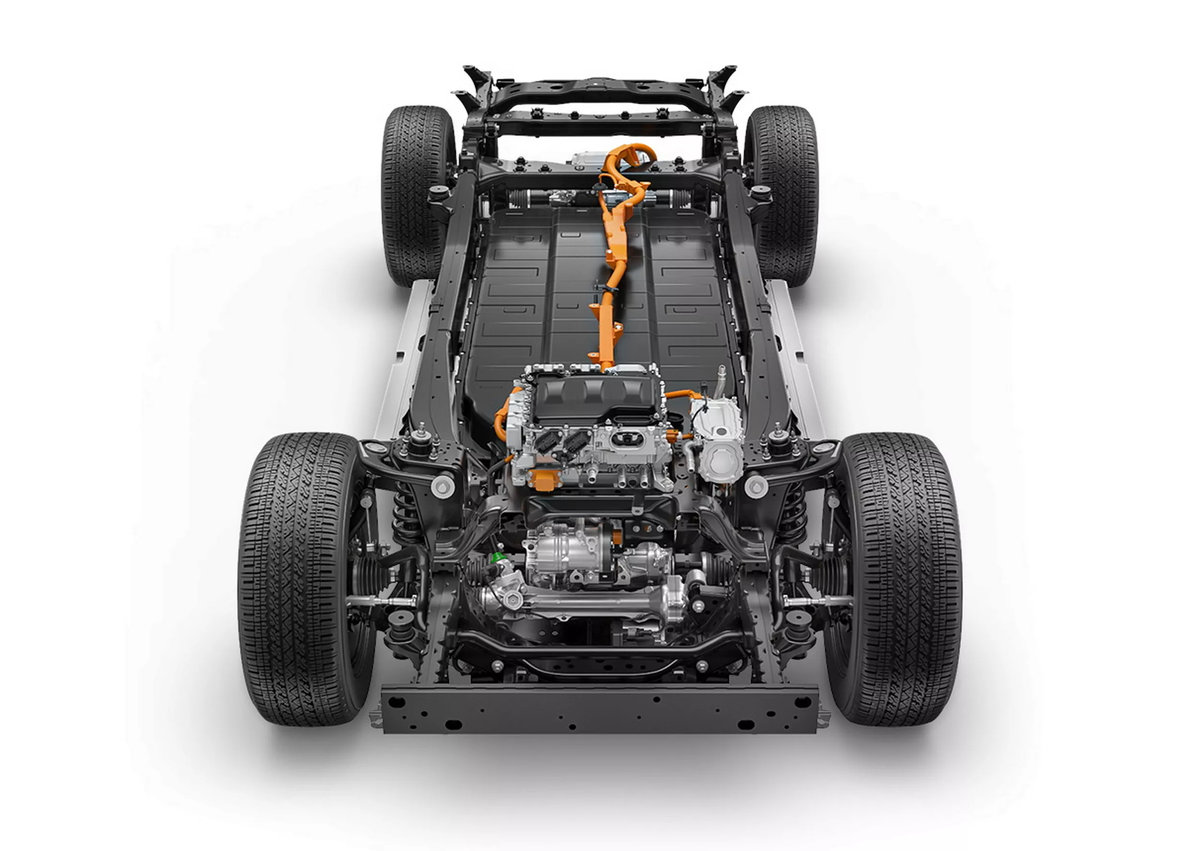
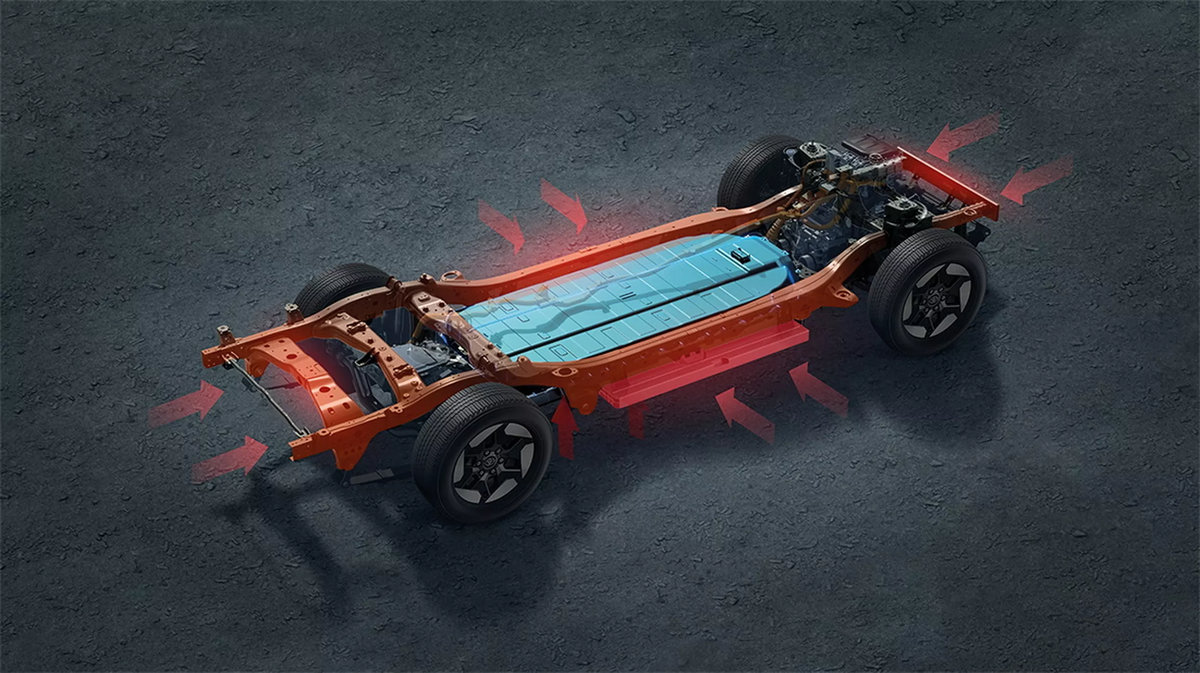
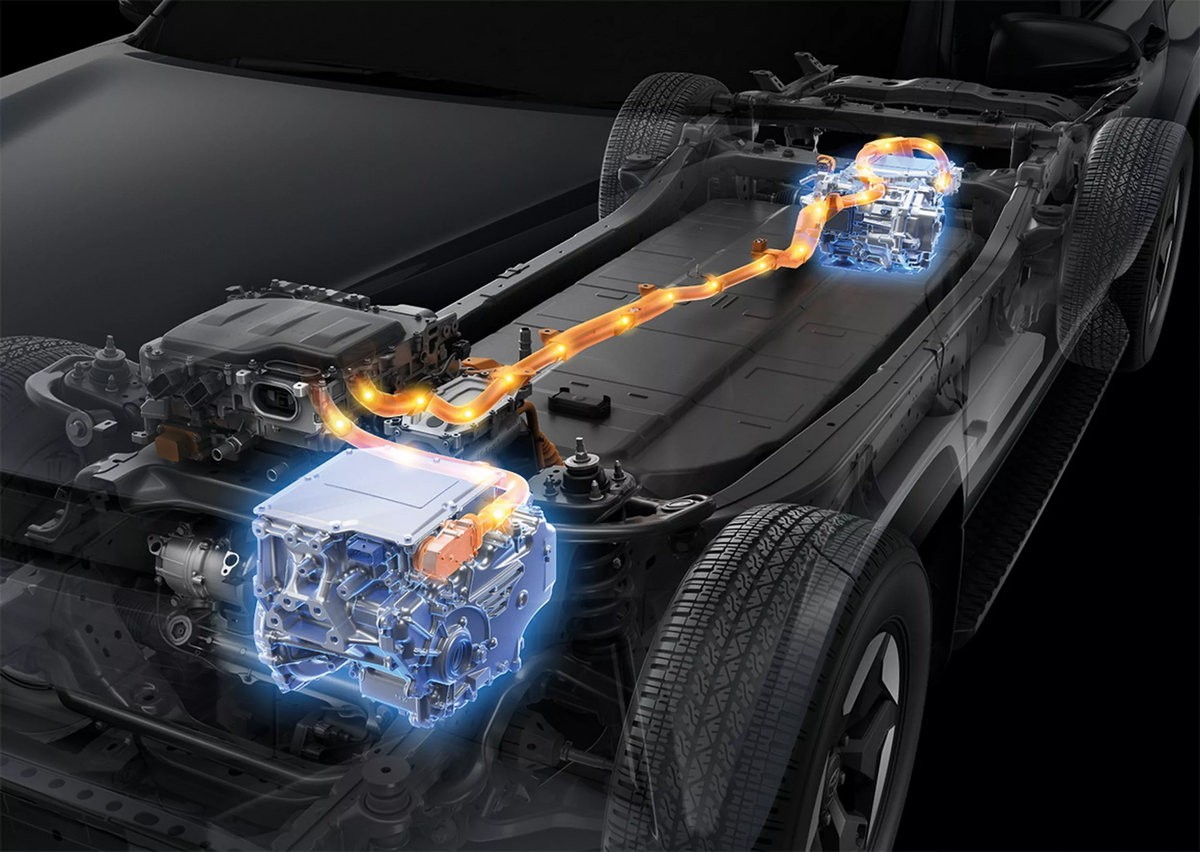
The lithium-ion battery pack is optimally positioned to fit under the floor, making maximum use of the frame width. The adoption of high-output eAxles (electric drive systems) at the front and rear achieves a maximum system output of 144kW (196ps). Furthermore, an advanced control system maintains the excellent off-road performance of the traditional body-on-frame structure.
Thanks to the high efficiency of the eAxle, a cruising range of over 300km is achieved even with a relatively compact battery capacity of 59.2kWh. It also ensures fording ability and ample towing and loading capacity, without sacrificing practicality as a commercial vehicle.
The range is not particularly long at just over 300km, but it is a practical setting intended for use in urban delivery operations and zero-emission areas.
A hydrogen-powered FCEV model is also under development.
In addition to the diesel and BEV models announced this time, Toyota is also developing a fuel cell electric vehicle (FCEV) model, which is scheduled to be released in Europe and Oceania from 2028 onwards, but the company says it is not yet at the stage where it can unveil the actual vehicle.
By offering a wider range of powertrain options, we can respond flexibly to the energy situation in each region.
The deep bond between Thailand and the Hilux
Speaking at the event, Toyota’s Chief Branding Officer Simon Humphries spoke about the deep relationship between the Hilux and Thailand that spans more than 60 years.
The Hilux, which was born in 1968, accelerated its globalization with the “IMV (Innovative International Multi-purpose Vehicle) Project” in 2004. Thailand played a central role in this project. Thailand was the first Asian country outside of Japan where Toyota produced automobiles, and many people now refer to the Hilux as the “national car of Thailand.”
Toyota vehicles produced in Thailand have exceeded 13 million in total and are used by people in 133 countries around the world.
Toughness forged in harsh environments around the world
The new Hilux has evolved by listening to the voices of a diverse range of customers around the world.
The ninth-generation model reflects feedback from users around the world, including the ruggedness that miners demand, the comfort that families desire, the fuel efficiency that fleet owners value, and the design and technology that young people expect.
Whether it’s farmers transporting produce, families taking long-distance trips, or construction workers building cities, the Hilux has built a strong reputation for its quality, durability, and reliability (QDR).
Wide range of grades available
In the Thai market, the new Hilux is available in multiple grades.
Hilux Travo Prerunner & 4TREX series

- Double cab/smart cab available
- Equipped with a 2.8L diesel engine
- MT (manual) / AT (automatic) can be selected
- Smart and Premium grades available
- Price range: 1,029,000 – 1,090,000 baht
Hilux Travo Overland Series

Specially equipped model for outdoor and adventure-oriented users
- Overland grade: from 1,102,000 baht
- Overland Plus grade: from 1,176,000 baht
- 4TREX Overland grade: from 1,292,000 baht
- 4TREX Overland Plus grade: from 1,366,000 baht
Global rollout schedule
The new Toyota Hilux will be launched around the world according to the following schedule:
- Europe and Australia : From December 2025
- Asian market : 2026 and onwards
- Japan : Mid-2026
Pricing and detailed specifications for each market will be announced closer to launch.
Release date and specifications in Japan
The new Hilux for the Japanese market is scheduled to go on sale in mid-2026 . A diesel model is expected to be introduced for the Japanese market, and future announcements are awaited regarding the domestic launch of the BEV model.
Toyota will launch a special website today and will update it with the latest information.
What is the multipathway strategy?
Toyota’s “Multi-Pathway” initiative is an effort to achieve carbon neutrality by providing a variety of options tailored to the energy circumstances and customer needs of each country and region, rather than relying on a single solution.
While BEVs are the optimal solution in urban areas with well-developed power grids, areas with limited power infrastructure require different powertrains such as internal combustion engines, hybrids, hydrogen fuel cells, etc. The new Hilux can be said to be a model that embodies this strategy, with its three powertrain options: diesel, BEV, and FCEV.
Comparison with competing models
In the pickup truck market, the new Hilux will compete against the following rival models:
- Ford Ranger : Recently undergoing a full model change
- Mitsubishi Triton : New model launched
- Nissan Navara : Sales remain strong
- Mazda BT-50 : Produced in Thailand, just like the Hilux
By adding the BEV model, the company aims to secure first-mover advantage in the electric pickup truck market.
Summary: A fusion of tradition and innovation
The ninth-generation Toyota Hilux has undergone its first full model change in 10 years, evolving into an innovative model suited to the electrification era while maintaining its traditional toughness and reliability.
The adoption of an electric parking brake is a major advancement that clearly differentiates the Hilux from the Hilux Champ and Land Cruiser FJ. Improved ease of use will appeal to a wider range of users.
The addition of BEV models heralds the dawn of a new era of electrification for commercial vehicles and pickup trucks. Furthermore, with the launch of FCEV models from 2028 onward, Toyota is steadily moving forward toward realizing a mobility society in which “no one is left behind.”
The car is scheduled to go on sale in Japan in mid-2026. It is expected to start with a diesel model, but it is expected that BEV and FCEV models will also be introduced in Japan in the future.
The Hilux boasts a cumulative sales record of over 28 million units in over 195 countries around the world, and with the ninth generation, this legend will write a new chapter.
Source :