
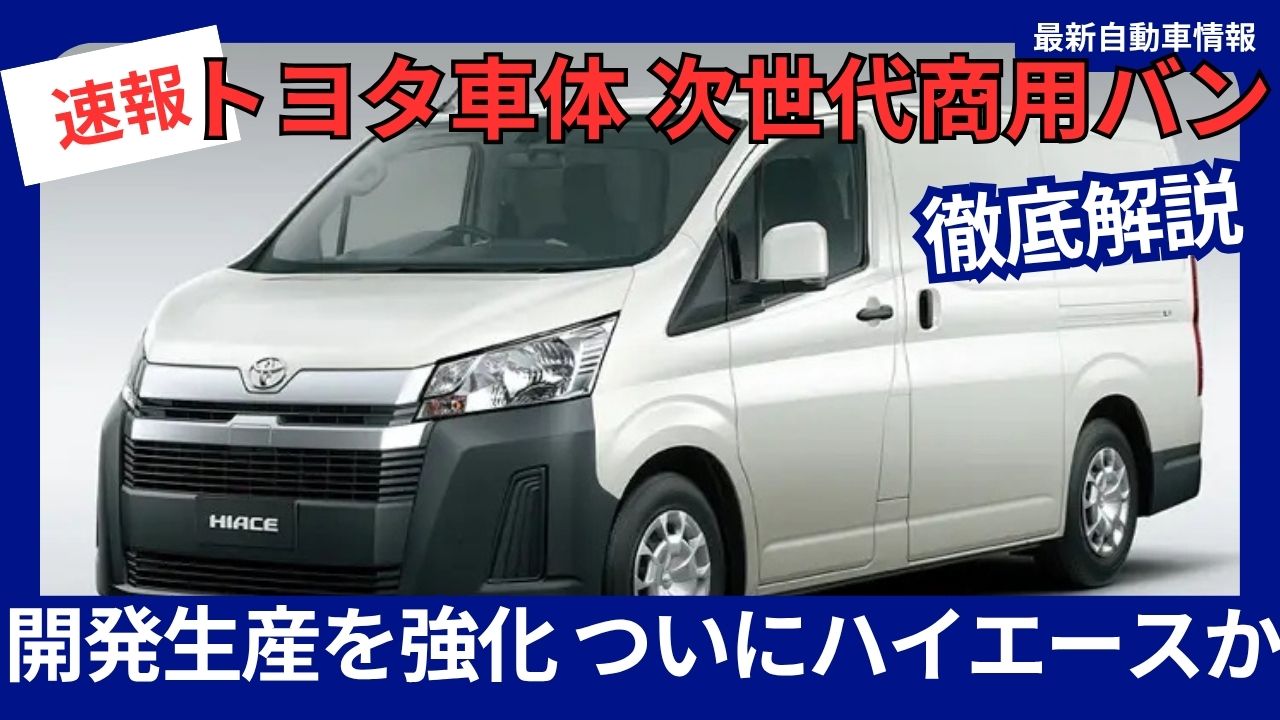
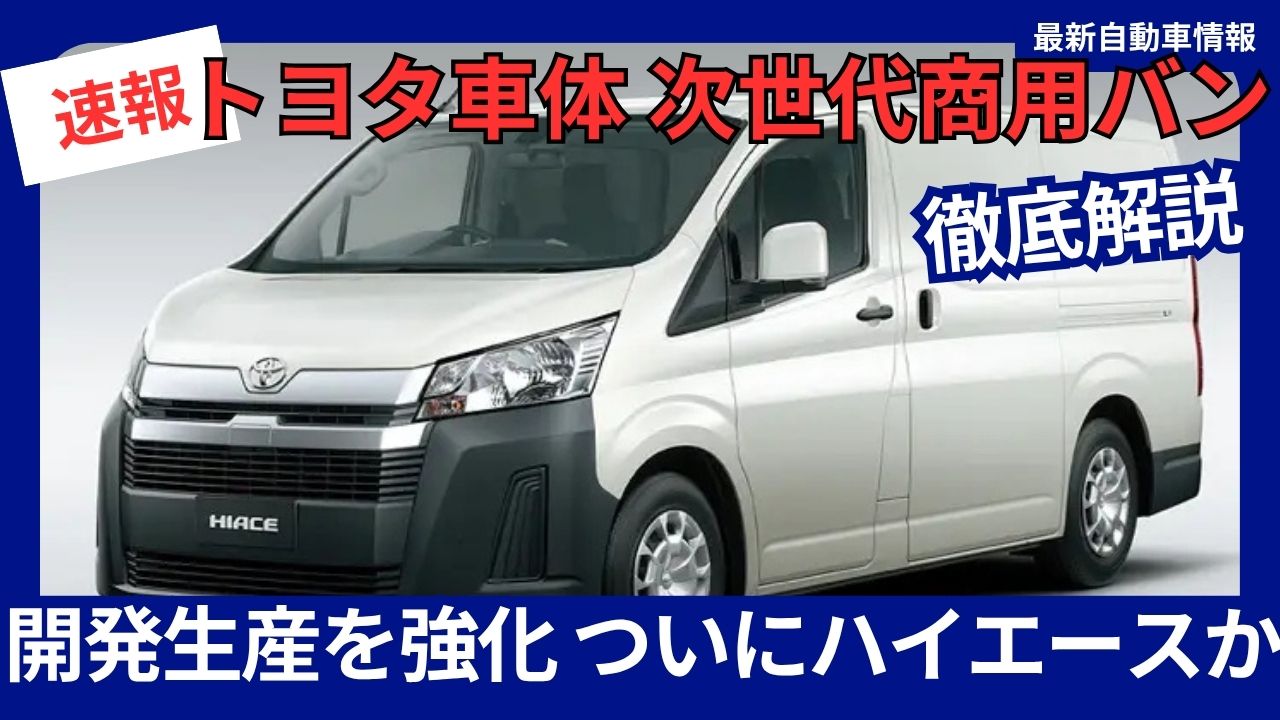
Toyota Auto Body, the Toyota Group’s commercial vehicle manufacturer, announced a major strategic shift on June 27, 2025, drawing attention from the automotive industry. The company has decided to transfer the luxury minivans “Alphard” and “Vellfire,” which have been produced at the Inabe Plant in Inabe City, Mie Prefecture, to Toyota Motor Corporation’s Tahara Plant by the end of 2027. This decision is not simply a change of production base; it sends a clear message that Toyota Auto Body is returning to its founding roots in the commercial vehicle business and will fully commit itself to the development and production of next-generation commercial vans that will support the future logistics business. Anticipation is building for the long-rumored next-generation model of the commercial vehicle “Hiace,” which will be produced by Toyota Auto Body.

The history and current role of the Inabe Factory
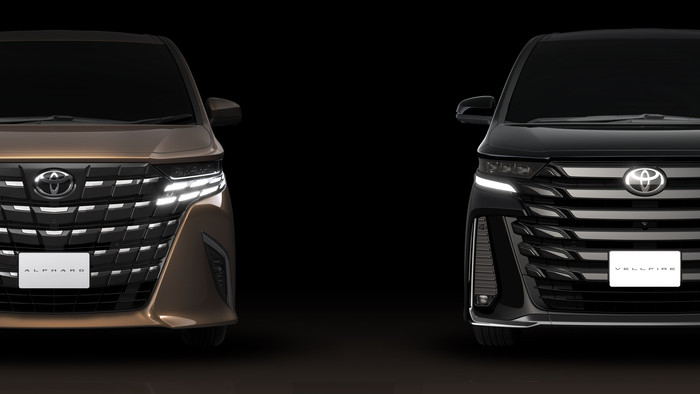
Alphard Vellfire
The Inabe Plant began operations in 1993 and has been the core of Toyota’s minivan production for over 30 years. Currently, the plant produces the luxury minivans Alphard and Vellfire, as well as the commercial van Hiace, and functions as an important production base for the Toyota Group. However, in response to rapid changes in the logistics industry and intensifying competition in the commercial vehicle market, Toyota Auto Body has decided to make a bold strategic shift.
The background to this decision was a combination of factors, including a surge in delivery demand due to the expansion of the e-commerce market, the need to improve logistics efficiency due to labor shortages, and responding to electrification due to strengthened environmental regulations.To respond to these market changes, Toyota Auto Body has adopted a strategy of specializing its Inabe Plant as a commercial vehicle plant and investing concentrated resources in the development and production of next-generation commercial vans.
Strategic significance of the Alphard and Vellfire production transfer
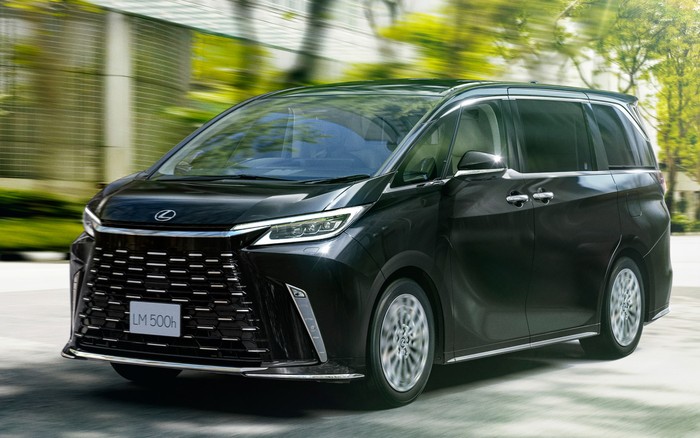
LEXUS LM
The transfer of the Alphard and Vellfire to the Tahara Plant has strategic significance beyond simply improving production efficiency. The production know-how of luxury minivans, which Toyota Auto Body has handled up until now, will be transferred to Toyota Motor Corporation itself, and a more integrated production system is expected to be built. In particular, the Tahara Plant produces luxury vehicles such as the Lexus LS and NX, as well as frame vehicles such as the Land Cruiser 250 and the 4Runner for overseas markets, and has high quality control capabilities and technical expertise.
The Tahara Plant currently produces the Lexus brand’s luxury minivan “LM,” and has accumulated experience and know-how in minivan manufacturing. For this reason, transferring production of the Alphard and Vellfire is a rational decision from a technical standpoint. Furthermore, the Tahara Plant is also considering introducing production technology for next-generation electric vehicles, and in the future, it may function as a production base for electrified versions of the Alphard and Vellfire.
The future of logistics illustrated by next-generation commercial vans

Current Hiace
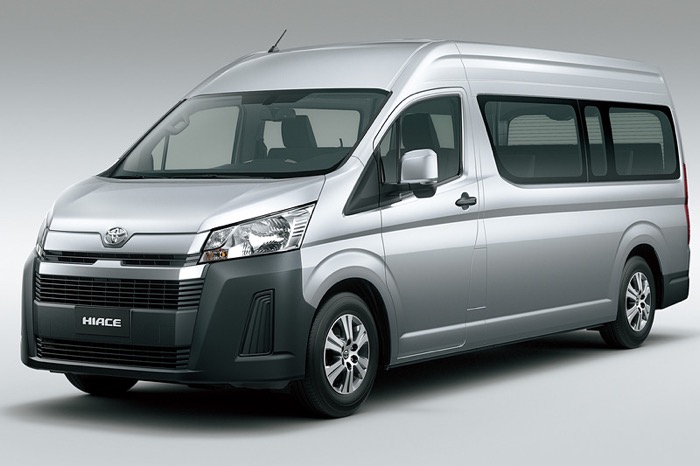
New Hiace overseas model
The next-generation commercial van being developed by Toyota Auto Body is expected to be an innovative product that will significantly change the conventional concept of commercial vehicles. This new commercial van will be built on a platform designed specifically for commercial vehicles that allows for flexible changes to passenger capacity, load capacity, and drivetrain type depending on the application, and will offer a variety of powertrain options. This will enable the development of a vehicle fleet that can meet a wide range of logistics needs, from small-lot deliveries in urban areas to long-distance transport.
What’s particularly noteworthy is that this next-generation commercial van has been developed with electrification technology at its core. It has been designed as a platform that integrates a variety of electrification technologies, from hybrids, plug-in hybrids, pure electric vehicles, and even fuel cell vehicles. This will enable logistics operators to choose the power source that is optimal for their delivery routes and operating conditions, offering significant benefits.
Factory innovation brought about by human-centered manufacturing
In converting the Inabe Plant into a dedicated commercial vehicle plant, Toyota Auto Body is placing particular emphasis on the concept of “human-centered manufacturing.” This is an approach that does not simply aim to improve production efficiency, but rather creates an environment where employees can work comfortably, thereby improving both quality and productivity. Specifically, plans include improving the work environment, reducing workloads through the use of digital technology, and supporting employee skill development.
This initiative is also significant as a measure to address the labor shortage problem facing Japan’s manufacturing industry. In particular, commercial vehicle manufacturing requires the ability to respond to complex specification changes and small-lot production, making it essential to secure and develop skilled technicians. Toyota Auto Body aims to secure and retain talented personnel by creating a comfortable working environment, while also focusing on developing the next generation of technicians.
Division of roles and collaboration within the Toyota Group
This production transfer also clarifies the division of roles within the Toyota Group. Since taking over the van business from Toyota in 2018, Toyota Auto Body has led the planning and development of models such as the Noah and Alphard. By leveraging this experience and specializing in the commercial vehicle field, Toyota Auto Body will be able to further enhance its expertise within the Group.
On the other hand, Toyota Motor Corporation will be able to build a more efficient production system by focusing on passenger car production. This division of roles will enable each company to concentrate management resources on their areas of expertise, improving the competitiveness of the entire group. In particular, in the development of electrification technology, combining Toyota Motor Corporation’s technological development capabilities with Toyota Auto Body’s commercial vehicle expertise is expected to lead to the development of more practical and competitive commercial vehicles.
Changes in the commercial vehicle market and the competitive environment
The current commercial vehicle market is in the midst of rapid change. The expansion of e-commerce has led to an explosive increase in demand for home delivery, and a shift from long-distance transportation using traditional large trucks to more detailed delivery networks using small and medium-sized commercial vehicles is underway. Furthermore, stricter environmental regulations have made the electrification of commercial vehicles an unavoidable challenge.
Furthermore, with the advancement of autonomous driving technology, the practical application of unmanned delivery vehicles is coming into view in the future. In order to respond to such technological innovations, it is essential to have the ability to adapt to new technologies in addition to traditional commercial vehicle manufacturing know-how. Toyota Auto Body’s decision to specialize its Inabe Plant as a commercial vehicle-only plant can be seen as a strategic investment to respond to these market changes.
Impact on the local economy and consideration for employment
The conversion of the Inabe Plant to a commercial vehicle-only production is expected to have a significant impact on the local economy. For Inabe City, Mie Prefecture, the Toyota Auto Body Inabe Plant is an important source of employment, and it will have a significant ripple effect on related subcontractors and the local economy. In order to minimize the impact on employment that comes with the specialization of the plant, Toyota Auto Body plans to implement initiatives such as reallocating employees and supporting them in acquiring new skills.
In particular, the development and production of next-generation commercial vans requires specialized knowledge in technical fields that are different from conventional ones, making continuous education and training of employees important. Toyota Auto Body aims to contribute to improving the technological capabilities of the region through human resource investment and create sustainable jobs.
Contributing to a sustainable mobility society
Toyota Auto Body’s strategic shift is also an important initiative toward realizing a sustainable mobility society. The development of next-generation commercial vans is expected to make a significant contribution to reducing the environmental impact of the logistics industry. In particular, the spread of electric commercial vehicles in urban deliveries is expected to improve air pollution and reduce noise.
Furthermore, by building an efficient logistics system, it will be possible to simultaneously optimize deliveries and reduce environmental impact.Next-generation commercial vans will become the foundation for providing comprehensive logistics solutions that go beyond simple means of transportation, with delivery route optimization utilizing IoT and AI technologies, real-time package tracking, and predictive maintenance.
Commitment to technological innovation and quality improvement
As the Inabe Plant transitions to a dedicated commercial vehicle production facility, Toyota Auto Body is also actively introducing the latest production technologies. The plant is transforming into a next-generation plant that embodies the concept of Industry 4.0, including optimizing production processes with digital twin technology, introducing a quality control system that utilizes AI technology, and building an efficient production line through collaboration between robotics and human workers.
These technological innovations will simultaneously improve the quality and production efficiency of commercial vehicles, and build a production system that can more accurately meet customer needs. For commercial vehicles in particular, it is important to be able to respond to small-lot production and make detailed specification changes according to the application, and building a flexible and efficient production system is a source of competitiveness.
Strengthening international competitiveness and overseas expansion
The development of the next-generation commercial van will also contribute to strengthening Toyota Auto Body’s international competitiveness. Due to increasing global logistics demand and stricter environmental regulations, demand for high-performance, environmentally friendly commercial vehicles is expanding on a global scale. The next-generation commercial van developed by Toyota Auto Body is competitive enough to meet the needs of these global markets, and the company is also considering expanding overseas in the future.
In the Asia-Pacific region in particular, the rapid spread of e-commerce is driving a surge in demand for commercial vehicles, and expectations are rising for Japanese commercial vehicle technology. Toyota Auto Body’s next-generation commercial van is expected to be an important tool for entering these overseas markets.
Future prospects and challenges
Toyota Auto Body’s strategic shift marks an important turning point in the Japanese automobile industry. The shift from efficiency through traditional mass production to increased added value through specialization is attracting attention as a new growth strategy in the mature automobile market. However, this strategic shift also presents many challenges.
It is necessary to take a long-term approach, such as increasing investment in technological development, continuous efforts to develop human resources, and promptly responding to changes in market needs. In addition, there is a possibility that competitors will also make similar strategic shifts, so maintaining differentiating factors and securing a competitive advantage will be important issues.
Toyota Auto Body aims to overcome these challenges and establish itself as a leader in the commercial vehicle industry by integrating the commercial vehicle manufacturing know-how it has cultivated since its founding with the Toyota Group’s technological capabilities and its ability to respond to new market needs. The completion of the transfer of Alphard and Vellfire production at the end of 2027 marks the first step in this new strategy, and subsequent developments will undoubtedly attract attention from the entire industry.
Reference: Toyota Auto Body