

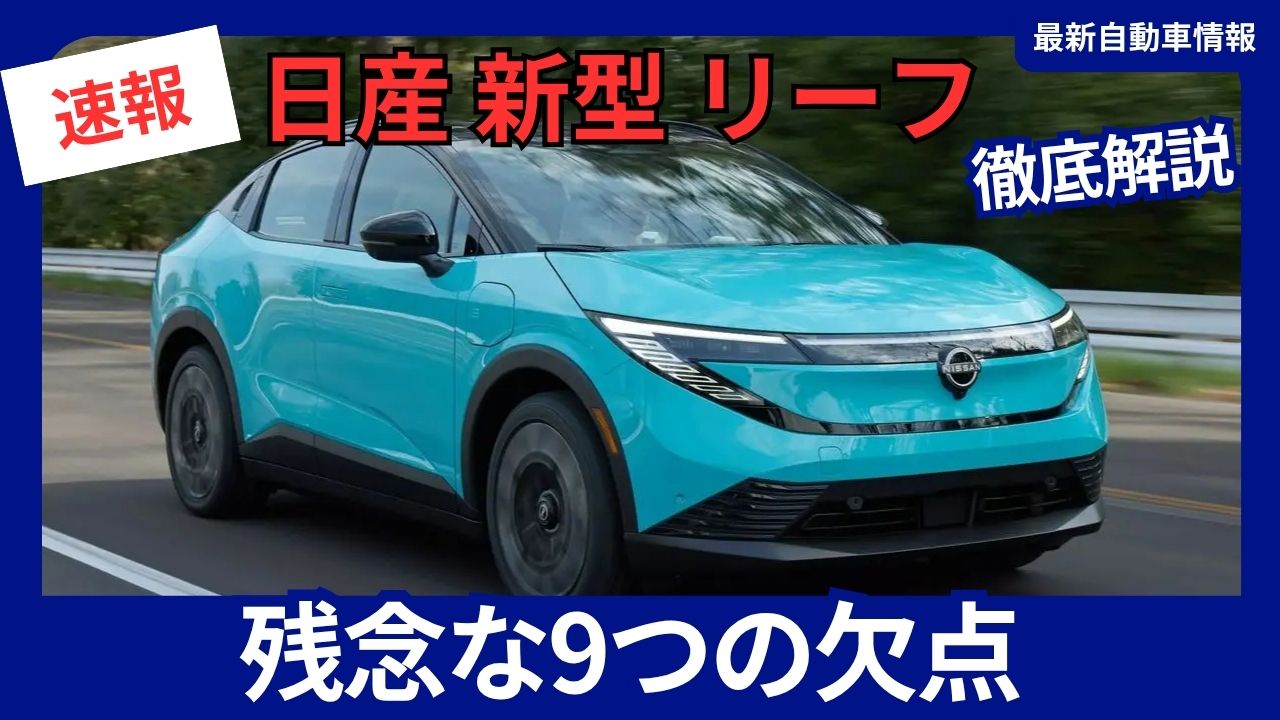
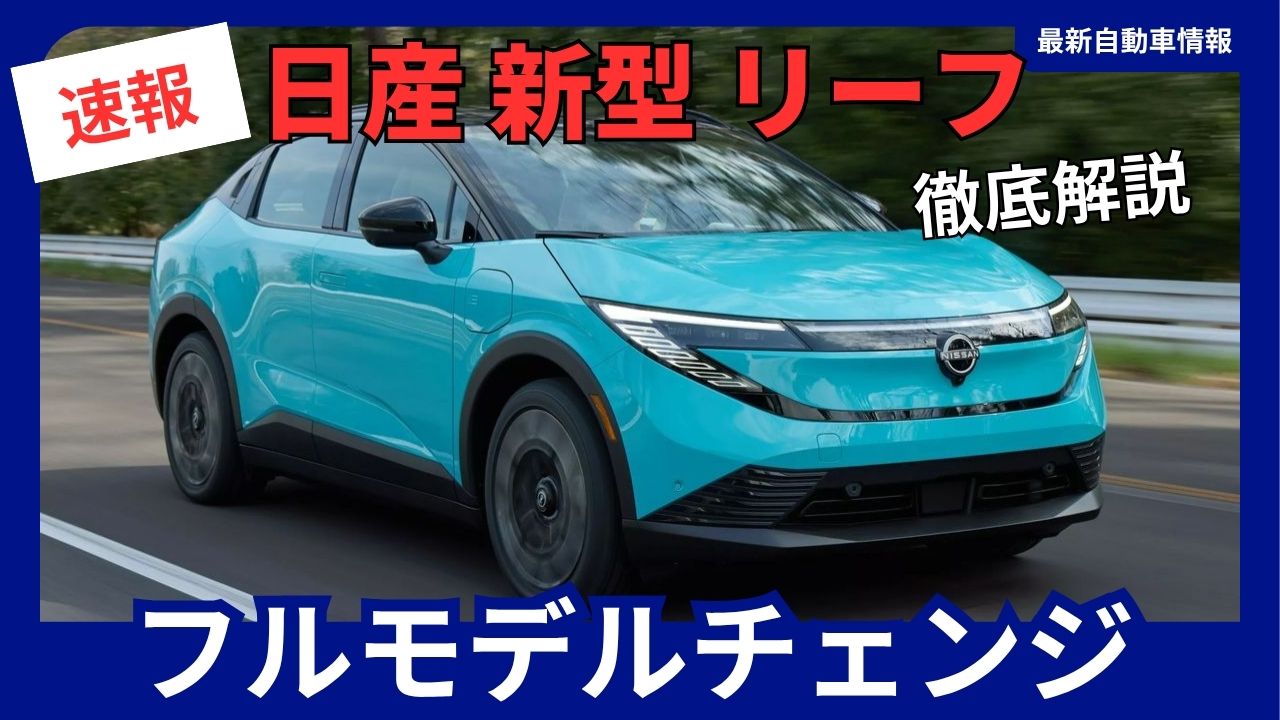
The new Nissan Leaf will undergo a full model change in October 2025. Reborn as a pioneer of EVs for the first time in 14 years, this model boasts a range of 702km and a dramatic transformation into an SUV. However, test drive users and experts have pointed out some “unfortunate flaws.”
In this article, we will thoroughly explain not only the benefits but also the drawbacks that actual owners are concerned about, for those who are considering purchasing the new Leaf.
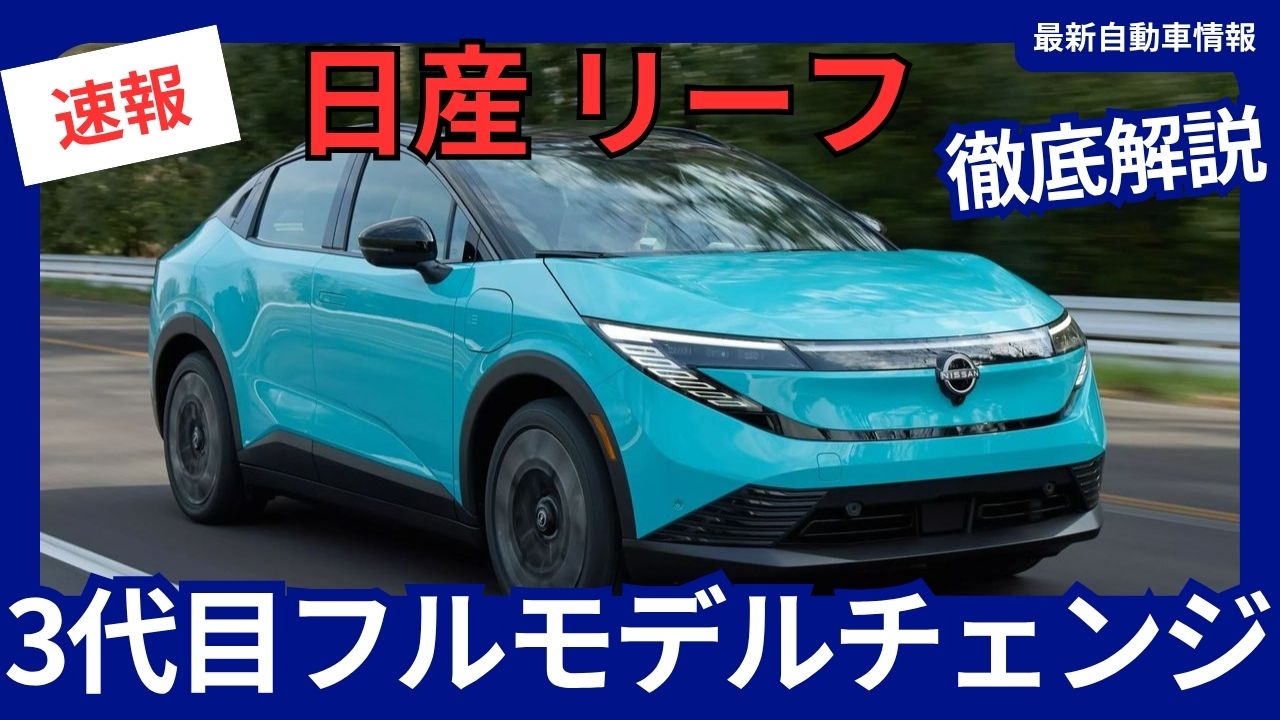
What is the new Leaf? A review of its basic specifications
First, let’s review the basic information about the new Leaf.
Body size and price range
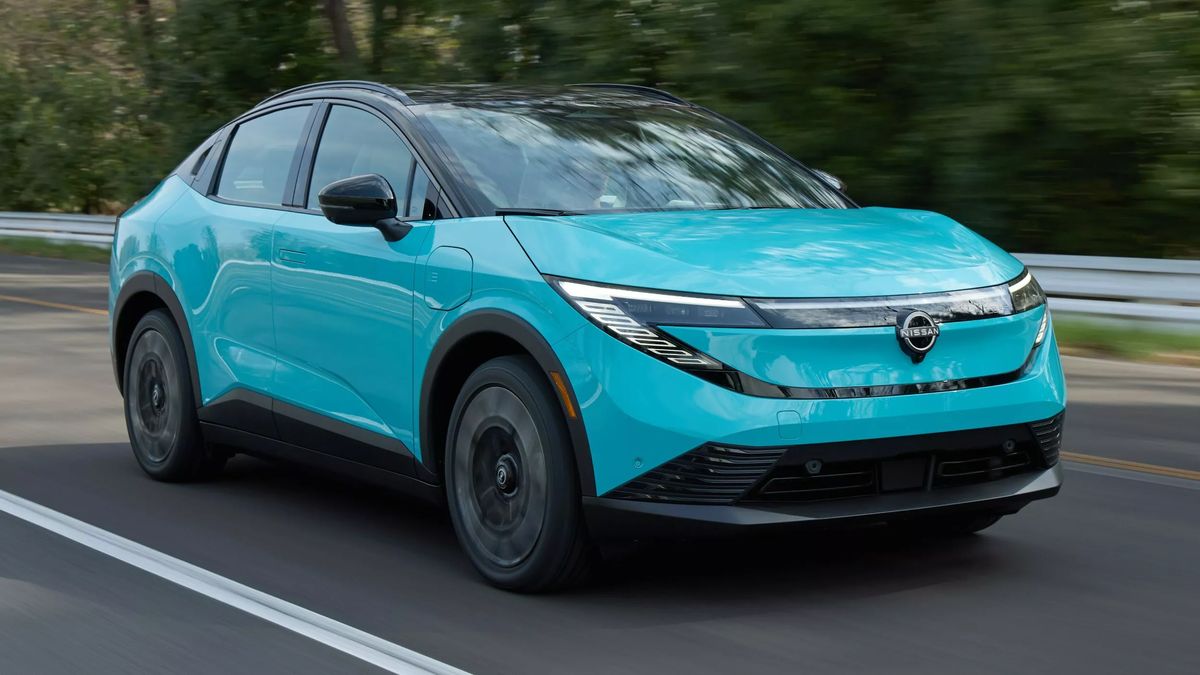
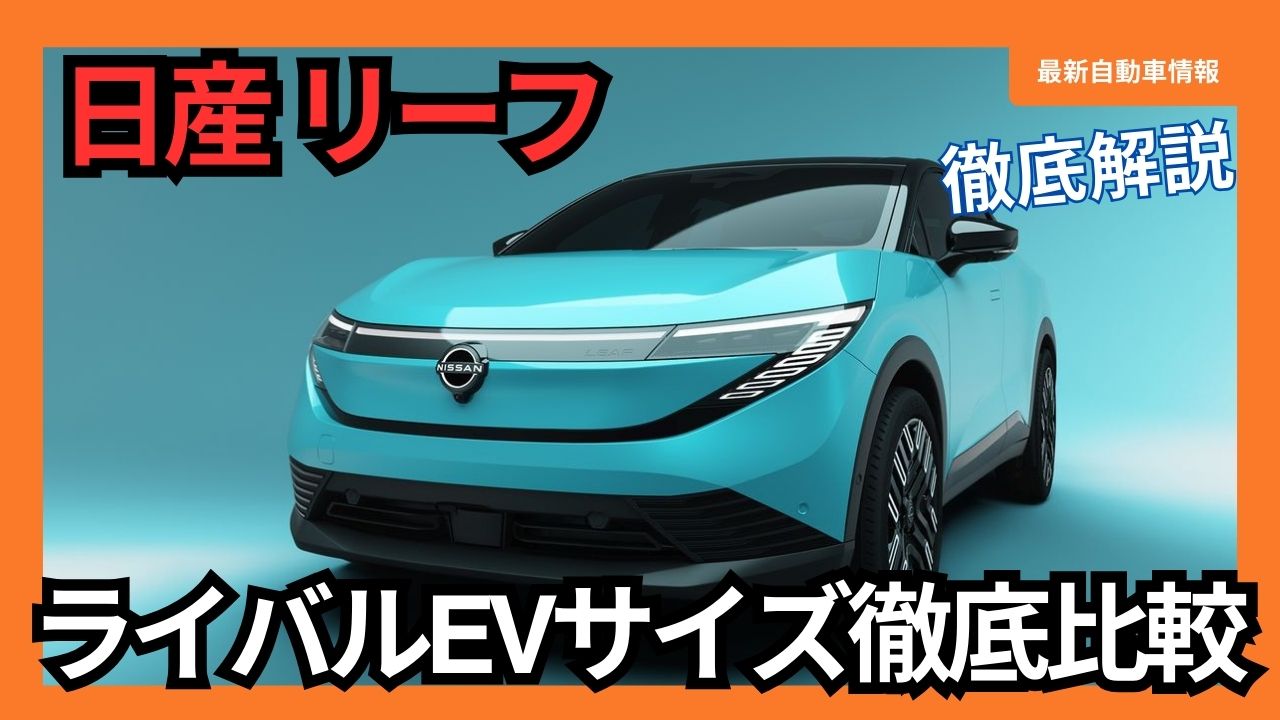
2026 Nissan Leaf
- Overall length : 4,360mm (-120mm compared to previous model)
- Overall width : 1,810mm
- Height : 1,550-1,565mm
- Price : 5,188,700 yen to 6,513,100 yen (including AUTECH)
- Battery : 2 types: 55kWh (B5) and 78kWh (B7)
Powertrain and specifications
- B5 grade : 177ps/35.2kgm, cruising range 490km (WLTC)
- B7 grade : 218ps/36.2kgm, maximum cruising range 702km (WLTC)
- Charging performance : 150kW fast charging in 15 minutes → Approximately 250-300km of travel

9 unfortunate flaws of the new Leaf
Disadvantage 1: No seat ventilation function
2026 Nissan Leaf
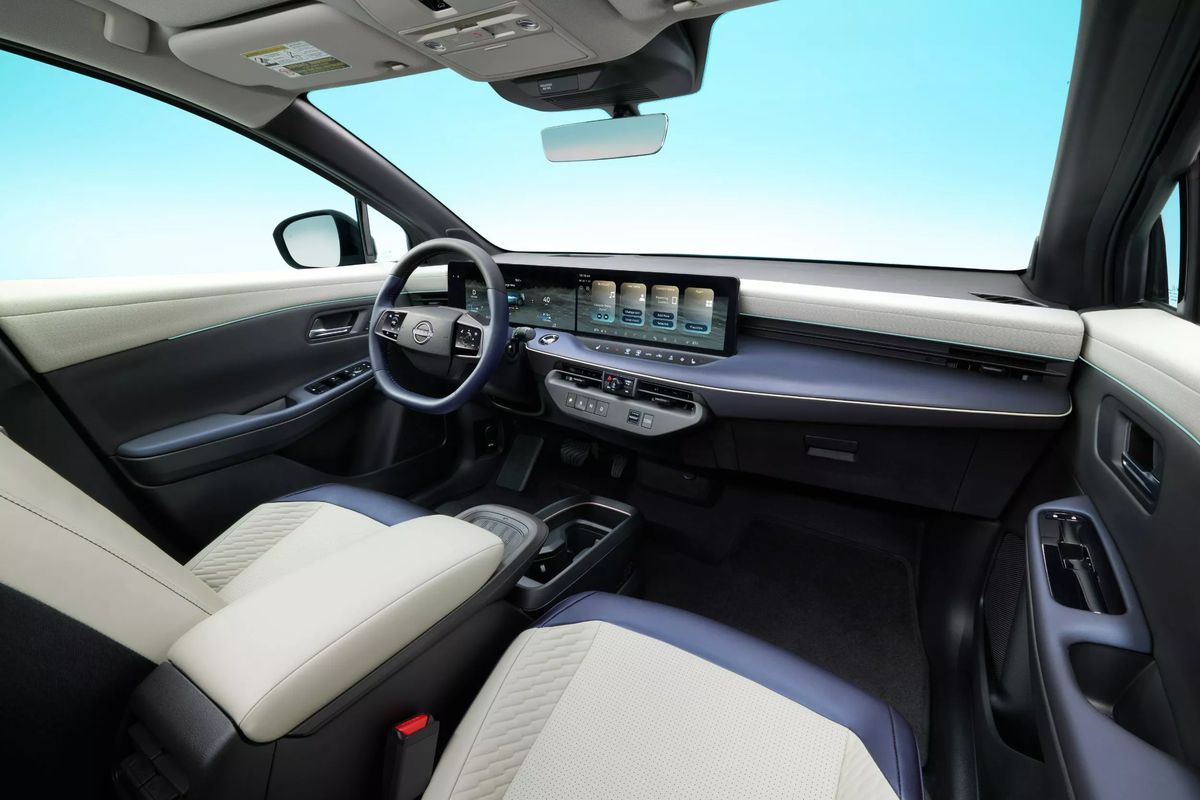
Even the top-of-the-line “B7 G” (5,999,400 yen) does not have seat ventilation (air-circulating function for the seat) . Seat heaters are standard equipment on all grades, but considering Japan’s hot and humid summers, the lack of seat ventilation at this price range is a major drawback.
In recent years, seat ventilation has become standard equipment in Japanese cars in the 4 million yen range. It is also equipped in rival cars like the Tesla Model 3 and Hyundai IONIQ 5, so it feels inferior in terms of equipment.
Disadvantage 2: Google Maps navigation does not display highways on the panel
2026 Nissan Leaf
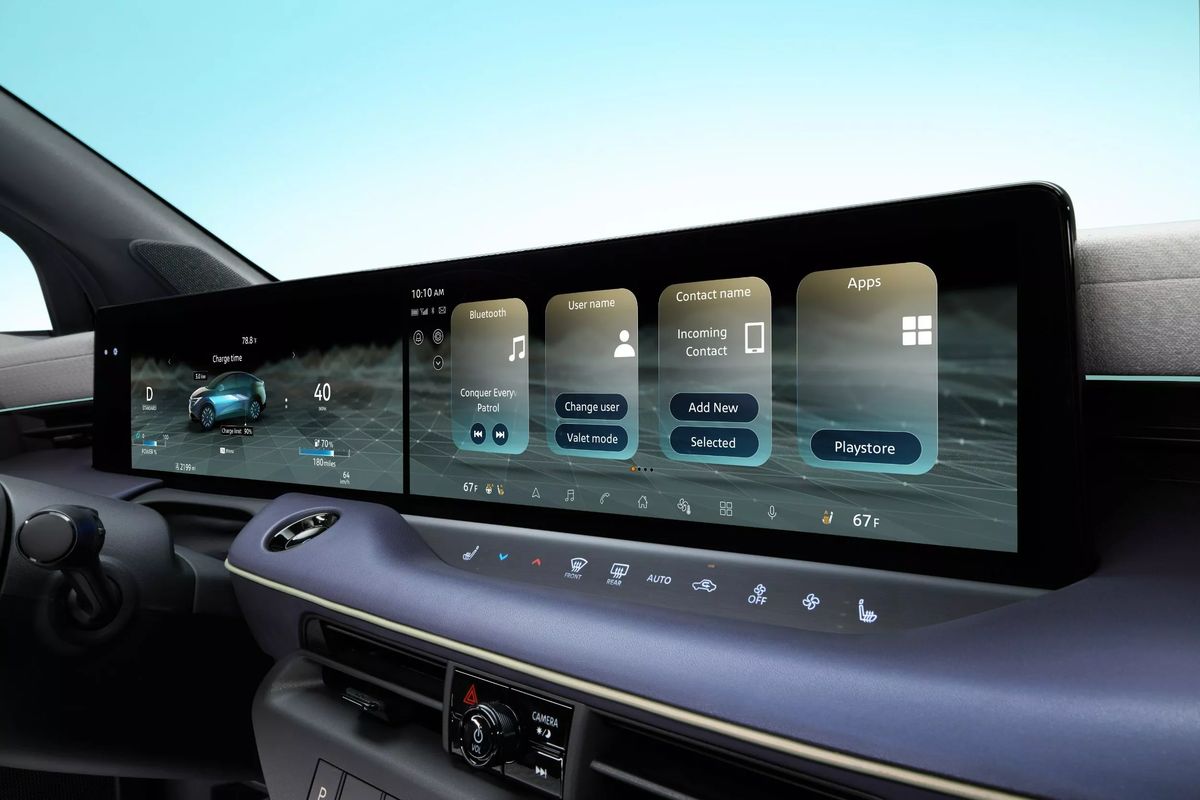
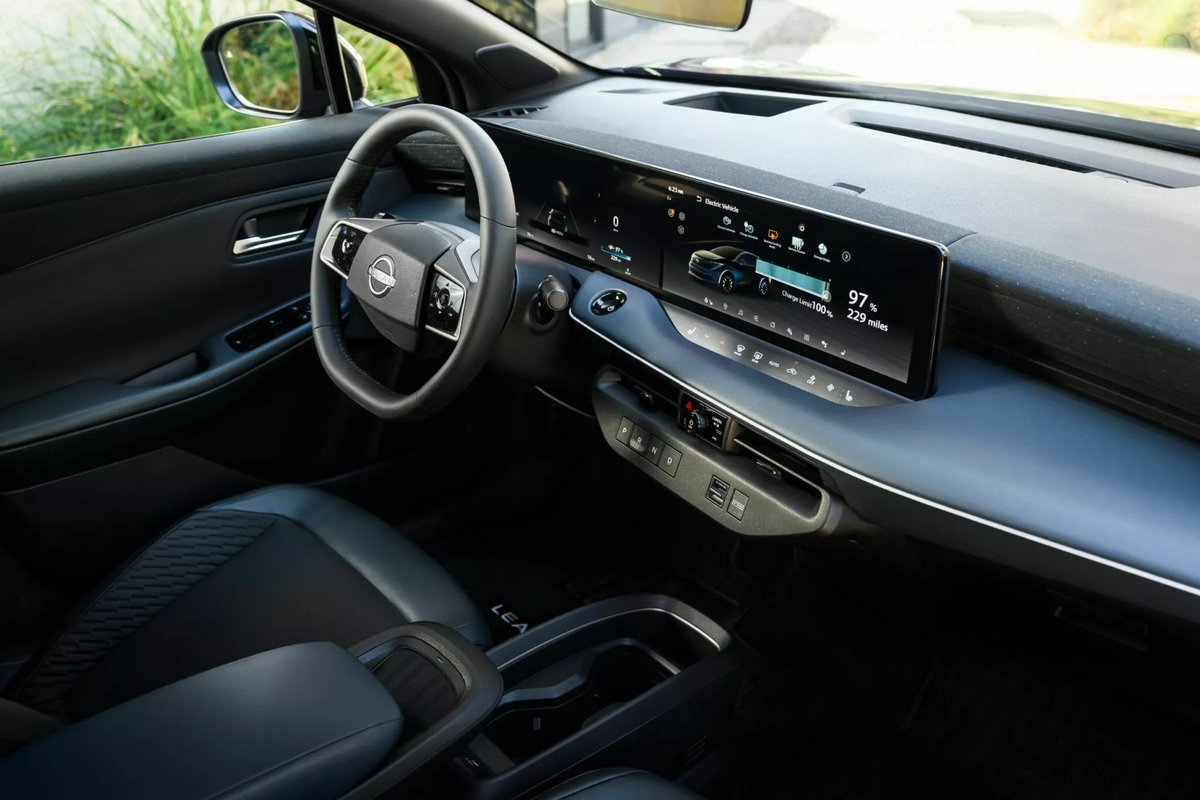
The new Leaf features a large 14.3-inch dual display and comes standard with Google Maps. However, Google Maps does not display panel displays (3D branch guidance) for highway junctions or service areas .
This is a problem that has also been pointed out for other Japanese cars that use Google Maps, such as the new Honda Accord. When driving on Japan’s complex highway network, many drivers feel uneasy on roads they are unfamiliar with without the detailed branching guidance found in conventional Japanese navigation systems.
Solution : There is a way to use third-party apps (Yahoo! Car Navigation, Google Maps app, etc.) with Apple CarPlay or Android Auto, but it is preferable to use the standard navigation system.
Disadvantage 3: Only CHAdeMO charging standard (Japanese specification)
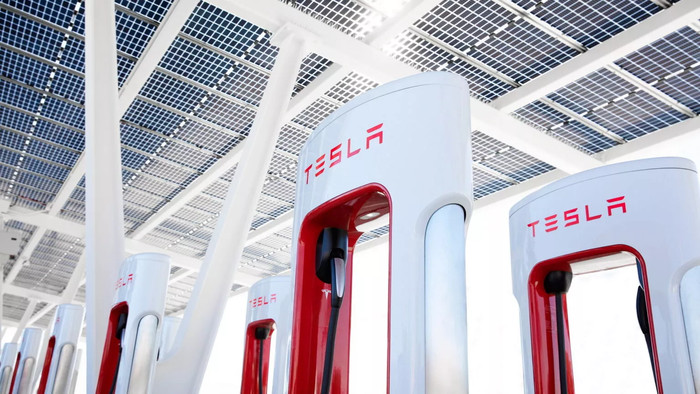
The North American model is compatible with NACS (Tesla’s Supercharger standard) , but the Japanese model is only compatible with the CHAdeMO standard as before.
The problems with this are:
- Aging chargers : Some CHAdeMO chargers in Japan have been left with broken LCD screens or have reduced output.
- Few chargers support 150kW : The new Leaf supports 150kW fast charging, but there are only a limited number of chargers that can actually output 150kW.
- Charging times may be longer : With a charger with an output of around 50kW, a 30-minute charge may only restore around 80-100km of driving range.
Meanwhile, Tesla’s Supercharger network is expanding nationwide, allowing for a stable charging experience. Many people in Japan are calling for NACS compatibility.
Disadvantage 4: No 4WD (four-wheel drive) option
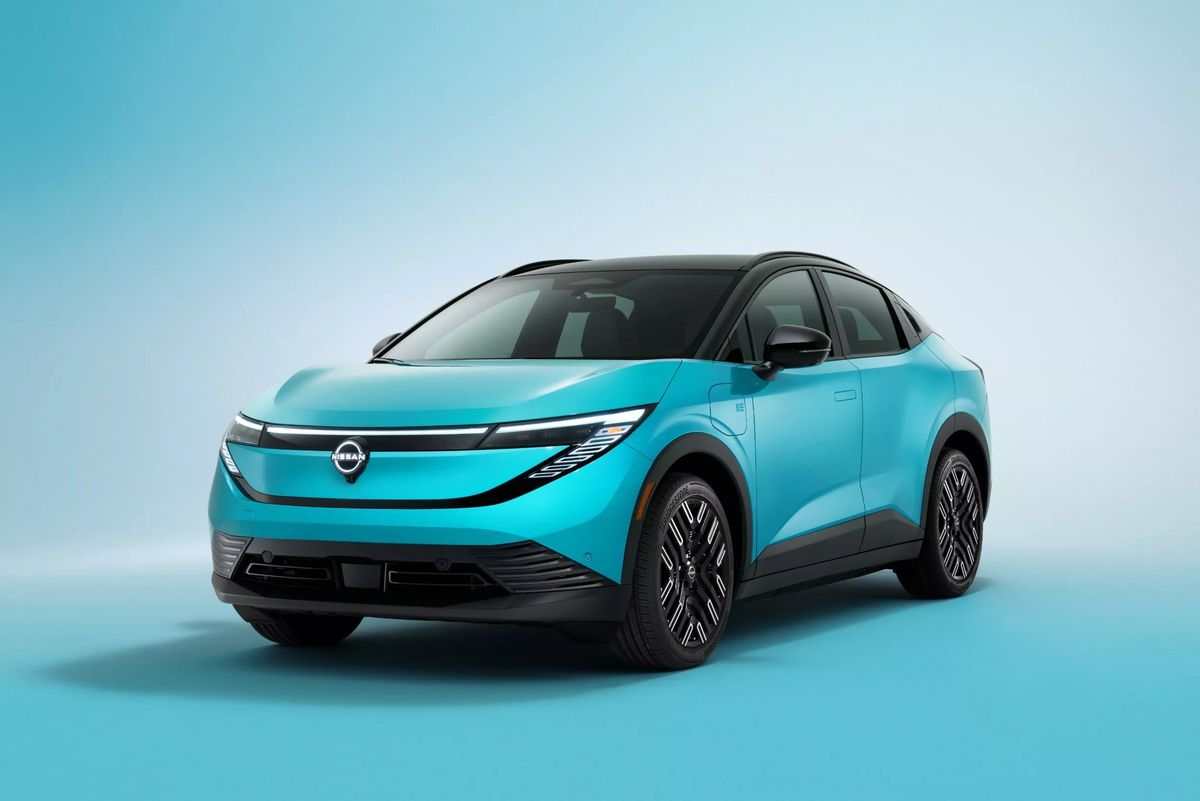
2026 Nissan Leaf
The new Leaf is only available as a front-wheel drive (FF) model with a front motor , and there is no four-wheel drive model available.
This puts you at a disadvantage in situations like:
- Driving stability on snowy and icy roads : Driving on mountain passes and in snowy areas in winter
- Traction at launch : When transmitting the 218 horsepower to the road, front-wheel drive tends to lose driving force.
- Stability at high speeds : Less stable than 4WD when changing lanes at high speeds
Competitors like the Tesla Model 3 and Toyota bZ4X also have 4WD models, so the range of options is less.
Disadvantage 5: One-pedal drive does not support complete stops
2026 Nissan Leaf
The new Leaf has a one-pedal drive function called “e-Pedal Step,” but it does not support coming to a complete stop . Once you release the accelerator and slow down to about 8-10 km/h, the car will switch to coasting.
Competing EVs from companies like Tesla and BYD are mainly models that can come to a complete stop when the accelerator is released and then maintain the stop, so there is a difference in convenience.
Good news : The new Leaf is equipped with a new feature called “Intelligent Distance Control,” which helps the car follow the vehicle ahead and bring it to a complete stop even when cruise control is not in use. This feature somewhat compensates for the disadvantage of not being able to use one pedal.
Disadvantage 6: The shorter overall length compared to the previous model affects livability
2026 Nissan Leaf
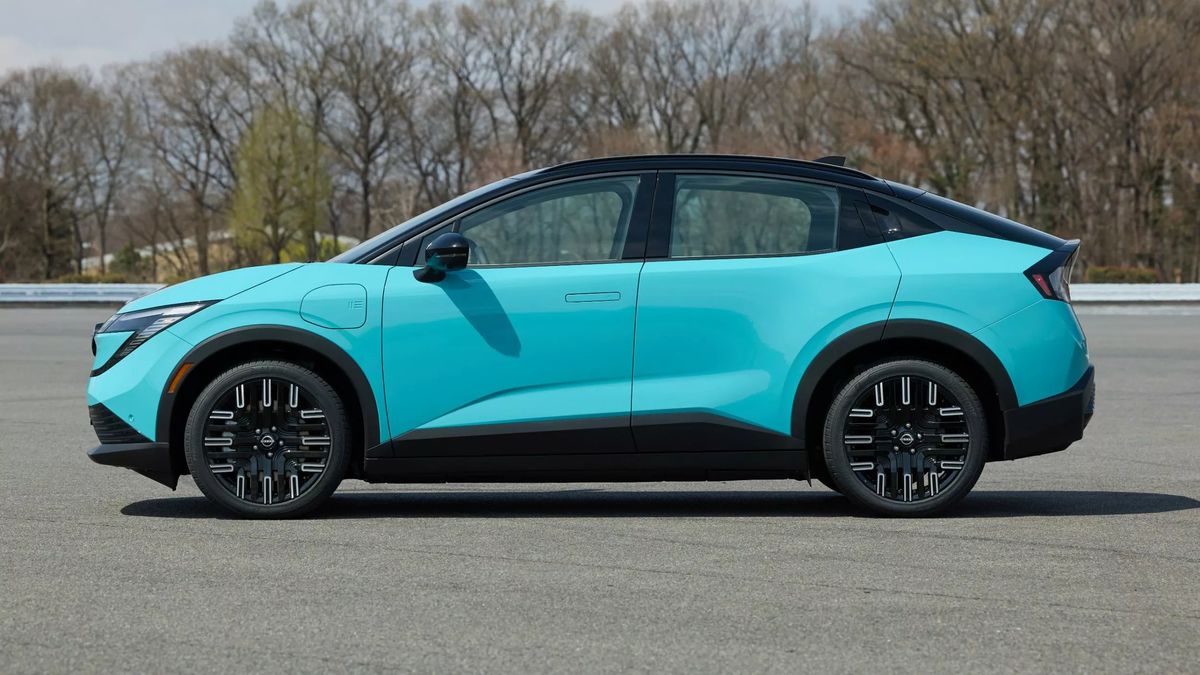
The new Leaf is 120mm shorter than its predecessor . This is designed to improve design and aerodynamics, but it does raise some concerns:
- Rear seat legroom : The wheelbase has also been shortened by 10mm, which may have resulted in a sacrifice of rear seat legroom.
- Luggage space : The trunk capacity is standard at 420L, but due to the fastback style, it is less able to carry tall luggage than the previous hatchback style.
To determine the actual livability, we recommend that you test drive or check the car to see how comfortable the rear seats are.
Disadvantage 7: ProPilot 2.0 is optional
2026 Nissan Leaf
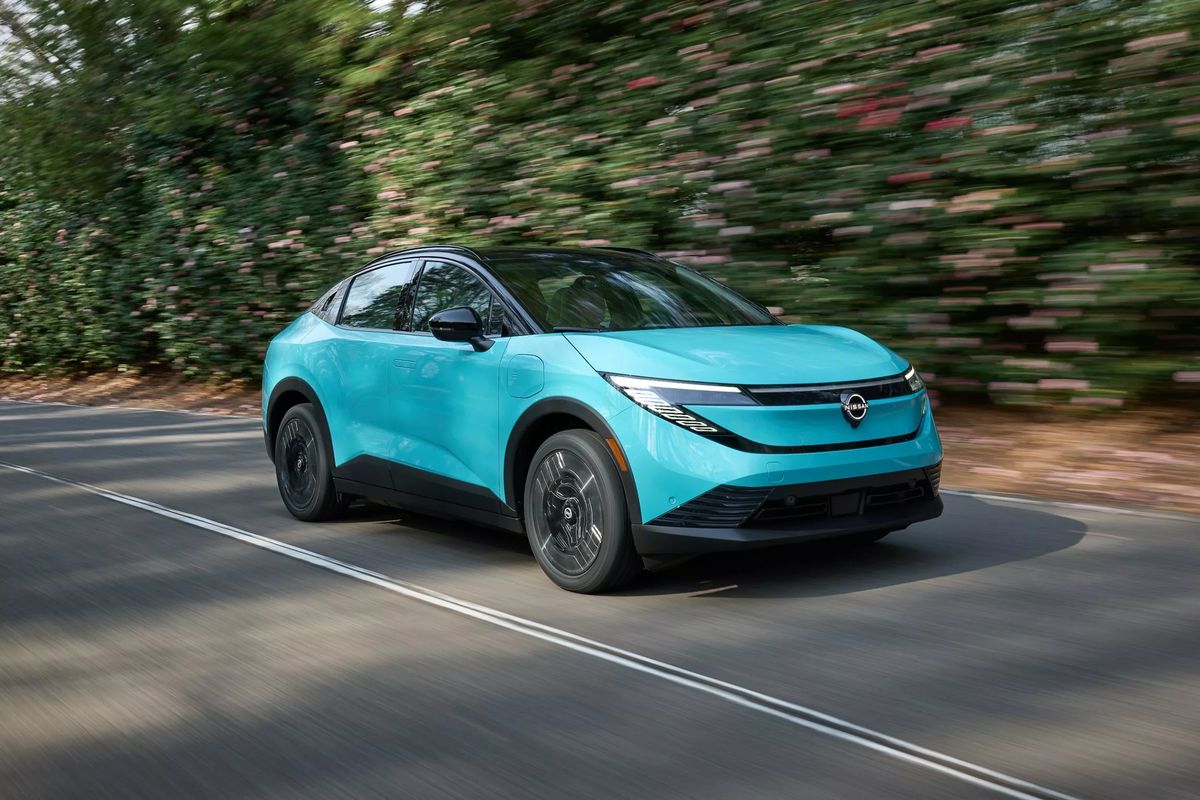
One of the car’s greatest attractions is ProPilot 2.0, which is available as an option on the top-of-the-line grade, the B7 G.
Key features of ProPilot 2.0 include:
- Supports hands-free driving on highways (all speeds)
- Automatically follows up to the speed limit + 10km/h
- Eyes-on (eye gaze monitoring) system
This advanced driver assistance system has performance comparable to Tesla’s Autopilot, but since the option price has not been made public, the total price could well exceed 6 million yen.
Please note : Vehicles equipped with ProPilot 2.0 will be 15mm taller (1,565mm) and will not fit within the low height limit (1,550mm) of some multi-storey car parks.
Flaw 8: Design preferences are divided (lack of differentiation from Aria)
NISSAN ARIYA 2026
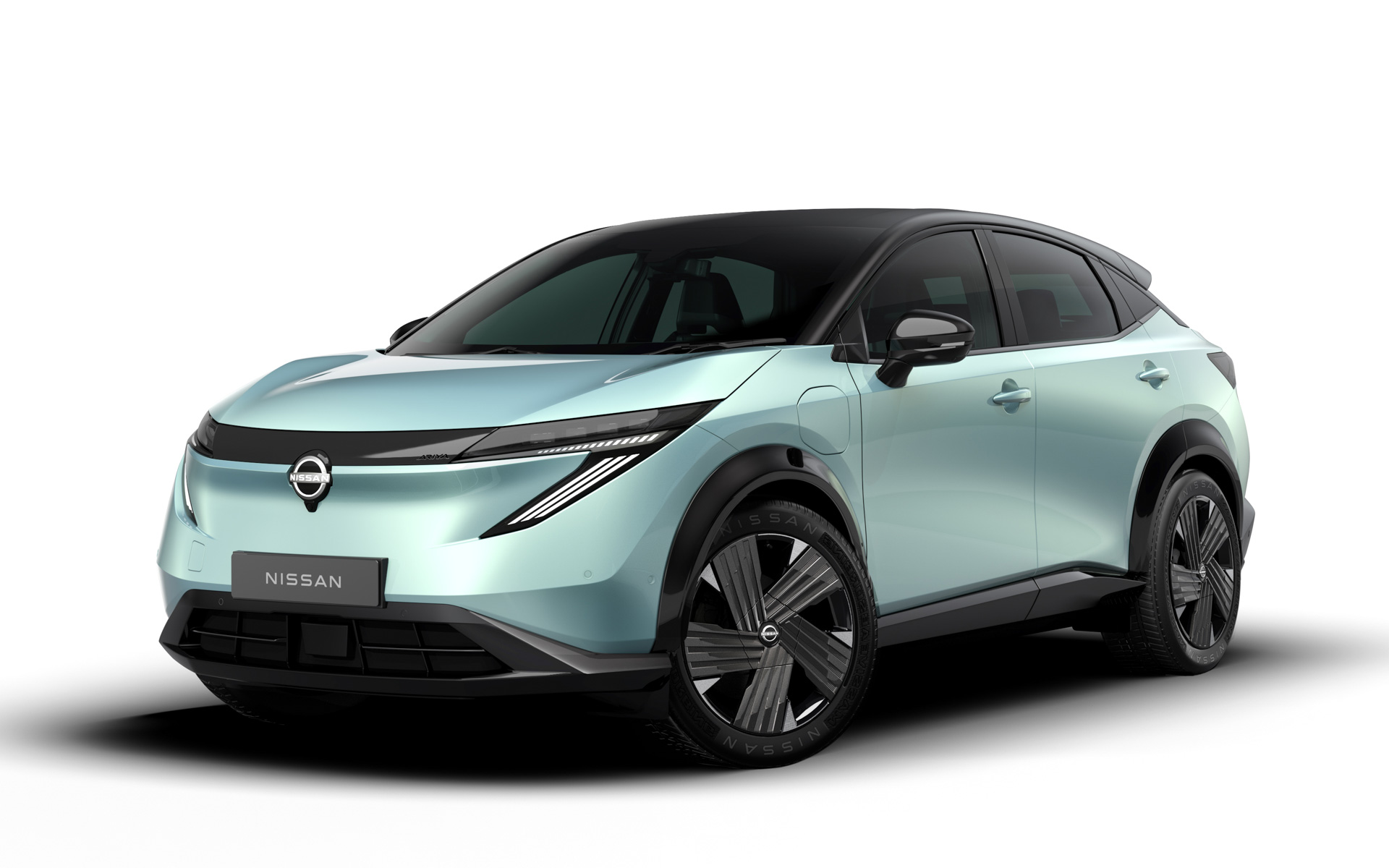
The new Leaf has undergone a major transformation into an SUV style, but some have pointed out that the design is not sufficiently differentiated from the higher-end model, the Ariya .
Online comments:
- “I can’t tell the difference between Leaf and Aria.”
- “The front masks are too similar, and there’s no sense of difference in luxury.”
- “I preferred the unique design of the previous Leaf.”
On the other hand, there are also positive comments such as “It’s stylish and cool” and “It looks like a mini Aria, which I like,” and people’s opinions on the design vary.
Disadvantage 9: The B5 grade will be released in February 2026, which is quite late.
The entry-level model “B5” (55kWh battery, 490km range) is scheduled to be released in February 2026 , and when it goes on sale in October 2025, only the higher-end B7 model will be available.
This causes the following problems:
- Early buyers can only choose the expensive B7 grade (starting at 5.18 million yen).
- Those who want to purchase with a budget of less than 5 million yen will have to wait several months.
- It’s difficult to compare the price with competitors like bZ4X and IONIQ 5.
Many people considering purchasing an EV place a high priority on cost performance, so the delay in launching an entry-level model is a major disadvantage.
Comparison with competing models
| Car model | Cruising range (WLTC) | Price range | Charging standard | 4WD setting |
|---|---|---|---|---|
| New Leaf | 490-702km | 5.18-6.51 million yen | CHAdeMO | none |
| Toyota bZ4X | 559-567km | 5.5-6.5 million yen | CHAdeMO | can be |
| Tesla Model 3 | 627-715km (EPA conversion) | 5.39-7.81 million yen | NACS/CHAdeMO | Yes (AWD) |
| Hyundai IONIQ 5 | 470-610km | 5.39-7.81 million yen | CHAdeMO/CCS | can be |
Who is the new Leaf recommended for?
People I can recommend
- People who like Nissan car designs and brands
- Those looking for an EV with a long driving range (those who drive long distances several times a year)
- Those who are attracted to hands-free driving on highways (ProPilot 2.0)
- Those who value quietness and ride comfort
- Those seeking the peace of mind of a domestically produced EV
People who should be carefully considered
- Those who require seat ventilation
- Those who live in snowy areas and need a 4WD
- Those looking for an EV with a budget of under 5 million yen (must wait for the B5 grade)
- Those who place importance on highway navigation guidance
- Those who want to use Tesla’s Supercharger network
Summary: The unfortunate drawbacks of the new Leaf and the criteria for making a purchase decision
The new Nissan Leaf is a major evolution of the EV, undergoing its first full model change in 14 years. It boasts many appealing features, including a 702km range, exceptional quietness, and a cutting-edge interior.
However, it also has some unfortunate drawbacks:
- Seat ventilation not equipped
- No highway panel displayed on Google Maps
- Compatible with CHAdeMO only (Japanese model)
- No 4WD setting
- One-pedal complete stop not supported
- Overall length is shorter than the previous model
- ProPilot 2.0 is an option
- Design pros and cons
- Delay in release of B5 grade
It is important to understand these drawbacks and carefully consider whether it is suitable for your lifestyle and usage environment.
Things to check before purchasing :
- Check the rear seat comfort and luggage space in the actual vehicle
- Investigating the output and installation status of quick chargers around your home
- Check the option prices and total price of ProPilot 2.0
- Test drive comparison with competing models (bZ4X, IONIQ 5, Tesla Model 3)
If you understand and accept the drawbacks of the new Leaf before purchasing, it will be a very satisfying EV. We’ll be keeping an eye on future developments, including the release of the B5 grade in February 2026.
Related articles :
Nissan Leaf