

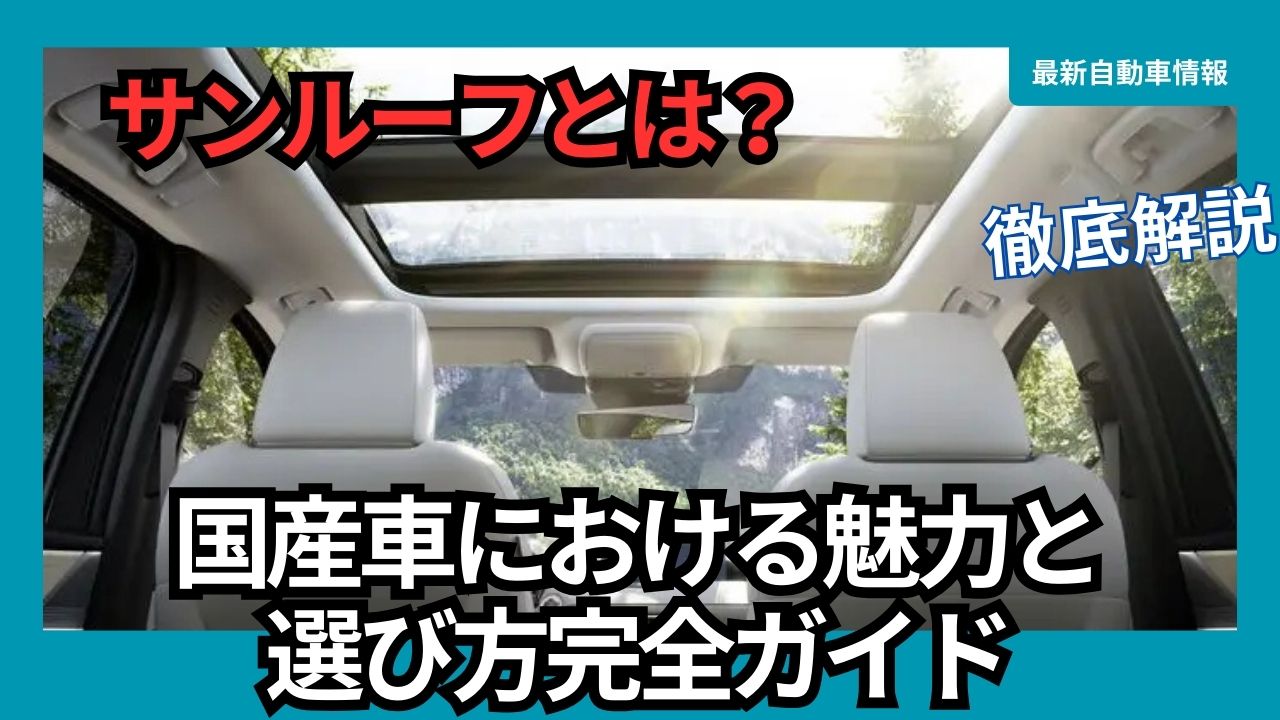
Sunroofs, which are installed on the roofs of automobiles, are attractive features that significantly enhance the enjoyment of driving. Until recently, sunroofs were installed in many Japanese cars, but in recent years, with technological advances, their form and functionality have evolved significantly.
This article provides detailed information useful for those considering purchasing a sunroof, from its basic features to the latest equipment information . We will provide easy-to-understand explanations from an expert perspective so that you can fully understand the advantages and disadvantages and make the best choice for your car life.
What is a sunroof? Basic concepts and history
Sunroof Definition
A sunroof is an openable skylight installed on the roof of a vehicle for the purpose of lighting and ventilation . The name is a combination of the English words “sun” and “roof,” and means a roof that lets in sunlight.
By letting natural light into the car, it creates a bright and open space, and is gaining popularity as a feature that gives you a refreshing feeling similar to that of an open-top car. Depending on the manufacturer, it is known by various names such as “moon roof,” “panoramic roof,” or “glass roof.”
The history of sunroofs in Japan
The history of sunroofs in Japanese cars is surprisingly long, dating back to 1968 when the Honda N360 was the first car to be fitted with a manual sunroof by the manufacturer. Later, in 1972, Maruen, in collaboration with the American company DAS, released an aftermarket sunroof, which attracted attention as the first aftermarket sunroof for a Japanese car.
The first-generation Honda Prelude in 1978 was equipped with an electric sliding sunroof , which became the prototype for today’s electric sunroofs. From the 1980s to the 1990s, sunroofs became all the rage, especially in minivans and minivans, and even special specifications such as the “triple sunroof” appeared.
Difference from glass roof
The biggest difference between a sunroof and a “glass roof,” which is often confused with it, is whether or not it can be opened and closed .
- Sunroof : A mechanism that allows the roof to be opened and closed
- Glass roof : Fixed type, glass surface cannot be opened or closed
A glass roof is a device that only lets in light, bringing brightness into the interior but does not have a ventilation function. On the other hand, a sunroof can be opened and closed to ventilate, making it a more multifunctional device.
Sunroof features and names by manufacturer
Toyota: Panoramic moonroof/dimming panoramic roof
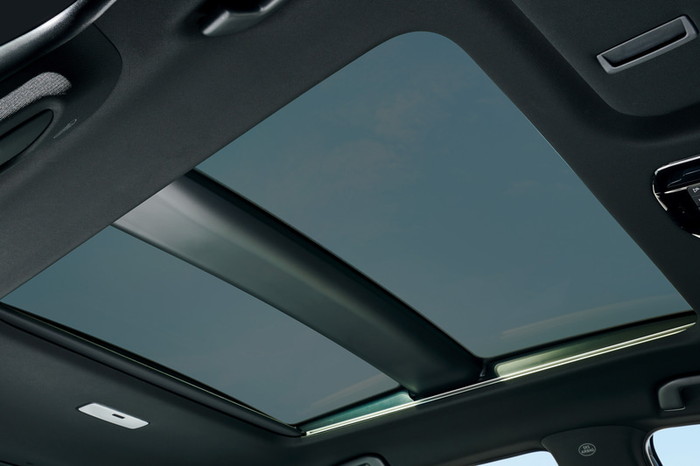
New Harrier Dimmable Panoramic Roof
Toyota uses moon roofs and panoramic roofs produced by Aisin Corporation, a subsidiary of the Toyota Group. For models released after 2020, the industry’s first “dimming panoramic roof” made of glass roof panel has been attracting attention.
The latest Corolla Cross is equipped with a panoramic roof except for the G grade, and all grades of the RAV4 are equipped with a moonroof. The dimming panoramic roof is a groundbreaking technology that can instantly adjust its transparency through electrical control, allowing you to control the amount of light entering the vehicle depending on the situation.
Honda: Sunroof/glass roof
Honda uses sunroofs manufactured by Yachiyo Kogyo, a subsidiary of the Honda Group. They were standard equipment on the Vezel Play grade, but as of May 2023, production has been discontinued.
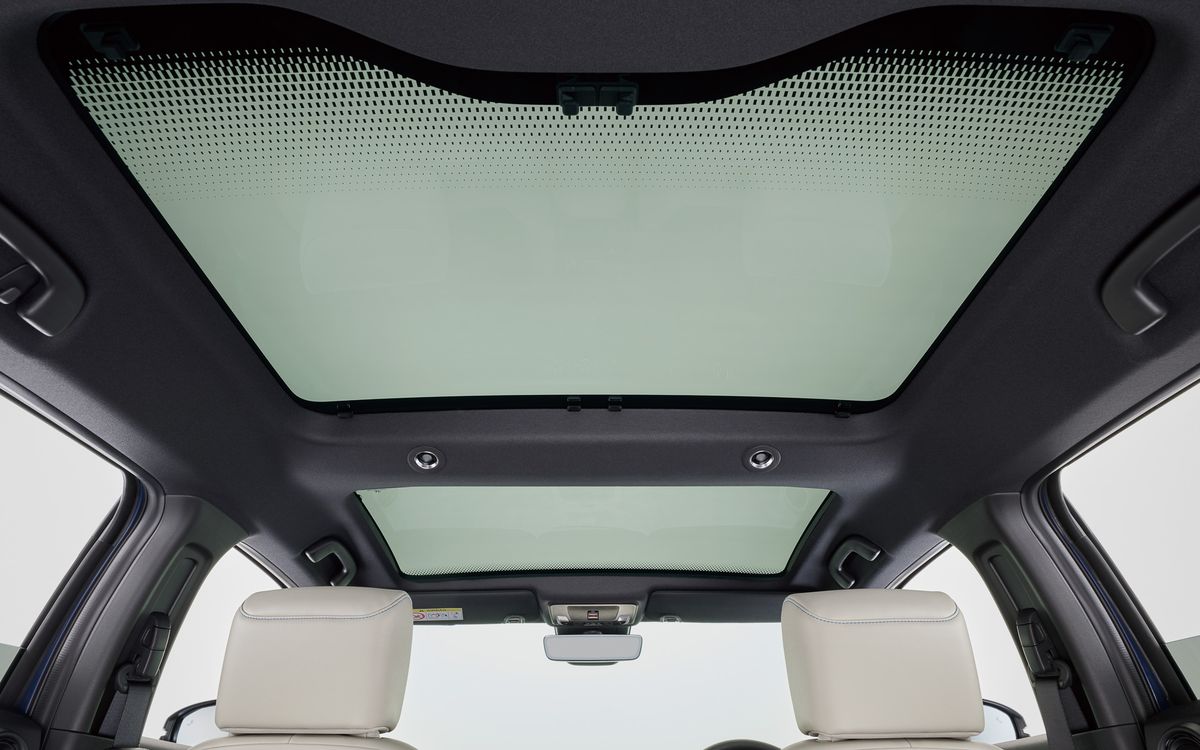
New Vezel roof glass with Low-E glass
In addition, the Honda e electric vehicle features a glass roof that snaps into place , creating a futuristic design.
Nissan: Panoramic glass roof
Nissan primarily uses glass roofs manufactured by glass manufacturer Nippon Sheet Glass Co., Ltd. The latest Ariya is equipped with an electric tilt and slide glass roof, providing a sense of openness when driving.
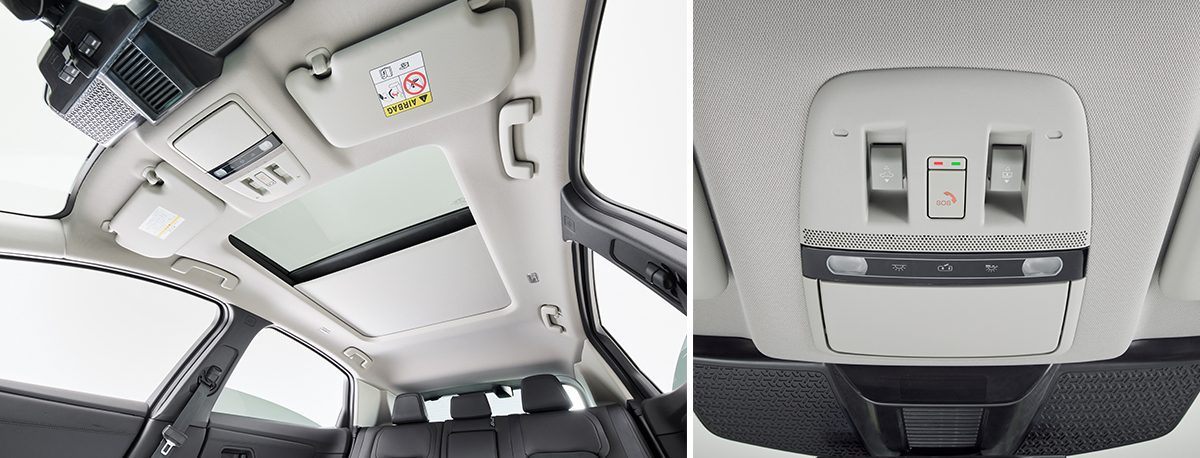
An electric glass roof is standard on the Cima, while it is available as a manufacturer option on the Skyline.
Mazda: Power sliding glass sunroof
Mazda has adopted an “electric sliding sunroof (with tilt-up function).” It is standard equipment on all grades of the CX-8, and is available as a manufacturer option on the MAZDA3, CX-5, and MAZDA6.
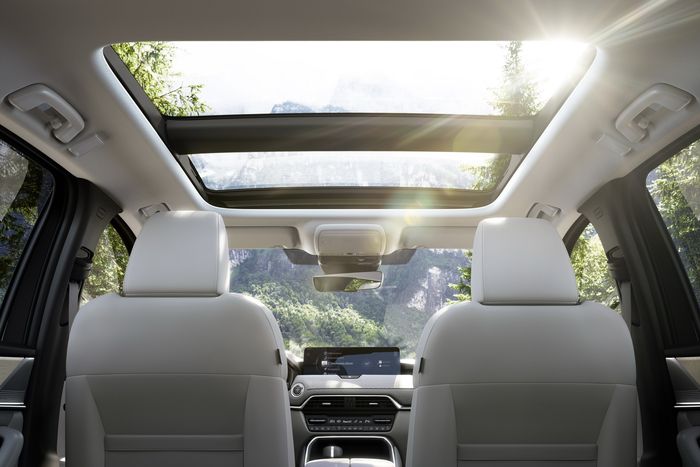
Mazda CX-60
Subaru: Large sunroof
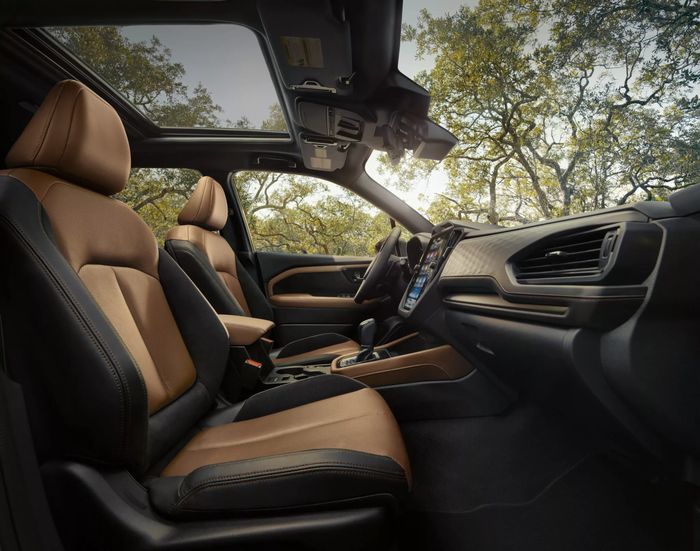
Subaru Forester
Subaru is the only manufacturer that uses the term ” sunroof ” as it is. It is available as a manufacturer option on the Forester, Impreza, Levorg, etc., and availability varies depending on the grade.
Mitsubishi: Electric panoramic sunroof
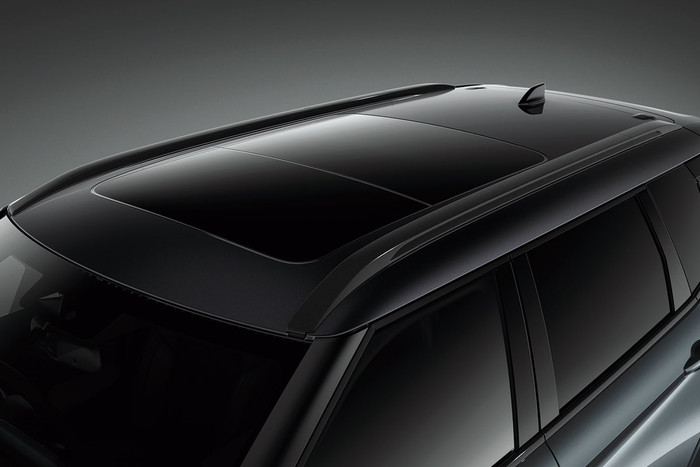
Mitsubishi offers sunroofs on all models except for kei cars . They are available as a manufacturer option on the “P” and “G” grades of the Eclipse Cross, RVR, and Outlander PHEV.
Daihatsu: Sky Feel Top
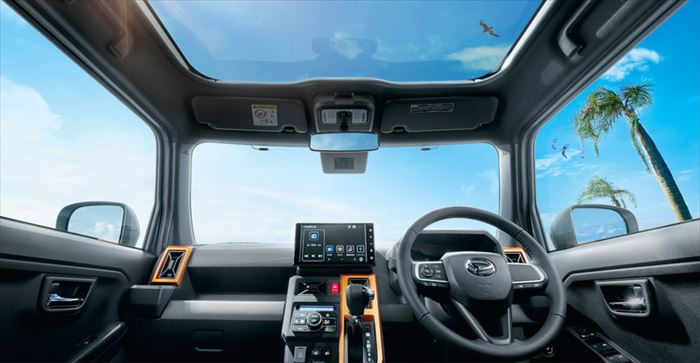
Daihatsu’s light SUV “Taft” comes standard with a large glass roof called “Sky Feel Top” on all grades . It is attracting attention as a rare example of a light vehicle with a sunroof as standard equipment.
Types and Functions of Sunroofs
Tilt-up and sliding types
The tilt-up type has a structure in which the rear part of the glass surface lifts up, making it a practical design that allows ventilation even in rainy weather, while the sliding type has a mechanism in which the glass surface slides back to open, ensuring a wider opening and a greater sense of openness.
The latest models are mainly “tilt and slide” models that combine both of these functions, offering the convenience of being able to choose how to open them depending on the situation.
Panoramic sunroof features
The panoramic sunroof has a larger glass area than a regular sunroof, allowing natural light to reach the rear seats. It creates an overwhelming sense of openness inside the car and is expected to help reduce fatigue on long drives.
However, the large glass area also has disadvantages, such as an increase in the temperature inside the car in summer and increased rain and wind noise, so you need to carefully consider the usage environment.
Comparison of electric and manual types
Electric sunroofs can be easily opened and closed with the push of a button, and in luxury cars they can even be operated remotely from the driver’s seat. However, there is a risk of failure of the motor or electrical system, which can result in expensive repair costs.
Manual sunroofs require operation with a lever or handle, but their simple structure has the advantage of lowering the risk of breakdowns and keeping repair costs down.
Benefits of a sunroof
An overwhelming sense of openness
The greatest appeal of a sunroof is the overwhelming sense of openness it brings to the interior of the car . The natural light streaming in through the roof transforms the closed interior of the car into a bright and open space. You can enjoy the blue sky on sunny days and raindrops through the glass on rainy days, allowing you to experience different moods depending on the weather.
This sense of openness significantly reduces the psychological sense of claustrophobia, especially during long drives or traffic jams, providing a more comfortable driving experience.
Efficient ventilation function
A sunroof with a tilt-up function allows for efficient ventilation without opening the side windows . Opening a side window at high speeds can cause loud wind noise, but ventilation through the sunroof reduces noise and wind pressure, allowing for quieter air exchange inside the car.
Even in winter, tilting the fan open minimizes the cold and allows for ventilation, making it a useful feature for smokers.
Increased appraisal value
Cars with sunroofs tend to be highly valued in the used car market . Because they are treated as a manufacturer option and are installed at low rates, cars with sunroofs are subject to additional points when trade-ins or appraisals are made, and they often fetch higher prices than cars of the same model.
Luxury cars, SUVs, and minivans in particular have high resale value when equipped with sunroofs, making them advantageous when selling in the future.
Producing a sense of luxury and exclusivity
Installing a sunroof enhances the overall luxury and exclusivity of the vehicle . Even on cars with light body colors, the black glass roof acts as an accent and gives a stylish impression.
The satisfaction of owning it will also increase, and you will be able to enjoy the fulfillment of knowing that you are driving a special car.
Disadvantages of a sunroof
Protection from the summer heat and sun
Cars with sunroofs require special care to protect against the midsummer heat . Glass roofs are equipped with retractable sunshades, but they do not provide the same heat insulation as a regular metal roof.
If you forget to close the shade when parking in the hot sun, the inside of your car may become too hot to get in. Also, depending on the position of the sun, direct sunlight may shine on the passengers, making them feel dazzled or hot.
Increased vehicle weight
Installing a sunroof will increase the vehicle’s weight by approximately 20 to 30 kg , and since this weight will be placed at the highest point of the vehicle, it may raise the center of gravity and slightly reduce driving stability.
In addition, the burden on the vehicle when accelerating and decelerating increases, resulting in a decrease in fuel efficiency, and depending on the vehicle model, the vehicle weight classification may increase, resulting in an increase in weight tax.
Cost and maintenance burden
The price of manufacturer options varies depending on the car model, but they are generally around 100,000 yen , which is by no means cheap. In luxury cars, they may be included as part of a full equipment package, but they require a considerable initial investment.
Regular maintenance is also required . Neglecting to clean the drain and inspect the opening and closing mechanism increases the risk of leaks and malfunctions. Deterioration of the rubber gasket due to aging or failure of the opening and closing motor can cost between 30,000 and 100,000 yen to repair.
Risk of breakdown and leak prevention
There are several parts around the sunroof, such as the opening and closing motor, rubber gaskets, and drain, which may malfunction after long-term use .
The most common cause of leaks is deterioration of the gaskets, and debris clogging the grooves and drains in the roof openings can cause poor drainage. Regular cleaning and inspection are necessary, and you should also be careful when washing your car.
Recommended car models with sunroofs
SUV/Crossover models
The Toyota Harrier is equipped with a luxurious panoramic roof, a large-opening glass roof with an electric roller shade that creates an elegant driving experience.
The Nissan X-Trail can be equipped with a large electric panoramic sunroof, boasting excellent lighting. The Mazda CX-5 also offers a sunroof as a manufacturer option, and its stylish appearance makes it popular.
Minivan model
The Toyota Alphard comes with an optional “twin moonroof” that features skylights on both the front and rear seats, providing a luxurious feeling of openness for all seats.
Previous models of the Honda Stepwagon were equipped with a huge glass skylight known as a “top light roof,” making it popular in the used car market.
Sedan model
The Toyota Camry offers a luxurious optional power tilt-and-slide sunroof, while the Honda Accord boasts convenient one-touch operation.
The Nissan Skyline is available with an optional advanced electric panoramic sunroof, extending the feeling of openness even to the rear seats.
Light vehicle
The Daihatsu Taft is unusual among kei cars in that it comes standard with a large glass roof called the “Sky Feel Top” on all grades. Although it is a fixed roof, it is a rare find that gives you a sense of openness that you wouldn’t expect from a kei car.
Regarding retrofitting a sunroof
Possibilities and limitations of retrofitting
Sunroofs can be installed after the fact as well as as a manufacturer option , but installation by a professional is essential for safety and compliance with vehicle inspection regulations.
Deregulation in 1997 made it unnecessary to submit a structural change notification, but Article 2 of the Road Transport Vehicle Safety Standards stipulates that openings must not protrude more than 300 mm above the roof height when open.
Precautions for retrofitting
Drilling a cutout hole in the roof of a car is a highly difficult task, so it is essential to hire an experienced specialist . There is also the risk of leaks or insufficient strength due to poor construction, so it is important to choose a company with a proven track record and a solid warranty system.
The cost varies greatly depending on the model and specifications, but you will generally need a budget of around 200,000 to 500,000 yen.
Maintenance methods for long-term use
Daily care points
Regular maintenance is essential to ensure long-term, comfortable use of your sunroof .
Cleaning the drain is the most important thing, and carefully removing accumulated dust and fallen leaves will prevent leaks. It is also important to check the condition of the rubber gasket ; if it is cracked or deteriorated, it is recommended that you replace it as soon as possible.
If the opening and closing mechanism does not operate smoothly, using an appropriate lubricant can help.
Troubleshooting and repair costs
Leaks and poor opening and closing are common problems with sunroofs. Leaks caused by deterioration of the rubber gasket can be repaired at a specialist store for a few thousand to 10,000 yen, but problems with opening and closing due to a broken motor can cost between 30,000 and 100,000 yen .
By making it a point to have regular inspections once or twice a year , you can prevent problems and extend the life of your sunroof.
Precautions for long-term use
With proper maintenance, sunroofs can last for over 10 years . It is recommended that the rubber gaskets and sealants be replaced every 3 to 5 years, and the opening and closing mechanism should be greased once or twice a year.
Frequency of use also has a significant impact on the lifespan of the car. Frequent opening and closing will accelerate wear, so be sure to use it in moderation. Keeping it completely closed when parked will prevent deterioration due to rainwater and ultraviolet rays.
Who is a sunroof suitable for and who is not?
Characteristics of suitable people
Sunroofs are ideal for those who enjoy open-air driving and those who are outdoorsy . They are ideal for romantic scenes such as driving along the seaside or mountain roads, or stargazing at night.
It is also recommended for those who are attached to their car and want to increase their satisfaction even if it is a little more expensive . With luxury cars, adding options without hesitation will increase the joy of ownership and also increase the value at resale.
Characteristics of people who are not suited
It may not be suitable for people who are sensitive to heat or sunlight, or who don’t usually open their windows . Japan has a rainy season and extreme heat, making it more difficult to use a sunroof than Europe.
Some people end up “putting it on but hardly ever opening it” or “leaving the shades closed all the time,” so you need to carefully consider how well it fits into your lifestyle.
summary
Sunroofs are an attractive feature that brings a sense of openness and comfort to the interior of a car , but at the same time, there are some things to be aware of, such as how to deal with the heat and the hassle of maintenance.
When considering a purchase, it’s important to consider the following points:
- Usage frequency prediction : Determine whether you will actually use it
- Climate of the area where you live : Summer heat and rainy season
- Budget and costs : Initial and maintenance costs
- Compatibility with the vehicle : resale value and equipment level
- Lifestyle : Outdoorsy and a desire for openness
If possible, we recommend test driving a car with a sunroof before purchasing to experience its practicality. If you feel that the advantages outweigh the disadvantages, a sunroof will surely be a valuable piece of equipment that will double the enjoyment of your drive.
Make a choice that you won’t regret based on the car lifestyle you desire.