
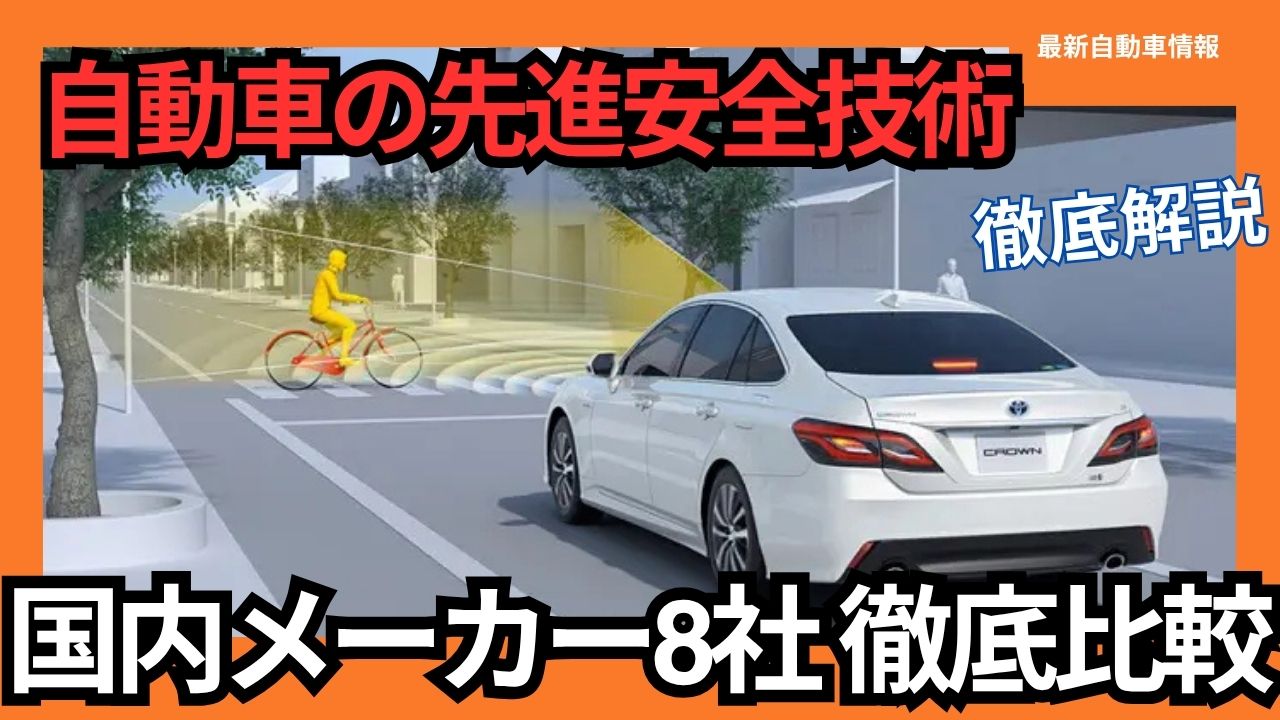
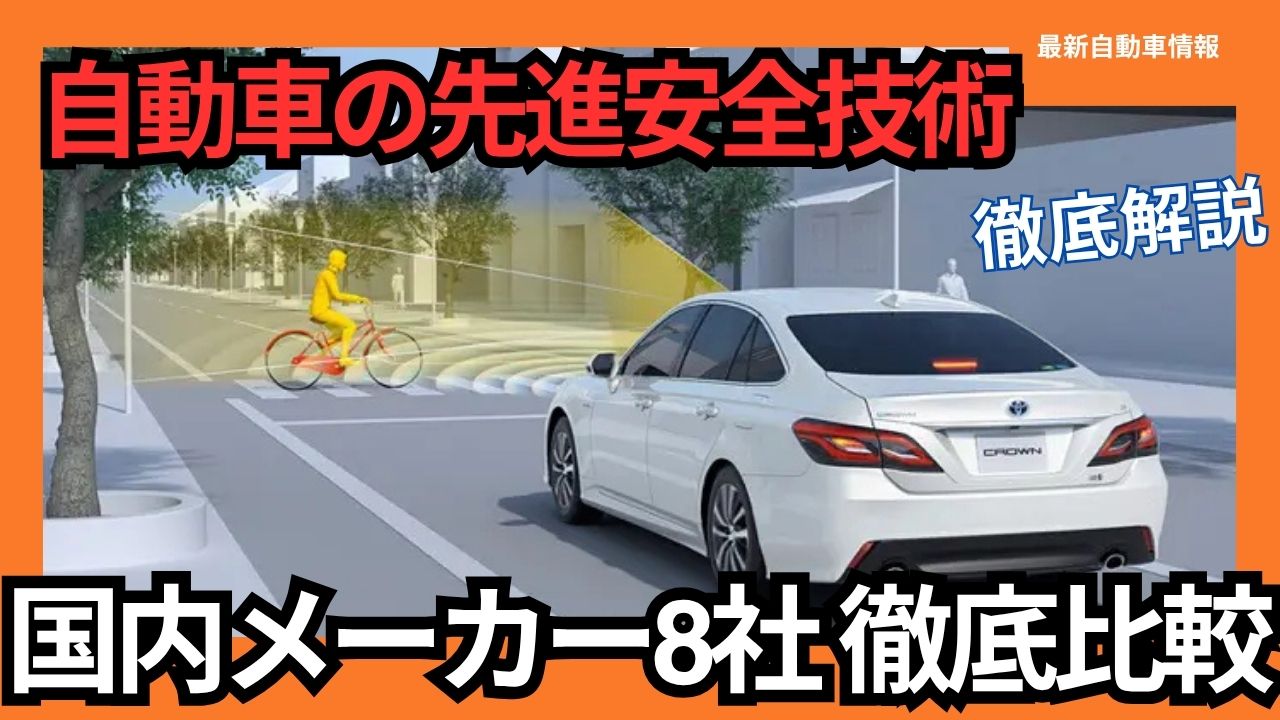
This book provides an easy-to-understand explanation of the latest automotive safety technologies as of 2025. It covers the functions of collision mitigation braking and advanced driver assistance systems (ADAS), trends among manufacturers, and even the “Sapocar” system. This is a must-read guide for choosing a safe car.
1. Introduction: Why is automotive safety technology important now?
Traffic accidents are a risk that is close to everyone’s heart. However, advances in technology have made it possible to prevent accidents before they happen and minimize damage if an accident does occur. Automotive safety technology is evolving dramatically every day, based on two basic concepts: preventive safety (active safety) to prevent accidents from occurring, and collision safety (passive safety) to protect passengers and pedestrians in the event of an accident.
This article provides an easy-to-understand explanation of the latest safety technologies as of 2025, helping you choose a safe car.
2. The latest in active safety technology has evolved to this extent!
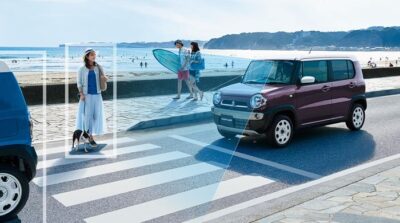
At the core of “active safety” are Advanced Driver-Assistance Systems (ADAS) , which monitor the surrounding environment using cameras, radar, and other sensors, and warn the driver and assist with driving operations to prevent accidents.
Representative active safety features
- Collision mitigation braking (automatic braking)
- They detect vehicles and pedestrians ahead and automatically apply the brakes if the risk of collision increases. The latest systems are increasingly able to detect pedestrians, bicycles, and motorcycles at night.
- Acceleration suppression device when pedal is accidentally pressed
- If you accidentally step on the accelerator instead of the brake in a parking lot, for example, the system will reduce engine output to prevent sudden acceleration. Systems that work not only when driving forward but also when reversing are becoming more common.
- Lane Keeping Assist System (LKA)/Lane Departure Warning System (LDW)
- It recognizes the lane and provides steering assistance and a warning if the driver is about to stray from the lane, significantly reducing driver fatigue on highways and other roads.
- Adaptive Cruise Control (ACC)
- The system automatically follows the vehicle ahead while maintaining a safe distance. Systems are now available that have a full-speed following function that can even stop the vehicle in traffic jams, and that allow hands-off driving under certain conditions.
- Blind Spot Monitor (BSM) / Rear Side Vehicle Detection Warning
- This function detects vehicles approaching from behind, which can easily occur in the blind spot of the door mirrors, and alerts the driver, making it an important feature that supports safe lane changes.
- Advanced Light Technology
- The Adaptive High Beam System (AHS) detects oncoming and preceding vehicles and automatically adjusts the high beam illumination range, improving nighttime visibility and contributing to the early detection of pedestrians and other obstacles.
- Emergency Driver Response System (EDSS)
- If the driver’s health suddenly changes and it becomes difficult to continue driving, this system safely slows down and stops the vehicle and makes an emergency call.
What is Advanced Safety Technology (ADAS)?
ADAS (Advanced Driver Assistance Systems)
Advanced driver assistance systems (ADAS) are technologies that assist drivers in preventing traffic accidents and mitigating damage. They utilize sensors such as cameras, radar, and LiDAR to monitor and analyze the situation around the vehicle and automatically control it.
- Collision avoidance and damage reduction
- Lane Keeping Assist
- Reduces driving fatigue
Key evolutionary points for 2025
- Expanding use of AI and machine learning
- OTA update support
- Enhanced driver monitoring
- Linking with high-definition maps
Differences between companies
In Japan, the names and packaging of these systems vary from company to company: Toyota ” Toyota Safety Sense ” and ” Lexus Safety System+ ,” Honda ” Honda SENSING ,” Nissan ” Intelligent Emergency Braking, ” Subaru “EyeSight,” Mazda ” i-ACTIVSENSE ,” Mitsubishi ” e-Assist ,” Daihatsu ” Smart Assist III ,” and Suzuki ” Dual Sensor Brake Support .” First, we compared the collision mitigation braking performance of safety technologies.
Detailed explanation by manufacturer
Toyota Safety Sense 3.0
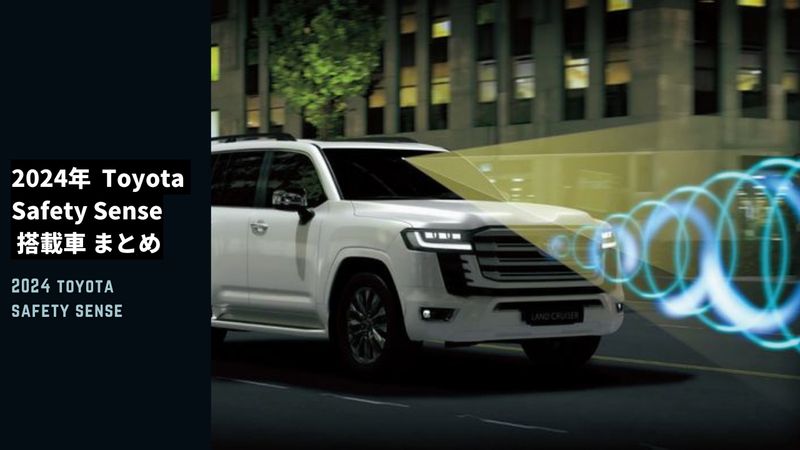
Main features
- Pre-crash safety (pedestrian, bicycle, and vehicle detection)
- Lane Tracing Assist (LTA)
- Dynamic Radar Cruise Control
- Road Sign Assist (sign recognition)
2024 Update Contents
Paid updates available
Starting in September 2024, existing vehicles will be able to update to the latest features for 11,000 yen (tax included). Wireless updates via OTA (Over-The-Air) are supported.
Technical specifications
- Operating speed: ~180km/h
- Sensor: Monocular camera + millimeter wave radar
- Target: Vehicles, pedestrians, and bicycles
- Price: Standard equipment / Update ¥11,000
Honda SENSING 360+
Newly installed in 2024
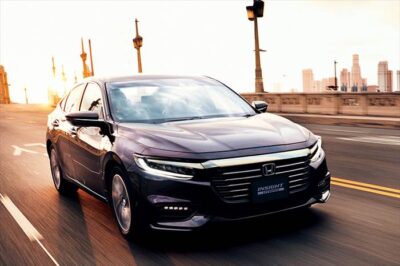
Features of Honda SENSING 360+
- 360-degree sensing
- Driver monitoring camera installed
- High-precision map data linkage
- Collision Mitigation Braking System (CMBS)
Key evolution points for 2024
Driver-cooperative driving
Cooperative driving between people and vehicles will further reduce traffic accidents. By monitoring the driver’s condition, the system supports safer driving.
Technical specifications
- Operating speed: ~80km/h
- Sensors: Multiple cameras + radar
- Vehicle models: Starting with the 2024 Accord
- Price: Standard equipment
Nissan ProPILOT 2.0
Next-generation version under development
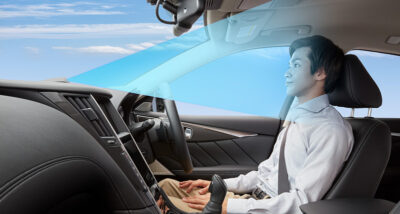
ProPILOT 2.0 Features
- Hands-off driving on the highway
- Navigation-linked route driving
- Lane Change Assist
- 360-degree sensing
Next-generation ProPILOT (scheduled for 2027)
Integration of AI technology
By combining the UK company Wayve’s AI technology, “Wayve AI Driver,” with Nissan’s “Ground Truth Perception,” the company plans to dramatically improve collision avoidance performance.
Technical specifications
- Operating speed: ~80km/h
- Sensor: Tri-camera + Radar + LiDAR
- Supported roads: Expressways and expressways
- Price: Options by grade
SUBARU EyeSight X
Strengthen in 2024
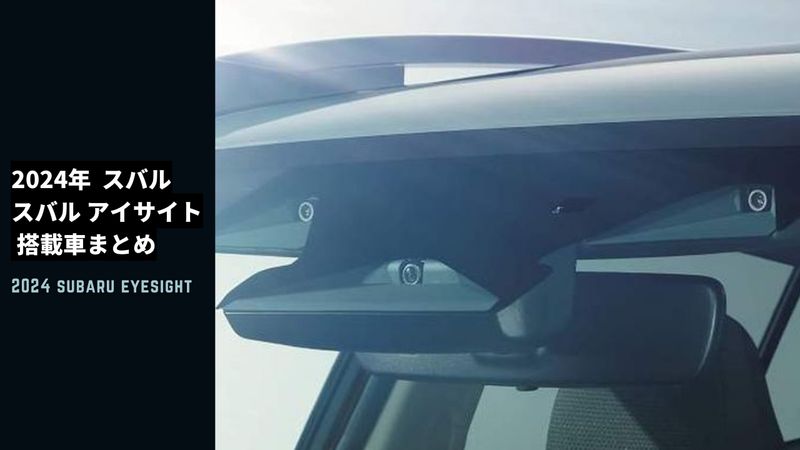
EyeSight X Features
- Stereo camera + four front and rear radars
- Utilizing high-precision map data
- Hands-off driving on the highway
- X-MODE linked control
Improvements for 2024
Strengthened X-MODE collaboration
The collaboration between X-MODE and EyeSight has been strengthened when driving on rough roads, improving safety in a wider variety of driving situations.
Technical specifications
- Operating speed: ~180km/h
- Sensor: Stereo camera + radar
- Features: Coordinated control with symmetrical AWD
- Price: Standard/optional by grade
Mazda i-ACTIVSENSE
New DEA installed

i-ACTIVSENSE Features
- Wide-angle monocular camera (100-degree field of view)
- millimeter wave radar
- Cruising & Traffic Support (CTS)
- Lane Keep Assist System (LAS)
New for 2024: DEA
Driver emergency response system
The DEA (Driver Emergency Assist) installed in the CX-80 detects a sudden change in the driver’s physical condition and assists in automatically stopping the vehicle in a safe place.
Technical specifications
- Operating speed: ~80km/h
- Sensor: Monocular camera + millimeter wave radar
- New function: DEA (Anomaly Response)
- Price: Standard equipment
Differences in collision mitigation braking performance
Toyota’s ” Toyota Safety Sense ” is capable of detecting a wide range of obstacles, including vehicles, pedestrians, nighttime pedestrians, and bicycles, and surpasses other companies in all functions.
Feature comparison table by manufacturer (2024 edition)
| Function / Manufacturer | Toyota TSS |
Honda SENSING |
Nissan ProPILOT |
Mazda i-ACTIVSENSE |
Subaru EyeSight |
Mitsubishi e-Assist |
Daihatsu Smart Assist |
Suzuki Safety |
Lexus LSS+ |
|---|---|---|---|---|---|---|---|---|---|
| Collision mitigation braking (vehicle-to-vehicle) | 10-180km/h◎ | 5-100km/h◎ | 10-80km/h○ | 4-80km/h○ | 1-160km/h◎ | 5-100km/h○ | 4-80km/h○ | 5-100km/h○ | 10-180km/h◎ |
| Pedestrian detection brake | 10-80km/h ◎ Nighttime use | 5-65km/h○ | 10-60km/h○ | 4-65km/h○ | 1-80km/h◎ | 5-65km/h○ | 4-50km/h ○ Nighttime use | 5-60km/h○ | 10-80km/h ◎ Nighttime use |
| Bicycle-sensing brake | 10-80km/h◎ | 5-65km/h○ | -△ | 4-65km/h○ | 1-80km/h◎ | -△ | -△ | -△ | 10-80km/h◎ |
| Lane Keeping Assist (LKA) | 50km/h~◎ | 65km/h~◎ | 60km/h~○ | 65km/h~○ | 65km/h~◎ | 60km/h~○ | 60km/h~○ | 60km/h~○ | 50km/h~◎ |
| adaptive cruise control | Compatible with all vehicle speeds◎ | Compatible with all vehicle speeds◎ | Compatible with all vehicle speeds◎ | Compatible with all vehicle speeds | Compatible with all vehicle speeds◎ | 30km/h~○ | 30km/h~○ | Compatible with all vehicle speeds | Compatible with all vehicle speeds◎ |
| Hands-off driving assistance | ○TSS 3.0 | ○360+ | ○2.0 | △CTS | ×- | ○MI-PILOT | ×- | ×- | ○Teammate |
| Automatic Parking Assistance | Advanced Park | ×- | ○ProPARK | △360° View | ×- | ×- | △ Corner sensor | ×- | Advanced Park |
A word from the editorial department
We are now in an age where automotive safety technology is no longer considered special equipment and anyone can benefit from it. However, the most important thing is not to rely too much on this technology and for drivers to always be mindful of safe driving.
Having a proper understanding of the latest safety technologies and choosing a vehicle that suits your driving style and life stage will lead to a safe and comfortable car life.
Summary of Toyota Safety Sense equipped vehicles
What do you think of Honda’s safety driving support system, “Honda SENSING”?
Nissan ProPilot and other safety driving support systems
Summary of Subaru EyeSight Ver.2 Ver.3 Touring Assist equipped vehicles
Summary of Mazda i-ACTIVSENSE equipped vehicles
Mitsubishi e-Assist Active Safety Technology: Comparison Summary
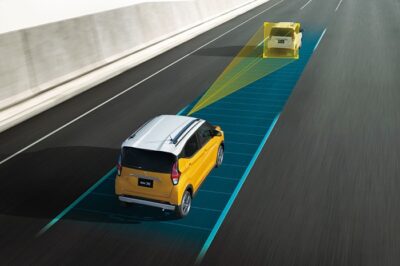
Summary of Daihatsu Smart Assist equipped vehicles
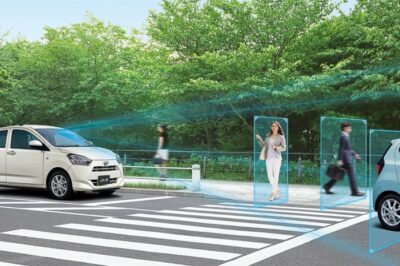
Suzuki SUZUKI Safety Support equipped vehicle summary