
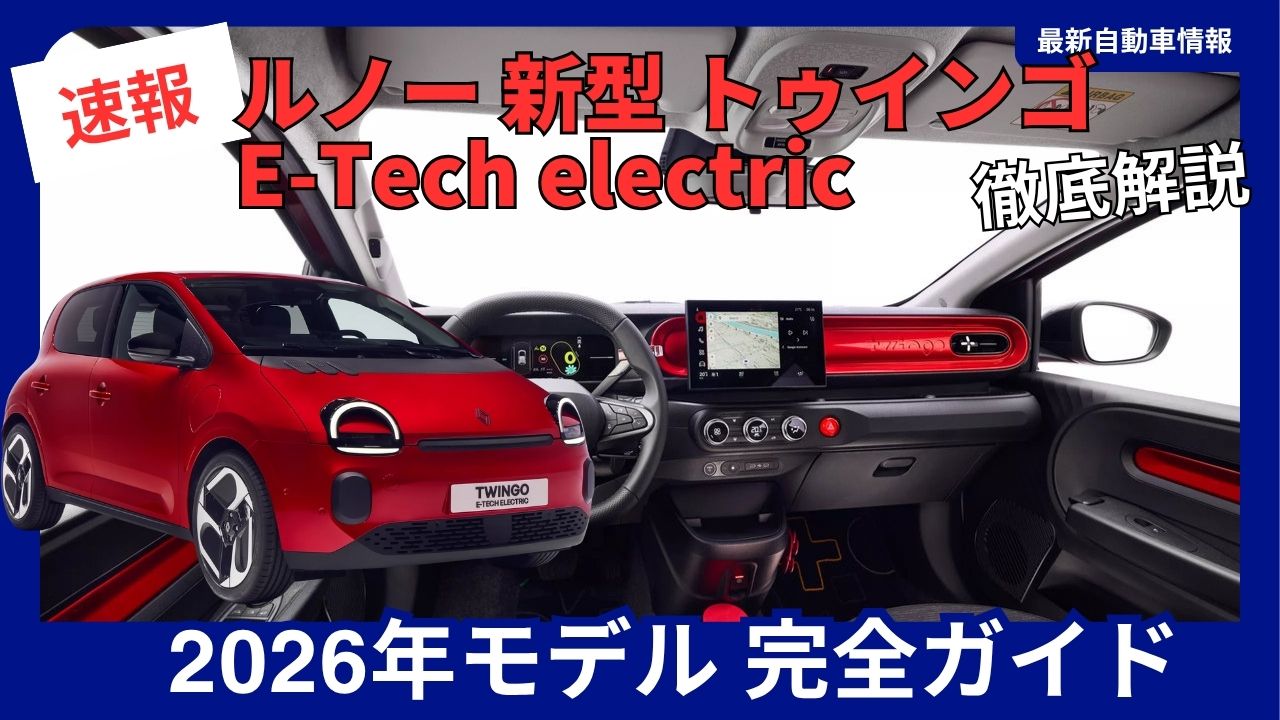
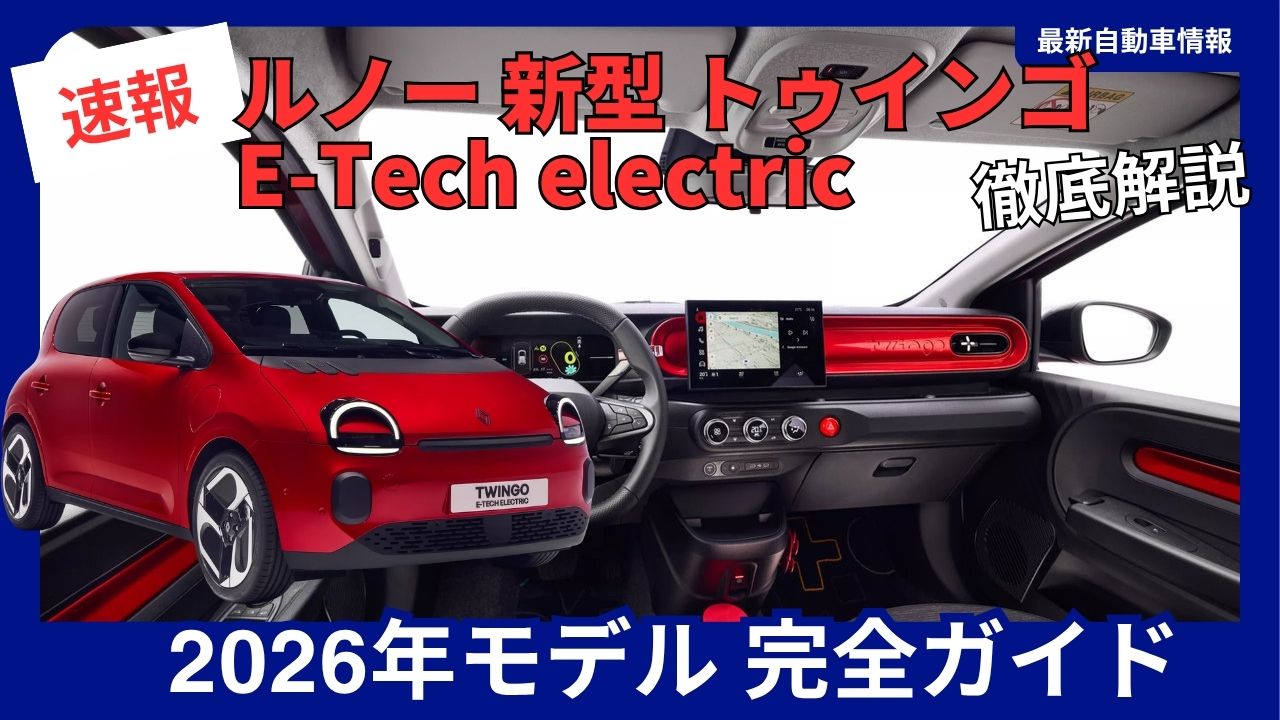
The new Twingo E-Tech electric, announced by Renault on November 6, 2025, is the fourth-generation model of the brand’s popular compact car, fully electrified. It is attracting attention as a next-generation city commuter that combines advanced EV technology with practicality while offering a modern interpretation of the iconic design of the first-generation Twingo.
The new Twingo, which has been converted from a conventional gasoline model to a fully EV-only model, will offer a new option in the electric vehicle market with an affordable price tag of approximately 20,000 euros (approximately 3.5 million yen). Sales are scheduled to begin in the European market in early 2026, and it will be a strategic model to compete with rival models such as Volkswagen’s ID.Up and BYD’s Dolphin Surf.
Major changes and evolutions of the new Twingo E-Tech electric
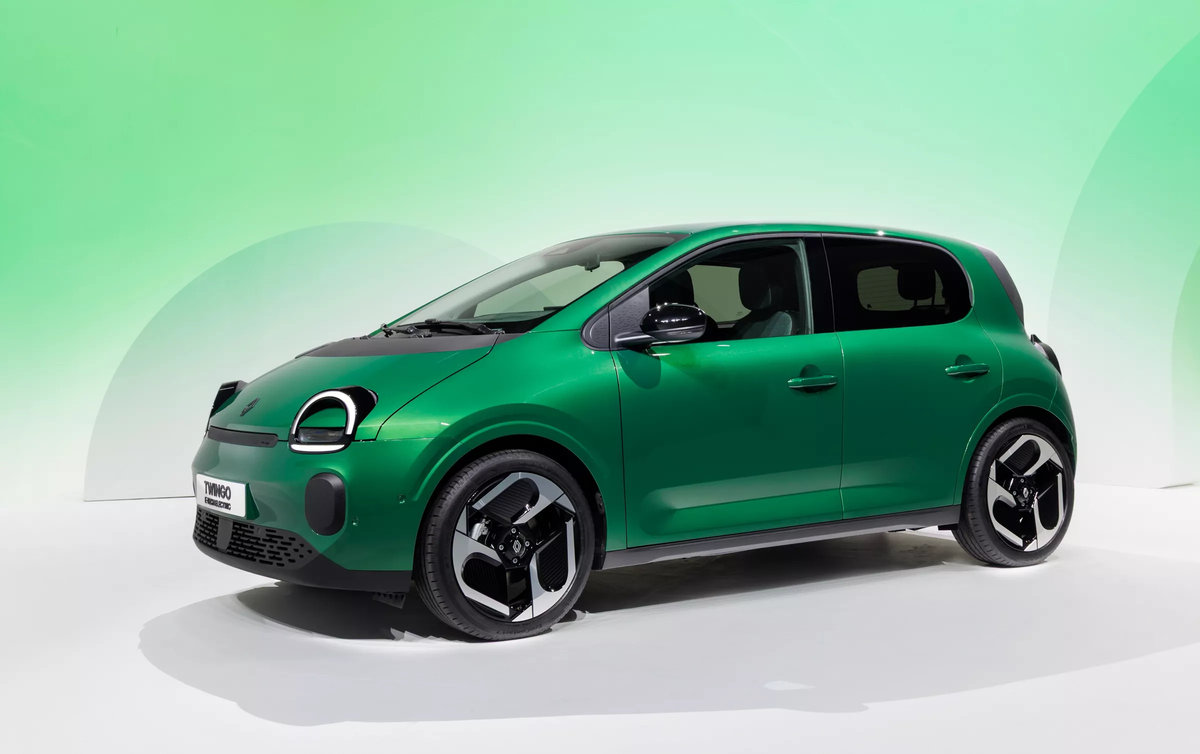
Renault Twingo
Design and construction innovation
- Homage to the original design : A modern reinterpretation of the round headlights and character lines of the original Twingo, released in 1993.
- 5-door structure : 5-door body that emphasizes practicality (the first generation was 3-door)
- New generation EV platform : Uses a short version of the AmpR Small platform
- Lightweight design : Vehicle weight is kept to 1,200 kg, minimizing the weight increase typical of EVs
Completely revamped powertrain
- Fully electrified : Eliminate the conventional gasoline engine model and switch to an EV-only model
- Uses LFP battery : 27.5kWh lithium iron phosphate battery reduces costs and is environmentally friendly
- Best-in-class efficiency : Achieves a practical driving range of 262km despite a small battery
The charm of retro-modern exterior design
The exterior of the new Twingo features a “neo-classical” approach, with homage to the first-generation model evident throughout.
Front design features
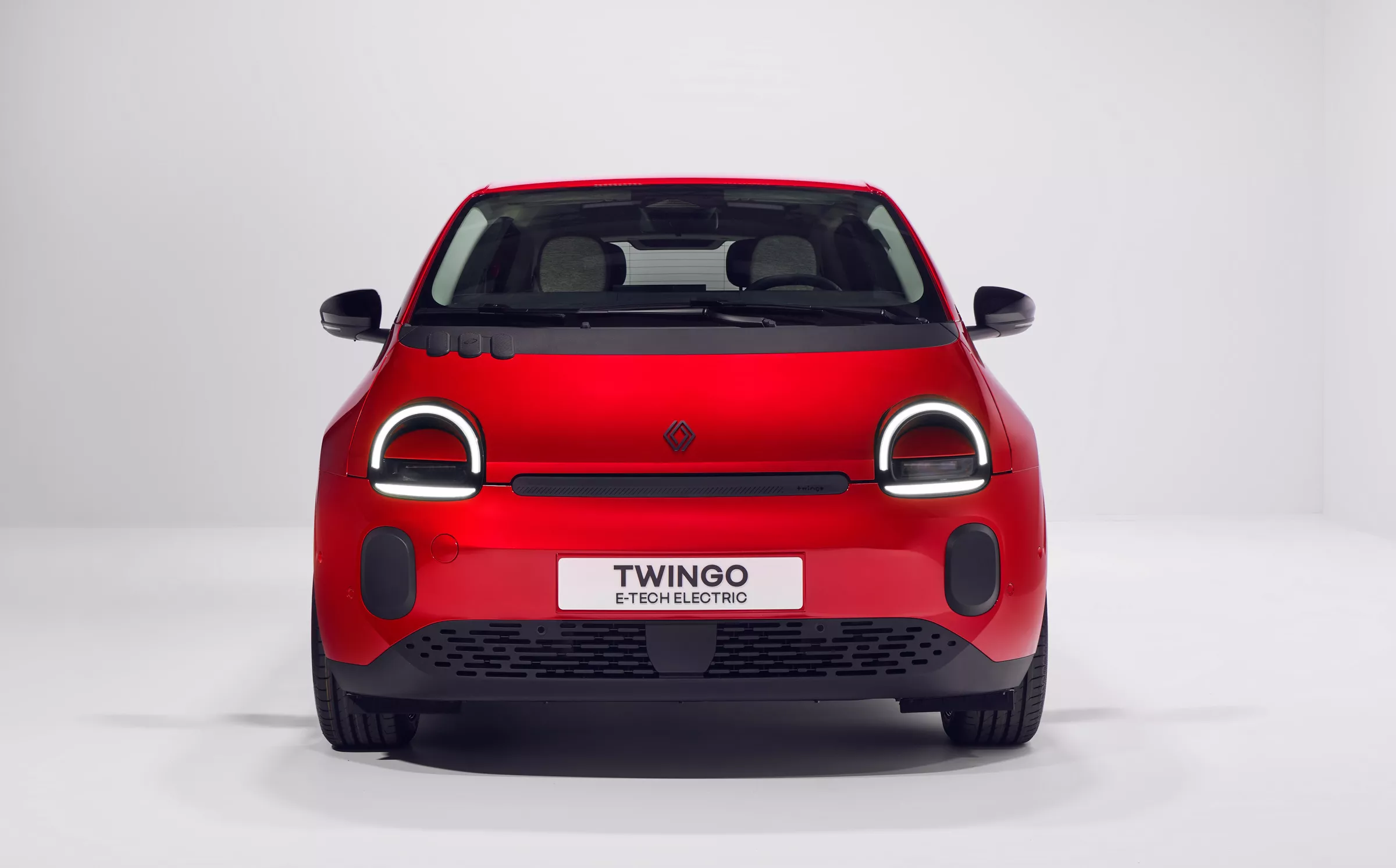
- Round headlights : Adorable round DRL lights reminiscent of the first-generation Twingo
- Three air intakes : A design motif from the first-generation Twingo, located at the top of the bonnet
- Expressive face : Unique facial expression described as “bug-eye” design
Side and rear design
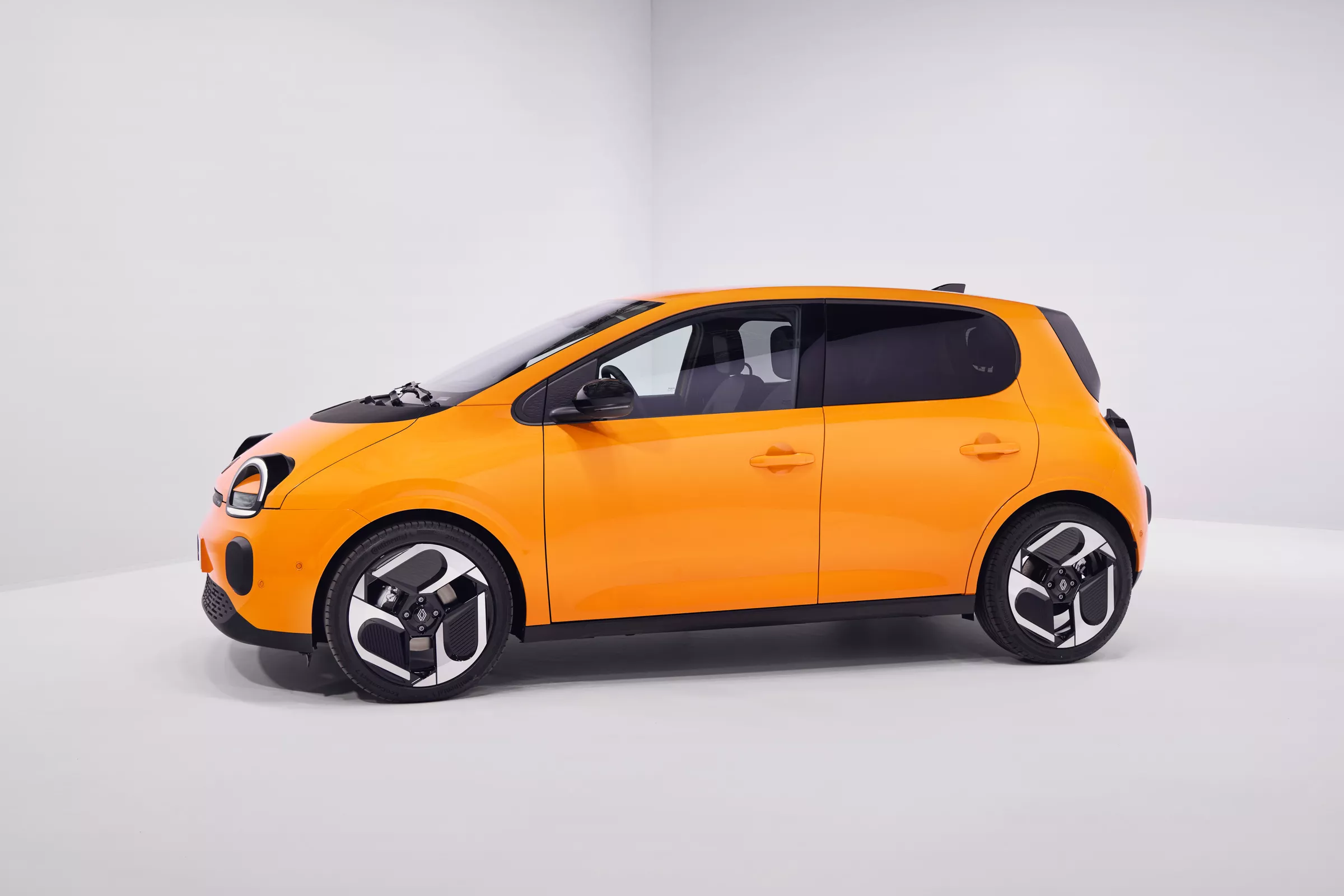
- Short overhang : Compact body size with a total length of 3,790 mm
- Wide stance : 1,720mm overall width for a stable stance
- Modern wheels : Large diameter wheels ranging from 16 to 18 inches
- Sporty rear : A wide rear view that suggests a light and nimble ride
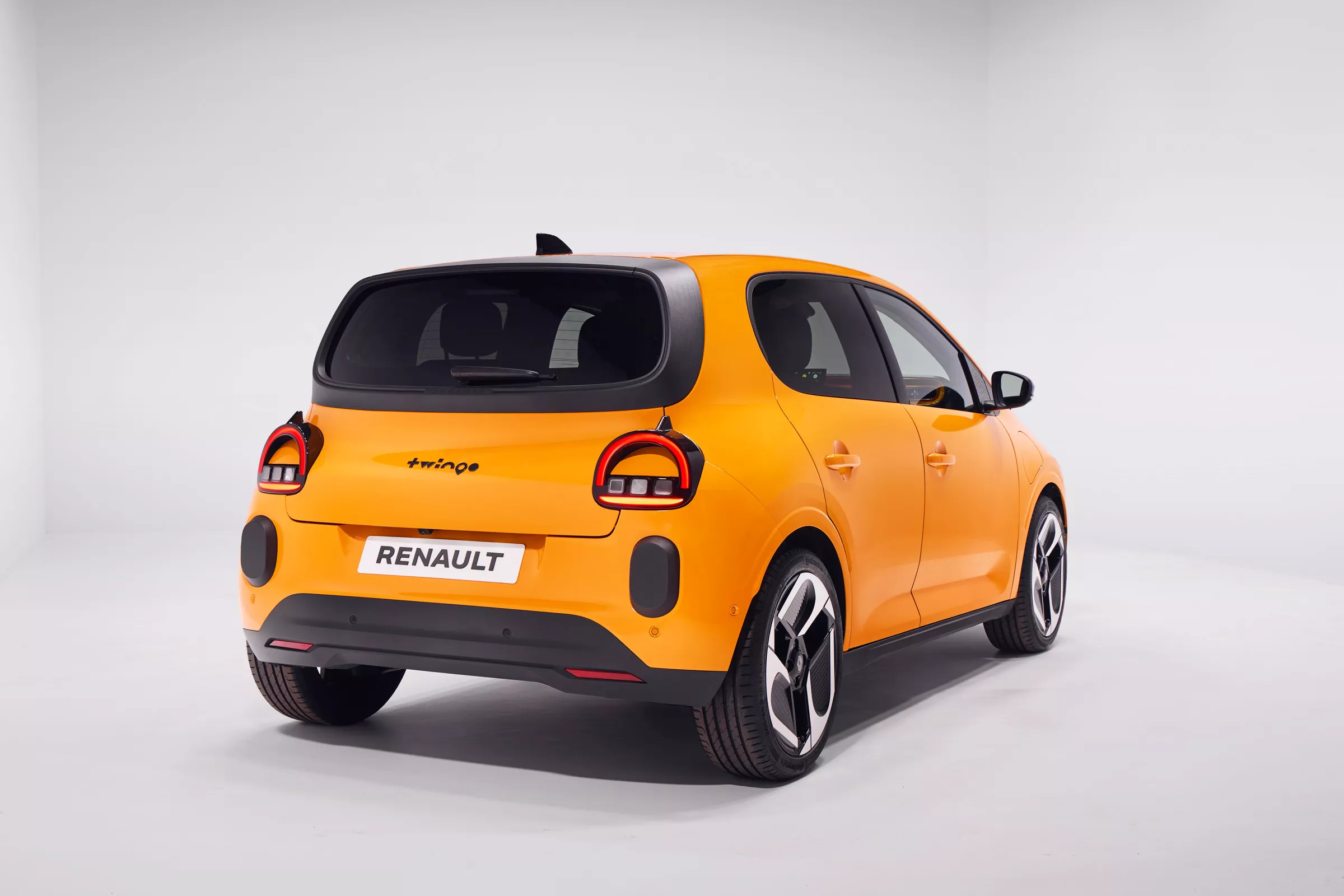
There is a wide range of color variations available, including unique body colors such as Popteria White, Lemon Gelato, and Salmon Pink.
Compact yet spacious interior
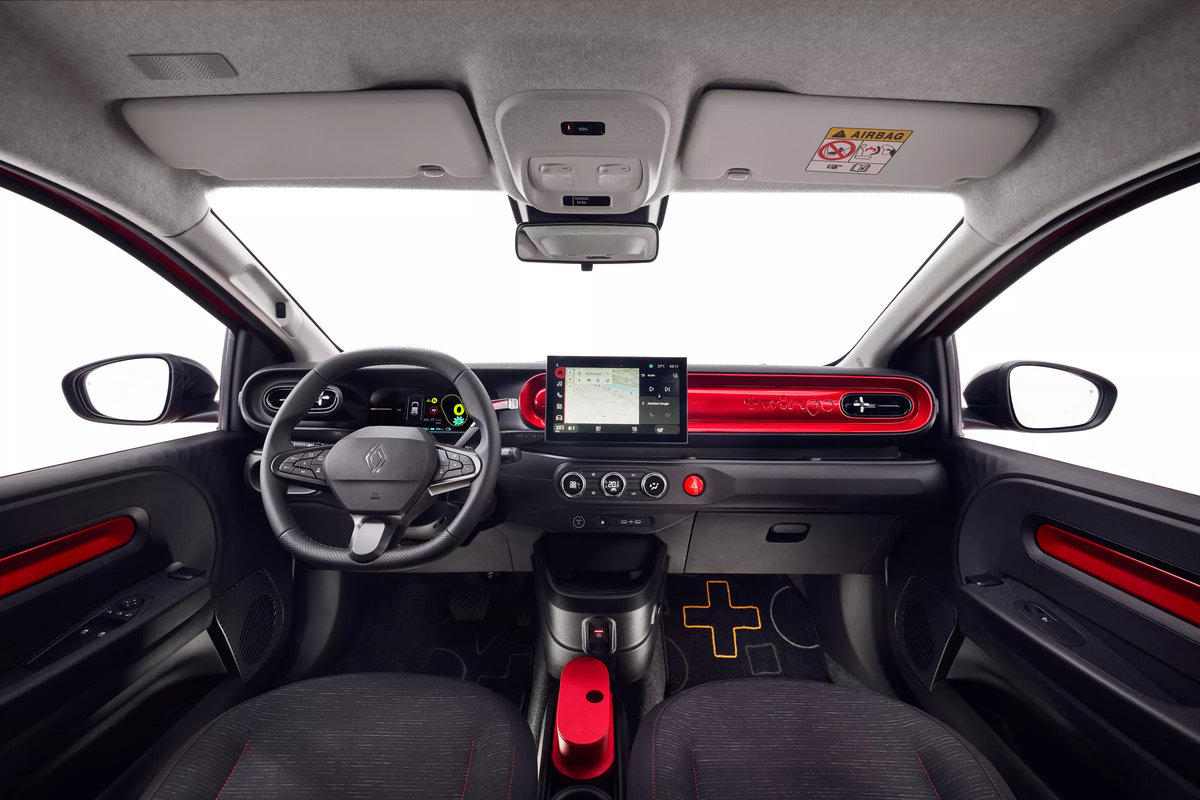
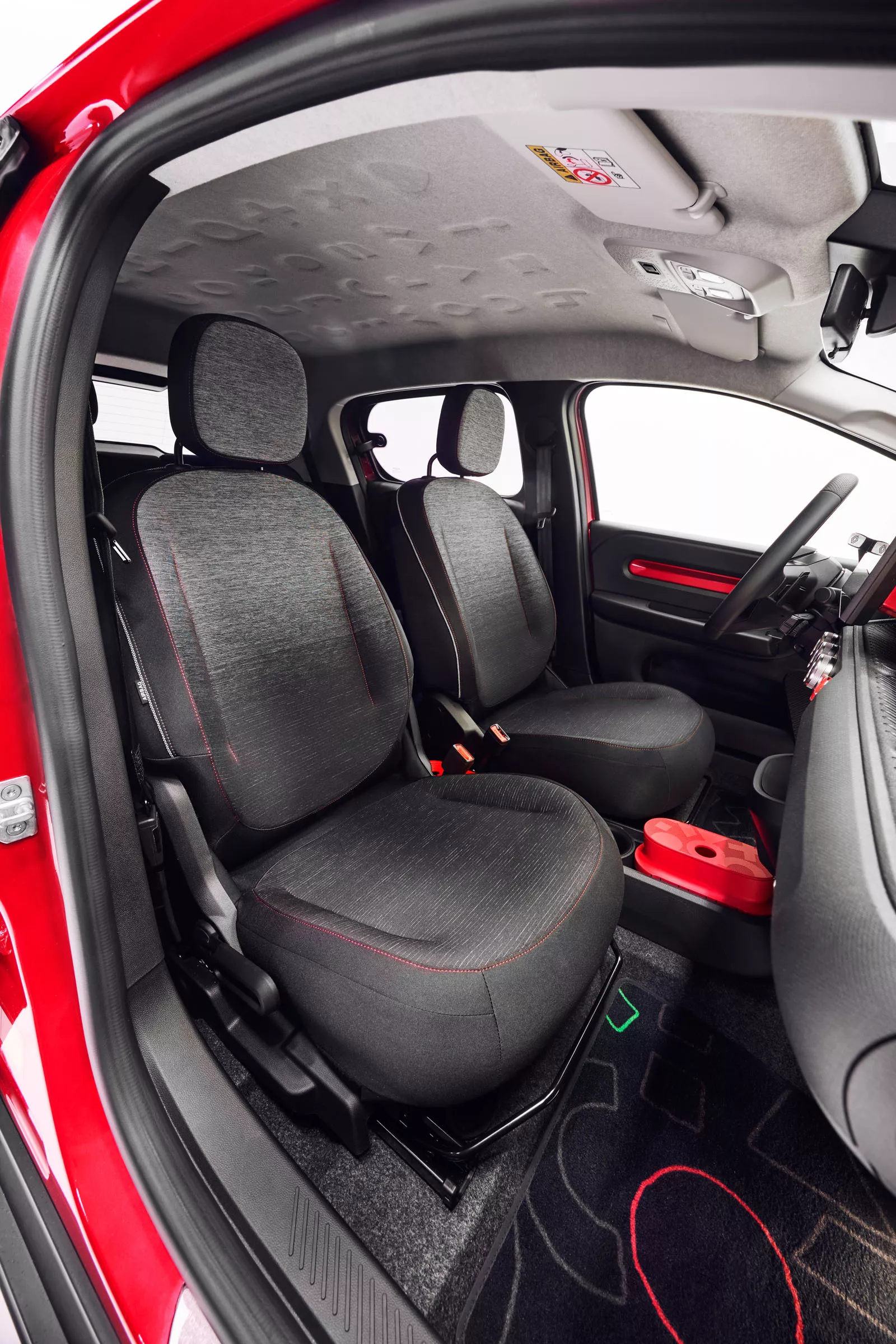
The new Twingo’s greatest strength is its interior spaciousness and practicality, which exceed those of its class.
Renault Twingo
Body size and interior space
Renault Twingo
- Length x width x height : 3,790 x 1,720 x 1,490 mm
- Wheelbase : 2,490mm (same as previous model)
- Vehicle weight : 1,200 kg (lightweight for an EV)
The overall length has been extended by 145mm compared to the previous model, while the overall height has been reduced by 55mm, improving aerodynamic performance.
Innovative seating arrangements
Renault Twingo
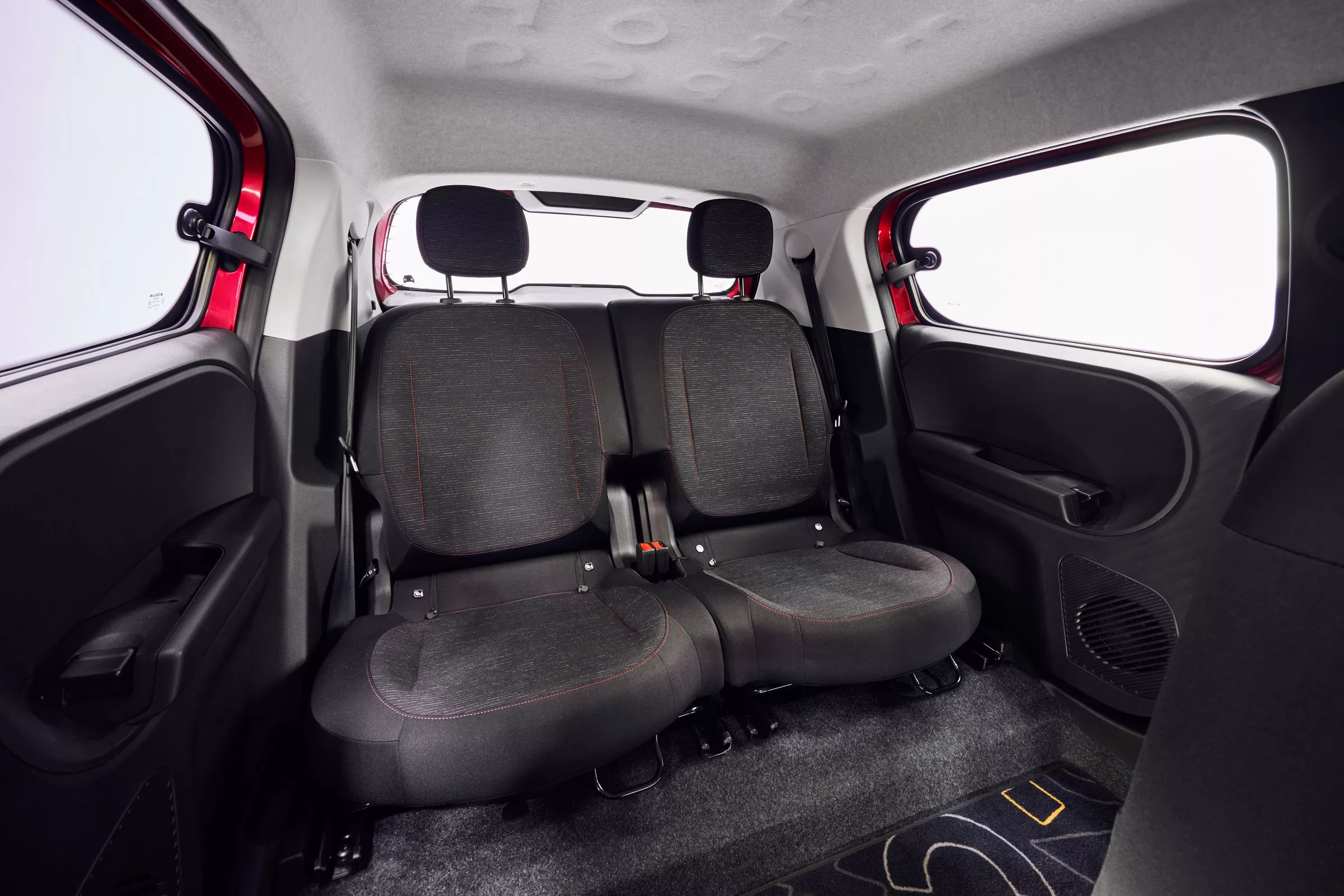
The highlight feature of the new Twingo is the independent sliding rear seats .
- Slide amount : Maximum 170mm forward/backward adjustment possible
- Individual adjustment : flexibility to adjust left and right seats independently
- Balanced with load capacity : passenger space and luggage space are optimized according to the situation
Class-leading luggage capacity
- Normal : 360 liters (approximately twice the capacity of the Fiat 500e)
- With rear seats folded : Maximum 1,000 litres
- Underfloor storage : 50 litres of additional storage space
- Comparative advantage : Comparable to the Renault 5 (326L) and Volkswagen Golf (381L)
This loading capacity is impressive for a compact car with a total length of less than 3.8m.
Pop and modern interior design
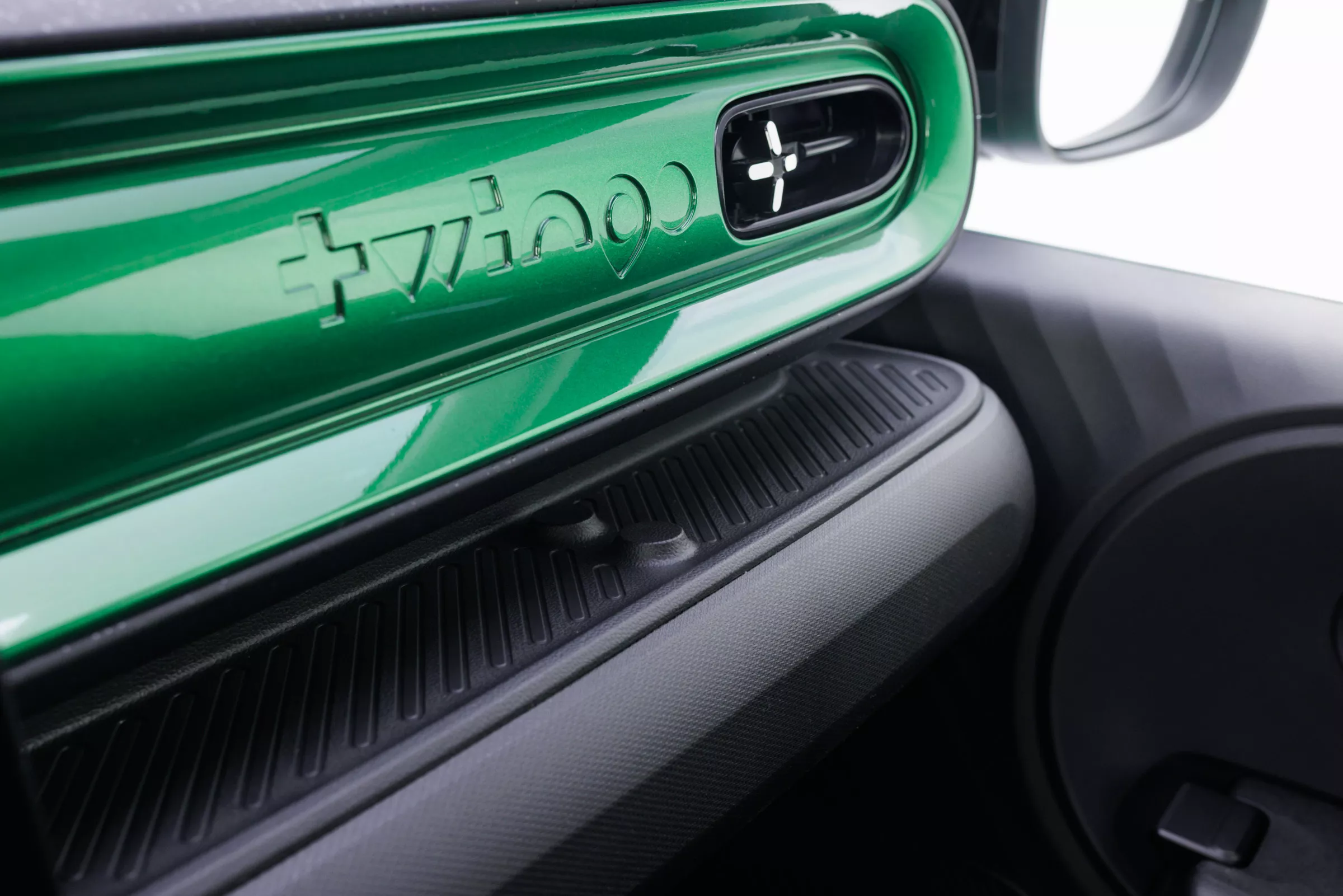
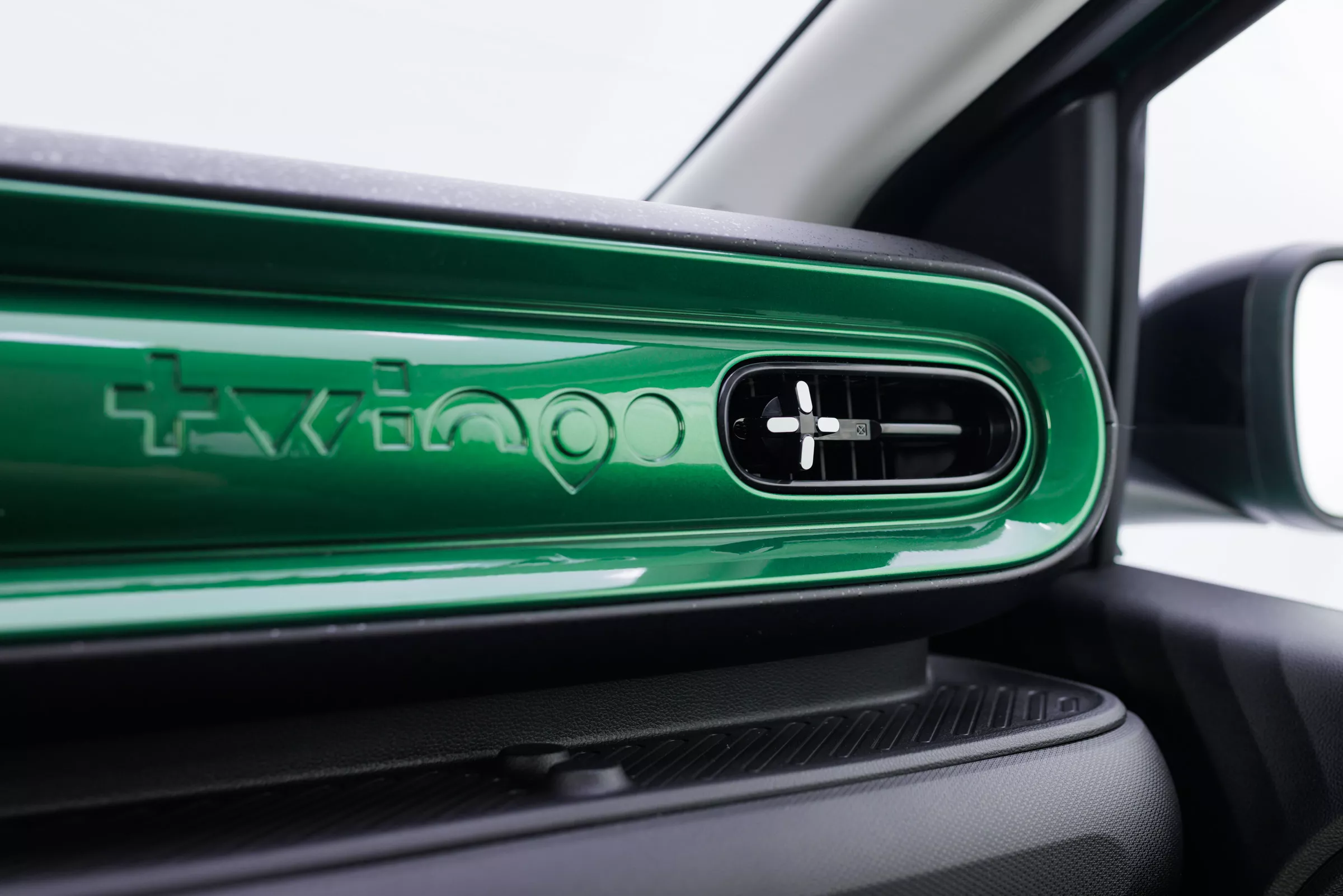
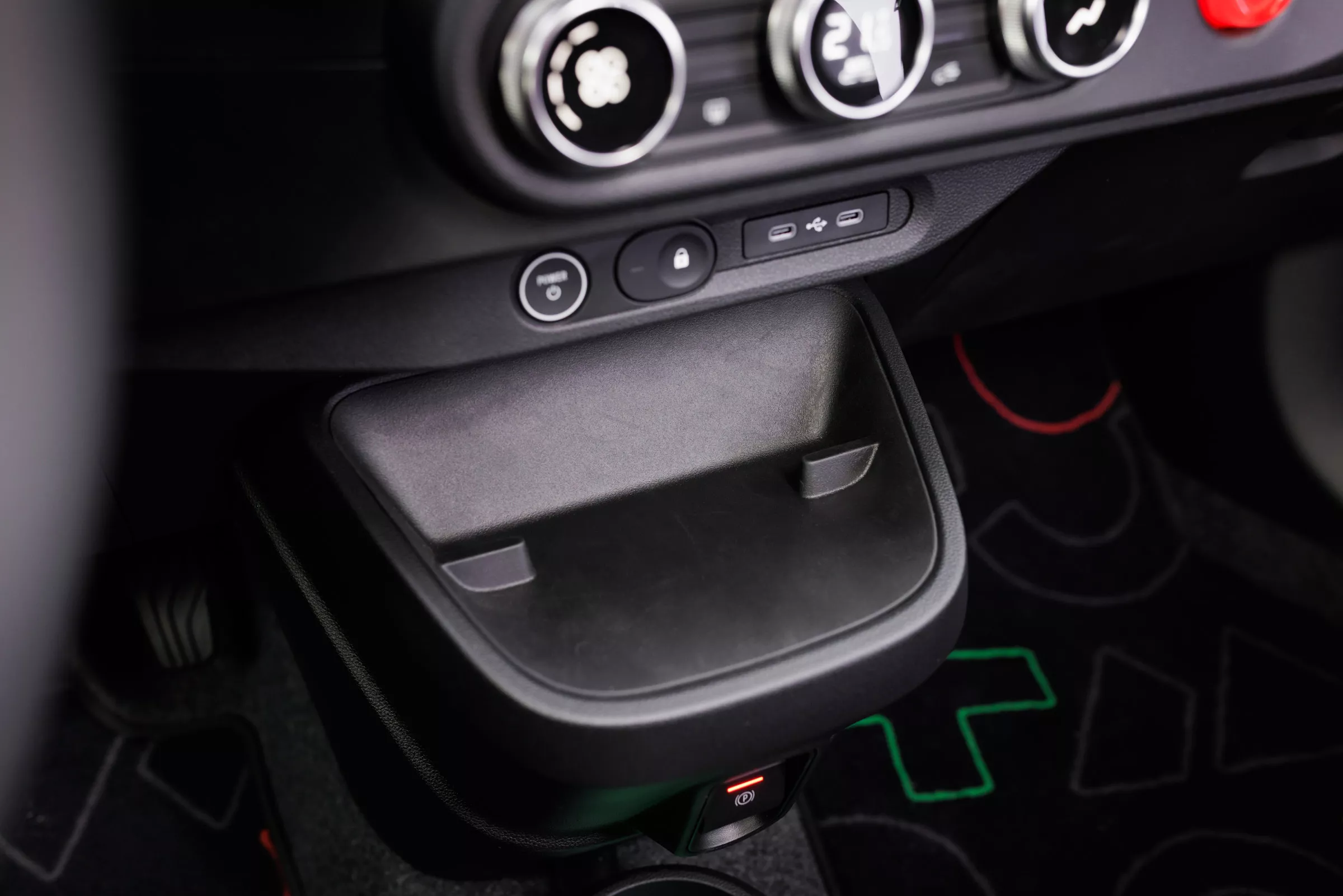
Color-coordinated interior
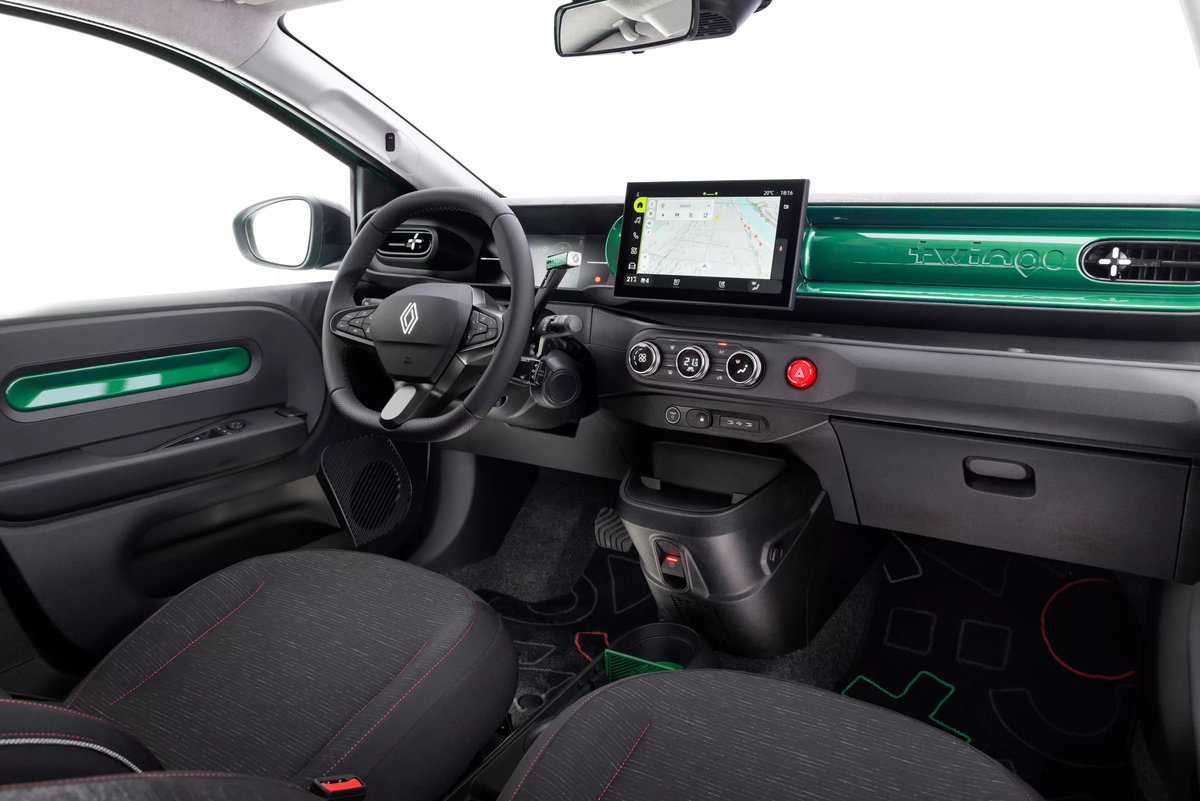
The interior of the new Twingo features a color scheme that matches the exterior color. A consistent color theme is applied to the dashboard, seats, door trim, etc., creating a unified space.
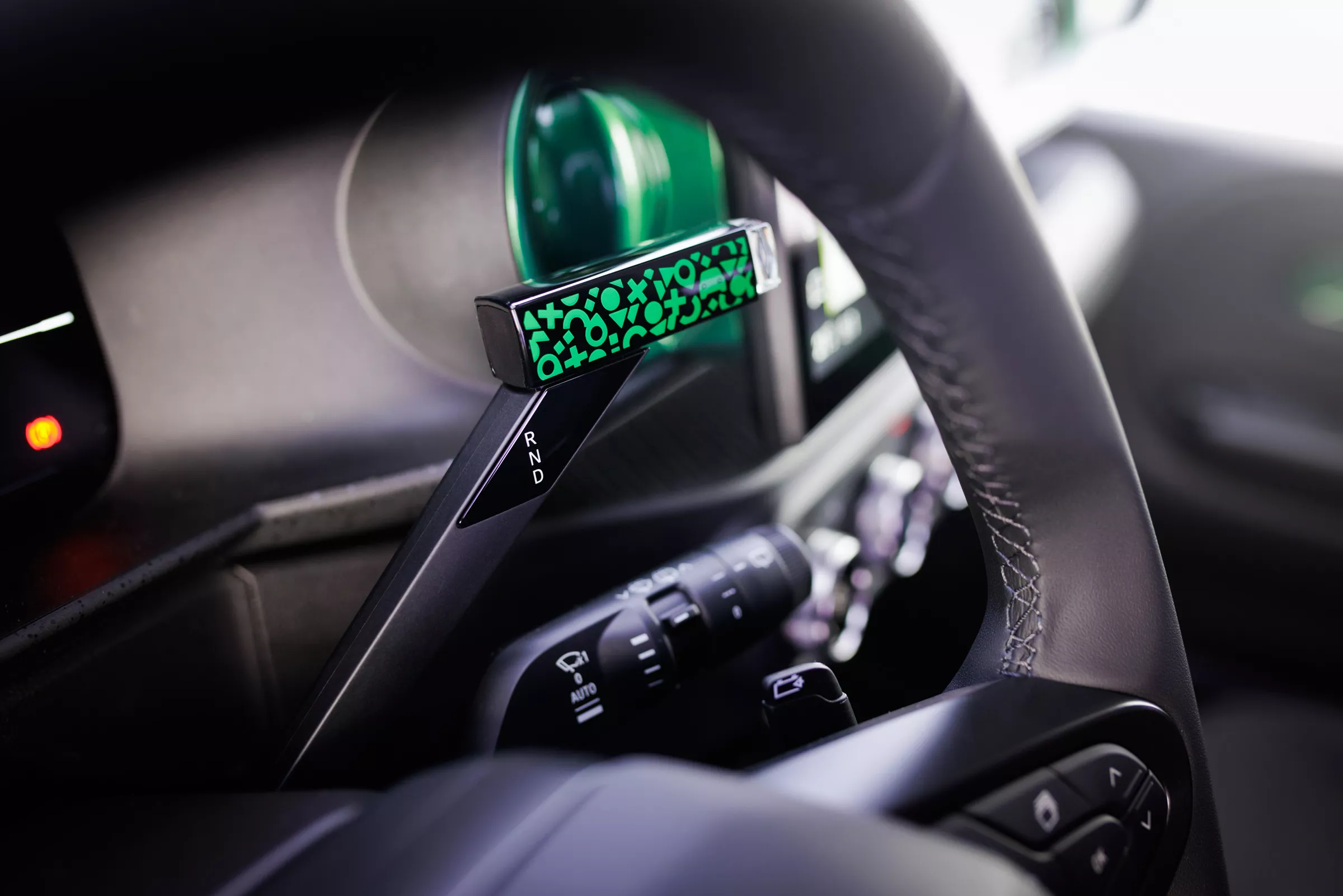
Digital Cockpit
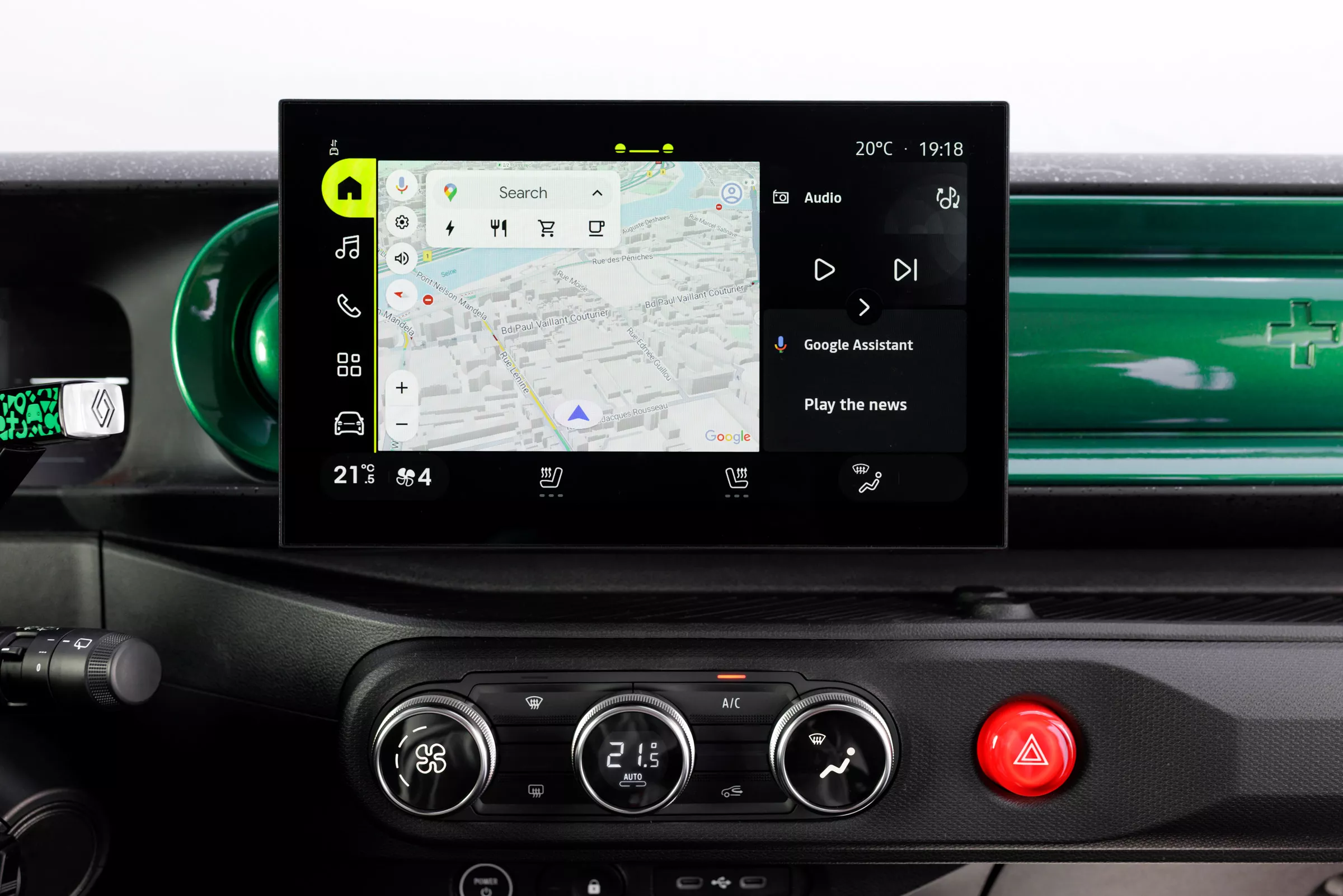
Renault Twingo
- 7-inch digital meter : displays essential information clearly
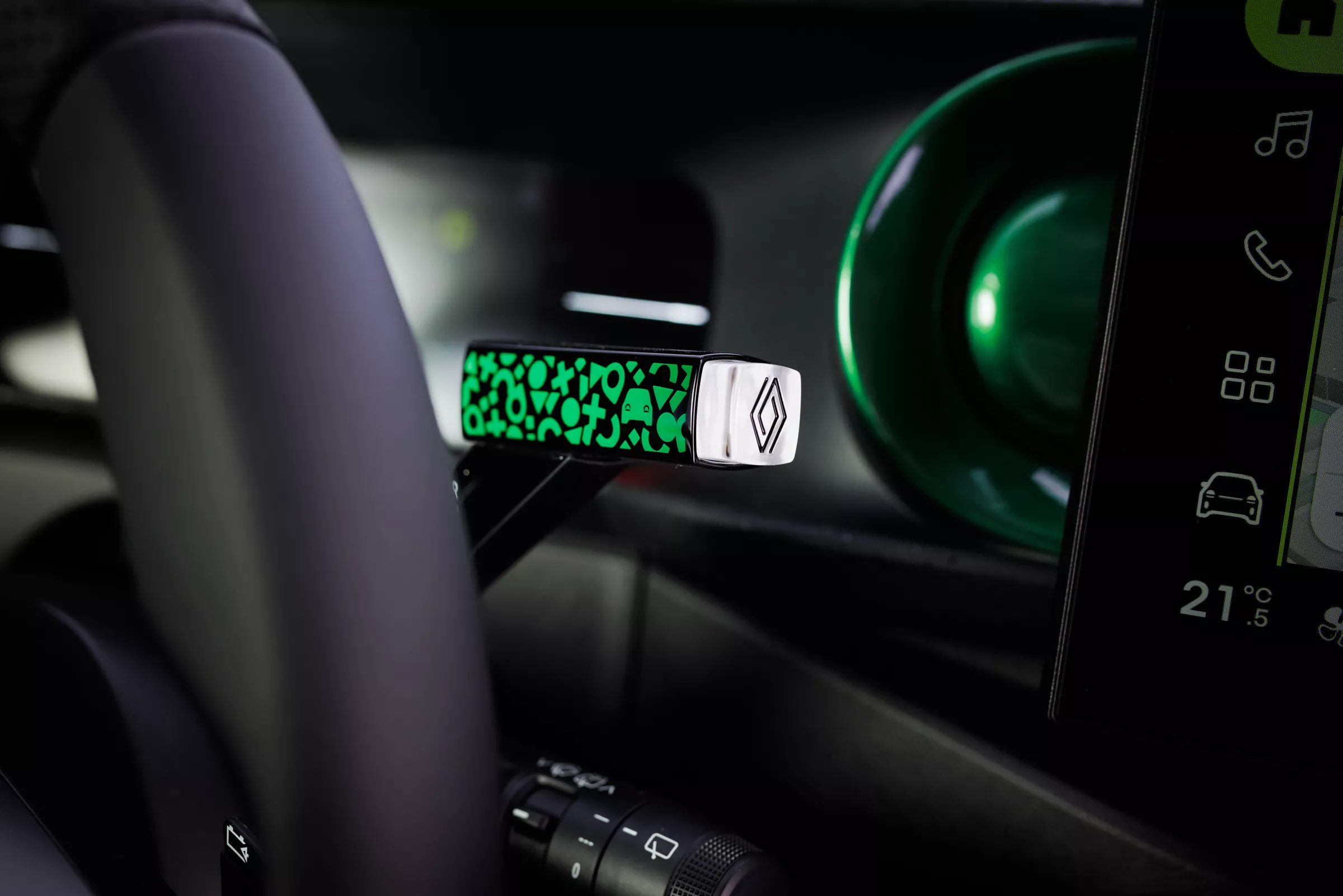
- 10-inch infotainment system : large, centrally located touchscreen
- Google integration : Built-in support for Google Maps and Google Assistant
- AI Assistant “Reno” : A dedicated avatar that provides charging information and vehicle function support
Unique Equipment
- e-pop shifter : lipstick-shaped customizable gear selector
- Twingo Alphabet : Exclusive design embossed on the roof lining
- Welcome Fanfare : Exclusive sound by electronic music master Jean-Michel Jarre
These playful features express a French style that sets the car apart from German cars such as Volkswagen.
EV-specific powertrain performance details
Electric powertrain specs
- Motor placement : Front-mounted (FF drive)
- Maximum output : 82PS (60kW) / 81hp
- Maximum torque : 175Nm (17.8kgm) / 129lb-ft
- 0-50km/h acceleration : 3.85 seconds
- 0-100km/h acceleration : 12.1 seconds
- Maximum speed : 130km/h (approx. 81mph)
Battery and range
- Battery type : 27.5kWh LFP (lithium iron phosphate) battery
- Range (WLTP) : 262 km (163 miles)
- Charging performance : DC fast charging up to 50kW
- Charging time : 10% to 80% in approximately 30 minutes
Advantages of LFP batteries
The LFP (lithium iron phosphate) battery used in the new Twingo has the following advantages over the conventional NMC (nickel manganese cobalt) battery:
- Cost reduction : Low use of rare metals and low manufacturing costs
- Improved safety : Lower risk of thermal runaway
- Long life : Little deterioration due to charge/discharge cycles
- Environmentally friendly : Reduced reliance on cobalt and nickel
Comparison with competing models
Compared to the Volkswagen ID.Every1 Concept (a preview model of the ID.Up):
| item | Renault Twingo | VW ID.Every1 |
|---|---|---|
| Range | 262km | 250km |
| charging speed | 50kW | Unreleased |
| Estimated price | Approximately €20,000 | Approximately €20,000 |
| Market launch | Early 2026 | Scheduled for 2027 |
Renault has a slight advantage in range and is one year earlier on the market, so it can expect to enjoy a first-mover advantage.
Competitive pricing strategies
Price range and market positioning
- European price : Approximately 20,000 euros (without subsidies)
- Equivalent to Japanese yen : Approximately 3.5 million yen (calculated at an exchange rate of 150 yen/€)
- Compared to previous model :
- 3rd generation MT (1L gasoline): 2.5 million yen
- 3rd generation EDC (0.9L turbo): 2.59 million yen
- New EV: Approximately 3.5 million yen (estimated)
Source of price competitiveness
Renault is affordable because:
- Platform sharing : AmpR Small platform shared with Renault 5 and 4
- Small battery : Reduces expensive battery capacity (27.5kWh)
- LFP Chemistry : Adopting Cheap Battery Technology
- Efficient design : Simple structure with no wasted space
- Economies of scale : Cost reduction through sharing of parts across multiple vehicle models
Get even more savings with subsidies
If you take into account subsidies for electric vehicle purchases offered by each country, the actual purchase price will be even lower.
- France : grants of up to €7,000
- Germany : Environmental bonus available
- UK : Plug-in car subsidies (depending on the system)
Release date and sales strategy
Market launch schedule
- Announcement date : November 6, 2025
- Sales start : Early 2026 (European market)
- Production base : Europe (details undisclosed)
- Introduction in Japan : Undecided (production of the previous model will end in 2023)
Positioning in Renault’s EV strategy
The new Twingo plays an important role in Renault’s EV lineup.
Renault EV lineup (as of 2026)
- Megane E-Tech : C-segment crossover
- Renault 5 E-Tech : B-segment hatchback (40/52kWh battery)
- Renault 4 E-Tech : B-segment crossover
- Twingo E-Tech : A-segment city car (smallest and cheapest model)
The Twingo is expected to contribute to expanding EV sales across the brand as an “entry model” for customers considering switching to EVs.
Twingo history and evolution
First generation Twingo (1992-2007)
- Features : 3-door hatchback, FF layout
- Design : Round headlights and adorable form
- Verdict : Popular as an iconic French city car
Second generation Twingo (2007-2014)
- Features : Continued 3-door, FF layout
- Evolution : More refined design and equipment
3rd generation Twingo (2014-2026)
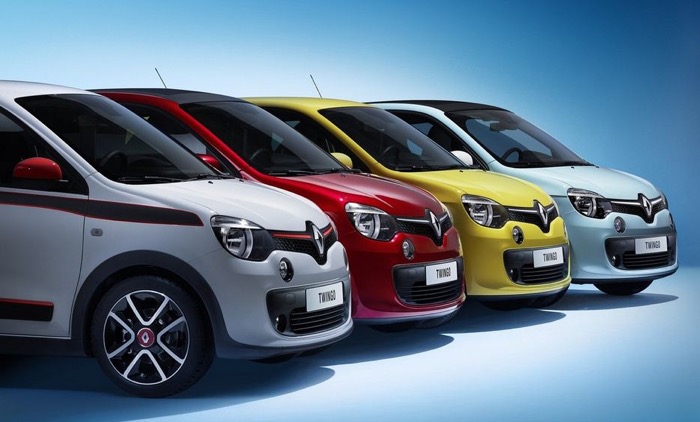
- Innovation : 5-door, rear-engine, rear-wheel drive layout
- Joint development : Shares the base with the Smart Fortwo/Forfour
- Electrification : Addition of Twingo ZE (EV model) for overseas markets
- Battery: 22kWh
- Range: 180km
- Output: 82PS
4th generation Twingo (2026 onwards)
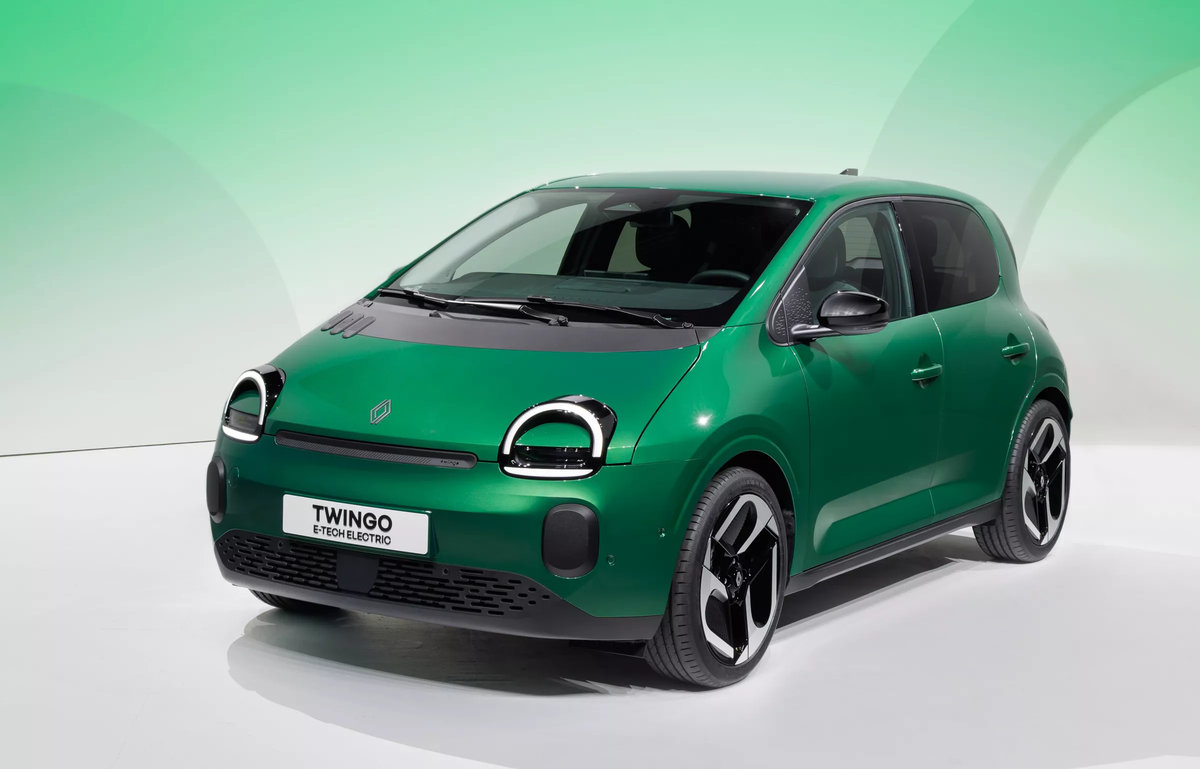
- Full EV transition : Gasoline models discontinued
- Return to FF : Change from rear-wheel drive to front-wheel drive layout
- Platform renewal : Dedicated EV platform adopted
- Design Revisited : Original Homage Design
Thorough comparison with competing models
Fiat 500e
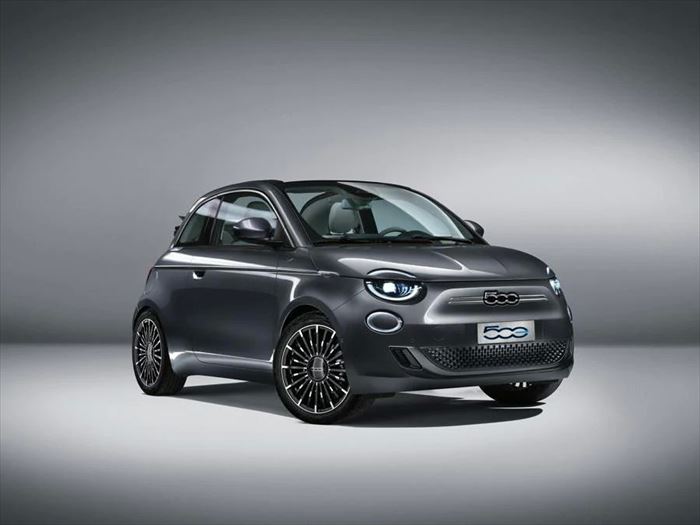
Fiat 500e
- Battery : 42kWh
- Range : 320km
- Luggage : 185L (about half of Twingo)
- Price : From approximately 4 million yen
- Evaluation : Twingo wins in terms of design and practicality
BYD Dolphin/Dolphin Surf
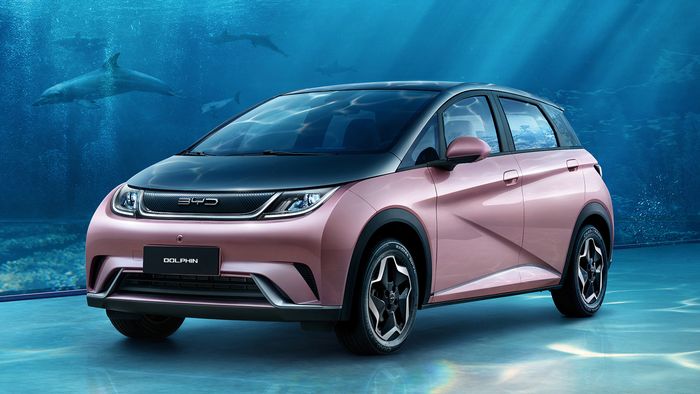
BYD DOLPHI
- Battery : 44.9 kWh
- Range : 340km
- Price : From approximately 3.5 million yen
- Evaluation : The Twingo has the advantage in terms of range, but its design and European brand appeal
VW ID.Up (scheduled for 2027)
- Battery : Estimated 30-40kWh
- Cruising range : 250km (estimated)
- Price : Target price: approx. €20,000
- Evaluation : Direct rivals, but Renault is ahead in terms of launch timing
Dacia Spring Electric
- Battery : 26.8 kWh
- Range : 230km
- Price : Approximately 2 million yen (Europe’s cheapest EV)
- Evaluation : Price advantage, but Twingo is better in terms of equipment and design
Pros and cons of the new Twingo
merit
✅Affordable : Affordable price range for an EV
✅Excellent practicality : Spacious interior and luggage space beyond its class
✅Attractive design : The distinctive style of the original Homage
✅Ideal for city use : Compact size and easy handling
✅Advanced equipment : The latest connectivity including Google integration
✅Environmental performance : Sustainability with LFP battery
✅Customizability : A wide range of colors and options
Disadvantages
Limited range : 262km makes it unsuitable for long-distance driving
. Modest acceleration : 0-100km/h in 12.1 seconds isn’t sporty
. Charging speed : 50kW cap is slow for a modern EV
. Small battery : This may affect future used car value
. Highway restrictions : 130km/h top speed is too slow on the highway.
Target users and usage scenarios
Ideal user profile
- Urban residents : Daily travel distance is less than 50km
- Second car demand : Owning a separate vehicle for long distance travel
- Environmentally conscious people : Interested in EVs but want to avoid expensive cars
- Design-conscious : Seeking unique styling
- First-time EV buyers : Want an affordable EV experience
Ideal Use Scenarios
- Commuting to work or school : Daily use of 30-40km round trip
- Shopping : Weekend trip to the shopping center
- City riding : Narrow roads and urban areas with many parking lots
- Short-distance leisure : Short trips to nearby areas (within 100km)
Unsuitable usage scenarios
- Long-distance driving : Charging plans are required for round-trip trips of more than 200 km.
- Mainly highways : Maximum speed and range restrictions
- Cold regions : Driving range decreases significantly in winter
- Areas with underdeveloped charging infrastructure : Environments where home charging is difficult
Frequently asked questions about the new Twingo
Q1: When will the new Twingo be released in Japan?
A: At this time, there are no plans to introduce the new model in Japan. Production of the previous model for Japan ended in 2023, and there has been no official announcement from Renault Japan regarding the introduction of the new model in Japan. Sales in the European market are scheduled to begin in early 2026.
Q2: What is the actual range of the new Twingo?
A: The WLTP value is 262km, but in actual use conditions the range is as follows:
- Urban area : approx. 250-270km
- Expressway : about 180-200km
- Winter (heated) : Approx. 150-180km
- Summer (with air conditioning) : Approximately 220-240km
Q3: How long does it take to charge?
A: It depends on the charging method.
- DC fast charging (50kW) : 10-80% in about 30 minutes
- AC normal charging (7kW) : 0-100% in approximately 4 hours
- Household outlet (3kW) : 0-100% in approximately 9 hours
Q4: Why did you go back to FF from the previous model’s rear-wheel drive layout?
A: Due to the characteristics of EV powertrains, the FF structure, which places the motor and inverter at the front, is advantageous in terms of packaging efficiency and manufacturing costs. Another reason is that sharing the platform with the AmpR Small also reduces costs.
Q5: Compared to the competing Fiat 500e, which one do you recommend?
A: It depends on the purpose of use.
- Practicality : Twingo (luggage capacity 360L vs 185L)
- Range-focused : 500e (320km vs 262km)
- Design : Personal preference
- Price : Twingo is slightly cheaper (estimated)
Q6: Can I use it safely in winter?
A: LFP batteries have better low-temperature performance than NMC batteries, but their range still drops by 20-30% in winter. If you regularly drive more than 100km, you should be careful about your winter charging schedule.
Q7: How do maintenance costs compare to gasoline vehicles?
A: Electric cars are generally cheaper to maintain.
- Fuel costs : Electricity costs are about 1/3 of gasoline costs
- Maintenance : No oil changes required, long-lasting brake pads
- Taxes : Many countries offer preferential tax treatment for EVs
- Insurance : May be slightly higher depending on vehicle price
Summary: The new Twingo E-Tech sets a new standard for urban EVs
The new Renault Twingo E-Tech electric demonstrates new possibilities for compact urban cars with its bold decision to go fully electric.
With its adorable design that inherits the DNA of the first-generation Twingo, practicality that exceeds its class, and affordable price tag, it overturns the preconceived notion that EVs are expensive and impractical.
The 262km range is not enough for long-distance driving, but it is sufficient for everyday use in urban areas, and the cost and weight savings achieved by the small battery are the result of pursuing the essence of a city car.
With competitors such as the Volkswagen ID.Up and BYD Dolphin Surf on the horizon, Renault is trying to differentiate itself with its timely market launch and playful design, typical of French cars.
Once launched in 2026, it will be interesting to see what impact the new Twingo will have on the spread of EVs in Europe, and whether it will be introduced to the Japanese market in the future.
We will continue to update you on the new Renault Twingo E-Tech electric as soon as we have the latest information, so stay tuned!