
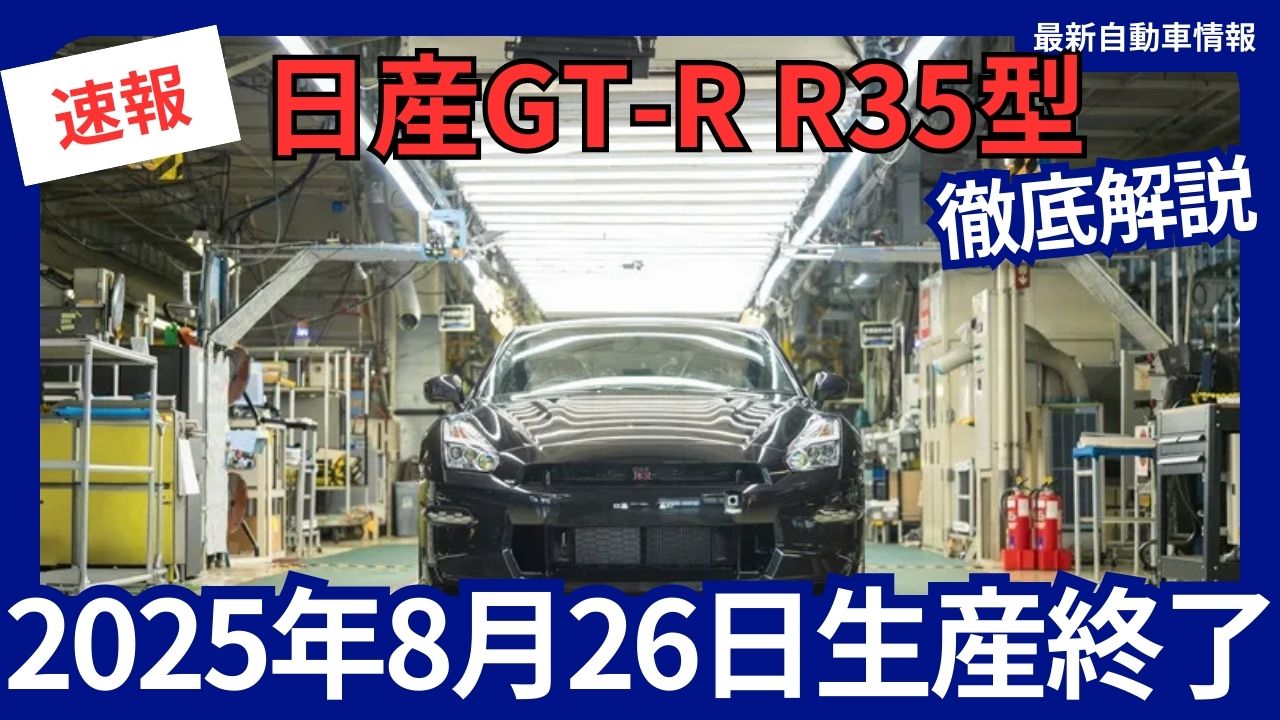
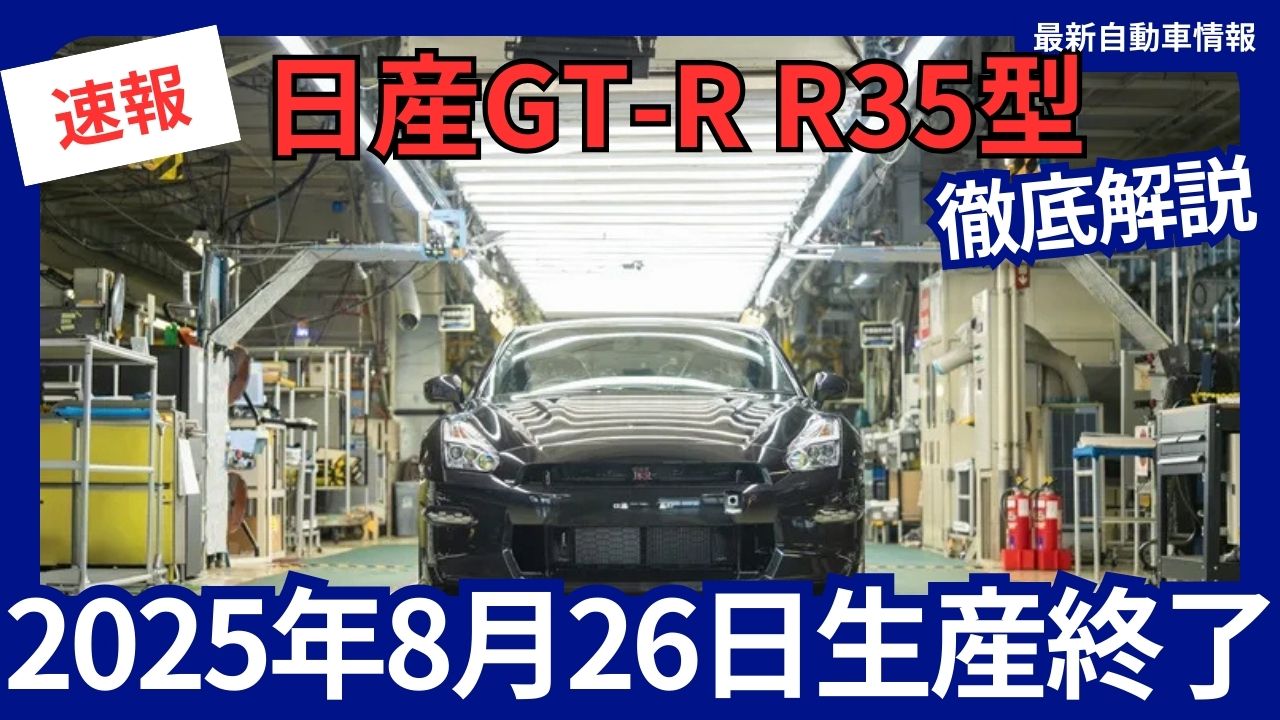
On August 26, 2025, Nissan Motor Co., Ltd. officially announced the end of production of the R35 Nissan GT-R, which had been in production for 18 years since 2007. According to an official Nissan Motor Co., Ltd. press release , production of the last vehicle ended at the Tochigi Plant (Kamisuwa-cho, Tochigi Prefecture) on the same day, and a commemorative off-line ceremony was also held.
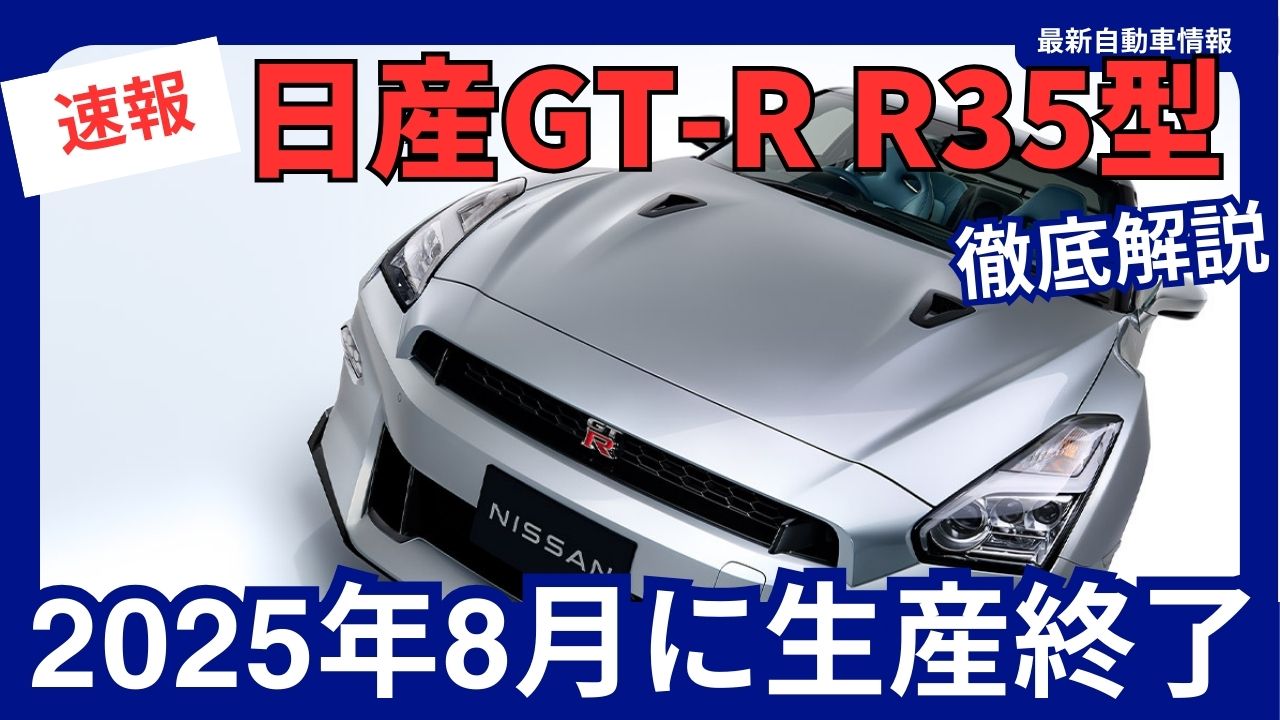
The last one is a special edition Midnight Purple car.
The last R35 GT-R is a “Premium edition T-spec” model, with a body color exclusive to the T-spec, “Midnight Purple.” This special final vehicle will be delivered to a customer in Japan. Approximately 48,000 units were produced over 18 years, and the car has continued to be loved by sports car fans around the world.
The history and technological appeal of the GT-R
Born as a supercar that anyone can enjoy
The R35 GT-R was born in 2007 as a new dimension of multi-performance supercar that embodied the concept that “anyone can enjoy the ultimate supercar lifestyle, anywhere, anytime.” As the “Nissan GT-R,” which was separated from the conventional Skyline, it was designed as a world-class car that combined “GT (Grand Touring)” performance with “R (Racing)” technology.
Engine assembled with expert craftsmanship
The heart of the R35 GT-R is the VR38DETT 3.8-liter V6 twin-turbo engine, and all 48,000 of them were hand-assembled by nine skilled “takumi” (master craftsmen) at the Yokohama Plant. Each engine is fitted with a plate bearing the name of the master craftsman responsible for assembly, a testament to the craftsman’s pride and responsibility.
Continuous evolution for improved performance
Unlike the life cycle of a conventional automobile, the R35 GT-R has undergone continuous evolution with each model year. Maximum output has increased from 480ps at launch to 570ps since the 2017 model (an increase of 90ps). The NISMO model introduced in 2014 adopted a GT3 race car-spec turbocharger and high-precision parts, achieving a maximum output of 600ps.
History of the GT-R
The Nissan GT-R is Japan’s pride and joy, a super sports car. It has been announced that production of the R35 GT-R will end in August 2025, causing many fans to express their sadness. However, the history of the GT-R does not end here. With anticipation for the next-generation model in mind, let’s look back at the history of the GT-R from its origins to the present day.
The origins of the GT-R: Skyline GT-R (PGC10 model)
The origin of the GT-R is the Skyline 2000GT-R (PGC10 model), commonly known as the Hakosuka GT-R, which was born in 1969. Since then, famous cars representing each era, such as the Kenmeri GT-R, R32 model, R33 model, and R34 model, have woven the history of the GT-R, captivating many people with their outstanding performance and beautiful design, and becoming deeply rooted in Japanese automotive culture.
R35 GT-R: To the top of the world
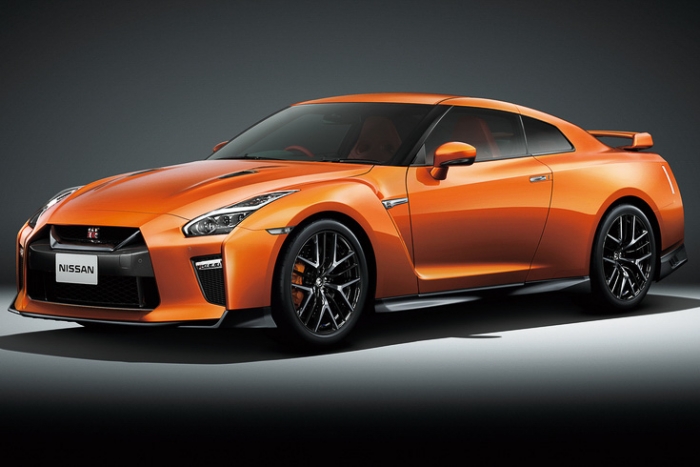
GT-R
In 2007, the GT-R dropped the “Skyline” name and became the “GT-R (R35),” ushering in a new generation. It incorporated cutting-edge technology of the time, including the newly developed 3.8-liter V6 twin-turbo “VR38DETT” engine and dual-clutch transmission. The R35 GT-R blazed a new trail as a world-class high-spec super sports car.
The evolution of the R35 GT-R: Always at the cutting edge
Since its release in 2007, the GT-R has undergone improvements and specification changes every year, always remaining at the cutting edge.
- 2011 model: The interior and exterior design, including the engine mechanism and aerodynamic performance, has been refined. New grades “Club Track edition” and “EGOIST” have been added.
- 2014 model: Changes were made to the front and rear lamps and suspension. A new “NISMO” model was announced.
- 2017 model: A major minor change was made to the interior and exterior, and the “NISMO” independent model was born.
- 2024 model: Second major minor change. Major changes to the interior and exterior.
These improvements have allowed the GT-R to continue evolving and captivate sports car fans around the world.
End of R35 GT-R production: expectations for the next-generation GT-R
More than 10 years have passed since its introduction, and sales have ceased in some regions. Now, it has been announced that sales in Japan will end with the 2025 model, with production ceasing in August of the same year. However, Nissan is also considering the development of the next-generation GT-R, and the evolution of the GT-R is still on the horizon.
R35 GT-R Mechanism: The Crystallization of Innovative Technology
The R35 GT-R is the culmination of innovative technology.
- Premium Midship Package: The world’s first independent transaxle is used, with the engine located at the front of the vehicle and the clutch, transmission and transfer case at the rear.
- VR38DETT Engine: The 3.8LV 6-cylinder DOHC twin-turbo engine is hand-assembled one by one by craftsmen.
- GR6 type dual-clutch transmission: Enables automatic gear changes in as little as 0.2 seconds.
These innovative technologies enable the GT-R to achieve world-class driving performance.
GT-R NISMO: Ultimate performance
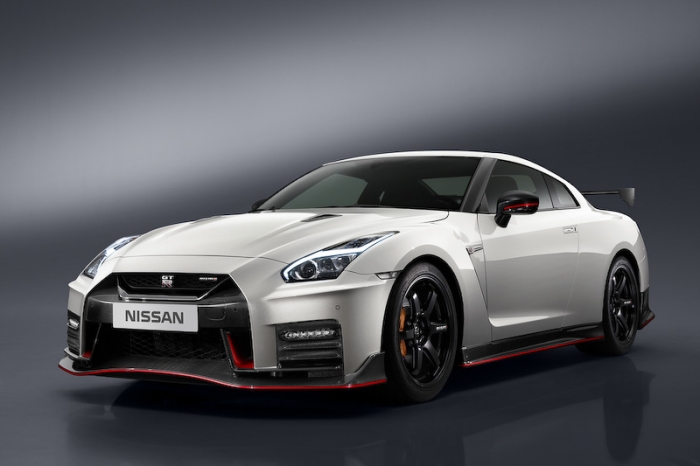
GT-R NISMO
The GT-R NISMO is the ultimate performance model that utilizes knowledge gained from racing activities. With dedicated aero parts, suspension, and engine tuning, it aims to reach even greater heights.
GT-R T-spec: For those seeking a special GT-R
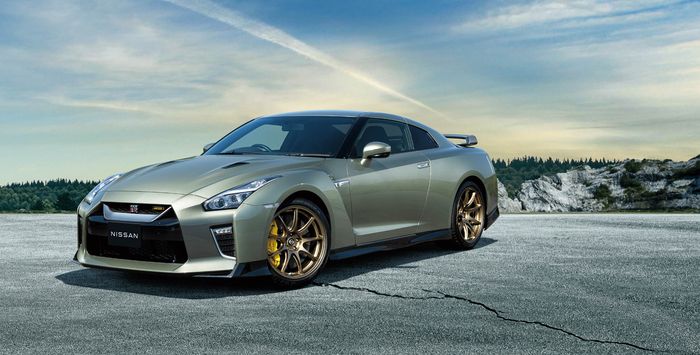
GT-R Premium edition T-
The GT-R T-spec is a model prepared for those who want a special GT-R. With its exclusive body color, interior, and equipment, it exudes a presence that sets it apart from other GT-Rs.
About the next-generation GT-R
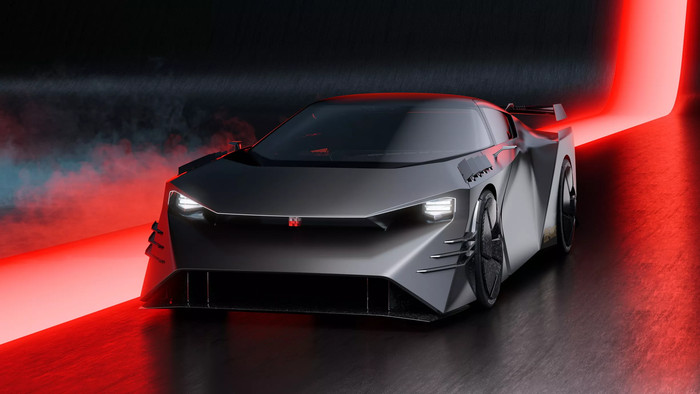
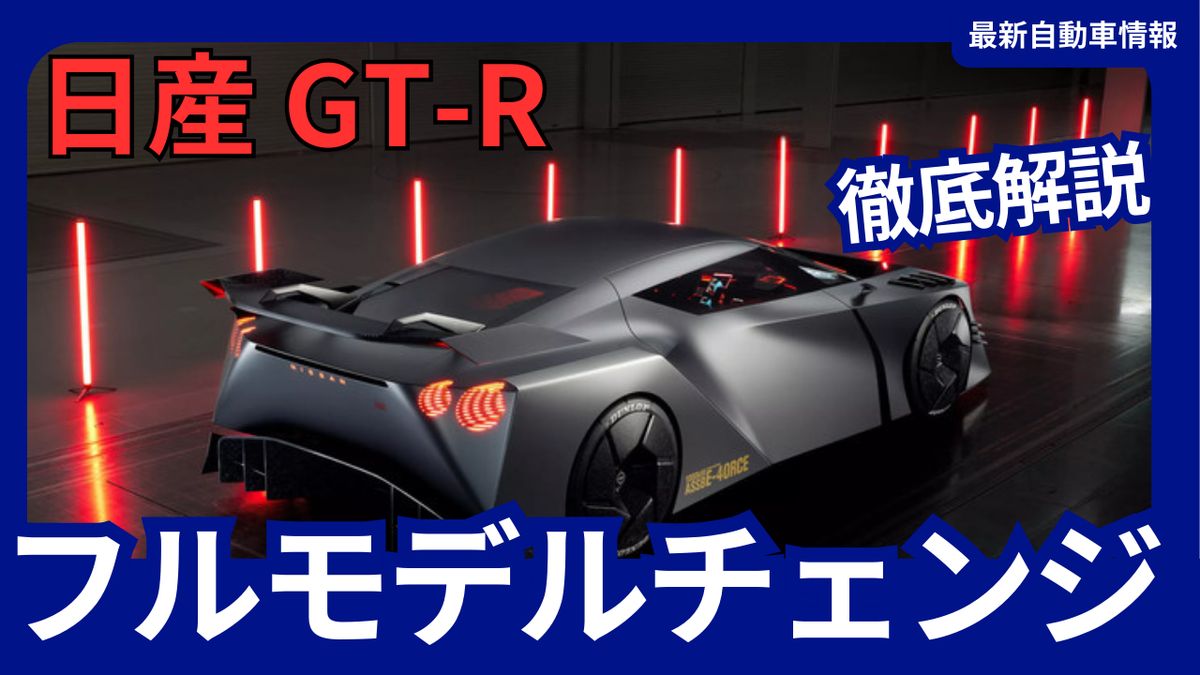
NISSAN hyperforce
When imagining what the next-generation GT-R will look like, one thing that stands out is the Nissan Hyperforce concept car, which was unveiled at the Japan Mobility Show in October 2023. This model features innovative design and technology that gives a glimpse into the future of the GT-R.
Brilliant achievements in motorsports
Record-breaking on the circuit
The R35 GT-R has set records on numerous circuits:
Nürburgring Circuit Record
- 2007: 7 minutes 38 seconds (wet road conditions)
- 2008: 7 minutes 29 seconds (standard specification, Toshio Suzuki)
- 2009: 7 minutes 26 seconds
- 2012: 7 minutes 18 seconds
- 2013: 7 minutes 8.679 seconds (GT-R NISMO, fastest R35 ever recorded by Michael Krumm)
Tsukuba Circuit Record
- December 2019: 59.361 seconds (2020 model GT-R NISMO)
- January 2024: 59.078 seconds (2024 GT-R NISMO, Tsugio Matsuda)
Race success
In the Super GT Championship, the car recorded five wins in the GT500 class and three wins in the GT300 class. It has also won numerous races both in Japan and overseas, including the Blancpain GT Series Pro-Am class victory in 2013 and the Bathurst 12 Hour race in 2015. Furthermore, in 2016, it achieved a Guinness World Record by drifting at a 30-degree angle at 304.96 km/h at Fujairah International Airport in the UAE.
Expectations for the next-generation GT-R
CEO hints at revival
Nissan CEO Ivan Espinosa commented at the announcement, “To all GT-R fans, this is not a permanent farewell to the GT-R. We aim to bring the GT-R back to you someday.” While no specific plans have been finalized at this time, he hinted at the development of a next-generation model, saying, “The GT-R will evolve and return.”
Technology transfer and new challenges
Nissan is committed to redefining the GT-R name for the next generation. The learnings gained from the R35 have been essential to the development of the next-generation GT-R, and the company aims to set new standards while evolving its legacy. Fans around the world are eager to see how the GT-R will evolve in an increasingly electrified automotive industry.
The Nissan GT-R’s legacy in automotive history
The R35 GT-R was more than just a high-performance sports car. It set a new standard as a multi-performance supercar, offering safe and enjoyable off-road performance even on rainy or snowy roads, comfort in urban areas, and overwhelming performance on the circuit. It was designed to enable all drivers to enjoy the best performance in all situations.
With its ATTESA ET-S all-wheel drive system and innovative aerodynamic design, the R35 GT-R became one of the iconic cars symbolizing “Nissan’s Technology,” and its long production period of 18 years ensured it remained beloved by many car enthusiasts.
Production of the car was discontinued due to regulatory compliance and difficulties in procuring parts, but its technological legacy and records will be passed on to future generations, and it is hoped that it will one day be revived as a new GT-R.
Reference articles: