

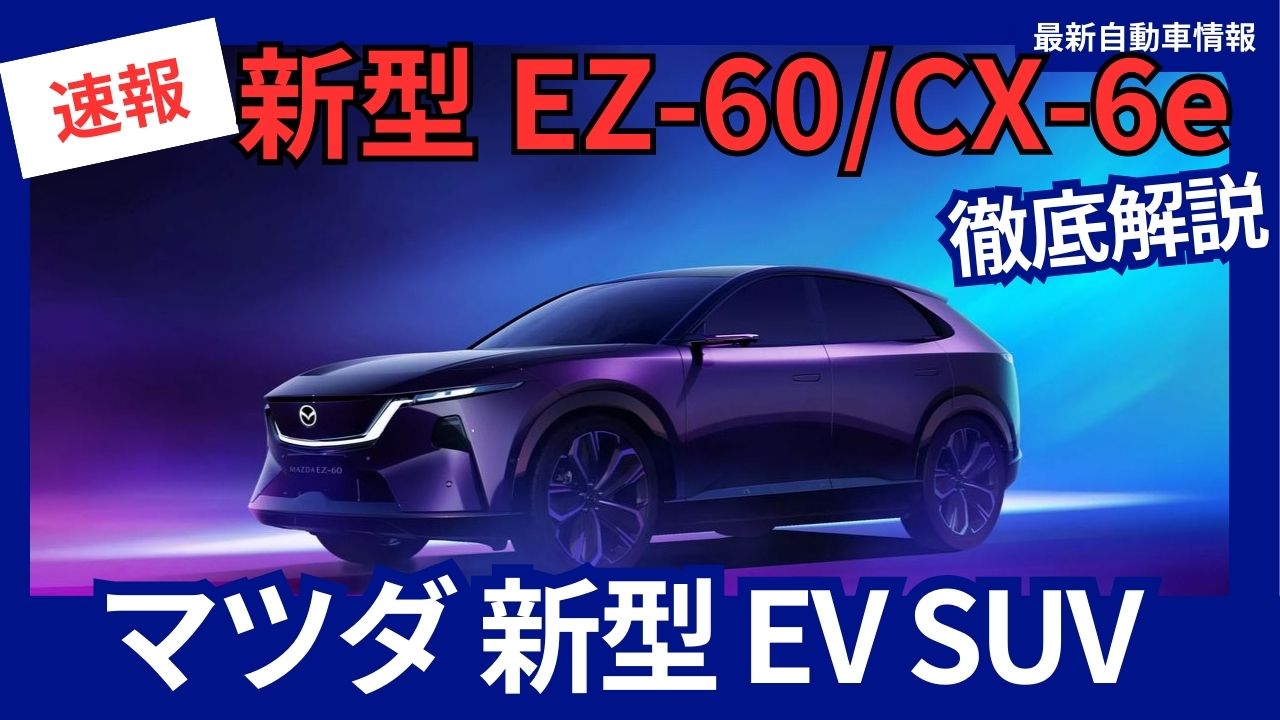
As the automotive industry enters a once-in-a-century period of transformation, manufacturers are accelerating their shift to electrification. Mazda, which has made a distinctive presence amid this trend, also announced a noteworthy new electric vehicle (EV) SUV on April 10, 2025, as a new step in its electrification strategy. This model, which will be released as the “EZ-60” in the Chinese market and as the “CX-6e” in global markets, particularly Europe, has the potential to be an important milestone in Mazda’s EV strategy.
The MX-30, Mazda’s first mass-produced EV, was a model full of Mazda’s signature originality and challenging endeavors, with features like double-door freestyle doors and a cork interior. However, it was criticized for its short driving range, and issues remained, particularly with regard to its practicality as an EV. Based on the experience with the MX-30 and feedback from the market, Mazda’s next step was to develop a model that combined practicality to meet mainstream market needs with Mazda’s unique design and driving performance at a high level. The culmination of this effort is the recently announced EZ-60/CX-6e.
This new EV SUV was unveiled ahead of its official debut at the Beijing Motor Show at the end of April 2024. The images released reveal elegant yet powerful proportions that strongly reflect Mazda’s design philosophy, “KODO – SOUL of MOTION.” More than just a means of transportation, the car’s distinctively vibrant design evokes the joy of ownership and the fun of driving, making it a distinctive and appealing choice compared to existing EVs. It has the potential to be a particularly compelling new option for users considering the Tesla Model Y, which has become a benchmark in the global EV market.
Summary of the new Mazda EV SUV “EZ-60/CX-6e”
- New EV SUV unveiled:
- Mazda has announced the new EV SUV “EZ-60/CX-6e” as a new step in its electrification strategy. This will be the first full-scale mass-produced EV following the MX-30.
- It will be officially unveiled at the 2024 Beijing Motor Show, and aims to combine practicality that meets mainstream market needs with Mazda’s signature design and driving performance.
- design:
- The design strongly reflects the Mazda Arata concept car, which will be unveiled in 2023.
- Based on Mazda’s design philosophy, “KODO – SOUL of MOTION,” the car has a flowing, powerful form that is full of life.
- The front has a grille-less look typical of an EV, but it conveys strength and intelligence, while the side features a sporty silhouette reminiscent of a coupe SUV.
- The doors are hinged for practicality.
- Platforms and Technologies:
- The platform that forms the basis of the car is that of the Chinese automaker Changan Automobile, and is the same as the model for the company’s EV brand Deepal.
- This collaboration aims to reduce development costs and speed time to market.
- The powertrain is expected to be dominated by a single motor (expected to have two output settings) with rear-wheel drive.
- Two battery capacities (68.6kWh/80kWh) are available, and a practical driving range is expected, although as it is an SUV, it may be shorter than the sedan model.
- Charging performance is expected to support DC fast charging of up to 200kW, which is on par with many European manufacturers.
- The adoption of range extender technology is likely to be postponed, and the car will likely be developed as a pure EV (to differentiate it from existing PHEVs).
- While collaboration with Changan Automobile is expected to bring benefits in the areas of software and connectivity, attention will be focused on the extent to which Mazda’s unique “Jinba-ittai” driving experience can be realized.
- Market deployment:
- The first market will be China (as the EZ-60).
- It is almost certain that it will be introduced in the European market as the “CX-6e” by 2026 (although its sister sedan, the “6e,” is scheduled to be introduced first).
- Introduction to the US market is likely to be postponed for the time being, as it is likely to be ineligible for import tariffs and EV tax credits (IRAs) associated with Chinese production.
- Mazda’s strategic positioning:
- The EZ-60/CX-6e is an important model that strengthens Mazda’s EV lineup while maintaining its “multi-solution strategy.”
- The collaboration with Changan Automobile is a practical strategic decision to efficiently launch products in the highly competitive EV market.
- The success of this model could have a major impact on Mazda’s future electrification strategy and brand image.
A sophisticated exterior that inherits the DNA of the Arata concept car
The design of the EZ-60/CX-6e heavily borrows design elements from the concept car “Mazda Arata” announced in 2023.
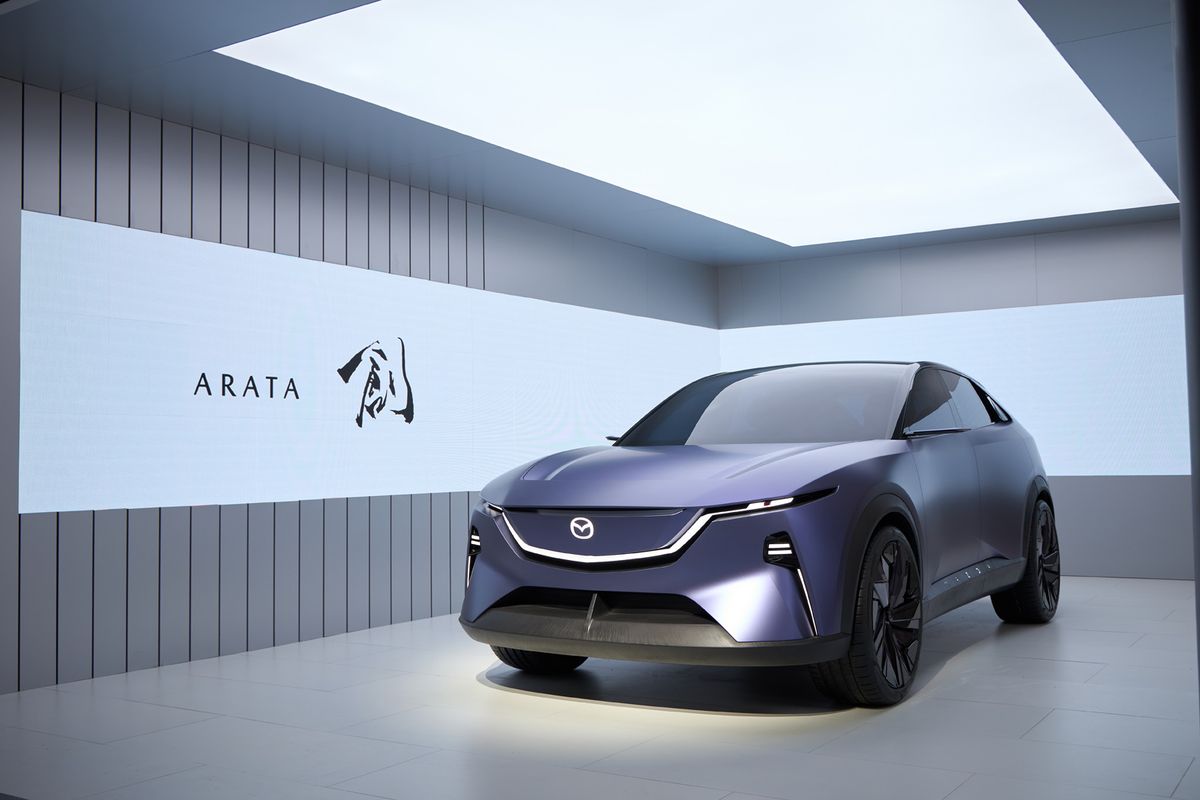
MAZDA-ARATA-Concept
The Arata is a study model that shows the direction of Mazda’s proposed next-generation electric SUV, and the EZ-60/CX-6e was born as its commercial version. While maintaining the advanced spirit and emotional appeal of the concept car, it has been refined in every detail to meet the realistic requirements of a mass-produced model.
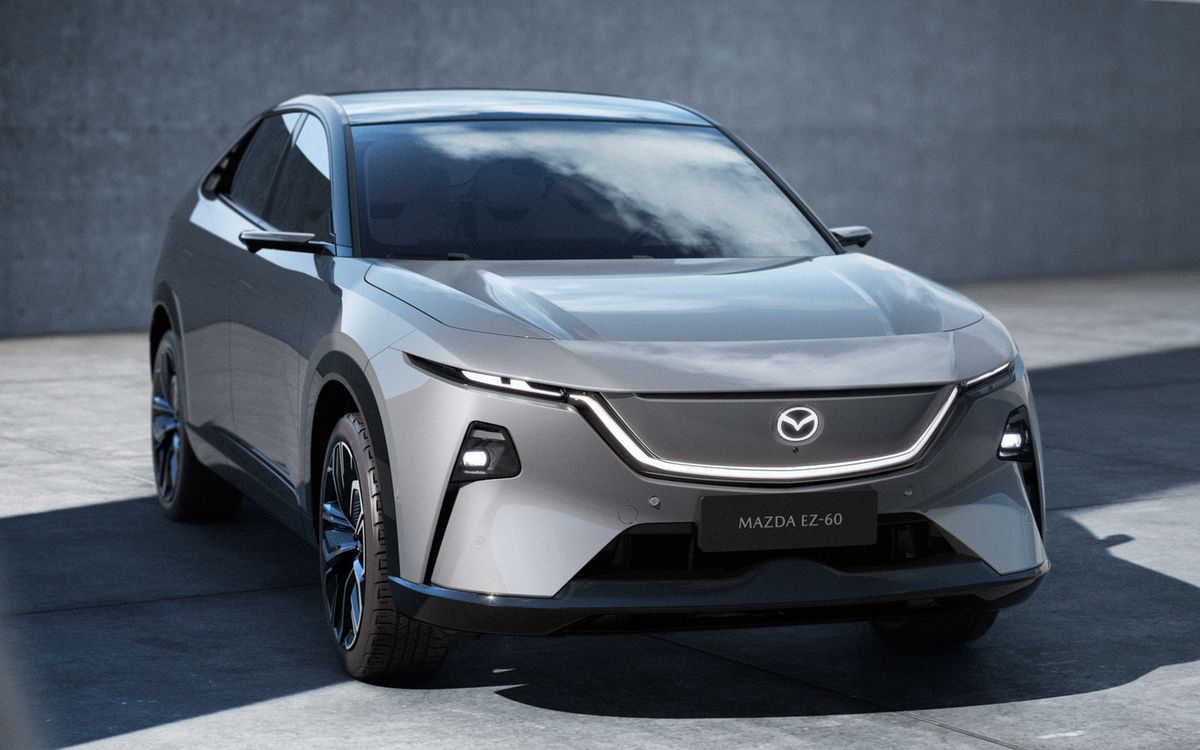
MAZDA EZ-60
Mazda CX-6e
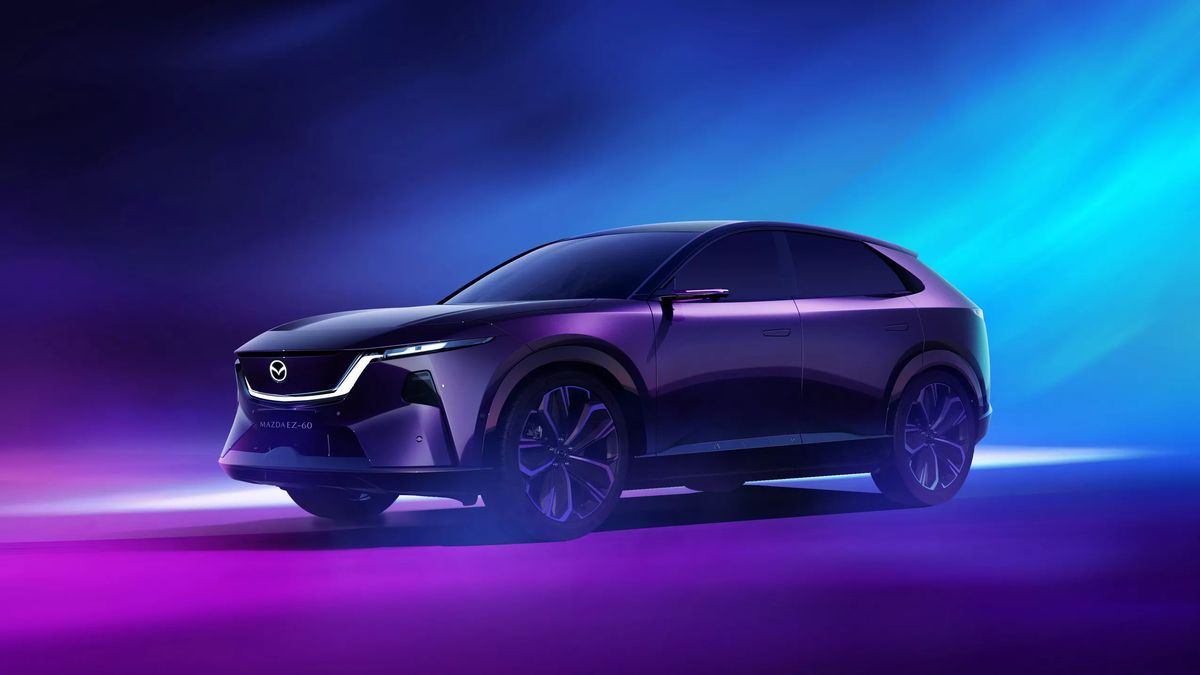
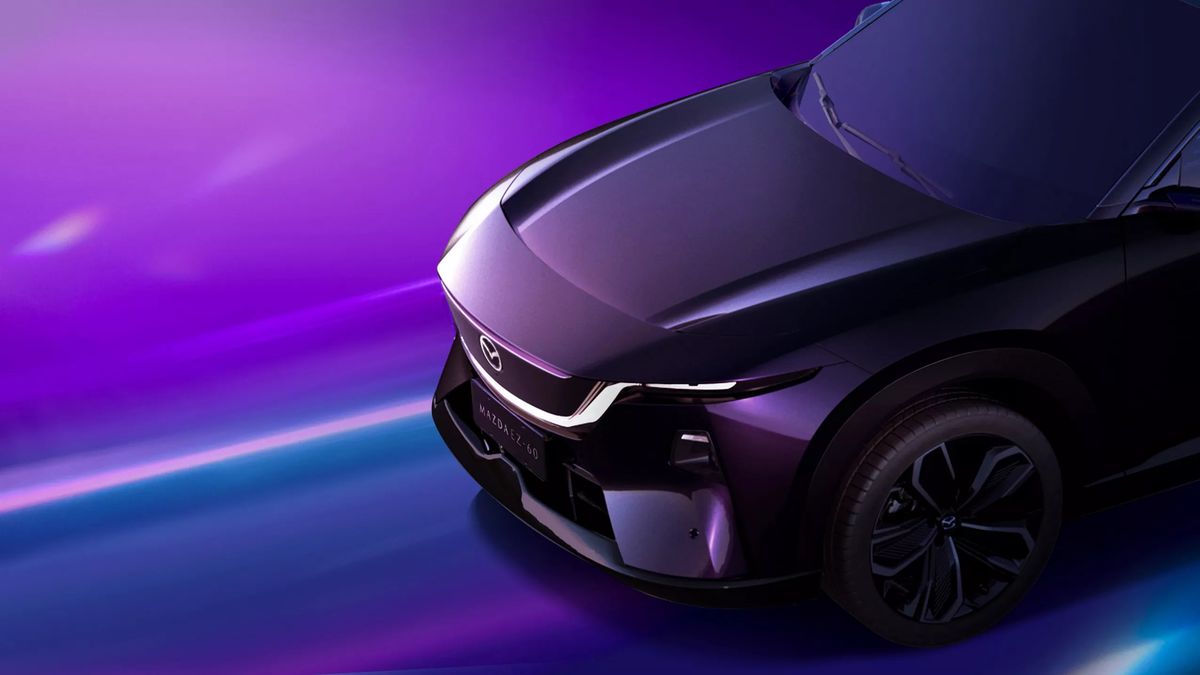
The front face adopts a new design language that does away with the signature wing common to recent Mazda vehicles. Taking advantage of the low cooling requirements unique to EVs, the car has a solid, almost grille-less appearance, while the three-dimensional shape and delicate expression of light combine to create an impression of strength and intelligence. The thin, sharp headlamp units emphasize the car’s advanced nature and also seem to express a lively gaze. This expressive front mask gives the EZ-60/CX-6e a clear personality and presence in the crowded EV SUV market.
Mazda CX-6e
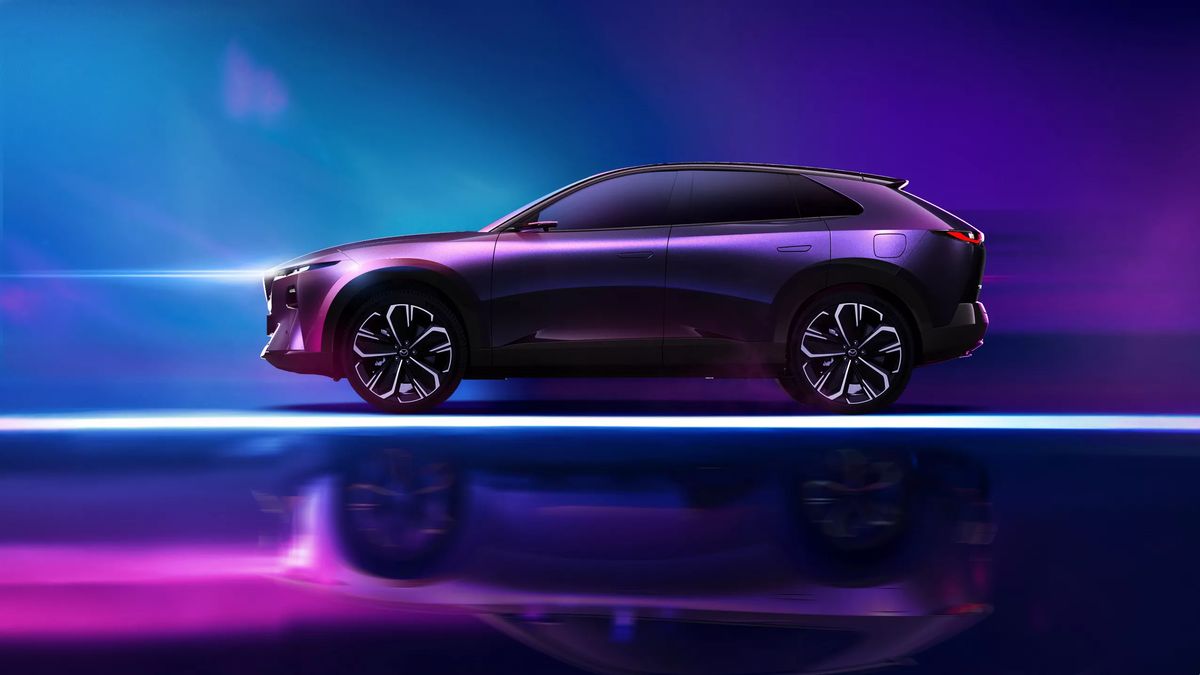
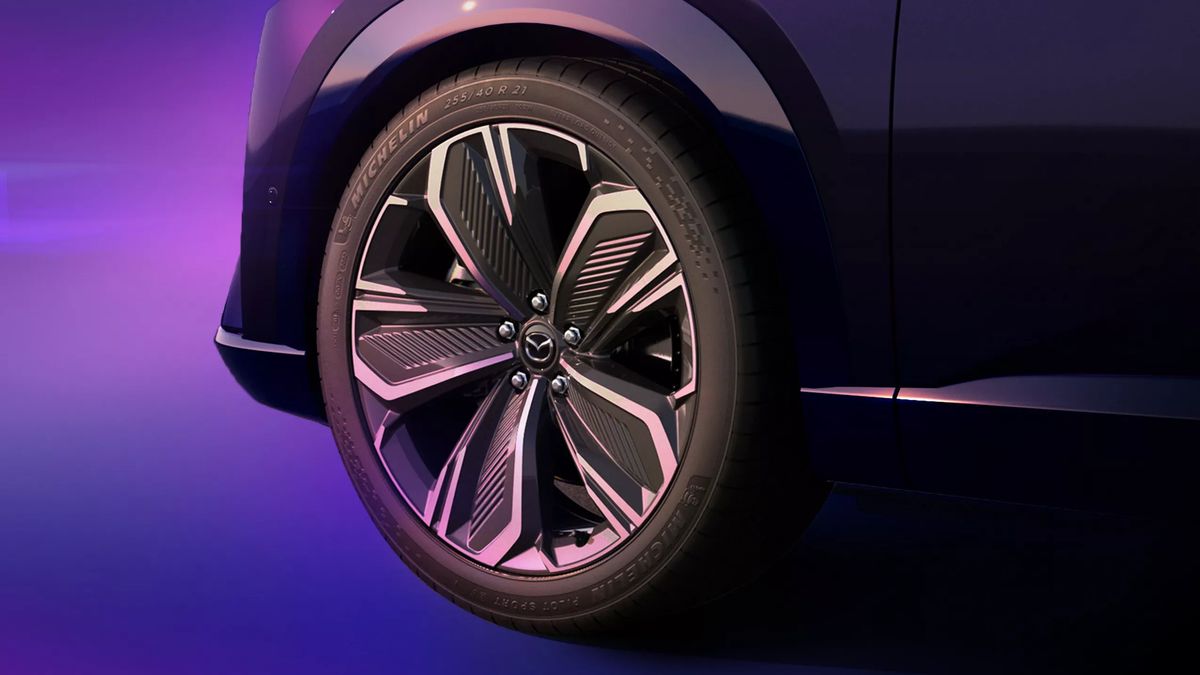
Looking at the side view, one can see the character lines that express the vitality and dynamic movement that are a hallmark of the KODO design. In particular, the powerful shoulder line that surges from the front fender to the rear, and the smoothly tapered rear cabin design that contrasts with it, give the car a coupe-like elegance and sportiness, despite being an SUV. The concept car featured camera-type digital exterior mirrors, but the production model may feature conventional mirrors in some regions due to regulatory compliance and cost considerations. However, the coupe-like silhouette created by the frameless door glass and dramatically sloping D-pillars shown on the concept car has been firmly carried over to the production model, enhancing its stylish impression.
Mazda CX-6e
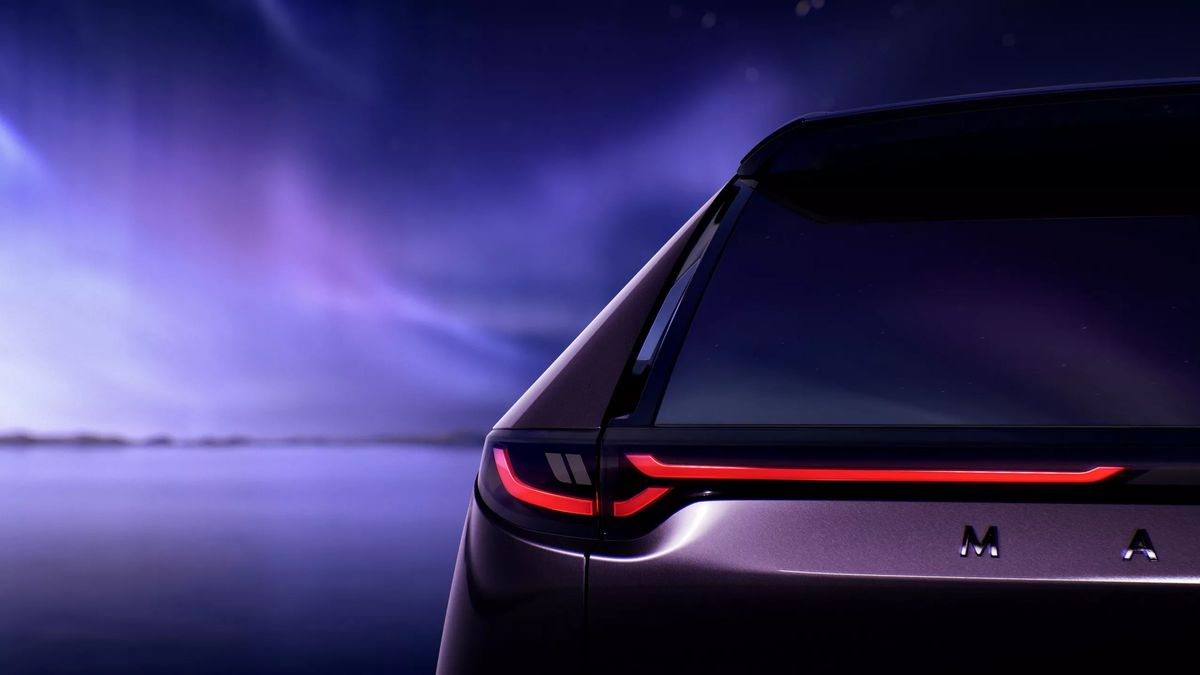
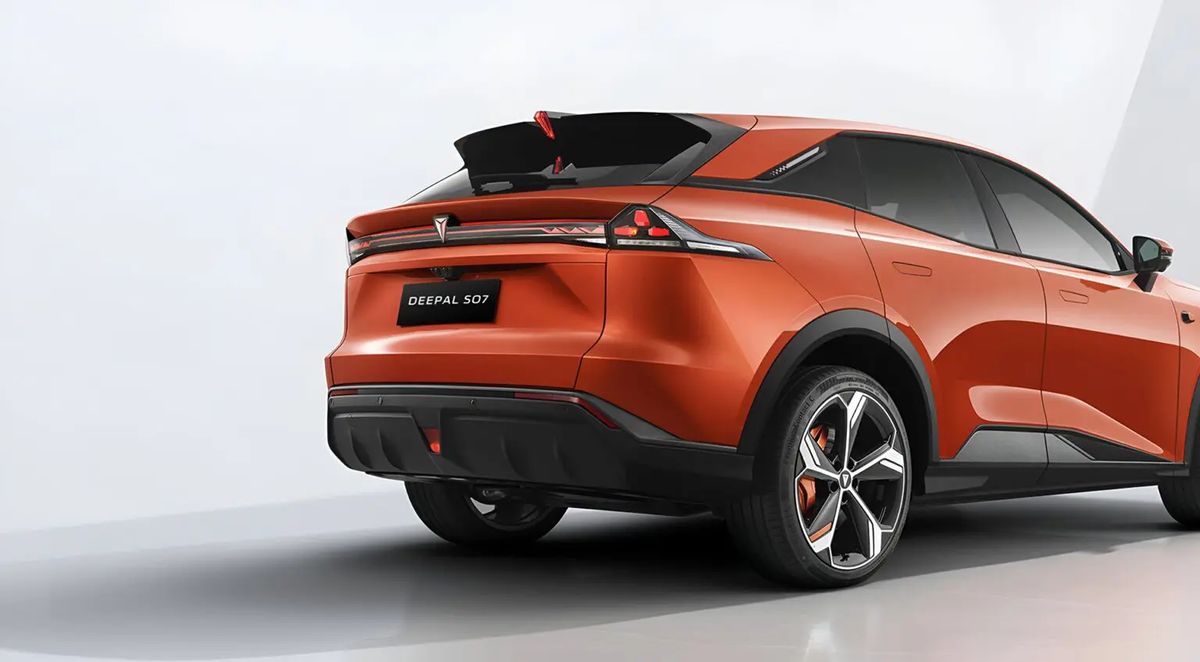
The rear design also has a sleek, sporty look that is typical of Mazda. The horizontal design connecting the left and right combination lamps creates a sense of width and stability, and the lamp graphics, which incorporate a distinctive circular motif, assert the identity of the Mazda brand. The shape of the tailgate and the design of the bumper have also been carefully calculated down to the smallest detail to achieve both aerodynamic performance and aesthetic appeal.
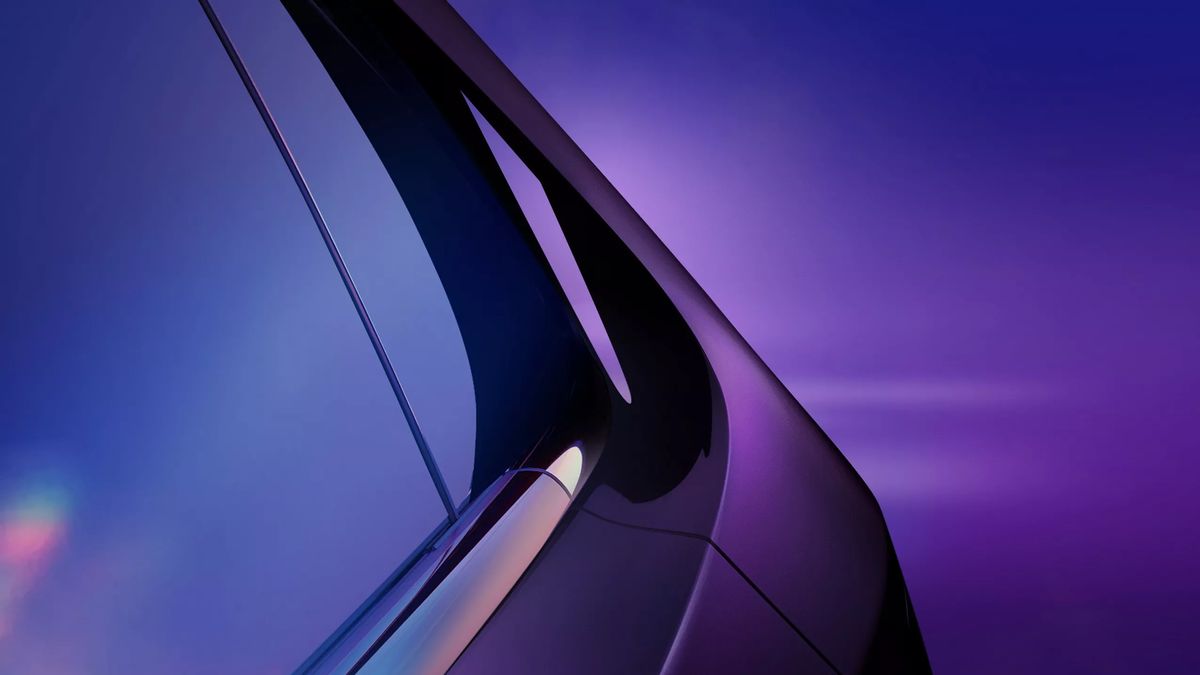
The MX-30 featured unique freestyle doors, but the EZ-60/CX-6e prioritizes practicality and uses conventional hinged doors. This improves access to the rear seats and ease of use in everyday life, making the car a design that is easily accepted by a wide range of users, including families.
Mazda CX-6e
Overall, the design of the EZ-60/CX-6e can be said to be a sublimation of Mazda’s long-cultivated Kodo design philosophy, tailored to the new era of EVs. Not only is it futuristic, but its form, which pursues the inherent beauty and vitality of a car, has the power to appeal to the sensibilities of many people.
Mazda CX-6e
Collaboration with China’s Changan Automobile: New platforms and electrification technologies
A notable feature of the development of the EZ-60/CX-6e is that its underlying platform uses the architecture of Changan Automobile, a major Chinese automaker . This represents a new approach in Mazda’s electrification strategy, and is a strategic decision that will enable it to streamline development resources and quickly launch products in the highly competitive Chinese and global markets.
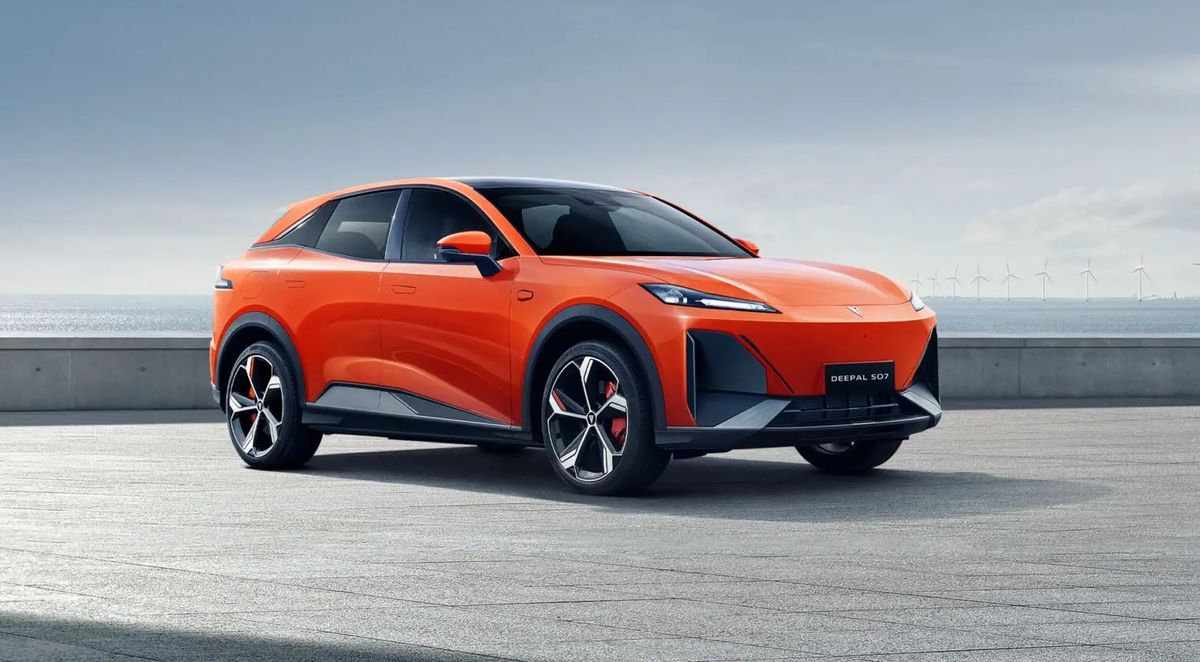
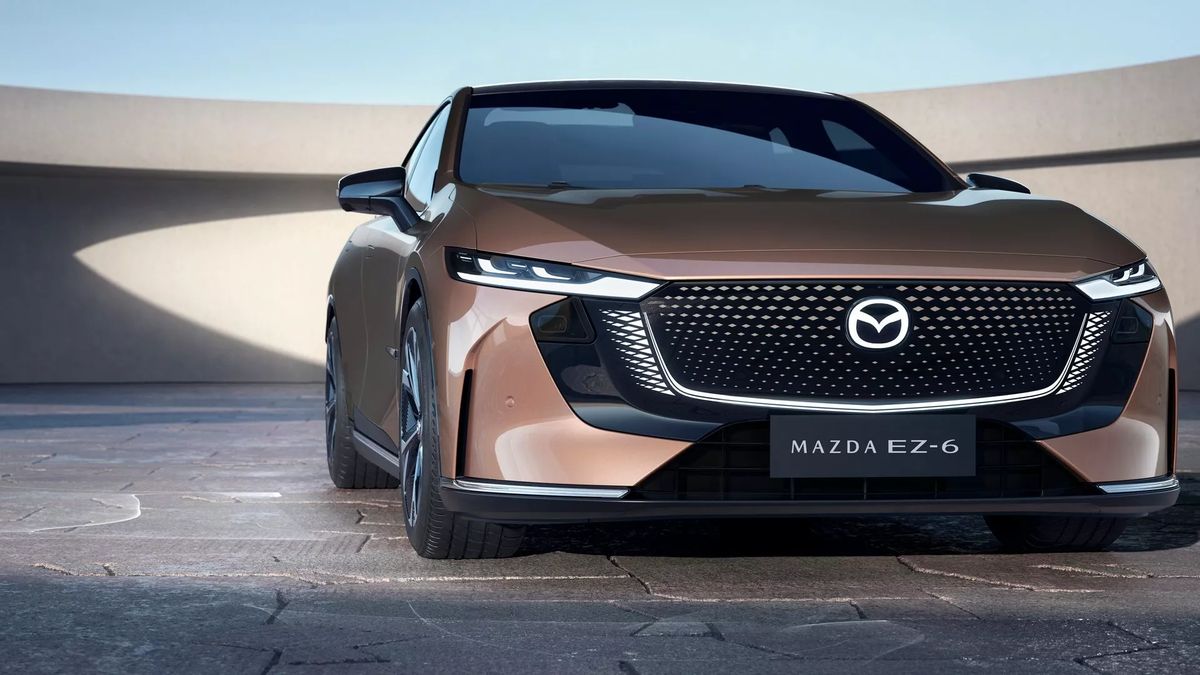
This collaboration applies not only to the EZ-60/CX-6e SUVs, but also to the simultaneously announced sedan model, the EZ-6 (known as the “6e” in overseas markets). In other words, these two EV models, which will likely form the new core of Mazda’s brand, are being developed based on Changan Automobile’s platform. Specifically, it appears that the platform shares common underlying technologies with Changan Automobile’s Deepal electric brand models, particularly the S7 (SUV, formerly known as the S07) and the SL03 (sedan). The Deepal S7 is already recognized as a strong rival to the Tesla Model Y in the Chinese market and is scheduled for launch in Europe by the end of 2025. By utilizing this proven platform, Mazda can shorten development time and reduce costs while ensuring consistent performance and quality.
Deepal S7
While we will have to wait for the official announcement at the Beijing Motor Show to learn the specific specifications of the EZ-60/CX-6e, such as its powertrain configuration, battery capacity, and driving range, we can make some inferences from the specifications of its sibling, the EZ-6/6e sedan, for which information has already been released. The 6e sedan for the European market is expected to be offered with two main powertrain options. Both will be single-motor systems that drive the rear wheels, with the entry-level model expected to produce a maximum output of approximately 241 horsepower (180 kW / 244 PS) and the top-of-the-line model expected to produce a maximum output of approximately 255 horsepower (190 kW / 258 PS).
The battery is likely to be available in two capacities: 68.6 kWh and 80 kWh. This means that the sedan’s driving range in WLTP mode is expected to be approximately 483 km (300 miles) to 555 km (345 miles). However, as an SUV, the EZ-60/CX-6e is heavier and has a larger frontal projection area than a sedan, resulting in increased air resistance. Due to these factors, even with the same battery capacity, the range is expected to be slightly shorter than that of the sedan. Still, this is a significant improvement over the MX-30, and there is no doubt that it will provide a more reliable and practical driving range for everyday use and long-distance travel.
In terms of charging performance, the platform used by Deepal is believed to support DC fast charging of up to around 200kW. While this is slightly inferior to the 800V system (maximum 350kW) of the E-GMP platform used by the Hyundai-Kia Group, it is at the same level of performance as current EVs from many European manufacturers, including Volkswagen and Volvo, and is said to be fast enough for practical use. When using a standard fast charger, it should be possible to restore most of the remaining battery power in around 30 minutes.
Another feature of Changan Automobile’s platform is its high design flexibility. In addition to a pure EV model, the Deepal S7 for the Chinese market also offers a range-extender EV (EREV) equipped with a 1.5-liter gasoline engine for power generation. This range-extender technology eliminates concerns about running out of battery power and enables long-distance travel even in areas lacking charging infrastructure. However, Mazda already offers its own plug-in hybrid (PHEV) system in models such as the CX-60 and CX-80. These PHEV models combine EV driving with external charging and long-distance driving with the internal combustion engine, fulfilling a similar role to a range extender in some sense. Therefore, it is unlikely that Mazda will directly use Changan Automobile’s range-extender technology for the CX-6e. Mazda will likely choose to develop the CX-6e as a pure EV, both to differentiate it from its existing PHEV lineup and to maintain its brand image.
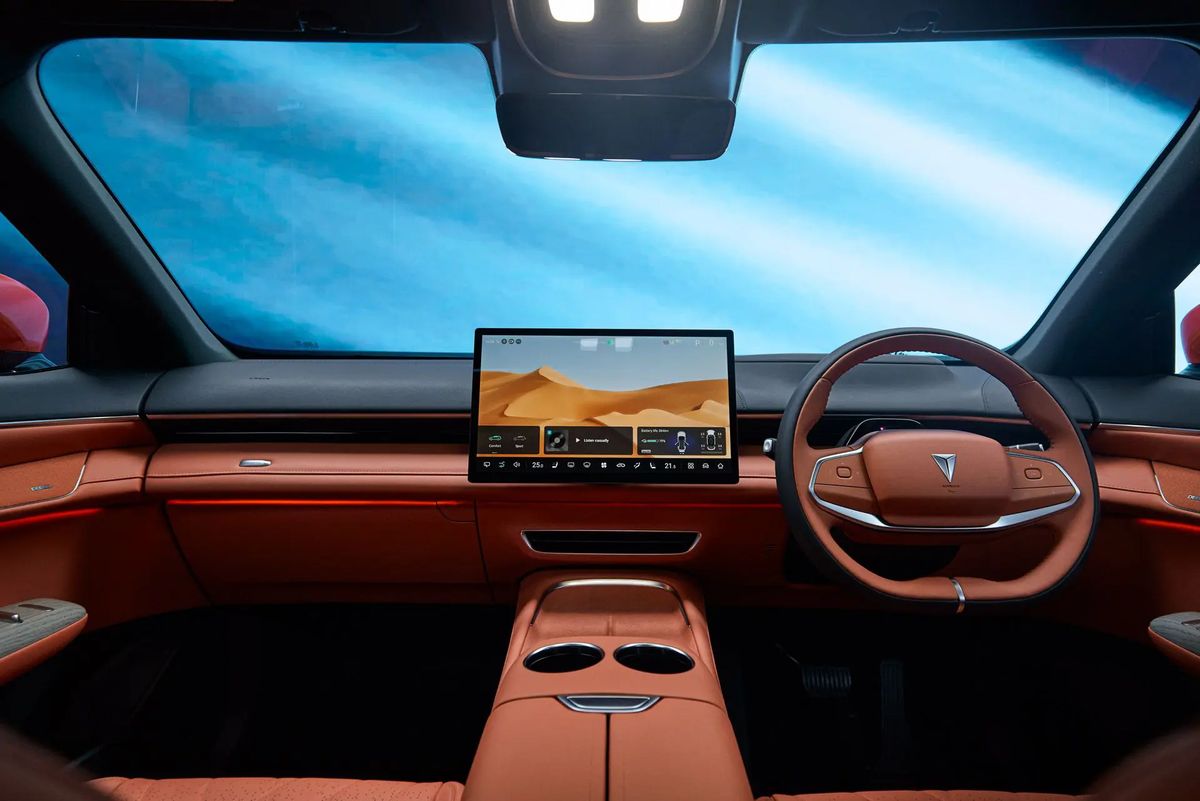
Deepal S7
Meanwhile, collaboration with Changan Automobile could also bring benefits in areas such as software and connectivity. Software has become increasingly important in automotive development in recent years. Chinese manufacturers are rapidly evolving elements that influence the user experience, such as infotainment systems, driver assistance systems (ADAS), and over-the-air (OTA) software update functions. Through its partnership with Changan Automobile, Mazda may be able to introduce these advanced software technologies and connected services into its own models at a relatively low cost. This will further enhance the product appeal of the EZ-60/CX-6e.
However, it cannot be denied that adopting another company’s platform may pose certain limitations in achieving Mazda’s unique “Jinba Ittai” driving experience. Until now, Mazda has pursued a driving experience that is exactly what the driver wants with its Skyactiv Vehicle Architecture, which integrates control of the chassis, suspension, steering, powertrain, etc. Based on Changan Automobile’s platform, the extent to which Mazda’s distinctive driving feel can be infused into the car will be put to the test, as will the tuning skills of the team. It will be interesting to see what kind of driving value Mazda’s engineers will provide on this new platform.
Global market expansion strategy: Europe as the main battlefield, US postponed
Mazda’s market development strategy for the EZ-60/CX-6e is expected to take different approaches depending on the region. The first major battlefield will be the Chinese market, home to development partner Changan Automobile. China is the world’s largest automobile market, and the adoption of EVs is rapidly increasing. The EZ-60 is expected to contribute to improving Mazda’s brand image and expanding sales in this rapidly growing Chinese EV market. Mazda aims to gain a certain share of the market in the increasingly competitive Chinese EV market by leveraging its stylish design and the reliability of the Mazda brand.
In the global market, the European market is a particularly important target. The European Union (EU) is growing into one of the world’s leading EV markets, driven by strict environmental regulations and aggressive EV adoption policies. Mazda has always placed importance on the European market, introducing models that cater to European consumers’ preferences for design and driving performance. While Mazda has not yet officially announced the CX-6e’s European launch, this is highly likely. One factor supporting this is the already-indicated release of its sister car, the 6e sedan (known as the EZ-6 in China), in the European market in the second half of 2024. Since the sedan and SUV share a common platform and key components, it’s only natural to assume the CX-6e SUV will follow the sedan into the European market.
Furthermore, SUVs remain popular in Europe, making the SUV segment a key driver of EV sales. The market is highly competitive, with many competing models, including the Tesla Model Y, Volkswagen ID.4, Skoda Enyaq, Hyundai Ioniq 5, and Kia EV6, but the sheer size of the market also means it’s a large one. For Mazda to fully implement its EV strategy in Europe, launching a competitive electric SUV is essential. Given these circumstances, it’s almost certain that the CX-6e will be released in Europe by 2026. If its launch were to be postponed, it would represent a major setback for Mazda’s European strategy, making this an unlikely scenario. The success of the CX-6e in Europe will be a key factor in determining the success of Mazda’s overall global electrification strategy.
On the other hand, the much anticipated introduction of the car in the North American market, especially the United States, is unfortunately likely to be postponed for now. The main reason for this is that the EZ-60/CX-6e are produced in China. In recent years, the United States has imposed high import tariffs on Chinese products, and barriers to Chinese imports have been increasing, particularly for automobiles. Furthermore, the EV tax credit system under the Inflation Reduction Act (IRA) introduced by the Biden administration requires that the vehicle’s final assembly location be in North America (the United States, Canada, or Mexico). Furthermore, strict requirements are also imposed regarding the sourcing of critical minerals and components used in batteries. Therefore, the CX-6e, which is produced in China and likely uses many Chinese-made battery components, is highly likely to be ineligible for this tax credit.
Without the tax credit of up to $7,500, Mazda will be at a significant disadvantage in price competitiveness. This will force it into a tough battle against not only US manufacturers like Tesla, GM, and Ford, but also Hyundai, Kia, and Volkswagen, which produce EVs in North America. Considering these import barriers and tax disadvantages, Mazda is likely to see little benefit in bringing the CX-6e to the US market. For the time being, the CX-6e will likely be sold primarily in China and Europe, where the shift to EVs is already underway and barriers to Chinese-made vehicles are relatively low. While this may be disappointing news for Mazda fans in the US, it is a realistic decision that reflects the current geopolitical situation and the policies of each country.
In the future, if production can be achieved in North America, such as Mexico, and the battery supply chain can be restructured to meet IRA requirements, it may be possible to introduce the battery to the US market, but this is still a long way off.
The CX-6e’s position in Mazda’s electrification strategy and future prospects
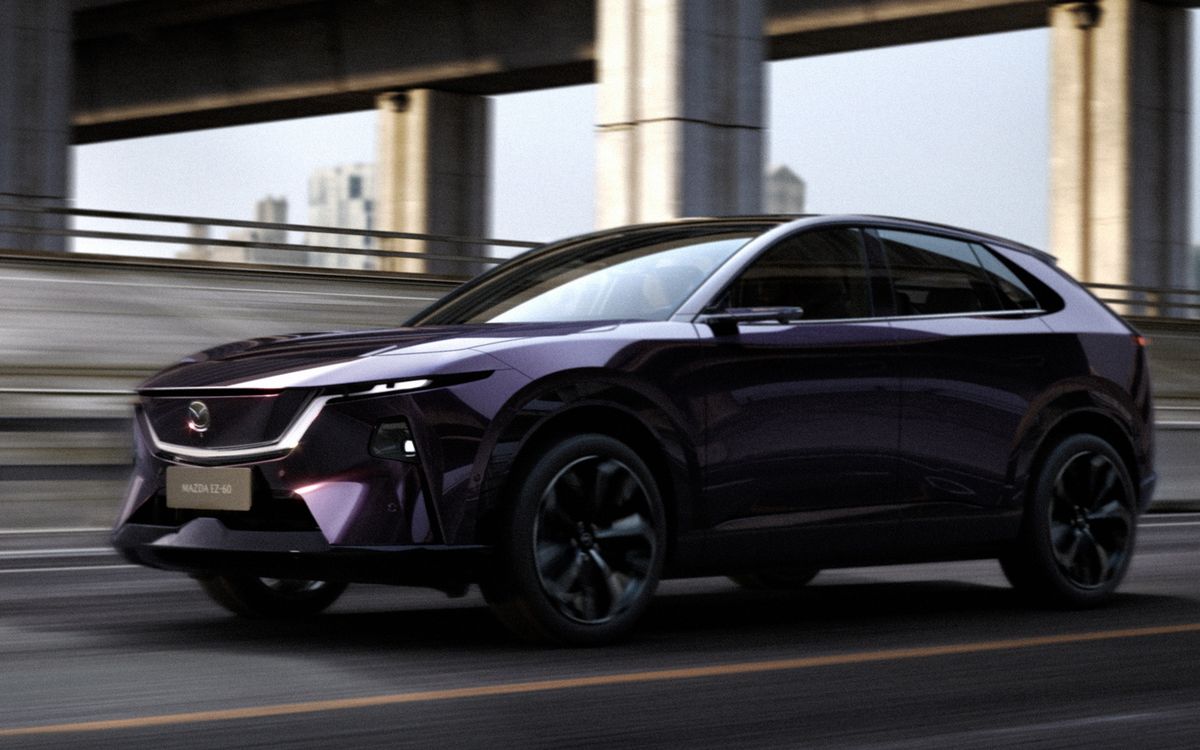
MAZDA EZ-6
The launch of the Mazda EZ-60/CX-6e signals a new phase in Mazda’s electrification efforts while continuing its “Multi-Solution Strategy” that it has been promoting to date. The Multi-Solution Strategy is a concept that continues to offer a variety of powertrain options, including highly efficient internal combustion engines (SKYACTIV-X, SKYACTIV-G, SKYACTIV-D), hybrids (HEVs), plug-in hybrids (PHEVs), and electric vehicles (EVs), in order to respond to the diverse energy situations, infrastructure development status, and customer needs of each region.
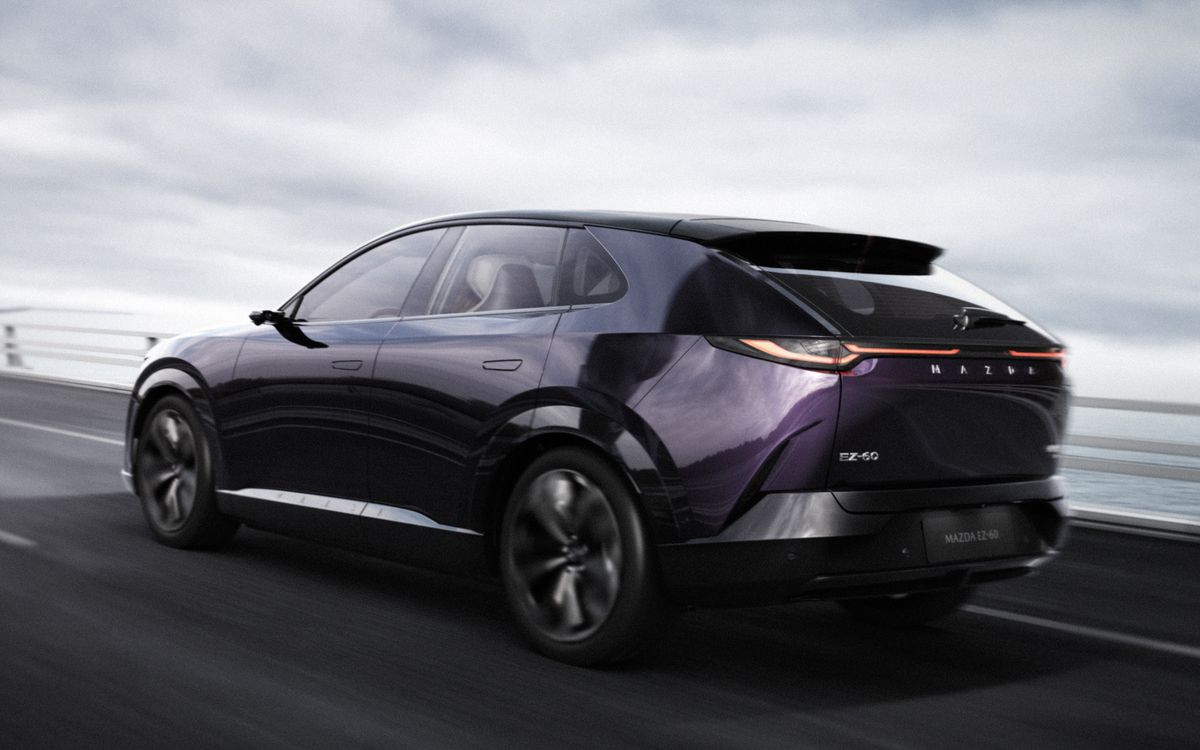
MAZDA EZ-6
Based on this strategy, Mazda has launched models such as the CX-60, CX-70, CX-80, and CX-90 in its large product group, introducing new powertrains such as inline-six engines and PHEVs. Meanwhile, expanding its EV lineup is also an urgent priority in order to achieve its long-term goal of becoming carbon neutral. The EZ-60/CX-6e and EZ-6/6e, which will follow on from the MX-30, will be positioned as core models in this EV lineup.
In particular, Mazda’s adoption of a new approach, such as collaborating with Changan Automobile, suggests flexibility and practicality in its strategy. EV development requires huge investments, and competition is intensifying with established manufacturers and capital-rich Chinese manufacturers, particularly in battery technology and software development. It is not easy for a relatively small manufacturer like Mazda to pursue development in all areas on its own. Therefore, utilizing the proven platforms and technologies of other companies to reduce development costs and time and quickly bring a competitive EV to market is a logical strategy.
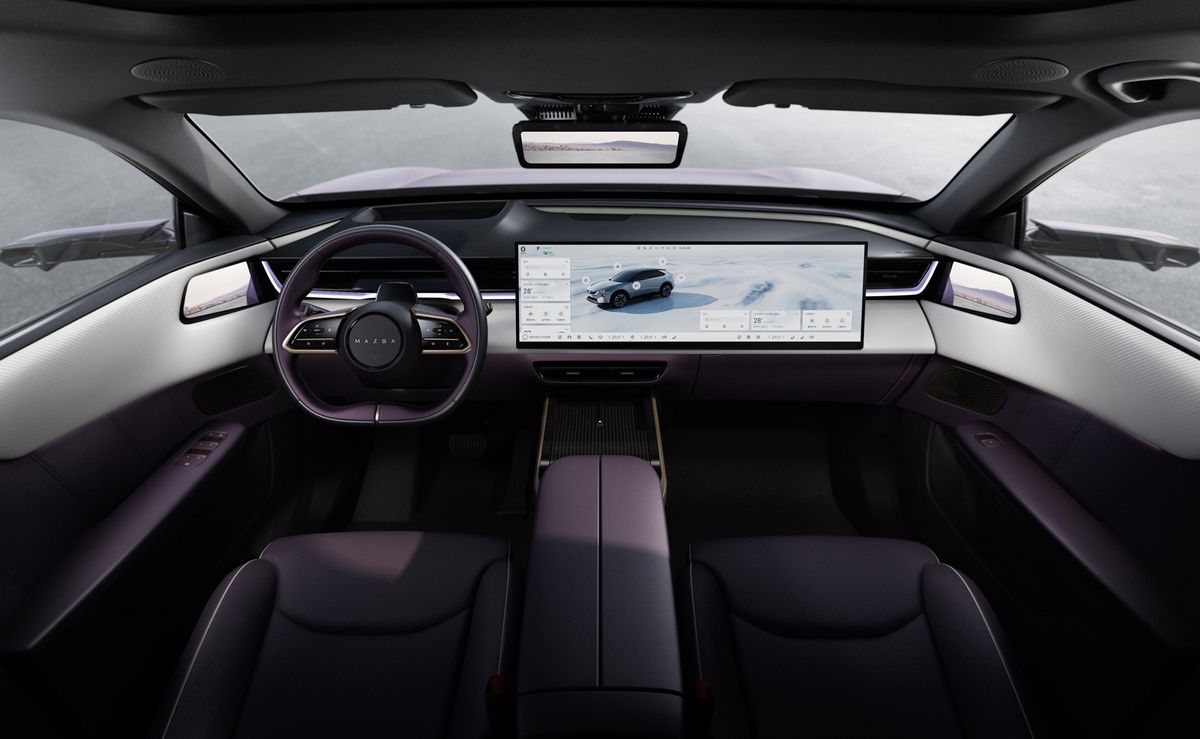
MAZDA EZ-6
This collaboration poses both risks and opportunities for Mazda. As mentioned above, risks include the challenge of maintaining Mazda’s unique driving feel and brand image, as well as the possibility of increased dependence on a specific partner. On the other hand, opportunities include the ability to focus development resources on Mazda’s areas of expertise, such as design and tuning driving performance, as well as future proprietary technology development, and easier access to China’s rapidly evolving electrification technology and market trends.
Going forward, Mazda is expected to further expand its EV lineup while assessing the market reception of the EZ-60/CX-6e and EZ-6/6e. In the future, Mazda may be considering EV development utilizing its collaborative relationship with Toyota Motor Corporation, or developing its own dedicated EV platform. Furthermore, future developments of Mazda’s unique range extender EV technology, which uses a rotary engine as a generator and which Mazda has been researching and developing for many years, will be of interest. (It is already being sold in Europe and elsewhere as the MX-30 R-EV, but there is also the possibility of it being deployed in larger models.)
A word from the editorial department
The EZ-60/CX-6e may be the model that signals the full-scale dawn of the era of electrification for Mazda. Following on from the challenges of the MX-30, this new EV SUV was developed with a more realistic approach, focusing on market needs. How will it be received by drivers around the world? The outcome will be crucial in determining Mazda’s future brand value and sustainability as a company. With a sophisticated KODO design, a new technological foundation developed in collaboration with Changan Automobile, and a market strategy tailored to regional characteristics, the EZ-60/CX-6e’s endeavors, combined, will hopefully lead to the success of Mazda’s electrification strategy. Further details and market reactions will be announced in the future.