
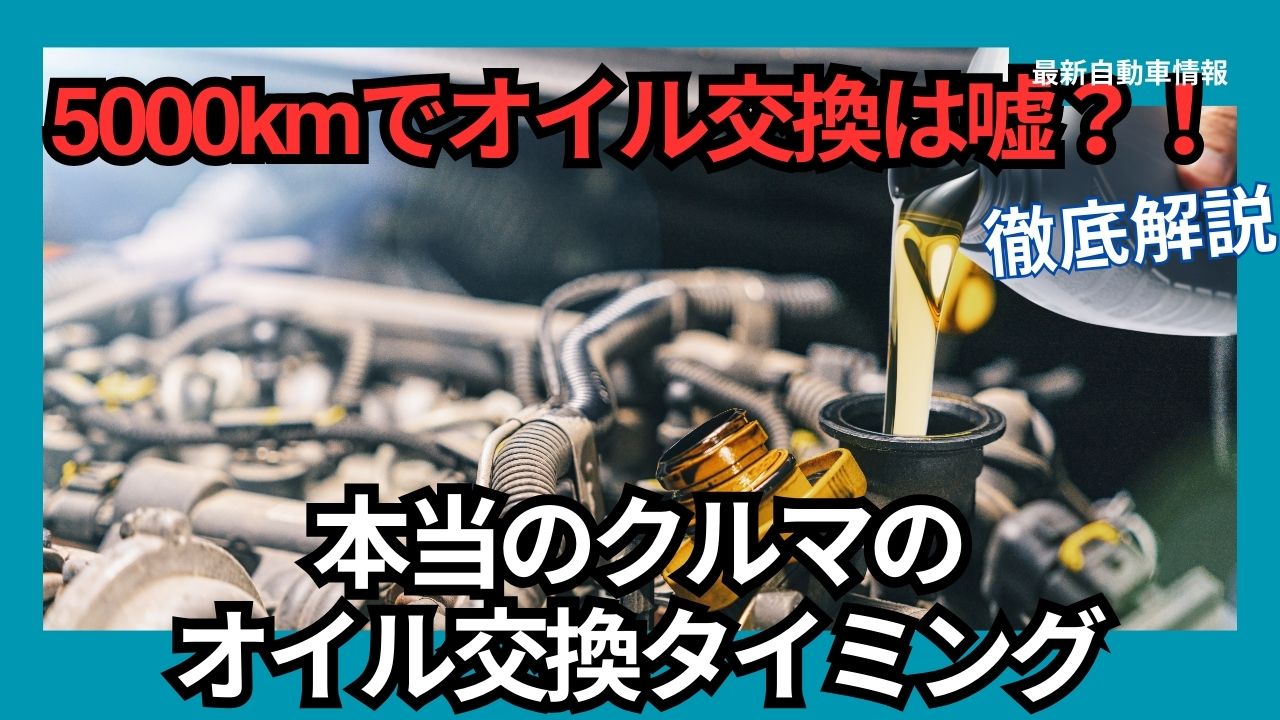
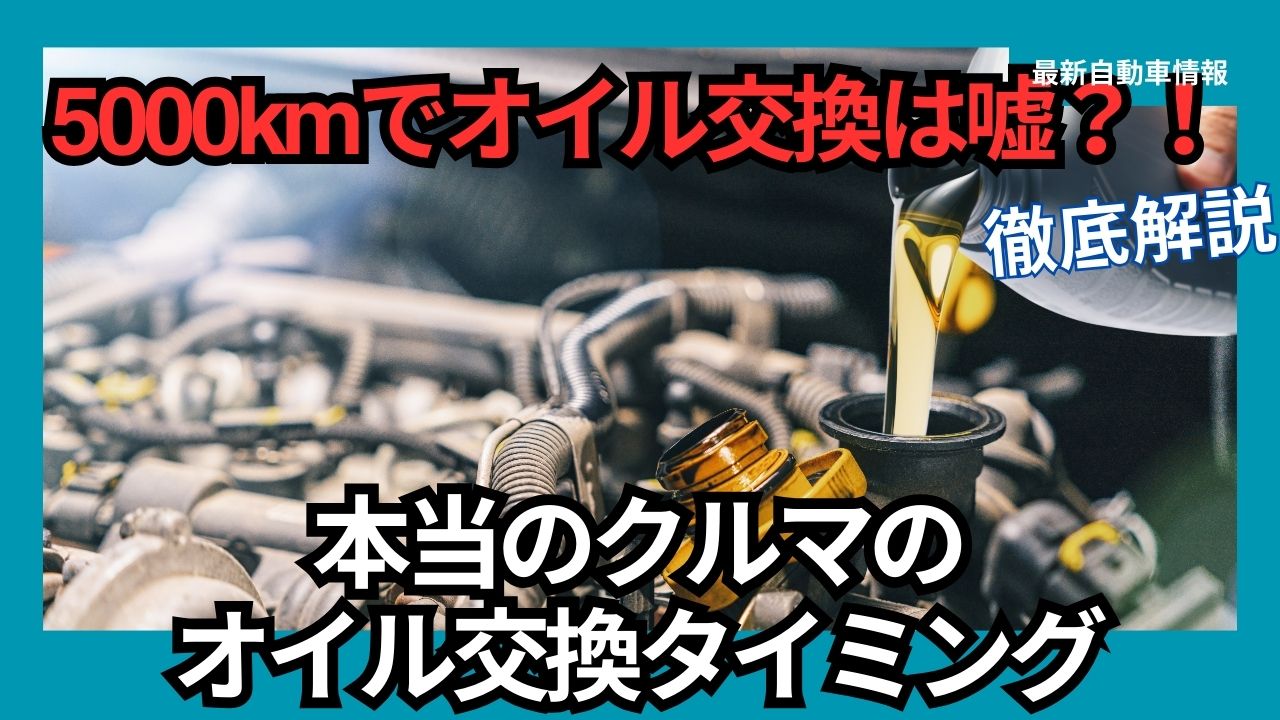
Do you believe in common sense such as “You have to change your oil every 5000km” or “3000km is safe”? In fact, much of this information is outdated.
The technology level of modern cars and older cars is significantly different, and common knowledge about oil changes has also changed. In this article, we will tell you the correct timing for oil changes and the latest information you should know.
Why did the “5000km replacement theory” spread?
The technology level of old cars
Compared to cars from a generation ago:
- Low engine manufacturing precision
- The oil quality is poor
- Incomplete sealing inside the engine
This definitely required frequent oil changes.
Industry sentiment
Oil changes are a major source of revenue for auto parts stores and repair shops , so they tend to recommend changes more frequently than actually necessary.
[Latest information] Here’s the manufacturer’s official replacement time!
Each manufacturer’s official website lists the recommended intervals for oil changes, assuming genuine oil is used.
Toyota’s official recommendation (latest data)
According to the official Toyota website :
| Engine type | Standard replacement period | Severe conditions |
|---|---|---|
| Gasoline vehicles (excluding turbo) | 15,000km or 1 year | 7,500km or 6 months |
| Gasoline turbo car | 5,000km or 6 months | 2,500km or 3 months |
| Diesel vehicles | 5,000km to 20,000km | 2,500km to 10,000km |
Officially recommended by Honda
Answer from Honda’s official website :
| Vehicle classification | Standard replacement period | Severe conditions |
|---|---|---|
| General vehicle type | 10,000km or 12 months | 5,000km or 6 months |
| Some vehicle models | 15,000km or 12 months | 7,500km or 6 months |
| Turbo-equipped vehicles | 5,000km or 6 months | – |
Official Nissan recommendation
On the Nissan official website :
Inspection and replacement guidelines: Every 5,000 km or every 6 months
- Engine oil deteriorates due to oxidation regardless of mileage.
- Recommended to replace every six months
Officially recommended by Subaru
Subaru Official FAQ (2016 and later models):
| Engine type | Standard replacement period | Severe conditions |
|---|---|---|
| General engine | 10,000km or 12 months | 5,000km or 6 months |
| turbo engine | 5,000km or 6 months | 2,500km or 3 months |
Mazda’s official statement
From Mazda’s official website :
- Deteriorated engine oil shortens the life of your engine
- Even when not in use, it will oxidize and deteriorate over time.
- Regular maintenance is essential
[Analysis by manufacturer] Why are there differences in the recommended timing?
Toyota’s strategy: Emphasis on long-term use
The longest recommended period of 15,000km or one year reflects Toyota’s high engine manufacturing precision and confidence in quality.
Nissan’s conservative approach
The relatively short recommendation of 5,000km or six months indicates a conservative stance that prioritizes engine protection.
Honda Subaru’s balanced model
A balanced and realistic proposal is 10,000km or 12 months .
[Expert Commentary] The Truth About Severe Conditions
The “severe conditions” that each manufacturer commonly lists are:
Common severe condition conditions
- Driving environment
- Frequent driving on unpaved roads
- Frequent use of mountain paths and uphill/downhill roads
- Continuous use when the outside temperature is below freezing
- Usage Patterns
- Repeated short runs
- Frequent idling or low-speed driving
- Extremely high annual mileage
- Use as a towing vehicle
- Judgment criteria: If driving under the above conditions accounts for 30% or more of the total driving
Important discovery: More people than expected are affected by severe conditions
People who commute less than 10km each way or who only ride on weekends are also likely to be subject to severe conditions.
[Voices from the field] Honest opinions of dealer service staff
Behind the scenes of maintenance pack design
If you check the maintenance package that comes with buying a new car, you’ll actually see:
- Only includes 1-2 oil changes per year
- If you change it every 3000km, you should need to change it 10 times a year.
- Evidence that the manufacturer itself does not anticipate frequent replacement
Recommended by field technicians
Results of interviews with multiple dealer engineers:
“Excessive changes are unnecessary, oil quality is important”
“Within the range recommended by the manufacturer”
“Once a year is required regardless of mileage.”
The evolution of engine oil: Why does it last longer now?
High performance of modern oil
1. Improvement of additive technology
- Antioxidants : Significantly slows down oil deterioration
- Detergent and dispersant : Effectively prevents sludge buildup
- Viscosity modifier : Maintains optimal performance over a wide temperature range
2. Improving the quality of base oil
With the popularity of fully synthetic oil :
- Stable performance even at high temperatures
- Improved cold startability
- Performance can be maintained for a long period of time
3. Advances in engine technology
- Improved manufacturing precision : Optimized part clearance
- Material improvement : Use of wear-resistant material
- Improved combustion efficiency : Reduces the occurrence of dirt
Seriously Dangerous! The Terrible Consequences of Neglecting Oil Changes
Example: Tragedy of no replacement after 70,000km
A woman’s car that never had an oil change since it was new
- Mileage: 70,000km
- Result: Complete engine failure
- Repair costs: Vehicle must be replaced (loss of several million yen)
Five problems that can occur if you neglect to change your oil
Stage 1: Deteriorating fuel economy (over 10,000km)
- Fuel consumption increased by 15-20%
- Changes in engine sound
Stage 2: Engine malfunction (over 15,000km)
- Decreased acceleration performance
- Unstable idling
- Abnormal noise
Stage 3: Internal parts wear (over 20,000km)
- Piston ring wear
- Bearing damage
- Decrease in compression pressure
Stage 4: Serious malfunction (over 25,000km)
- Oil leaks occur
- White and black smoke emissions
- Engine warning light on
Stage 5: Engine blowout (over 30,000km)
- Complete engine seizure
- Unrepairable condition
- Vehicle disposal or engine replacement (starting from 500,000 yen)
[Direct from the Pros] How to determine the optimal timing for an oil change
Recommended replacement intervals based on driving pattern
General use (mainly commuting and shopping)
- Gasoline vehicles : 10,000km or once a year
- Turbo cars : 8,000km or once a year
Those who fall under severe conditions
Replace at half the recommended distance if :
- Over 20,000km per year
- Driving on mountain roads and slopes is 30% or more
- Stop-and-go is over 30%
- Mostly short distance trips of less than 8km per day
- Use at outside temperatures below -20°C
High-performance cars and sports driving
- Turbo/Supercharged vehicles : 5,000km
- Sports cars : 3,000-5,000km
- Circuit driving : 1,000-2,000km
Points to check for oil deterioration
Visual check
- Color change : Light brown → Dark brown → Black
- Transparency : Transparent → Semi-transparent → Opaque
- Viscosity : Thin → Thick
Judging by smell
- Normal : Odorless or slight oily odor
- Beware : Sour smell
- Danger : Burnt or metallic smell
The right oil makes all the difference! Tips for choosing the right brand
Oil characteristics by price range
Economy class (1,000-2,000 yen/L)
- Mineral oil base
- Good enough for general use
- Replacement frequency: According to the recommended distance
Standard class (2,000-4,000 yen/L)
- Partially synthetic oil
- Balanced performance
- Replacement frequency: 1.2 times the recommended distance
Premium class (over 4,000 yen/L)
- Fully synthetic oil
- Long-term stable performance
- Replacement frequency: 1.2-1.5 times the recommended distance is possible
Manufacturer recommended oil
Trends among Japanese car manufacturers
- Toyota : 0W-20 and 5W-30 are mainstream
- Honda : 0W-20 is highly recommended
- Nissan : 5W-30, 0W-20
- Mazda : Diesel vehicles in particular require special oil
[Cost Comparison] Appropriate vs. Excessive Replacement Frequency
Total cost comparison over 10 years (when driving 10,000km per year)
In case of 3,000km replacement
- Number of exchanges: 33
- Oil cost: Approximately 200,000 yen
- Labor cost: Approximately 100,000 yen
- Total amount: Approximately 300,000 yen
Manufacturer recommended (10,000km)
- Number of exchanges: 10
- Oil cost: Approximately 60,000 yen
- Labor cost: Approximately 30,000 yen
- Total amount: Approximately 90,000 yen
Difference: You can save up to 210,000 yen !
Frequently Asked Questions: Oil change questions answered
Q1. Can I extend the change interval by using high-quality oil?
A. Full synthetic oil can extend the recommended distance by 1.2-1.5 times, but we recommend using it within the scope of the manufacturer’s warranty.
Q2. Should I change the oil filter every time?
A. Once every two oil changes is sufficient. However, in severe conditions, we recommend changing it every time.
Q3. Are imported cars the same as Japanese cars?
A.The specified viscosity is often different for European cars, so be sure to check the instruction manual.
Q4. Should I replace old cars more frequently?
A. For cars that are over 10 years old and have traveled over 100,000 km, it is safe to change the oil every 0.8 times the recommended distance.
Summary: Keep costs down and extend the life of your car with the right knowledge
Key Takeaways
- “5000km exchange” is excessive in modern times
- The distance recommended by the manufacturer is sufficient
- It is important to determine the quality of the oil
- Adjustments are required depending on the conditions of use.
- Excessive replacement is a waste of money
Final recommended replacement timing
- General use : Manufacturer recommended mileage or once a year
- Severe conditions : half the recommended distance
- High-performance vehicle : 5,000km or less
- Older cars : 0.8 times the recommended distance
By acquiring the correct knowledge, you can avoid unnecessary expenses and keep driving your beloved car for a long time . Don’t be fooled by the sales talk of car accessory stores and repair shops, but make sure to perform proper maintenance based on scientific evidence.
Find the best time to change your car’s oil and enjoy a smart car life!