
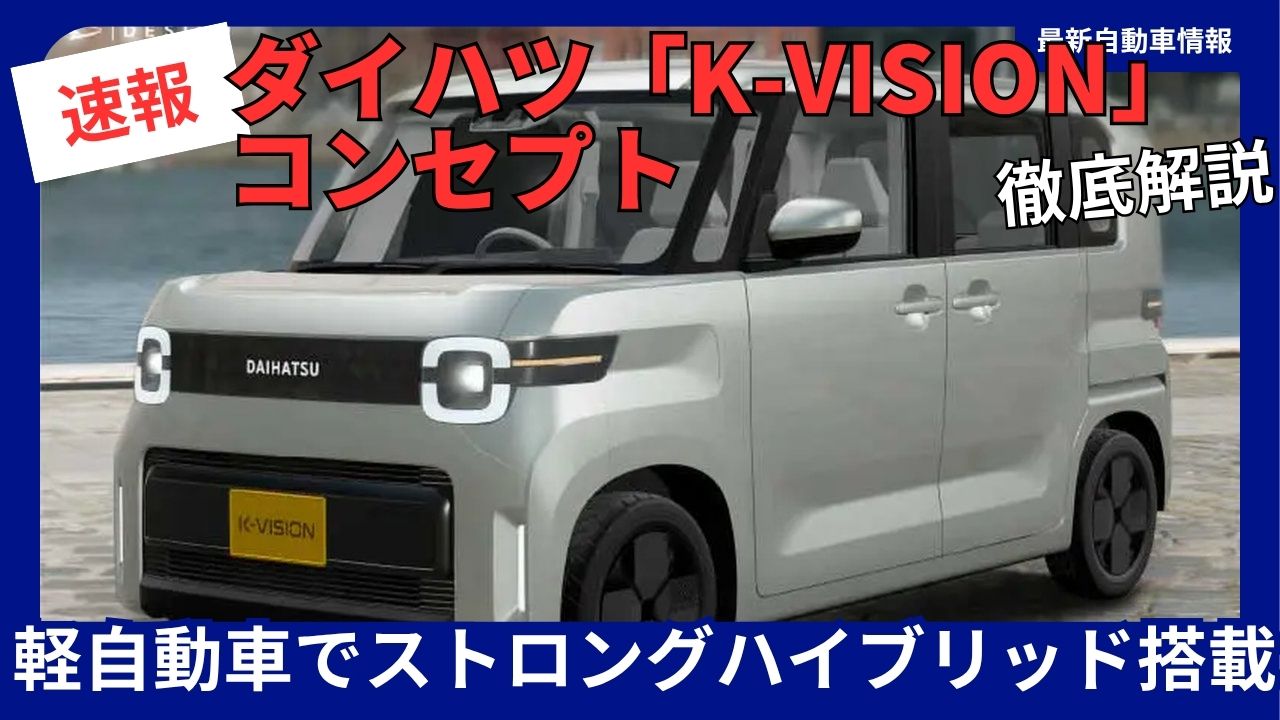
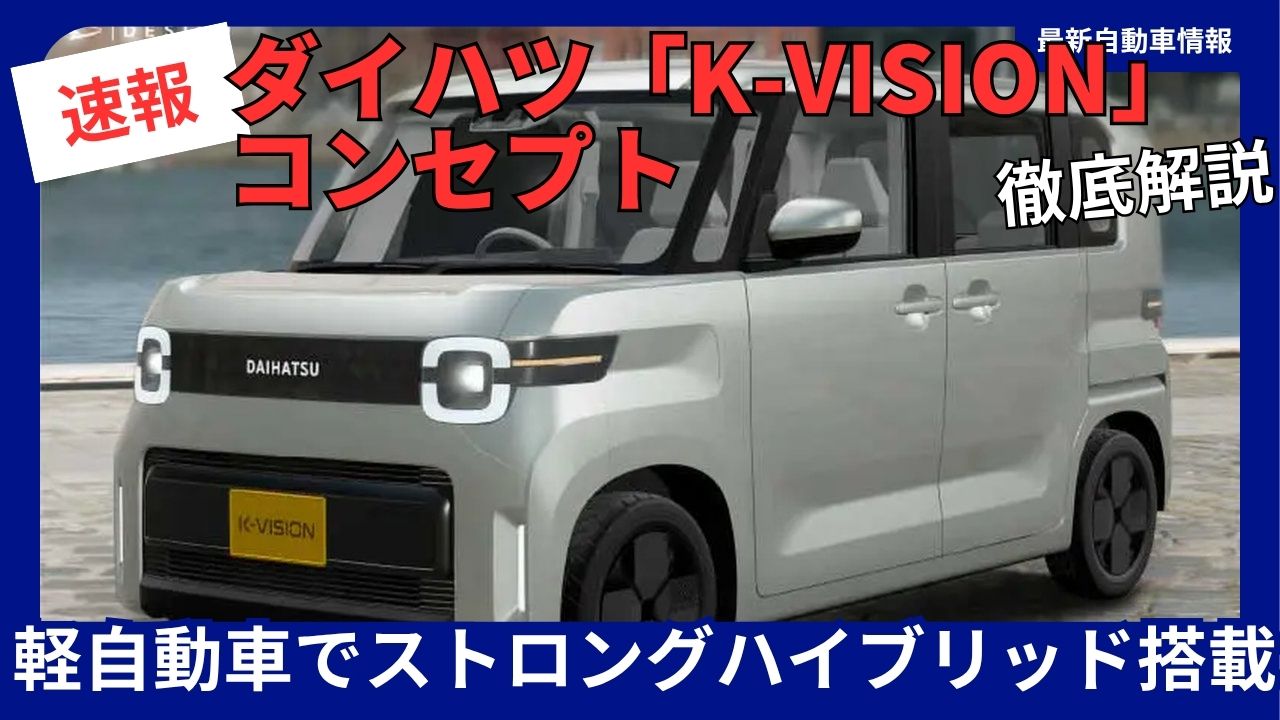
Daihatsu Motor Co., Ltd. unveiled its next-generation minicar concept car, “K-VISION,” for the first time in the world at the Japan Mobility Show 2025, which will be held at Tokyo Big Sight from October 29 to November 9, 2025. This model, the first minicar to feature a strong hybrid system, has the potential to revolutionize the minicar market.
The theme of the exhibition is “Daihatsu Mei for me. What we can do because we’re small. Starting with small things, one by one.” Since its founding in 1907, Daihatsu has been closely involved in people’s lives, continuing to invent cars that pack excitement, friendliness, and convenience into small bodies. This spirit has been named “Daihatsu Mei,” and it expresses the future that unfolds from the first-generation Midget as its starting point.
What is K-VISION? The next generation minicar for everyone
K-VISION
The K-VISION is a light hybrid vehicle developed under the concept of “everyone’s next-generation minicar.” Built on the next-generation DNGA platform, which anticipates future electrification, it features a lightweight, compact version of the e-SMART HYBRID system that has been well-received in the Rocky HEV. It aims to set a new standard for minicars, realizing the appeal of electric vehicles without the need for charging, including quiet, powerful driving thanks to 100% motor drive, excellent environmental friendliness, and external power supply functionality.
Body size and design
K-VISION
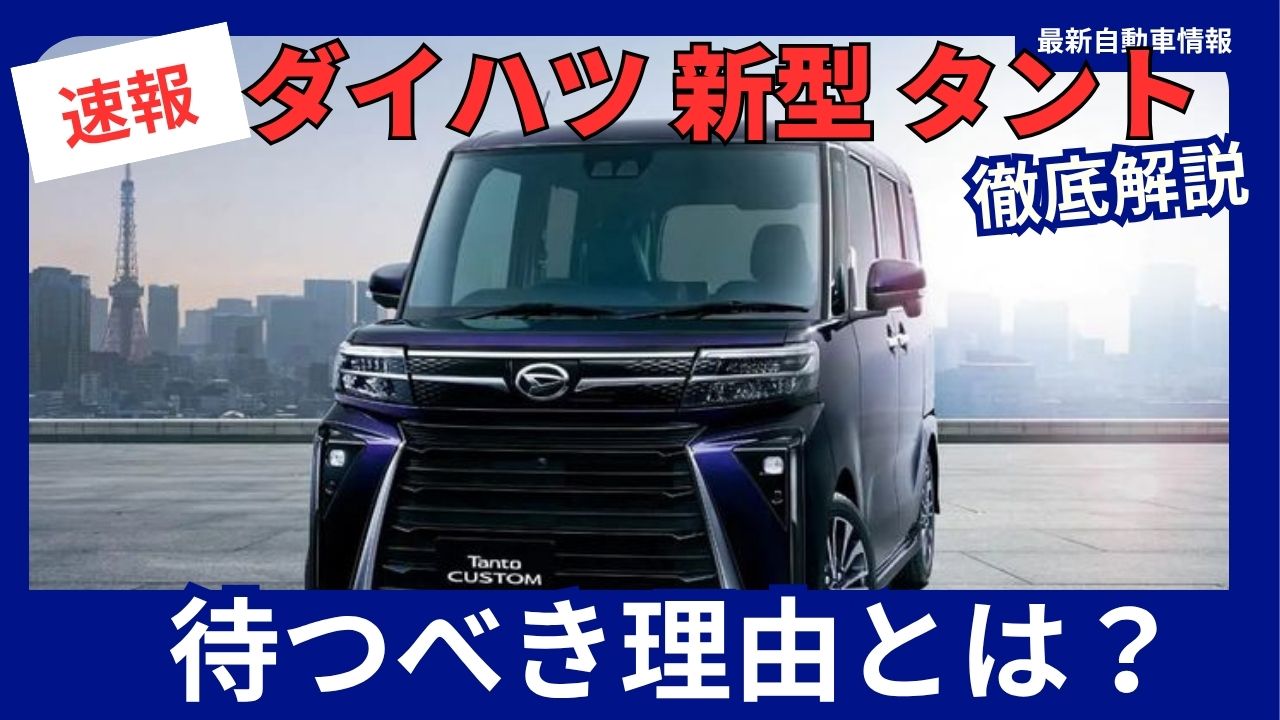
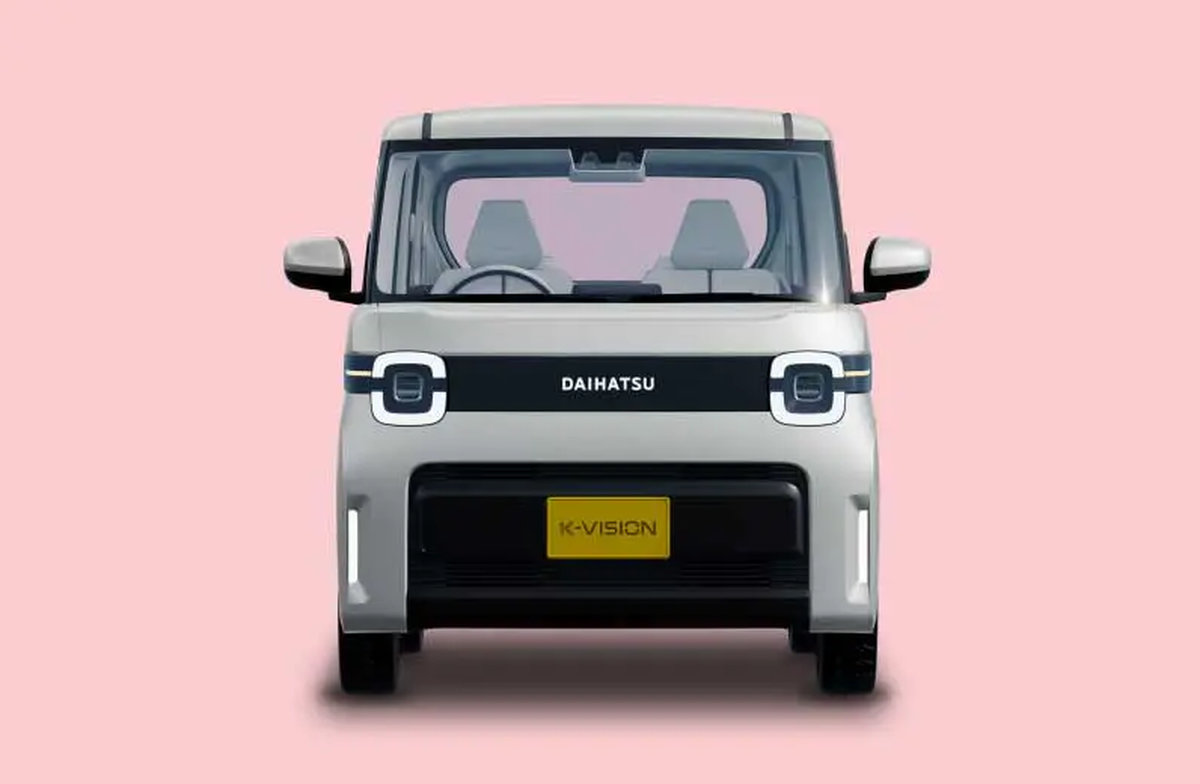
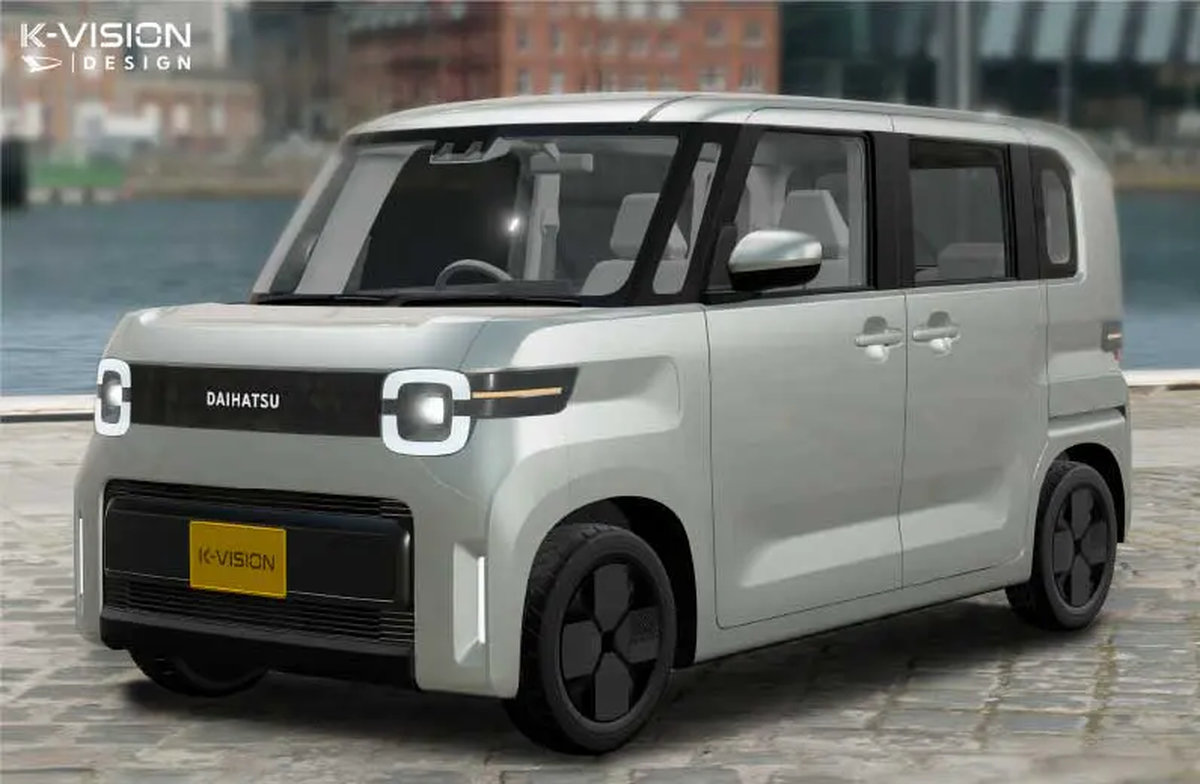
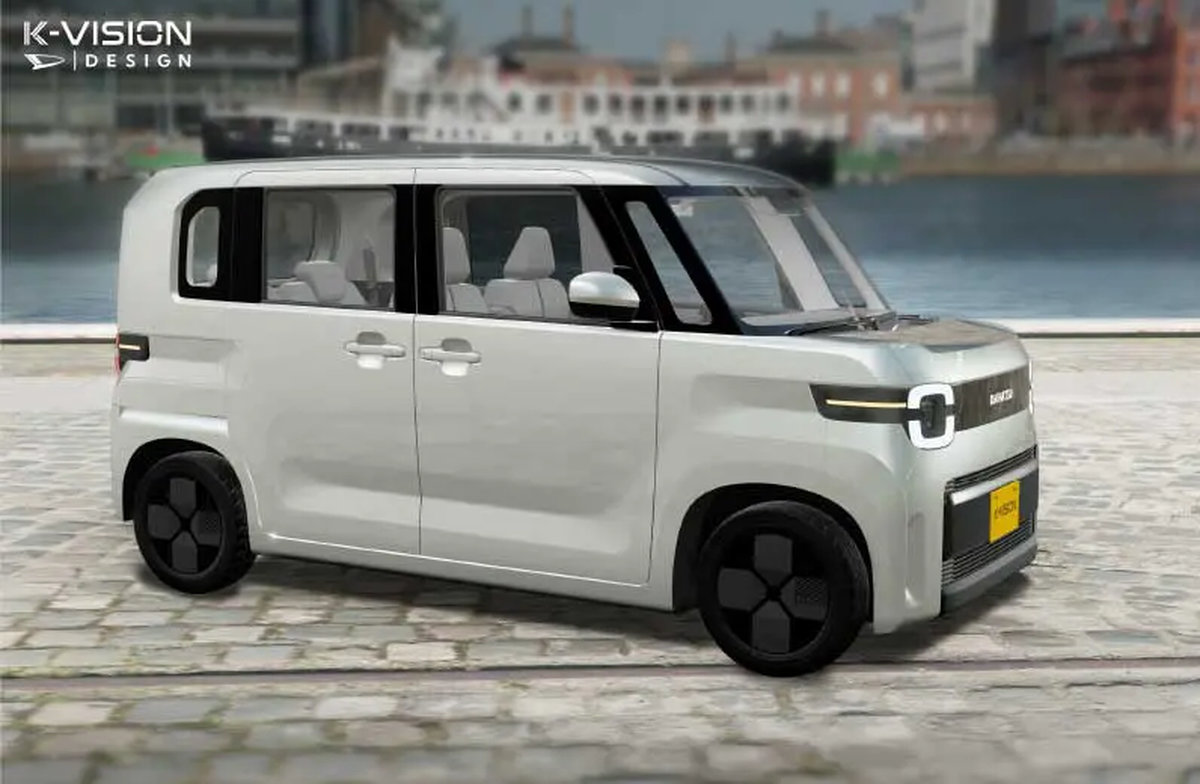
The K-VISION’s body dimensions are 3,395mm long, 1,475mm wide, 1,680mm high, and have a 2,460mm wheelbase, making the most of the minicar standard. The height is between the current Tanto (1,755-1,775mm) and Move (1,655-1,670mm), placing it in the high-roof wagon class. This exquisite height setting is thought to be a way to achieve both a low center of gravity thanks to the strong hybrid system battery and a spacious interior.
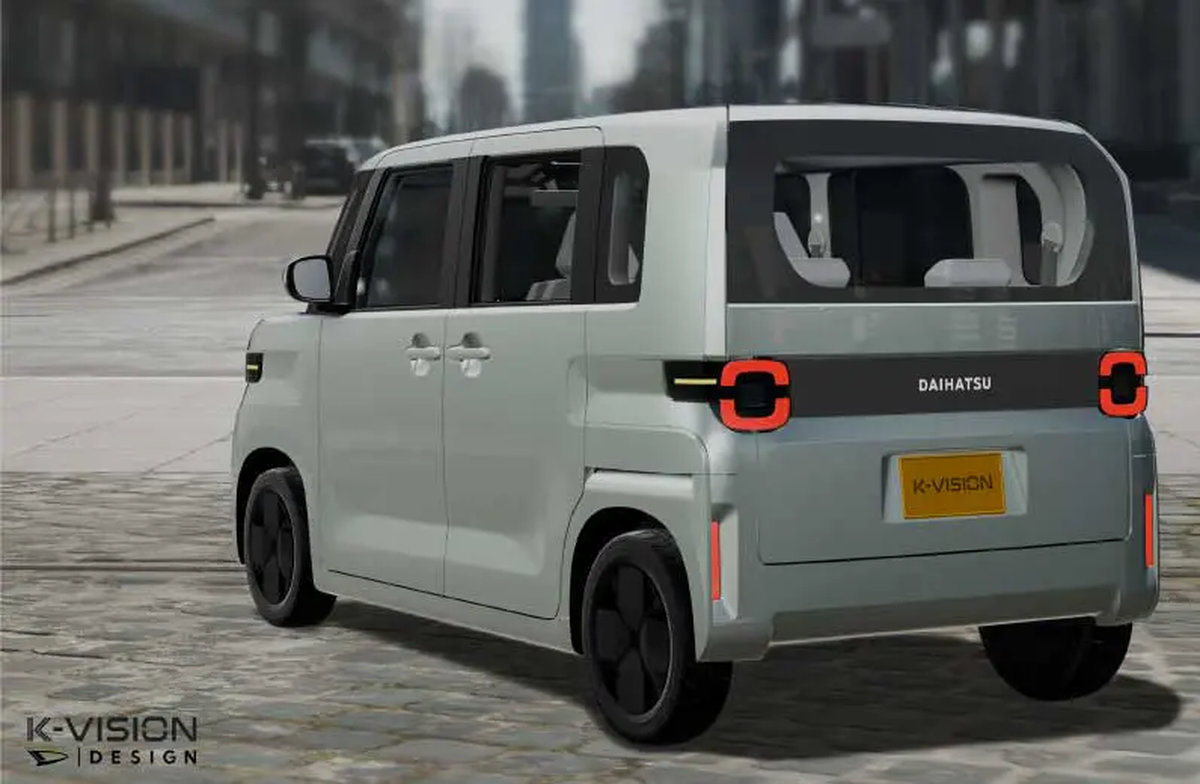
The exterior design is based on simple, friendly straight lines. It features sliding doors on both sides for added convenience. Distinctive features include black garnish that wraps around the sides of the front face, and square headlights with striking signature lamps that feature an upper and lower “C” shape. The lower grille is rectangular, and while very simple, it exudes a sense of advanced style and style.
What is noteworthy is that the new car uses the “DAIHATSU” logo instead of the traditional Daihatsu “D” emblem, which may suggest a new generation Daihatsu design identity.
K-VISION
Innovative strong hybrid system for light vehicles
Newly developed “e-SMART HYBRID” lightweight and compact technology
The biggest feature of the K-VISION is the “e-SMART HYBRID” system, newly developed for light vehicles. The motor and engine are directly connected on the same shaft, and the power control unit (PCU) and electromechanically integrated transaxle have made it possible to achieve compactness and lightness that is the size of a light vehicle.
This strong hybrid system uses a series hybrid method, generating electricity with the engine and driving the motor. 100% motor drive provides quiet, powerful driving. Compared to conventional engine + CVT vehicles, fuel efficiency has improved by more than 20% (according to Daihatsu research), making it both wallet-friendly and environmentally friendly.
Realizing the appeal of electric vehicles without the need for charging
A major benefit of the K-VISION is that it does not require charging. Thanks to its strong hybrid system, the engine generates electricity, so there is no need to worry about the hassle of plugging in and charging infrastructure. You can enjoy the benefits of electric vehicles in the same way you would normally.
Furthermore, the vehicle is equipped with an external power supply function, ensuring a large capacity that can provide approximately four days’ worth of electricity in the event of a disaster. If the vehicle is parked with a full fuel tank and consumes 400W of power, it is said to be able to provide the electricity needed for daily life for approximately four days. This is an extremely important feature in Japan, a country prone to disasters.
Interior: A simple and intuitive next-generation cockpit
K-VISION
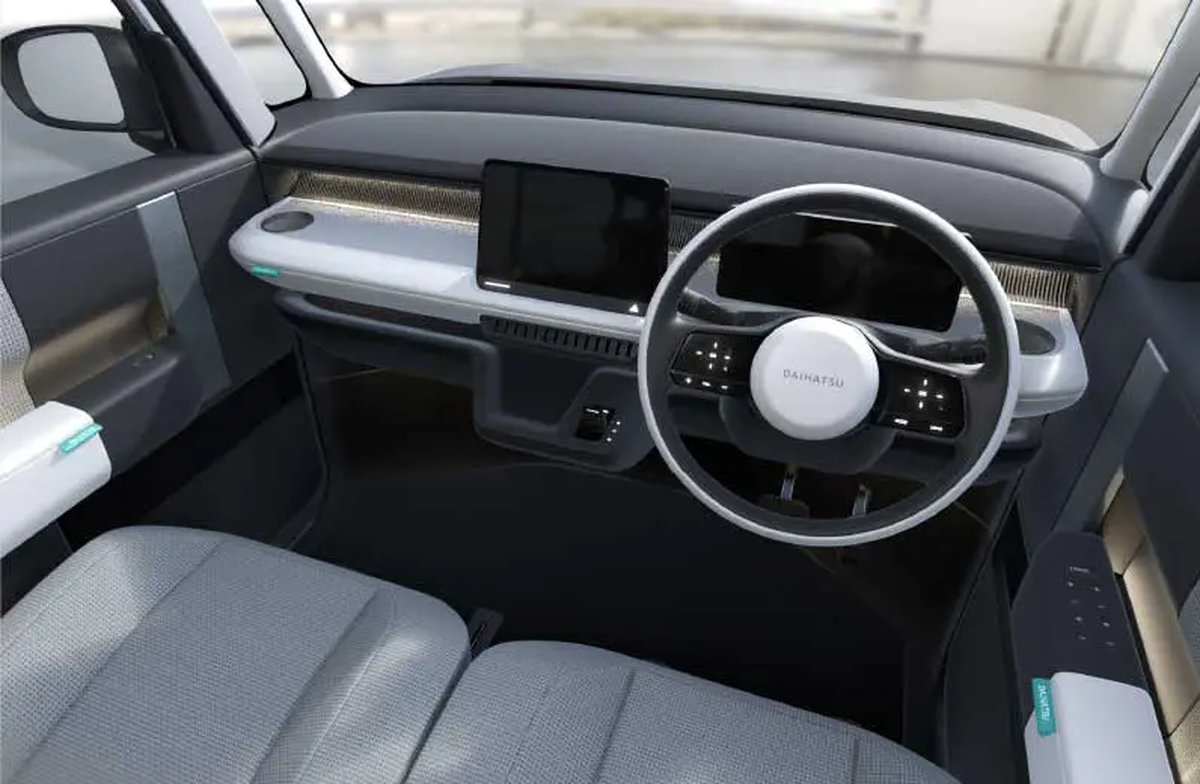
The interior of the K-VISION is based on a modern light gray color scheme, with warm-colored ambient lighting on the instrument panel and door trim, resulting in a high-quality finish that exceeds that of a minicar.
The instrument panel has ambient lighting positioned at the back to create a sense of perspective, while the front has a horizontal, flat space like a tray. It’s a practical design that looks like it could hold luggage. The infotainment system display is located in the center, and the meters also use a thin LCD. This helps to emphasize visibility, convenience, and a sense of modernity.
K-VISION
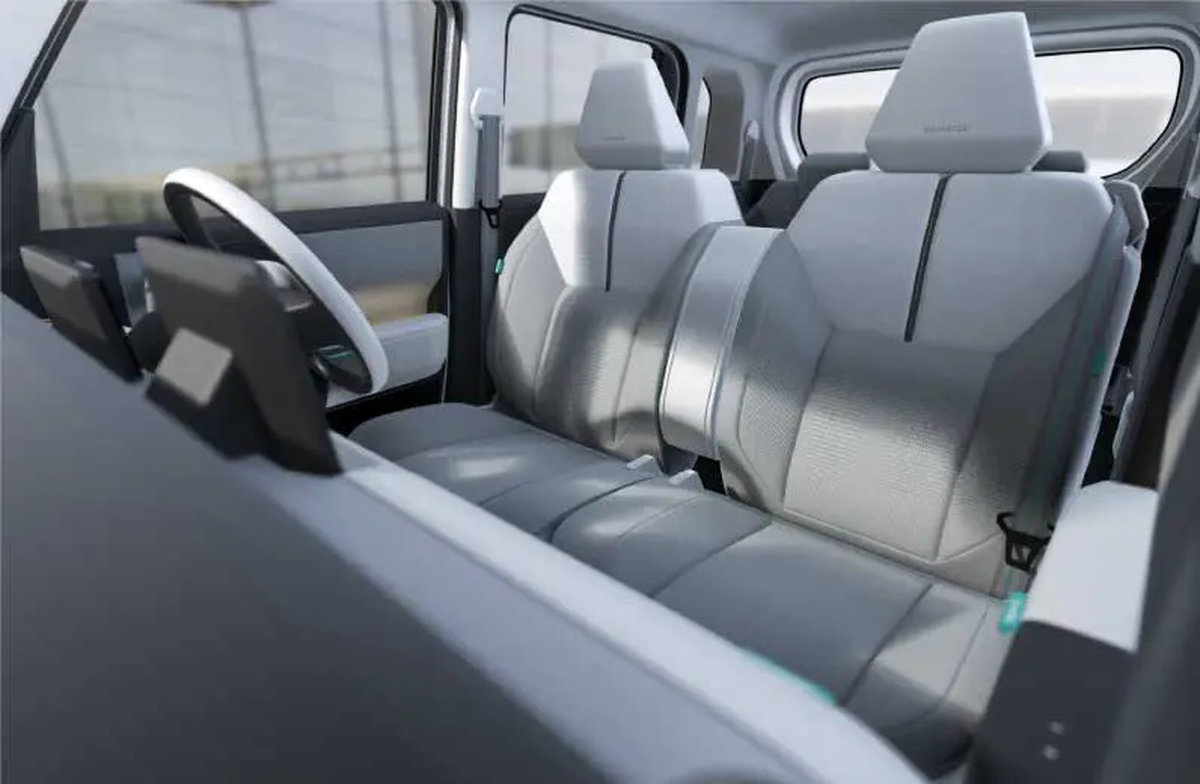
Toshiaki Kinoshita, head of the Brand Promotion Office at Daihatsu’s Corporate Headquarters, explained, “We developed a new, simple and intuitive design to make this a vehicle that is easy to use for everyone, including beginners and the elderly.”
It also features a spacious interior and excellent convenience with sliding doors on both sides, making it suitable for a wide range of situations, from everyday use to family outings.
Next-generation Tanto? Or Move? Anticipation for commercialization
K-VISION
It is not yet clear whether K-VISION will lead to the next Tanto or Move, but there is great anticipation among industry insiders.
With its overall height positioned between the Tanto and the Move, it is possible that it will be released as a new generation model that maintains the usability of the Tanto while achieving more refined styling and a highly efficient powertrain. Alternatively, it cannot be ruled out that a dedicated strong hybrid model could be created as part of an entirely new lineup.
In the minicar market, super high-roof wagons such as the Honda N-BOX, Suzuki Spacia, Mitsubishi Delica Mini, and Nissan Roox are popular, but the K-VISION has the potential to open up a new market with its environmental performance and the appeal of electric vehicles, which set it apart from these other vehicles.
Electrification strategy for light vehicles and the positioning of K-VISION
Kei cars are an important segment in Japan’s automobile market, accounting for approximately 40% of the total. Electrifying these cars is an unavoidable challenge as Japan moves towards carbon neutrality.
However, minicars are subject to significant constraints in terms of cost and size, and there are many challenges to overcome before they can be converted into battery electric vehicles (BEVs). There are also remaining issues with user acceptance, such as the state of the charging infrastructure, concerns about range, and the high cost of batteries.
The strong hybrid system adopted by K-VISION is a practical solution to these issues. It allows users to enjoy the benefits of electric vehicles without the need for charging, and it can utilize existing gas station infrastructure without compromising user convenience.
Daihatsu is developing a diverse electrification strategy, exhibiting the BEVs “Midget X” and “KAYOIBAKO-K,” as well as the upcoming commercial vehicle “e-ATRAI STICKER FACTORY” at the Japan Mobility Show 2025. Among these, K-VISION is positioned as the most realistic solution that will be easily accepted by many users.
Daihatsu’s inventive spirit “Daihatsu Mei”
In addition to K-VISION, many other interesting concept cars were exhibited at this year’s Japan Mobility Show.
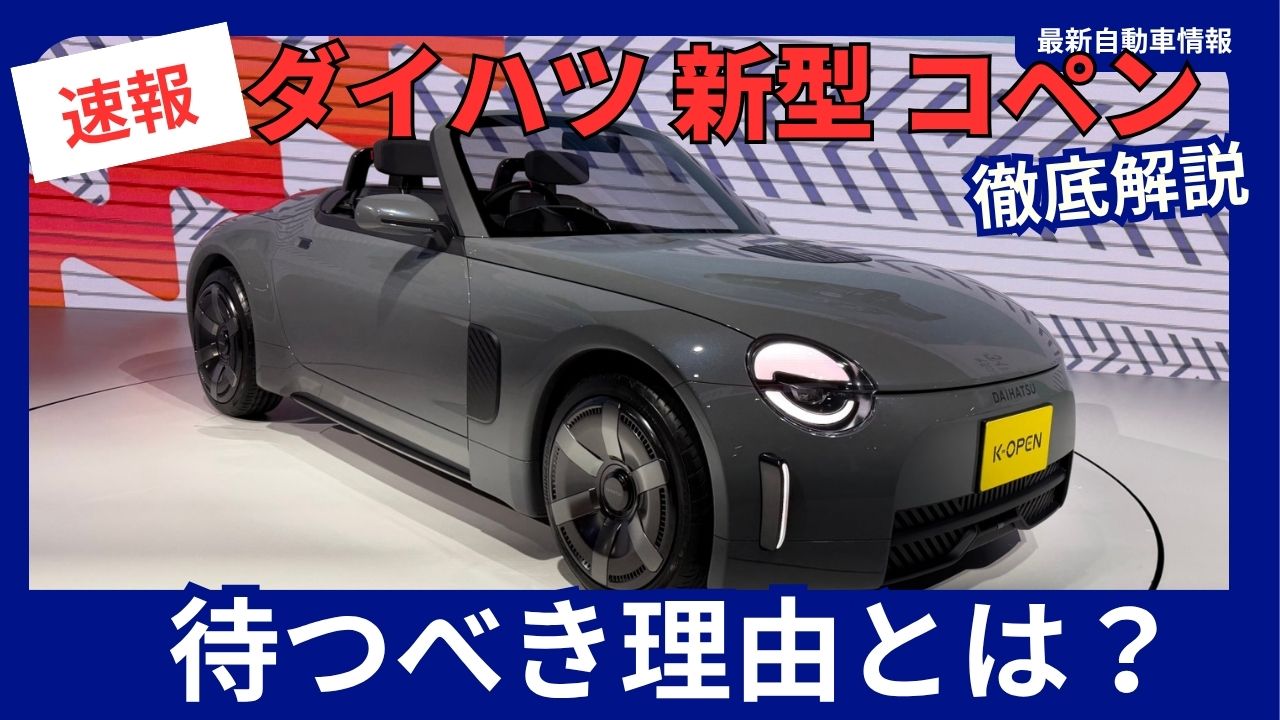
The Midget X, which carries on the inventive spirit of the original Midget into the future, is a new mobility vehicle that is just the right size for ease of handling and peace of mind, something bigger than a bicycle but smaller than a minicar. The K-OPEN, which is small enough to bring the light and comfortable open-air feel closer to you and allow you to easily enjoy the driving experience that only a FR vehicle can offer. The lineup of models embodies Daihatsu’s philosophy of “what’s possible because it’s small,” including the KAYOIBAKO-K, which proposes new ways of working in the last mile and ways of getting closer to the community.
These concept cars connect the “perspective that is close to people’s lives” and “spirit of invention” that Daihatsu has valued since its founding to the future.
Summary: Towards a new standard for minicars
The Daihatsu K-VISION Concept is making a big impact on the industry as the first light vehicle to feature a strong hybrid system.
It has many attractive features for users, such as quiet and powerful driving thanks to 100% motor drive, improved fuel efficiency of over 20%, ease of use without the need for charging, and external power supply functionality in emergencies. The combination of the next-generation DNGA platform and the lightweight and compact e-SMART HYBRID system will be highly praised as a realistic solution for the electrification of light vehicles.
It remains to be seen whether the K-VISION will be commercially available, whether it will debut as the next-generation Tanto or Move, or whether it will appear as an entirely new model. Specific release dates and detailed specifications will need to be announced in the future, but Daihatsu’s goal of creating a “new standard for minicars” is certainly beginning to take shape.
The K-VISION will be on display at the Japan Mobility Show 2025 until November 9th. If you have the opportunity to see the actual vehicle, why not visit the Daihatsu booth and experience the appeal of the next-generation minicar for yourself?
Daihatsu News Release