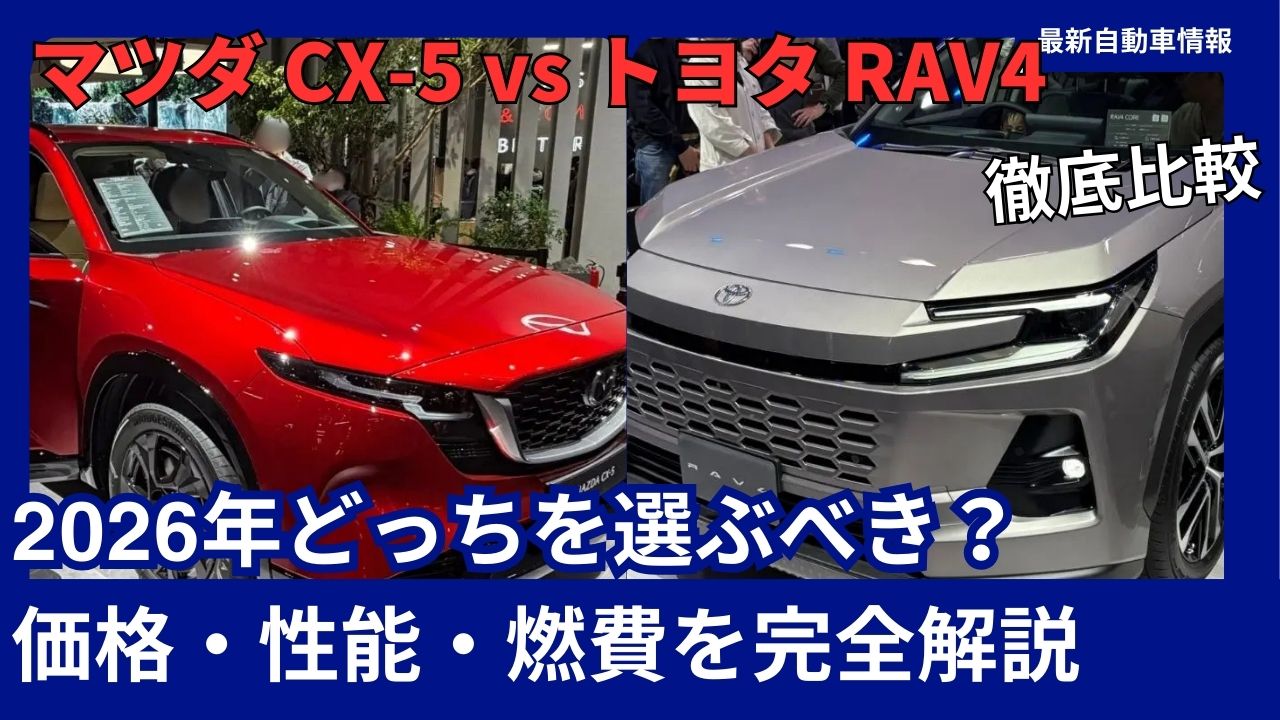



Toyota’s popular SUV, the RAV4, has gained widespread support, especially among outdoor enthusiasts and families. When considering purchasing one, maintenance and running costs are a major concern.
This article provides a detailed breakdown of the maintenance costs for a RAV4, showing you exactly how much it costs per year. It’s a must-read for anyone who wants to know about the costs of maintaining a RAV4, including car tax, insurance, and gasoline.
When using a car, it’s important to understand the maintenance costs of owning one, such as gasoline, taxes, and insurance. If you don’t know, you may not be able to maintain your RAV4 and end up having to sell it. This article introduces the gasoline costs, taxes, and insurance costs of the RAV4, along with simulations. This information is useful for those considering purchasing one, as well as those who are already owners. If you’re interested in the maintenance costs of a RAV4, be sure to check it out.
Maintenance costs are around 310,000 to 380,000 yen.
RAV4 maintenance and running costs
Since the RAV4 is a luxury car, it’s best to expect maintenance and running costs to be high.
- Automobile tax: 36,000 yen or 43,500 yen (1 year)
- Voluntary insurance premium: Approximately 100,000 yen (1 year)
- Vehicle inspection fee: Approximately 100,000 yen (every 2 years)
- Parking fee: Approximately 30,000 yen (monthly)
- Fuel cost: Depends on mileage
- Consumables: car wash, engine oil, etc.
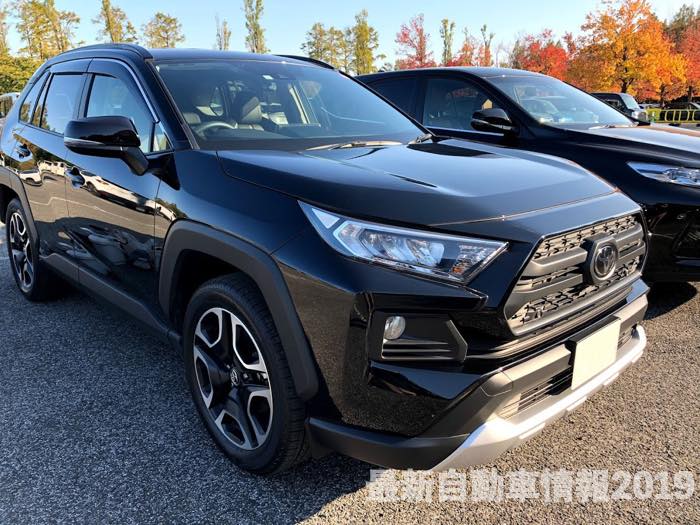
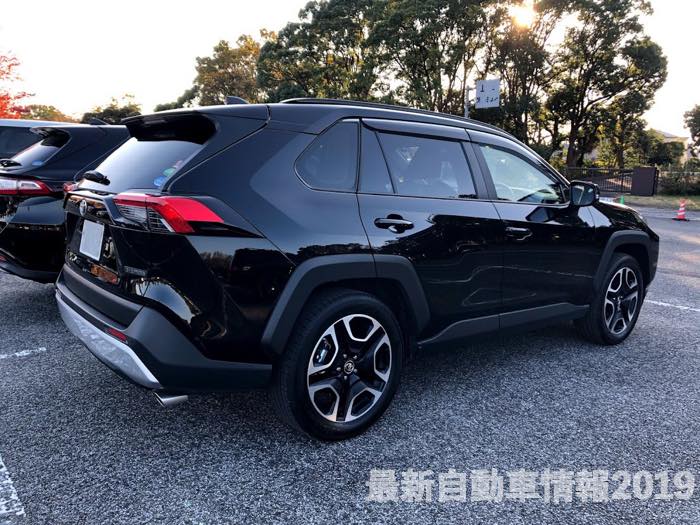
RAV4 automobile tax: 43,500 yen (1 year)
Applying this to the table, the 2.0L inline 4-cylinder direct injection engine “Dynamic Force Engine” installed in the RAV4 has an engine displacement of “1.5L or more but less than 2.0L”, so the automobile tax amount is 36,000 yen. The 2.5L inline 4-cylinder
direct injection engine “Dynamic Force Engine” + motor has an engine displacement of “2.0L or more but less than 2.5L”, so the automobile tax amount is 43,500 yen.
| Engine displacement | Automobile tax amount |
|---|---|
| 660cc | 10,800 yen |
| 1,000cc or less | 25,000 yen |
| More than 1,000cc but less than 1,500cc | 30,500 yen |
| More than 1,500cc but less than 2,000cc | 36,000 yen |
| More than 2,000cc but less than 2,500cc | 43,500 yen |
| More than 2,500cc but less than 3,000cc | 50,000 yen |
| More than 3,000cc but less than 3,500cc | 57,000 yen |
| More than 3,500cc but less than 4,000cc | 65,500 yen |
| More than 4,000cc but less than 4,500cc | 75,500 yen |
| More than 4,500cc but less than 6,000cc | 87,000 yen |
| Over 6,000cc | 110,000 yen |

Voluntary insurance premium: Approximately 80,000 yen (1 year)
Voluntary automobile insurance is insurance that car owners and users can voluntarily purchase to cover the portion of their insurance that is not covered by compulsory automobile liability insurance, or to prepare for damages that are not covered by compulsory automobile liability insurance . The main differences between compulsory automobile liability insurance and voluntary automobile insurance are as follows:
| item | Compulsory automobile liability insurance | Voluntary insurance |
|---|---|---|
| Join | compulsion | any |
| Coverage | Personal injury and property damage compensation | Personal injury and property damage compensation, vehicle insurance, passenger insurance, etc. |
| Compensation amount | minimum level | Subscriber’s choice |
| Insurance premiums | Depends on the vehicle type and age | Depends on the compensation |
Voluntary insurance mainly covers three types of coverage :
- Third-party liability insurance: Covers damages to the other party who is killed or injured.
- Property damage insurance: Covers damage to the other party’s property, such as vehicles and buildings.
- Vehicle insurance: Covers repair costs if your car is damaged in an accident.
You can freely combine these types of coverage to choose the coverage you need. The premium for optional insurance is determined by the coverage you choose, the type of car you own, your age, your accident history, and other factors.
This time, you can freely combine options, and the amount varies depending on the voluntary insurance company, so we think it will cost around 80,000 yen per year, including vehicle insurance.
Compulsory automobile liability insurance (17,650 yen for 2 years) required at the time of vehicle inspection
When purchasing a car, you pay the insurance premium for the period until the next vehicle inspection. The amount of automobile liability insurance premium differs between standard cars and light cars, and when purchasing a new standard car, it costs 17,650 yen.
Standard car: Automobile weight tax (weight tax) charged every two years after vehicle inspection: 32,800 yen (for two years)
Since it is a statutory fee that is included in the vehicle inspection fee, it will be included in the vehicle inspection fee. The automobile weight tax is determined by vehicle model. The vehicle weight of the RAV4 is 1,530kg to 1,800kg, and private passenger cars are inspected every two years, while cargo vehicles are inspected annually.
| Vehicle weight | Less than 13 years since new registration |
|---|---|
| Less than 500kg | 8,200 yen |
| 1,000kg or less | 16,400 yen |
| 1,500kg or less | 24,600 yen |
| 2,000kg or less | 32,800 yen |
| 2.500kg or less | 41,000 yen |
| 3,000kg or less | 49,200 yen |
Here is an article about car taxes.
Vehicle inspection fee: Approximately 100,000 yen (every 2 years)
Vehicle inspection is a system to check whether a vehicle complies with the safety standards set forth in the Road Transport Vehicle Act. All vehicles must undergo inspection three years after purchase , and then every two years thereafter . We estimated that the inspection fee for the RAV4 would be around 100,000 yen.
Gasoline costs

- Fuel economy for gasoline vehicles (2WD) is calculated using WLCT mode fuel economy: 15.2km/L to 15.8km/L (13.0km/L). Fuel economy for hybrid vehicles (2WD) is calculated using WLCT mode fuel economy: 20.6km/L to 21.4km/L (17.0km/L).
Calculation of driving 10,000 km when gasoline price is 170 yen per liter
- Gasoline model 10,000km = 130,769 yen
- Hybrid car 10,000km = 100,000 yen
Consumables and other expenses
Other expenses include car wash fees and parking fees when traveling.
Calculate the cost for one year
The calculations are based on a 10,000 km annual driving distance. Also, I’ve written “approximately” because I’ve divided each payment into one year. Other expenses and parking fees are not included in this calculation, as some people incur these fees and others do not.
| 1 year fee | RAV4 gasoline vehicle |
RAV4 Hybrid |
|---|---|---|
| automobile tax | 36,000 yen | 43,500 yen |
| Voluntary insurance premiums | Approximately 100,000 yen | Approximately 100,000 yen |
| Compulsory automobile liability insurance | Approximately 8,825 yen | Approximately 8,825 yen |
| Vehicle weight tax (weight tax) |
Approximately 16,400 yen | Approximately 16,400 yen |
| Vehicle inspection costs | Approximately 50,000 yen | Approximately 50,000 yen |
| Gasoline costs | Approximately 130,769 yen | Approximately 100,000 yen |
| total | Approximately 341,994 yen | Approximately 318,725 yen |
*This is based on the latest automotive information, so please let us know if you find any mistakes.
Maintenance costs for the RAV4 are likely to be around 340,000 yen per year for a gasoline-powered vehicle and around 310,000 yen per year for a hybrid vehicle . We hope this information is helpful when purchasing.
New RAV4 partial improvement price grade
RAV4 Hybrid model grade
| Model | Drive system | Price (10%) |
|---|---|---|
| HYBRID X | 2WD | 3,538,000 yen |
| E-Four (4WD) | 3,791,000 yen | |
| HYBRID Adventure |
E-Four (4WD) | 4,303,000 yen |
| HYBRID G | E-Four (4WD) | 4,304,000 yen |
| Adventure “OFFROAD packageⅡ” |
E-Four (4WD) | 4,503,000 yen |
RAX4 gasoline model grade
| Model | Drive system | Price (10%) |
|---|---|---|
| X | 2WD | 2,938,000 yen |
| 4WD | 3,169,000 yen | |
| Adventure | 4WD | 3,684,000 yen |
| Adventure “OFFROAD packageⅡ” |
4WD | 3,884,000 yen |
| G | 4WD | 3,666,000 yen |
| GZ package | 4WD | 3,884,000 yen |
A word from the editorial department
So far we’ve focused on price, but we’d like to talk about comfort as well.
The “inline 4-cylinder 2.0L direct injection engine + Direct Shift-CVT” model is fine in terms of price, but not in terms of comfort. I have driven the 2.0L gasoline engines of the third-generation Harrier and fourth-generation RAV4, and found them to be very slow to start. Because the torque is insufficient for the vehicle weight, even with the Direct Shift-CVT, it will still feel slow, even if it is improved.
On the other hand, the “inline 4-cylinder 2.5L direct injection engine + motor” uses Toyota’s specialty hybrid system. Starting the car is done solely by the motor, but since motors excel at torque, you can expect a very good start. Overseas models also use this hybrid engine specification only, and it has received high praise overseas. Furthermore, when using “radar cruise control,” the difference can be noticeable, as electric control and hybrids work well together.
If comfort and performance are important to you, we recommend a hybrid car. It is important to consider these points when making your purchase. Furthermore, the annual maintenance costs for this car are estimated to be around 310,000 to 340,000 yen. It is important to consider these points when making your purchase.
RAV4 Q&A
Image of a person riding in a RAV4
-
RAV4 drivers are often seen as active, outdoor-loving people. Its urban yet sophisticated design is also popular, making it a car that is supported by a wide range of people.
Image of a person riding in a RAV4
-
The average annual income of a RAV4 owner is said to be around 4 million to 6 million yen. However, because there is a wide range of grades available, it is owned by a wide range of people, from relatively young people in their 20s and 30s, to families and high-income earners.
Is the RAV4 popular with women?
-
The RAV4 is popular with women due to its stylish design, ease of driving, and high safety performance. In particular, the urban and sophisticated grades tend to be popular with women.
Is the RAV4 considered a luxury vehicle?
-
The RAV4 isn’t exactly a luxury car, but as a mid-class SUV, it offers a certain level of luxury and status. The interior quality and equipment are excellent, making it a vehicle that offers high ownership satisfaction.
Why is it said that the RAV4 is difficult to park in?
-
The RAV4 is 4,600mm long and 1,855mm wide, which is a little large considering the road conditions in Japan. Therefore, it may not be able to fit into mechanical parking lots or multi-story parking garages. It is important to check the size of the parking lot in advance.
Why is it a good decision to buy a RAV4?
-
There are many reasons why people are glad they bought the RAV4, including that it is easy to drive, can carry a lot of luggage, has a cool design, and has excellent safety performance. It can be said that this is a car with a high level of overall satisfaction.
How does the RAV4’s spaciousness compare to other vehicles?
-
The RAV4 is classified as a C-segment SUV, and even compared to other SUVs in the same class, it boasts top-class interior and cargo space. In particular, the legroom in the back seats is spacious, allowing even adults to relax comfortably.
How fuel efficient is the RAV4?
-
The fuel economy of the RAV4 is 15.2km/L (approximately 10km/L) in WLTC mode for the gasoline model, and 20.6km/L (approximately 15km/L) in WLTC mode for the hybrid model. Actual fuel economy will vary depending on driving conditions and road conditions, but this can be said to be relatively good fuel economy for an SUV.
RAV4 related articles