

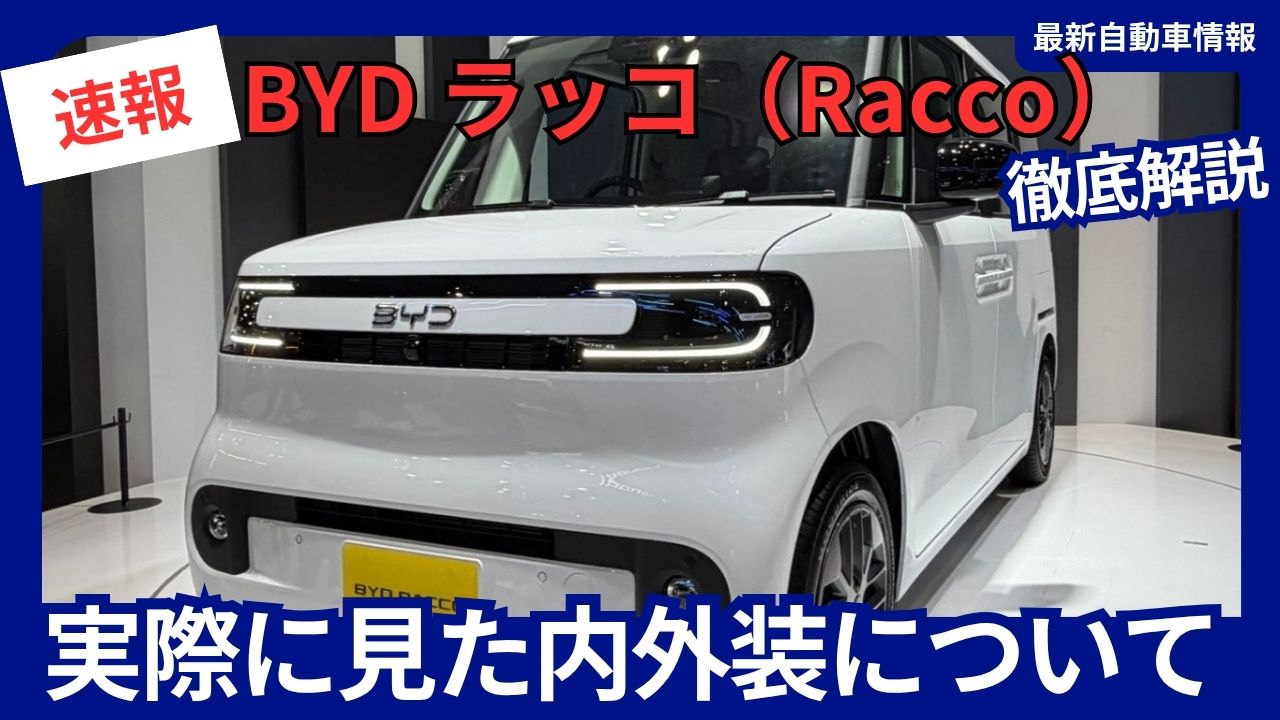
On October 29, 2025, at the Japan Mobility Show 2025, BYD, a major Chinese electric vehicle manufacturer, unveiled its first light vehicle-compliant EV, the “RACCO,” for the first time in the world. This vehicle is BYD’s first model developed exclusively for an overseas market, and is a testament to the company’s commitment to the Japanese market. Scheduled for release in the summer of 2026, this light EV will bring a new option to the Japanese light vehicle market as a super-height wagon equipped with sliding doors.
In this article, we will thoroughly explain the appeal, advantages, and concerns of the BYD Sea Otter, based on detailed information gained from actually seeing the exhibited vehicle.
What is the BYD Sea Otter? A complete look at the light EV designed exclusively for Japan
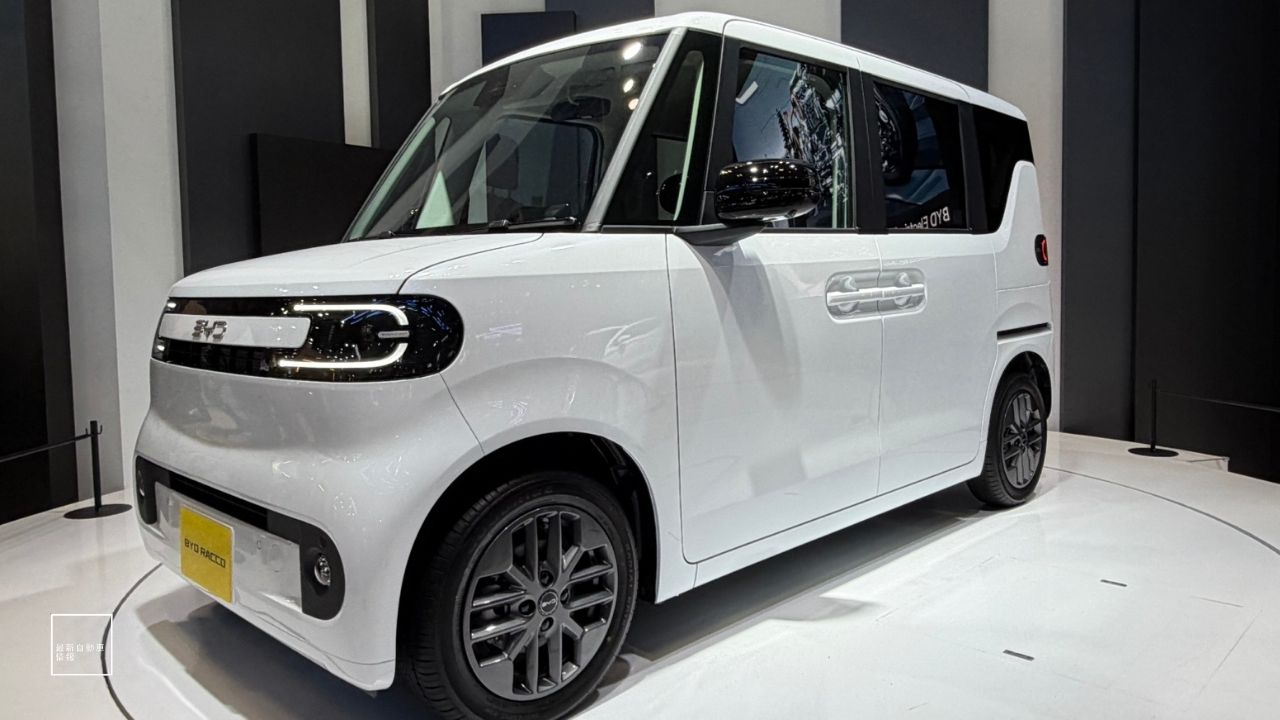
BYD RACCO
A special model developed for the Japanese market
The BYD Sea Otter is the company’s first vehicle developed as an “overseas-only model.” It is not planned for sale in China or other markets, and is designed entirely to meet the needs of the Japanese market. This is an extremely unusual move for a foreign automaker, and shows BYD’s strong commitment to the Japanese market.
An innovative combination of a super-height wagon, sliding doors, and an EV
The Japanese market currently has light passenger EVs such as the Nissan Sakura and Honda N-ONE e:, but there are no super-height wagon-type light EVs with sliding doors. If the Raccoon is released as planned in the summer of 2026, it will be Japan’s first light EV with sliding doors .
This concept, which combines the super height wagon, the most popular minicar category in Japan (the Honda N-BOX was the top-selling minicar for 10 consecutive years from 2015 to 2024), with an EV, is something that many consumers have been waiting for.
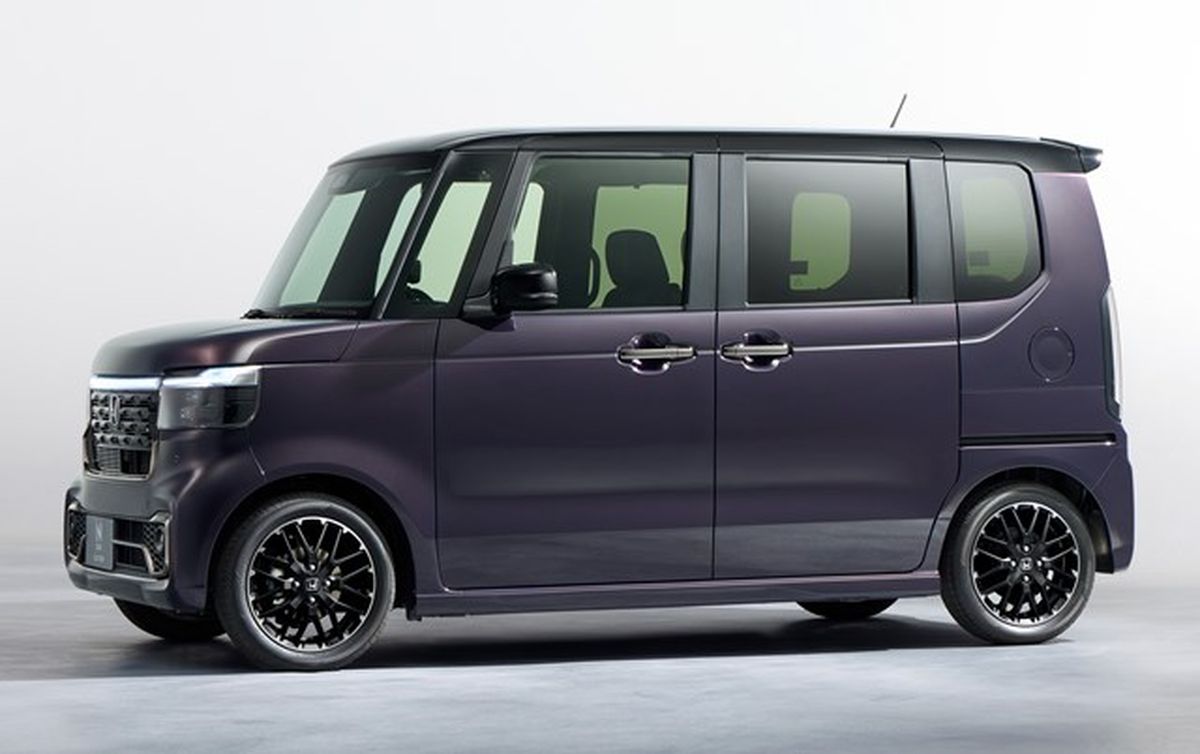
N-BOX CUSTOM
BYD Sea Otter’s main specifications
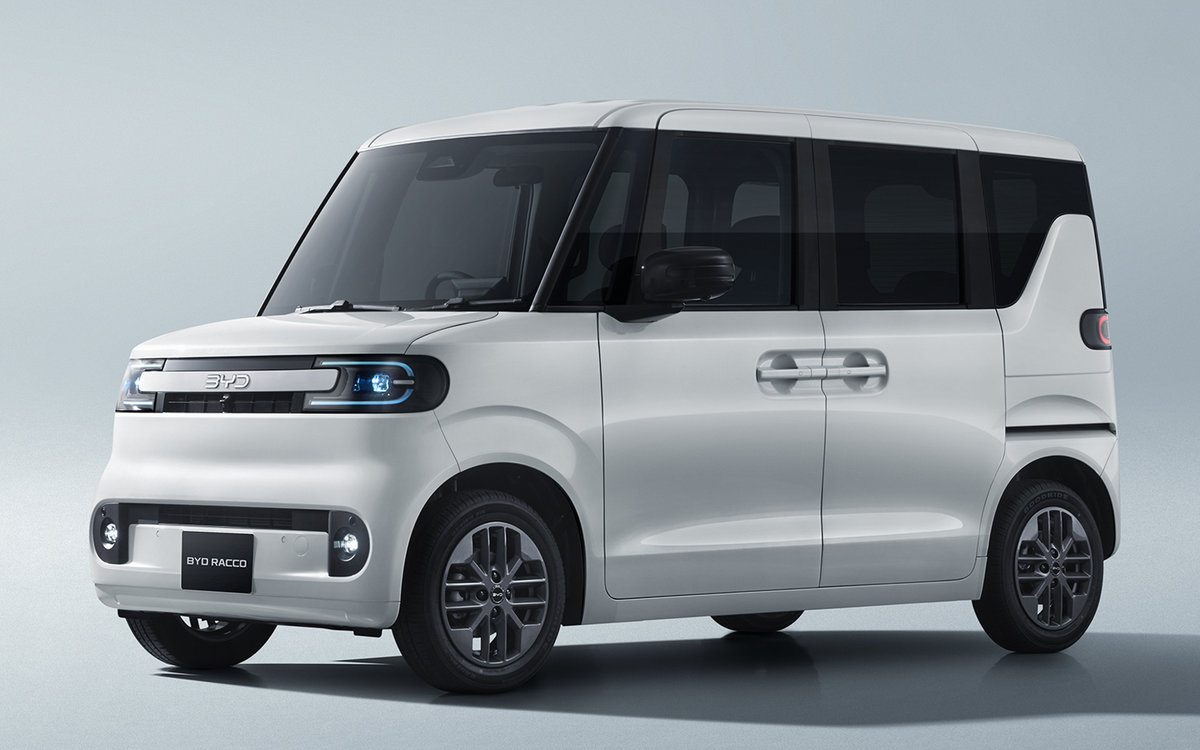
Body size and basic specifications
- Total length : 3,395mm
- Overall width : 1,475mm
- Overall height : 1,800mm
- Wheelbase : Details not yet announced
- Passenger capacity : 4 people
- Drive system : Front-wheel drive (FWD)
Although the body size fits perfectly within the kei car standard, it still offers the interior space unique to a super high-roof wagon with an overall height of 1,800mm.
Powertrain
- Motor output : 64ps (47kW)
- Maximum torque : 18.4 kgm (180 Nm)
- Battery type : Lithium iron phosphate (LFP) “Blade Battery”
Although the maximum output is limited to 64ps in accordance with the self-imposed regulations for light vehicles, the maximum torque is set at a generous 18.4kgm, allowing you to expect the smooth and powerful acceleration that only an EV can provide.
Battery capacity and range
The BYD Sea Otter will be available in two battery grades:
Standard model
- Battery capacity : 25kWh (estimated; actual capacity may be 30kWh)
- Cruising range : 240km (WLTC estimate)
- Estimated price : 2.49 million yen
Long Range Model
- Battery capacity : 40kWh (estimated; actual capacity may be 42kWh)
- Cruising range : 370km (WLTC estimate)
- Estimated price : 2.99 million yen
President Tofukuji commented, “We hope that people will choose the Long Range as their first car,” and the car has a highly practical driving range.
The appeal of exterior design
Front design
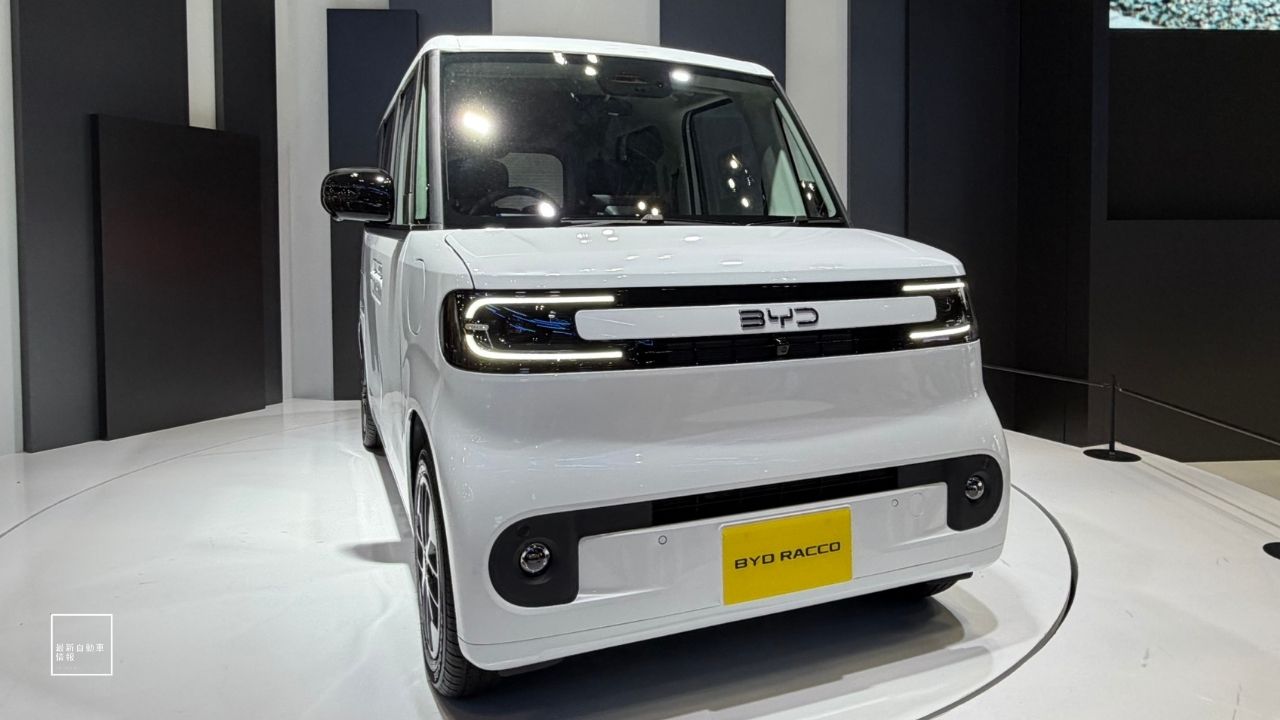
BYD RACCO
The BYD Sea Otter’s front mask features an advanced design unique to EVs. Because there is no need for large cooling grilles like in engine vehicles, openings are kept to a minimum, improving aerodynamic performance.
- LED headlights : High-quality LED headlights are standard equipment.
- Sharp design : A unique look that is different from any other manufacturer
- High quality : The impression from seeing the actual car is that it has a quality that exceeds that of domestic minicars.
Many visitors who actually saw the vehicle at the Japan Mobility Show commented that it “feels like high quality” and “has a better feel than Japanese minicars.”
Side view
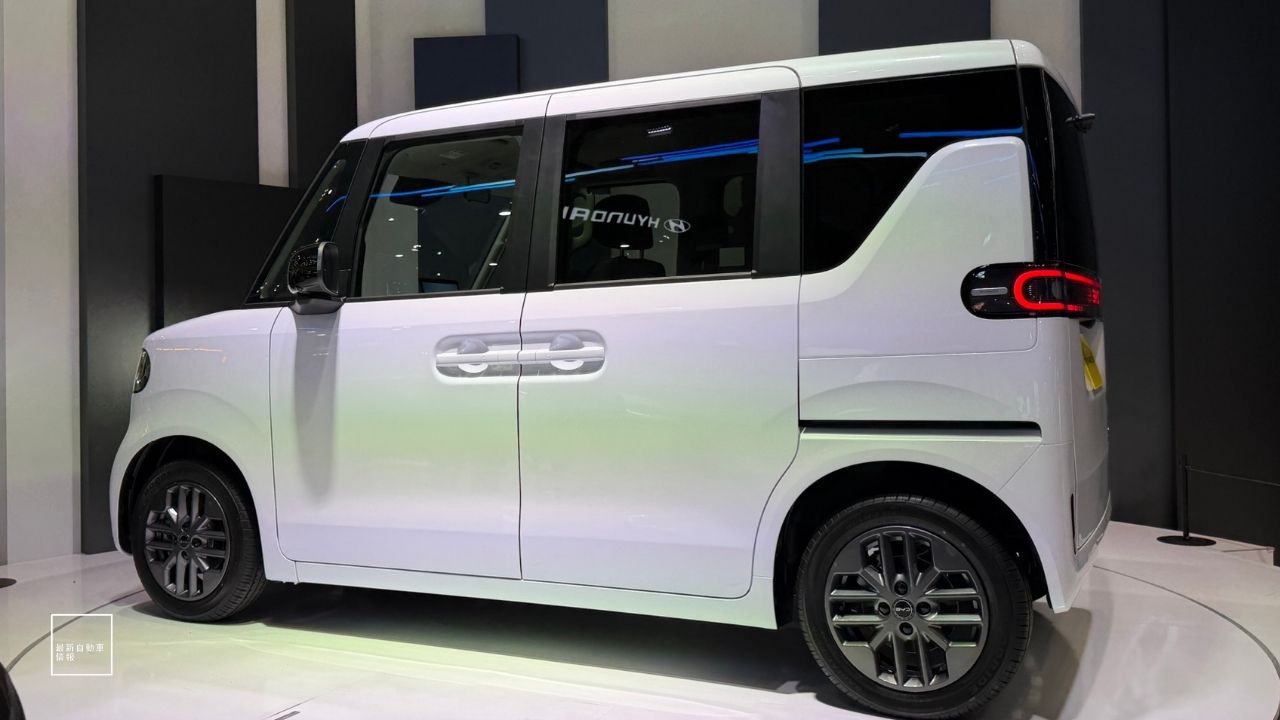
BYD RACCO
- Sliding doors : Power sliding doors on both sides (operable with driver’s seat switch)
- Flat body sides : A square design that maximizes interior space
- Floating roof : The D-pillars are painted black, creating a design that makes the roof appear to be floating.
- Charging port : Located on the front
- Tire size : 165/65R15 (N-BOX has a higher aspect ratio than 165/55R15, prioritizing ride comfort)
The wheels are 10-spoke aluminum wheels, which combine design and quality.
Rear design

BYD RACCO
- Single-character tail lamp : LED tail lamp connected in a horizontal line
- BYD logo : Brand logo placed on the rear gate
- Flat tailgate : Near-vertical gate design maximizes cargo space
- Gate that opens wide to the bottom : Designed for easy loading and unloading of luggage
The square rear design combines practicality and design at a high level.
The appeal of interior design
First impressions of the interior
My first impression of the car was that it had an amazingly high quality feel. The interior, unified in a two-tone ivory and black color scheme, gives off a high-quality, bright impression.
Cockpit area
- 12.3-inch display : Large central touchscreen
- Digital meter : Full digital meter with LCD panel
- Steering wheel : Multi-function steering wheel with various switches
- Shifter : Compact and cutely designed shift lever
- Air conditioning controls : Physical buttons ensure ease of operation
- Android Auto / Apple CarPlay : Smartphone connectivity function standard equipment
Attention to detail
Evidence of thorough research into Japanese kei cars is evident everywhere:
- Air conditioning vent adjustment knob : Pink accent color adds a playful touch
- Cup holders : Located on both the driver’s and passenger’s seats
- Storage tray : practical storage space in the center console
- Sliding door open/close switch : Rear door can be operated from the driver’s seat
Seat comfort
Front seats
- Power seats : Equipped with electric adjustment function (a rare feature in a minicar)
- Two-tone color : high-quality ivory and black color scheme
- Soft and comfortable seating : Seat design with excellent cushioning
- Armrest : equipped on the driver’s side
rear seat
- Ample legroom : The flat floor, unique to EVs, provides an outstanding sense of openness
- Spacious seat and back : Designed to reduce fatigue even during long journeys
- Seatback table : Foldable table on the back of the front seat
- Shopping hook : A hook for hanging convenience store bags, etc.
- Assist grip : Convenient grip for getting on and off the vehicle
- Sunshade : Equipped with a sunshade on the rear window
Ample storage space
- Tray under the passenger seat : Storage space that makes use of the flat floor
- Door pockets : practical storage in each door
- Seatback pocket : Pockets on the back of the front seats
Playful details
The B-pillar features a cute sea otter illustration , a playful design that is associated with the car’s name. Such small details add to the charm of the sea otter.
BYD Sea Otter’s Advantages
1. Unique packaging
The combination of a super height wagon, sliding doors, and an EV is a unique package that does not currently exist in Japan. By combining the benefits of an EV with Japan’s most popular kei car body type, it will be an attractive option for many users.
2. Practical range
The long-range model has an estimated range of 370km, making it practical enough for everyday use as well as weekend leisure activities. It’s even capable of making a round trip from Tokyo to Hakone or Gotemba without having to worry about charging.
3. Driving performance unique to EVs
The maximum torque of 18.4 kgm is a very generous setting for a minicar.
- Smooth acceleration : Accelerate smoothly from a standing start
- Quietness : No engine noise makes the interior quiet
- Powerful mid-speed range : Overtaking and merging can be done without stress
4. Low center of gravity provides excellent handling stability
The battery is placed under the floor to achieve a low center of gravity, and the use of four-wheel disc brakes , which is rare for a minicar , ensures stable braking performance.
5. High safety performance
Blade Battery Safety
- High safety thanks to the use of a lithium-ion iron phosphate battery
- High durability that does not ignite or explode even in nail penetration tests
- The battery itself is a structural member thanks to the CTC (Cell to Chassis) structure, which also improves the vehicle’s rigidity.
Advanced Driver Assistance Systems (ADAS)
- BSM (Blind Spot Monitor) : Detects vehicles in blind spots
- PVM (Panoramic View Monitor) : Check your surroundings with a 360-degree camera
- ACC (Adaptive Cruise Control) : Assists driving on highways
- Navigation Pilot : Single-lane driving assistance
- Automatic emergency braking system : Helps avoid and mitigate collisions
6. V2L/V2H function
- V2L (Vehicle to Load) : Can be used as a power source outdoors or in the event of a disaster
- V2H (Vehicle to Home) : Power can be supplied to homes during power outages
This feature makes the sea otter not just a means of transportation, but also a valuable “mobile battery.”
7. Low running costs
The benefits of EVs include:
- Fuel costs : about 1/3 the cost of a gasoline-powered vehicle
- Maintenance costs : No engine oil changes required, few consumables
- Taxes : Low automobile tax
In the long run, it offers cost-effectiveness that will more than make up for the difference in initial costs.
8. Overwhelmingly high quality texture
Many people involved in the project were surprised by the high quality of the car when they saw it in person. Many commented that it was comparable to Japanese minicars, and in fact, in many ways even surpassed them.
9. Choice of two grades
Two grades, the standard model and the long-range model, allow users to choose the model that best suits their lifestyle:
- Mainly for local shopping and commuting : Standard model is sufficient
- If you want to enjoy weekend drives , we recommend the long-range model.
10. Expectations for charging performance
BYD has ultra-fast charging technology with its “Super e-Platform.” The Otter is also expected to have excellent charging performance:
- Expected fast charging performance : Standard maximum 90kW, long range maximum 120kW
- Normal charging : 6kW (estimated)
If this is realized, it will provide convenience that far exceeds that of domestically produced light EVs (Nissan Sakura: maximum 30kW, Honda N-VAN e:: maximum 50kW).
Disappointments and concerns about the BYD Sea Otter
1. Price uncertainty
As of November 2025, the official price has not yet been announced. The estimated price is:
- Standard model : 2.49 million yen
- Long range model : 2,990,000 yen
However, this is only an estimate, and the market reaction could vary significantly depending on the actual price.
Price Concerns
- Developed exclusively for Japan, there is a need to recover costs
- There are no economies of scale due to global expansion like other BYD models.
- It may be more expensive than the N-BOX price range (around 1.7 million to 2.5 million yen)
It is desirable to set a price that allows it to compete head-on with engine-powered light vehicles without subsidies.
2. Dependence on charging infrastructure
Since it is an EV, convenience is greatly reduced if the charging environment is not in place:
- If there is no charging environment at home : Convenience is greatly reduced
- Congestion at quick chargers : Waiting times may occur at highway service areas/parking areas on holidays
- Charging time : Takes longer than refueling with gasoline
Ensuring a charging environment is a particular challenge for those living in apartment complexes.
3. Range Concerns
The standard model’s estimated range of 240km is sufficient for everyday use, but:
- Reduced range in winter : Battery performance decreases in cold regions
- Highway driving : Electricity efficiency worsens than city driving
- Using air conditioning : Driving range is particularly reduced when using the heater.
Actual cruising range may vary significantly depending on conditions.
4. Sales and service network issues
BYD has around 80 domestic sales outlets, which is a small number compared to domestic manufacturers:
- Limited number of stores where you can test drive : Few opportunities to see the actual car
- Concerns about after-sales service : Uncertainty about whether the maintenance system is sufficient
- Resale value : Unknown value in the used car market
5. Awareness of the BYD brand
The BYD brand is not yet well known in the Japanese market:
- Concerns about Chinese manufacturers : Some consumers have concerns about quality and durability
- Lack of experience : Limited track record of passenger car sales in Japan
- Brand image : Impression of inferiority to domestic manufacturers in terms of luxury and reliability
6. Battery degradation concerns
Lithium-ion batteries inevitably deteriorate over time:
- Decreasing range : May be shorter than when new after a few years
- Battery replacement costs : Potentially expensive replacement costs
- Warranty details : Battery warranty details have not yet been announced
BYD’s Blade battery is said to be highly durable, but long-term performance data is yet to be evaluated.
7. CEV subsidy amount
CEV subsidies for BYD’s EV models tend to be more stringent than those for domestically produced vehicles:
- Possibility of small subsidy amount : Actual purchase price will be higher than expected
- Risk of changes in subsidy system : Subsidy amount fluctuates due to changes in national policy
8. Rear seat sliding function
Since the detailed specifications have not yet been fully released, it is unclear whether the rear seats have a sliding function. This is standard equipment on Japanese light super height wagons, but if it is omitted, it may be less practical.
9. Performance in cold climates
EVs generally face the issue of reduced performance in cold climates:
- Decreased battery performance : Driving range significantly reduced in low temperature environments
- Power consumption due to heating : Large power consumption due to inability to utilize engine waste heat
- Slower charging speed : Charging speed also slows down in cold temperatures.
BYD is said to be equipped with a battery management system and a heat pump system, but we will have to wait until the car is released to see how well it performs in cold climates.
10. Risk of delay in release
The planned release date of summer 2026 is still about six months away:
- Appearance of competing vehicles : There is a possibility that similar models from other manufacturers will appear before the launch
- Changes in specifications and prices : The information currently available may be subject to change.
- Changes in the market environment : Changes in the EV market and subsidy system
Comparison with competitors
Nissan Sakura/Mitsubishi eK Cross EV
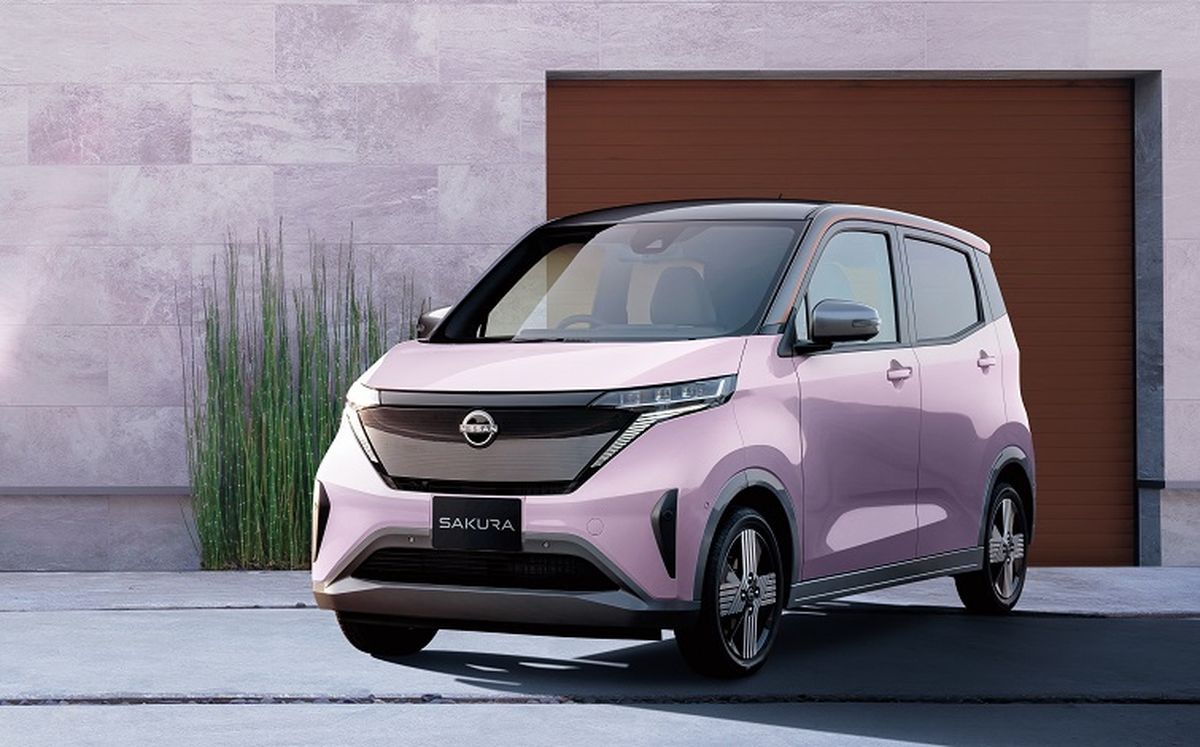
SAKURA
BYD Sea Otter Advantages
- Sliding door equipped
- Higher overall height (1,800mm vs 1,655mm)
- Spacious interior space
- Selectable battery capacity (2 grades)
Advantages of Sakura/eK Cross EV
- Proven and reliable
- Extensive dealer network
- Subsidy amounts tend to be high
- Stable resale value
Honda N-ONE e: / N-VAN e:
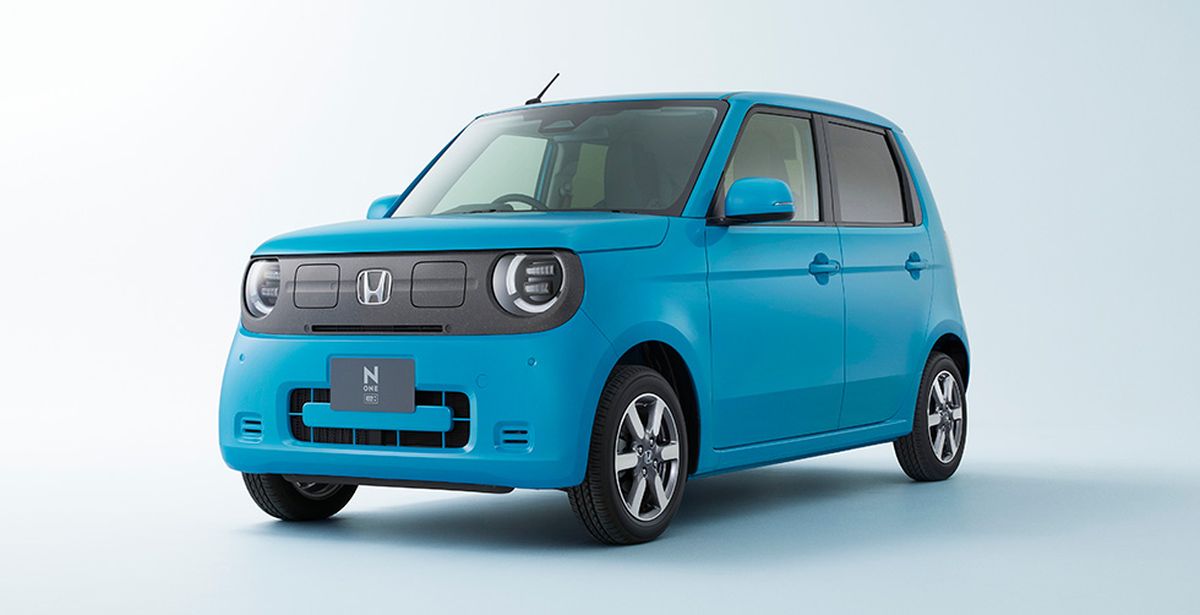
N-ONE e
BYD Sea Otter Advantages
- Equipped with sliding doors (not available on the N-ONE e:)
- Longer range (long range model)
- Spacious interior space
- Fast charging performance (estimated)
Advantages of the N-ONE e:/N-VAN e:
- Honda brand reliability
- Nationwide sales and service network
- Sophistication of design
- Proven Battery Management
Hyundai Instar (standard size)
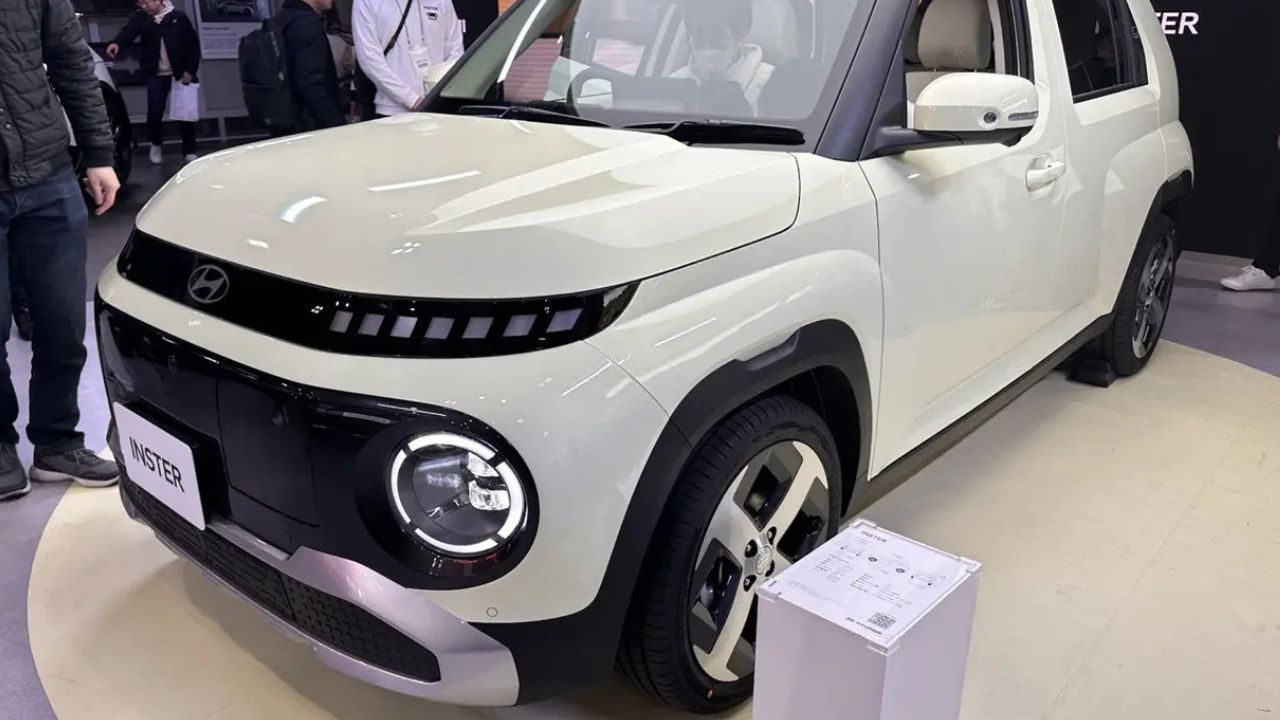
BYD Sea Otter Advantages
- Taxes are low because it is a light vehicle
- Easy to handle
- Low price (estimated)
Insta’s Advantages
- More interior space
- high speed stability
- Long range (up to 355km)
- Comfort as a regular car
Who is this recommended for?
Who is BYD Sea Otter suitable for?
- Charging environment at home : You can use a detached house or a parking lot with charging facilities.
- Daily travel distance is limited : commuting, shopping, etc., with daily travel distance of less than 50km
- Sliding doors are essential : If you have small children or frequently have elderly passengers.
- Emphasis on running costs : Want to reduce fuel and maintenance costs
- Highly environmentally conscious : Want to contribute to reducing CO2 emissions
- Want to try new things : Interested in new technologies and new brands
Who BYD Sea Otter is not suitable for
- Lack of charging environment : There are no charging facilities in the apartment complex, and there are no chargers nearby
- Frequent long-distance travel : frequently travelling over 100km
- Emphasis on brands : Prioritizing domestic manufacturers and expanding dealer networks
- Needed Now : Can’t wait until summer 2026
- Emphasis on resale value : Prioritizing the stability of trade-in prices
Summary: Will the BYD Sea Otter become the center of attention in the light EV market?
The BYD Racco is a unique package of a super high-roof wagon, sliding doors, and EV , and has the potential to bring a breath of fresh air to Japan’s minicar market.
comprehensive evaluation
Advantages
- Designed for the Japanese market
- Practical range (especially long-range models)
- High quality texture and design
- Driving performance unique to EVs
- Extensive safety equipment
- V2L/V2H function
Concerns
- The price will vary greatly depending on the rating
- Sales and service network challenges
- Low brand awareness
- Dependence on charging infrastructure
- Long-term reliability unknown
Market impact
If the BYD Racco can achieve a price of around 2 million yen without subsidies, it could have a major impact on Japan’s light EV market and, ultimately, the entire light vehicle market.
Suzuki’s President Suzuki expressed caution, saying, “We shouldn’t engage in price competition,” which shows that domestic manufacturers view the emergence of the BYD Sea Otter as a threat that cannot be ignored.
Future points to watch
- Official price announcement : Will the expected prices of 2.49 million yen/2.99 million yen become a reality?
- Test drive evaluation of actual vehicle : What are the actual driving performance and ride comfort like?
- Fast charging performance : Will it surpass domestically produced light EVs?
- Sales structure development : How far can the dealer network be expanded before the launch?
- Subsidy amount : How much will be paid if you are eligible for the CEV subsidy?
The arrival of the BYD Sea Otter has the potential to shatter stereotypes such as “EVs are expensive” and “EVs are unnecessary for minicars.” It’s a car worth paying attention to, and we can’t wait for its release in the summer of 2026.
Advice for those considering purchasing
- First, check out the display car : Check the texture and size for yourself
- Check your charging environment : Check your home, workplace, and nearby charging facilities
- Review your lifestyle : Analyze your daily mileage and usage patterns
- Collect subsidy information : Research subsidy systems of the national and local governments
- Competitor vehicles also considered : Nissan Sakura and Honda N-ONE e:
The BYD Sea Otter is an innovative model that brings a new option to the Japanese minicar market. Its success will depend on pricing, actual product quality, and BYD’s seriousness about the Japanese market. Let’s look forward to its official release in the summer of 2026.