
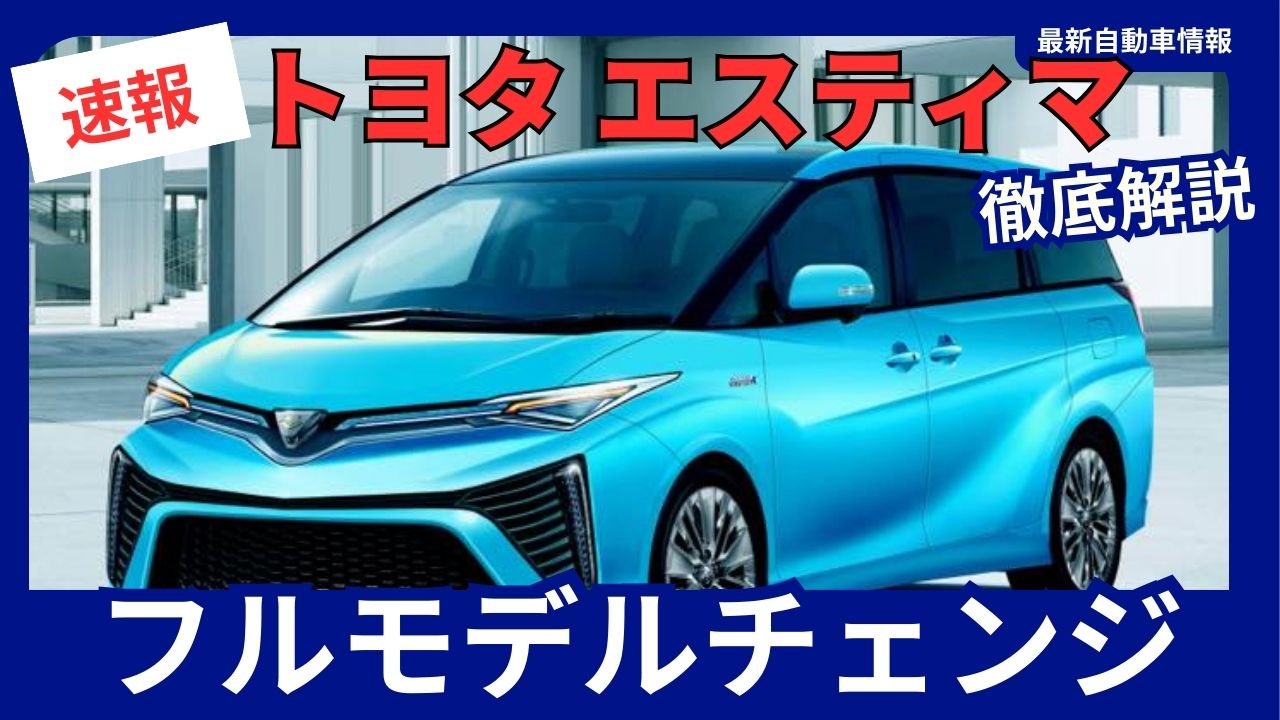
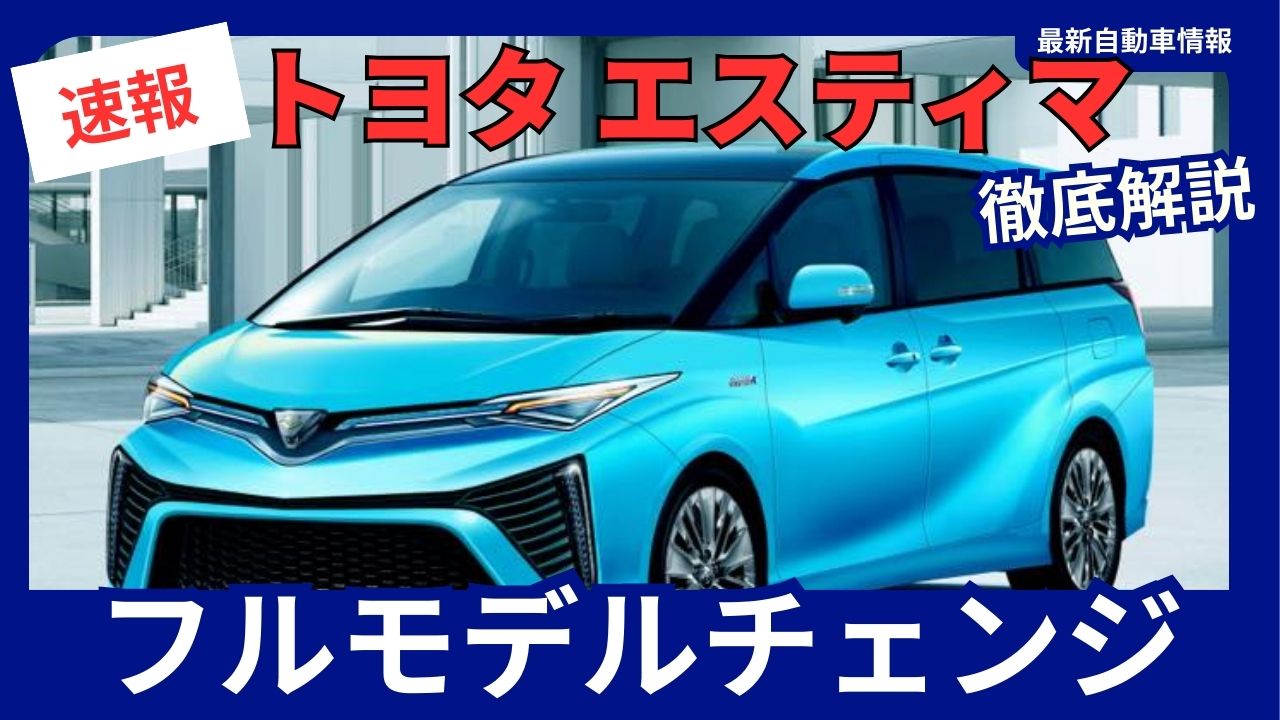
Toyota is expected to fully redesign the fourth-generation Estima and release it around October 2027. The next-generation Estima may be a seven-seater FCEV. Sales of the previous Estima ceased in 2020, marking its return after five years. The announcement at the next Japan Mobility Show 2025 is likely to be the most anticipated.
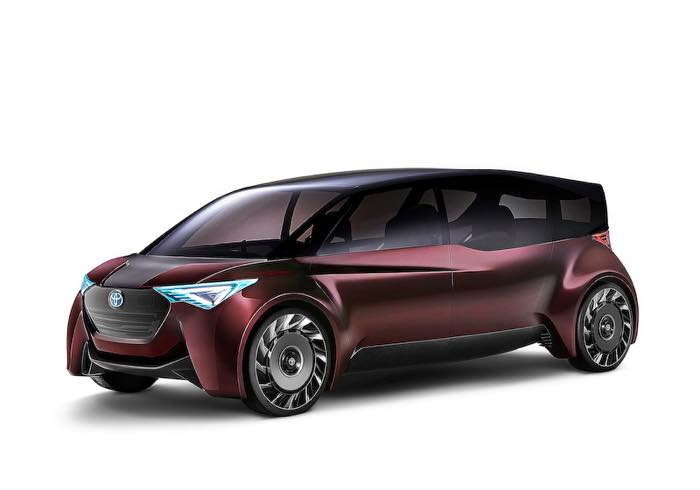
The “Estima FCV” concept model was unveiled at the 45th Tokyo Motor Show 2017, which was held from Wednesday, October 25th to Sunday, November 5th, 2017.Toyota announced the ” Fine-Comfort Ride ,” a fuel cell vehicle (FCV) concept model, on October 18th, 2017, making its world premiere.
About the new Toyota 4th generation Estima
The vehicle will be released as a stylish minivan, adopting a newly developed platform called TNGA (Toyota New Global Architecture) , while retaining the excellent packaging provided by its low floor. It will be significantly improved from the previous model, with a lighter weight, lower center of gravity, and increased body rigidity . All Toyota vehicles that adopt TNGA offer a level of ride comfort and ease of driving superior to their predecessors. We can expect a seating arrangement and an exterior that is unique to the Estima, different from the Alphard and Vellfire. Furthermore, an Estima FCEV model is expected to be added to the lineup, and a seven-seater model using the same system as the Mirai is expected to be developed. Like the Alphard , the hybrid model may use the same new 2.5L hybrid system plus motor.
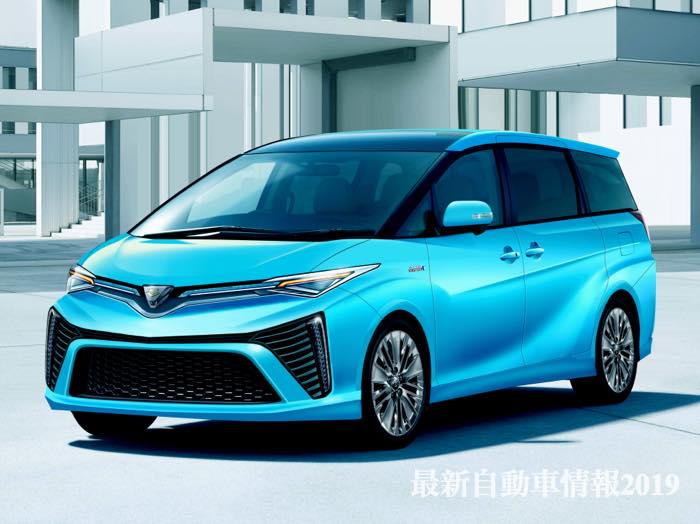
Estima predicted CG
- It adopts the newly developed “GA-K platform” based on TNGA (Toyota New Global Architecture) .
- It is equipped with either an FCEV system or a new engine: a 2.5L inline 4-cylinder direct injection engine (Dynamic Force Engine) + hybrid system.
- Equipped with the latest version of Toyota Safety Sense (TSS3) and advanced driving assistance technology Toyota Teammate [Advanced Drive].
- The meter features a ” large 12.3-inch full LCD digital meter ” and a “14-inch display audio.”
About the new 4th generation Toyota Estima FCEV
Following on from its hybrid vehicles, Toyota is now focusing on developing even more advanced fuel cell vehicles. While it already has the Mirai sedan, it is now developing the Estima FCEV as a minivan model, and it appears the company is planning to appeal to the world as a seven-seater fuel cell vehicle .
| FC stack | FCB130 Solid polymer compressed hydrogen: 3 bottles |
|---|---|
| Maximum power | 128kW (174ps) |
| Motor maximum output |
134kW (182ps) / 6,940rpm |
| Motor Max Torque |
300Nm/(30.6kgm)/ 0~3,267rpm |
| Drive battery | Lithium-ion 4.0Ah |
| Passenger capacity | 7 people |
| Range | Approximately 700km |
Currently, Toyota’s FCEV model lineup only includes the sedan types “MIRAI” and “Crown Sedan,” so it is natural that they will consider FCEV models for minivan models as well.
Toyota Hybrid System (THS II) for 2.5L engines
The hybrid system employs a more compact THS II, with significant changes to the battery position and other aspects. By improving the engine’s thermal efficiency and transmission’s transmission efficiency, the entire powertrain system (engine and transmission) has improved fuel economy by approximately 25% and power performance by more than 15%. Inheriting the compact, lightweight, and low-loss technologies used in the fourth-generation Prius , the hybrid system for the 2.5L engine has been completely redesigned, and a high-performance multi-stage THS II for rear-wheel drive vehicles has been newly developed. The 2.5L THS II achieves superior power performance and fuel economy at a high level by leveraging the compact, lightweight, and low-loss technologies and the synergistic effects of the new TNGA-based engine’s high combustion efficiency and high output. The multi-stage THS II delivers high-speed acceleration and a direct feel that completely redefines the hybrid vehicle experience. In addition to improving system efficiency at highway speeds, intermittent engine operation at high speeds improves fuel economy.
| Specifications | D-4S + motor (THS II) |
|---|---|
| engine | Inline 4-cylinder 2.5L direct injection engine + motor |
| Maximum power | 131kW (178ps) / 5,700rpm |
| Maximum torque | 221Nm(22.5kgm)/ 3,600-5,200rpm |
| Motor maximum output | 88kw (120ps) |
| Motor Max Torque | 202Nm (20.6kgm) |
| System Maximum Output | 155kw (211ps) |
| transmission | Electric continuously variable transmission |
| Drive system | 2WD/4WD (E-Four) |
Expected specs for the new 4th generation Estima
| Specifications | New Estima Hybrid model |
New Estima FCEV model |
|---|---|---|
| full length | 4,850mm | |
| Overall width | 1,850mm | |
| Overall height | 1,750mm | |
| Wheelbase | 3,250mm | |
| engine | Inline 4-cylinder 2.5L direct injection engine D-4S + motor (THS II) |
Inline 4-cylinder 2.5L direct injection engine D-4S |
| Maximum power | 131kW (178ps) / 5,700rpm |
205ps/ 6,600rpm |
| Maximum torque | 221Nm(22.5kgm)/ 3,600-5,200rpm |
250Nm/ 4,800rpm |
| Front motor maximum output |
88kw (120ps) |
– |
| Front motor maximum torque |
202Nm (20.6kgm) |
– |
| System maximum output |
155kw (211ps) |
– |
transmission |
Electric continuously variable transmission | Direct Shift-CVT |
| Drive system | 2WD/E-Four (four-wheel drive system) |
2WD/4WD |
| WLTC mode fuel economy | 24.0km/L | 13.0-14.0km/L |
| Passenger capacity | 7 people | |
Toyota Safety Sense (TSS3) standard on all new Estima vehicles
The new Estima is equipped with the latest Toyota Safety Sense (TSS3), which supports collision avoidance support pre-crash safety, intersection detection, low-speed acceleration suppression function, and emergency steering avoidance support function.
Pre-crash Safety (PCS) with pedestrian detection function: This system uses millimeter-wave radar and a camera to detect vehicles and pedestrians ahead, and provides warnings, brake assist, and automatic braking to help avoid collisions and mitigate damage. The automatic braking system operates at speeds between 10 and 80 km/h for pedestrians. For example, if the speed difference between the vehicle and the pedestrian is 30 km/h, the system will slow down the vehicle by approximately 30 km/h to help avoid a collision. It also operates at a wide speed range for vehicles, from 10 km/h to the maximum speed. For example, if the vehicle is traveling at 40 km/h toward a stopped vehicle, the system can slow down the vehicle by approximately 40 km/h. It also adds features such as “low-speed acceleration suppression,” “detection of oncoming vehicles and pedestrians when turning right at an intersection,” and “emergency steering avoidance support.”
- A low-speed acceleration suppression function that detects pedestrians, cyclists, and vehicles directly in front of the vehicle at low speeds and suppresses acceleration.
- It can also detect oncoming vehicles going straight when turning right at an intersection, as well as pedestrians crossing from the opposite direction when turning right or left.
- Emergency steering avoidance support function that assists steering when the driver makes an evasive maneuver in an emergency.
The Road Sign Assist (RSA) has expanded its detection targets, and now also reads major roadside traffic signs such as “speed limit,” “stop sign,” “no entry,” and “no crossing” and displays them on the instrument panel.
The Lane Departure Alert (LDA) camera recognizes the white and yellow lines in the driving lane, and if it detects the possibility of lane departure, it alerts the driver with a buzzer and a visual display, helping to avoid collisions caused by lane departure.
The Automatic High Beam (AHB) camera detects the headlights of oncoming vehicles or the taillights of vehicles ahead and automatically switches between high and low beams, reducing glare for drivers of other vehicles and helping to ensure forward visibility at night.
Radar Cruise Control : This vehicle employs radar cruise control, which uses millimeter-wave radar to detect the distance between vehicles and the vehicle ahead, and adjusts its speed to match the speed of the vehicle ahead within a set speed range, allowing it to maintain a certain distance while following. Millimeter-wave radar and a camera detect lane changes by the vehicle ahead, allowing for smoother acceleration and deceleration control. Toyota aims for the ultimate goal of a mobility society: zero traffic fatalities and injuries. Toyota is researching and developing various safety equipment and systems based on its “Integrated Safety Concept,” striving to “develop safer vehicles and technologies,” and strengthening a wide range of traffic safety initiatives through “participation in traffic environment improvement” and “traffic safety awareness activities for people.”
Lane Tracing Assist (LTA) When driving on a highway or expressway, turning on the Lane Tracing Assist (LTA) switch while the radar cruise control is activated will provide steering assistance necessary to maintain the lane. A curve speed suppression function has been added. Driver Abnormality Response System A function has been added that detects driver abnormalities and contributes to life-saving rescue.
Curve speed control function When radar cruise control is activated, speed control begins when the steering wheel is first turned.
Leading vehicle departure notification function If you are stopped behind a vehicle in front of you at a traffic light or in a traffic jam and do not notice the vehicle in front of you starting to move, a buzzer will sound and a message will appear on the display to notify you.
Advanced Safety
Intelligent Clearance Sonar (Parking Support Brake Stationary) is a system that helps mitigate collisions caused by accidentally pressing the accelerator or pressing it too hard, thereby reducing damage. The “Clearance Sonar” displays and sounds a buzzer when approaching stationary objects while parking, and now has an added function to mitigate contact with stationary objects. The sonar can also accurately detect glass at convenience stores and other locations. When driving at low speeds (below 15km/h), if a stationary object is detected in the direction of travel, the hybrid system output is reduced, and if the distance becomes even shorter, the brakes are automatically applied.
Leading vehicle departure notification function If you are stopped behind a vehicle in front of you at a traffic light or in a traffic jam and do not notice the vehicle in front of you starting to move, a buzzer will sound and a message will appear on the display to notify you.
Emergency brake signal (hazard lights flashing type) When you apply the brakes suddenly, the hazard lights will automatically flash.
Digital inner mirror: Images from a camera mounted on the rear of the vehicle are displayed on the rearview mirror.
Advanced Park Remote function: Operation guidance is provided by the screen display and voice/buzzer sounds, and assistance is provided for reversing into a target parking position confirmed on the screen or for exiting from parallel parking by operating the steering wheel, shift position, accelerator and brake.In addition, a dedicated smartphone app is available, allowing parking to be performed remotely from outside the vehicle.
Comparison of the old Estima and Toyota Safety Sense
The previous model was equipped with “Toyota Safety Sense C,” but the new model is equipped with the second-generation “Toyota Safety Sense,” which significantly improves the level of safety technology.
| system | Next-generation Toyota Safety Sense |
Toyota Safety Sense C |
|---|---|---|
| method | Monocular camera + millimeter wave radar |
Monocular camera + laser radar |
| Automatic high beam |
◯ | ◯ |
Pre-crash safety system with collision avoidance support |
Daytime and nighttime pedestrian and bicycle |
◯ |
| Lane Tracing Assist |
◯ | × |
| Lane Departure Alert |
Steering control White/yellow line detection Road edge detection Wandering alarm |
◯ White line/yellow line detection |
| Road Sign Assist | ◯ | × |
| Radar cruise control |
◯ | × |
| Leading vehicle departure notification | ◯ | ◯ |
Summary of Toyota Safety Sense equipped vehicles
About the exterior of the concept model “Fine-Comfort Ride”
In terms of size, this model is an extension of the previous Estima’s wheelbase. It features a diamond-shaped cabin that is wide from the front to the center and narrows towards the rear, maximizing the space and aerodynamic performance of the second-row seats. Taking advantage of the free layout unique to electric vehicles, the adoption of in-wheel motors, placement of the tires at all four corners, and a cover covering the underside of the body has resulted in high driving stability and quietness befitting a premium sedan.
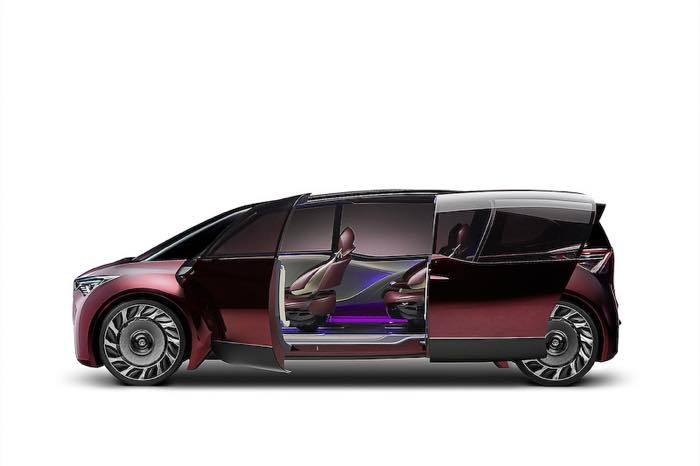
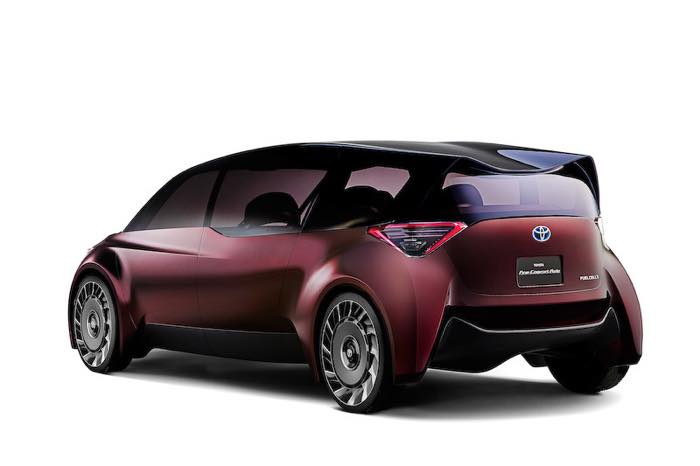
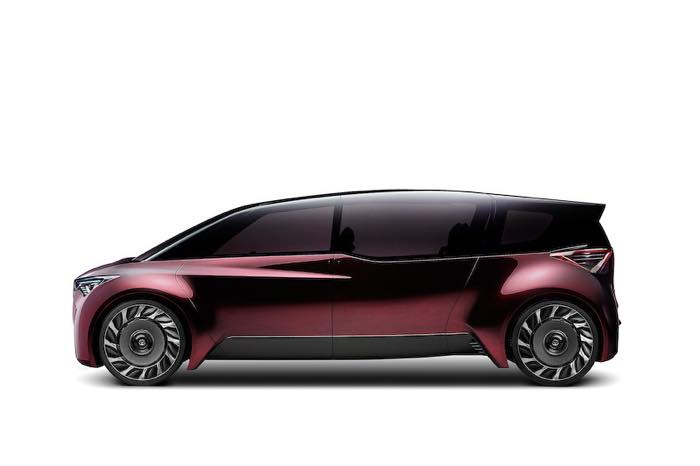
| Specifications | Estima Hybrid |
Fine-Comfort Ride |
|---|---|---|
| full length | 4,820mm | 4,830mm |
| Overall width | 1,810mm | 1,950mm |
| Overall height | 1,760mm | 1,650mm |
| Wheelbase | 2,950mm | 3,450mm |
| Passenger capacity | 7-8 people | 6 people |
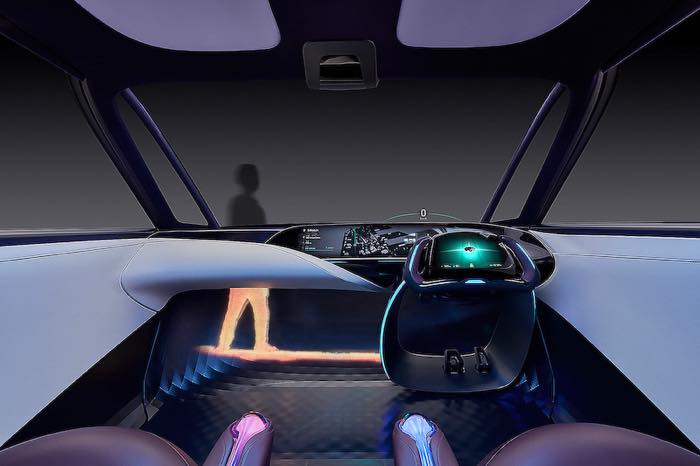
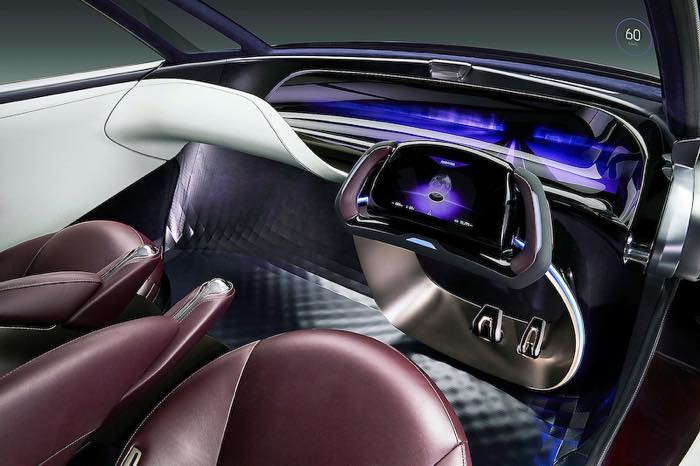
Concept model “Fine-Comfort Ride” interior
Based on the theme of “Wearing Comforts,” the car embodies a vision of future mobility in which cars are not simply vehicles for transportation, but provide passengers with value beyond just transportation.
The seat can be freely adjusted to any position, and the agent function and touch display are located at the center, allowing passengers to freely access information. The seat layout can also be freely adjusted, allowing Fine-Comfort Ride to be used as both an “individual space” and a “personal communication space.”
About Estima
Since the first generation, it has been called a genius egg, maintaining its egg-shaped design and beautiful shape, but the older third generation debuted in 2006, and it is quite rare for a car to maintain its popularity for nine years without a model change.
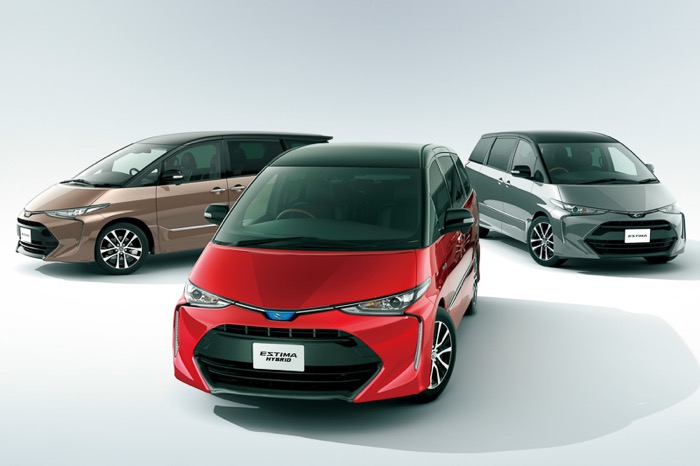

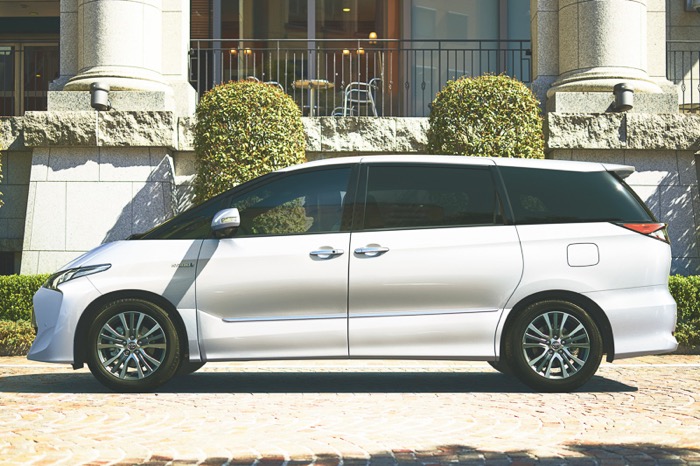
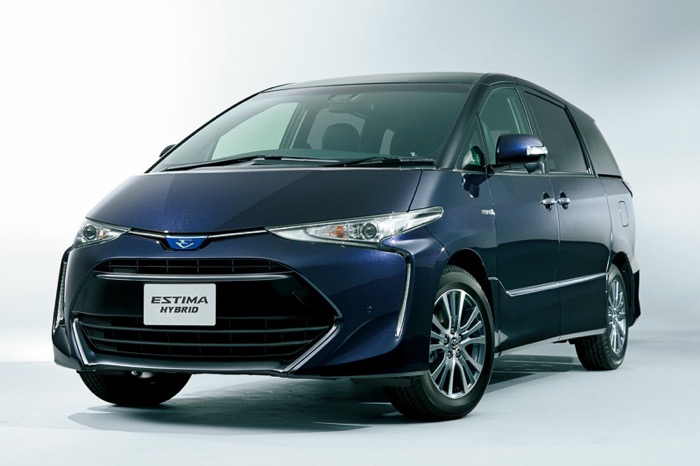
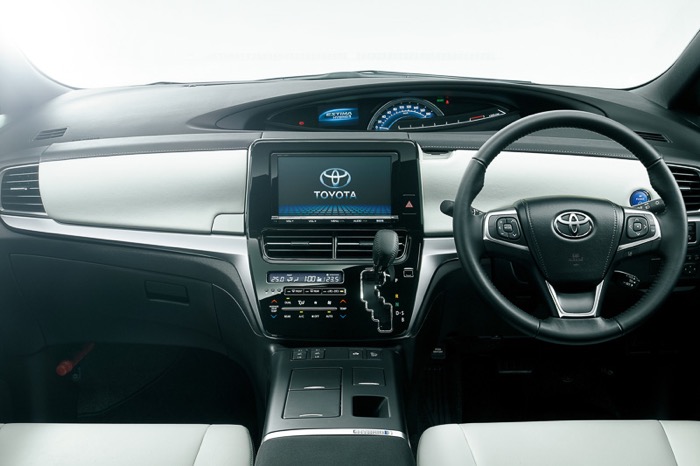
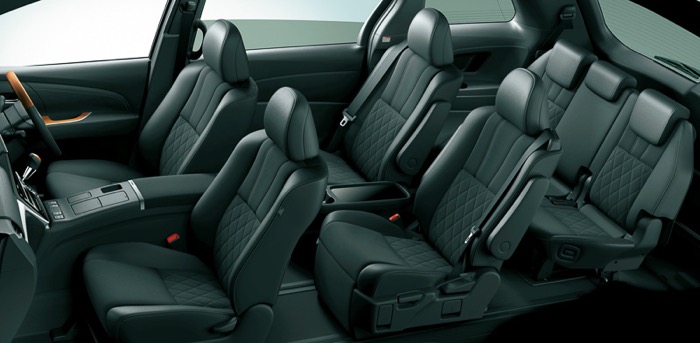
Toyota Safety Sense C will also be introduced as standard equipment. A major minor change with a Keen look was made and the car was released on June 6, 2016.
In April 2018, the name of the collision avoidance support package was changed from “Toyota Safety Sense C” to “Toyota Safety Sense.”
Production was discontinued due to a reorganization of vehicle models in anticipation of the abolition of the sales channel system scheduled for May 2020. Subsequently, by the end of March 2020, all new vehicle registrations for distribution stock were completed and sales ceased, bringing an end to three generations and a history of approximately 30 years.
A word from the editorial department
It seems likely that Toyota’s new Estima will be released in 2027. Its release as a seven-seater FCEV (fuel cell electric vehicle) will attract attention as part of environmentally friendly mobility. In particular, consumer expectations are likely to be high since sales of the previous Estima ended in 2020 and five years have passed since then.
Toyota has previously showcased concept models of fuel cell vehicles at exhibitions such as the Tokyo Motor Show, but the unveiling of the new Estima at the upcoming Japan Mobility Show 2025 is sure to attract significant attention from the automotive industry and those interested in the environment.
We will update this page as new information becomes available.
Toyota News Release