
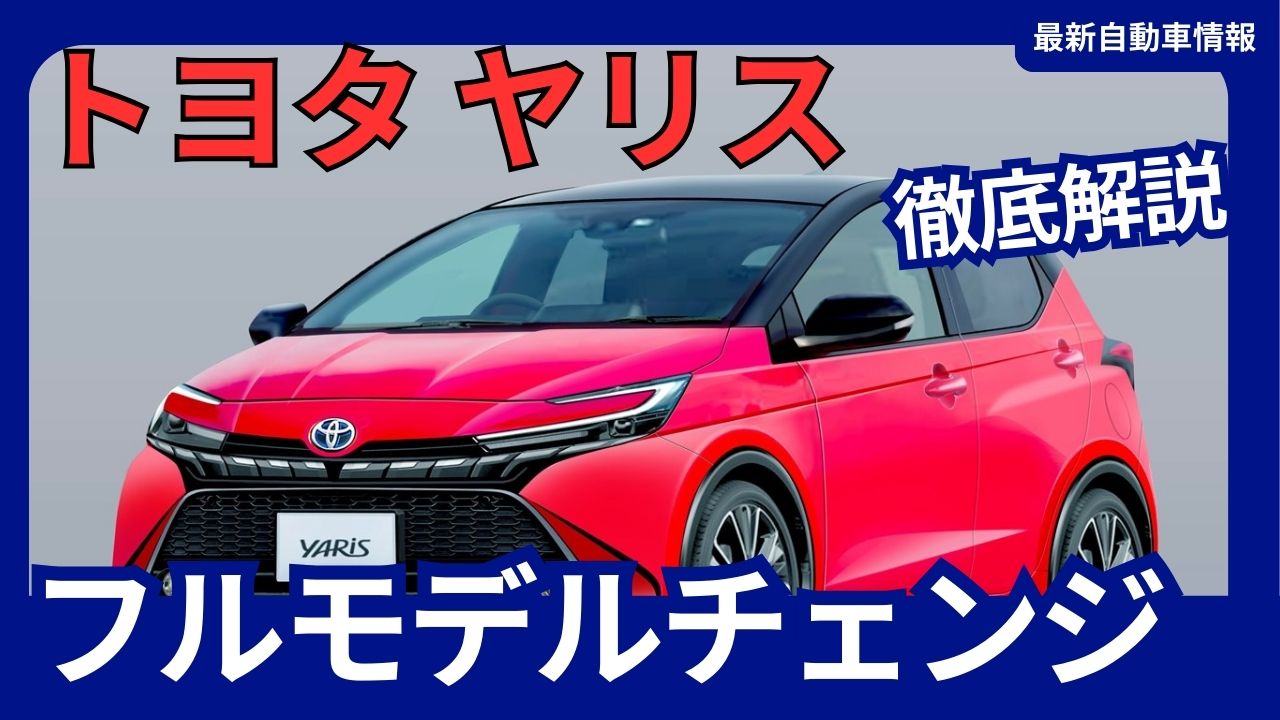
Toyota’s flagship compact car, the Yaris, is scheduled for a full model change in 2027. The highlight of this change is the inclusion of the latest 1.5L inline-four engine, which is expected to deliver both improved fuel economy and powerful driving. The previous model was released on February 10, 2020, and this will be the first full model change in seven years. We will explain in detail why 2027 is the date and what specifications it will have.
Summary of articles on the full model change of the Yaris
- The full model change has resulted in significant changes to the exterior design.
- The higher grade models feature a 10.5-inch display audio and a 12.3-inch full digital LCD meter display .
- The new powertrain is a 1.5L inline-four engine with a new “dual hybrid” powertrain that uses fifth-generation Toyota hybrid technology.
About the new Toyota Yaris full model change
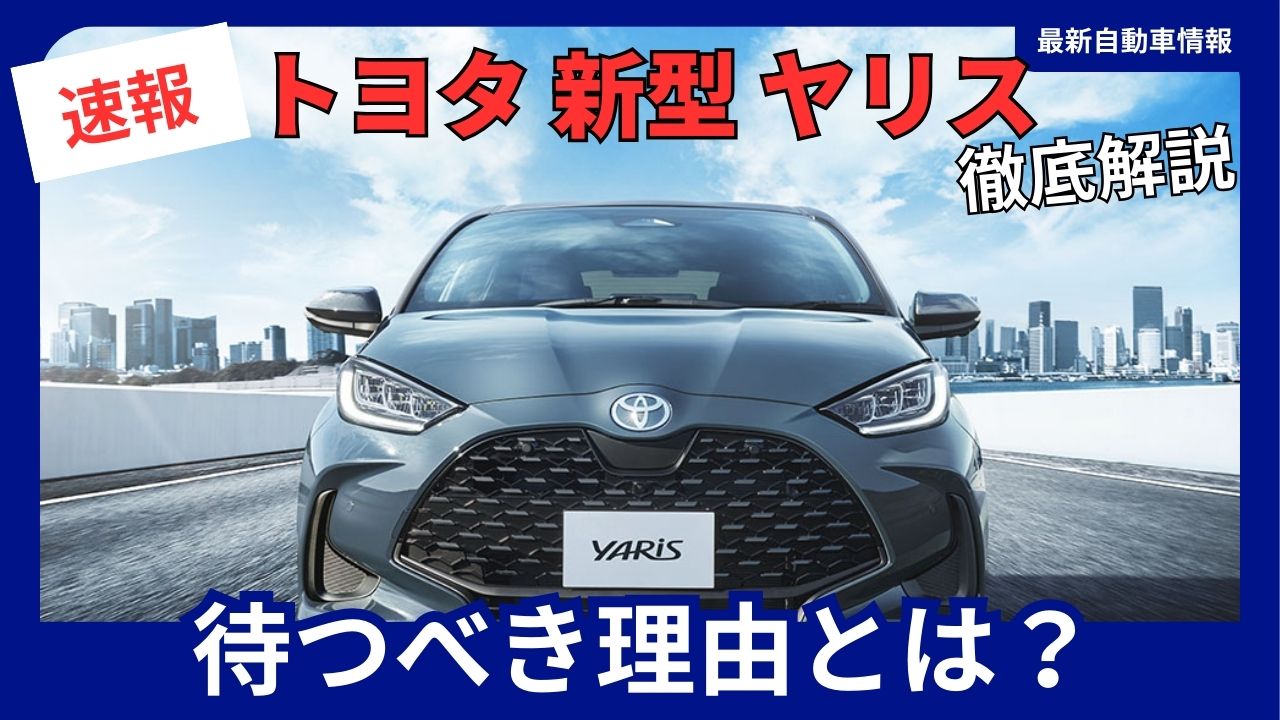
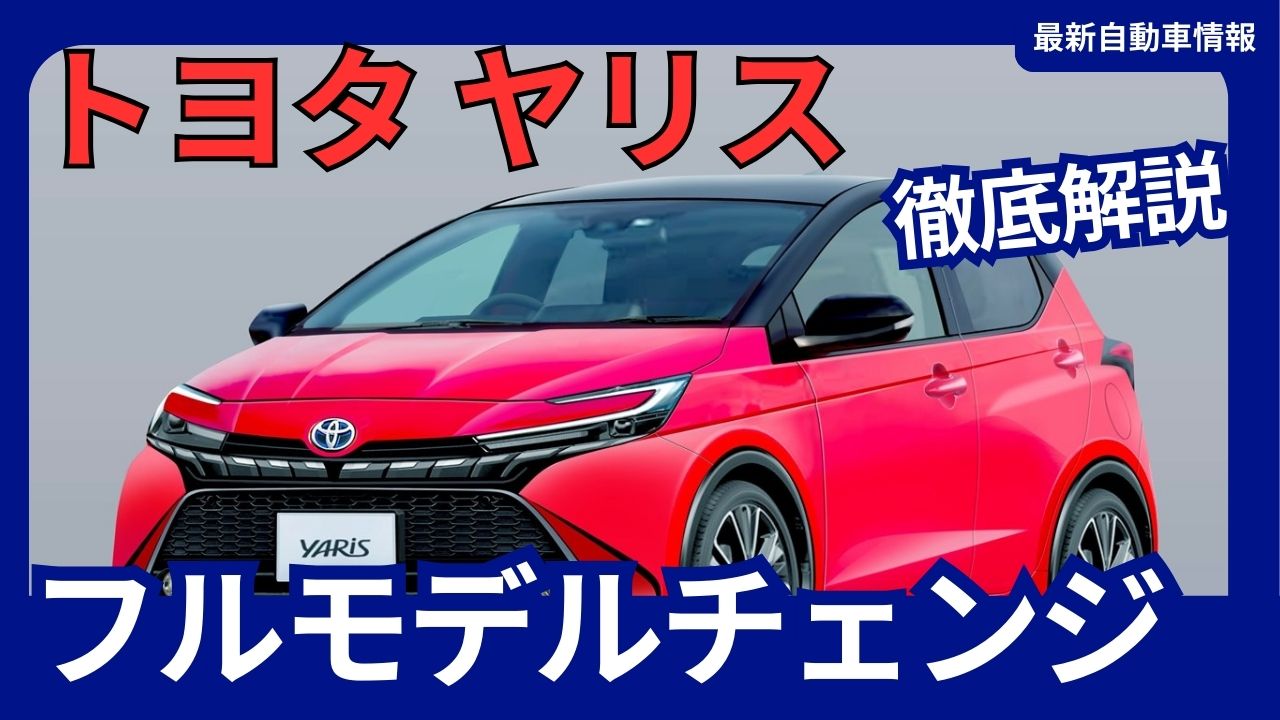
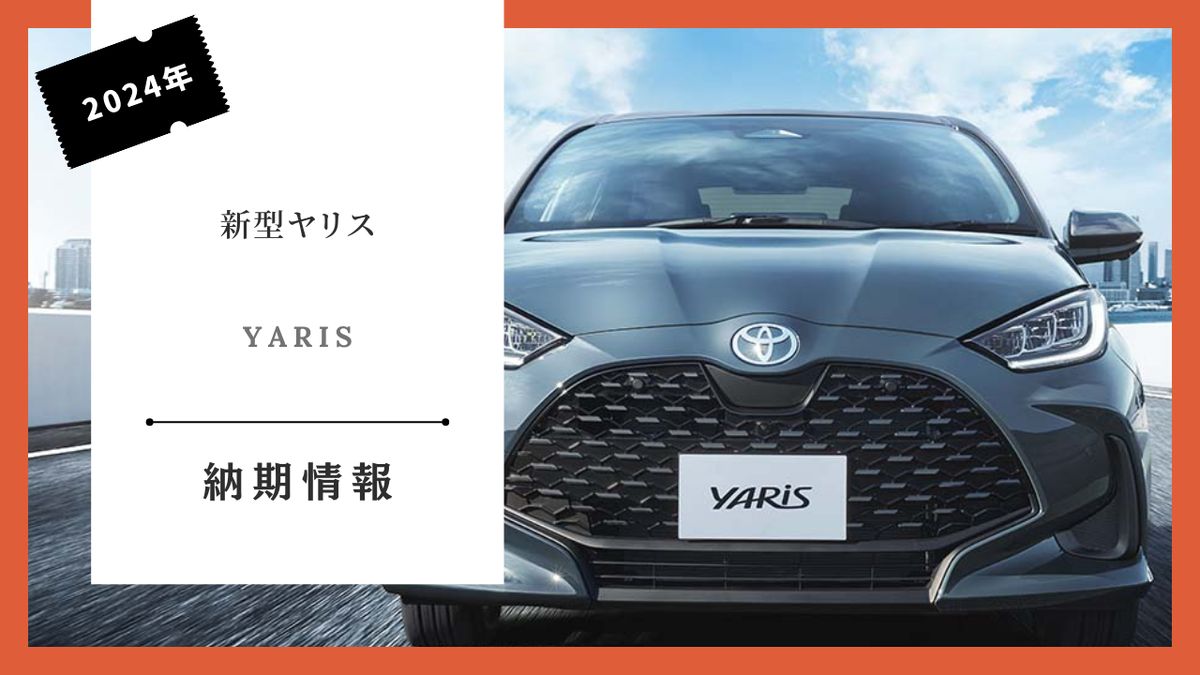
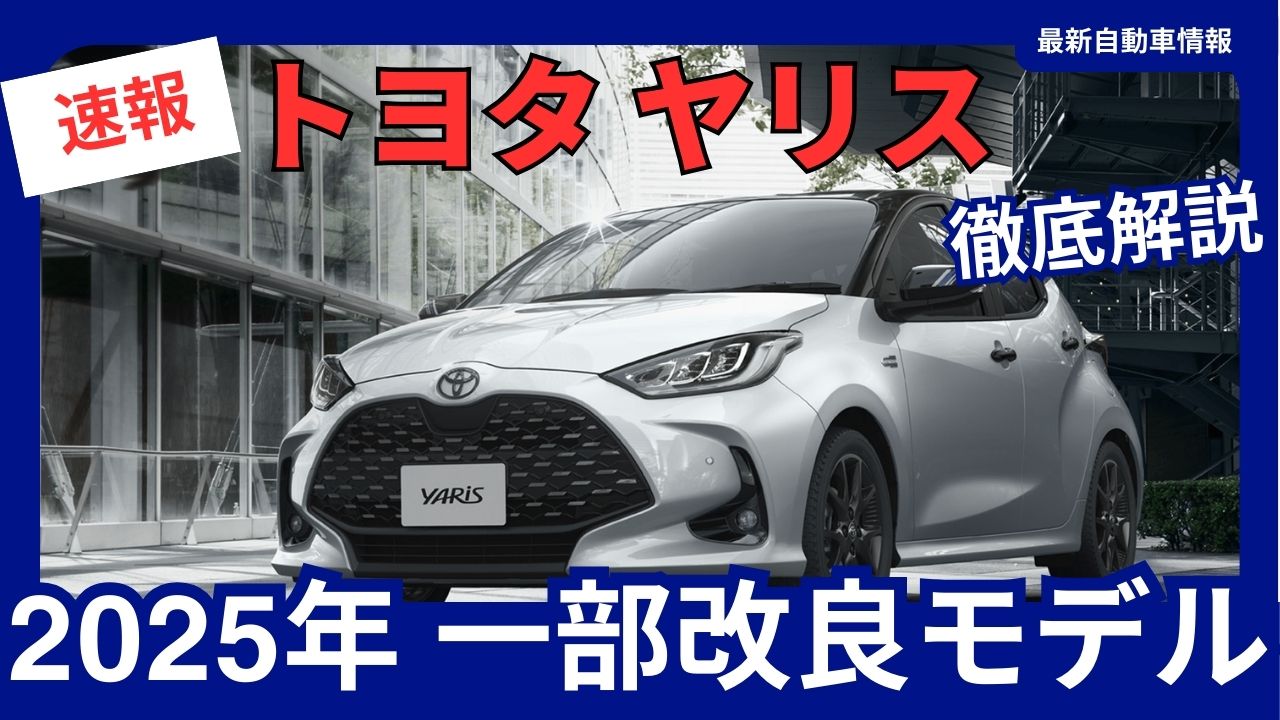
The exterior design is also expected to be revamped, incorporating Toyota’s latest design language for a sharper, sportier look. A CG image of the Yaris has arrived, showing the front face adopting a hammerhead design.
The interior has also been upgraded, with the higher grades featuring a 10.5-inch display audio and a 12.3-inch full digital LCD meter display , further enhancing comfort and functionality.
It will also use an improved version of the TNGA-B platform , which will improve body rigidity and provide a more comfortable ride.
The car is also expected to be equipped with a full range of safety features, including the latest preventative safety technology. The latest version of Toyota’s driving support system, “Toyota Safety Sense,” will be adopted to support safe driving. This will further enhance functions such as collision mitigation braking, lane keep assist, and adaptive cruise control, and Toyota Teammate’s “Advanced Park” and “Advanced Drive” will be installed to support safe driving.
The new Yaris, scheduled for release in 2027, will be equipped with a 1.5L inline 4-cylinder engine that brings together Toyota’s latest technologies. The hybrid model will be equipped with a new “dual hybrid” powertrain that uses fifth-generation Toyota hybrid technology. This is expected to achieve both better fuel economy and more powerful acceleration than the previous model.
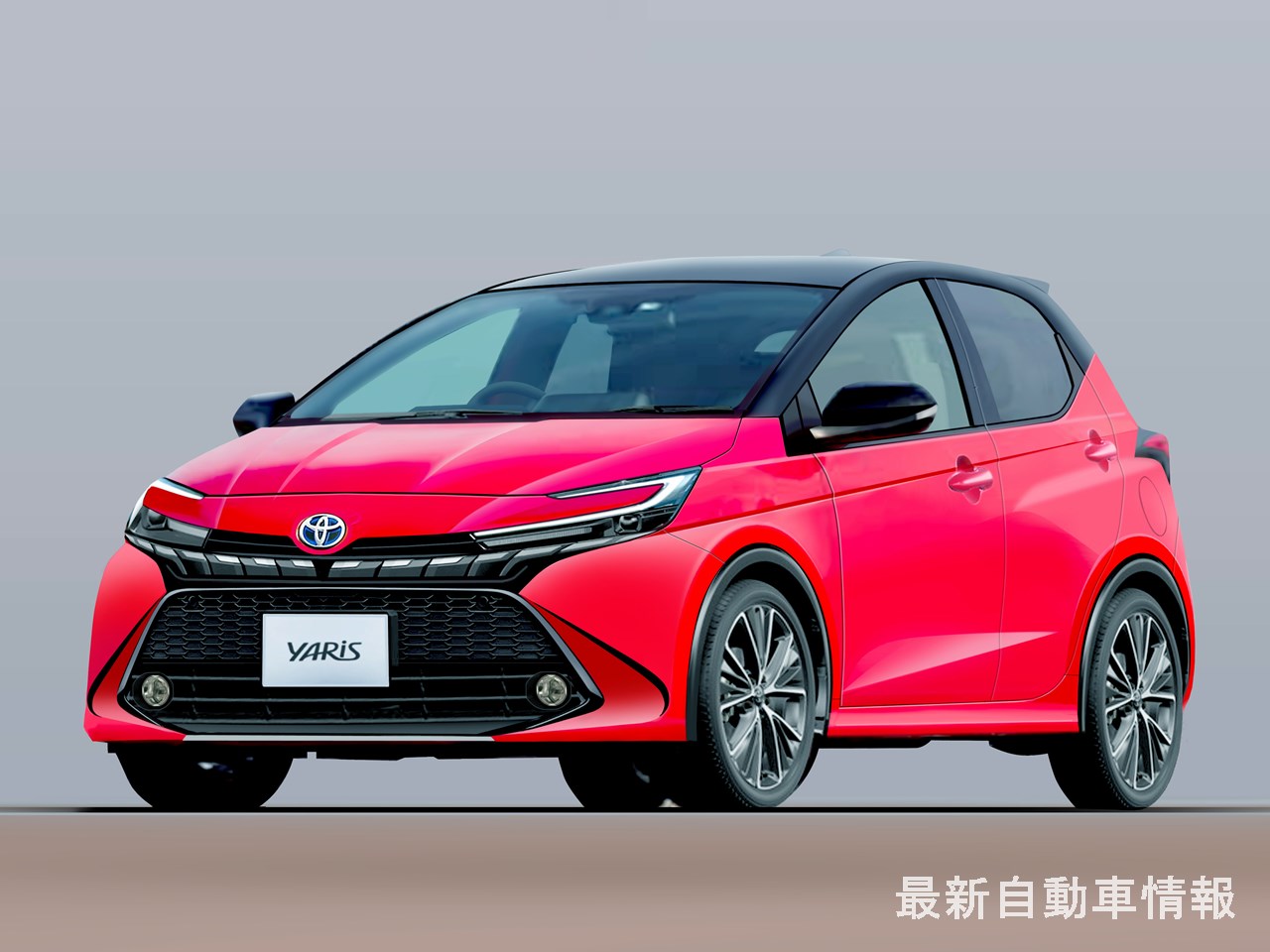
Yaris predicted CG
Toyota’s new Yaris full model change will feature the latest inline-four engine just announced
On May 28, 2024, Toyota Motor Corporation (Toyota), Subaru Corporation, and Mazda Motor Corporation (Mazda) jointly declared that they would develop new engines compatible with electrification in order to achieve carbon neutrality through multiple pathways.
The engines announced at this time were small, highly efficient, and powerful in-line 4-cylinder engines with displacements of 1.5L and 2.0L, designed for electrification. The 1.5L engine comes in two types: a naturally aspirated model and a turbocharged model.
The new engine will be able to meet the strict emissions regulations that are scheduled to be introduced in Europe and the US, which would require a 30% reduction in power output for existing engines, without reducing power output, and will also be able to reduce volume by 20% and overall height by 15%.
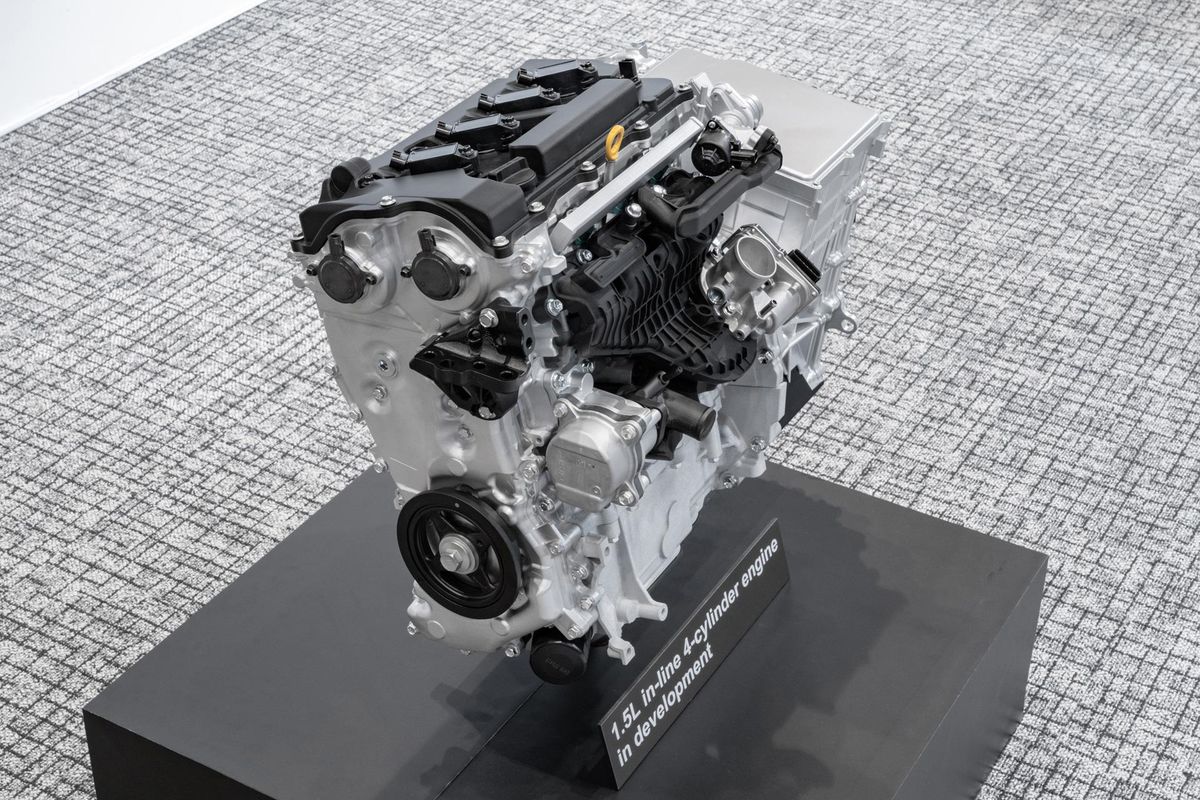
Toyota’s 1.5L inline 4-cylinder engine under development
Reference: Toyota
In other words, the motor is the main component, which further improves combustion efficiency and can be expected to achieve even lower fuel consumption. For users, this is an advantage not only in fuel efficiency but also in terms of lower maintenance costs in terms of taxes.
What is the European exhaust gas regulation Euro 7?
Euro 7 is a new automobile emission standard proposed by the European Commission. This standard aims to reduce air pollution and environmental impact in Europe, and sets even stricter standards than the previous Euro 6.
In November 2022, the European Commission proposed that Euro 7 would be applied to passenger cars and light commercial vehicles from July 1, 2025, and to heavy vehicles from July 1, 2027. However, the implementation date was postponed from the 2025 date proposed by the European Commission, and passenger cars and vans will now be introduced from January 2028. Furthermore, it was suggested that NOx restrictions for trucks should be relaxed further than proposed.
When will the new Toyota Yaris be fully redesigned? Release date
At this point, I predict that the Yaris will undergo a full model change around 2027. There are a number of reasons for this.
As of 2024, the current Yaris has undergone some minor improvements, but has not undergone a single minor change. There have been almost no popular Toyota models in the past that have not undergone a minor change, and it is likely that a minor change and refresh in 2025 will allow it to continue as is for just over two years. Additionally, the current model remains extremely popular in the Japanese market, and even minor changes will be enough to ensure continued sales.
In other words, it is highly likely that the car will be released around 2027. If Toyota does not choose to make a minor change in 2025, it may be possible that a full model change will be brought forward.
Toyota’s new Yaris is fully redesigned with next-generation Toyota Safety Sense
The next-generation Toyota Safety Sense will be standard on all vehicles. This system includes Pre-Collision Safety, which can detect cyclists during the day and pedestrians at night, and Lane Tracing Assist (LTA), which assists with steering to keep the vehicle in its lane when radar cruise control is activated.
The latest “Pre-crash Safety with Collision Avoidance Assist” offers further enhancements, including intersection detection, low-speed acceleration suppression, and emergency steering assistance. This system, equipped with pedestrian detection, uses millimeter-wave radar and a camera to detect vehicles and pedestrians ahead and provides collision avoidance and damage mitigation through alerts, brake assist, and automatic braking. Automatic braking activates for pedestrians at speeds between 10 and 80 km/h, slowing the vehicle appropriately depending on the speed difference. It also activates for vehicles at a wide speed range, from 10 km/h to maximum speed, and can decelerate at high speeds even when facing stopped vehicles. Additional features include low-speed acceleration suppression, detection of oncoming vehicles and pedestrians when turning right at an intersection, and emergency steering assistance.
- A low-speed acceleration suppression function that detects pedestrians, cyclists, and vehicles directly in front of the vehicle at low speeds and suppresses acceleration.
- It can also detect oncoming vehicles going straight when turning right at an intersection, as well as pedestrians crossing from the opposite direction when turning right or left.
- Emergency steering avoidance support function that assists steering when the driver makes an evasive maneuver in an emergency.
The Road Sign Assist (RSA) has expanded its detection targets, and now also reads major roadside traffic signs such as “speed limit,” “stop sign,” “no entry,” and “no crossing” and displays them on the instrument panel.
The Lane Departure Alert (LDA) camera recognizes the white and yellow lines in the driving lane, and if it detects the possibility of lane departure, it alerts the driver with a buzzer and a visual display, helping to avoid collisions caused by lane departure.
Leading vehicle departure notification function If you are stopped behind a vehicle in front of you at a traffic light or in a traffic jam and do not notice the vehicle in front of you starting to move, a buzzer will sound and a message will appear on the display to notify you.
The Automatic High Beam (AHB) camera detects the headlights of oncoming vehicles or the taillights of vehicles ahead and automatically switches between high and low beams, reducing glare for drivers of other vehicles and helping to ensure forward visibility at night.
Radar Cruise Control : This vehicle employs radar cruise control, which uses millimeter-wave radar to detect the distance between vehicles and the vehicle ahead, and adjusts its speed to match the speed of the vehicle ahead within a set speed range, allowing it to maintain a certain distance while following. Millimeter-wave radar and a camera detect lane changes by the vehicle ahead, allowing for smoother acceleration and deceleration control. Toyota aims for the ultimate goal of a mobility society: zero traffic fatalities and injuries. Toyota is researching and developing various safety equipment and systems based on its “Integrated Safety Concept,” striving to “develop safer vehicles and technologies,” and strengthening a wide range of traffic safety initiatives through “participation in traffic environment improvement” and “traffic safety awareness activities for people.”
Lane Tracing Assist (LTA) Lane Tracing Assist (LTA), featured in the new Lexus LS series, is being adopted for the first time in the next-generation Toyota Safety Sense P. When driving on a highway or expressway and radar cruise control is activated, turning on the Lane Tracing Assist (LTA) switch provides steering assistance necessary to keep the vehicle in its lane.
Advanced Safety
Intelligent Clearance Sonar (Parking Support Brake Stationary) is a system that helps mitigate collisions caused by accidentally pressing the accelerator or pressing it too hard, thereby reducing damage. The “Clearance Sonar” displays and sounds a buzzer when approaching stationary objects while parking, and now has an added function to mitigate contact with stationary objects. The sonar can also accurately detect glass at convenience stores and other locations. When driving at low speeds (below 15km/h), if a stationary object is detected in the direction of travel, the hybrid system output is reduced, and if the distance becomes even shorter, the brakes are automatically applied.
Emergency brake signal (hazard lights flashing type) When you apply the brakes suddenly, the hazard lights will automatically flash.
If the driver continues to make no changes while the Lane Tracing Assist (LTA) system is in operation, it will prompt the driver to take action with sound, visual and gradual deceleration warnings, and will alert people outside the vehicle with hazard lights and a horn while slowing down and stopping the vehicle within its own lane, helping to avoid accidents involving damage to the vehicle or other parties involved and reducing the damage caused by the accident.
Digital inner mirror: Images from a camera mounted on the rear of the vehicle are displayed on the rearview mirror.
Advanced Park remote function provides on-screen and voice/buzzer guidance, and assists with backing into a target parking position confirmed on the screen and exiting from parallel parking by operating the steering wheel, shift position, accelerator and brake.In addition, a dedicated smartphone app is available, allowing you to park remotely from outside the car.
Panoramic View Monitor (360° monitor) You can check hard-to-reach areas, such as diagonally behind or directly to the side of the car, so you can spot obstacles early.
Blind Spot Monitor (BSM) uses radar to detect vehicles in adjacent lanes. If a vehicle enters your blind spot, an LED indicator mounted on the door mirror will light up.
Safe Exit Assist (SEA) When exiting the vehicle, the Blind Spot Monitor (BSM) sensor is used to detect approaching vehicles, including bicycles, from behind. If the system determines that there is a risk of a collision with the open door or with an occupant exiting the vehicle, an indicator in the door mirror will light up to warn the driver.
Rear Cross Traffic Auto Brake: Detects blind spots when reversing and alerts the driver. If there is a risk of collision, the system automatically applies the brakes to help mitigate damage from a collision with an approaching vehicle.
Remote start (app) You can start the engine, etc. using the MyTOYOTA app.
A word from the editorial department
The arrival of the new Yaris will breathe new life into the compact car market. With improvements in every aspect, including fuel economy, driving performance, design, and safety, the new Yaris is expected to garner support from a wide range of users. We will keep you updated as new information becomes available.
Yaris related articles
Yaris
Toyota