


Toyota Motor Corporation of America announced the new C-HR battery electric vehicle (BEV) model for 2026 on May 14, 2025 (local time). The official launch date in the US market is scheduled for 2026.
The Toyota C-HR once captured the attention of the city with its unique style. After a period of rest, the name is about to be engraved on the American soil again. However, this is not the C-HR we remember. Taking the demands of the times to heart, the car has shed its internal combustion engine and made a bold transformation into a pure EV that runs 100% on electricity. At its heart is a 0-60 mph (approximately 96 km/h) acceleration time of just 5.0 seconds, which is surprisingly faster than Toyota’s GR86 sports car. With its sophisticated design and thrilling driving, the new C-HR is poised to breathe new life into the EV world.
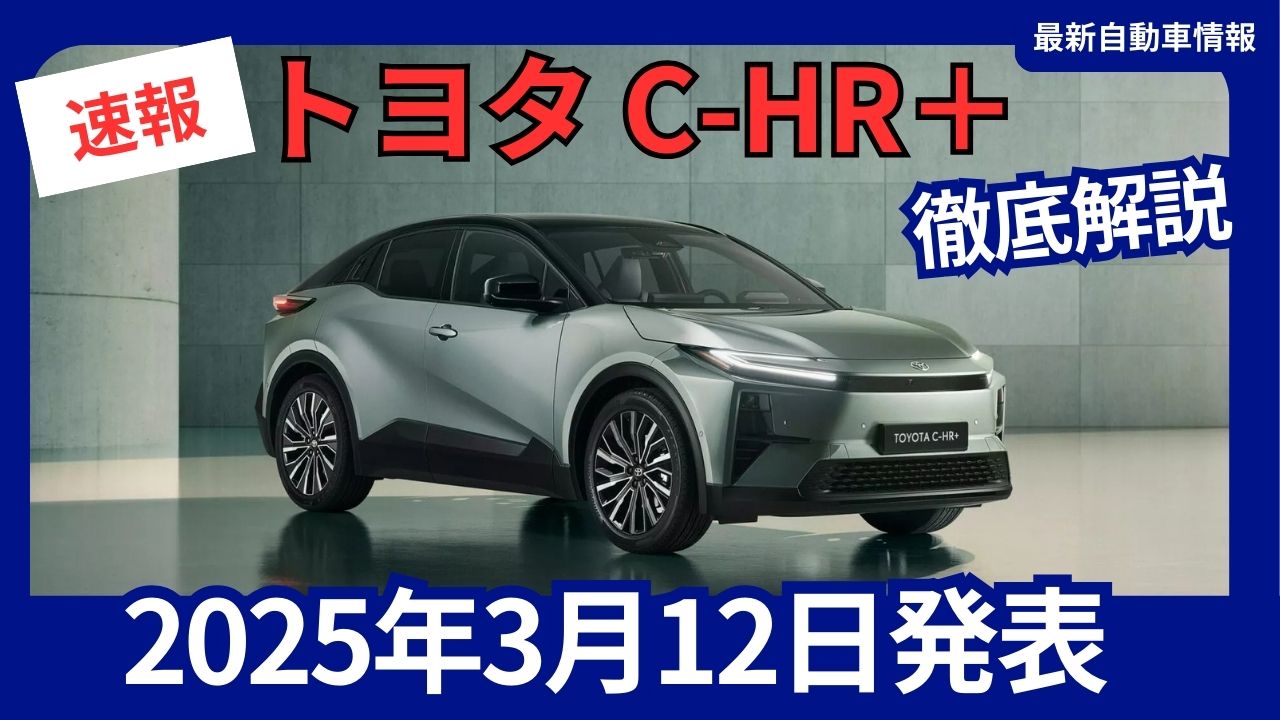
The story of this new C-HR actually began quietly in Europe. A model named ” C-HR+, ” which shares the same basic design, made its world premiere early, generating a lot of buzz with its innovative appearance. In Europe, the EV version was given the “+” name to distinguish it from existing hybrid and plug-in hybrid models, but the situation is a little different in the American market. In the US, where the C-HR’s history came to an end in 2022, there is no hybrid option, and the new C-HR will once again shine as a pure electric vehicle. This is a symbolic launch that shows Toyota’s strong commitment to electrification.
Introduction: Overview of the Toyota C-HR EV
- The Toyota C-HR, once popular in Japan, is making a spectacular comeback in the US market as an electric vehicle (EV) for the first time in about three years.
- This is not just a re-release, but a major transformation in both its internals and design, with acceleration performance that is said to surpass even the Toyota GR86.
- The EV version was previously announced in the European market under the name “C-HR+,” which was chosen to distinguish it from existing hybrid (HEV) and plug-in hybrid (PHEV) models. In the US, it will be introduced as an EV-only model.
Development background and positioning
- The new C-HR EV is positioned as a vehicle that will play a vital role in Toyota’s electrification strategy for the US market.
- The basic structure is based on the same platform as Toyota’s EV “bZ” (formerly bZ4X), which has achieved a significant improvement in product appeal.
- Sales in the US ended in 2022, so this will be a long-awaited re-release for fans who remember its unique design and driving style.
Exterior design features
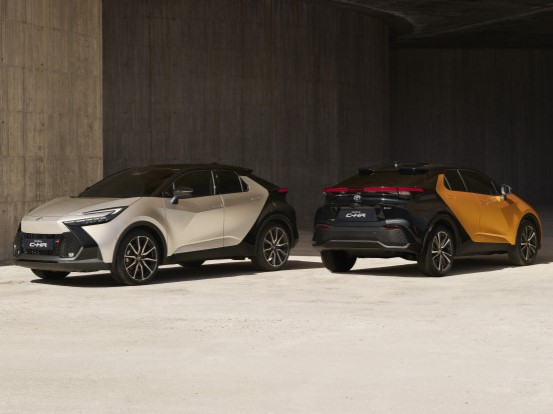
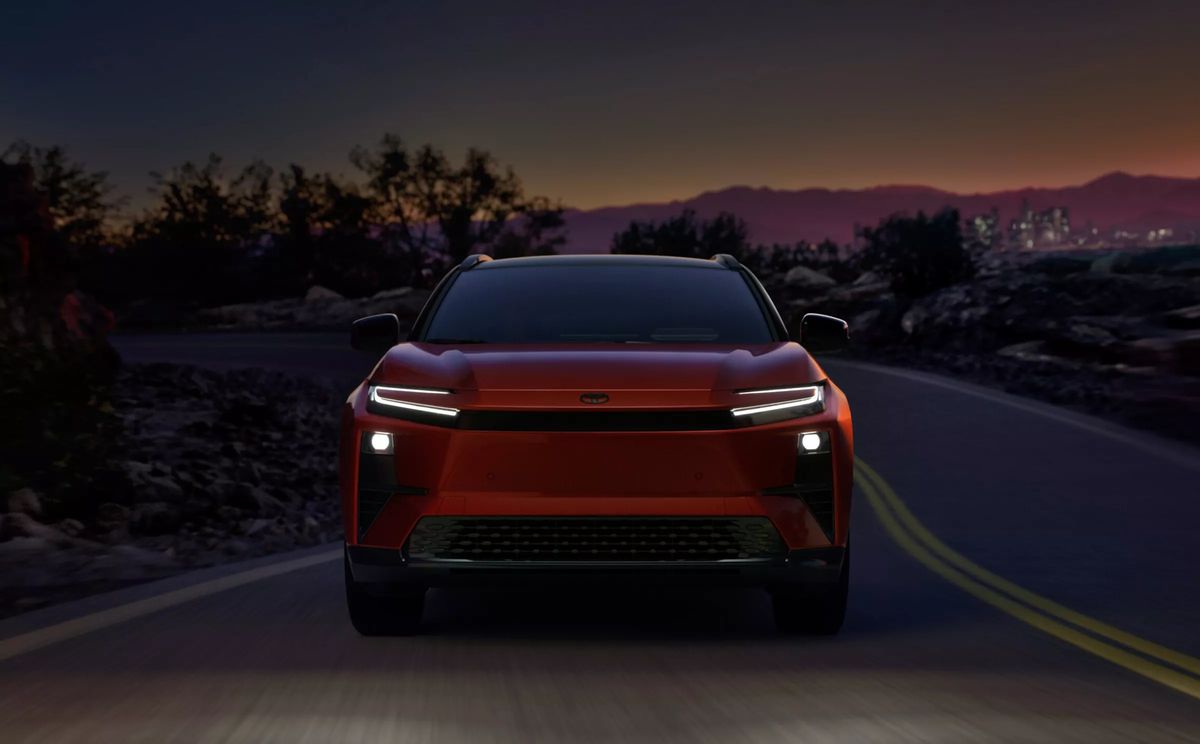
- The front mask boldly adopts Toyota’s latest design language, a “hammerhead” motif reminiscent of a shark, creating a bold and intelligent look.
- While retaining the coupe-like, sleek fastback style unique to the C-HR, it has evolved into a more futuristic and sophisticated form.
- The striking “U”-shaped LED daytime running lights, positioned independently from the headlight unit, emphasize the car’s advanced design.
- The rear design features distinctive features such as linear taillights that create a modern sense of width, jewel-like four-light horizontal lamps, and a dual roof spoiler that combines aerodynamic performance with design.
Platform and body size
- The car employs the e-TNGA 2.0 platform, which was developed specifically for EVs, contributing to excellent handling stability and a spacious interior thanks to its low center of gravity.
- The wheelbase is 2,750mm, the same as the bZ, but the overall length is 4,519mm, about 102mm shorter than the bZ, resulting in more compact proportions. The overall width is 1,869mm and the overall height is 1,620mm.
- It is one size larger than the previous C-HR (2022 model), and although it is a C-segment SUV, it has an imposing presence that approaches that of a D-segment SUV.
Powertrain and driving performance
- For the US market, only a high-performance dual-motor AWD (all-wheel drive) system with a maximum output of 338 horsepower (343 PS/252 kW) will be available.
- Acceleration from 0 to 60 mph (approximately 96 km/h) is said to take just 5.0 seconds, which is faster than Toyota’s GR86 sports car, so you can expect a thrilling acceleration experience.
- The milder single-motor version available for the European market is not currently scheduled for US market introduction.
Battery and charging system
- It is equipped with a large-capacity 77kWh lithium-ion battery that can handle everything from everyday use to long-distance travel.
- The expected range from a full charge is approximately 290 miles (approximately 467 km).
- In addition to an 11kW onboard charger (standard charger) that can be used at home or public charging stations, the vehicle comes standard with a NACS (North American Charging Standard) port, which is becoming increasingly popular as a charging standard in North America.
- It supports fast charging of up to 150kW, allowing the battery to be charged from 10% to 80% in approximately 30 minutes.
Interior and equipment
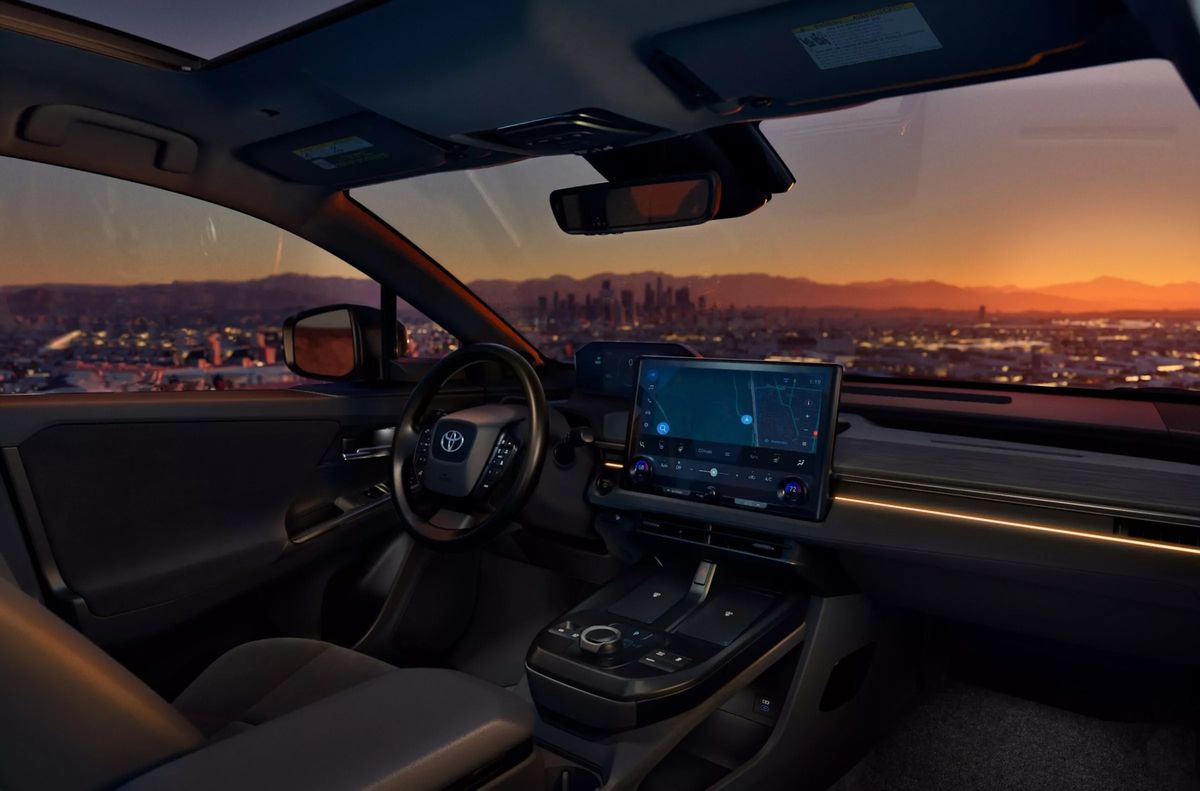
- The interior design follows the same philosophy as the new bZ, and a large 14-inch touchscreen media system is installed in the center of the dashboard.
- The meter in front of the driver’s seat uses a 7-inch LCD panel, similar to that used in the Prius.
- In the US market, two trim levels will be available: SE and XSE.
- Even the base SE model comes standard with a 14-inch touchscreen, heated front seats, an electric power tailgate, and a wireless smartphone charger that can charge two devices simultaneously.
- The higher-grade XSE model offers the option of 20-inch designs in addition to the standard 18-inch alloy wheels, and comes standard with advanced features such as a power driver’s seat with memory function, an 8-way power passenger seat, lane change assist, and a panoramic view monitor.
Release date and expected price
- The official launch date in the US market is expected to be delayed to 2026, a little later than originally expected.
- The current expected price is expected to start at around $35,000, which may make it a little more affordable than its big brother, the bZ.
Role in Toyota’s electrification strategy
- The new C-HR EV will play an important role in strengthening Toyota’s battery electric vehicle (BEV) lineup, particularly in the North American market, as part of its global “Multi-Pathway” strategy.
- The new series will be clearly differentiated from the previously released “bZ” series in terms of design and characters, and aims to meet a wider range of customer needs.
- Future trends across Toyota’s SUV lineup (such as the electrification strategy for the new RAV4, which is rumored to be announced soon) could also affect the C-HR EV’s market positioning.
The story behind the C-HR’s revival: a three-year absence from the US market and its long-awaited return
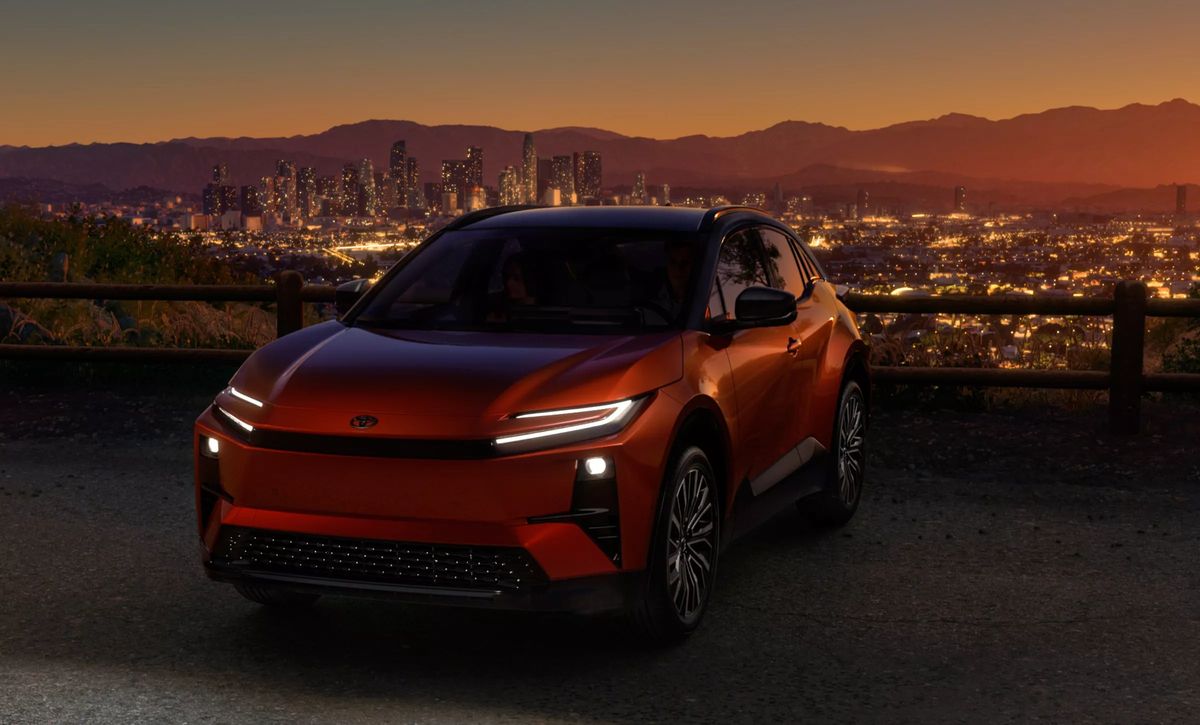
TOYOTA USA C-HR EV
The return of the new C-HR to the US market marks an important milestone in Toyota’s electrification strategy. Sales of the previous C-HR in the US were discontinued in 2022. This was likely due to intensifying competition in the compact SUV segment and the fact that the powertrain at the time was unable to meet market demands. However, its unique design captivated many fans, and many called for its revival.
This reintroduction is not just a model change, but also a major transformation in the form of a complete shift to EV. This is closely related to the existence of the major facelift version “bZ” recently announced by Toyota . Originally the “bZ4X” in the lineup, this model has been renamed ” bZ ” and has been significantly enhanced with a completely redesigned front fascia and interior, as well as increased battery capacity and driving range. The new C-HR shares a platform with the revamped bZ and is positioned as a core model in Toyota’s next-generation EV lineup. The early announcement of the C-HR+ in Europe not only raised expectations in the global market, but also paved the way for its introduction in the US market.
Exterior design: Bold, sophisticated and futuristic
The exterior design of the new C-HR EV inherits the coupe-like crossover SUV styling philosophy of the previous C-HR, but has evolved into a bolder, more sophisticated, and future-oriented form. Perhaps the most eye-catching feature is the adoption of Toyota’s latest design language, the “hammerhead” motif, on the front mask. This creates a sharp, aggressive expression reminiscent of a shark stalking its prey, visually expressing the dynamic driving performance of the new C-HR.
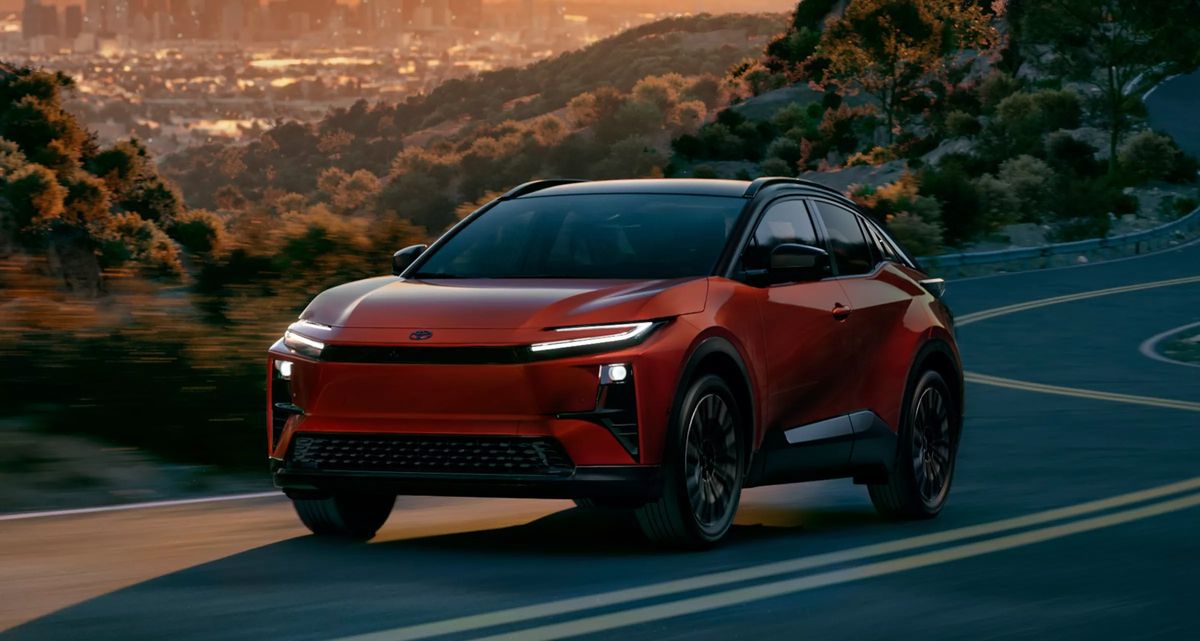
Furthermore, the headlight units are positioned completely independently of the distinctive “U”-shaped LED daytime running lights, emphasizing an advanced and sharp impression. The body sides, with their accented character lines and smooth surface structure, create complex shadows that give the impression of movement even when stationary. The roofline is even steeper than the previous model, accentuating the sporty fastback coupe style. This tail-end design clearly differentiates it from its sibling, the bZ, which has a practical, angular rear end, and is an element that accentuates the C-HR’s unique individuality.
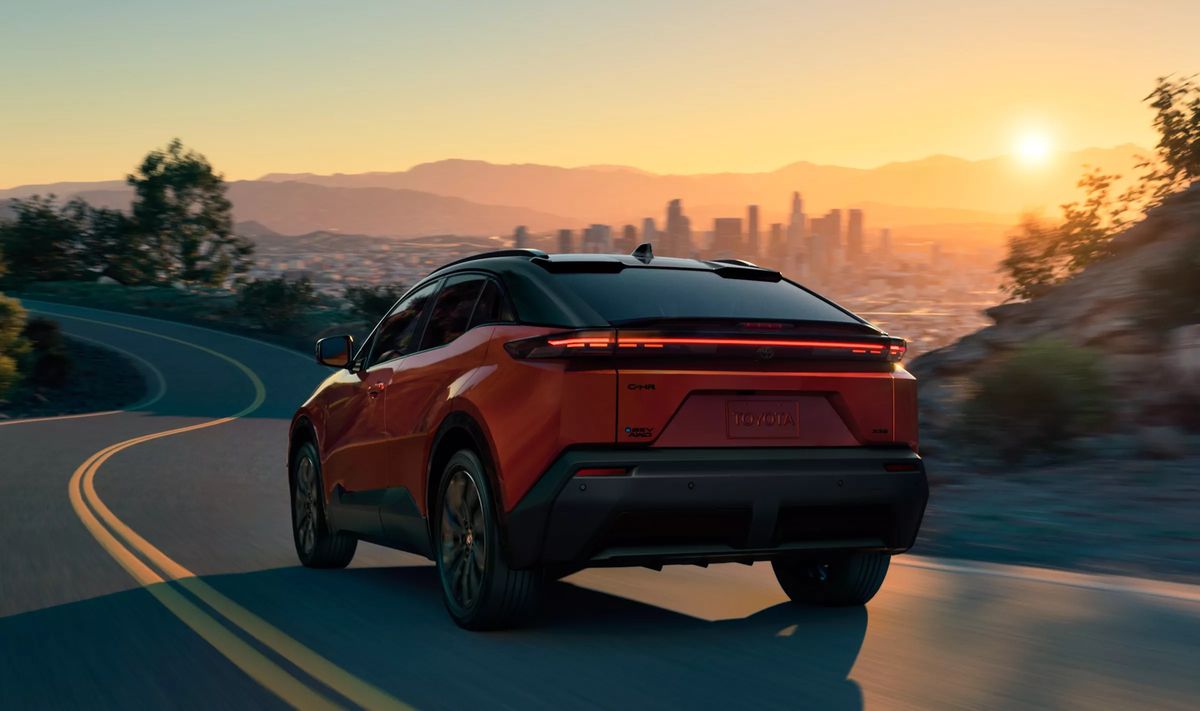
TOYOTA USA C-HR EV
At the rear, the straight-line taillights that connect directly in the center create a modern, wide look, while four horizontal OLED-style lamps are located directly below them on both sides, creating a unique presence at night. The dual roof spoilers not only contribute to improved aerodynamic performance, but also function as a visual accent, completing the car’s relaxed, sporty styling. These design elements strongly emphasize that the new C-HR is not just a means of transportation, but a mobility that provides the joy of ownership and the pleasure of driving.
Interior: A cockpit designed for modern comfort
The interior of the new C-HR EV shares the same advanced, driver-centric philosophy as the exterior. The design and some components share many similarities with the previously revamped new bZ, creating a unified look as Toyota’s latest EV. The focal point of the cockpit is the large 14-inch touchscreen media system located in the center of the dashboard. This high-definition display provides intuitive operation of a wide range of information, including navigation, audio, and vehicle settings, and is also equipped with a wide range of connected functions.
TOYOTA USA C-HR EV
In front of the driver is a 7-inch LCD meter panel similar to that found in Toyota’s compact cars, the Prius. This meter displays essential driving information, such as speed, remaining battery power, cruising range, and the operating status of driver assistance systems, in a graphical and easy-to-understand format.
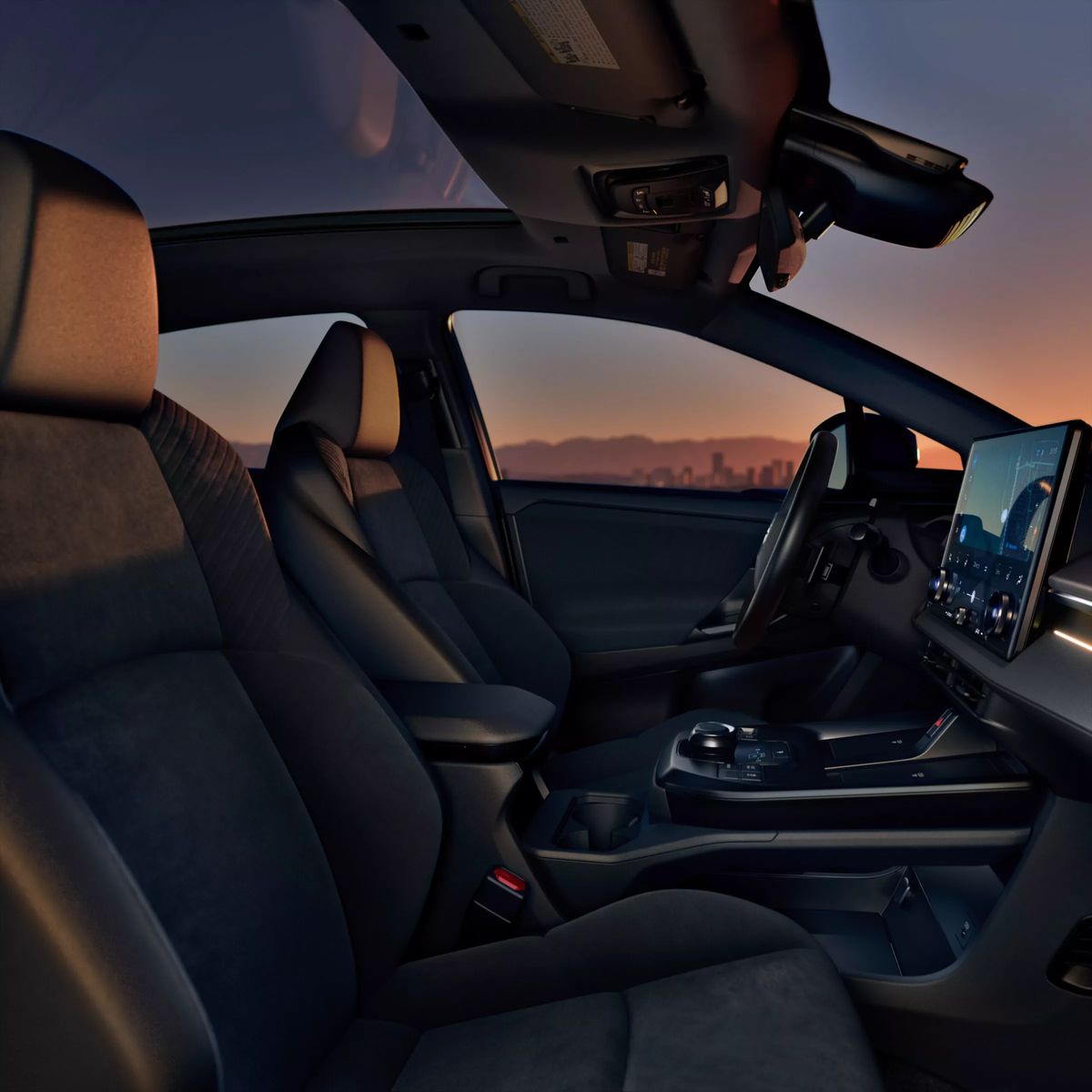
In the US market, two grades, the SE and XSE, will be available based on this powerful dual-motor AWD powertrain. Even the entry-level SE model comes standard with the aforementioned 14-inch touchscreen media system, heated front seats for comfortable driving on cold days, a power liftgate (electric power back door) for easy loading and unloading, and a wireless charger that can charge two smartphones simultaneously.
TOYOTA USA C-HR EV
If you choose the higher-grade XSE, the standard 18-inch alloy wheels will be upgraded to more prominent 20-inch wheels, broadening your range of choices. Inside, the driver’s seat is equipped with a power seat with memory function, and the passenger seat is equipped with an 8-way power seat, allowing for more precise adjustment of the driving position. Furthermore, the advanced safety driver assistance system has been enhanced, and convenient features such as Lane Change Assist (LCA), which supports lane changes on highways, and the Panoramic View Monitor (PVM), which allows for a bird’s-eye view of the vehicle’s surroundings, are now standard equipment, further improving safety and comfort. The seat materials and interior trim textures are also expected to reflect the C-HR’s unique attention to detail.
Body size and platform strategy: Possibilities opened up by e-TNGA 2.0
The new C-HR EV is based on Toyota’s e-TNGA 2.0 platform, which is specifically designed for electrified vehicles. This platform, which is also used for the bZ (formerly bZ4X), is designed to achieve excellent handling stability through a low center of gravity, a spacious interior thanks to efficient battery installation, and high collision safety performance. The new C-HR makes the most of the benefits of this advanced platform, aiming to achieve a high level of both driving performance and interior comfort.
Looking at the specific body dimensions, the new C-HR EV is 4,519mm long, 1,869mm wide, and 1,620mm high. The wheelbase is the same as the bZ at 2,750mm (108.2 inches). However, the overall length is 4 inches (approximately 102mm) shorter than the bZ, resulting in more compact and taut proportions. These dimensions are thought to contribute to easy handling and dynamic driving performance.
Compared to the previously sold 2022 C-HR (length 4,385mm x width 1,795mm x height 1,550mm), the new model is significantly larger, with an increase of approximately 134mm in length, 74mm in width, and 70mm in height. This improves interior space and gives the C-segment SUV an imposing presence comparable to a D-segment SUV. For reference, compared to other Toyota SUV models, the C-HR is slightly longer than the Corolla Cross (length 4,490mm) and more compact than the RAV4 (length 4,600mm) and Harrier (length 4,740mm). This exquisite size setting is likely intended to balance ease of handling in urban areas with comfort for long-distance travel.
Powertrain: Overwhelming acceleration performance that surpasses even the GR86
The new C-HR EV for the US market offers a bold choice of powertrain. It’s available only with a high-performance dual-motor all-wheel-drive (AWD) system that delivers a maximum output of 338 horsepower (343 PS/252 kW). This powerful electric unit delivers astonishing performance, accelerating from 0 to 60 mph (approximately 96 km/h) in just five seconds. This figure is 1.1 seconds faster than the 0-60 mph time (approximately 6.1 seconds) of Toyota’s pure sports coupe, the GR86, clearly demonstrating that the new C-HR is not just an eco-car; it is also a sports EV that delivers thrilling driving pleasure.
TOYOTA USA C-HR EV
The C-HR+ for the European market also comes in single-motor AWD versions with total system outputs of 165 horsepower (167 hp/123 kW) and 221 horsepower (224 PS/165 kW), but these relatively milder versions will not be introduced in the US market. Toyota’s decision to limit the US market to the powerful dual-motor AWD version likely reflects American consumers’ increasing demand for high performance from EVs and the need to compete with the performance levels offered by competing EVs, including Tesla. Toyota’s strategy also appears to be to further sharpen the C-HR brand’s image of “fun driving” with the EV launch. This bold powertrain strategy will likely be key to the new C-HR EV establishing a solid presence in the US EV market.
Battery technology and charging solutions: everyday use and long-distance travel
The battery system at the heart of the electric drive is also one of the new C-HR EV’s attractions. The US model will be available with only one lithium-ion battery pack with a generous capacity of 77 kWh. According to Toyota, this battery pack will provide a driving range of approximately 290 miles (approximately 467 km) on a full charge. This range is practical enough for daily commuting and shopping, as well as weekend drives and moderately long-distance trips.
Regarding the charging system, an 11kW onboard charger that can be used at home or public charging facilities is standard equipment. Even more noteworthy is the fact that the car comes standard with a NACS (North American Charging Standard) port , which is rapidly gaining popularity as a charging standard in North America . This may make it easier to access Tesla’s Supercharger network in the future, which is expected to greatly contribute to improving user convenience.

The car supports fast charging at peak charging speeds of up to 150kW. It has been announced that this capability will allow the battery to be charged from 10% to 80% in approximately 30 minutes, significantly reducing waiting times for charging during long-distance travel. While a peak charging speed of 150kW is not at the forefront of the market, it is at a practical level, and considering the state of the charging infrastructure, it is likely to be satisfactory for many users. Toyota has also paid the utmost attention to battery durability and safety, aiming to provide an EV system that can be used safely for a long period of time.
Release Plan and Pricing Strategy: A highly anticipated car awaiting the arrival of 2026
The new C-HR EV for North America has now revealed its fascinating form, but it will likely be a while before it actually makes its way into our lives. According to an announcement from Toyota, the official release has been slightly delayed until 2026. For fans eagerly awaiting the car, this is a little further into the future, but perhaps this extra time will allow the car to be further refined. Let’s look forward to seeing it refined and polished down to the finest details.
And of course, the question is the price. Official information will be revealed as the release date approaches, but currently, it is predicted that the starting price of the new C-HR EV will be around $35,000. Considering that its big brother, the bZ (formerly bZ4X), is expected to start in the low $40,000 range, this price setting may reflect Toyota’s desire to bring the appeal of EVs to more people. You can sense Toyota’s enthusiasm to present a stylish, high-performance EV as a realistic option. We look forward to future announcements regarding detailed prices and options for each grade.
Toyota’s electrification strategy and the role of the C-HR EV: A vehicle that serves as a bridge to the future
The launch of the new C-HR EV marks the beginning of a new chapter in Toyota’s global initiatives for electrification, particularly in strengthening its EV lineup in the important market of North America. Building on the electrification technology it has cultivated over many years in hybrid vehicles, Toyota has adopted a “Multi-Pathway” strategy that aims to realize a sustainable society through a variety of options, including battery electric vehicles (BEVs), plug-in hybrid vehicles (PHEVs), and fuel cell vehicles (FCEVs). Expectations for the potential of BEVs are growing day by day.
The new C-HR EV, along with its companions in the previously released “bZ” series, will be a powerful driver of Toyota’s BEV strategy. While the bZ appeals to those who prioritize family use and practicality, the C-HR EV is likely to be a model that captures the hearts of those who are more particular about design and want to enjoy the act of driving itself. While using the same platform, Toyota’s commitment to catering to diverse lifestyles is evident by giving each model a distinct personality and character.
The American EV market is a crowded one, with Tesla and many other manufacturers launching innovative technologies and compelling models one after another. For the new C-HR EV to succeed in this market, it will need not only beautiful design and outstanding performance, but also the reliability and quality cultivated over many years of car manufacturing, and above all, the bond of trust that Toyota has built with its customers. Furthermore, there are reports that a new version of Toyota’s flagship SUV, the RAV4, is scheduled to be unveiled on May 21, 2025, suggesting that Toyota’s entire SUV lineup is about to undergo dramatic change amid the growing trend toward electrification. The form of this new RAV4 may also influence the C-HR EV’s position in the market.
A word from the editorial department
After three years, the all-new Toyota C-HR EV is back on American roads, fully electric. It’s more than just a revival of a familiar name. It embodies Toyota’s vision of a future of sustainable, enriching mobility, showcasing a new era of crossovers with a sophisticated blend of design, performance, and advanced technology. Its acceleration, which would make even the GR86 jealous, dramatically redefines the car’s previous image. Its sleek, futuristic coupe-SUV design captivates the eye. And it offers practical driving range and a smart charging solution for everything from daily commutes to weekend adventures. All of these features have been meticulously developed to deliver new value and an exhilarating driving experience to all who drive it.
Although there’s still some time until its 2026 release, the new C-HR EV will undoubtedly be an important test of Toyota’s EV strategy. How will its beautiful, even provocative, styling and thrilling performance be received in the highly competitive American EV market, and will they become the driving force behind Toyota’s ascent to the top of the electrification era? Everyone is now watching with eager interest from around the world. Perhaps this car will set a new trend in the EV market. The new C-HR EV certainly has the appeal and potential to make people think so.
Toyota News Release