


On September 16, 2025, Suzuki officially unveiled the new e-Vitara, the company’s first mass-produced electric vehicle (BEV) SUV. This innovative model, based on the concept of an “Emotional Versatile Cruiser,” is scheduled to go on sale in Japan from January 16, 2026. This article will take a closer look at the detailed specifications, design, price, and notable features of the new e-Vitara.
What is the new e-Vitara? The first step in Suzuki’s electrification strategy
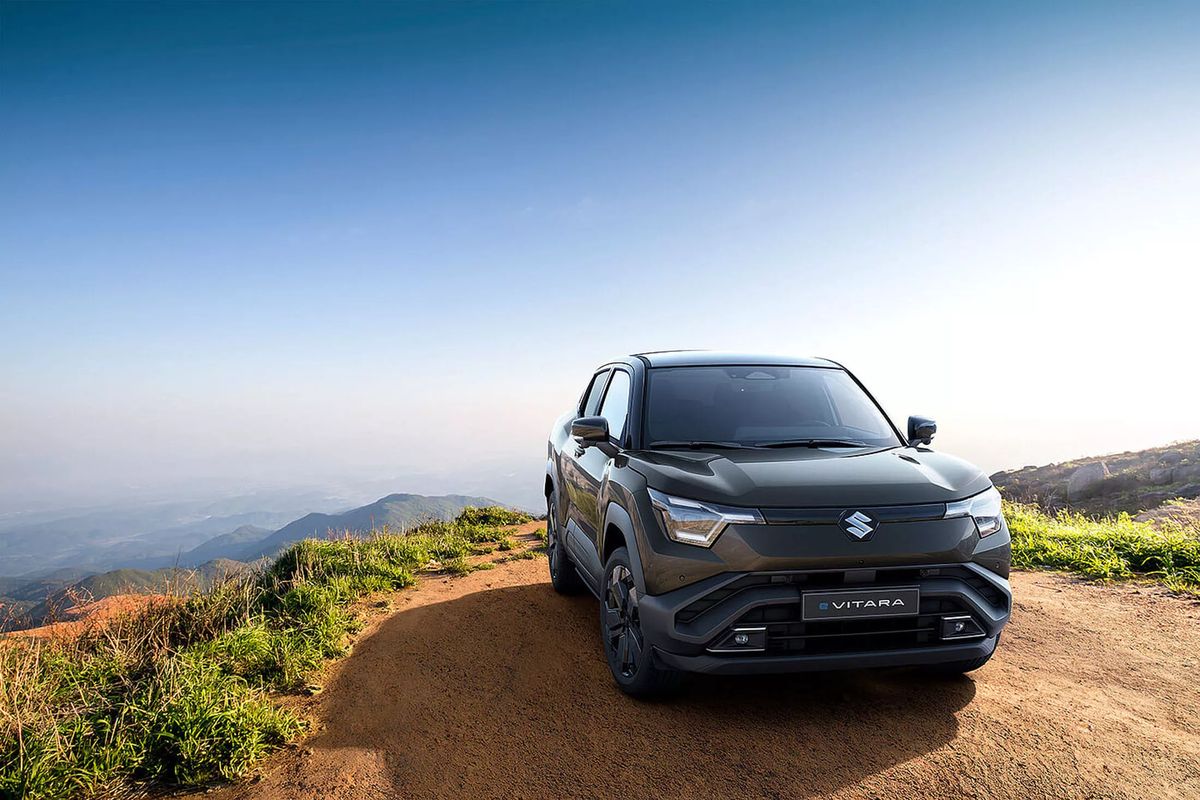
Suzuki e-Vitara
Positioning as a global strategic BEV vehicle
The new Suzuki e-Vitara was developed as the company’s first global strategic vehicle, a battery electric vehicle (BEV). This is a commemorative model that marks Suzuki’s full-scale entry into the electric vehicle market, a brand that has been known for compact cars and hybrid vehicles until now.
OEM supply in collaboration with Toyota
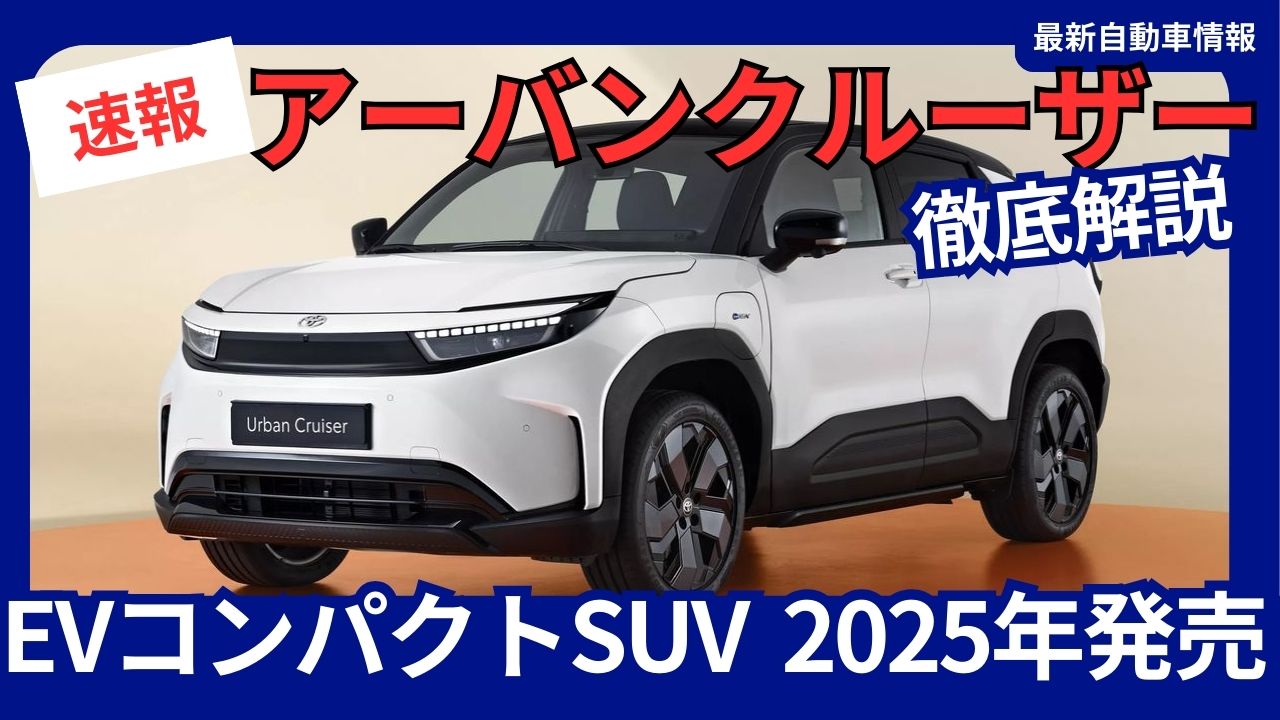
It is worth noting that this model will be supplied to Toyota as the ” Urban Cruiser .” This collaboration makes it clear that the two brands will work together to promote the spread of electric vehicles.
Pricing for the new e-Vitara: Details by grade
Pricing and grade structure
Pricing for the new eVitara is as follows:
- X grade (49kWh/2WD) : 3,993,000 yen
- Z grade (61kWh/2WD) : 4,488,000 yen
- Z grade (61kWh/4WD) : 4,928,000 yen
Actual price after applying subsidies
With the application of the CEV subsidy of 870,000 yen, the effective purchase price will be as follows:
- X grade: from approximately 3.12 million yen
- Z grade (2WD): from approximately 3.62 million yen
- Z grade (4WD): from approximately 4.06 million yen
Exterior design: A fusion of “high-tech and adventure”
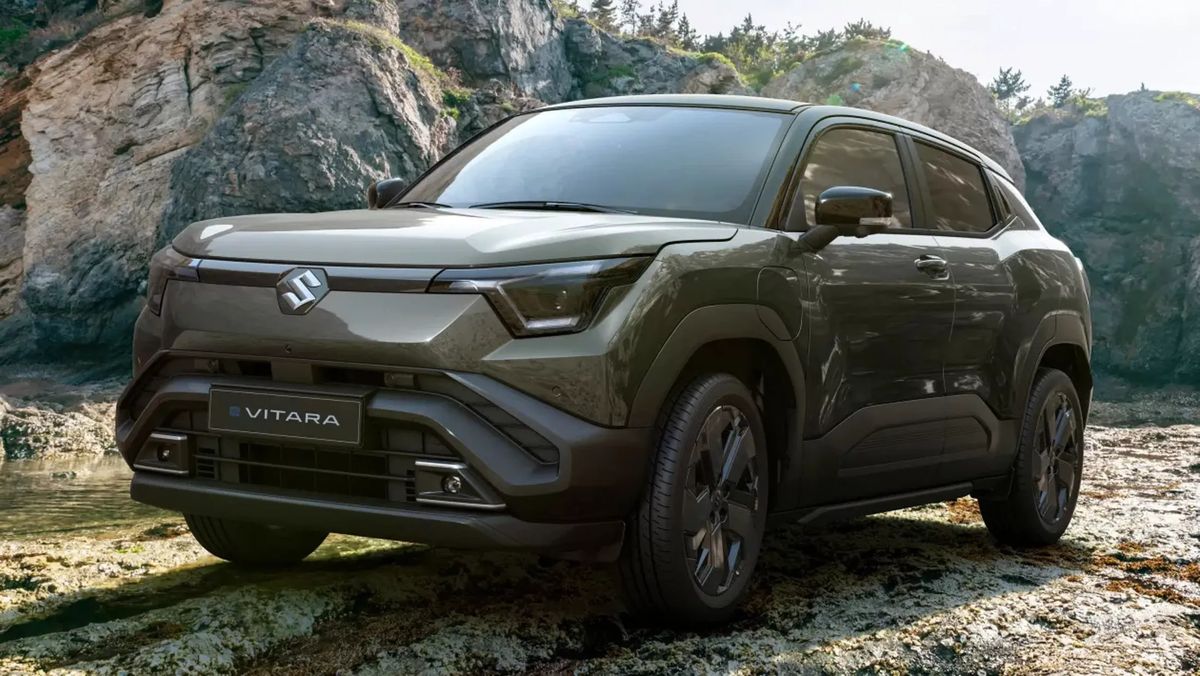
Suzuki e-Vitara
Design concept and features
The exterior of the new eVitara is based on the theme of “High-Tech & Adventure” and has the following features:
- Polygonal and polyhedral structure : Expressing the advanced feel of a BEV and the strength of an SUV
- A bold front mask : A powerful design that stimulates the adventurous spirit
- Long wheelbase : Proportional design that takes advantage of the space efficiency unique to BEVs
- 18-inch aluminum wheels : Comes with a resin garnish that combines aerodynamic performance and weight reduction
Body size: Compact yet impressive
- Total length : 4,275mm
- Overall width : 1,800mm
- Overall height : 1,640mm
- Wheelbase : 2,700mm
- Minimum turning radius : 5.2m
This size is similar to the Toyota Yaris Cross and Honda Vezel, positioning it as a compact SUV suitable for Japan’s road conditions.
Color variations
The new eVitara is available in five exterior colours:
- Bluish Black Pearl 4 (standard color)
- Arctic White Pearl x Black Roof 2-tone (additional color +88,000 yen)
- Opulent Red Pearl Metallic x Black Roof 2-Tone (Additional Color +55,000 yen)
- Splendid Silver Pearl Metallic x Black Roof 2-Tone (Additional Color +55,000 yen)
- Land Breeze Green Pearl Metallic x Black Roof 2-tone (additional color + 55,000 yen)
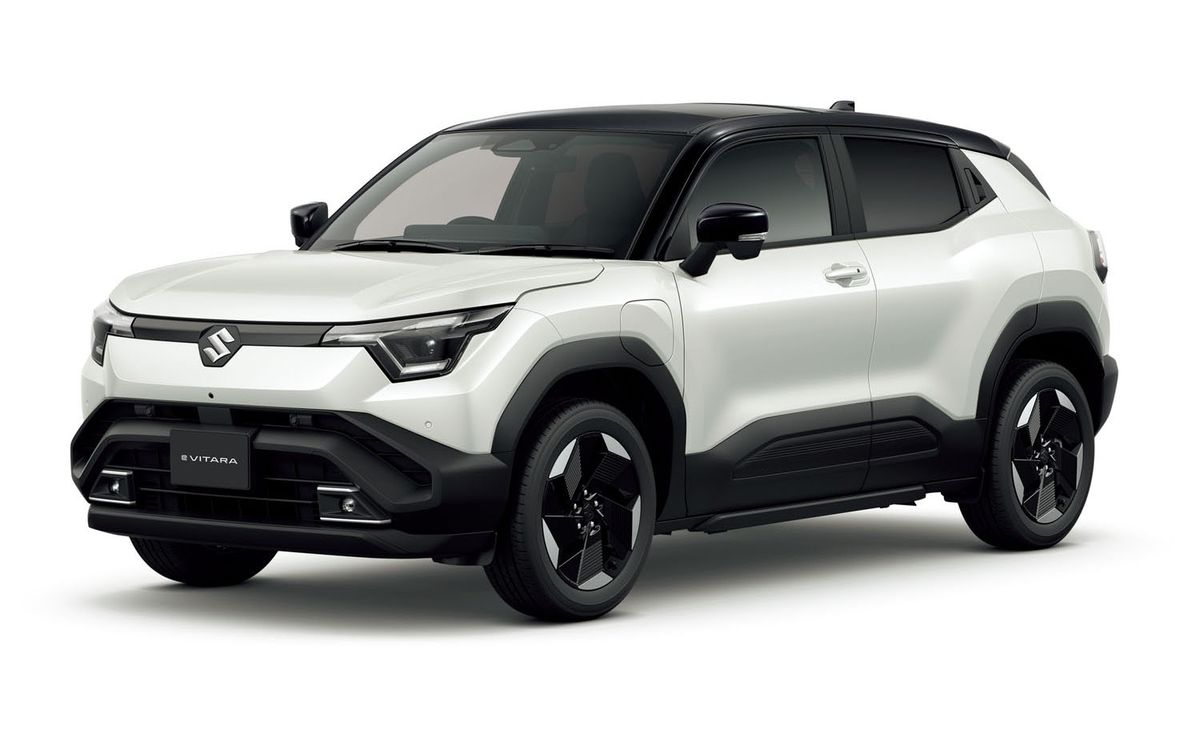
Z (Arctic White Pearl with Black two-tone roof)
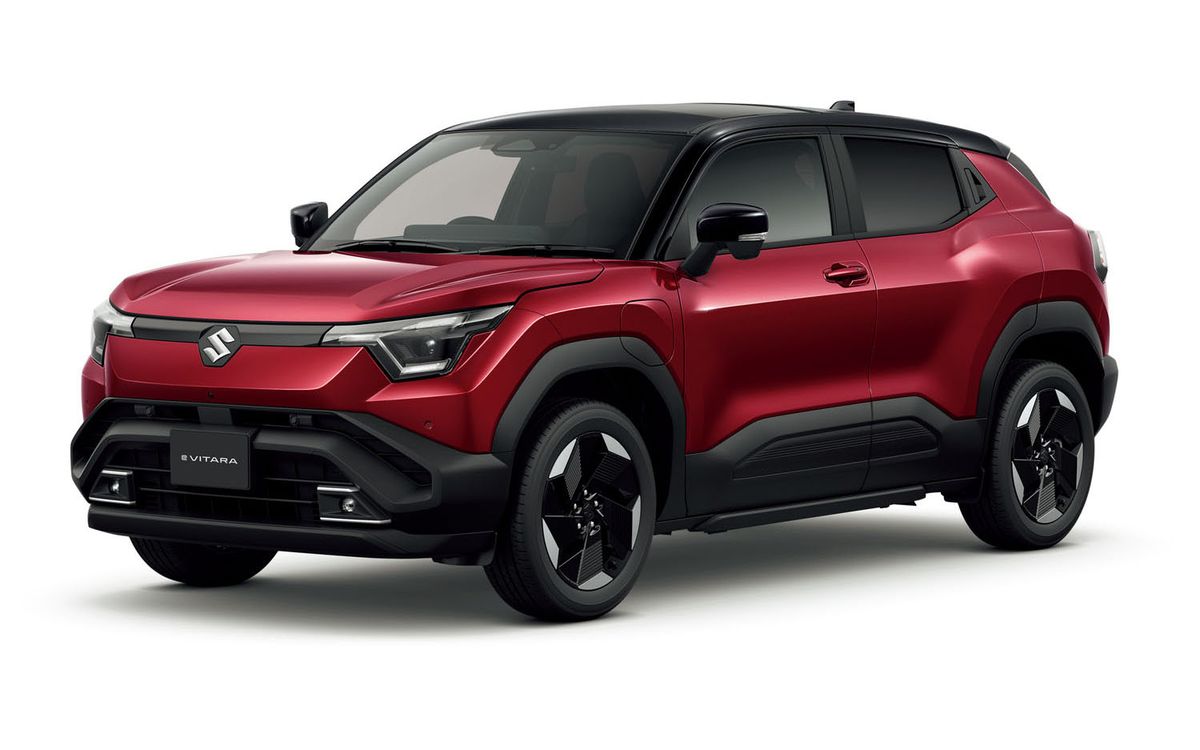
Z (Opulent Red Pearl Metallic with Black Two-Tone Roof)
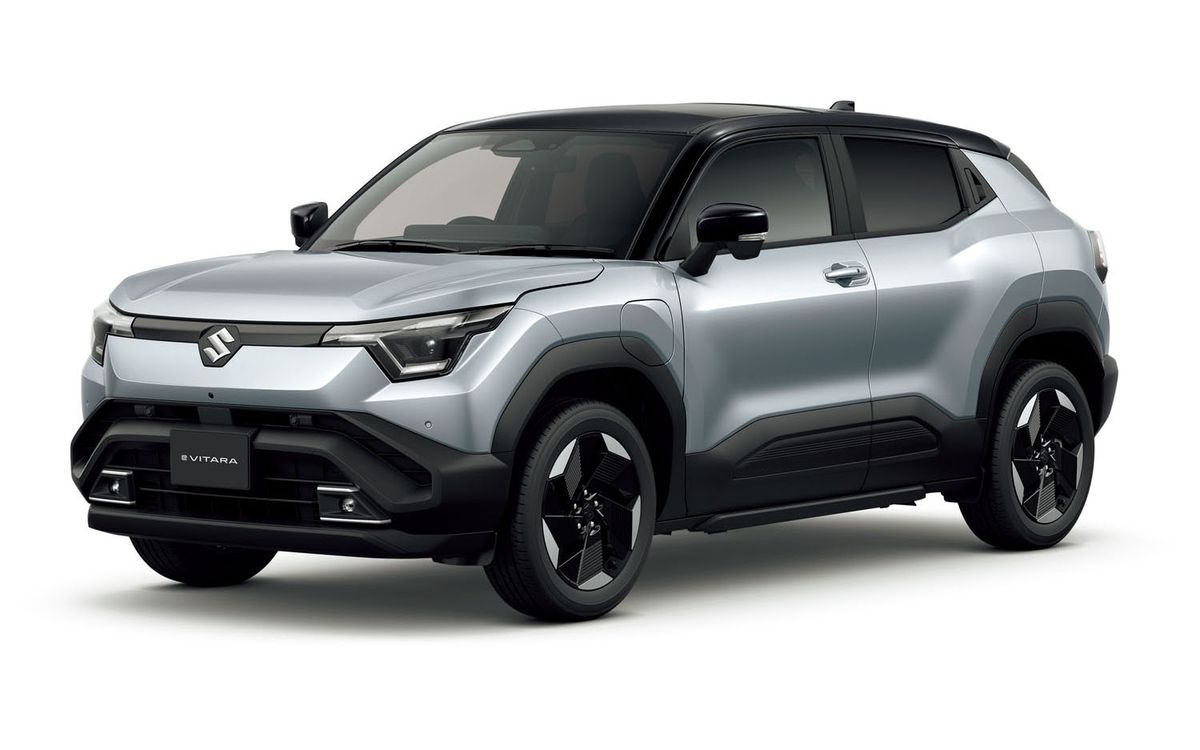
Z (Splendid Silver Pearl Metallic with Black Two-Tone Roof)
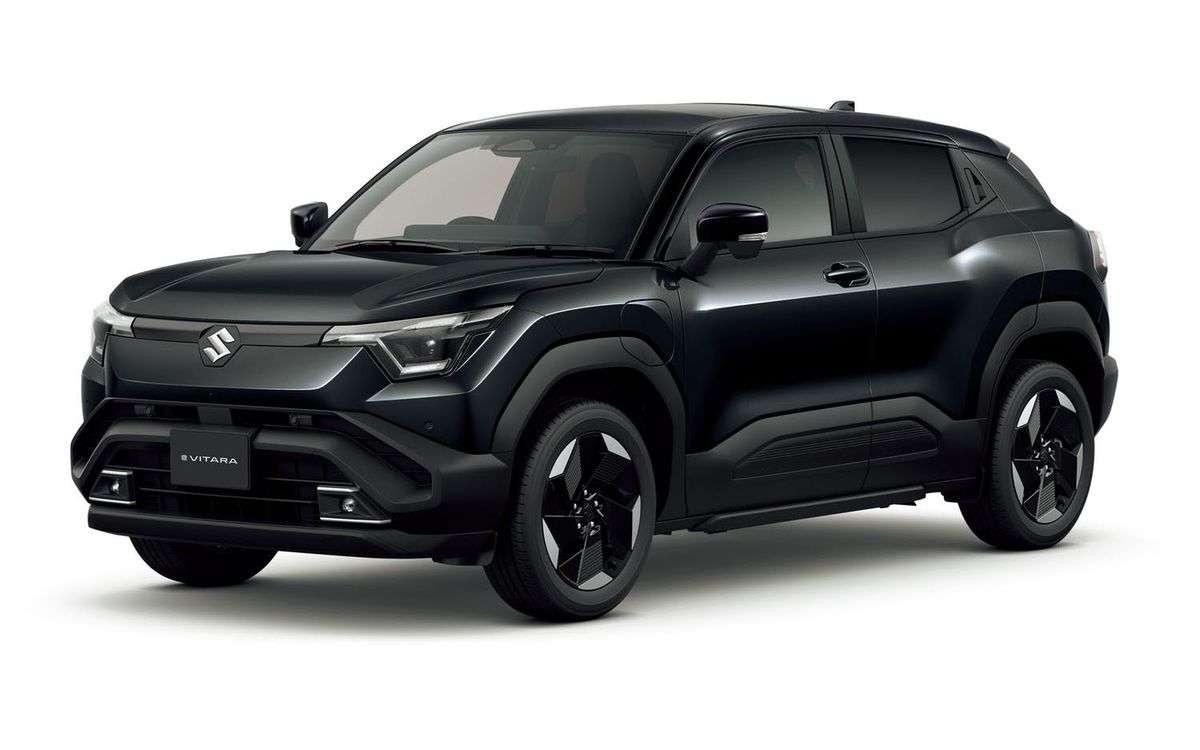
Z (Bluish Black Pearl 4)
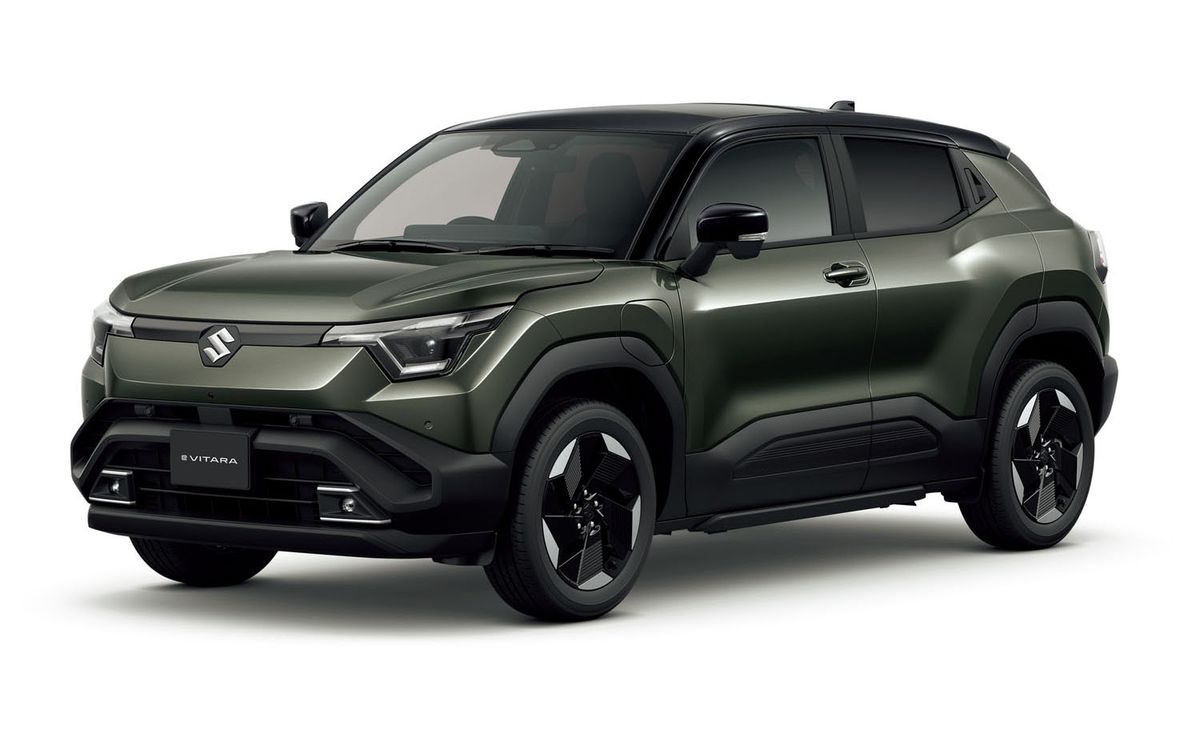
Z (Landbreeze Green Pearl Metallic with Black Two-Tone Roof)
Interior design: a harmony of quality and innovation
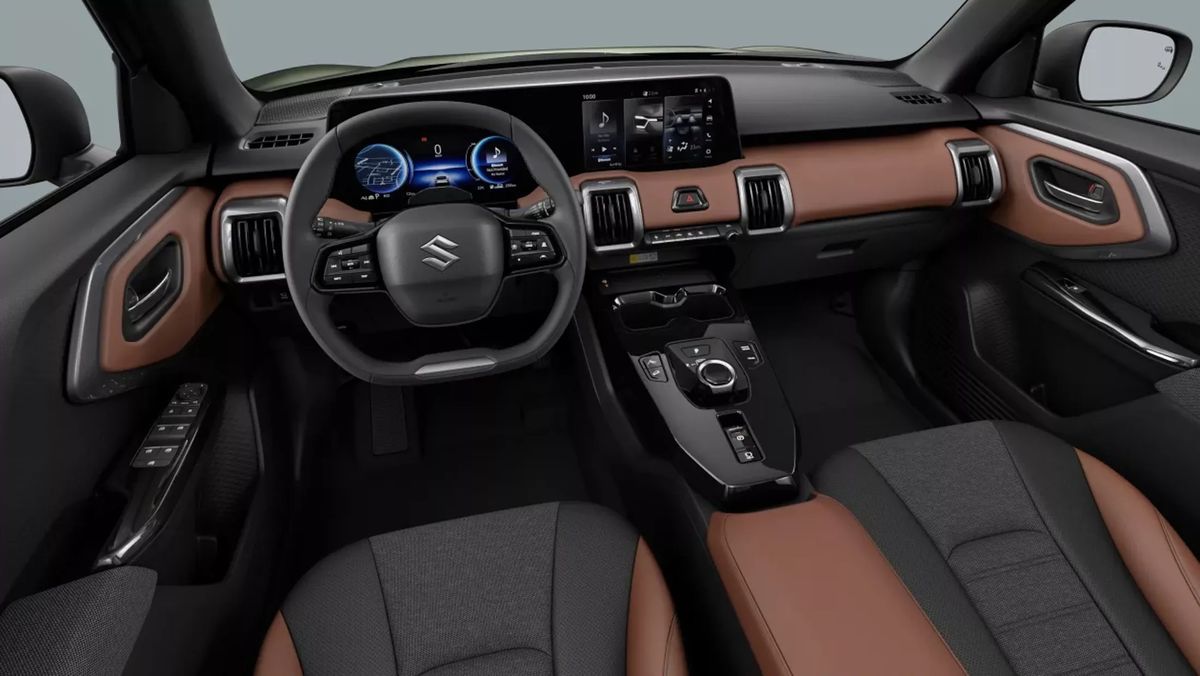
Suzuki e-Vitara
Design theme and texture improvement
The interior of the new e-Vitara features a high-quality finish with a black and brown base, and adopts a sophisticated design that completely overturns the image of Suzuki cars to date.
Advanced equipment and functions
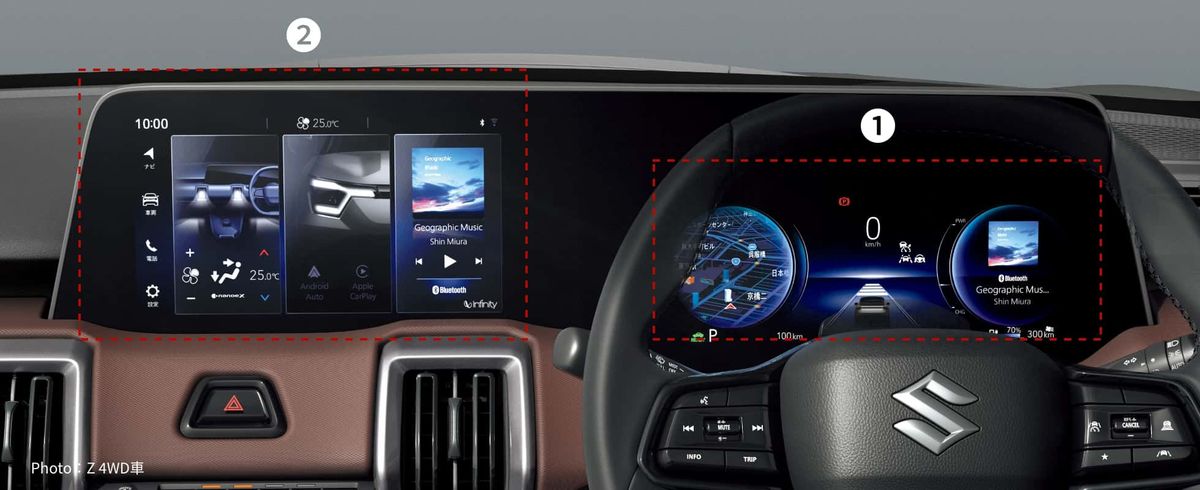
- Integrated display system : 10.25-inch meter and 10.1-inch display integrated
- Floating center console : A design that exudes innovation
- Ambient light : 12 color and 7-level dimming adjustment
- Panoramic glass roof : IR-cut glass creates a sense of openness
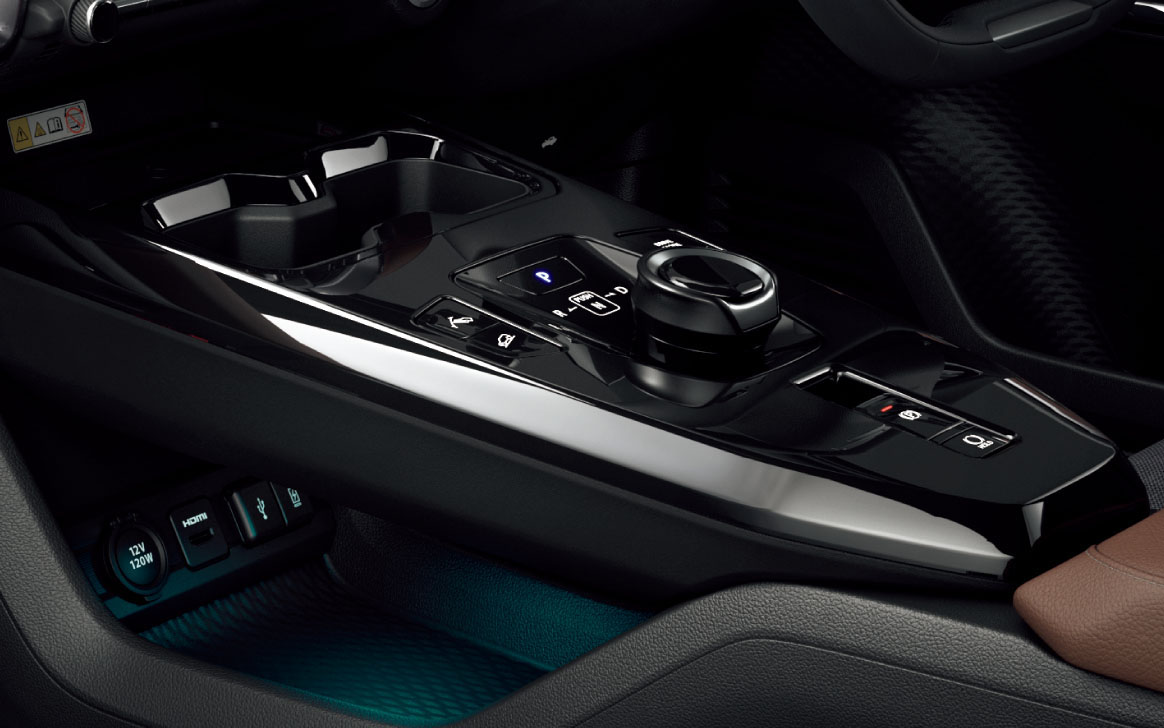
Seat material and equipment
Even the entry-level X model comes with synthetic leather and fabric combination seats, creating a premium feel. The driver’s and passenger’s seats are also equipped with seatbelt height adjustment mechanisms.
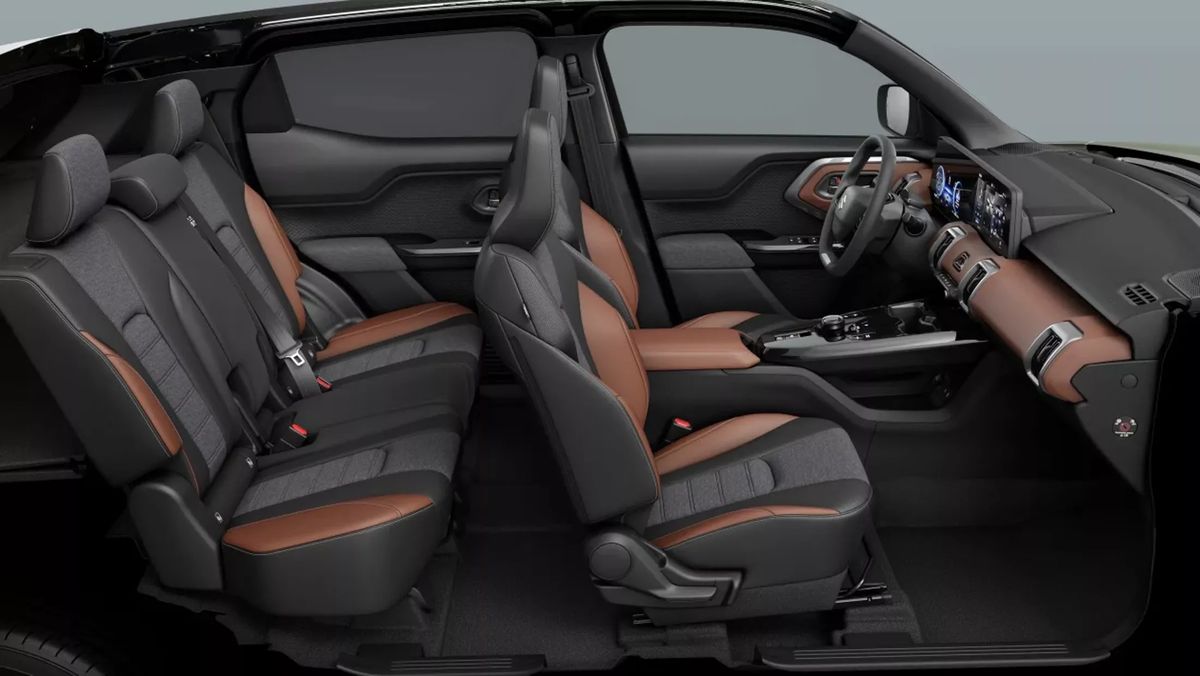
Suzuki e-Vitara
Powertrain: Innovative electric system “eAxle”
Motor performance and battery capacity
The new eVitara is available with two battery capacities:
49kWh battery specification (X grade)
- Maximum output : 144hp
- Maximum torque : 19.7 kgm
- Cruising range : 433km (WLTC mode)
- Power consumption rate : 124Wh/km
61kWh battery specification (Z grade)
- 2WD model : 174ps/19.7kgm, cruising range 520km
- 4WD specification : System total 184ps/31.3kgm, cruising range 472km
Newly developed platform “HEARTECT-e”
Features of the newly developed “HEARTECT-e” platform exclusively for BEVs:
- Lightweight structure : Weight reduction through increased use of high-tensile steel plates
- High Voltage Protection : Safety First
- Spacious interior : Efficient layout with short overhangs
- Maximizing battery capacity : Optimization by eliminating the member under the main floor
Uses a lithium iron phosphate battery
It uses a lithium-ion iron phosphate battery that ensures safety and long life, offering the following advantages over conventional lithium-ion batteries:
- High safety : Excellent thermal stability and low risk of fire
- Long life : High charge/discharge cycle resistance and little battery deterioration
- Reduced environmental impact : Reduced use of rare metals
Electric 4WD system “ALLGRIP-e”: The evolution of Suzuki’s 4WD technology
High-performance 4WD with independent front and rear control
The ALLGRIP-e, which is installed on the 4WD model, is an electric 4WD system with two independent eAxles at the front and rear.
Two driving modes
Auto Mode
- Optimal control according to road conditions
- Achieves both excellent handling stability and off-road performance
- Stable driving thanks to precise control of front and rear drive force distribution
Trail Mode
- Control specialized for escaping rough roads
- Brake control for spinning tires
- Reliable driving force transmission with LSD function
Driving assistance and safety equipment: Safety and peace of mind with the latest technology
Suzuki Safety Support
The new e-Vitara comes standard with Suzuki’s latest safety technology, Dual Sensor Brake Support II.
List of advanced safety equipment
- Adaptive cruise control : with full-speed tracking function
- Blind Spot Monitor : Detects vehicles behind in adjacent lanes
- Rear Cross Traffic Alert : Warning of approaching vehicles from behind
- Lane departure warning : with sway detection function
- False start prevention function : Forward and backward
Parking Assistance System
- Parking sensors : 4 locations front and rear
- Rear camera : with guideline display function
Charging performance and convenience
Charging specifications
- Fast charging : CHAdeMO compatible
- Normal charging : AC200V compatible
- Charging time : Approximately 30 minutes for fast charging to 80% (reference value)
Charging port location
The charging port is located on the driver’s side front fender for easy access.
Comparison with competitors
Comparison with domestic electric SUVs
| Car name | Price range | Range | Battery capacity |
|---|---|---|---|
| Suzuki eVitara | From 3,990,000 yen | 433-520km | 49-61kWh |
| Nissan Ariya | From 5.39 million yen | 470-610km | 66-91kWh |
| Mazda MX-30 EV | From 4.51 million yen | 256km | 35.5kWh |
| Mitsubishi Eclipse Cross PHEV | From 4.62 million yen | 57.3km (EV) | 13.8kWh |
Price competitive advantage
The new e-Vitara is priced competitively compared to electric vehicles in the same class, making it an affordable model even for those new to electric vehicles.
Points to consider when purchasing and recommended grades
Points to consider when selecting a grade
Those who are recommended the X grade (3.99 million yen)
- Those who want to reduce initial costs
- Those who mainly use it for daily use and rarely travel long distances
- Those who live in areas where a 2WD vehicle is sufficient
Those who are recommended the Z grade (from 4.48 million yen)
- Those who travel long distances frequently
- Those looking for comprehensive equipment
- Those who need 4WD performance
Benefits of utilizing subsidies
By taking advantage of the CEV subsidy of 870,000 yen, it is possible to significantly reduce the actual purchase price. However, as the subsidy has conditions and deadlines, we recommend that you consider applying early.
Maintenance and running costs
Advantages of electric vehicles
- Fuel cost reduction : Significant savings compared to gasoline costs
- Reduced maintenance costs : No engine oil changes required
- Tax benefits : exemption from automobile weight tax, reduction in automobile tax
Estimated annual maintenance costs
Estimated annual maintenance costs under typical conditions:
- Electricity costs : Approximately 30,000-40,000 yen per year (assuming 1,000km driven per month)
- Vehicle inspection and maintenance costs : Approximately 80,000-100,000 yen (every two years)
- Optional insurance : Approximately 60,000-80,000 yen (varies depending on conditions)
Future developments and market impact
Suzuki’s electrification strategy
The new e-Vitara will be the first step in Suzuki’s full-scale electrification strategy, and we can expect to see the development of derivative models based on this platform in the future.
Impact on Japan’s electric vehicle market
The new e-Vitara, which combines affordable pricing with practical performance, has the potential to accelerate the spread of electric vehicles in Japan.
summary
The new Suzuki e-Vitara is the company’s first fully electric SUV, and is an innovative model with the following appealing features:
Main attractions
- Competitive pricing : Affordable starting from ¥3,990,000
- Practical range : Reliable driving distance of up to 520km
- Advanced design : High-quality, sophisticated finishes both inside and out
- Comprehensive safety features : The latest driving assistance systems are standard equipment
- True 4WD performance : precise control only possible with electric power
For those considering purchasing
The new e-Vitara is a model that is especially recommended for those considering switching to an electric vehicle, those who are environmentally conscious, and those who want to experience the latest technology at an affordable price.
Pre-orders will begin at dealerships ahead of the release on January 16, 2026, so if you’re interested, we recommend gathering information and considering your purchase early.
Suzuki’s long-awaited new e-Vitara offers a new option to the Japanese electric vehicle market and is a noteworthy model that will contribute to the realization of a sustainable mobility society, so we look forward to seeing how it develops in the future.
Suzuki News Release
https://www.suzuki.co.jp/release/a/2025/0916/index.html
Suzuki eVitara