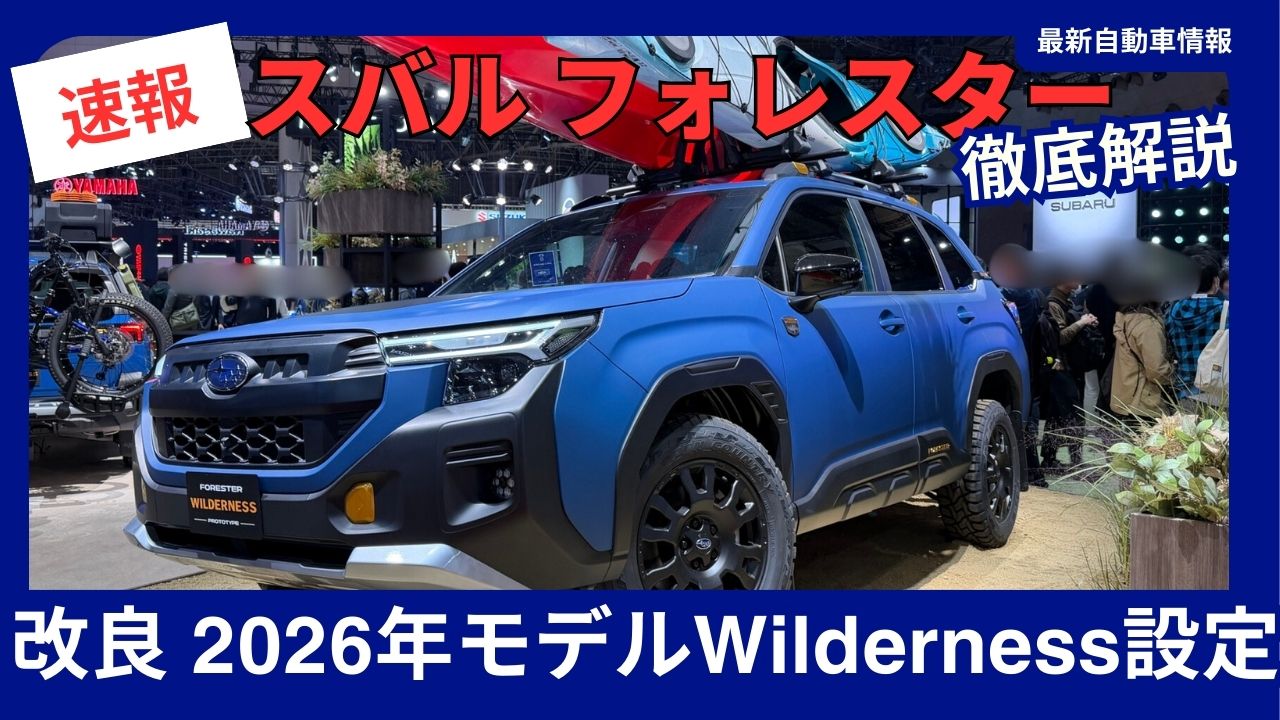



Subaru’s signature crossover SUV, the Outback, is set to undergo a full model change for the 2026 model year, bringing with it a dramatic transformation. For 30 years, the Outback has maintained its distinctive “tall wagon” style, but the next model is expected to be reborn with a more boxy, powerful SUV-like stance. This article provides a detailed explanation of the information currently available about the new Outback, which will undergo a bold transformation to meet modern needs while retaining the practicality of a wagon that has been cultivated over the years.
- 2026 Subaru Outback redesign: Will adopt a boxier, SUV-like stance.
- Powertrain: Equipped with a self-charging hybrid powertrain jointly developed with Toyota, it will improve efficiency. Conventional gasoline engines (2.5L naturally aspirated and 2.4L turbo) are also expected to continue.
- Trim range: New models will be introduced, including a Wilderness trim, which will have enhanced off-road capabilities like the current model.
- Exterior Design:
- The distinctive lifted wagon silhouette has been changed to a taller, boxier SUV silhouette.
- It is expected to incorporate much of the design language of the new Forester.
- It has a heavier, more upright stance and angular wheel arches.
- The front is more powerful, with a larger grille and a higher hood.
- Possibility of adopting split LED headlights.
- The rear maintains a long rear overhang, with a flat roofline and angular tail.
- This suggests an expansion of luggage space.
- Full-width LED taillights, large roof rails.
- The Wilderness trim is expected to feature thick plastic cladding and copper-colored exterior accents.
- Interior design: Expect a complete overhaul, possibly featuring a modern digital cockpit with a large infotainment display, but likely retaining physical buttons for HVAC controls.
- Technology: Subaru’s EyeSight driver assistance system is expected to be upgraded.
- Platform: It is likely to use an evolved version of the Subaru Global Platform.
- Hybrid system: Combines a 2.5L horizontally opposed four-cylinder engine, CVT, electric motor (88kW), secondary motor/generator, and 1.1kWh lithium-ion battery, integrating a mechanical all-wheel drive system.
- Relationship with Legacy: Legacy production is scheduled to end in spring 2025. The Outback will evolve as an independent model.
- Market strategy: Meet mass market needs with a more SUV-like form and strengthen collaboration with the Forester and Ascent. The Crosstrek will fill a niche position in the crossover market.
- Debut: Scheduled to debut at the New York Auto Show on April 16, 2025. Sales are expected to begin later this year.
- Wilderness Grade Features:
- Higher ground clearance than the regular model.
- A more aggressive all-terrain tire.
- Extensive use of plastic body cladding.
- Distinctive copper-colored exterior accents.
Subaru’s new Outback undergoes a complete redesign, transforming it into an SUV-like form to appeal to the mass market.
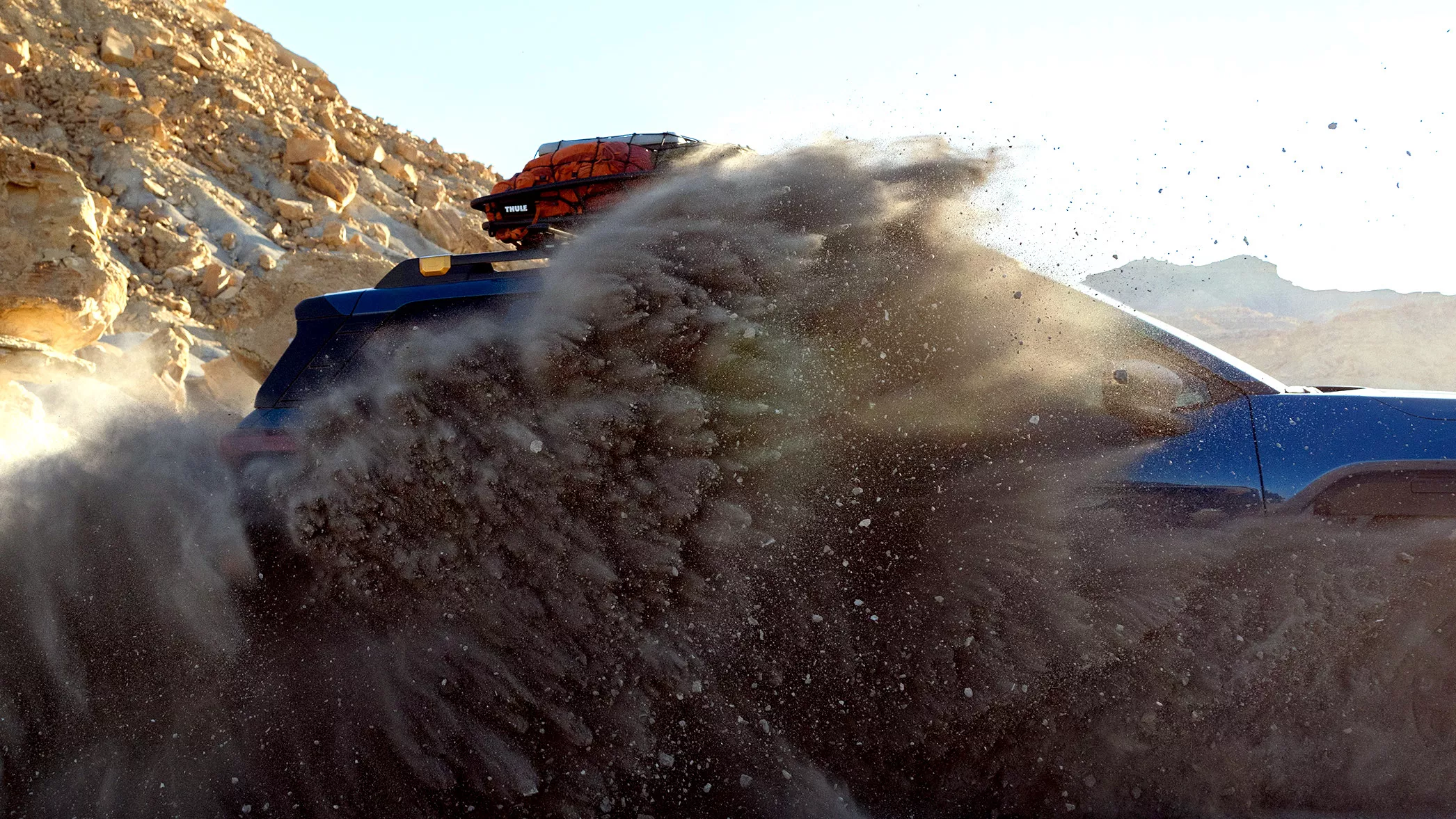
Since the introduction of the first-generation model, the Outback has captivated many fans with its unique character, combining the off-road capabilities, cargo capacity of a wagon, and the security of an SUV. However, in recent years, with the SUV market becoming more diverse and competition intensifying, Subaru appears to have reconsidered the Outback’s positioning. Judging from the latest spy shots and leaked information, the 2026 model will evolve from the previous sleek wagon form to a more square, upright, SUV-like silhouette.
The current model’s sleek lines will be replaced by more angular body panels and muscular wheel arches. This design has much in common with the design language of the recently announced new Forester, suggesting Subaru’s intention to build a consistent brand image across its SUV lineup. The front mask will have a powerful impression, with a larger grille and a higher-positioned hood. The headlights may adopt the latest trend of split LEDs, which may be a matter of personal preference, but will appear more refined compared to Subaru’s recent designs.
In the rear section, the long rear overhang that was a characteristic of the Outback has been maintained, but the roofline has been made flatter and the tailgate has been changed to a squarer shape. This is thought to contribute to an increase in luggage space capacity, further improving the Outback’s high practicality. The nearly vertical rear glass and large tailgate opening are the result of pursuing ease of loading and unloading. The full-width LED taillights and large roof rails add modern accents to the design.
This change to an SUV-like form is thought to be a strategy to appeal to a wider range of customers. While the traditional wagon design has been supported by a small number of enthusiasts, SUVs remain popular with a wider range of people and represent a sense of security and status. By bringing the Outback closer to a more conventional SUV shape, Subaru may be aiming to strengthen ties with its existing SUV lineup, such as the Forester and the Ascent three-row SUV, and to differentiate it from the Crosstrek, the entry-level crossover SUV model.
Subaru’s new Outback undergoes a full model change, featuring a hybrid powertrain jointly developed with Toyota: improving fuel efficiency and environmental performance
One of the biggest highlights of the 2026 Outback is the inclusion of a self-charging hybrid powertrain jointly developed with Toyota Motor Corporation. The automotive industry has been shifting toward electrification in recent years, and Subaru is no exception.
This new hybrid system will significantly contribute to improved fuel efficiency and reduced emissions, making it an attractive option for environmentally conscious consumers. This hybrid system is already installed in the Crosstrek and Forester for the Japanese market.
The hybrid configuration combines a 2.5-liter horizontally opposed four-cylinder engine with a continuously variable transmission (CVT), an 88kW (118 horsepower) electric motor (capable of directly driving the wheels), a secondary motor/generator, and a 1.1kWh lithium-ion battery. Notably, Subaru’s traditional Symmetrical All-Wheel Drive (AWD) system is integrated into this hybrid system. This ensures that the Outback’s renowned off-road capabilities are maintained in the hybrid model, ensuring peace of mind on snowy or rough roads. The introduction of the hybrid model leads to significant improvements in fuel economy, a major benefit that will reduce the financial burden on users in an era of rising gasoline prices. The motor’s assist also contributes to improved acceleration, resulting in a smoother, more comfortable driving experience.
| Specifications | Outback Strong Hybrid |
|---|---|
| engine | 2.5L horizontally opposed 4-cylinder DOHC naturally aspirated “FB25 type” + motor (THS) |
| Maximum power | 118kW (160PS) / 5,600rpm |
| Maximum torque | 209Nm/ 4,000-4,400rpm |
| Motor maximum output |
88kW (119.6ps) |
| Motor Max Torque |
270Nm |
transmission |
Electric continuously variable transmission |
| Drive system | AWD |
| battery | Lithium-ion battery |
Conventional gasoline engines will continue to be available: Meeting diverse needs
While electrification continues to advance, Subaru is expected to continue offering conventional gasoline-powered models in its lineup. The 2026 Outback is expected to continue to feature the current model’s naturally aspirated 2.5-liter flat-four engine (current model: 182 horsepower) and a more powerful 2.4-liter turbocharged flat-four engine (current model: 260 horsepower).
These gasoline engine models are an attractive choice for customers who prefer a more direct acceleration and engine feel that differs from hybrid systems. The turbo model in particular is suitable for customers who want more powerful performance, such as when overtaking on the highway or driving fully loaded. Of course, these gasoline engine models are also combined with Subaru’s signature Symmetrical AWD system and CVT, providing excellent driving stability and off-road performance.
Subaru’s New Outback Fully Redesigned: Evolving Off-Road Performance: Return of Wilderness Grade and Further Enhancements
One of the Outback’s appealing features, its off-road performance, is expected to be further enhanced in the 2026 model. It has already been officially announced that the Wilderness trim, a highly popular option for the current model, will also be available for the next-generation model. Like the Forester and Crosstrek Wilderness trims, the new Outback Wilderness will be equipped with even more advanced features for serious off-road driving than the standard model. Specifically, it will likely feature a special suspension for increased ground clearance, more aggressive all-terrain tires, and an undercarriage for body protection on rough terrain. Additionally, the released teaser image suggests that the Wilderness trim will feature distinctive copper-colored accents on its exterior. This is a design element shared with the Forester and Crosstrek Wilderness trims, emphasizing its identity as a Subaru off-road model. Furthermore, the entire body is expected to feature extensive plastic exterior parts to protect the vehicle from scratches and impacts , creating a tougher, more adventurous appearance. These improvements to the vehicle’s off-road capabilities will be a major attraction for users who enjoy outdoor activities. Its superior off-road capabilities will be put to good use in a variety of situations, such as camping, fishing, and mountain climbing, expanding the range of activities available.
Subaru’s new Outback fully redesigned interior and latest technology: improved comfort and safety
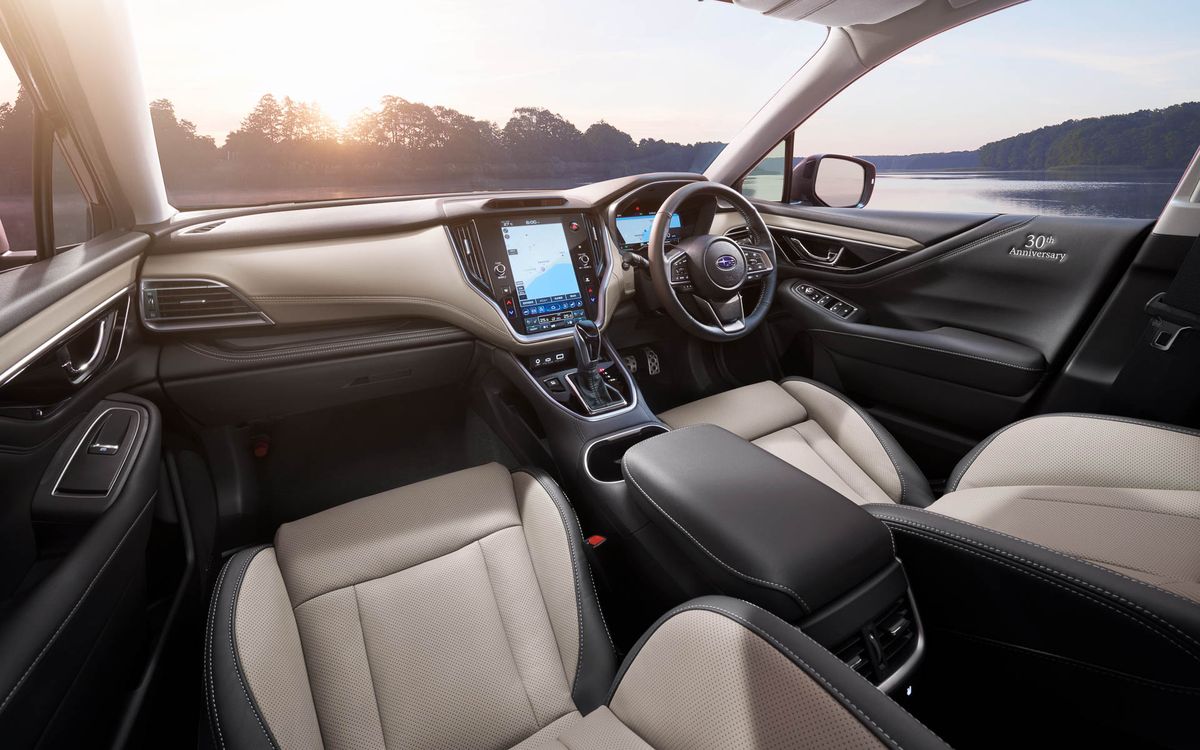
The 2026 Outback is expected to undergo a major overhaul not only on the exterior but also on the interior. The large center display that has been adopted in many new vehicles in recent years is likely to be installed in the new Outback. This will enable centralized operation of the infotainment system, vehicle settings, climate control, and more, creating a more modern and user-friendly cockpit.
It is not yet clear whether the display layout and design will follow the same direction as the recently announced new Forester, or whether the Outback will feature its own unique interface. However, many expect Subaru to continue to emphasize the physical aspects of its controls, particularly the climate control. Intuitive operability is an important factor that also contributes to safety, and for the Outback, which is intended for family use, this should be emphasized along with the use of durable materials.
Subaru’s new Outback undergoes a full model change, further improving the EyeSight driver assistance system
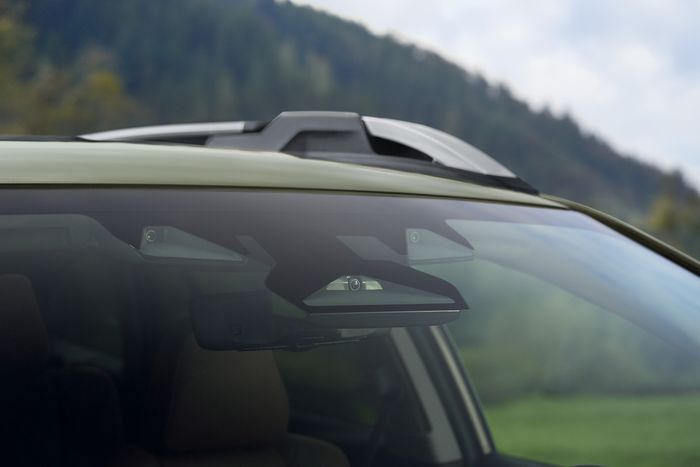
In terms of safety, Subaru’s highly acclaimed driver assistance system, EyeSight, will be further improved. The latest sensors and software will improve functions such as collision mitigation braking, adaptive cruise control, and lane departure warning, supporting safer and more comfortable driving. With competition in the ADAS (Advanced Driver Assistance Systems) market intensifying, attention will be focused on how Subaru will evolve EyeSight.
The End of the Legacy and the Future of the Outback: Subaru’s Strategic Shift
This full model change is not just a new Outback, but also marks a major turning point in Subaru’s lineup strategy. Subaru has decided to end production of the Legacy, a sedan model that has been popular for many years, in the spring of 2025. This decision reflects the global trend of the rise of the SUV market and the shrinking sedan market.
The Legacy was once the roots of the Outback, and the “Outback” nameplate was first introduced as an outdoor option package as part of the Legacy. However, as the market changed, the Outback grew into an independent model line and gained popularity in major markets such as North America and Australia. Meanwhile, Legacy sales have been sluggish in recent years, and Subaru appears to have decided to focus its management resources on the SUV segment, which is expected to see greater growth.
The end of the Legacy may be sad news for longtime fans, but the Outback’s bold evolution into an SUV style is expected to appeal to a wider customer base and further establish its position as an important model supporting Subaru’s backbone. By combining the practicality of a traditional wagon with a modern SUV design and an environmentally friendly hybrid powertrain, Subaru will strengthen its product competitiveness and aim to survive in the fierce SUV market.
Debut at the New York Auto Show and future developments
The new Subaru Outback is scheduled to have its world premiere at the New York International Auto Show on April 16, 2025, where details such as its final design, specifications, and grade configuration will be officially announced.
Sales of the new Outback are expected to begin in the second half of 2025. Until then, automotive enthusiasts and Subaru fans will be building up anticipation by imagining what the new model will look like from the teaser images and spy shots that have been released.
The reborn 2026 Subaru Outback will be launched on the market as a new-generation crossover SUV, featuring powerful SUV styling, a high-performance hybrid powertrain jointly developed with Toyota, improved off-road performance, and a modern, comfortable interior. Traditional wagon fans may have mixed feelings about the transformation, but it is expected to appeal to a wider audience and become a model that will drive new growth for Subaru. We look forward to the release of more detailed information in the future.
Subaru News Release
https://media.subaru.com/pressrelease/2302/subaru-announces-global-debut-all-new-2026-outback
Subaru