

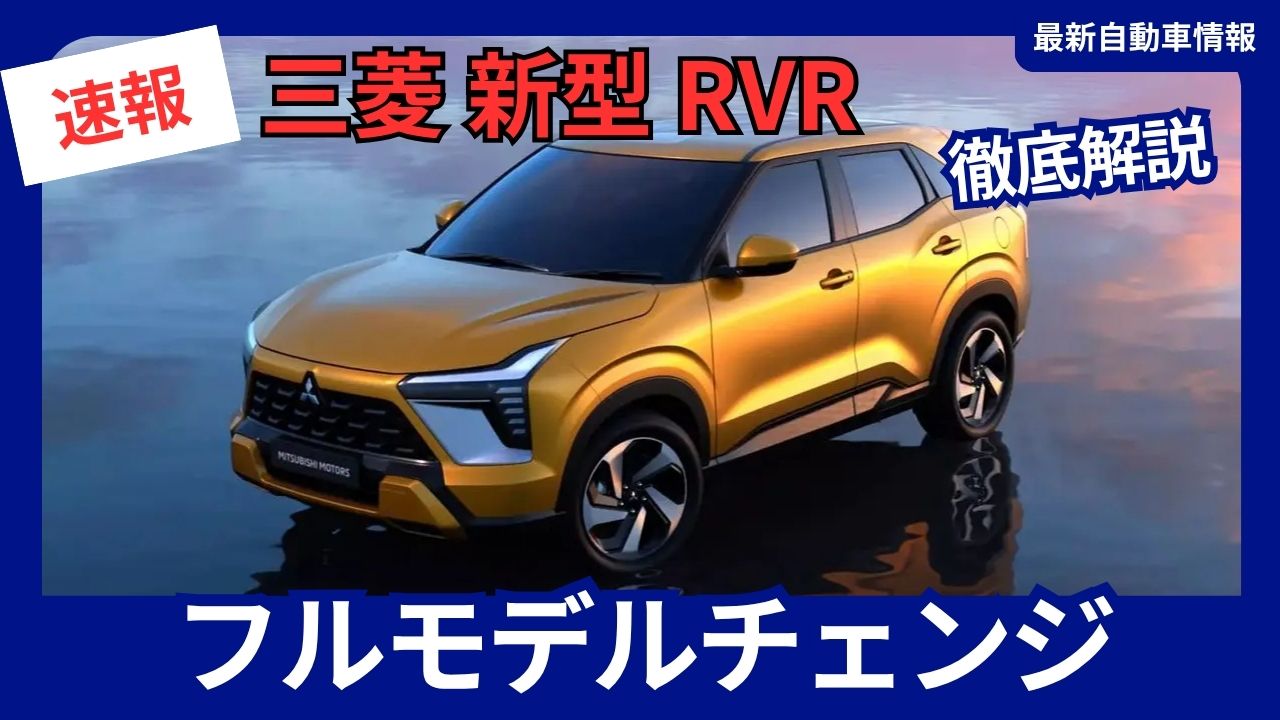
It has been revealed that Mitsubishi’s compact SUV, the RVR, which sadly ceased production in April 2024, will undergo a full model change and return to the Japanese market in the second half of 2026. The new RVR will be based on the highly acclaimed compact SUV, the XFORCE, and will be released as a strategic model optimized for the Japanese market.
The RVR, which debuted as the third generation in 2010 and has been a beloved entry-level SUV for many years, has undergone repeated improvements. Its successor, the new model, is attracting attention as a next-generation compact SUV that combines the latest technology with Mitsubishi’s renowned off-road performance.
In this article, we will thoroughly explain the latest information currently known about the new RVR, including its design, specifications, price, and release date.
Mitsubishi RVR returns with a long-awaited full model change! Summary of changes to the new RVR | What has evolved?
The new RVR is not just a facelift, but a complete redesign. The main changes are as follows:
[Major changes]
- A Japanese version of the popular “Exforce” model
- The manufacturing base is Mizushima Plant in Kurashiki City, Okayama Prefecture.
- Achieves class-leading ground clearance of 222mm (27mm more than the previous model)
- Equipped with a newly developed 1.6L hybrid system, it achieves a fuel efficiency of 24.4km/L (overseas reference value).
- Uses Mitsubishi’s unique strong hybrid technology derived from PHEV
- Improved sophistication with a large 12.3-inch dual display
- Equipped with the “Dynamic Sound Yamaha Premium” audio system, jointly developed with Yamaha
- Seven drive modes to accommodate a variety of road conditions
- The possibility of Nissan e-POWER being installed is also suggested.
These changes have enabled the new RVR to address the issues with the previous model and give it the product strength to compete on equal terms with strong rivals such as the Yaris Cross and Vezel.
New RVR exterior design: Styling that combines toughness and innovation
The evolved “Dynamic Shield” creates a powerful front mask
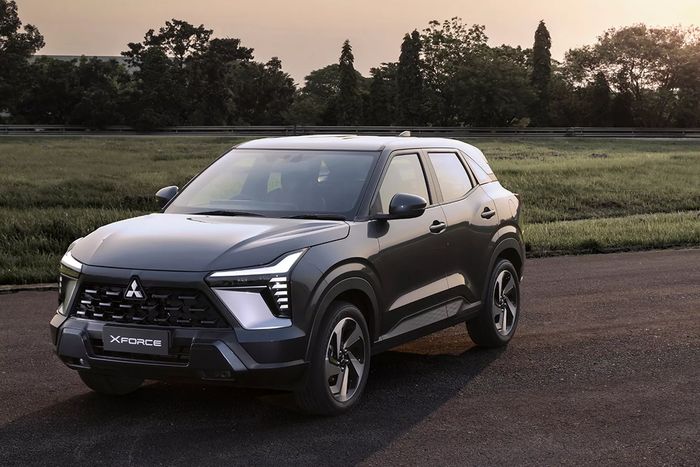
Mitsubishi Xforce
The exterior design of the new RVR further evolves Mitsubishi’s design identity, “Dynamic Shield.” The three-dimensional design, in which the left and right bumpers powerfully protect the front grille, emphasizes depth and sportiness. The T-shaped LED headlights and daytime running lights create a bold look, giving the car a striking presence even in urban areas.
The Japanese model is expected to have a specially designed front grille pattern and LED light design, which will result in a sophisticated front face that blends in with Japanese cityscapes while retaining the powerful look of the overseas model.
Sleek side view and floating roof
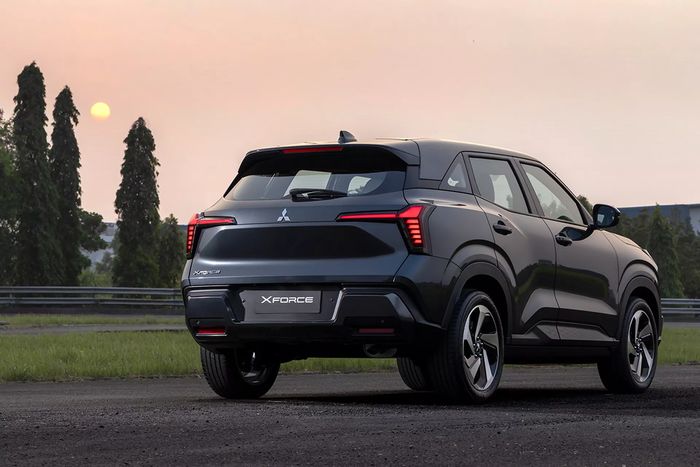
xforce
The body side is based on the “Silky & Solid” concept, combining elegance and robustness. The flowing character lines that run from the three-diamond emblem on the front to the sides and rear create a smooth and light impression.
The “floating roof design” gives the car a stylish, urban feel while maintaining the powerful presence of an SUV. The lower body has the solid proportions of an SUV, and the large 18-inch wheels tighten up the feet, giving it the presence of a full-fledged SUV.
Muscular fenders and high ground clearance emphasize activeness
A key feature of the new RVR is its class-leading ground clearance of 222mm. This high ground clearance visually accentuates the powerful SUV look and gives the driver a sense of security that they can tackle any road.
Combined with the muscular, protruding fenders, it gives the car the appearance of a full-fledged SUV that can also be used in outdoor scenes.
New RVR interior design: An interior space that combines advanced equipment and comfort
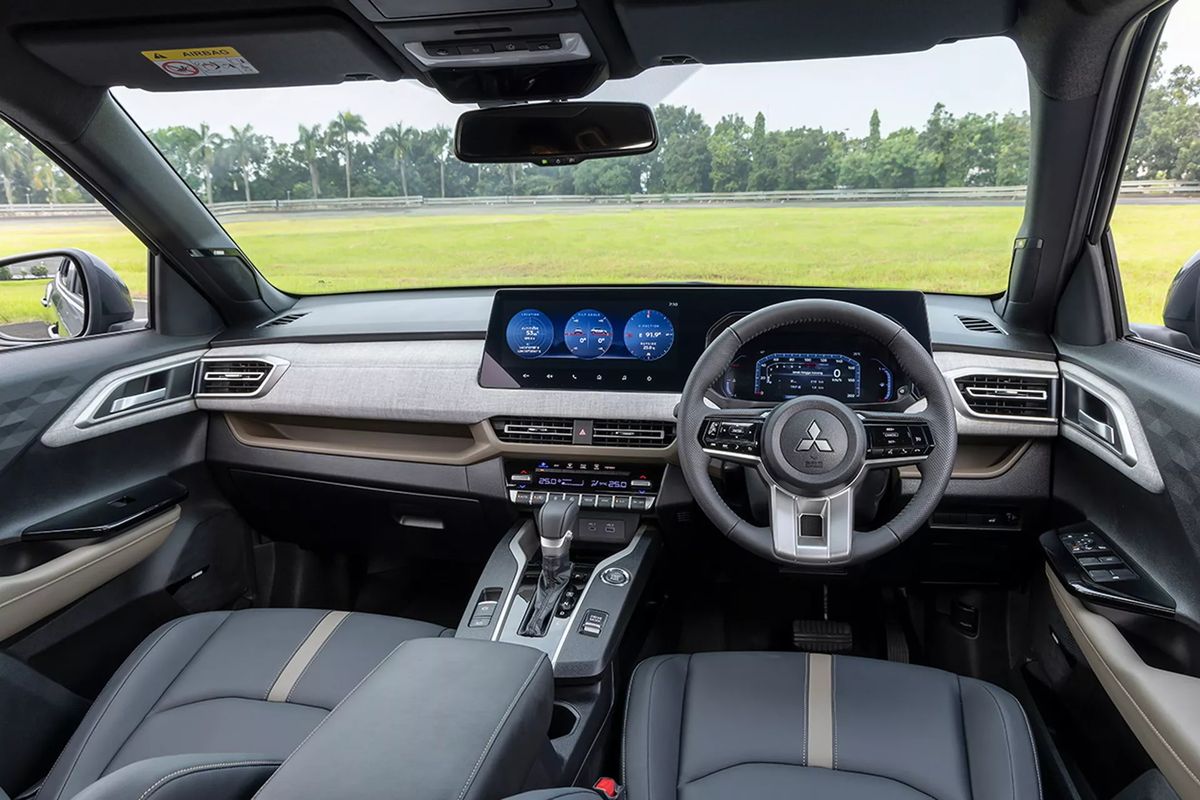
Horizontal Axis concept
xforce
The interior of the new RVR adopts the horizontally-oriented “HORIZONTAL AXIS” concept. The instrument panel extends horizontally, providing excellent forward visibility and an open feeling of space.
This horizontal design also has the practical benefit of allowing the driver to intuitively grasp changes in the vehicle’s posture when driving on rough roads, etc. The dynamic shape that continues into the door trim creates a spacious and comfortable interior space.
12.3-inch dual display for improved sophistication
Located in the center of the instrument panel is a large monolithic panel that combines a 12.3-inch smartphone-linked display audio and a 12.3-inch digital driver display. The screen is divided into three sections and equipped with a multi-widget function that can display multiple pieces of information simultaneously, greatly improving visibility and operability.
The latest infotainment system, which supports smartphone connectivity with Apple CarPlay and Android Auto, allows for intuitive operation of navigation, music, calls, and more, supporting a comfortable drive.
High-quality audio system jointly developed with Yamaha
One of the major attractions of the new RVR is the “Dynamic Sound Yamaha Premium” audio system, jointly developed with Yamaha. It maximizes speaker performance with sound quality improvements optimized for the unique acoustic space of a vehicle cabin.
One feature worth mentioning is the automatic adjustment of not only the volume but also the sound quality itself according to the vehicle speed.Even on rough roads or at high speeds, you can enjoy dynamic bass and clearly defined mid- and high-range sounds, creating a comfortable sound environment that won’t tire you out even on long drives.
Interior space and seat layout that also takes practicality into consideration
The rear seats are split-foldable in a 4:2:4 ratio, ensuring high practicality by allowing long items to be loaded even when four people are on board. The materials used are carefully selected, and stain-resistant fabrics are used, while still maintaining a modern and sophisticated texture.
The spacious interior is described as “best in its class,” providing comfort that can be used in a wide range of situations, from everyday use to leisure.
The new RVR’s body size: an exquisite size that’s perfect for Japanese roads
Body size compared to rivals
[Body size of the new RVR]
- Total length: 4,390mm
- Overall width: 1,810mm
- Overall height: 1,660mm
- Wheelbase: 2,650mm
- Minimum ground clearance: 222mm
- Approach angle: 21 degrees
- Ramp break angle: 20.5 degrees
- Departure angle: 30.5 degrees
- Wheel size: 18 inches
[Reference: Previous model RVR]
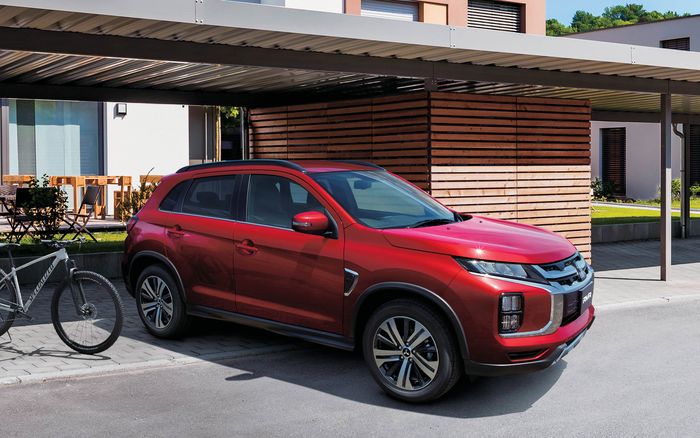
RVR
- Total length: 4,365mm
- Overall width: 1,770mm
- Overall height: 1,630mm
- Wheelbase: 2,670mm
- Minimum ground clearance: 195mm
[Reference: Eclipse Cross]
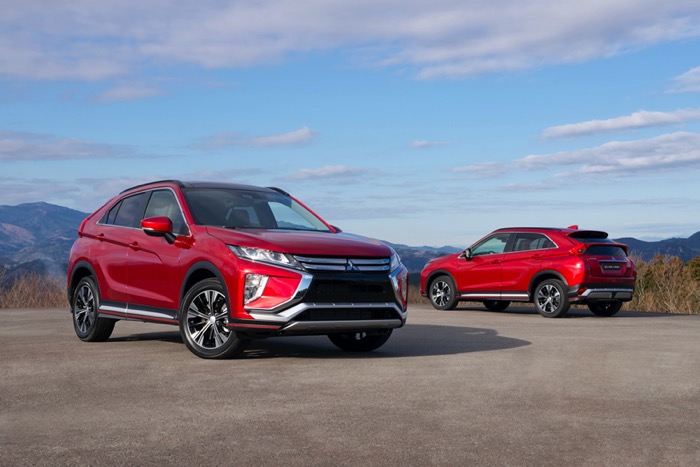
mitsubishi-eclipse-cross-
- Total length: 4,545mm
- Overall width: 1,805mm
- Overall height: 1,685mm
- Wheelbase: 2,670mm
- Minimum ground clearance: 175mm
The new RVR is slightly larger than the previous model, increasing its overall length by 25mm, its width by 40mm, and its height by 30mm. However, it maintains an exquisite size that takes into account the road conditions in Japan, ensuring its usability as a compact SUV that is easy to handle even in narrow alleys and parking lots.
Best-in-class off-road performance
The new RVR’s greatest asset is its class-leading ground clearance of 222mm, an increase of 27mm from the previous model, far exceeding rival vehicles in its class.
Furthermore, with an approach angle of 21 degrees and a departure angle of 30.5 degrees, it can handle large bumps and steep slopes. It provides a sense of security on rough roads, such as unpaved roads at campsites or deep ruts on snowy days. It’s a vehicle you can rely on not only for everyday use in urban areas, but also for weekend outdoor leisure activities.
New RVR powertrain | Three engine options and a notable hybrid
[Gasoline] 1.5L MIVEC engine
The entry-level model is equipped with Mitsubishi’s proud 1.5L in-line 4-cylinder gasoline engine. The “MIVEC (Mitsubishi Innovative Valve timing Electronic Control system)” mechanism continuously changes the intake valve lift to suppress intake resistance. By reducing energy loss during intake, it achieves excellent fuel efficiency.
[1.5L gasoline engine specifications]
- Engine type: Inline 4-cylinder 1.5L gasoline
- Maximum output: 105ps
- Maximum torque: 14.4kgm
- Transmission: CVT
- Drive system: FF (front-wheel drive)
- Estimated fuel economy: 18.0km/L
It offers ample power and reliability for everyday use, making it the perfect choice for cost-conscious users.
[Favorite] 1.6L Hybrid | New generation system derived from PHEV
The main feature of the new RVR is a strong hybrid system derived from the PHEV, combining a newly developed 1.6L inline 4-cylinder engine with an electric motor. This unique hybrid system was newly developed by applying the plug-in hybrid technology Mitsubishi has cultivated in the Outlander PHEV and Eclipse Cross PHEV.
[1.6L Hybrid Specifications]
- Engine type: Inline 4-cylinder 1.6L gasoline
- Engine output: 95ps/13.7kgm
- Motor output: 116ps/26.0kgm
- Drive system: FF (front-wheel drive)
- Estimated fuel economy: 24.4km/L (overseas reference value)
High expansion ratio cycle maximizes combustion efficiency
The newly developed 1.6L engine uses a high expansion ratio cycle (Atkinson cycle) to significantly improve combustion efficiency. Furthermore, the adoption of an electric water pump reduces mechanical loss and is designed to maximize energy utilization.
The drive battery is located under the front seat floor, maintaining a spacious interior without sacrificing passenger space. The motor’s high torque (26.0 kgm) delivers powerful acceleration when starting and overtaking, while also achieving excellent fuel economy of 24.4 km/L.
Seven drive modes to accommodate a variety of driving situations
The new RVR Hybrid offers seven drive modes to optimize driving control for different road conditions:
[EV mode]
- EV driving priority mode
- Quietness-focused mode
[Road surface mode]
- Normal mode
- Gravel mode (gravel road)
- Mud Mode
- Sand mode (sand)
- Snow mode (snowy roads)
These modes integrate Active Yaw Control (AYC), traction control, power control and power steering control to maximize stability and control in all road conditions.
[Expectations] Possibility of Nissan e-POWER being installed
Given the alliance between Mitsubishi and Nissan, it has been suggested that the new RVR may be equipped with Nissan’s advanced e-POWER technology. If the quiet and powerful driving characteristic of e-POWER, which uses the engine only to generate electricity and runs 100% on the motor, is realized, the product appeal of the new RVR will be further enhanced.
e-POWER has already received high praise in the Note and Kicks, and if this technology is installed in a Mitsubishi vehicle, it will be a big topic in the industry. Attention will be focused on the official announcement in the future.
New RVR fuel economy: Significant improvement from previous model
The new RVR employs the latest powertrain technology to significantly improve fuel economy.
[Expected fuel economy of the new RVR]
- 1.5L gasoline: 18.0km/L
- 1.6L Hybrid: 24.4km/L (overseas reference value)
[Reference: Fuel economy of previous model RVR]
- 1.8L gasoline FF: 13.8km/L
- 1.8L gasoline 4WD: 12.8km/L
The previous model’s 1.8L gasoline engine had a maximum fuel efficiency of 13.8km/L, but the new 1.5L gasoline engine achieves an improvement of over 4km/L. The hybrid model’s excellent environmental performance of over 20km/L allows for significant reductions in daily running costs.
If you drive 10,000 km per year and assume gasoline prices are 170 yen/L:
- Previous model (13.8km/L): Approximately 123,000 yen per year
- New gasoline (18.0km/L): Approximately 94,000 yen per year (saving approximately 29,000 yen)
- New hybrid (24.4km/L): Approximately 70,000 yen per year (saving approximately 53,000 yen)
In the long term, the economic benefits of improved fuel economy are enormous.
Advanced safety features of the new RVR | Equipped with Mitsubishi’s latest technology
The new RVR is expected to be generously equipped with Mitsubishi’s latest safety technology.
[Expected main safety features]
- Forward Collision Mitigation Braking System (FCM)
- Lane Departure Warning System (LDW)
- Automatic High Beam (AHB)
- Rear/side vehicle detection warning system (BSW)
- Reverse Traffic Alert System (RCTA)
- Adaptive Cruise Control (ACC)
- 360-degree omnidirectional monitor
- Blind Spot Monitor
- Parking sensors
These advanced safety features provide a high level of safety and peace of mind, from everyday driving to long drives.
New RVR price forecast | Competitive strategic pricing
The new RVR is expected to be priced strategically to be competitive with rival models.
[Expected price of the new RVR]
- 1.5L gasoline: 2.4 million to 2.5 million yen
- 1.6L Hybrid: 2.8 million to 3.2 million yen
[Reference: Price of previous model RVR]
- 2.3 million yen to 2.83 million yen
[Reference: Prices of rival models]
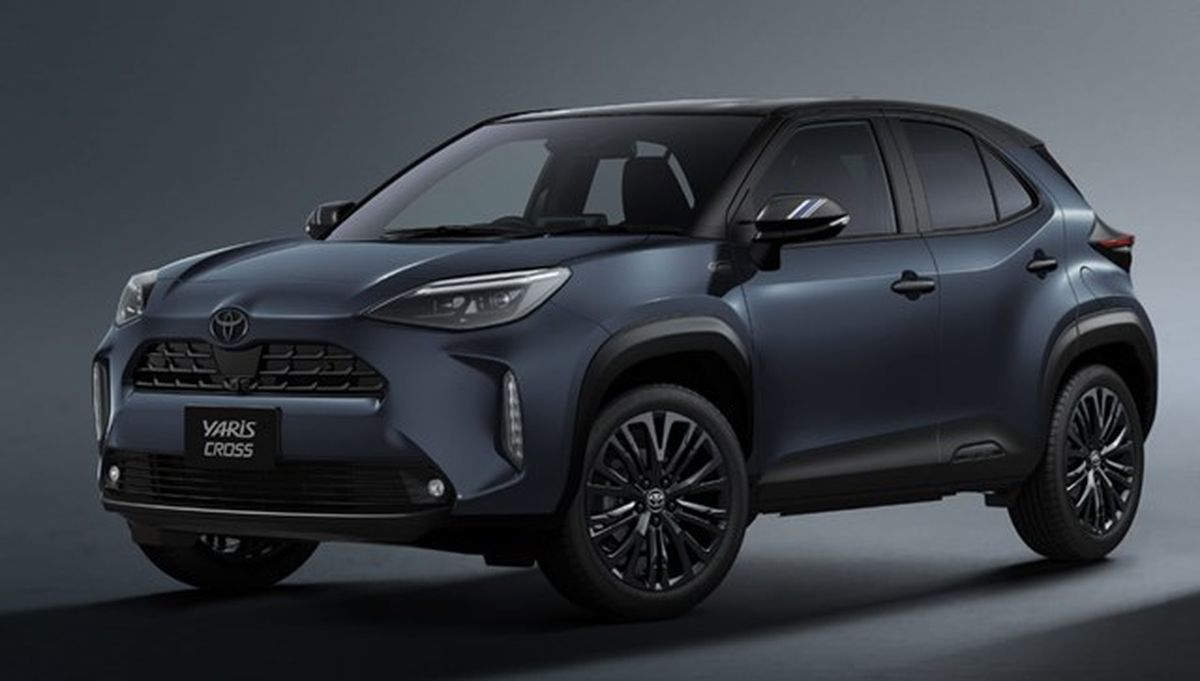
Yaris Cross
- Toyota Yaris Cross
- Gasoline: from 1.99 million yen
- Hybrid: from 2.32 million yen
- Honda Vezel
- Gasoline: from 2.39 million yen
- e:HEV: from 2.79 million yen
- Mitsubishi Eclipse Cross
- Gasoline: from 2.77 million yen
- PHEV: from 4.09 million yen
The new RVR will be equipped with high-quality features such as a class-leading ground clearance of 222mm, a premium audio system jointly developed with Yamaha, and a 12.3-inch dual display, and is expected to be priced as attractively as or even more attractively than the Yaris Cross and Vezel.
The hybrid model in particular offers excellent cost performance, considering its excellent fuel economy of 24.4km/L.
New RVR release date: Late 2026, around December most likely
The fully redesigned Mitsubishi RVR is most likely to be released in Japan in the second half of 2026, specifically around December .
Overseas, the model has already been released in Indonesia as Exforce in November 2023, and is now being rolled out to global markets such as the Philippines, Vietnam, Central and South America, the Middle East, and Africa. For the Japanese market, feedback gained from these overseas launches will be reflected in a special specification optimized for Japanese traffic regulations and market needs.
The production will take place at the Mizushima Plant in Kurashiki, Okayama Prefecture, and development is reportedly progressing smoothly. The official announcement is likely to be made in the first half of 2026, with the official release expected several months later.
As Mitsubishi’s long-awaited strategic model for the Japanese compact SUV market in 2026, it is sure to attract a great deal of attention.
The History of the Mitsubishi RVR | From the First to the Third Generation
First-generation RVR (1991-1997) | The driving force behind the RV boom
The first-generation RVR was released in 1991. The name “RVR” comes from the initials of “Recreation Vehicle Runner” and embodied the concept of a car for enjoying vacations.
The seven-seater wagon “Chariot” was developed as a wagon with a shortened body and an SUV feel. Its single-sided sliding door, spacious interior for five people, reasonable size, and design that matched the RV boom made it popular. Its high practicality, targeted primarily at urban areas, was highly praised, and it became a hit for Mitsubishi.
Second-generation RVR (1997-2002) | Features sliding doors on both sides
The second generation, which appeared in 1997, was based on the Chariot Grandis and featured a shorter body. The lineup included the 5-number size GDI RVR and the 3-number size RVR Sports Gear.
In response to strong customer requests, a minor change in 1999 added sliding doors on both sides. This significantly improved usability and attracted support from families. The car was produced until 2002, but no successor model was introduced, and the name was temporarily discontinued.
Third-generation RVR (2010-2024) | Transformation into a compact SUV
The third generation, which revived the name for the first time in eight years, was released in 2010. It completely changed from the sliding doors used in the first and second generations to hinged doors, and the concept shifted dramatically from a minivan to an SUV.
Sold overseas as the “ASX (Active Sports Crossover)” and “Outlander Sport,” it is also available in global markets. Equipped with the 1.8L engine of the base model, the Galant Fortis, it offers a comfortable ride thanks to its MacPherson strut front suspension and multi-link rear suspension.
The 4WD model uses an electronically controlled 4WD system with three modes: 2WD, 4WD Auto, and 4WD Lock. It served as Mitsubishi’s entry-level SUV for many years, but sales stagnated due to the competitive nature of the SUV market, and production was discontinued in April 2024.
Comparing the new RVR with rival models: What makes it better?
Comparison with Toyota Yaris Cross
[Strengths of Yaris Cross]
- Toyota brand reliability
- Low price (gasoline from 1.99 million yen)
- Extensive dealer network
- Wide range of colors
[Advantages of the new RVR]
- Ground clearance: 222mm (Yaris Cross: 175mm)
- High off-road performance
- Yamaha Premium Audio
- 12.3-inch dual display
- Hybrid fuel economy: 24.4km/L
Comparison with Honda Vezel
[Strengths of the Vezel]
- Sophisticated design
- e:HEV driving performance
- Spacious interior space
- Enhanced Honda Sensing
[Advantages of the new RVR]
- Full-scale SUV performance
- Peace of mind on rough roads
- Practical for outdoor activities
- 7 drive modes
- Tough design
The new RVR is a one-of-a-kind vehicle that combines the refinement of an urban SUV with genuine off-road performance, making it the perfect choice for users who want to seriously enjoy outdoor leisure activities on the weekend.
Summary | Will the new RVR become the center of attention in the compact SUV market?
The new RVR, which Mitsubishi will launch in the second half of 2026, is a strategic model based on the X-Force, which has received high praise overseas, and optimized for the Japanese market.
Mitsubishi Motors