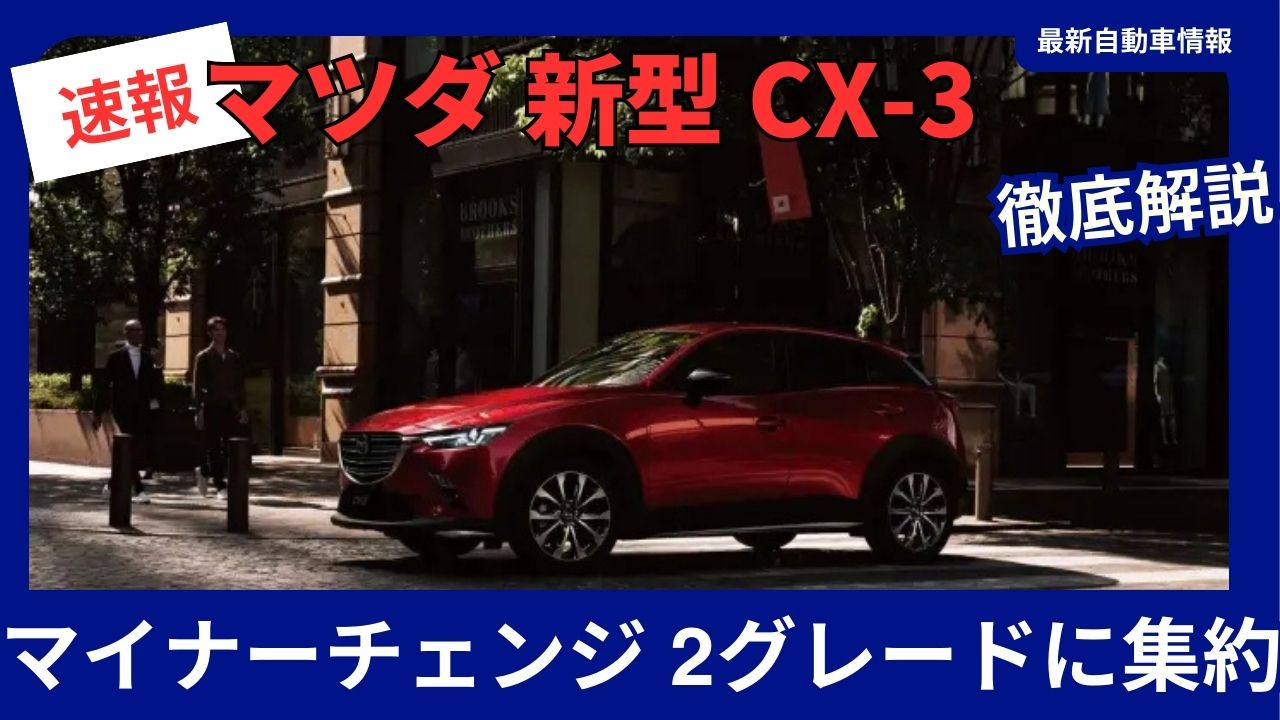

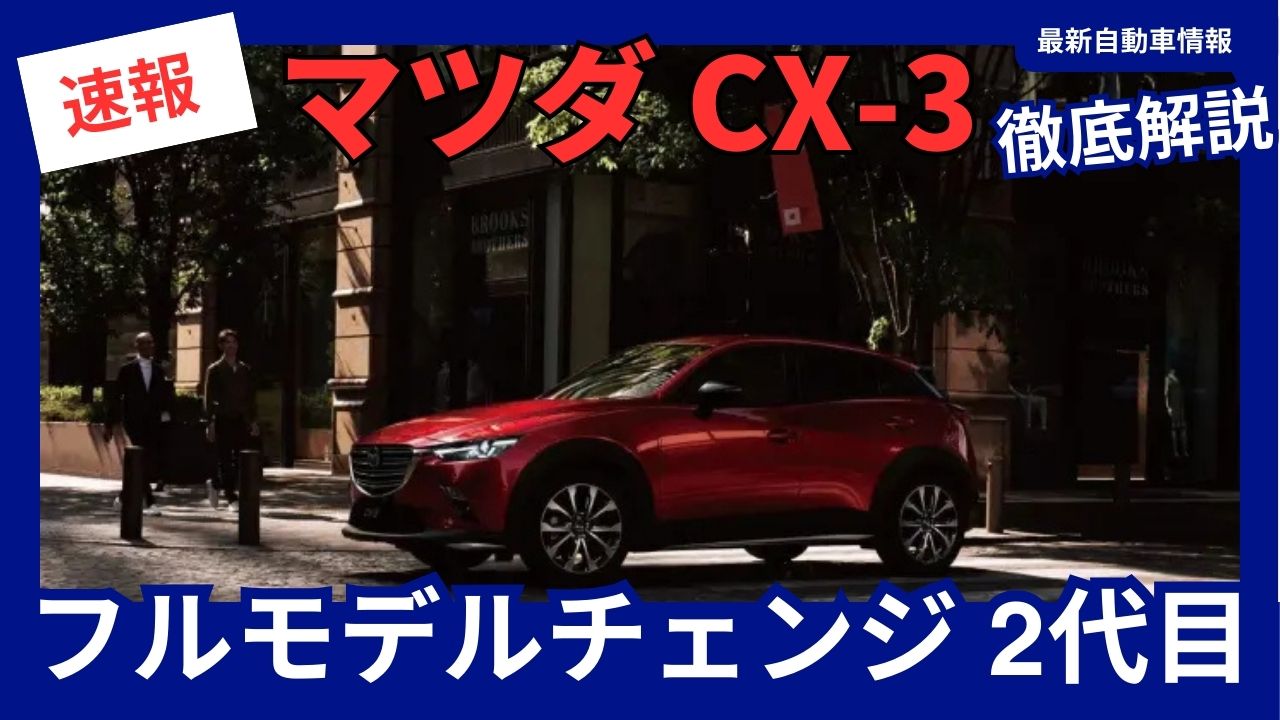
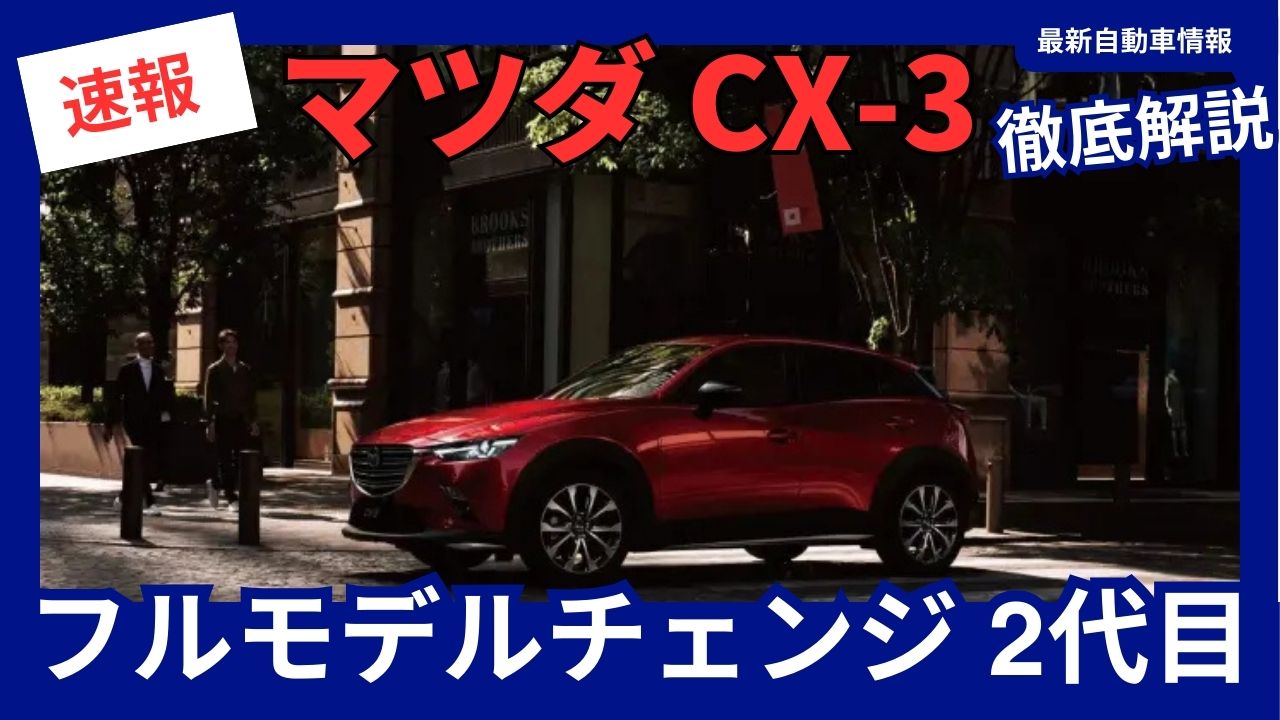
Mazda’s pride and joy, the CX-3, a compact crossover SUV, is undergoing a full model change and is scheduled for release in 2026. This model will see increased electrification, and is expected to adopt the e-SKYACTIV X mild hybrid and the e-SKYACTIV R-EV rotary EV model found in the MX-30. The previous model went on sale in 2015, and this will be the first full model change in exactly 10 years. We will explain in detail what kind of model the next-generation model will be.
More information on the new CX-3
Exterior design
- Sharp and sophisticated design based on Mazda’s design philosophy, “KODO – Soul of Motion”
- Sporty coupe SUV style
- The sloping rear window creates a sleek silhouette.
- The dedicated guard on the bottom of the vehicle adds a powerful accent.
Interior design
- A high-quality space that combines the latest technology with high-quality materials
- Expanded rear seat and luggage space for improved comfort and practicality
- Touch-enabled infotainment system
- Latest digital meter
- Fewer operation buttons give the device a simple and sophisticated look
Powertrain
- Newly developed 1.5L inline 3-cylinder gasoline engine and diesel engine
- Adopting a mild hybrid system to improve fuel efficiency
- A three-cylinder version of the “SKYACTIV-X” engine, which boasts the world’s highest level of environmental performance, is also available.
- Expectations are high for the adoption of the rotary EV model “e-SKYACTIV R-EV” that is installed in the MX-30.
safety equipment
- The advanced safety system “i-ACTIVSENSE” is standard equipment on all vehicles.
- Equipped with the latest safety features such as traffic jam assistance and forward cross traffic warning
- “Advanced SCBS Nighttime Pedestrian Detection Function” improves nighttime pedestrian recognition accuracy
Body size
- Total length x width x height: 4310 x 1765 x 1540mm
- Wheelbase: 2600mm
- The overall length and wheelbase have been extended compared to the current model, resulting in relaxed proportions and a spacious interior.
fuel economy
- Gasoline model: 21km/L
- Diesel model: 26km/L
- Plug-in hybrid model: 20km/L (in hybrid mode)
- The latest powertrain significantly improves fuel economy
price
- From 2.4 million yen
- The price is higher than the current model due to the adoption of the latest equipment.
- The plug-in hybrid model will be the highest grade and is expected to cost around 4 million yen.
release date
- 2026
Mazda CX-3 Second-Generation Full Model Change
The CX-3’s exterior further evolves Mazda’s latest design philosophy, “KODO – Soul of Motion,” with a sharper, more refined design. It features a deeply sculpted front fascia with an aggressive rear end. The chassis also employs Mazda’s next-generation vehicle structural technology, “SKYACTIV-Vehicle Architecture,” and is equipped with the new “e-SKYACTIV-G” engine, which combines the 2.0L direct-injection gasoline engine “SKYACTIV-G 2.0” with the “M HYBRID” mild hybrid system. This combination delivers a maximum output of 115kW (156PS) at 6,000 rpm and a maximum torque of 199Nm (20.3kgfm) at 4,000 rpm. The unique “M HYBRID” mild hybrid system delivers quiet, smooth acceleration, a premium driving feel, and fuel-efficient driving.
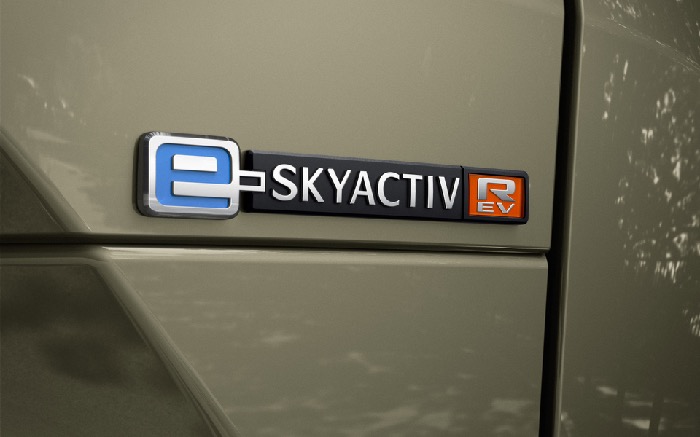
The new model will also be equipped with the e-SKYACTIV R-EV , which uses a rotary engine for power generation . This model employs a single rotary engine generator in the e-SKYACTIV, adopting a “power-generating rotary engine” model designed to double the driving range . Combined with a 17.8 kWh lithium-ion battery and a 50-liter fuel tank, the WLTP range will be approximately 640 km.
The expansion plan for the crossover SUV product group from 2022 onwards, announced on October 7, 2021, outlined a policy to enhance the lineup of large products and mid-size crossover SUVs. For Europe and Japan, where roads and parking lots are relatively narrow, the two-row “CX-60” and the three-row “CX-80” will be offered. Meanwhile, for markets such as North America, where larger size and presence are required, the wide-body two-row “CX-70” and the three-row “CX-90” will be introduced. This is expected to provide variations tailored to demand in each region and meet customer needs.
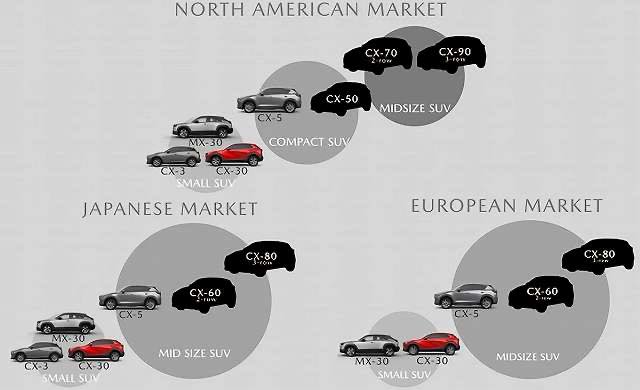
In the Japanese market, the CX-8 has been discontinued and the CX-60 and CX-80 have been added to the lineup. Additionally, the CX-3, MX-30, and small SUVs like the CX-30 are also in the lineup. This broad lineup helps Toyota meet diverse customer needs and increase its competitiveness in the market.
Mazda’s second-generation CX-3 features numerous new technologies
Mazda’s next-generation technology, “SKYACTIV TECHNOLOGY,” and next-generation gasoline engine, “SKYACTIV-X,” incorporate Mazda’s “Kodo-Soul of Motion” design philosophy. In addition, Mazda’s vehicle structural technology, “SKYACTIV-Vehicle Architecture,” is also adopted. The combination of these technologies delivers refined dynamic performance in all directions.
Mazda’s second-generation new “CX-3” exterior
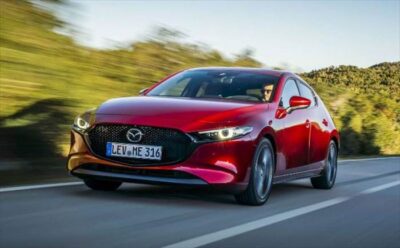
The exterior will fully adopt the “Kodo – Soul of Motion” design theme, resulting in a sharper look. We can expect a front design similar to that of the new Mazda3, new CX-60, and new CX-80.
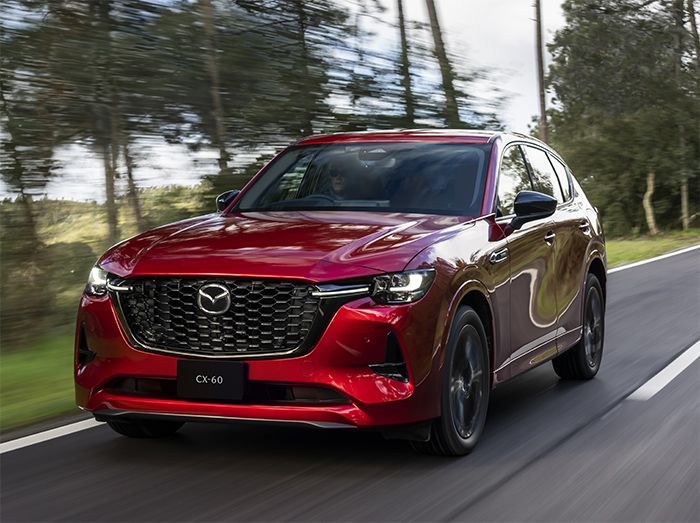
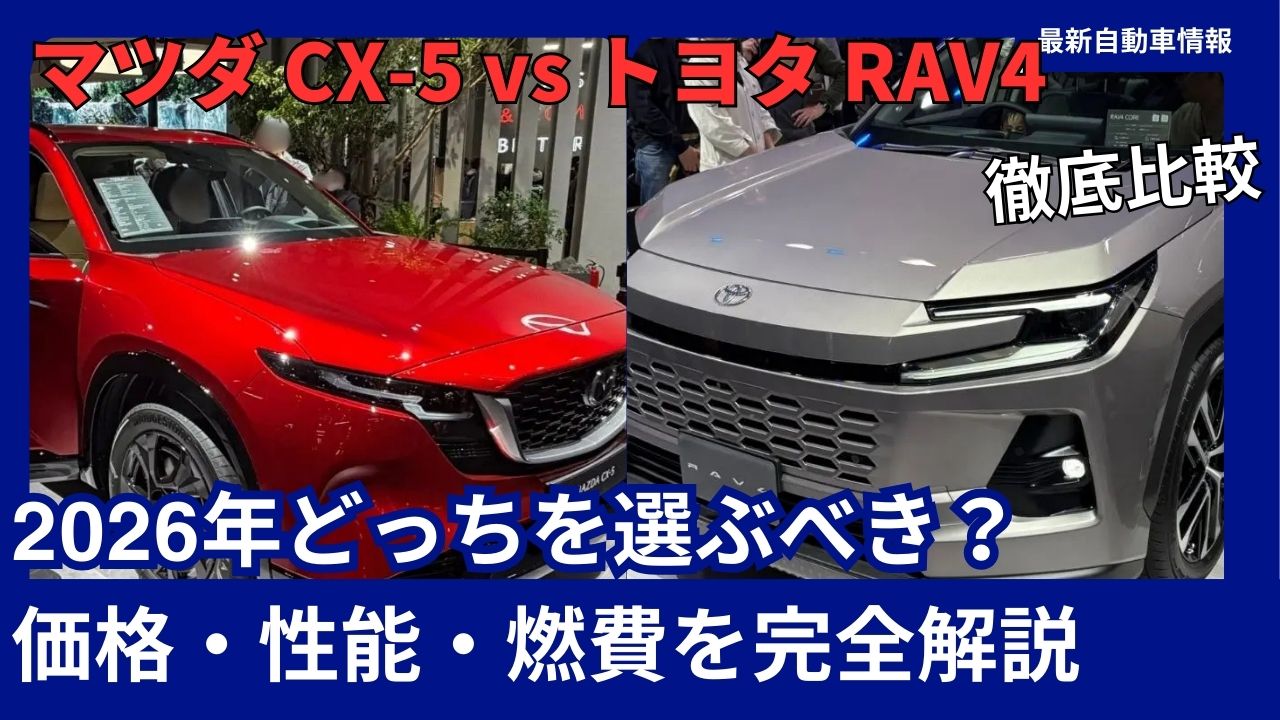
CX-60
Mazda’s second-generation new “CX-3” interior
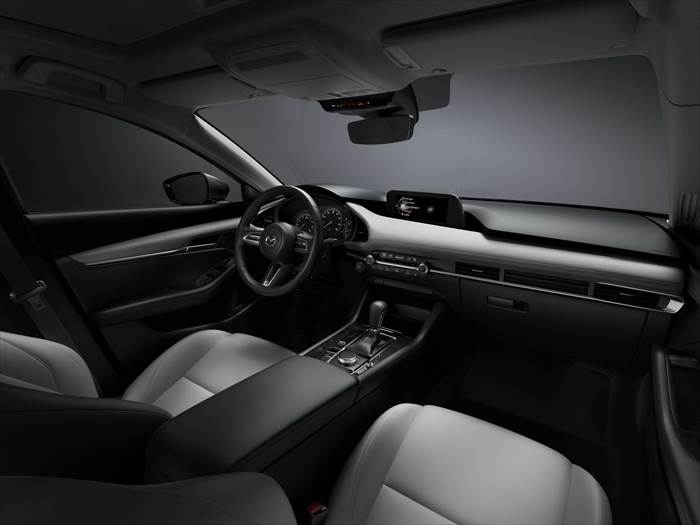
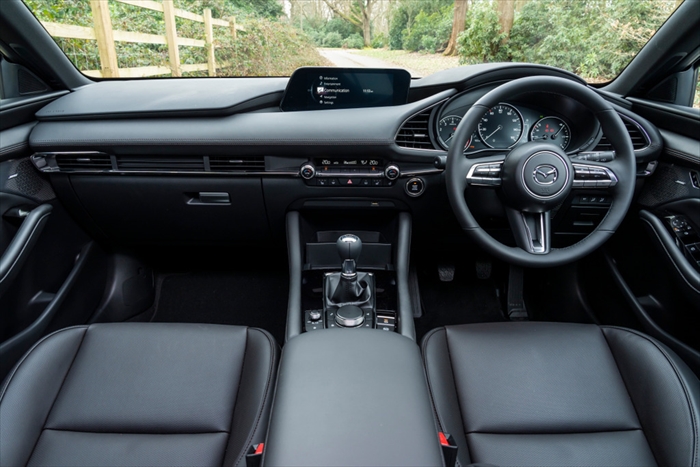
The interior, like the new Mazda3 , features an LCD meter panel and the latest “New Mazda Connect” 8.8-inch TFT infotainment system. This system also supports “Android Auto” and “Apple CarPlay.” “New Mazda Connect” does not have a touch panel, and all operations are performed using the commander control. It also has USB and 12V connections.
Mazda’s second-generation CX-3 now comes standard with next-generation i-ACTIVSENSE advanced safety technology
The new CX-3 will come standard with i-ACTIVSENSE technology. Additionally, the Advanced Smart City Brake Support (Advanced SCBS) will now include night-time pedestrian detection. Some of the latest safety features include:
- Blind Spot Monitoring (BSM)
- Traffic Sign Recognition System (TSR)
- Front Cross Traffic Alert (FCTA)
- Rear Cross Traffic Alert (RCTA)
- Smart City Brake Support [Reverse] (SCBS R) (Automatic transmission only)
- Rear parking sensors (center/corner)
- Advanced Smart City Brake Support (Advanced SCBS) (with night-time pedestrian detection function)
- AT false start prevention control [forward] (AT vehicles only)
- Advanced lighting (High Beam Control System (HBC), Adaptive LED Headlights (ALH))
- Lane Departure Warning System (LDWS)
- Traffic Jam Assist (TJA)
- Lane Keep Assist (LAS)
- Driver Monitoring (DM)
These advanced safety features are expected to help recognize dangers around the vehicle and support safe driving.
Mazda’s second-generation CX-3 powertrain
The new CX-3 will be equipped with the e-SKYACTIV-G, a combination of the 2.0L direct-injection gasoline engine “SKYACTIV-G 2.0” and the mild hybrid system “M HYBRID.” This engine delivers a maximum output of 115kW (156PS) at 6,000 rpm and a maximum torque of 199Nm (20.3kgfm) at 4,000 rpm. It also features the unique mild hybrid system “M HYBRID.” This system combines a maximum output of 5.1kW (6.9PS) at 1,800 rpm and a maximum torque of 49Nm (5.0kgfm) at 100 rpm, delivering quiet, smooth acceleration, a premium driving feel, and contributing to low fuel consumption. WLTC mode fuel economy is 15.5km/L to 16.2km/L. Equipment for each grade will also be revised.
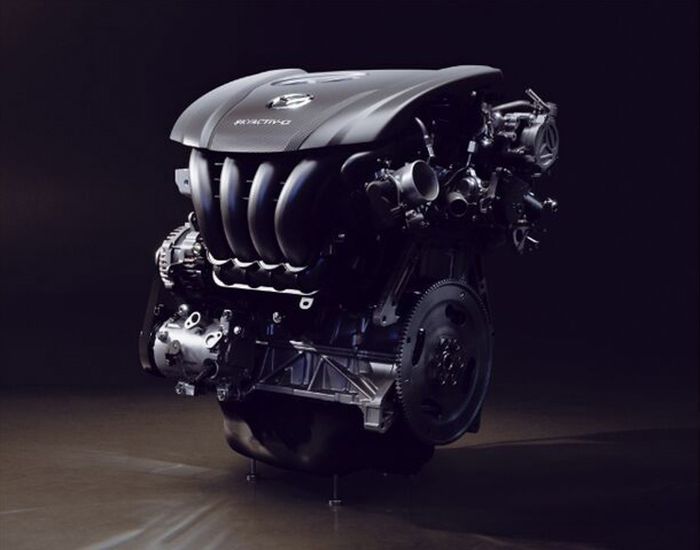
e-SKYACTIV G
Additionally, the new CX-3 will also have a rotary EV model in its lineup. This rotary EV is powered by a single-rotor, 830cc rotary engine developed by Mazda for use in PHEVs (plug-in hybrid vehicles). In this series hybrid system, the engine is dedicated to generating electricity. Nissan calls this the “series system (range extender)” and is known as “e-POWER,” and it is currently gaining popularity in terms of sales.
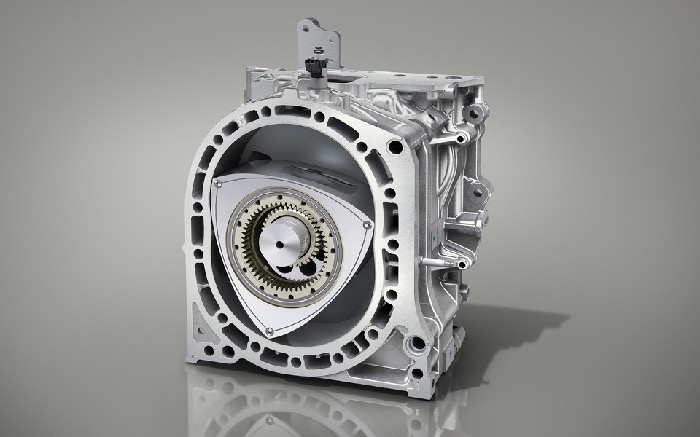
Mazda 2nd generation new “CX-3” specifications
| Specifications | CX-3 e-SKYACTIV-X |
|---|---|
| engine | 2.0L inline 4-cylinder engine |
| Maximum power | 140kW (190PS) / 6,000rpm |
| Maximum torque | 240Nm (24.4kgm) / 4,500rpm |
| Motor maximum output |
4.8kW (6.5PS) / 1,000rpm |
| Motor Max Torque |
61Nm (6.2kgfm) / 100rpm |
| Drive system | 2WD/4WD |
| mission | 6 speed AT |
| Specifications | CX-3 Rotary-EV |
|---|---|
| engine | Water-cooled 1 rotor |
| Maximum engine output | 72ps (53kW) / 4,500rpm |
| Maximum engine torque | 112Nm/4,500rpm |
| Motor maximum output | 170ps (125kW) |
| Motor Max Torque | 260Nm |
| battery | Lithium-ion 17.5 kWh |
| Drive system | 2WD |
| Passenger capacity | 5 people |
| WLTC mode fuel economy | 15.4km/L |
| WLTC EV range | 107km |
Mazda’s second-generation new “CX-3” hybrid system
The rotary EV’s series hybrid system consists of the following mechanisms.
Split system/series-parallel system (strong hybrid, hybrid, PHEV)
In the series-parallel system, the engine and motor are used as both power sources, with the motor mainly driving the vehicle when starting or driving at low speeds, and the engine starting to assist driving when the vehicle exceeds a certain speed or when accelerating suddenly. This improves fuel efficiency, but the base price tends to be higher than that of a regular gasoline model.
Parallel system (mild hybrid)
In a parallel system, the engine and motor always operate simultaneously, with the engine providing the primary driving force and the motor playing a supporting role. The motor has a relatively low output and the battery is small. The advantage of this system is that it is expected to improve fuel efficiency, while also allowing the benefits of hybrid technology to be enjoyed without significantly increasing the vehicle price.
Series system (each company has its own name)
In a series hybrid vehicle, the engine is primarily used to generate electricity, with only the motor providing driving force. The vehicle runs on power supplied from the battery, and when the battery runs low, the engine automatically generates electricity to replenish the power. As such, series hybrid vehicles can run without needing to be charged, and are therefore commonly known as “battery-free electric vehicles (BEVs).” The driving sensation is similar to that of an electric vehicle, with distinctive driving characteristics and the ability to accelerate and decelerate using only the accelerator pedal.
CX-3 full model change price forecast
The current 2024 CX-3 model is priced between 2,279,200 and 3,434,200 yen, but there is no doubt that prices will be revised when the new model is released. In particular, the new CX-3 will likely see a significant price increase as it will have more features and a full hybrid model than its predecessor.
CX-3 2024 model price
| grade | engine | transmission |
Drive system |
Price (10%) |
|---|---|---|---|---|
| 15S Touring | SKYACTIV-G1.5 | 6EC-AT | 2WD | 2,279,200 yen |
| 4WD | 2,521,200 yen | |||
| 15S Urban Dresser | 2WD | 2,532,200 yen | ||
| 4WD | 2,774,200 yen | |||
| 15S Vivid Monotone | 2WD | 2,708,200 yen | ||
| 4WD | 2,950,200 yen | |||
| XD Touring | SKYACTIV-D 1.8 | 2WD | 2,796,200 yen | |
| 4WD | 3,038,200 yen | |||
| XD Vivid Monotone | 2WD | 3,192,200 yen | ||
| 2WD | 3,434,200 yen |
When will the new CX-3 be fully redesigned?
The CX-3 is expected to undergo a final minor product improvement in 2024. After that, it will undergo a full model change in 2026 and be released as a fully electric vehicle.
Sales volume of the new CX-3
Sales volume in 2024
In 2023 , there were 7,326 units , but in 2024, there were 8,045 units. Although it is the end of the model’s life, the number of units is remaining flat.
| year and month | CX-3 sales volume |
|---|---|
| January 2024 | 143 units |
| February 2024 | 1,418 units |
| March 2024 | 1,378 units |
| April 2024 | 474 units |
| May 2024 | 497 units |
| June 2024 | 422 units |
| July 2024 | 607 units |
| August 2024 | 378 units |
| September 2024 | 409 units |
| October 2024 | 950 units |
| November 2024 | 772 units |
| December 2024 | 597 units |
| total | 8,045 units |
Mazda CX-3 registration numbers Source: Japan Automobile Dealers Association

What is the delivery time for the new CX-3?
After the full model change in 2026, attention will likely increase on the new model, which could result in longer delivery times.
[February 2025] New CX-3 delivery information
Delivery time is about one month
Mazda official announcement
According to Mazda’s official website, as of February 28, 2025, the estimated factory shipping dates for the CX-5 are as follows:
- About 1 month
This is only a guideline, and delivery times may vary depending on the grade, options, dealer, and region.
About the CX-3
- Sales began on February 27, 2015. It is the fifth in a new generation of vehicles to fully adopt “SKYACTIV TECHNOLOGY” and the design theme “KODO – Soul of Motion,” and is the second crossover SUV to adopt it after the CX-5. Two engines are available: a 1.5L diesel engine, “SKYACTIV-D 1.5,” and a 2.0L gasoline engine, “SKYACTIV-G 2.0,” but only the “SKYACTIV-D 1.5” is available for the Japanese model. It is the only diesel-only vehicle sold as a passenger car in Japan.
- The model was improved on December 24, 2015, and all vehicles are now equipped with the “Natural Sound Smoother” as standard, which suppresses engine knocking noise. The structure of the dampers and stabilizers, as well as the characteristics of the electric power steering, have been meticulously tuned.
While improving handling stability, a more refined ride comfort has also been pursued.
In addition, a new “DE Precision Supercharging Control” has been added, which provides precise engine control so that the car responds linearly to accelerator operation in the light load range. - On October 14, 2016, the company announced an improved model and a special edition “XD Noble Brown.” This improvement includes the adoption of the “G Vectoring Control” and “Adaptive LED Headlights” that are installed in the new Axela.
- The CX-3, launched in 2015, has undergone partial improvements every year, but in its third year, it will undergo a formal minor change and be released in June 2018, with changes to the exterior and interior design. The instrument panel and center console have been redesigned. An electric parking brake and front and rear armrests have been added. The new CX-3 is equipped with Mazda Radar Cruise Control (MRCC) [with all-speed tracking function] in addition to the i-ACTIVSENSE advanced safety technology found in the new CX-5 and CX-8. A 360-degree view monitor has also been added. The SKYACTIV-D 1.8 is equipped with a 1.8L inline-four DOHC direct-injection turbo engine with a maximum output of 116hp and a maximum torque of 27.5kgm. The SKYACTIV-G 2.0 is equipped with a 2.0L inline-four DOHC gasoline engine with improved torque and reduced friction for improved fuel economy and quieter operation.
What are the CX-3’s competitors?
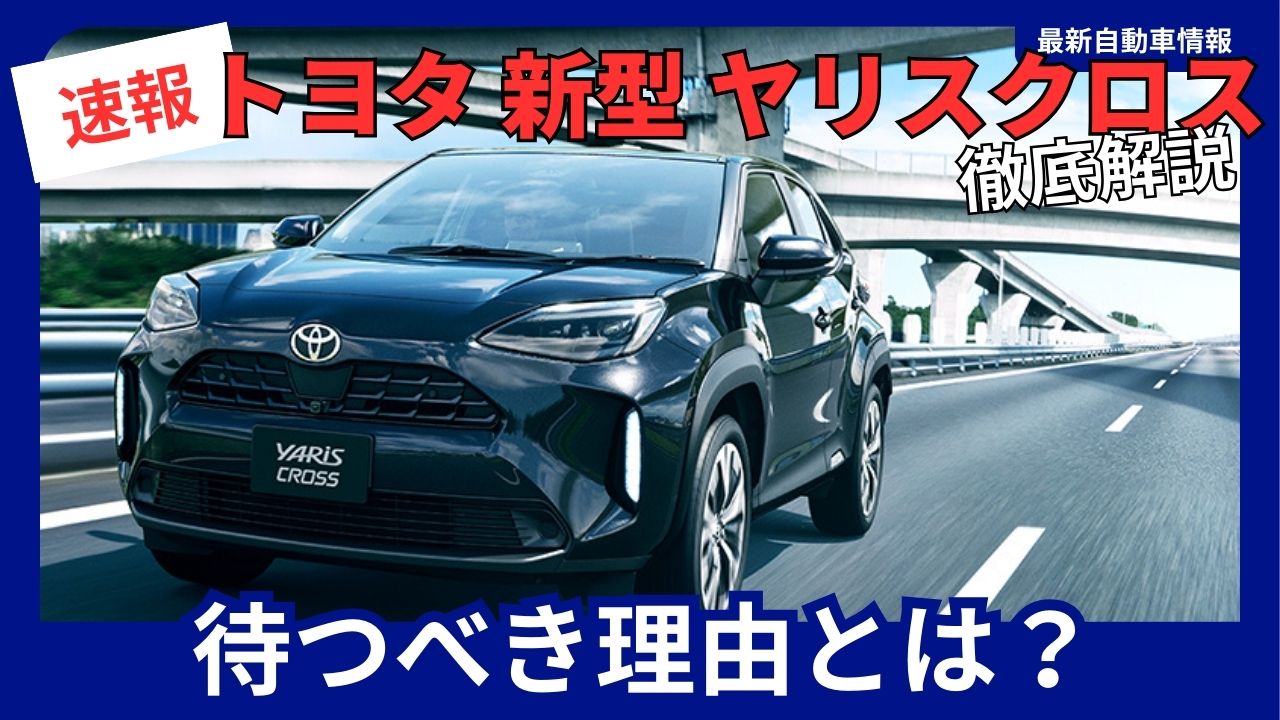
Competition for test drives of compact crossover SUVs has become extremely fierce, with many rival models including Toyota’s Raize and Yaris Cross, Honda’s WR-V and Vezel, Subaru’s Crosstrek, Suzuki’s XBEE, Daihatsu’s Rocky, and Nissan’s Kicks.
A word from the editorial department
The compact crossover SUV segment is a very important one for all Mazdas, and the next-generation CX-3 is expected to be a very strong model for Mazda. It will be a model packed with many hot topics, including a new generation architecture, electrification, and hybridization. This combination may give it a stronger product appeal than its competitors. We are already looking forward to the arrival of the new CX-3.
We will keep you updated as new information becomes available.
CX-3
https://www.mazda.co.jp/cars/cx-3/
Mazda