
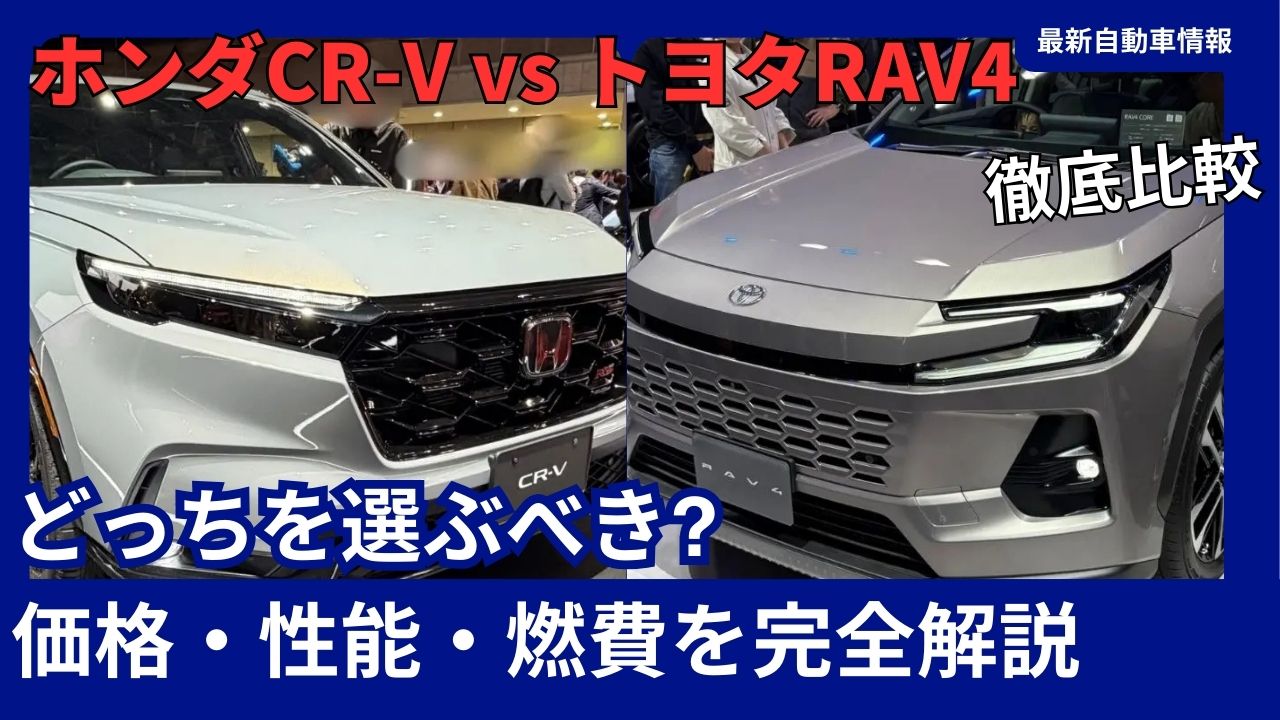
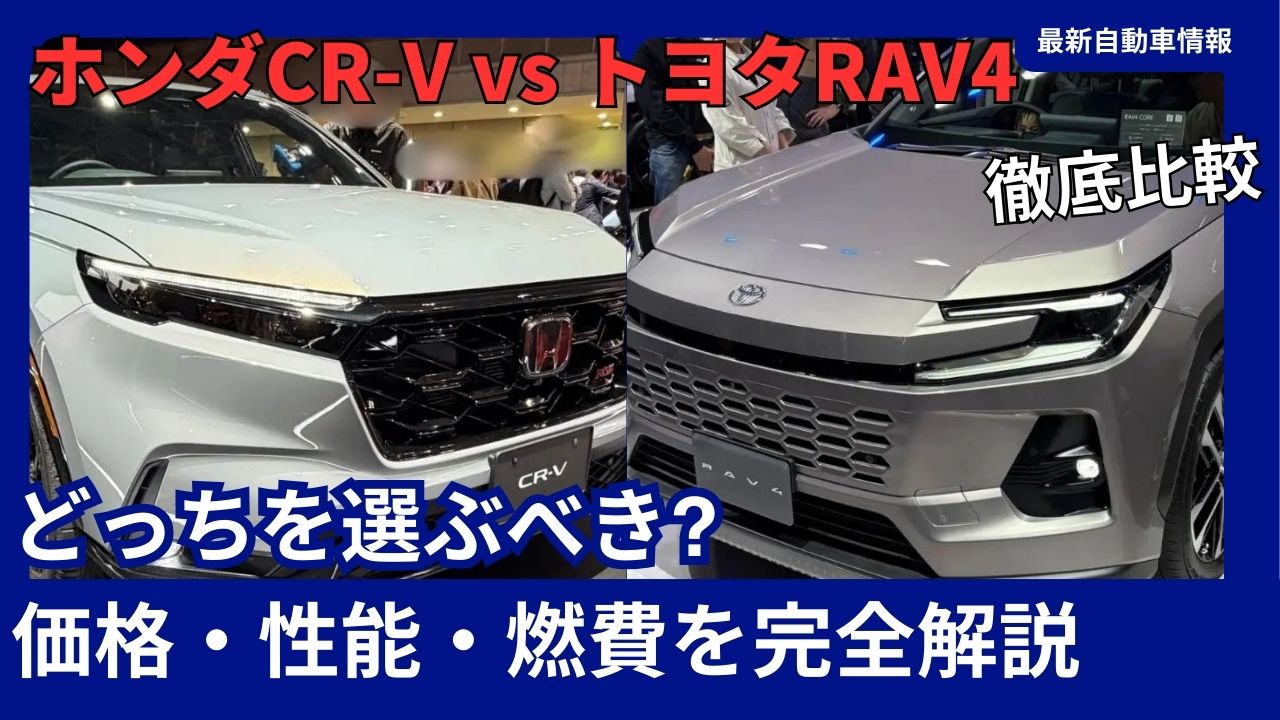
A thorough comparison of the 2026 Honda CR-V and Toyota RAV4. We’ll provide detailed information on price, fuel economy, performance, safety features, and interior space. We’ll also offer recommendations based on your needs.
1. Latest trends of the 2026 CR-V and RAV4 models
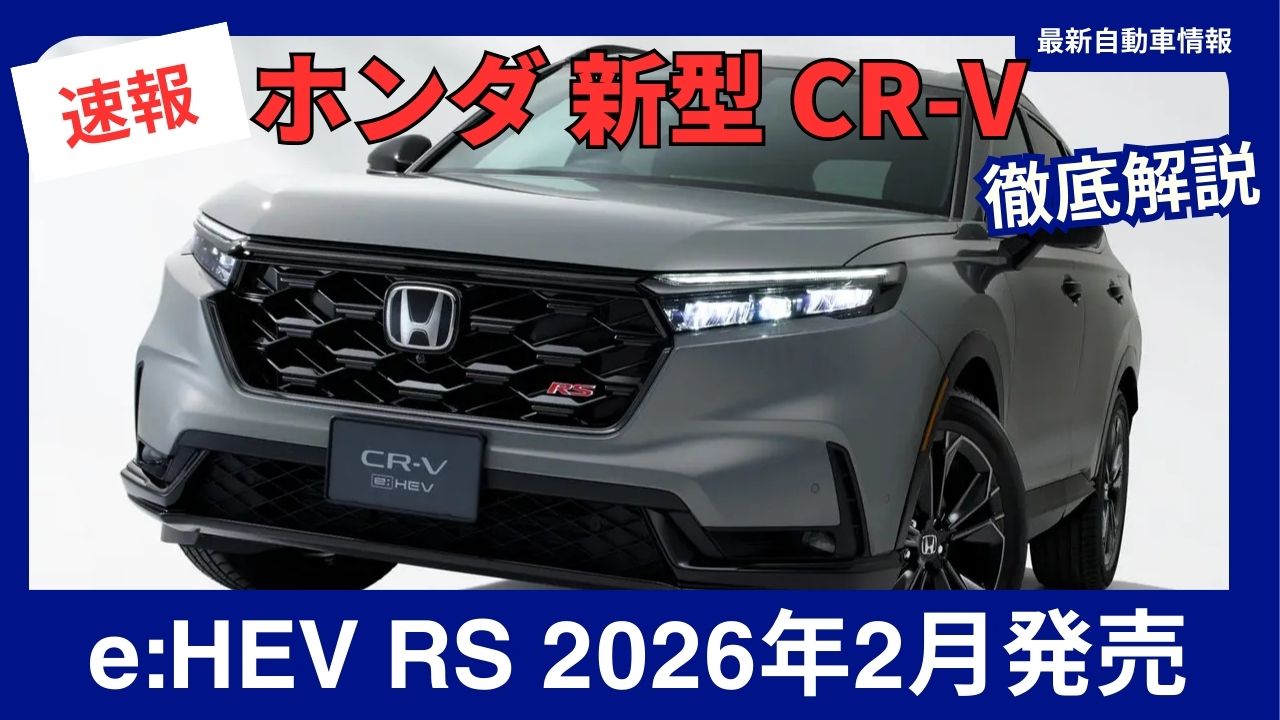
New Honda CR-V e:HEV RS (scheduled for release in February 2026)
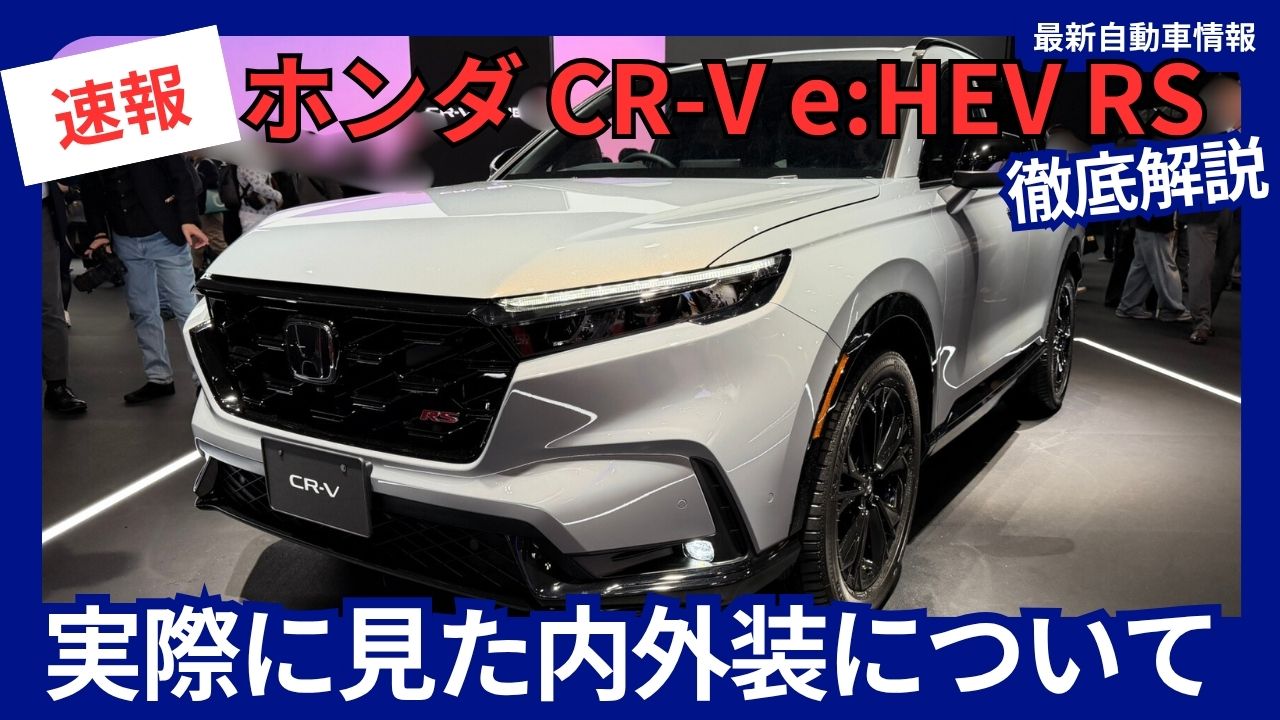
Honda will begin accepting advance reservations for the new CR-V e:HEV RS on December 12, 2025, with a planned release date in February 2026. The car was revived in the Japanese market in July 2024 as the fuel cell vehicle ” CR-V e:FCEV ,” but the addition of a hybrid model will enable it to appeal to a wider range of users.
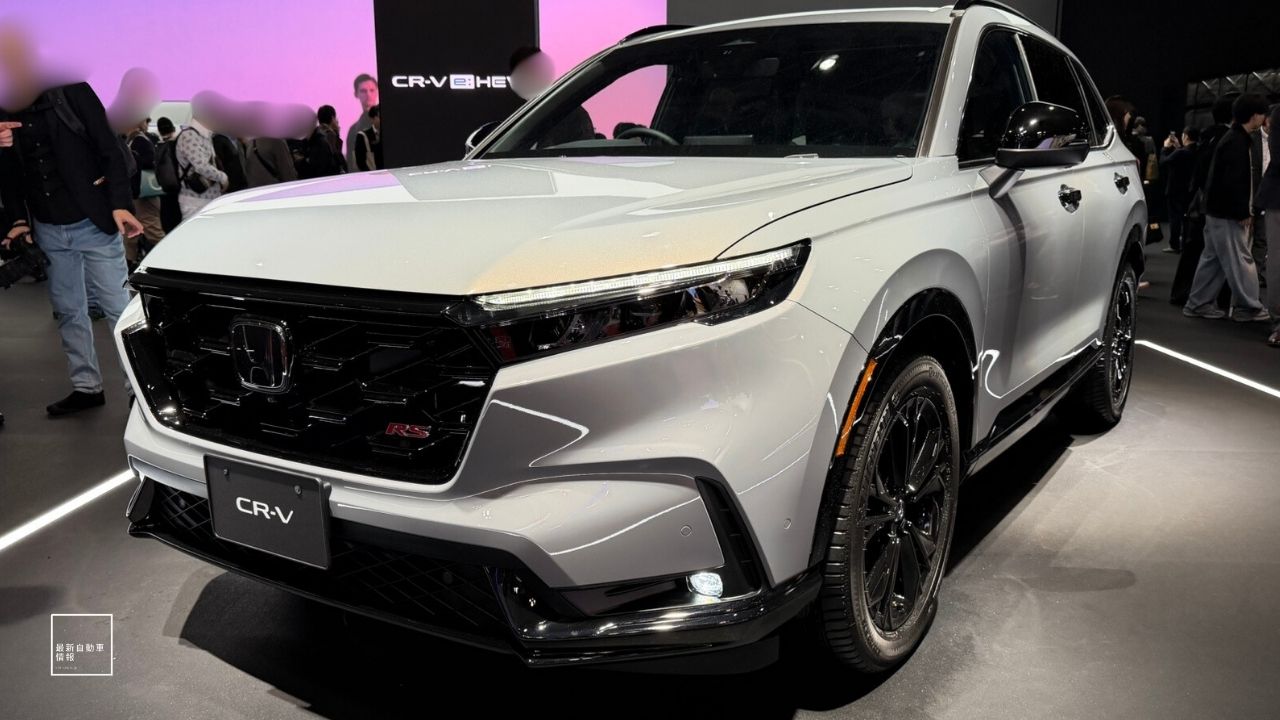
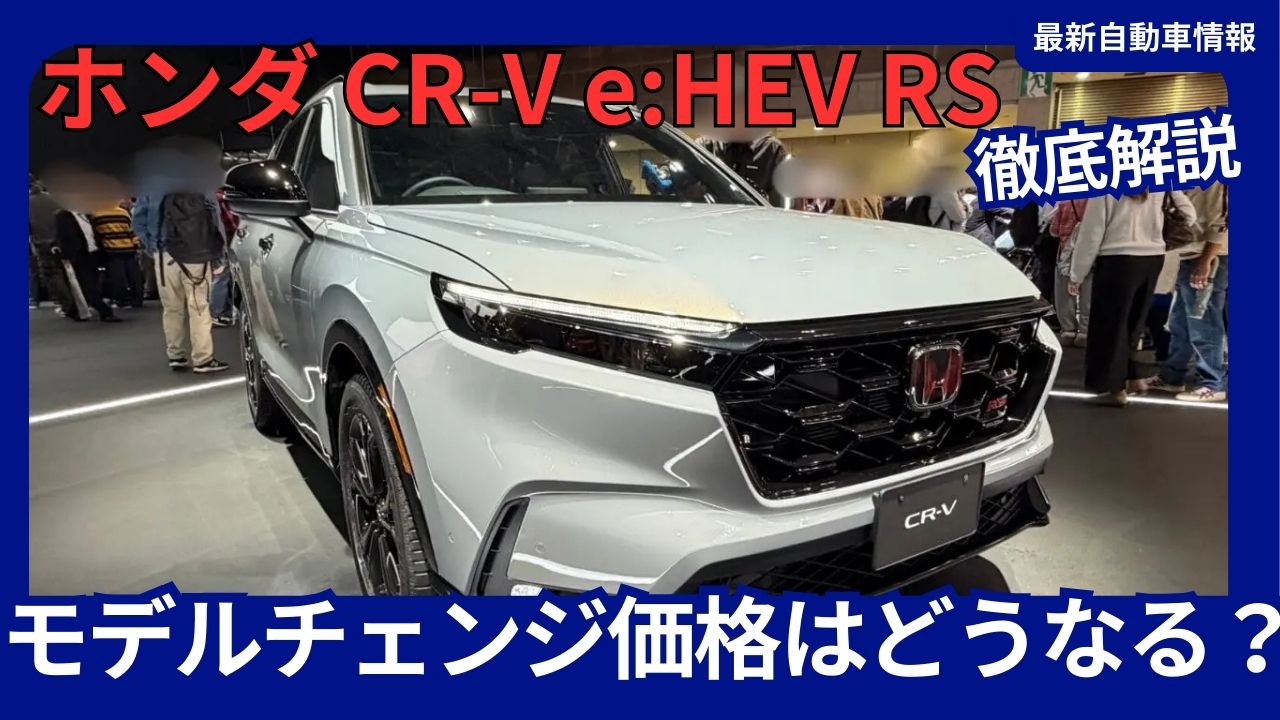
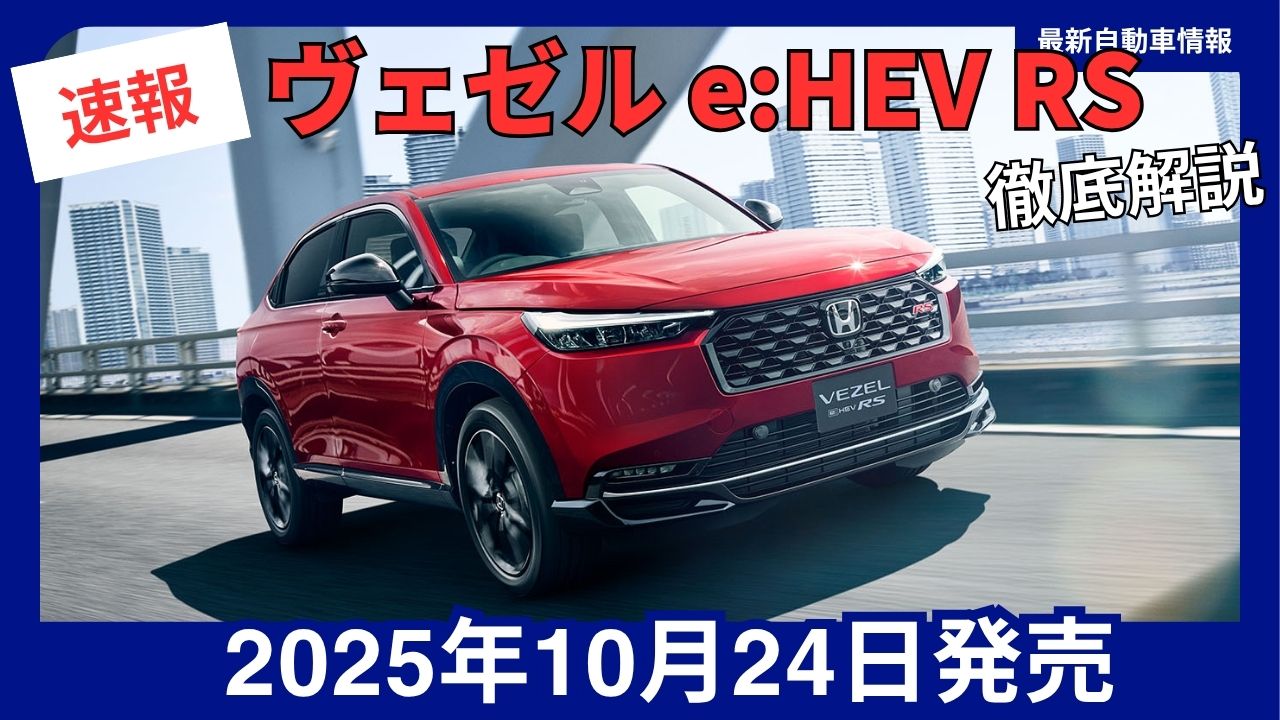
Honda CR-V e:HEV RS
Main features of the new CR-V
- 2.0L inline 4-cylinder engine + 2 motor e:HEV system
- The first SUV in Japan to feature Honda SENSING 360 (BLACK EDITION)
- A dignified body measuring 4,805mm long, 1,865mm wide and 1,690mm high
- Dedicated high/low two-stage engine directly connected gear
- Three grades available: e:HEV RS (FF/4WD), e:HEV RS BLACK EDITION (4WD only)
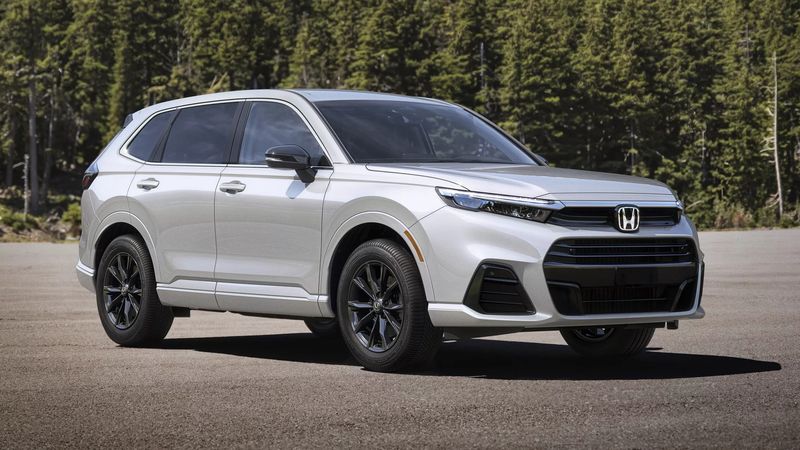
New Toyota RAV4 (scheduled for release on December 17, 2025)
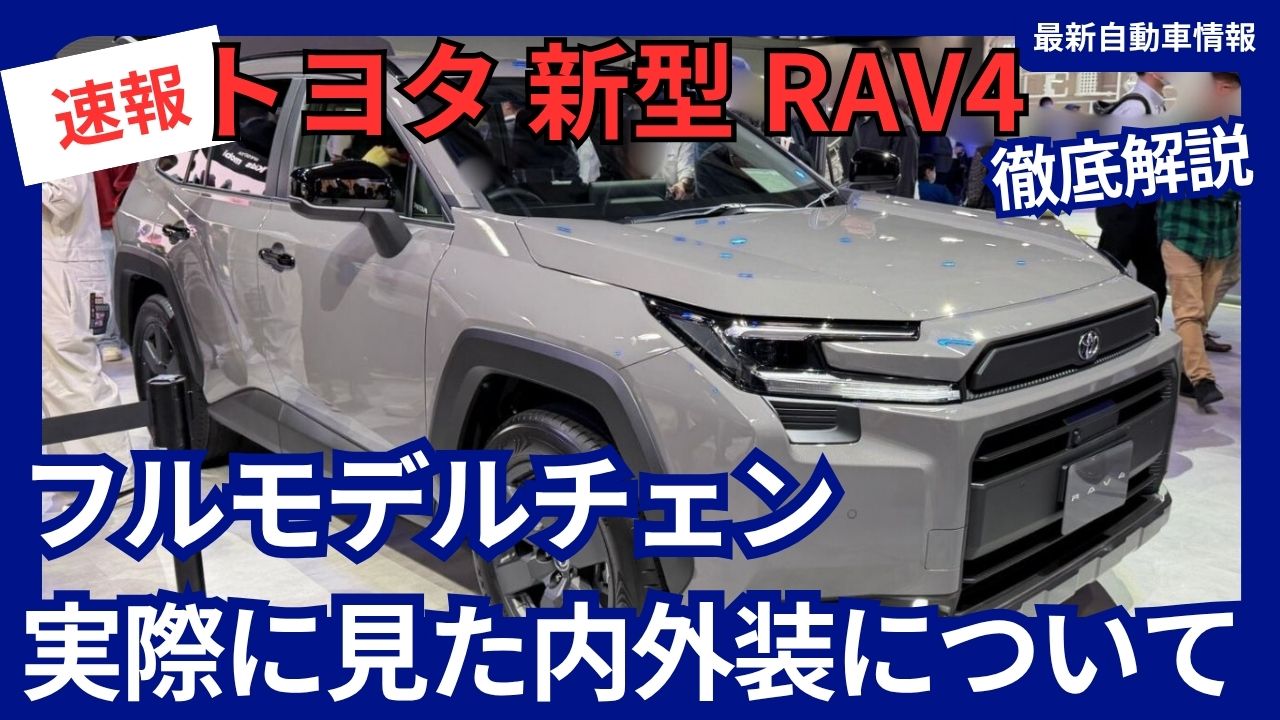
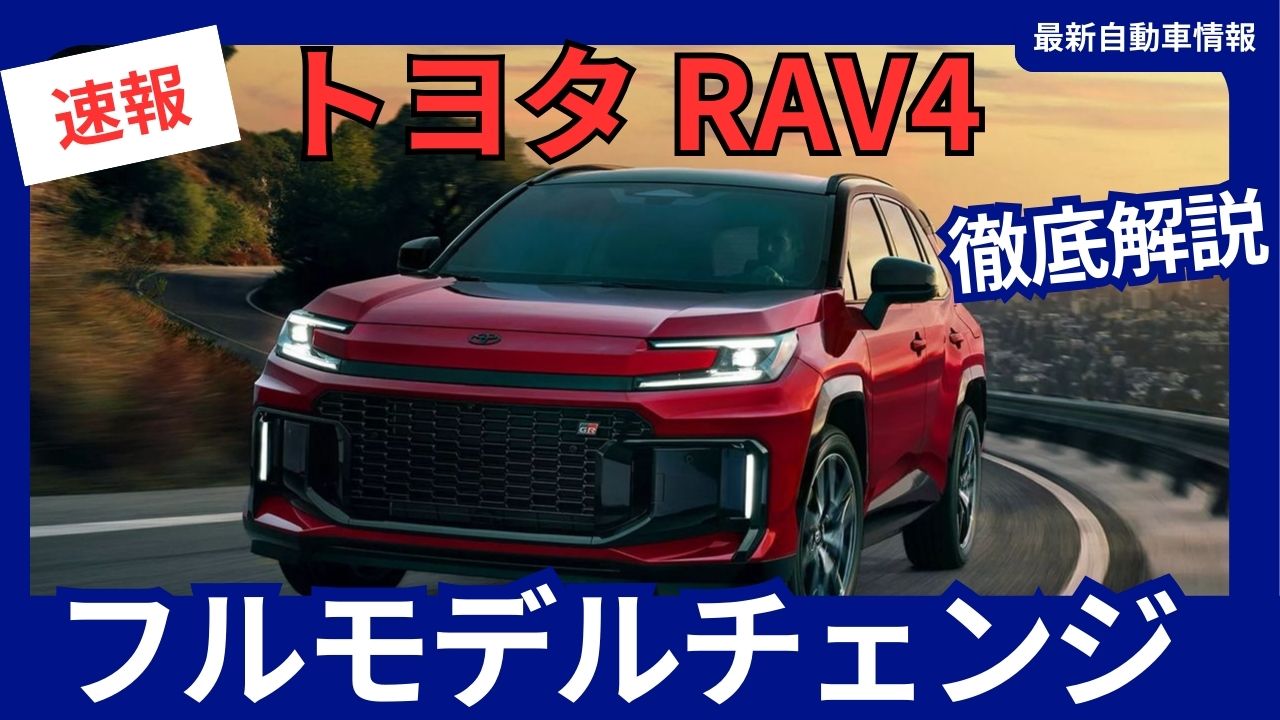
Toyota plans to release a fully redesigned new RAV4 on December 17, 2025. The sixth-generation new RAV4 will eliminate the gasoline-powered version and will be available in two versions: a hybrid (HEV) and a plug-in hybrid (PHEV).
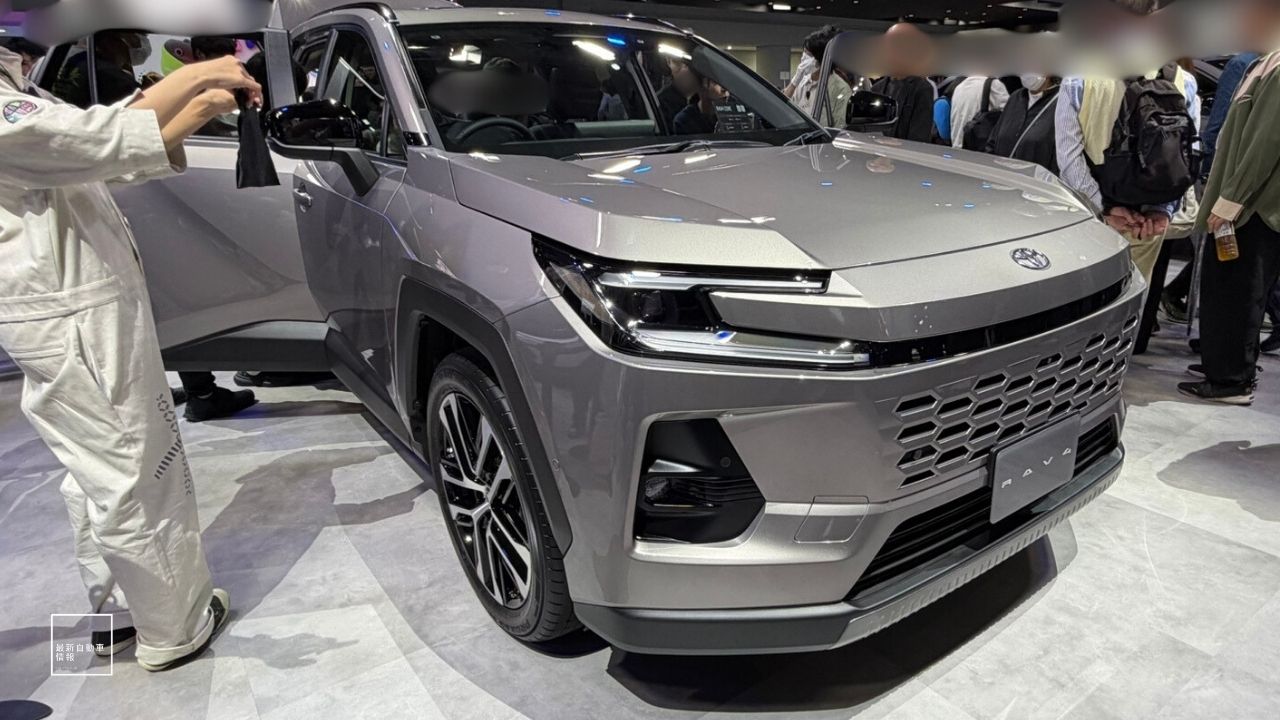
toyota rav4 core
Main features of the new RAV4
- Adoption of sixth-generation hybrid system in PHEV (first for Toyota)
- EV range: 150km (+55km compared to previous model)
- Three types of models available: CORE, ADVENTURE, GR SPORT
- Equipped with the software platform “Arene”
- Latest Toyota Safety Sense standard equipment
2. Thorough comparison of exteriors
Differences in design concepts
Honda CR-V: A sophisticated urban SUV
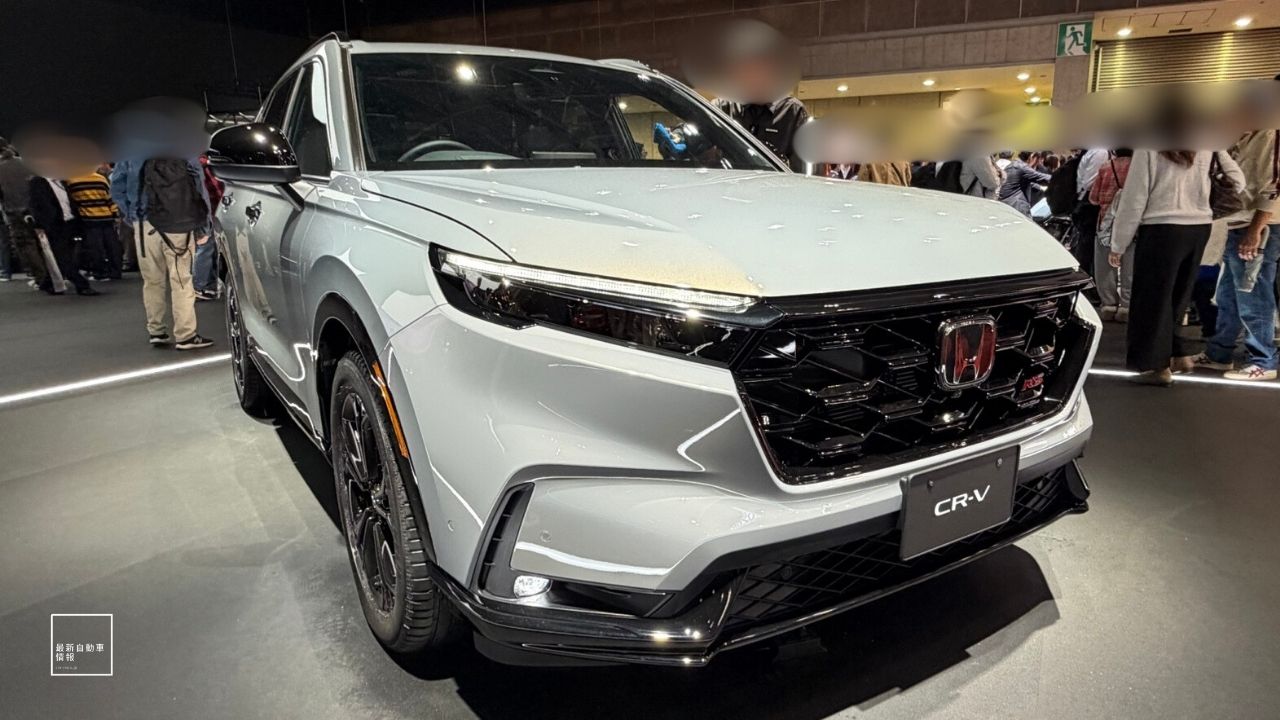
Honda CR-V e:HEV RS
The new CR-V features sharp headlights and a bold grille, pursuing a sophisticated design as an urban SUV. The BLACK EDITION in particular features exclusive black accents that visually express its high driving performance.
- Overall length 4,805mm x overall width 1,865mm x overall height 1,690mm
- Wheelbase: 2,700mm
- Overall length increased by 200mm and wheelbase increased by 40mm compared to the previous model
- 19-inch aluminum wheels (BLACK EDITION)
Toyota RAV4: Three Faces of Diversity
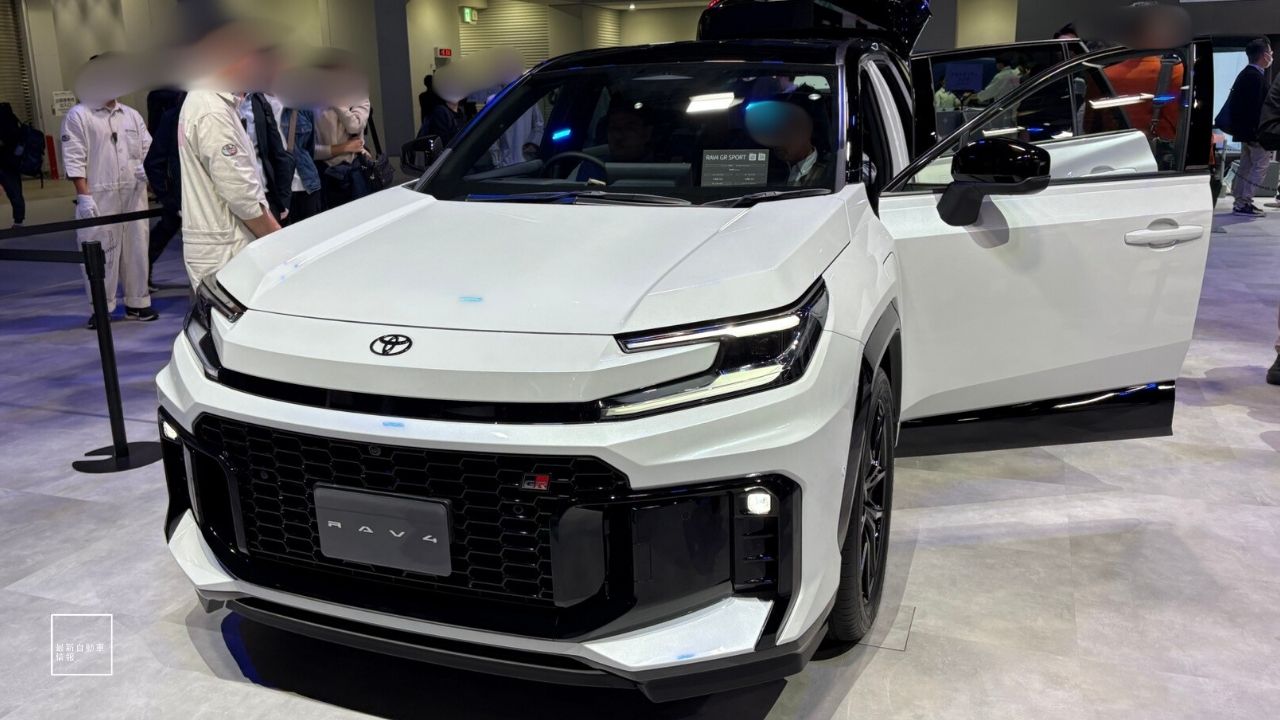
Toyota RAV4 GR Sport
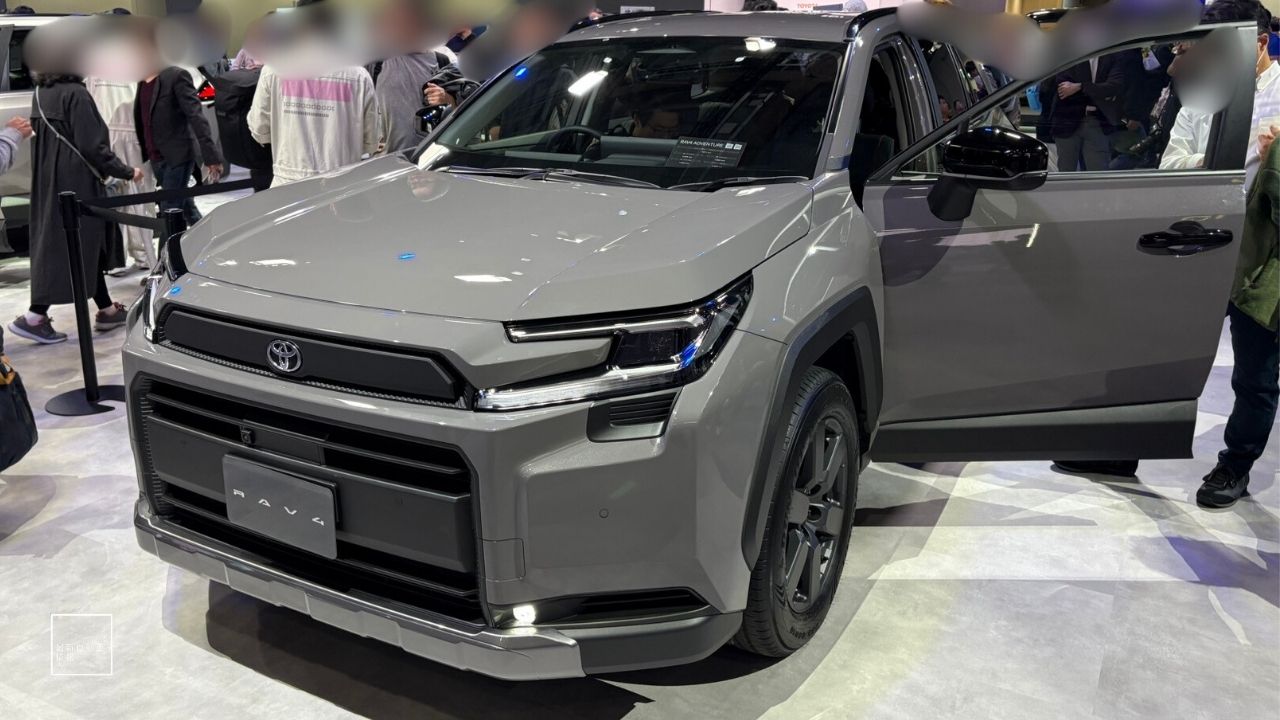
toyota rav4 adventure
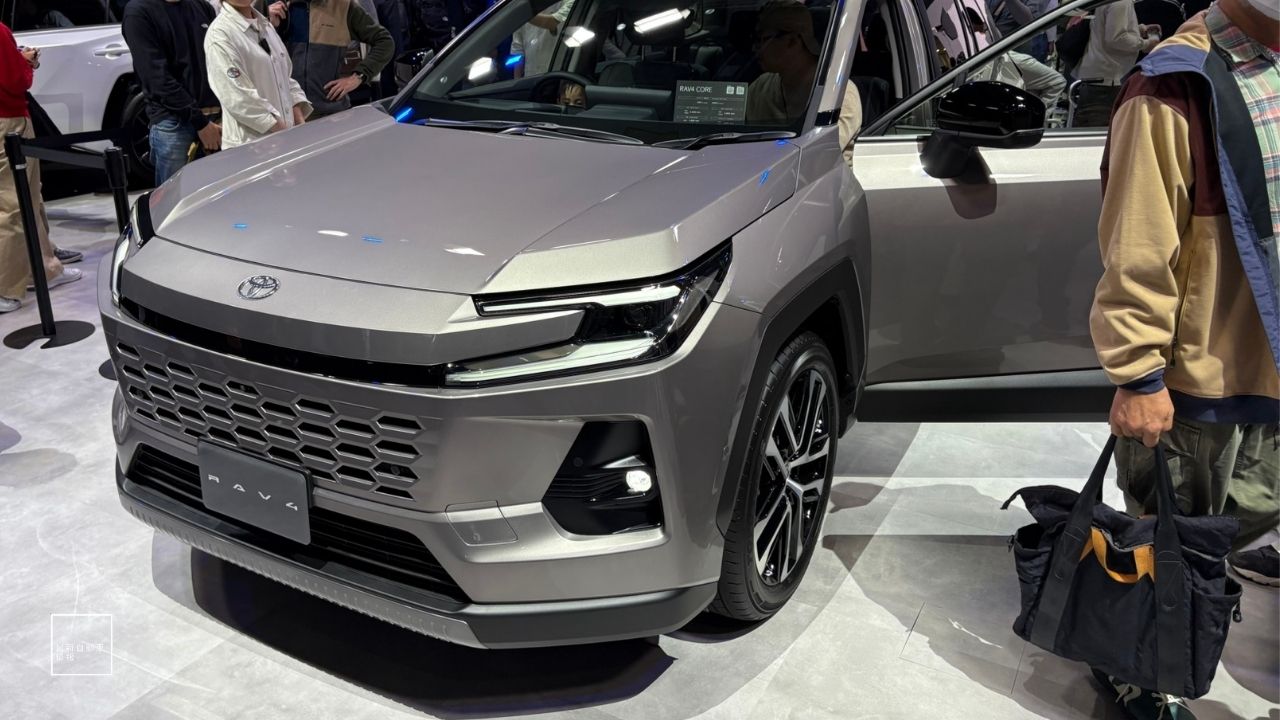
toyota rav4 core
The new RAV4 is available in three design types depending on the application.
- RAV4 CORE : The SUV hammerhead design emphasizes toughness. The grille integrated with the bumper expresses a three-dimensional sense of advanced technology and strength.
- RAV4 ADVENTURE : Wider tread (+20mm), special wheel arch moldings, and a large grille emphasize off-road performance. Newly developed color “Urban Rock” also available.
- RAV4 GR SPORT : Functional MATRIX grille, exclusive front and rear spoilers, and exclusive lightweight aluminum wheels create a sporty look.
Body size comparison chart
| Model | full length | Overall width | Overall height | Wheelbase |
|---|---|---|---|---|
| CR-V e:HEV RS | 4,805mm | 1,865mm | 1,690mm | 2,700mm |
| RAV4 CORE | 4,600mm | 1,855mm | 1,680mm | 2,690mm |
| RAV4 ADVENTURE | 4,620mm | 1,880mm | 1,680mm | 2,690mm |
| RAV4 GR SPORT | 4,645mm | 1,880mm | 1,685mm | 2,690mm |
The CR-V is larger overall, with its overall length exceeding that of the RAV4 by 160 to 205 mm. On the other hand, the RAV4 ADVENTURE and GR SPORT are wider than the CR-V at 1,880 mm, giving them a wider stance.
LED lighting system
Both vehicles come standard with full LED headlights and taillights. The CR-V is equipped with Adaptive Driving Beam (ADB), which detects oncoming and preceding vehicles and automatically adjusts the high beam range accordingly. The RAV4 also comes with the Adaptive High Beam System (AHS).
3. Differences in interior and equipment
Cockpit Infotainment
Honda CR-V: Advanced Google collaboration
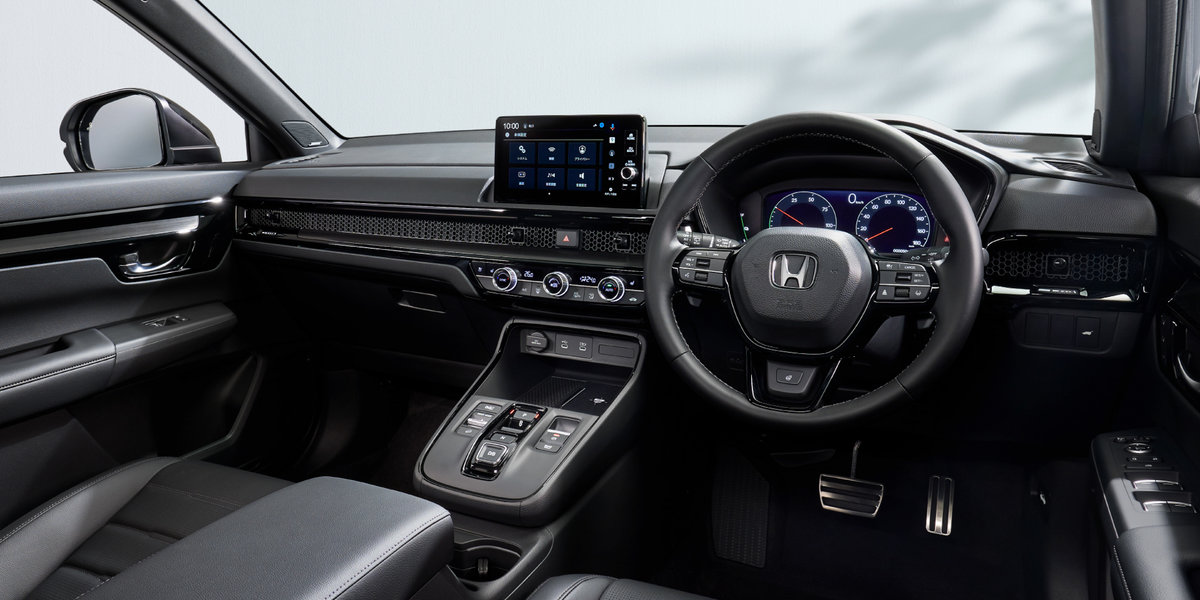
CR-V e:HEV RS BLACK EDITION
- 10.2-inch digital meter
- 9-inch display audio (compatible with Google and Honda CONNECT)
- BOSE 12-speaker premium sound system
- USB Type-C port (front and rear)
- 8-way power seat (driver’s seat), 4-way power seat (passenger seat)
Toyota RAV4: Arene Platform Innovation
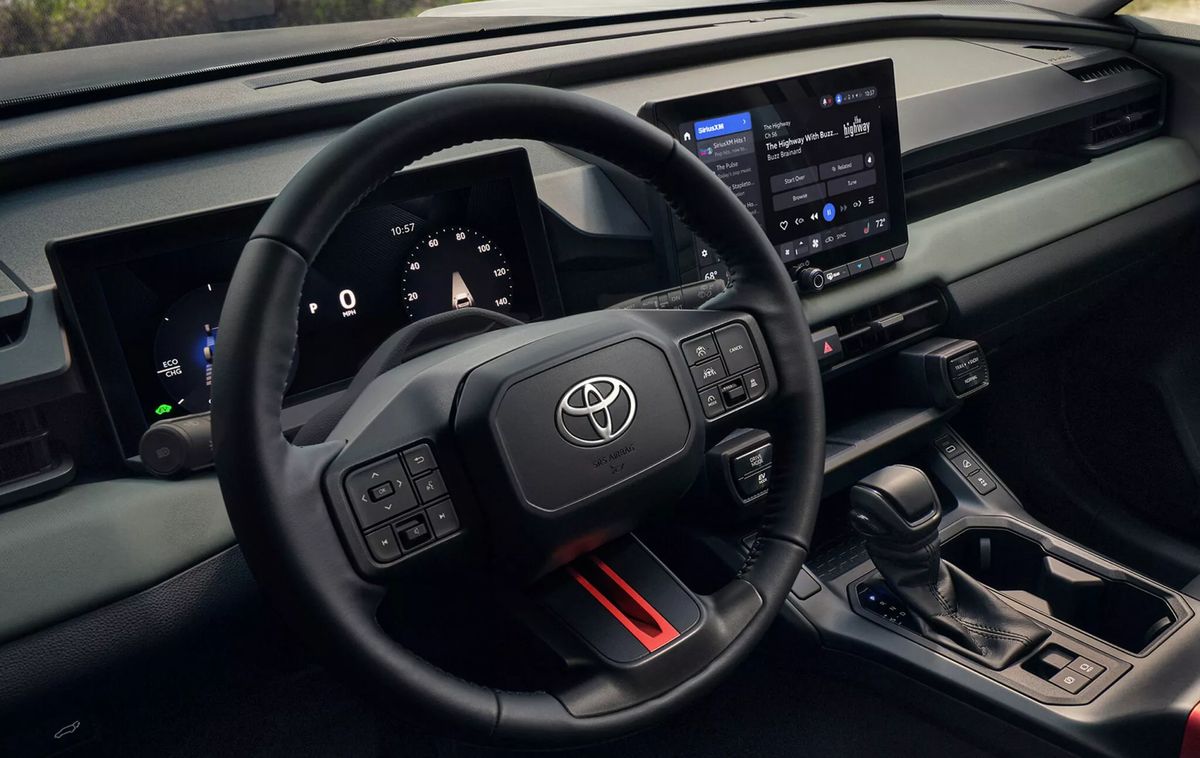
- 12.3-inch digital meter (full map drawing compatible)
- 10.5-inch or 12.9-inch new generation multimedia display
- Toyota’s first vehicle equipped with the Arene software platform
- Customizable home screen
- Improved response speed and understanding accuracy of voice recognition
- 45W USB Type-C fast charging port (CORE)
- 15W Wireless Charging (ADVENTURE)
Interior design features
The CR-V’s layout prioritizes excellent visibility and operability. The instrument panel is positioned 40mm lower to enhance ease of driving.
The RAV4 uses an island architecture design. Various functions such as the display and shifter are arranged in an integrated manner like an island, and the horizontal instrument panel makes it easy to grasp the sense of balance that is characteristic of an SUV. In addition, by adopting shift-by-wire and consolidating the EPB (electric parking brake) and brake hold switch, a simple and clean design is achieved.
Loadspace
CR-V : The exact luggage capacity has not been announced, but it has a large luggage space that takes advantage of its large body length of 4,805 mm.
RAV4 : Expanded from 733L to 749L (+16L). The rear seats can be folded flat, improving the storage capacity of long items.
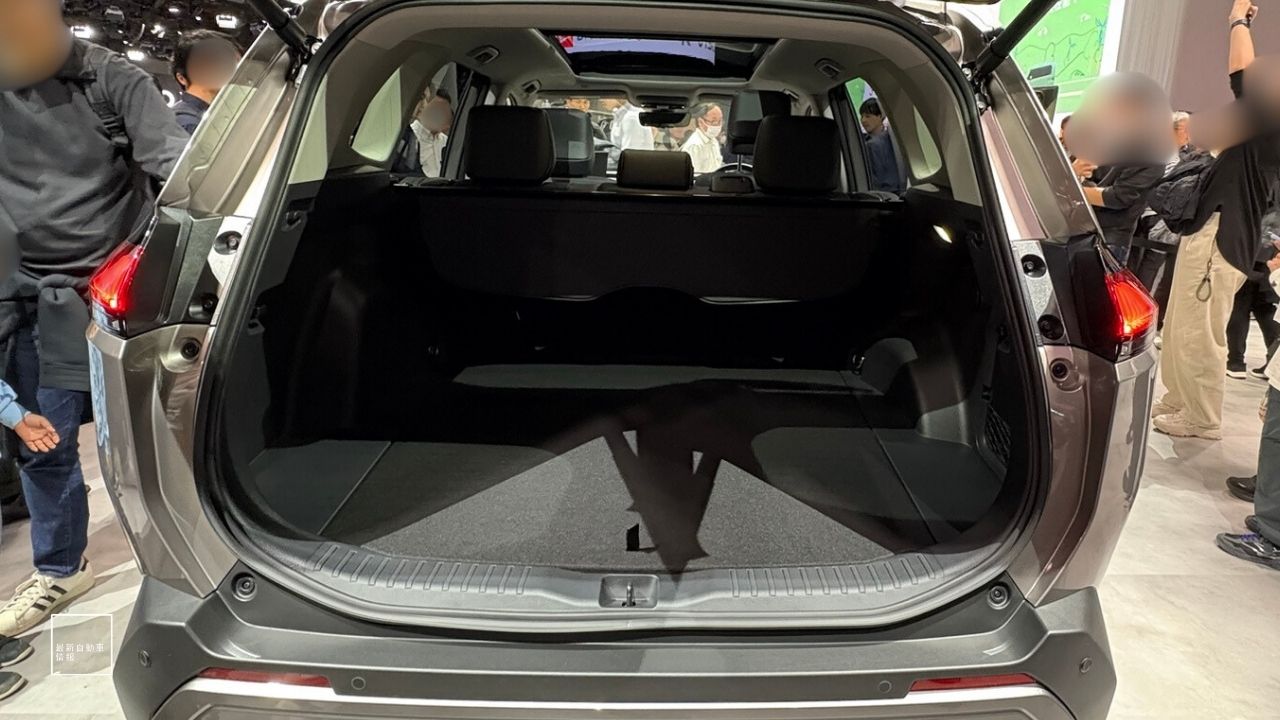
RAV4
Both vehicles feature 60:40 split folding rear seats, allowing for the carrying of a variety of luggage.
4. Powertrain and driving performance comparison
Honda CR-V e:HEV: A new generation hybrid with two gears
Powertrain specs
- Inline 4-cylinder 2.0L DOHC i-VTEC engine
- Maximum output: 145ps/17.8kgm
- 2 electric motors
- Motor output: 184ps/32.1kgm
- System configuration: e:HEV (two-motor hybrid)
- Drive system: FF or 4WD
- Features: CR-V exclusive high/low two-stage engine direct drive gear (Honda’s first low-gear engine drive mode)
Driving mode
- NORMAL: Balanced driving
- SPORT: More dynamic driving
- ECON: Fuel-efficient driving
- SNOW: Improved stability on snowy roads
- INDIVIDUAL: User customization
The CR-V’s e:HEV system has two motors, one for generating electricity and one for driving, and switches appropriately between “motor only,” “generating electricity with the engine,” and “engine only.” Of particular note is the addition of an engine drive mode with low gears, a first for Honda. This allows for both an exhilarating, high-quality ride and excellent environmental friendliness.
Toyota RAV4: 6th generation hybrid and evolved PHEV
HEV model (CORE ADVENTURE)
- Inline 4-cylinder 2.5L Dynamic Force Engine + electric motor
- Total system output: FF 229ps, E-Four 239ps
- 0-100km/h acceleration: 8.1 seconds
- Drive system: FF or 4WD (E-Four)
PHEV model (CORE PHEV・GR SPORT)
- Inline 4-cylinder 2.5L engine + 2 electric motors (6th generation hybrid system)
- Total system output: 324ps (+18ps compared to previous model)
- Battery capacity: 22.7kWh (25% increase from the previous model’s 18.1kWh)
- EV range: 150km (WLTC, +55km compared to previous model)
- 0-100km/h acceleration: E-Four 5.8 seconds
- DC fast charging compatible: 80% charge in about 30 minutes
- V2H (Vehicle-to-Home) compatible
- Drive system: 4WD (E-Four)
The RAV4 PHEV is equipped with Toyota’s first sixth-generation hybrid system. The use of silicon carbide semiconductors has made it compact and highly efficient, and combined with increased battery capacity, it has extended the EV range to 150km. This means that most daily travel can be done in EV mode.
Differences in driving performance
| item | CR-V e:HEV | RAV4 HEV | RAV4 PHEV |
|---|---|---|---|
| System Output | Undisclosed | 229ps/239ps | 324ps |
| 0-100km/h acceleration | Undisclosed | 8.1 seconds | 5.8 seconds |
| EV driving range | Not supported | Not supported | 150km |
| fast charging | Not supported | Not supported | correspondence |
The RAV4 PHEV boasts impressive performance, accelerating from 0 to 100 km/h in 5.8 seconds, giving it an advantage when overtaking or merging on the highway, while the CR-V’s two-speed gear system provides smooth acceleration from low to high speeds.
GR SPORT dedicated tuning
The RAV4 GR SPORT enhances its sporty performance with the following exclusive features:
- Wider tread (+20mm)
- Dedicated lightweight aluminum wheels (2.2 kg lighter)
- 235/50R20 high-grip tires
- Front Performance Damper
- Rear suspension brace
- Dedicated suspension tuning
- EPS Tuning
5. Fuel efficiency showdown
WLTC mode fuel economy comparison
| Model | fuel economy |
|---|---|
| CR-V e:HEV RS | |
| 2WD | 21.2km/L |
| 4WD | Not disclosed (estimated around 20km/L) |
| RAV4 HEV | 22.5km/L |
| RAV4 PHEV | 23.5km/L |
Actual fuel consumption prediction
The WLTC cycle values predict the following real-world fuel consumption:
Driving in urban areas
- CR-V e:HEV 2WD: Approx. 18-19km/L
- RAV4 HEV: Approx. 19-20km/L
- RAV4 PHEV (hybrid mode): Approximately 20-21km/L
Driving on the highway
- CR-V e:HEV 2WD: Approx. 20-21km/L
- RAV4 HEV: Approx. 21-22km/L
- RAV4 PHEV (hybrid mode): Approximately 22-23km/L
Advantages of the RAV4 PHEV
The RAV4 PHEV’s 150km EV driving range means that you barely use gasoline for daily commuting and shopping trips. In environments with convenient charging facilities, this can significantly reduce your actual fuel costs.
Example: If you drive 50km in one day
- If you work five days a week, you can charge once on the weekend and commute all weekdays in EV mode.
- Electricity cost: approx. 500 yen/week (when using electricity at night) vs. gasoline cost: approx. 1,500 yen/week
- Achieve fuel cost savings of over 50,000 yen per year
6. Safety equipment comparison
Honda CR-V: The advanced features of Honda SENSING 360
Honda SENSING 360 (BLACK EDITION only)
The CR-V e:HEV RS BLACK EDITION is the first Honda SUV in Japan to be equipped with Honda SENSING 360. The wider angle of the radar and camera, along with the addition of corner radar, significantly expands the range of safety assistance.
Key Features
- Collision Mitigation Braking System (CMBS) : Supports oncoming vehicle and crossing pedestrian detection
- Adaptive Cruise Control (ACC) : with traffic jam following function
- Lane Keeping Assist System (LKAS)
- Adaptive Driving Beam (ADB)
- Blind Spot Information (BSI)
- Intersection Accident Avoidance Assistance : Reduces the risk of head-on collisions
- Lane Change Assist : Supports lane change maneuvers on highways
- Downhill and crosswind response control : Automatically responds to changes in the driving environment
Standard Honda SENSING (e:HEV RS)
All grades except the BLACK EDITION are equipped with standard Honda SENSING, which combines eight sensors and a front wide-view camera, and also includes a near-collision mitigation brake system.
Toyota RAV4: Latest Toyota Safety Sense
Latest Toyota Safety Sense
The new RAV4 comes standard with the latest Toyota Safety Sense, which has been improved and features added.
Key Features
- Pre-crash Safety (PCS) : Detects oncoming vehicles and crossing pedestrians when meeting at intersections or turning right or left
- Lane Tracing Assist (LTA) : Lane centering assistance
- Radar cruise control (with full-speed tracking function)
- Road Sign Assist (RSA) : Road sign reading display
- Adaptive High Beam System (AHS)
- Driver Abnormality Response System : Added roadside evacuation function (new function)
- Sudden acceleration suppression function : Detects accidental or excessive acceleration and suppresses acceleration (new function)
- Panoramic View Monitor (PVM) : 3D imaging and vehicle transparency display
Advanced Park (RAV4)
The RAV4 also comes with the parking assistance function “Advanced Park” (available on a grade-specific basis).
Safety equipment comparison summary
| function | CR-V (SENSING 360) | CR-V (standard) | RAV4 |
|---|---|---|---|
| All speed ACC | ○ | ○ | ○ |
| Lane Keeping Assist | ○ | ○ | ○ |
| Intersection Assistance | ◎ | ○ | ○ |
| Lane Change Assist | ◎ | × | × |
| Roadside evacuation function | × | × | ○ |
| Sudden acceleration suppression | × | × | ○ |
| 360-degree field of view | × | × | ◎ (PVM 3D) |
The CR-V’s Honda SENSING 360 excels at providing driving assistance on highways, such as lane change assistance, while the RAV4 excels in everyday convenience, with features such as parking assistance and 3D images.
7. Price and grade structure
Honda CR-V e:HEV RS
| grade | Drive system | price |
|---|---|---|
| e:HEV RS | FF | Approximately 5 million yen |
| e:HEV RS | 4WD | Approximately 5.2 million yen |
| e:HEV RS BLACK EDITION | 4WD | Approximately 5.4 million yen |
Reference: CR-V e:FCEV (fuel cell vehicle): 8,094,900 yen
Toyota RAV4
| grade | Powertrain | Drive system | price |
|---|---|---|---|
| CORE | HEV | E-Four | Approximately 4.2 million yen |
| CORE | PHEV | E-Four | Approximately 6 million yen |
| ADVENTURE | HEV | E-Four | Approximately 4.5 million yen |
| GR SPORT | PHEV | E-Four | Approximately 6.7 million yen |
Price range comparison
Entry model
- RAV4 CORE HEV: Approximately 4.2 million yen (cheapest)
- CR-V e:HEV RS FF: Approximately 5 million yen
Mid-range
- RAV4 ADVENTURE HEV: Approximately 4.5 million yen
- CR-V e:HEV RS 4WD: Approximately ¥5.2 million
- CR-V e:HEV RS BLACK EDITION: Approximately 5.4 million yen
High-end
- RAV4 CORE PHEV: Approximately 6 million yen
- RAV4 GR SPORT PHEV: Approximately 6.7 million yen
Cost-performance analysis
RAV4 Advantages
- The entry price is about 800,000 yen cheaper
- PHEV configuration allows for long-term fuel cost savings
- Choose from three character styles (CORE/ADVENTURE/GR SPORT)
CR-V Advantages
- Honda SENSING 360 equipped model available for around 5 million yen (BLACK EDITION)
- Advanced infotainment in collaboration with Google
- BOSE 12-speaker premium sound comes standard
Five-year total cost of ownership
Prerequisites
- Annual mileage: 10,000km
- Gasoline price: 170 yen/L
- Electricity cost: 30 yen/kWh (PHEV, nighttime rate)
- Vehicle inspection and maintenance: average value of each company used
CR-V e:HEV RS 4WD (5.2 million yen)
- Vehicle price: 5.2 million yen
- Five-year fuel costs: Approximately 400,000 yen (assuming actual fuel consumption of 19 km/L)
- Vehicle inspection and maintenance: Approximately 500,000 yen
- Total: Approximately 6.1 million yen
RAV4 CORE HEV E-Four (4.2 million yen)
- Vehicle price: 4.2 million yen
- Five-year fuel costs: Approximately 380,000 yen (assuming actual fuel consumption of 20km/L)
- Vehicle inspection and maintenance: Approximately 500,000 yen
- Total: Approximately 5.08 million yen
RAV4 CORE PHEV E-Four (6 million yen)
- Vehicle price: 6 million yen
- Five-year fuel costs: Approximately 150,000 yen (80% of the year driven in EV mode, including charging costs)
- Vehicle inspection and maintenance: Approximately 550,000 yen (including battery inspection)
- Total: Approximately 6.7 million yen
- Subsidy utilization will result in a net cost of approximately 6.4 million yen (assuming a CEV subsidy of 300,000 yen)
In the long run, the RAV4 CORE HEV is the most economical, but if you have access to a charging station, the RAV4 PHEV will lower your total cost of ownership by reducing fuel costs.
8. Body size and practicality comparison
Detailed comparison of external dimensions
| Model | full length | Overall width | Overall height | Wheelbase | Minimum turning radius |
|---|---|---|---|---|---|
| CR-V | 4,805mm | 1,865mm | 1,690mm | 2,700mm | Undisclosed |
| RAV4 CORE | 4,600mm | 1,855mm | 1,680mm | 2,690mm | Undisclosed |
| RAV4 ADVENTURE | 4,620mm | 1,880mm | 1,680mm | 2,690mm | Undisclosed |
| RAV4 GR SPORT | 4,645mm | 1,880mm | 1,685mm | 2,690mm | Undisclosed |
Ease of handling
RAV4 Advantages
- The overall length is 4,600 to 4,645 mm, 160 to 205 mm shorter than the CR-V.
- Advantageous for maneuvering in urban parking lots and narrow roads
- If the overall width is 1,855mm (CORE), it may be possible to fit it into a multi-story parking lot.
CR-V Advantages
- A generous size with an overall length of 4,805mm and a wheelbase of 2,700mm
- Advantageous in terms of rear seat legroom and luggage space
- Excellent straight-line stability on the highway
Interior space and comfort
CR-V
- The instrument panel is positioned 40mm lower for a clear view.
- Significantly expanded interior space compared to the previous generation
- The rear seat legroom is spacious, making it comfortable even for long journeys.
RAV4
- Luggage capacity: 749L (with rear seats in use)
- Rear seats fold flat for improved storage of long items
- Reversible console box for increased storage flexibility
Evaluation by daily use scene
Driving in urban areas
- RAV4 has the advantage (ease of handling and parking)
- The RAV4 CORE is especially safe on narrow roads, with a width of 1,855 mm.
Expressway
- CR-V has the advantage (straight-line stability due to long wheelbase)
- Both vehicles offer comfortable cruising with ACC at all speeds.
Family use
- CR-V has the advantage (large interior space, comfortable rear seats)
- The RAV4 also has 749L of luggage space, which is enough to carry strollers and outdoor gear.
Outdoor
- RAV4 ADVENTURE is the best choice (off-road design, special equipment)
- The CR-V 4WD also has excellent off-road capabilities
9. Which one should you choose? Recommendations by use
Who is the CR-V recommended for?
✓ Premium-oriented and seeking high-quality driving
- Honda SENSING 360 (BLACK EDITION) advanced safety technologies
- BOSE 12-speaker premium sound standard
- The latest infotainment in collaboration with Google
✓ Spacious interior space and emphasis on comfort
- A generous size with an overall length of 4,805mm and a wheelbase of 2,700mm
- The rear seat has ample legroom, making long-distance driving comfortable.
- Ideal for large families and pets
✓ Frequent use of expressways
- Long wheelbase for excellent straight-line stability
- Smooth acceleration with the two-gear e:HEV system
- Quiet, high-quality cruising
✓ I like urban and sophisticated designs
- Stylish appearance
- Exclusive black accents for the BLACK EDITION
- 19-inch aluminum wheels
Who is the RAV4 recommended for?
✓ Emphasis on cost performance
- Entry price: approximately 4.2 million yen (CORE HEV)
- Excellent fuel economy: 22.5km/L (HEV)
- Reduce long-term maintenance costs
✓ Charging facilities are available, allowing you to take advantage of the benefits of PHEVs
- EV range: 150km (can be driven almost entirely in EV mode during daily driving)
- V2H compatibility ensures power supply during disasters
- Significant reduction in long-term fuel costs
✓ Looking for sporty performance
- RAV4 GR SPORT: Impressive performance with 0-100km/h acceleration in 5.8 seconds
- Specially tuned suspension
- Lightweight aluminum wheels and high-grip tires
✓ Outdoor and off-road oriented
- RAV4 ADVENTURE: Purpose-built off-road design
- Wider tread for improved off-road performance
- New colors such as “Urban Rock” that look great outdoors
✓ I want to experience the latest technology
- Software platform “Arene”
- 3D panoramic view monitor
- Supports OTA (Over-The-Air) updates
✓ Emphasis on ease of handling
- Overall length: 4,600-4,645mm (160-205mm shorter than the CR-V)
- Advantageous on narrow urban streets and in parking lots
- The RAV4 CORE has an overall width of 1,855mm, making it suitable for use in multi-story parking garages.
Best choice for each application
| Purpose | Recommended Models | reason |
|---|---|---|
| Mainly for commuting (less than 30km one way) | RAV4 PHEV | Commuting to work in EV mode every day reduces fuel costs |
| Weekend long drive | CR-V 4WD | Comfortable interior space, high-speed stability |
| Family use (family of 5) | CR-V 4WD | Spacious interior and comfortable rear seats |
| Mainly used in urban areas | RAV4 CORE HEV | Compact, easy to handle, and economical |
| Outdoor enthusiast | RAV4 ADVENTURE | Off-road design and performance |
| Sports Driving | RAV4 GR SPORT | 324ps, 0-100km/h 5.8 seconds |
| Premium Orientation | CR-V BLACK EDITION | Honda SENSING 360, BOSE |
| Cost performance is the top priority | RAV4 CORE HEV | Starting at 4.2 million yen, excellent fuel economy |
10. Summary: CR-V vs RAV4 final conclusion
comprehensive evaluation
Honda CR-V e:HEV RS: A premium SUV with high quality and innovation
Strengths
- Honda SENSING 360 Advanced Safety Technology (BLACK EDITION)
- Standard features include BOSE 12 speakers and Google connectivity
- Spacious interior and excellent comfort
- Smooth driving feel of the two-gear e:HEV system
- Luxurious interior and exterior design
weakness
- The entry price is a little high at 5 million yen
- There is no PHEV option (fuel cell vehicles are treated as a separate vehicle type)
- It is longer than the RAV4, making it slightly less maneuverable.
Perfect for these people
- Premium-oriented people in their 50s and above
- Lots of long-distance family drives
- Emphasis on the latest safety technology and comfort features
- You have a budget and want quality
Toyota RAV4: A versatile and innovative SUV
Strengths
- Three character types (CORE/ADVENTURE/GR SPORT) offer a wide range of options
- Affordable entry price of 4.2 million yen
- The PHEV’s EV range of 150km means you can drive almost entirely in EV mode on a daily basis.
- The cutting edge of the software platform “Arene”
- GR SPORT’s overwhelming power performance (324 hp, 0-100 km/h in 5.8 seconds)
- OTA support allows you to always update to the latest features
weakness
- PHEVs are expensive, costing around 6 million yen
- The HEV’s system output is roughly equivalent to that of the CR-V
- Standard audio isn’t as good as the CR-V’s Bose.
Perfect for these people
- Families in their 30s and 40s
- There is a charging environment, and the benefits of PHEVs can be utilized.
- Choose a character depending on the purpose
- Emphasis on cost performance
- Interested in the latest software technologies
Final selection criteria
If price is your priority → RAV4 CORE HEV (approximately 4.2 million yen)
- The most economical option
- Excellent fuel economy of 22.5km/L
- Basic performance is sufficient
If you prioritize comfort and premium quality → CR-V e:HEV RS BLACK EDITION (approx. 5.4 million yen)
- The peace of mind of Honda SENSING 360
- High-quality sound from 12 BOSE speakers
- Spacious interior space
If you prioritize environmental friendliness and innovation → RAV4 PHEV (starting from approximately 6 million yen)
- EV range: 150km
- Overwhelming power of 324ps
- V2H compatibility for peace of mind in the event of a disaster
If you prioritize sports performance → RAV4 GR SPORT (approximately 6.7 million yen)
- Acceleration from 0 to 100 km/h in 5.8 seconds
- Specially tuned suspension
- Also combines the environmental performance of a PHEV
If you’re looking for balance → CR-V e:HEV RS 4WD (approximately 5.2 million yen)
- Standard Honda SENSING is sufficient for safety
- Comfortable interior space
- Google-connected infotainment
Market competition
The two cars are direct competitors, but they have different personalities.
- CR-V : Honda’s flagship SUV, pursuing premium quality and high quality
- RAV4 : Toyota’s flagship SUV, appealing to a wide range of customers with its versatility and advanced technology
Other competitors to consider in this price range include:
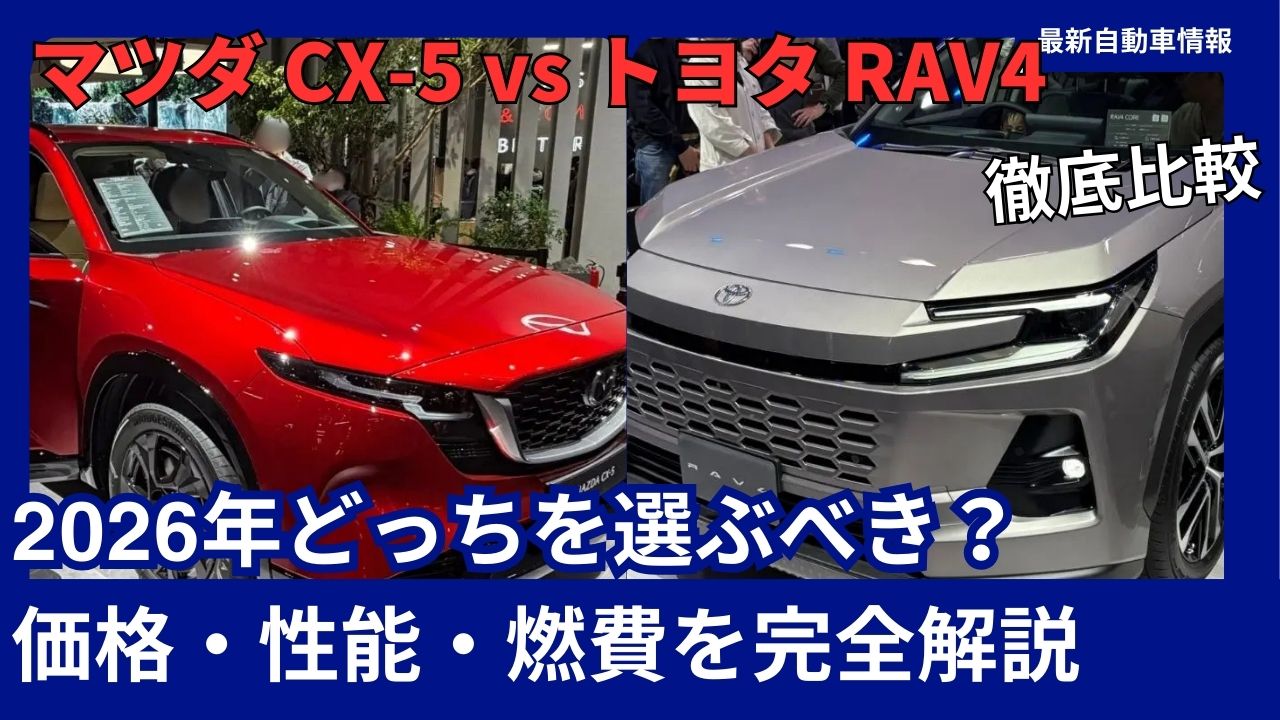
- Mazda CX-5 (2.9 million to 4.2 million yen)
- Nissan X-Trail (3.5 million to 5 million yen)
- Mitsubishi Outlander PHEV (4.5 million to 5.5 million yen)
SUV market outlook for 2026
The mid-size SUV market is expected to become even more active with the introduction of the new CR-V and RAV4. Of particular note are:
- Accelerating electrification : Both vehicles will shift to hybrids. Gasoline-powered vehicles will be phased out for the RAV4.
- Expansion of the PHEV market : As the RAV4 evolves into a PHEV, charging infrastructure is expected to improve as well
- Standardization of advanced safety technologies : Honda SENSING 360 and the latest Toyota Safety Sense
- Towards software-defined vehicles : The introduction of Arene in the RAV4 symbolizes the transformation of automobiles into smart devices
Important points to note when purchasing
About delivery time
- CR-V: Scheduled for release in February 2026 (pre-orders start December 12, 2025)
- RAV4: Scheduled for release on December 17, 2025 (HEV), production to begin in March 2026 (PHEV)
There may be a long wait time for delivery of the new model, so we recommend that you consider making your reservation early.
Utilizing subsidies
- RAV4 PHEV: Eligible for CEV subsidy (300,000 yen in 2024, confirmation required for 2025)
- CR-V: Hybrid vehicles are not eligible for subsidies.
Trade-in and resale value
- Both cars have strong brand power and can be expected to have high resale value.
- The RAV4 PHEV has a high resale value when considering subsidies.
- The CR-V BLACK EDITION is likely to fetch a premium appraisal due to its rarity.
lastly
Both the CR-V and RAV4 are excellent SUVs that have undergone significant improvements for the 2026 model year.
- The CR-V offers premium quality and advanced safety technology, providing a higher level of satisfaction.
- With three character models and electrification technologies, the RAV4 offers versatility to meet diverse needs.
The final choice will depend on your lifestyle, budget, and values.
- If you prioritize a comfortable family drive, choose the CR-V.
- If you’re looking for a balance of economy and advanced technology, choose the RAV4 HEV.
- If you want both environmental friendliness and performance, choose the RAV4 PHEV
We encourage you to test drive both vehicles and find the one that’s right for you. We hope that your SUV life in 2026 will be even richer and more comfortable.
Related articles