

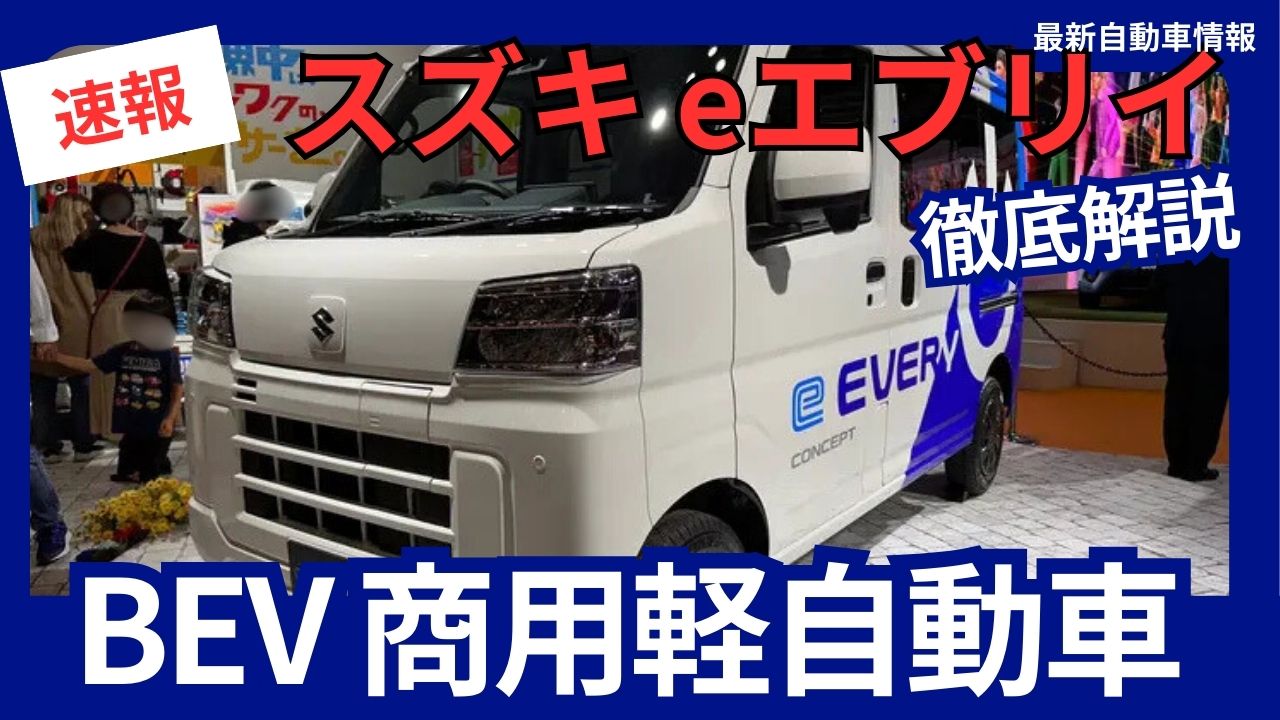
Suzuki will add the new “EVERY” battery EV (BEV) model that uses “e-SMART ELECTRIC” to its lineup, and will release it around February 2026. Originally scheduled for around December 2023, the release date has been changed due to the discovery of fraudulent issues regarding the certification procedures of Daihatsu Motor, one of the three companies involved. The model was exhibited at the “JAPAN MOBILITY SHOW 2023,” held mainly at Tokyo Big Sight .
Suzuki’s new “Every” partially improved BEV “eEvery”
To introduce the BEV commercial minivan, Suzuki and Daihatsu combined their minicar manufacturing know-how with Toyota’s electric vehicle technology to jointly develop a BEV system suitable for mini commercial vehicles. The vehicle was to be produced by Daihatsu, and Suzuki, Daihatsu, and Toyota were each scheduled to introduce it by the end of fiscal year 2023.
- Suzuki: EVERY EV
- Daihatsu: HIJET CARGO EV
- Toyota: PIXIS VAN EV
In terms of driving performance, the expected range per charge is around 200km.
For more details, please refer to this article.
The eEvery Concept was exhibited and unveiled at the Japan Mobility Show 2023, and I was able to see it up close, ask about its design and features, and even take some photos.
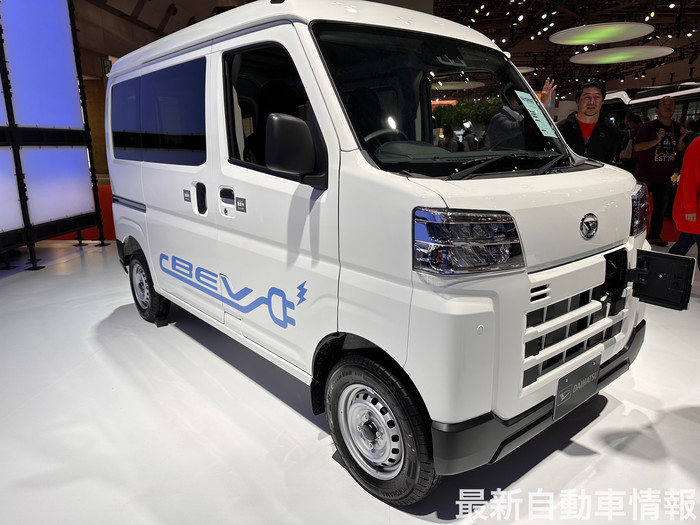
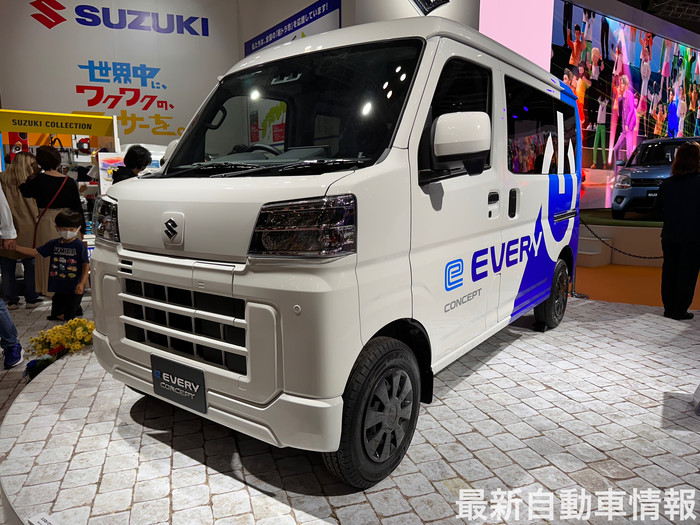
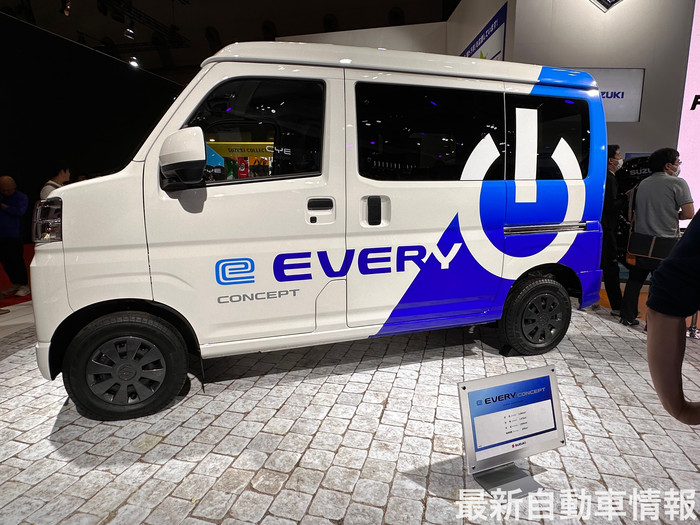
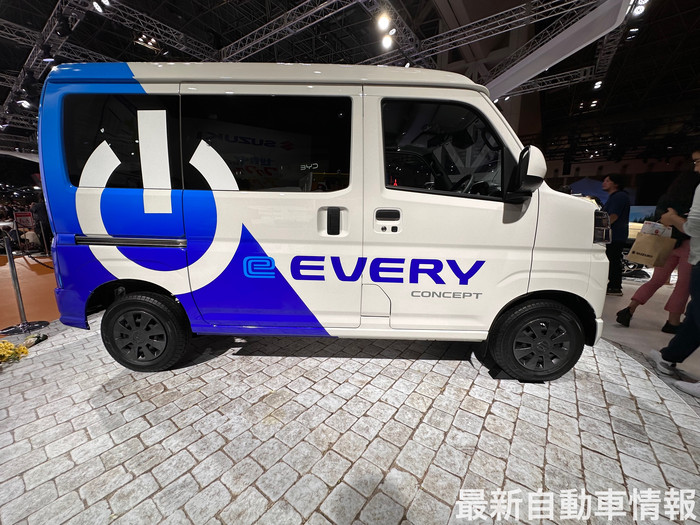

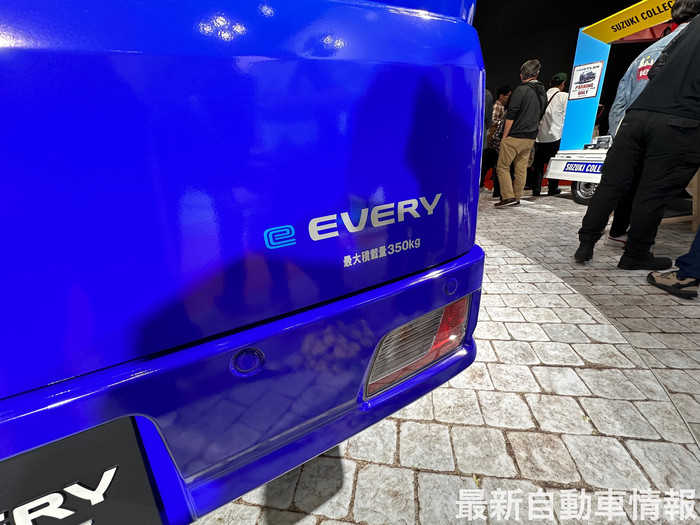
Suzuki’s new BEV “eEvery” rival models
Other companies are also developing EV models of commercial light vehicles, and Honda will begin accepting pre-orders for the new light commercial EV “N- VAN e: ” based on the light van “N-VAN” in May 2024, with the car scheduled to go on sale on October 10, 2024.
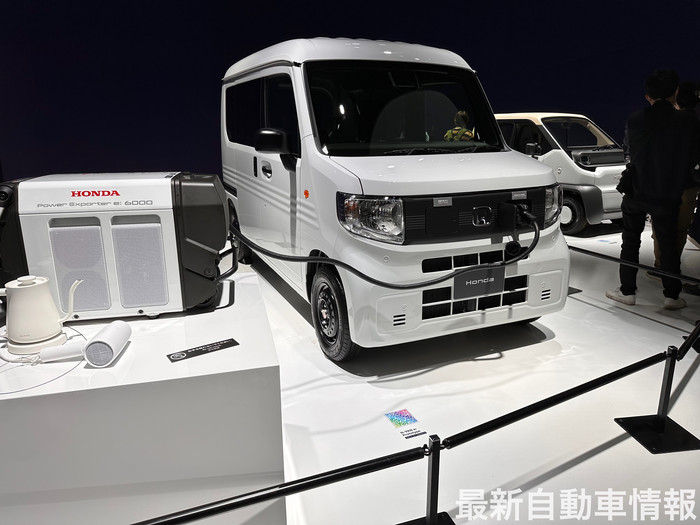
MEV-VAN Concept
Honda plans to roll out 30 types of EVs globally by 2030, and exhibited the “MEV-VAN Concept” equipped with a removable battery at the “JAPAN MOBILITY SHOW 2023.”
For more details, please refer to this article.
New Every and Every Wagon undergo some specification changes
Suzuki announced some changes to the specifications of its light commercial vehicle “Every” and light passenger vehicle “Every Wagon” on April 7, 2022, and released them on May 30. These changes include making a display audio system with a back-eye camera available as a manufacturer option for the “Every” and “Every Wagon.” The “Every” and “Every Wheelchair Accessible Vehicle” now have an idling stop system when stopped on 4AT (4-speed automatic transmission) models. Suzuki Safety Support is now standard equipment, and discharge headlamps are also standard on the JOIN. The luggage compartment lamp has been changed to LED, improving visibility and making it easier to work in dark places.
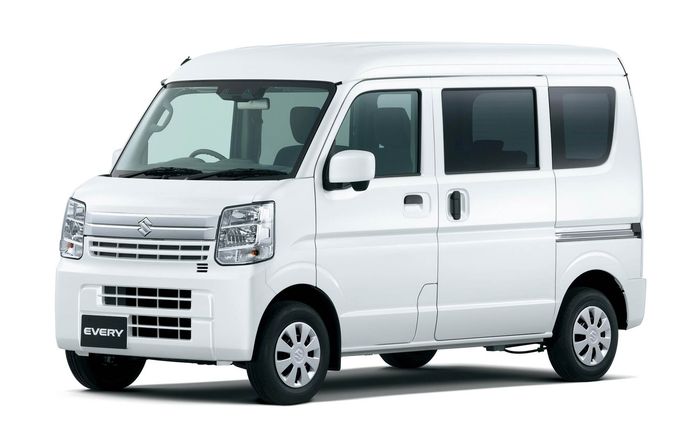
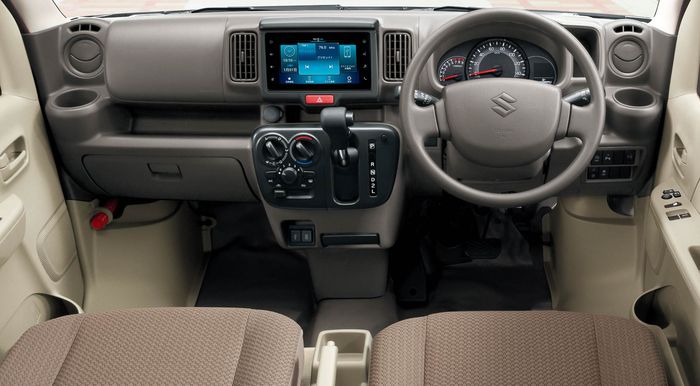
The Every Wagon and Every Wagon Wheelchair Accessible Vehicle have been equipped with LED rear room lamps, an overhead shelf on the high roof version, and a genuine leather steering wheel on the PZ Turbo Special, adding to their range of enhanced features. The light commercial vehicle Every and the light passenger vehicle Every Wagon are “Support Car S Wide” vehicles, which are being promoted by the Ministry of Economy, Trade and Industry and the Ministry of Land, Infrastructure, Transport and Tourism, and are certified by the Ministry of Land, Infrastructure, Transport and Tourism as vehicles with “AEBS2 (Early Collision Mitigation Braking System) Certified” and “PMPD (Propulsion Misapplication Prevention Device) Certified.”
New Every and Every Wagon: Partial specification changes and grade prices
Every
| Model | engine | transmission |
Drive system |
Price (10%) |
|---|---|---|---|---|
| PA | 0.66L inline 3-cylinder DOHC VVT engine |
5-speed manual transmission | 2WD | 991,100 yen |
| 5-speed AGS | 1,092,300 yen | |||
| 4 speed AT | 1,115,400 yen | |||
| 5-speed manual transmission | 4WD | 1,123,100 yen | ||
| 5-speed AGS | 1,224,300 yen | |||
| 4 speed AT | 1,224,300 yen | |||
| PC | 5-speed manual transmission | 2WD | 1,173,700 yen | |
| 4 speed AT | 1,298,000 yen | |||
| 5-speed manual transmission | 4WD | 1,305,700 yen | ||
| 4 speed AT | 1,430,000 yen | |||
| JOIN | 5-speed manual transmission | 2WD | 1,262,800 yen | |
| 5-speed AGS | 1,364,000 yen | |||
| 4 speed AT | 1,387,100 yen | |||
| 5-speed manual transmission | 4WD | 1,394,800 yen | ||
| 5-speed AGS | 1,496,000 yen | |||
| 4 speed AT | 1,519,100 yen | |||
| PA Limited | 5-speed manual transmission | 2WD | 1,020,800 yen | |
| 5-speed AGS | 1,122,000 yen | |||
| 4 speed AT | 1,145,100 yen | |||
| 5-speed manual transmission | 4WD | 1,152,800 yen | ||
| 5-speed AGS | 1,254,000 yen | |||
| 4 speed AT | 1,277,100 yen |
Every Wagon
| Model | engine | transmission |
roof | Drive system |
Price (10%) |
|---|---|---|---|---|---|
| JP Turbo | 0.66L inline 3-cylinder DOHC VVT turbo engine |
4 speed AT | High roof | 2WD | 1,569,700 yen |
| 4WD | 1,698,400 yen | ||||
| PZ Turbo | Standard roof | 2WD | 1,695,100 yen | ||
| 4WD | 1,823,800 yen | ||||
| High roof | 2WD | 1,712,700 yen | |||
| 4WD | 1,841,400 yen | ||||
| PZ Turbo Special |
Standard roof | 2WD | 1,783,100 yen | ||
| 4WD | 1,911,800 yen | ||||
| High roof | 2WD | 1,800,700 yen | |||
| 4WD | 1,929,400 yen |
About Every specs
| Specifications | Every |
|---|---|
| full length | 3,395mm |
| Overall width | 1,475mm |
| Overall height | 1,910mm |
| Wheelbase | 2,430mm |
| Indoor chief | 2,240mm |
| Indoor width | 1,355mm |
| Interior height | 1,420mm |
| Front and rear riding distance | 1,080mm |
All other features are best in their class except for the wheelbase. The body uses more high-tensile steel, and the engine, suspension, interior, electrical components, etc. have all been reduced in weight by 40 kg (5MT vehicle, compared to the previous model). The car also uses the R06A engine, which has recently become mainstream for Suzuki. The model combines the naturally aspirated R06A engine with a 5AGS transmission, and the weight reduction has resulted in a JC08 mode fuel economy of 20.2 km/L (previous model 16.4 km/L).
| Specifications | R06A |
|---|---|
| engine | Inline 3-cylinder DOHC 660cc VVT |
| Maximum power | 49ps/5700rpm |
| Maximum torque | 6.3kgm/3500rpm |
| transmission | 5AGS |
| Drive system | 2WD (FR) |
| JC08 mode fuel economy | 20.2km/L (old model 16.4km/L) |
Naturally, there is also a turbo model Every Wagon, with an R06A intercooler turbo that achieves a JC08 mode fuel economy of 16.2km/L (previous model 14.4km/L).
| Specifications | R06A |
|---|---|
| engine | Inline 3-cylinder DOHC 660cc intercooler turbo |
| Maximum power | 64ps/6000rpm |
| Maximum torque | 9.7kgm/3000rpm |
| transmission | 5AGS |
| Drive system | 2WD (FR) |
| JC08 mode fuel economy | 16.2km/L (old model 14.4km/L) |
The naturally aspirated R06A engine meets the 2005 exhaust gas emission standards by 75%. The 5-speed AGS model meets the 2015 fuel economy standards + 20% and is eligible for eco-car tax breaks, with exemptions on automobile acquisition tax and automobile weight tax (a 100% tax reduction).
Demand for light vehicles and commercial EVs
- Light commercial EVs offer the maneuverability you expect from a vehicle (minimum turning radius of 5m or less)
- Ensures necessary luggage space performance and load capacity.
- It is also very quiet when driving and when starting and stopping, so it can be used safely even in residential areas.
- The powerful driving performance that only a motor-driven EV can provide makes it possible to carry heavy loads with ease .
While maintaining the cargo space and load capacity required for a light commercial van, the powerful driving performance of a motor-driven EV makes it possible to carry heavy loads with ease.It is also very quiet when driving, starting, and stopping, making it safe to use in residential areas, including early mornings and late nights.
Japan Post has already begun fully introducing electric vehicles (EVs) and electric motorcycles into its delivery fleet since 2019. Mitsubishi Motors’ Minicab -MiEV Van is used for delivery work, while Honda’s BENLY e: electric motorcycle is used, and these vehicles are becoming more common sights around Tokyo. Yamato Transport began testing Honda’s new N-VAN e: in June 2023 for delivery operations. Light commercial EVs, in particular, are needed for their maneuverability in delivery operations.
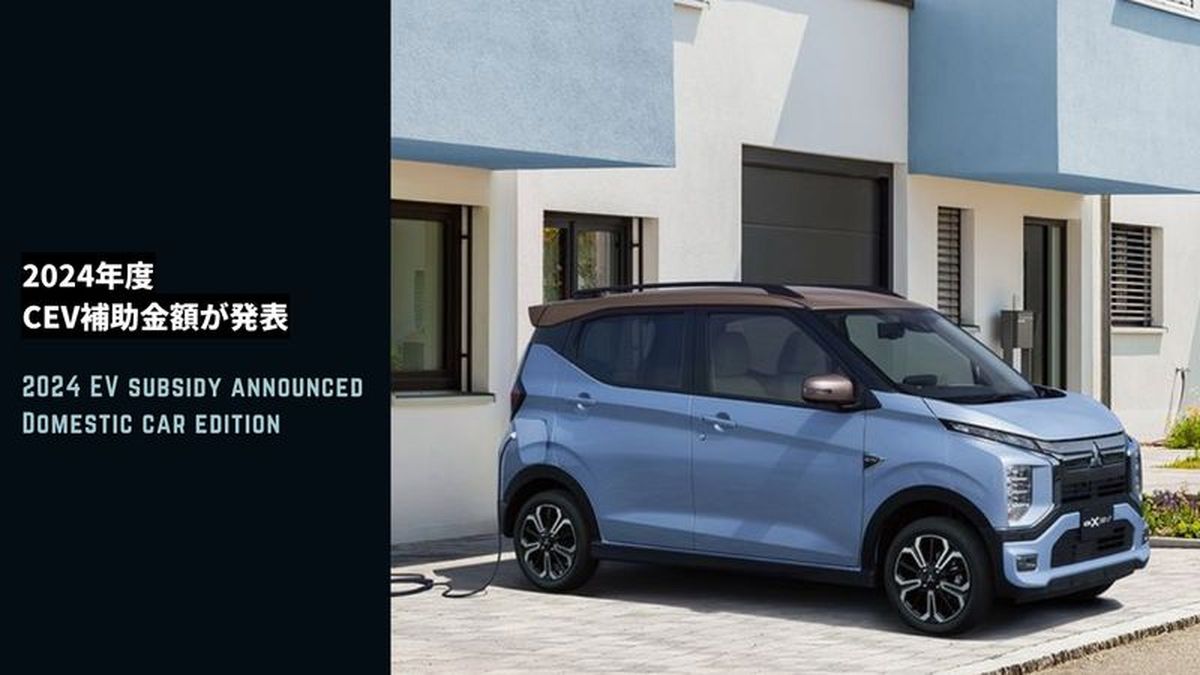
FY2024 Subsidy for Promoting the Introduction of Clean Energy Vehicles (EV, PHEV, FCEV) (CEV Subsidy)
With the availability of EV subsidies, the purchase price of an eEvery could be significantly reduced.
Subsidy budget: 129.1 billion yen
In order to promote the widespread adoption of clean energy vehicles, the FY2033 supplementary budget has been expanded to a subsidy budget of 129.1 billion yen. In order to realize GX in the automotive sector, it is necessary not only to improve vehicle performance, but also to “create an environment in which electric vehicles can be used sustainably.” For this reason, a new calculation method for subsidy amounts will be introduced in the FY2033 supplementary budget. Specifically, the subsidy recipients and amounts will be determined based on a comprehensive evaluation of manufacturers’ efforts based on “the value necessary to realize GX in the automotive sector,” such as vehicle performance, charging infrastructure development, after-sales service systems, and cooperation with local communities in the event of a disaster.
Subsidy amount
The amount of subsidy varies depending on the type of vehicle, fuel efficiency, etc., but for fiscal year 2024 (FY2023 supplementary budget), it is as follows:
| Vehicle type | Subsidy amount |
|---|---|
| Electric vehicles (EVs) | Up to 850,000 yen |
| Light electric vehicle (light EV) | Up to 550,000 yen |
| Plug-in hybrid vehicle (PHEV) | Up to 550,000 yen |
| Fuel Cell Vehicle (FCEV) | Up to 2.55 million yen |
Source: Clean Energy Vehicle Introduction Promotion Subsidy (CEV Subsidy)
A word from the editorial department
There is such high demand for commercial EVs that other companies, including Honda and Mitsubishi, will have them in their lineups by 2026. Keep an eye on the new world of EVs. We’ll keep you updated as new information becomes available.
Suzuki news release
https://www.suzuki.co.jp/release/a/2022/0407a/index.html
Every
https://www.suzuki.co.jp/car/every/
Every Wagon