
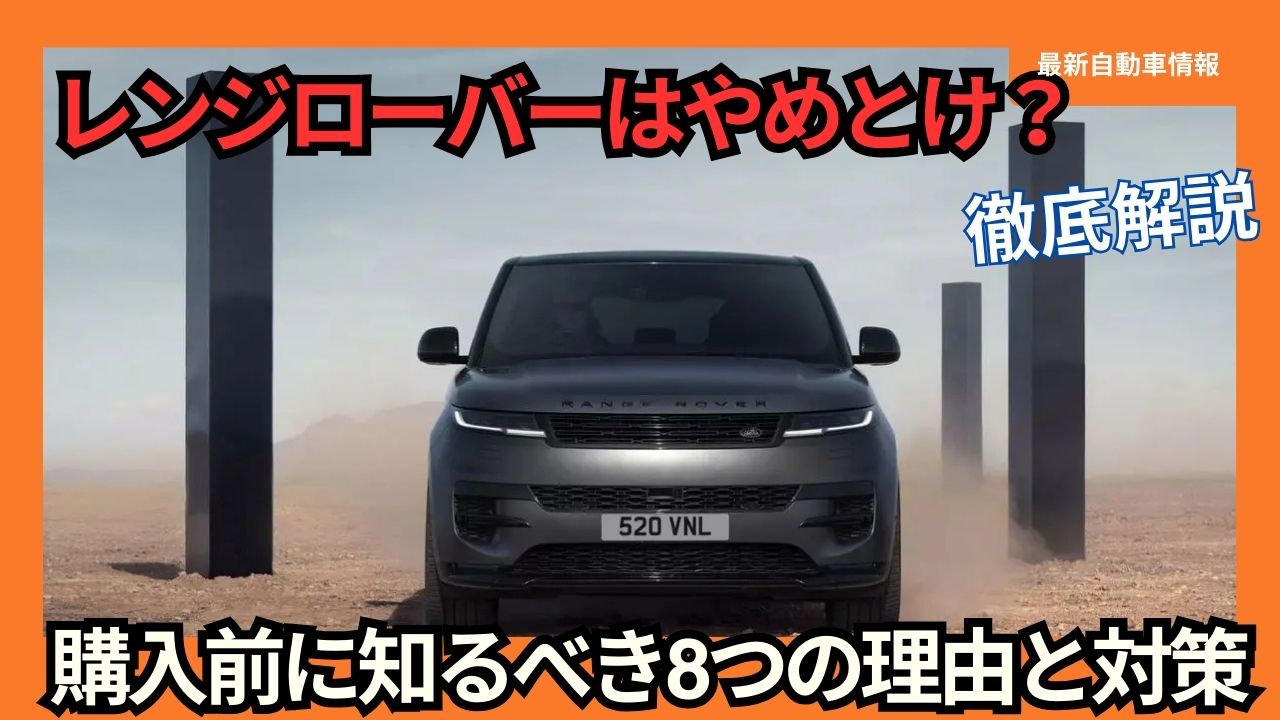
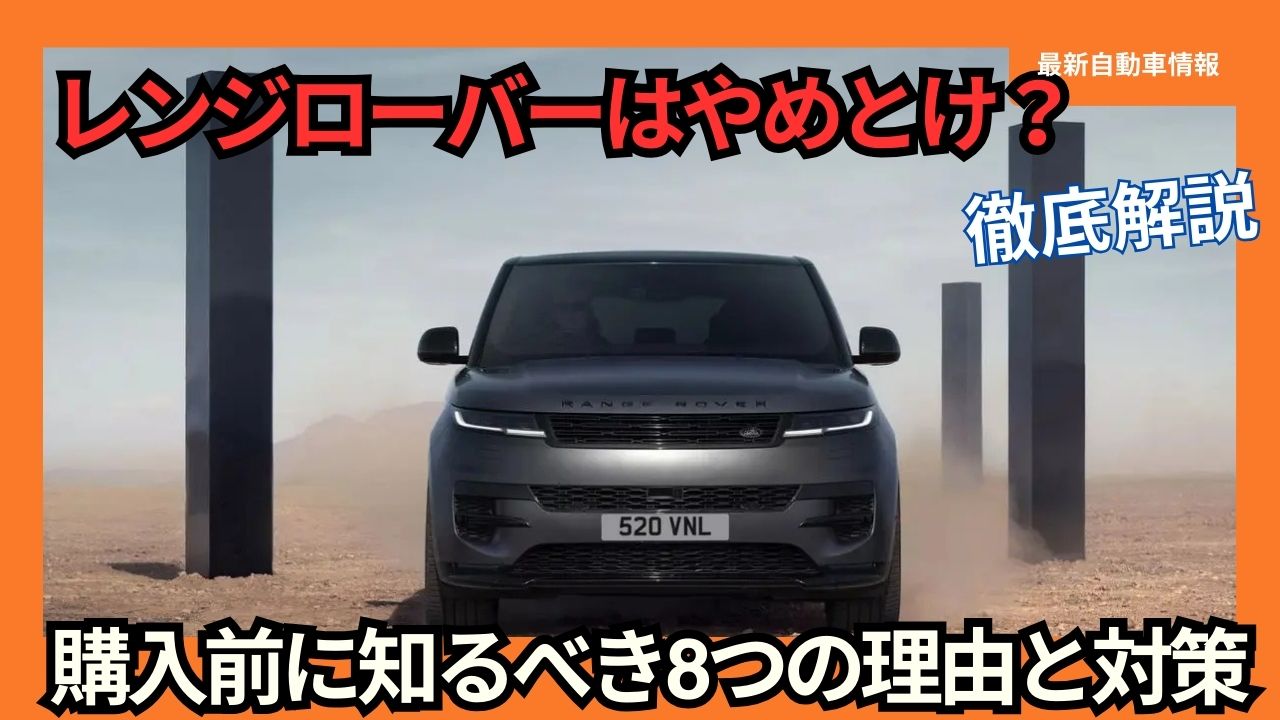
The Range Rover is a symbol of luxury SUVs and is admired by many people . However, the keyword ” Avoid Range Rover ” is frequently searched online , almost like a warning. Why is such a popular car being spoken of in such negative terms?
In this article, we’ll thoroughly explain the specific reasons why people are advised not to buy a Range Rover, and whether it’s still worth choosing one, so that those considering buying one won’t regret it later. We’ll delve into the actual maintenance costs and breakdown risks you should know before purchasing , as well as the characteristics of people who are truly suited to a Range Rover .
8 reasons why you should avoid a Range Rover
Beneath its commanding presence and luxurious feel, the Range Rover harbors some issues that some buyers may encounter.
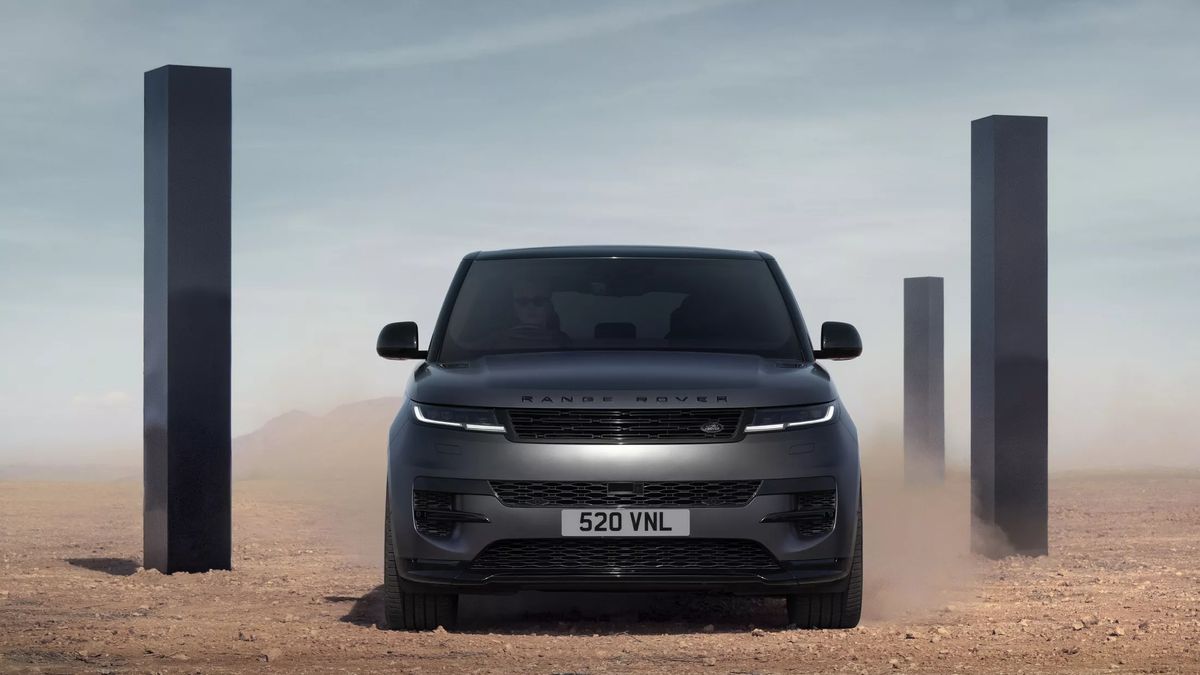
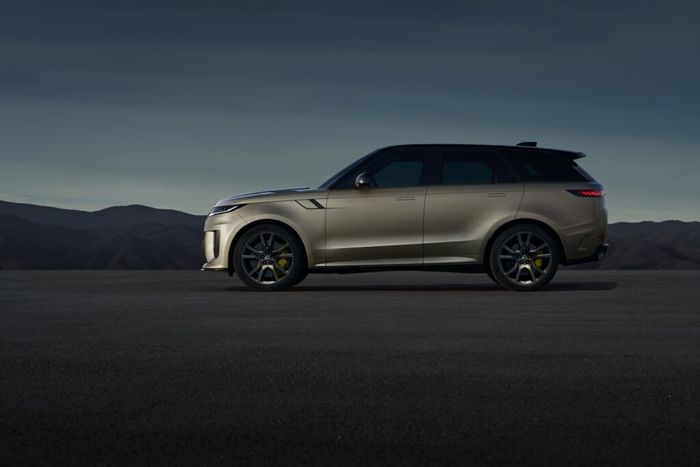
2025 Range Rover Sport Stealth Pack
1. Excessive maintenance costs
The biggest hurdle to owning a Range Rover is its high maintenance costs . It is said that annual maintenance costs are two to three times higher than those of a domestic luxury SUV. Breaking this down, in addition to fuel costs, automobile tax, and optional insurance premiums, vehicle inspection and maintenance costs, as well as repair and parts replacement costs (described below), it is not uncommon for the annual maintenance costs to exceed 500,000 to 1,000,000 yen .
The biggest problem with the Range Rover is its high maintenance costs. Annual maintenance costs consist of the following:
Breakdown of annual maintenance costs (approximate)
- Fuel costs: Approximately 200,000-300,000 yen (based on driving 10,000 km per year)
- Automobile tax: Approximately 66,500-88,000 yen (varies depending on engine displacement)
- Voluntary insurance premium: Approximately 100,000-200,000 yen
- Vehicle inspection and maintenance costs: Approximately 150,000-250,000 yen (average for two years)
- Repair and parts replacement costs: Approximately 100,000-500,000 yen
Total: 500,000-1,000,000 yen or more per year
These maintenance costs are about 2-3 times higher than those of a domestic luxury SUV.
2. Frequent breakdowns and high repair costs
Among imported cars, the Range Rover is known for having a particularly high failure rate . Problems with the air suspension , electrical systems , and infotainment systems have been reported in a variety of areas. Furthermore, parts are expensive and repair shops are limited, meaning a single repair can cost hundreds of thousands of yen.
Main failure points and repair costs
- Air suspension: 200,000-500,000 yen
- Electrical system problems: 50,000-300,000 yen
- Engine-related parts: 100,000-800,000 yen
- Infotainment system: 150,000-400,000 yen
In the 2023 Consumer Reports survey, the Range Rover ranked last in reliability.
3. Poor fuel economy
With its large body and powerful engine, the Range Rover is not known for its good fuel economy. Its typical fuel economy is around 6-8km/L in urban areas and 8-11km/L on the highway . With gasoline prices rising these days, this poor fuel economy can be a significant burden on the household budget.
The Range Rover’s fuel economy isn’t the best:
Actual fuel consumption data
- Urban driving: 6-8km/L
- Expressway: 8-11km/L
- Combined fuel economy: 7-9km/L
With gasoline prices currently soaring, this poor fuel economy places a significant burden on household budgets.
4. Difficult to handle
The large length and width of the Range Rover can make it difficult to drive on Japan’s narrow roads and in parking lots. In particular, many models exceed 1,930mm in width, meaning they often cannot be used in multi-story parking garages or mechanical parking garages. This poor maneuverability can be stressful when used daily in urban areas.
As the Range Rover is a large SUV, there are many situations where it is not suitable for Japanese road conditions:
- The overall width is over 1,930 mm
- Parking restrictions (mechanical parking lots are often unavailable)
- Stress of driving on narrow roads
- Difficulty in handling in urban areas
5. Low resale value
Although the new car price of a Range Rover is very high, its resale value tends to be low. The resale rate after three years is said to be about 50-60%, which is a big difference compared to the 70-80% for domestic luxury SUVs. This means that you will incur a large loss when selling.
The reality is that Range Rovers are expensive new but have poor resale values:
Resale value (after 3 years)
- Range Rover: Approximately 50-60%
- Domestic luxury SUVs (Lexus LX, etc.): Approximately 70-80%
This difference can result in a large loss when you sell.
6. Brand image issues
Some people have negative images of Range Rover, such as ” nouveau riche ” and ” showy .” This brand image is one of the reasons why people shy away from it, especially in Japan.
7. Parts supply issues
One problem specific to imported cars is that it takes time to order parts . This can result in longer repair times and longer periods when the car is out of service. Also, genuine parts are very expensive.
Issues specific to imported vehicles include:
- It takes time to get parts
- Genuine parts are expensive
- There are limited repair shops
- Possibility of prolonged repair period
8. Complexity of electronic control systems
The latest Range Rovers are equipped with sophisticated electronic control systems that are prone to system malfunctions and software bugs that can be very difficult and expensive to diagnose and repair.
The latest Range Rovers have complex electronic systems that are prone to the following problems:
- System malfunction
- Software bugs
- Difficulty in diagnosis
- High repair costs
Maintenance costs: how much do they cost per year?
Maintenance costs by model: how much does it cost per year?
Although it varies depending on the model, the annual maintenance costs for a Range Rover are approximately 500,000 to 1.2 million yen .
| Model name | Estimated annual maintenance costs | remarks |
| Range Rover (flagship) | 700,000 yen to 1,200,000 yen | Fuel costs and automobile taxes due to large displacement engines are particularly high |
|---|---|---|
| Range Rover Sport | 600,000 yen to 1,000,000 yen | Because it is a sports model, consumables such as tires need to be replaced frequently. |
| Range Rover Velar | 550,000 yen to 850,000 yen | Although it is a mid-range model, maintenance costs are still high. |
| Range Rover Evoque | 500,000 to 800,000 yen | Even the entry-level model is expensive compared to domestic cars |
How to reduce maintenance costs
- Thorough regular maintenance
- Early detection prevents major breakdowns
- Use of genuine oil
- Adherence to specified inspection intervals
- Choosing a reliable repair shop
- Use of Land Rover specialty stores
- Get multiple quotes
- Use of used parts (where appropriate)
- Utilizing an extended warranty
- Extended warranty when purchasing a new car
- Use of the Certified Pre-Owned Program
Actual failure rates and repair costs
Range Rover malfunctions tend to increase as the mileage increases. In particular, the air suspension installed in many Range Rovers frequently suffers from air leaks and compressor failures. Problems with the advanced infotainment system and electrical problems are also common.
These repair costs often run into the hundreds of thousands of yen, and in some cases can cost more than 500,000 yen per year . When considering a purchase, it is very important to make a financial plan that takes into account the risk of these repair costs.
Breakdown trends by mileage
New car ~ 30,000km
- Electrical system trouble due to initial defects
- Software-related issues
- Repair costs: 100,000-300,000 yen per year
30,000km to 70,000km
- Time to replace consumables
- Increase in air suspension-related problems
- Repair costs: 200,000-500,000 yen per year
70,000km to 100,000km or more
- Large parts need to be replaced
- Engine and transmission related problems
- Repair costs: 500,000 to 1,000,000 yen or more per year
Major failure cases and countermeasures
Air suspension failure
- Cause: Air leak, compressor failure
- Countermeasures: Regular inspection and proper use
- Repair cost: 200,000-500,000 yen
Electrical system trouble
- Cause: Moisture, aging
- Countermeasures: Regular battery replacement, store in a dry environment
- Repair cost: 50,000-300,000 yen
Infotainment system failure
- Cause: Software bug, hardware failure
- Solution: Regular updates
- Repair cost: 150,000-400,000 yen
Resale value issues
Comparison with other brands
| brand | Resale rate after 3 years | Five-year resale rate |
|---|---|---|
| Range Rover | 50-60% | 35-45% |
| Lexus | 70-80% | 55-65% |
| Porsche | 65-75% | 50-60% |
| BMW | 55-65% | 40-50% |
Reasons for the decline in resale value
- Avoided in the used car market due to frequent breakdowns
- High maintenance costs limit demand
- The size of the new car discount
- Short model change cycle
Who should still choose a Range Rover?
The above disadvantages might make you hesitate to buy a Range Rover, but there are still many people who choose it because it has its own appeal.
Characteristics of suitable people
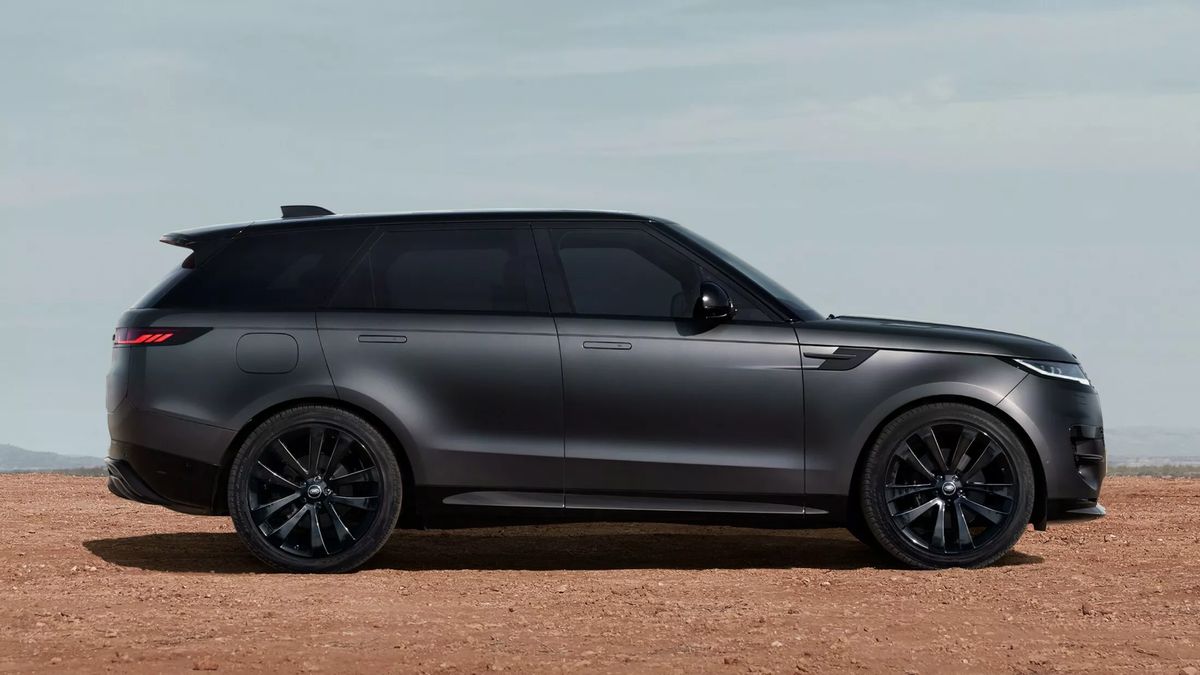
2025 Range Rover Sport
- A person with sufficient financial means is required to have an annual income of 15 million yen or more so that maintenance and repair costs are not a problem . You need to be in a financial position where you can enjoy cars as a hobby and not have to worry about maintenance costs.
- People who seek special value in their cars are strongly attracted to Range Rover’s unique design , its history as a supplier to the British Royal Family , and the brand’s status .
- For those seeking genuine off-road performance, the Range Rover, nicknamed the ” Rolls-Royce of the Desert ,” boasts outstanding off-road performance, as its name suggests. For those who often enjoy serious outdoor activities and rough road driving, it is an unparalleled companion.
- For those seeking the finest interior space, the interior, lavishly made with high-quality leather and wood, offers unrivaled comfort and quietness . Perfect for those who want to make their travel time a special experience.
Someone who can understand true charm
People who take advantage of off-road capabilities
- Serious outdoor activities
- There are many opportunities to drive on rough roads
People who value design and brands
- Unique design
- History and brand power as a supplier to the British Royal Family
People who want a high-quality interior space
- Top-class interior quality
- Comfort and quietness
Points to check before purchasing
Confirmation of financial plan
- Preparation for initial costs
- Vehicle price
- Registration fees
- Option fee
- Total: 8-20 million yen or more
- Securing maintenance costs
- Secure a budget of 800,000 to 1.2 million yen per year
- Emergency repair fund
- Calculating loss on sale
- Assuming a 50-60% decrease in value over five years
Lifestyle compatibility
Clarification of intended use
- Suitability for commuting
- Family structure compatibility
- Check the parking environment
Considering alternatives
- Comparison with domestic luxury SUVs
- Comparison with other imported brands
Things to keep in mind when buying a used car
Advantages and disadvantages of used cars
merit
- Available for purchase at 50-70% of the new car price
- Avoiding early depreciation
Disadvantages
- Increased risk of breakdown
- Shortened warranty period
- Unclear maintenance records
Tips for choosing a used car
- Check maintenance records
- Status of regular inspections
- Check repair history details
- Genuine parts usage
- Selecting a Certified Pre-Owned Vehicle
- Dealer Certification Program
- Extended warranty included
- Quality assurance details
- Professional inspection
- Detailed inspection before purchase
- Check the condition of invisible parts
- Predicting future repair needs
Summary: Making a decision you won’t regret
The Range Rover is certainly a car with many factors that make people say “don’t buy it.” The financial burden is not light, with high maintenance costs, frequent breakdowns, and low resale value.
However, for those who understand and have the financial and mental means to accept these disadvantages, this car can provide a special experience that cannot be found anywhere else.
Final check before deciding to buy
- Can you afford maintenance costs of over 1 million yen per year?
- Are the repair costs and time required in the event of a breakdown acceptable?
- Are you willing to accept a low resale value?
- Can you feel the value that can only be found in a Range Rover?
Only if you can answer “YES” to all of these questions should you consider buying a Range Rover.
lastly
There is a solid reason for the voices saying “Don’t buy a Range Rover.” However, for those who are still attracted to it and can accept the risks, it will be a special car with no alternative.
When considering a purchase, we strongly recommend that you use the information in this article as a reference and make a calm and careful decision. In order to choose a car you will not regret, it is important to gather enough information and allow yourself enough time to consider the purchase.