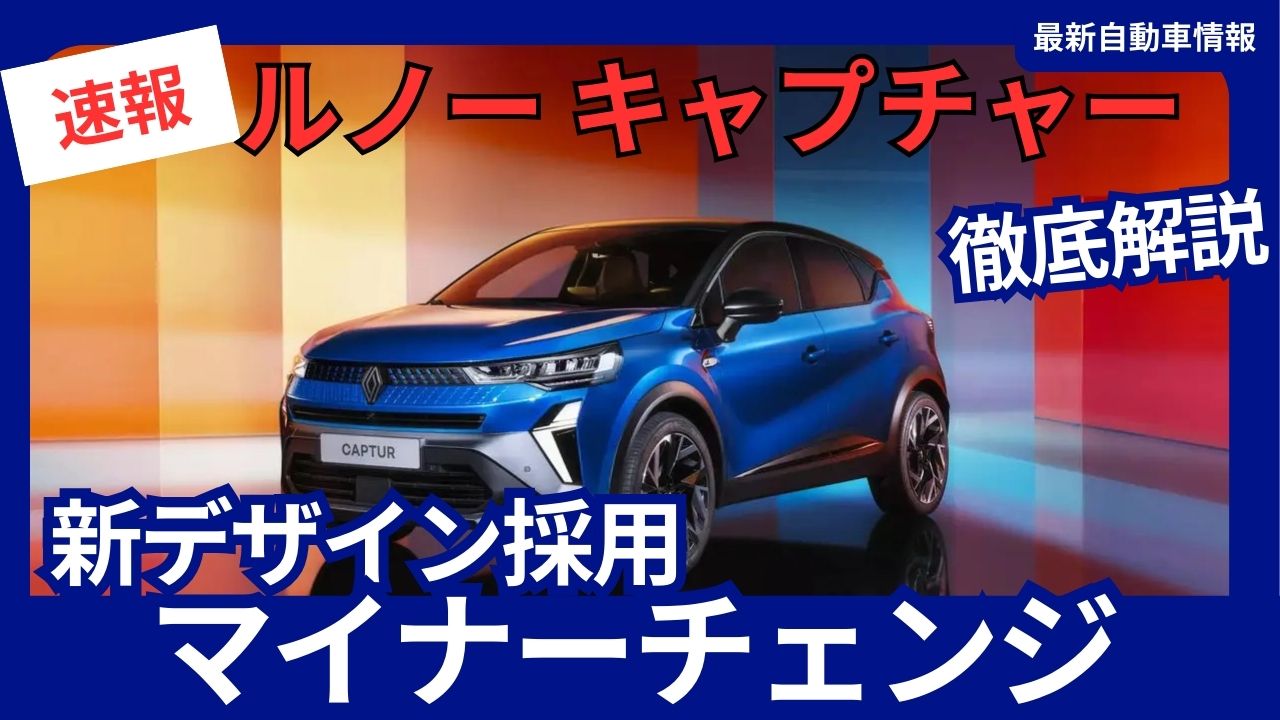

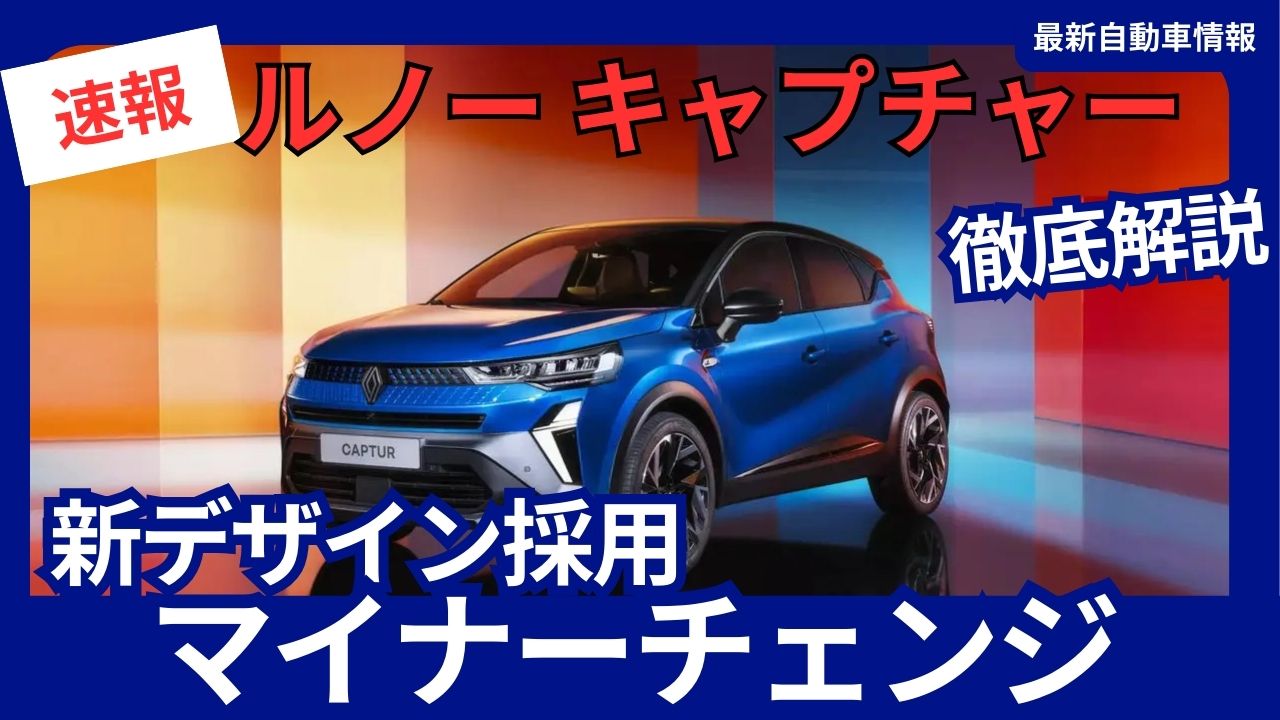
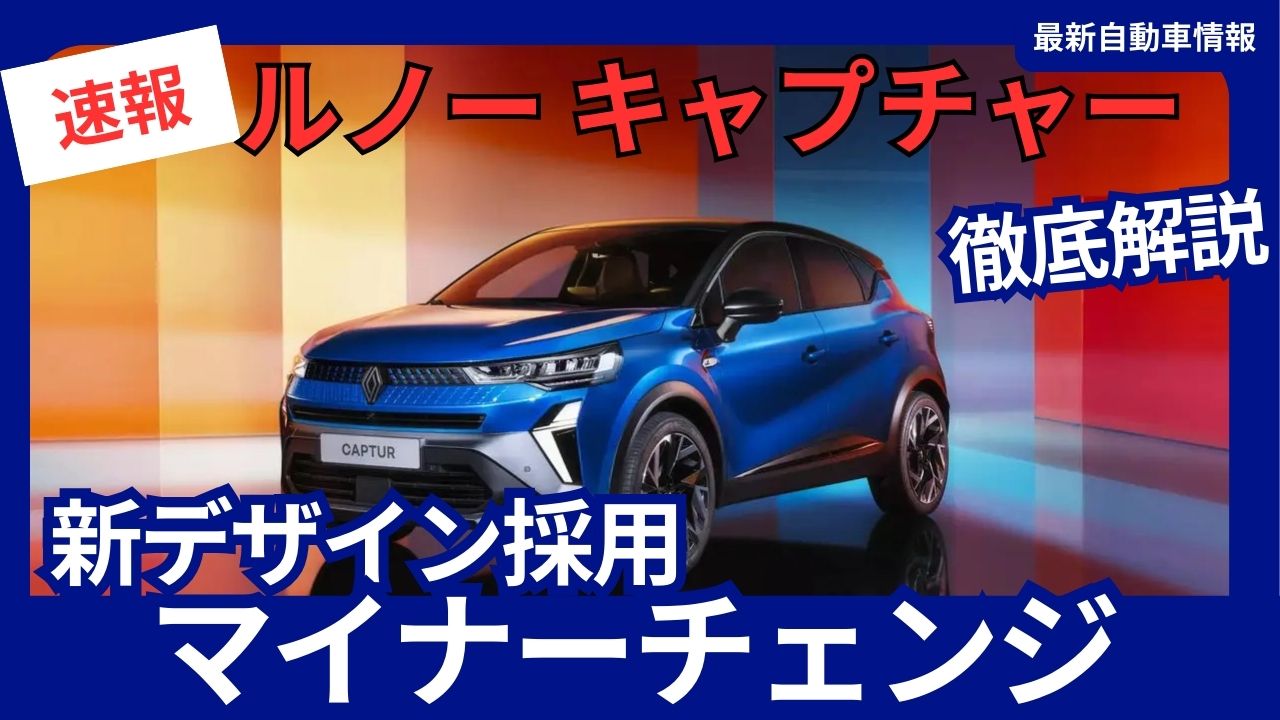
Renault will make minor changes to its popular compact SUV, the Captur, and release the Japanese model on June 12, 2025. Prices will range from 3,899,000 yen to 4,549,000 yen.
Renault’s popular compact SUV, the Captur, is undergoing a major facelift that includes a refreshed interior and exterior design, the introduction of cutting-edge technology, and improved driving performance, evolving to a new stage. The new Captur, which had its world premiere on April 4, 2024 (local time) , is scheduled for release in the Japanese market in June 2025, and is attracting the anticipation of many fans. Exhibition and test drive events for the new Renault Captur are also planned to be held in three cities to coincide with the release.
The Captur has steadily gained fans since the current model underwent a full model change in Japan in February 2021, and we take a closer look at how this latest improvement will transform it.
overview
- Renault’s popular compact SUV, the Captur, has undergone a major minor change.
- It is scheduled to be released in the Japanese market in June 2025.
Main changes to the exterior
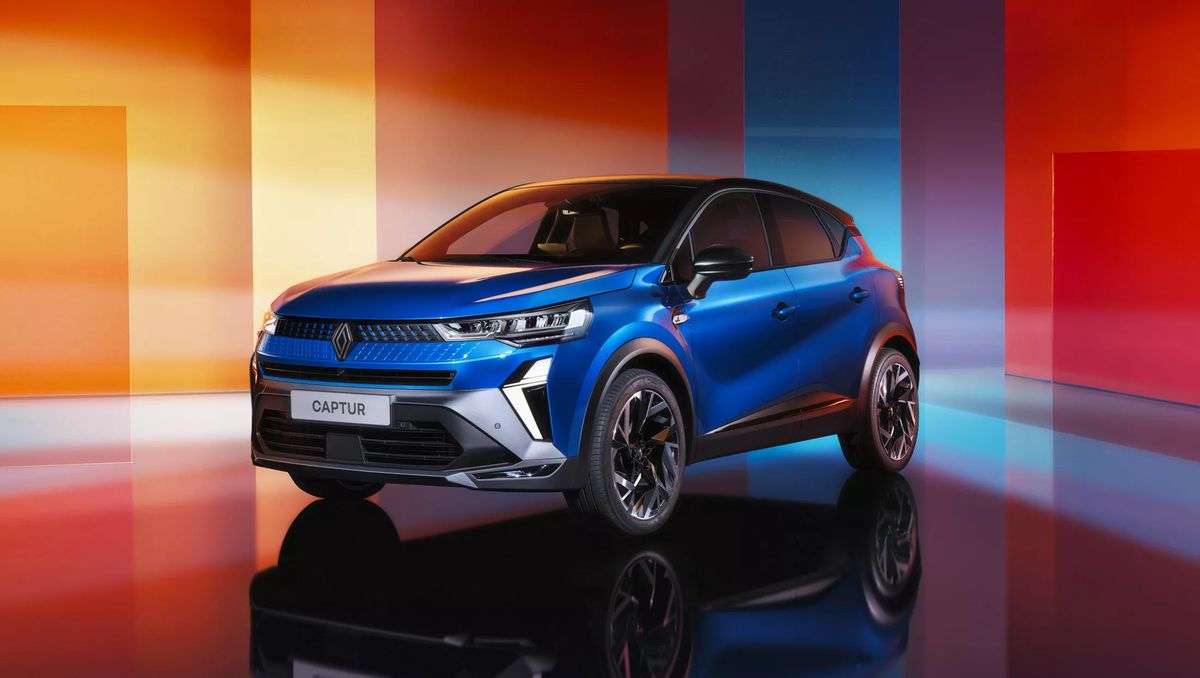
- The front face has been completely redesigned to adopt the new generation Renault design (new emblem, sharp full LED headlights, arrow-shaped daytime running lights, newly designed bumper).
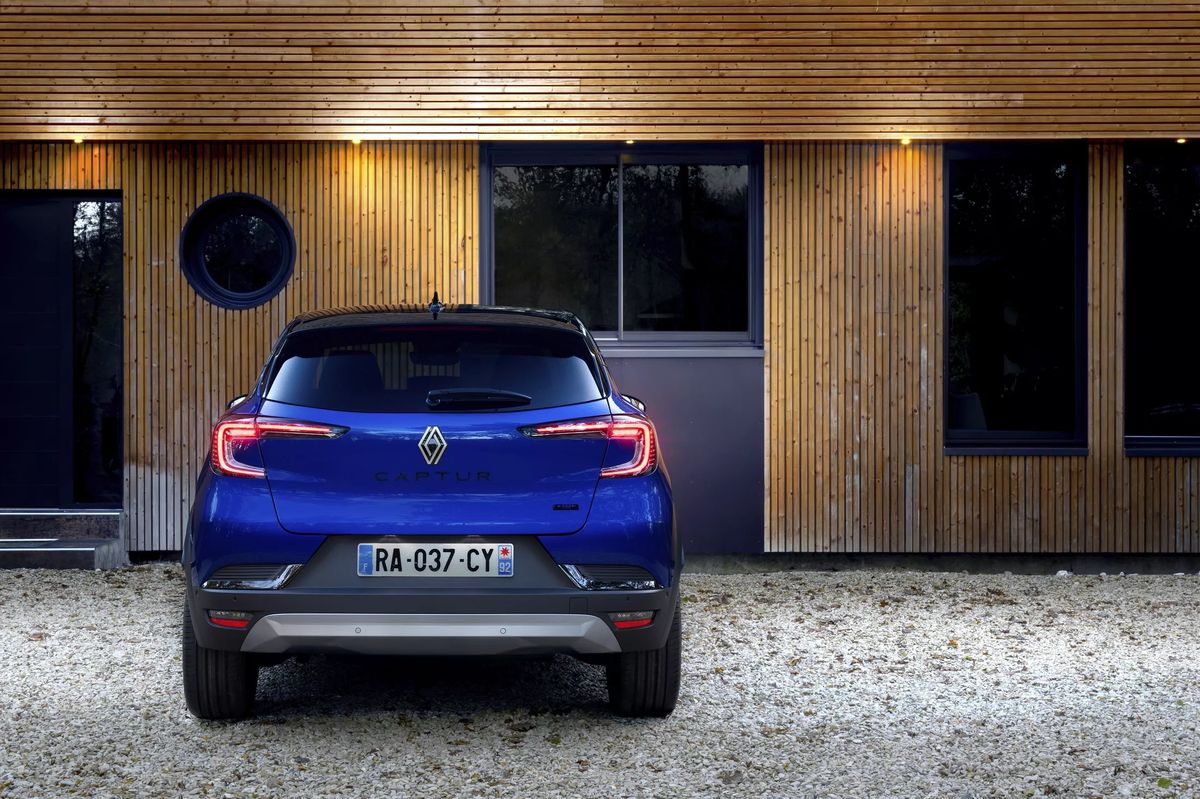
- The LED graphics in the rear taillights have been updated to better harmonize with the front design.
- The previous “RS Line” has been replaced by a new sporty grade, “Esprit Alpine” (featuring slate gray bumper inserts, gloss black accents, and exclusive 19-inch alloy wheels).
Main changes to the interior
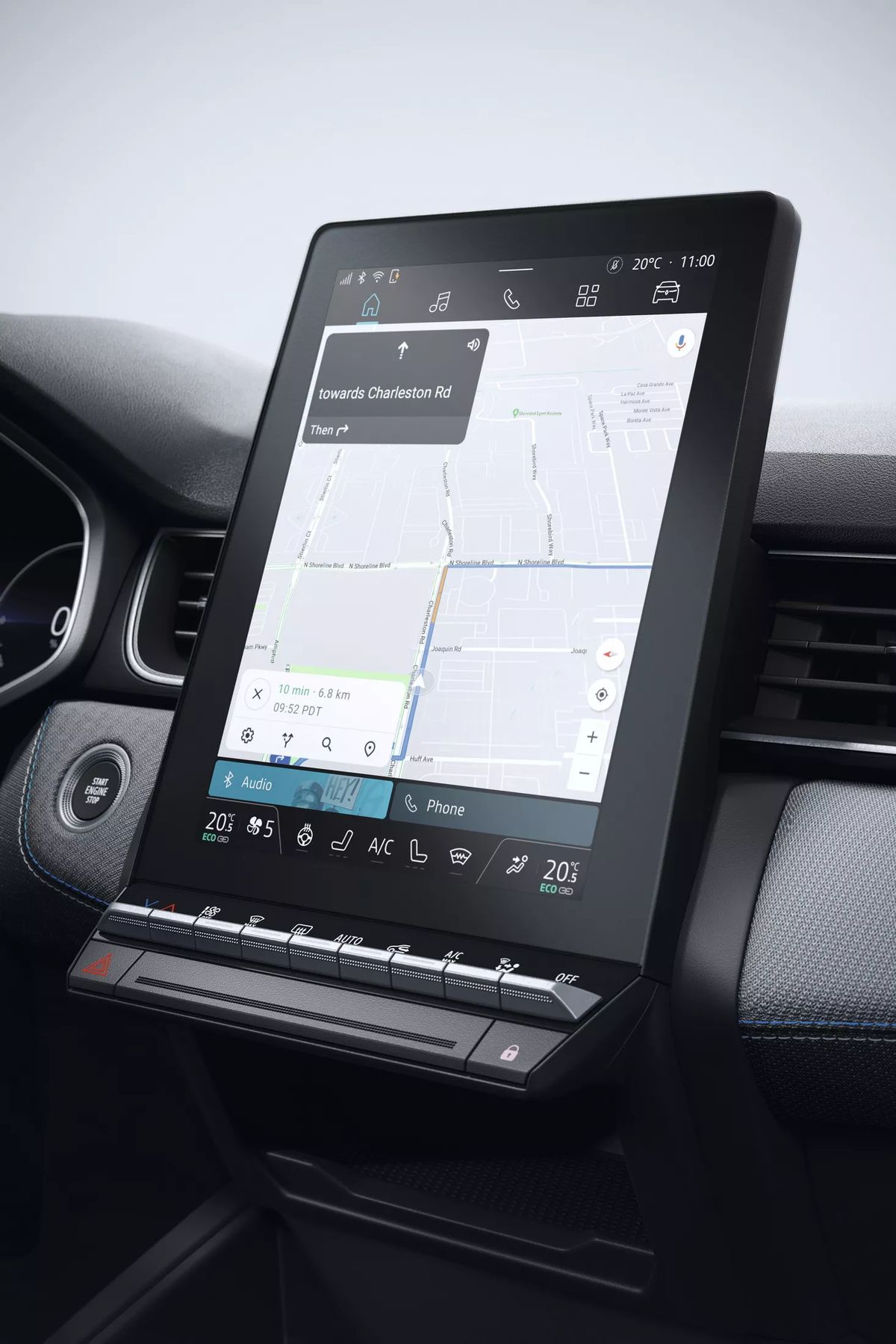
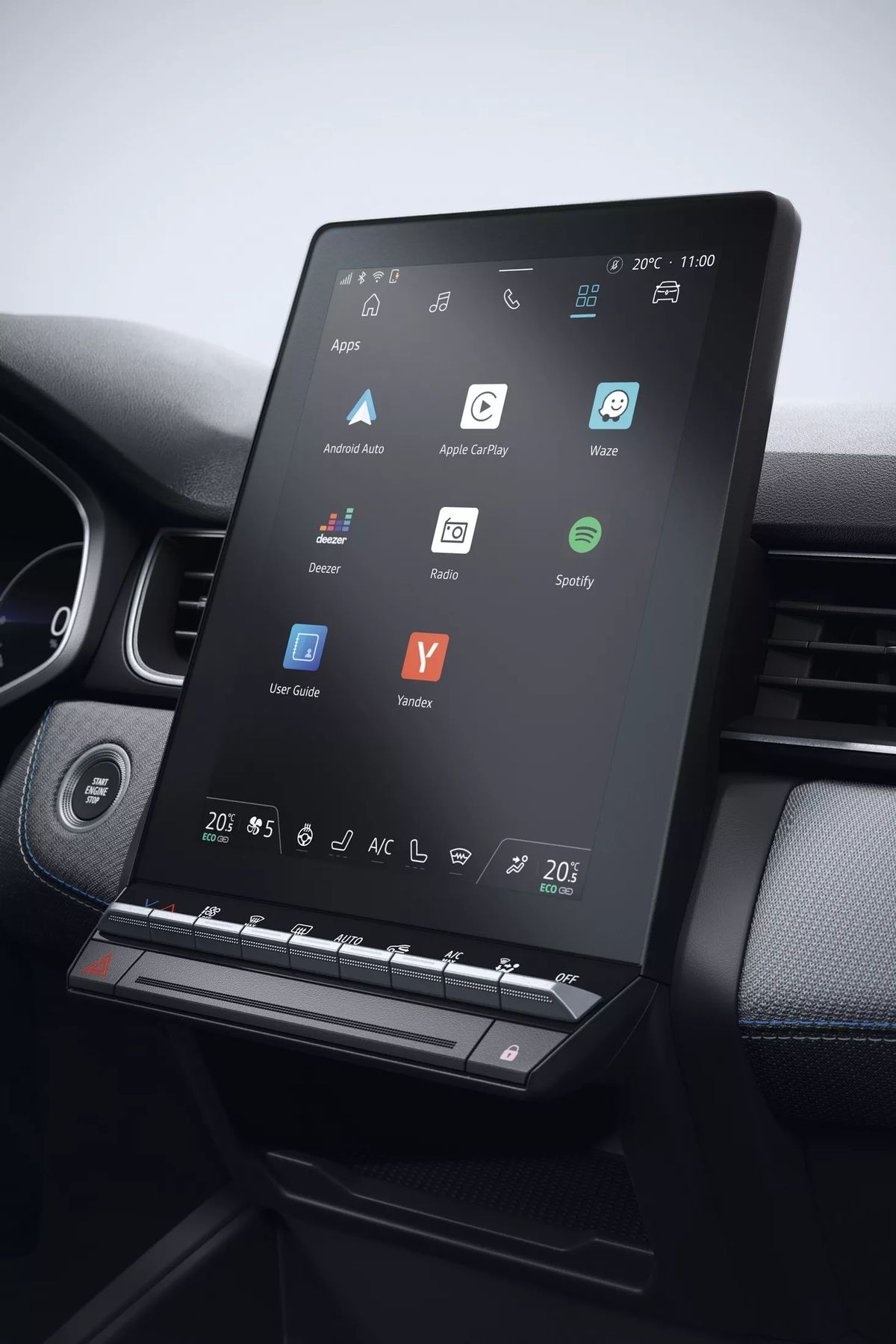
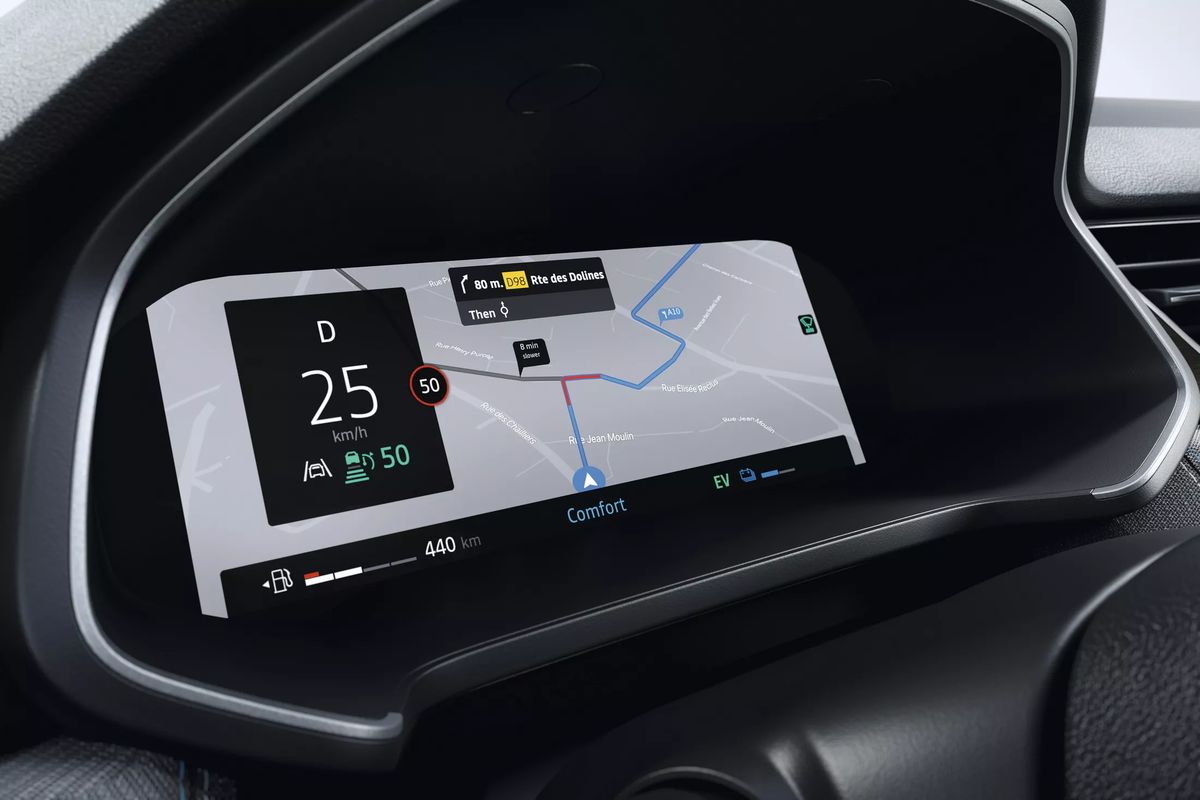
- It now comes with a 10.25-inch fully digital instrument cluster and a new 10.4-inch portrait-oriented touchscreen infotainment display.
- The infotainment system uses “Google Built-in” (based on Android Automotive 12), greatly improving convenience.
- The Esprit Alpine grade features exclusive interior trim (sustainable multi-texture fabric seats, blue stitching, French flag emblem, blue-gray dashboard insert, and aluminum pedals).
- Knee space in the rear seats has been increased to 221mm (top level in its class).
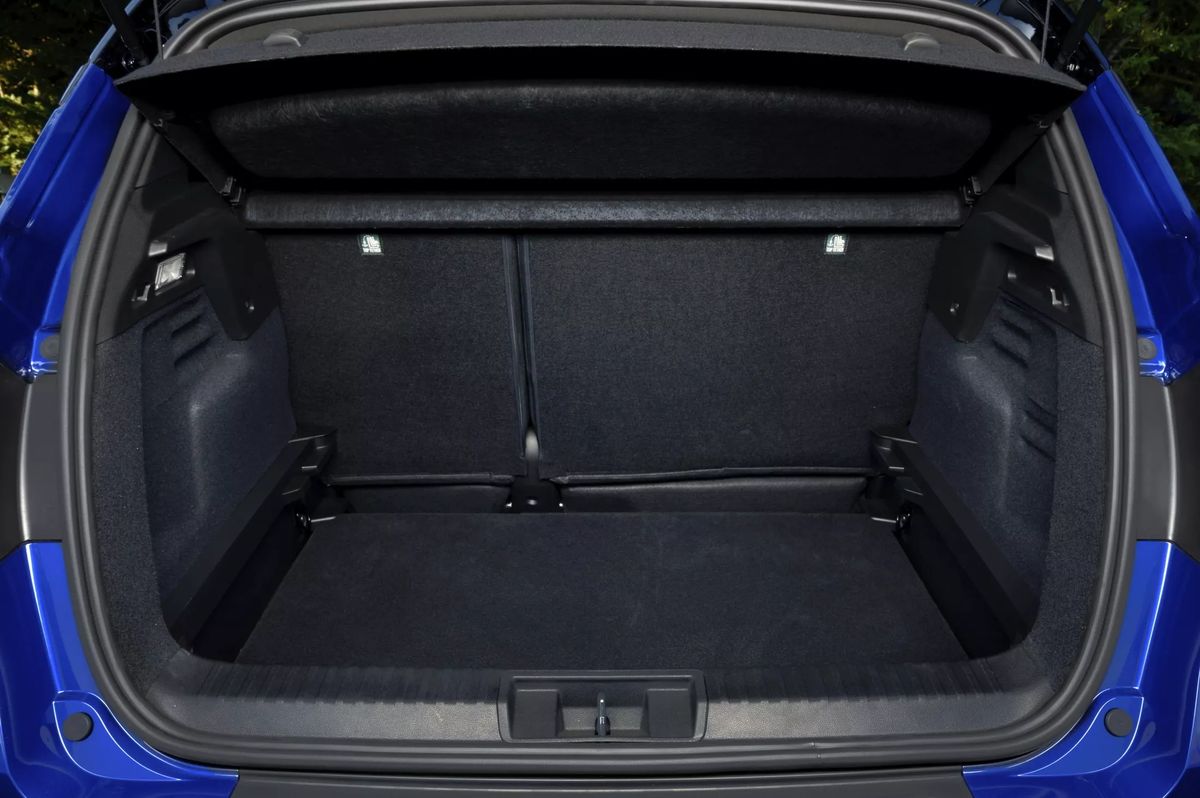
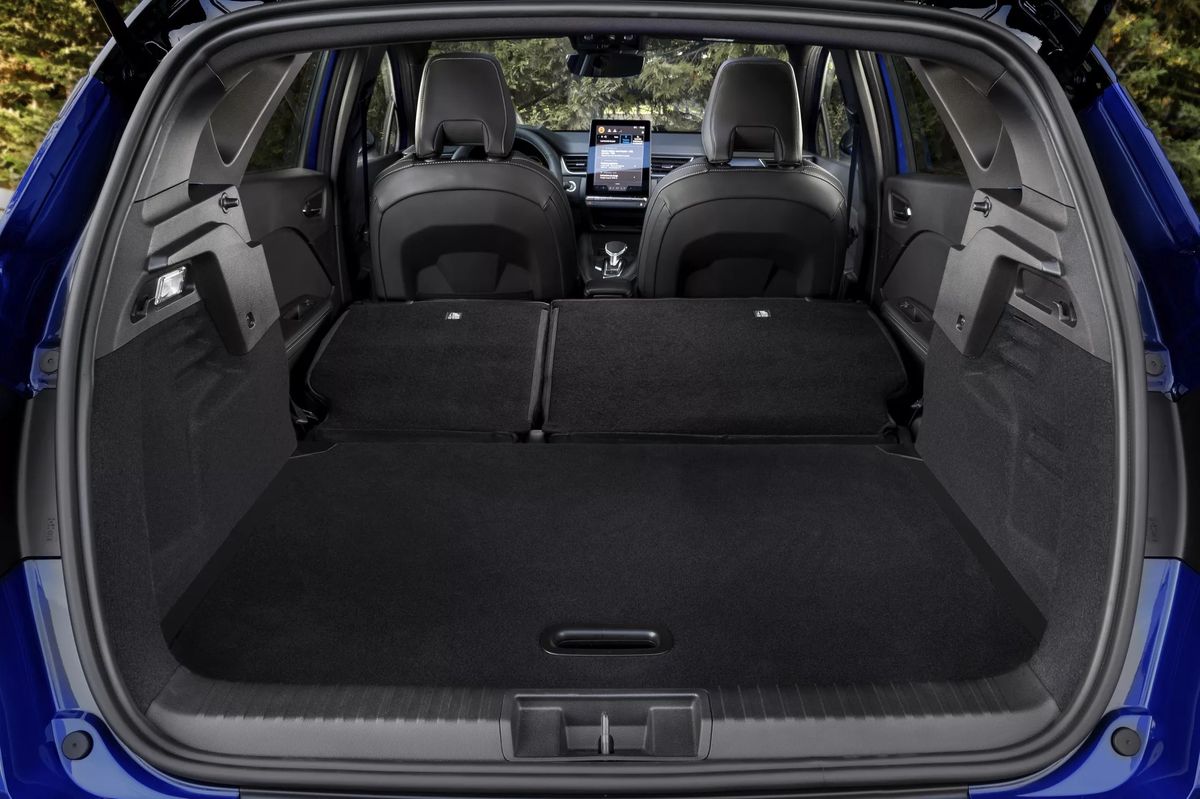
- The rear luggage capacity is 536L under normal conditions, and can be increased to a maximum of 1235L when the rear seats are folded down.
Powertrain (Japanese market forecast)
- Inline 4-cylinder 1.3L turbo engine + mild hybrid system (maximum output 160ps/maximum torque 27.5kgm, 7-speed EDC).
- E-TECH full hybrid system: 1.6L inline 4-cylinder engine (94ps/15.1kgm) + main motor (49ps/20.9kgm) + sub-motor (HSG, 20ps/5.1kgm), 4-speed engine/2-speed motor dog clutch transmission.
Improved driving performance
- While continuing to use the CMF-B platform, the suspension geometry, shock absorber characteristics, and steering adjustments have been fine-tuned to improve driving pleasure.
- The Esprit Alpine is equipped with 225/45R19 Michelin tires.
Fuel economy (WLTC mode value)
- 1.3L turbo mild hybrid: 17.4km/L.
- 1.6L E-TECH Hybrid: 23.2km/L
Enhanced safety equipment
- Adaptive cruise control (with stop and go function).
- Lane centering assist.
- “Highway & Traffic Jam Assist” integrates the above.
- A 360° camera that displays a bird’s-eye view of the surrounding area.
Body size (European specification reference value)
- Overall length 4240mm x overall width 1795mm x overall height 1590mm.
- Wheelbase: 2640mm.
- The overall length is 105mm longer than the previous model.
price
- The price is 200,000 yen higher than the current model.
- Prices range from 3,899,000 yen to 4,549,000 yen.
Release date
- World premiere: April 4, 2024.
- Release date in the Japanese market: June 12, 2025.
Dramatic evolution of exterior design: Towards the iconic style of the new generation of Renault
One of the most notable changes to the new Captur is the bold revamp of its exterior design. The front face has been completely redesigned, strongly reflecting Renault’s latest design language. In particular, the new brand emblem is centered around full-LED headlights that give a sharper, more masculine impression, and the adoption of distinctive arrow-shaped daytime running lights (DRLs) emphasizes the car’s advanced technology and dynamism. The front bumper has also been redesigned, creating an even more sophisticated, urban SUV look. This new front mask incorporates motifs common to the previously announced Scénic E-Tech, and foreshadows future design trends for Renault vehicles.
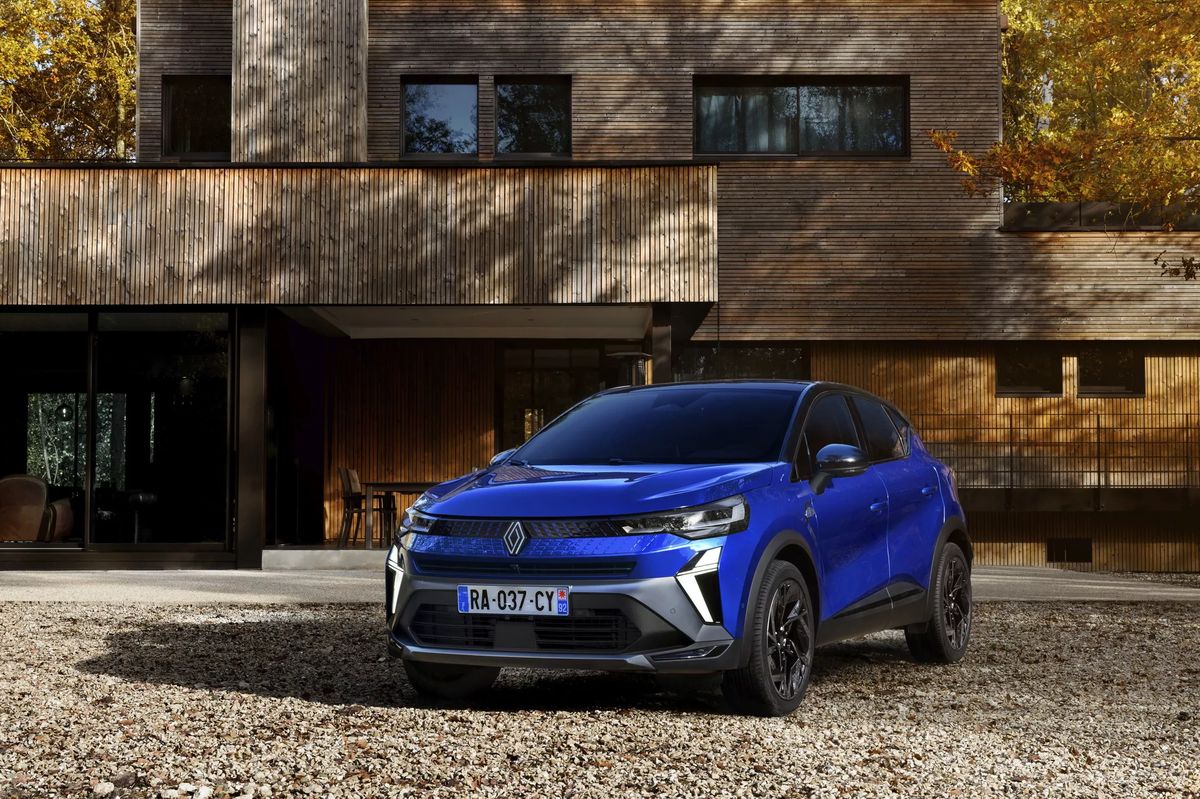
New Renault Captur E-Tech Hybrid
In the rear section, the LED graphics in the taillights have been updated to harmonize with the design of the front. This enhances the sense of unity throughout the vehicle, creating a more modern and sophisticated rear view. While the basic silhouette of the body remains the same, the new Captur has been given a fresh and premium impression thanks to the refinement of the design in every detail.
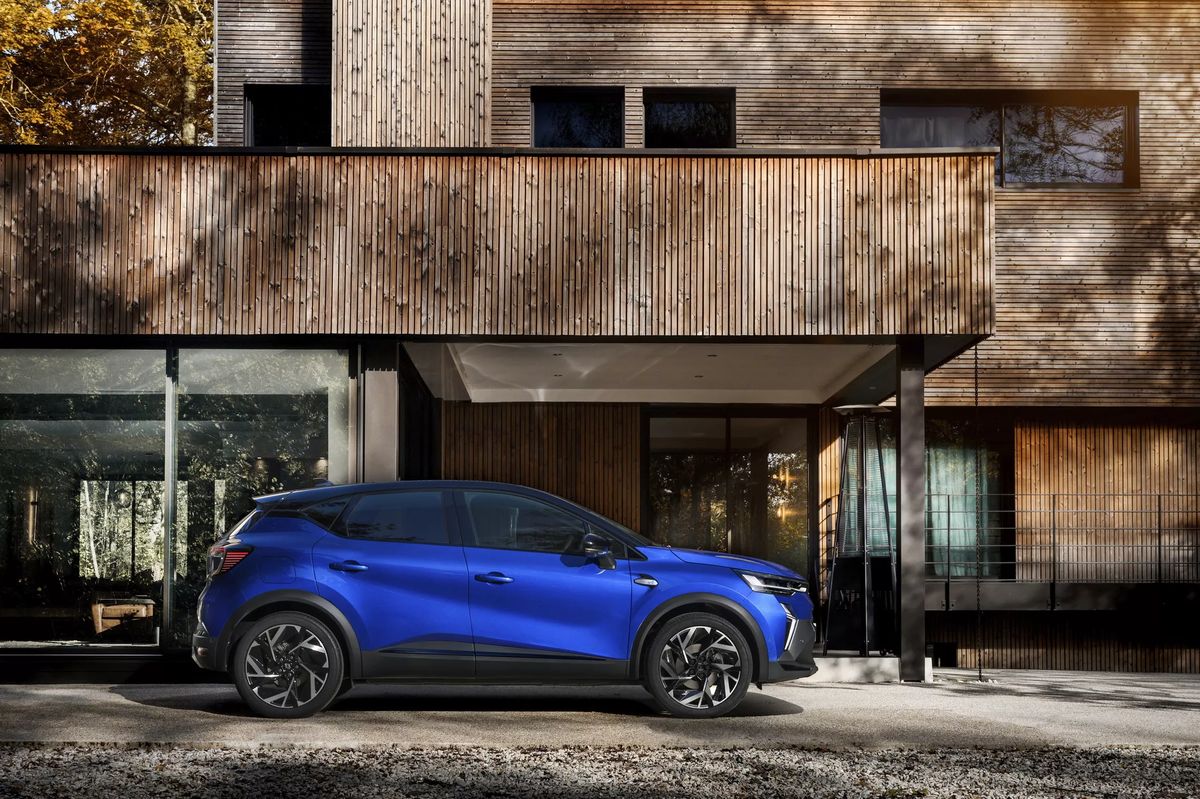
Another major topic of this minor change is the introduction of a new grade, “Esprit Alpine,” inspired by Renault’s sports car brand, “Alpine,” replacing the previous sporty grade, “RS Line.” This “Esprit Alpine” is equipped with slate gray bumper inserts, gloss black accent parts, and specially designed 19-inch alloy wheels, giving it a sporty and high-quality exterior that sets it apart from the standard model. The DNA of the Alpine brand is evident in every detail, creating a design that heightens the anticipation of the ride.
Interior evolution: combining cutting-edge technology and sustainability
The interior of the new Captur has undergone significant evolution, just like the exterior, incorporating the latest technology and improving the quality of its construction. The cockpit, where the driver has the most contact with the interior, now features a new 10.25-inch fully digital instrument cluster and a vertical 10.4-inch touchscreen infotainment display in the center console. This large display not only offers excellent visibility but also improved operability, providing the driver with an intuitive and comfortable interface.
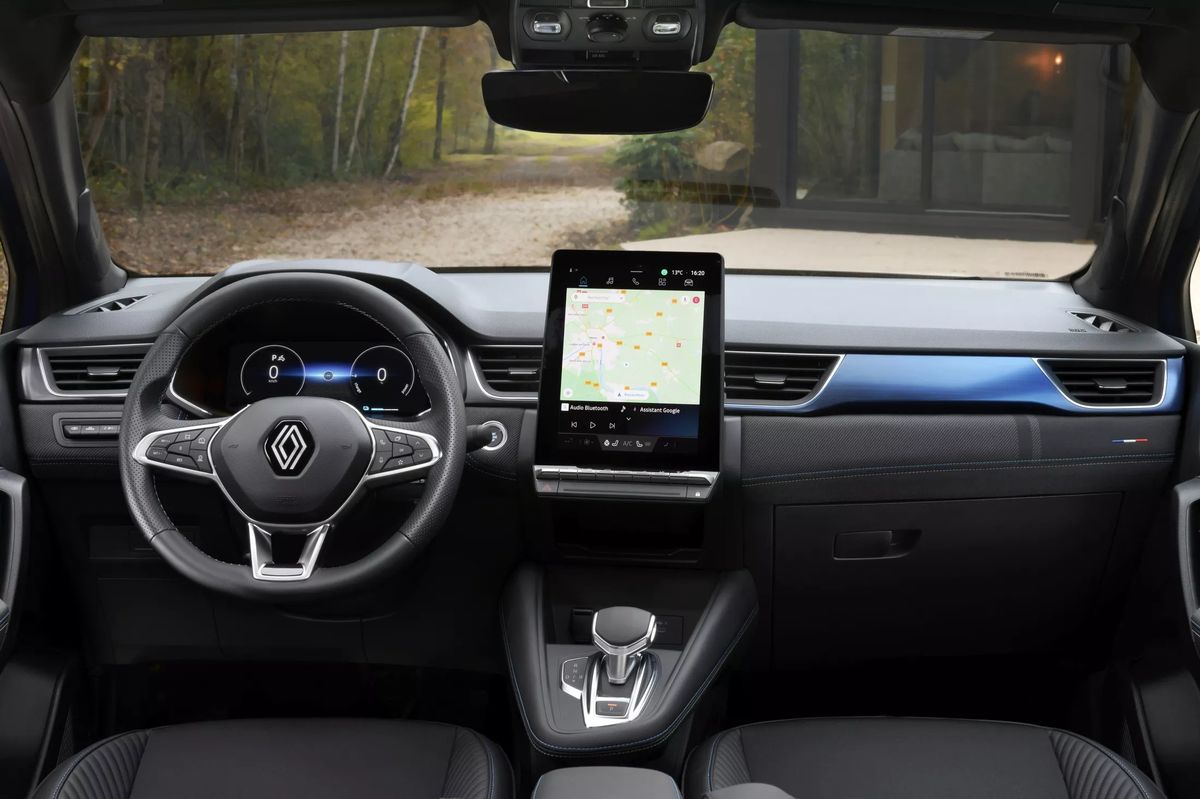
New Renault Captur E-Tech Hybrid
Of particular note is the adoption of “Google Built-in” in the infotainment system. This allows services such as Google Maps, Google Assistant, and the Google Play Store to be accessed directly in the car, providing smartphone-like convenience. The system runs on the latest Android Automotive 12 software and supports over-the-air (OTA) software updates, ensuring the latest features and security. Other features include USB-C charging ports (two or four depending on the grade), a wireless charging pad, and ambient lighting that changes depending on the time of day, creating an in-car environment ideal for today’s digital lifestyle. The optional nine-speaker Harman Kardon premium audio system delivers an immersive sound experience.
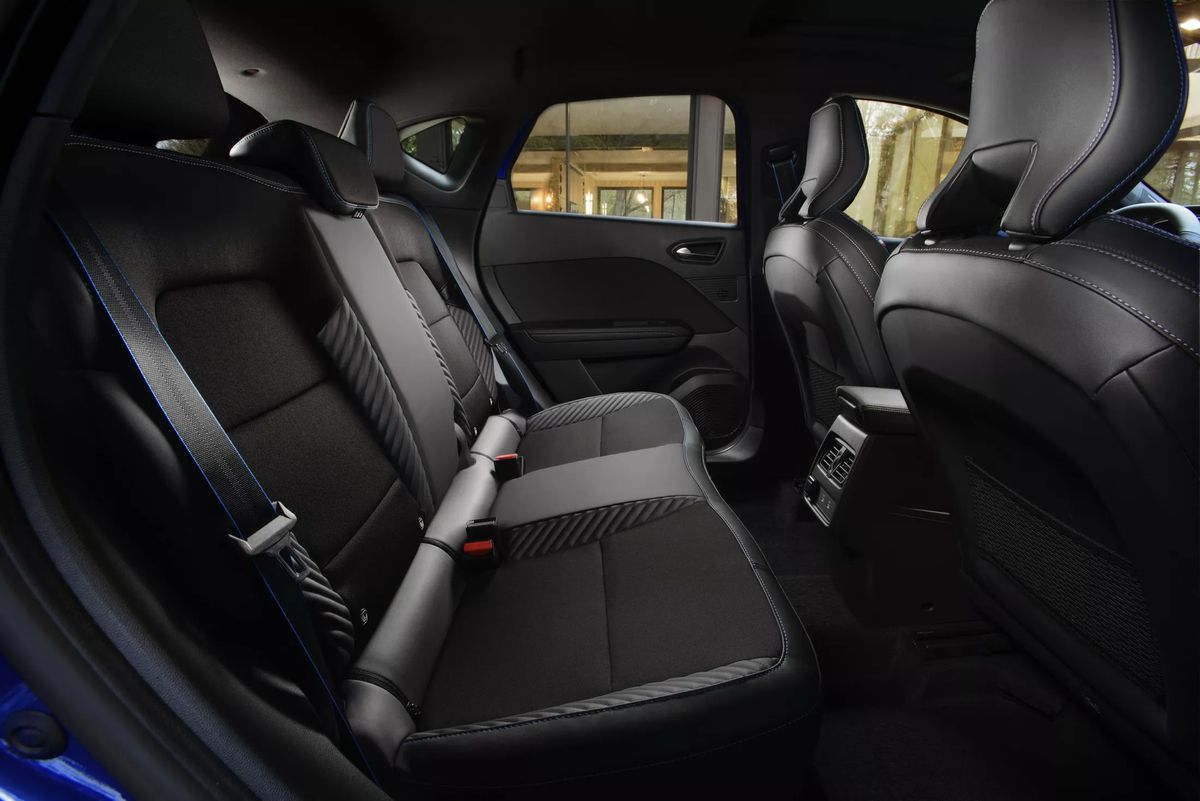
The interior of the new “Esprit Alpine” grade is specially appointed to reflect the sportiness of the exterior. The seats are made of sustainable “multi-texture” fabric instead of leather, achieving both environmental friendliness and a high-quality feel. The Alpine brand’s signature blue stitching and small emblems with a French flag motif are found throughout, creating a special feeling. The dashboard is decorated with blue-gray inserts, and the car is equipped with aluminum pedals, among other details that stimulate the sporty spirit.
The Captur’s inherent strengths, its spacious interior and ease of use, have been further refined in the new model. By redesigning the seatbacks, rear passengers’ knee room has been increased by 17mm from the previous generation to 221mm, achieving class-leading spaciousness. The 60/40 split-folding rear seats can be slid forward and backward by up to 160mm, allowing for flexible space arrangements depending on the number of passengers and the amount of luggage. Even under normal conditions, the rear luggage capacity boasts a class-leading 536L, which can be expanded to a maximum of 1235L by folding down the rear seats. From everyday shopping to leisure activities, the vehicle is practical enough to meet a variety of needs.
Versatile powertrains: efficiency and driving pleasure
The new Captur offers multiple powertrain options to meet market needs and environmental performance requirements. Two main powertrain options are expected to be available in the Japanese market.
The first is a unit that combines a 1.3-liter inline 4-cylinder turbo engine with a mild hybrid system. This engine delivers a maximum output of 160 hp and a maximum torque of 27.5 kgm, comparable to a 2.7-liter naturally aspirated engine, despite its small displacement. It provides a light acceleration feel from the moment you take off, and delivers effortless driving in all situations, from stop-and-go driving in urban areas to cruising on the highway. The transmission is mated to a 7-speed dual-clutch transmission (7EDC) with paddle shifters, combining direct, sporty driving with smooth gear changes. This 7-speed EDC has been increased in number from the previous generation’s 6-speed, allowing for more efficient and rhythmic driving.
Another noteworthy powertrain is Renault’s innovative hybrid system, “E-TECH.” This strong hybrid system combines a 1.6-liter inline 4-cylinder naturally aspirated engine (maximum output 94 PS, maximum torque 15.1 kgm) with two electric motors: a main electric motor (maximum output 49 PS, maximum torque 20.9 kgm) for drive and a sub-motor called an HSG (High-Voltage Starter Generator) (maximum output 20 PS, maximum torque 5.1 kgm). The E-TECH system incorporates numerous unique technologies, including energy management techniques developed in F1 and a dog-clutch multi-mode automatic transmission with four gears on the engine side and two on the motor side. Starting from a standstill, the car operates in EV mode using only the motor, optimally controlling the engine and motor depending on driving conditions to achieve a high level of balance between powerful, seamless acceleration and excellent fuel economy.
For overseas markets, the lineup also includes a more entry-level turbocharged 1.0-liter TCe three-cylinder engine (89hp or 99hp in LPG version, mated to a six-speed manual transmission), different output versions of the turbocharged 1.3-liter TCe four-cylinder engine with a 48V mild hybrid system (138hp with a six-speed manual, 158hp with an EDC automatic), and a non-electric 1.3-liter TCe (153hp) in some markets, but details of its introduction in Japan are yet to be announced. All powertrains are front-wheel drive (FF).
Enhanced driving performance: for a more refined driving experience
The new Captur continues to use the proven CMF-B platform, but has been improved to further maximize its potential. Renault engineers have revised the suspension geometry and optimized the characteristics of the shock absorbers, aiming to further enhance driving pleasure. In addition, the steering system has been adjusted to achieve a more precise and linear handling feel. This not only improves comfort in everyday driving, but also provides the driver with a sense of connection to the car, allowing them to control it at will, even during sporty driving on winding roads.
In particular, the most powerful engine version is equipped with newly developed shock absorbers, and the vehicle has been finely tuned for each grade. The newly added “Esprit Alpine” grade is fitted with 225/45R19 Michelin tires with superior grip performance, supporting its sporty character from the ground up. Thanks to these improvements, the new Captur has achieved robust driving performance that meets the expectations of users who pursue driving pleasure, without compromising the comfort and ease of handling of an urban SUV.
Improved fuel efficiency: Pursuing economical performance and reduced environmental impact
With growing interest in environmental performance, the new Captur also focuses on improving fuel economy. The fuel economy (WLTC mode value) of the powertrain that will likely be the mainstay in the Japanese market has been announced as 17.4km/L for the 1.3-liter turbo mild hybrid vehicle and 23.2km/L for the 1.6-liter E-TECH hybrid vehicle.
Considering that the previous generation Captur (equipped with a 1.2-liter turbo engine when first introduced in Japan) achieved a JC08 test fuel economy of 17.2 km/L, achieving these figures in the WLTC test fuel economy model, which is considered closer to actual fuel economy, demonstrates a significant improvement in the efficiency of the powertrain. The E-TECH Hybrid’s 23.2 km/L figure is particularly impressive for an SUV in this class, and contributes significantly to everyday economy and reduced environmental impact. The mild hybrid model also balances powerful driving with good fuel economy, making it an attractive option for a wide range of users.
Enhanced safety features: Advanced technology supports safe and secure driving
The new Captur is generously equipped with Renault’s advanced safety technology and driver assistance systems, ensuring a high level of safety and security for the driver and passengers. A camera mounted above the windshield and a radar in the front bumper combine to achieve highly accurate surrounding recognition. This enables features such as adaptive cruise control (with stop-and-go function) and lane centering assist, which assists with steering to keep the vehicle in the center of the lane. The vehicle is also equipped with Highway & Traffic Jam Assist, which integrates and controls these functions to significantly reduce driver fatigue during long-distance driving on highways and in traffic jams.
Furthermore, the car is equipped with a 360° camera to assist with parking and maneuvering in tight spaces. This system combines images from four cameras mounted on the front bumper, left and right door mirrors, and rear gate, and displays a bird’s-eye view of the vehicle on the infotainment display. This allows the driver to intuitively grasp the situation around the vehicle, which is prone to blind spots, enabling safer and smoother parking maneuvers. In addition to these advanced systems, the car is also equipped with a full range of basic safety features, such as collision mitigation braking and various airbag systems, ensuring a high level of safety that meets Europe’s strict safety standards.
Body size and packaging: Exquisite sizing that stands out in the city
The new Captur’s body dimensions are announced as 4240mm long, 1795mm wide, 1590mm high, and a 2640mm wheelbase (European reference values). Compared to the previous model (4135mm long, 1780mm wide, 1585mm high, 2605mm wheelbase), the overall length has been extended by 105mm, while the wheelbase has been extended by a relatively small 35mm (note that the information in article 1 stated it was +15mm, so the consistency of the information needs to be confirmed. This information is based on the provided information, but the actual Japanese specifications may differ). These dimensions are thought to strike an exquisite balance between expanding interior space and improving driving stability while maintaining maneuverability in Japanese urban areas. While detailed specifications such as the minimum turning radius will have to wait for the announcement of the Japanese specification, the Captur’s ease of handling as a compact SUV will continue to be a major attraction. The adoption of a new-generation platform has also improved body rigidity and reduced weight, providing the foundation for excellent driving performance and safety.
Pricing: Expectations are high for strategic pricing that matches the increased appeal
This major minor change includes a wide range of improvements, including a major overhaul of the interior and exterior design, the introduction of an advanced infotainment system, and the introduction of a new grade, Esprit Alpine.
Considering these improvements in appeal, the price of the new Captur will increase to a certain extent from the current model. The increase is expected, but it will vary depending on the grade configuration and equipment content. In particular, the newly introduced “Esprit Alpine” is expected to be positioned in a relatively high price range within the series due to its special equipment content.
| grade | Price (10%) |
|---|---|
| Techno Mild Hybrid | 3,899,000 yen |
| Esprit Alpine Mild Hybrid | 4,099,000 yen |
| Esprit Alpine Full Hybrid E-TECH | 4,549,000 yen |
Renault is expected to promote the car’s improved functionality and design, and develop a pricing strategy that accurately reflects its value in the highly competitive compact SUV market.
A word from the editorial department
The new Renault Captur, which has undergone significant evolution in terms of design, technology, and driving performance, had its world premiere on April 4, 2024, and is scheduled to be released in the Japanese market in June 2025.
For Renault, the Captur is a popular model that plays an important role in global markets, including Japan. This major facelift significantly refreshes the product’s appeal, strengthening its appeal to new customers as well as existing fans, and is expected to contribute to increased sales for the brand overall. In the Japanese market, the new Captur is sure to be an extremely attractive option for those seeking a stylish compact SUV. Details of the grade lineup, Japanese-specification equipment, and official pricing will be revealed as the launch approaches. Through the introduction of the new Captur, Renault aims to further strengthen its brand presence by enhancing synergy with other models, including the also-revised Lutecia, the Arkana coupe SUV, and the Kangoo, which is also popular in Japan. We eagerly await the car’s long-awaited arrival in Japan.
Renault Captur
https://www.renault.jp/information/news/captur-teaser2505.html