

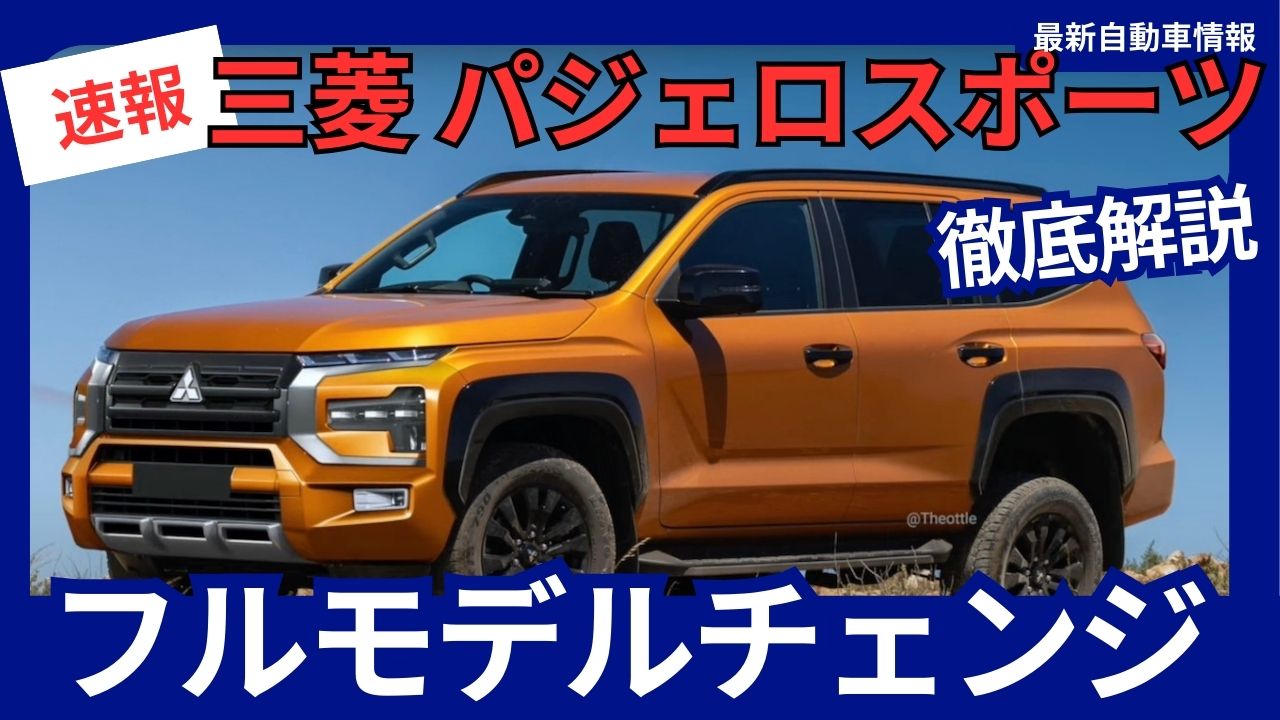
Mitsubishi Motors’ long-awaited new SUV, the Pajero Sport, is scheduled to undergo a full model change in the Japanese market in 2025. Previously sold domestically as the “Challenger,” the Pajero Sport has continued to evolve as an overseas-only model, but it will now return to Japan’s SUV lineup as the flagship. This article takes a closer look at the new Pajero Sport, which is equipped with new-generation technology and design, greatly improving its appeal.
The current model was released in 2015 and has been popular mainly in Asian markets, but it has undergone a full model change for the first time in about 10 years, evolving into the fourth generation. In Japan in particular, the successor to the model formerly known as the “Challenger,” it is expected to be reintroduced for the first time in 24 years since its discontinuation in 2001, attracting the interest of many fans. The new Pajero Sport is likely to have its world premiere in 2025, with its introduction to the Japanese market in 2025.
Summary of the new Mitsubishi Pajero Sport
- Mitsubishi Motors is redesigning its Pajero Sport SUV and plans to release it in the Japanese market in 2025.
- A model that was previously sold in Japan as the “Challenger” and was later sold exclusively overseas will be reintroduced to the domestic market.
- In the Japanese market, this will mark the revival of the model name of the brand’s flagship SUV, the Pajero.
- The new model uses a newly developed ladder frame that shares its platform with the Triton pickup truck, significantly strengthening the body rigidity.
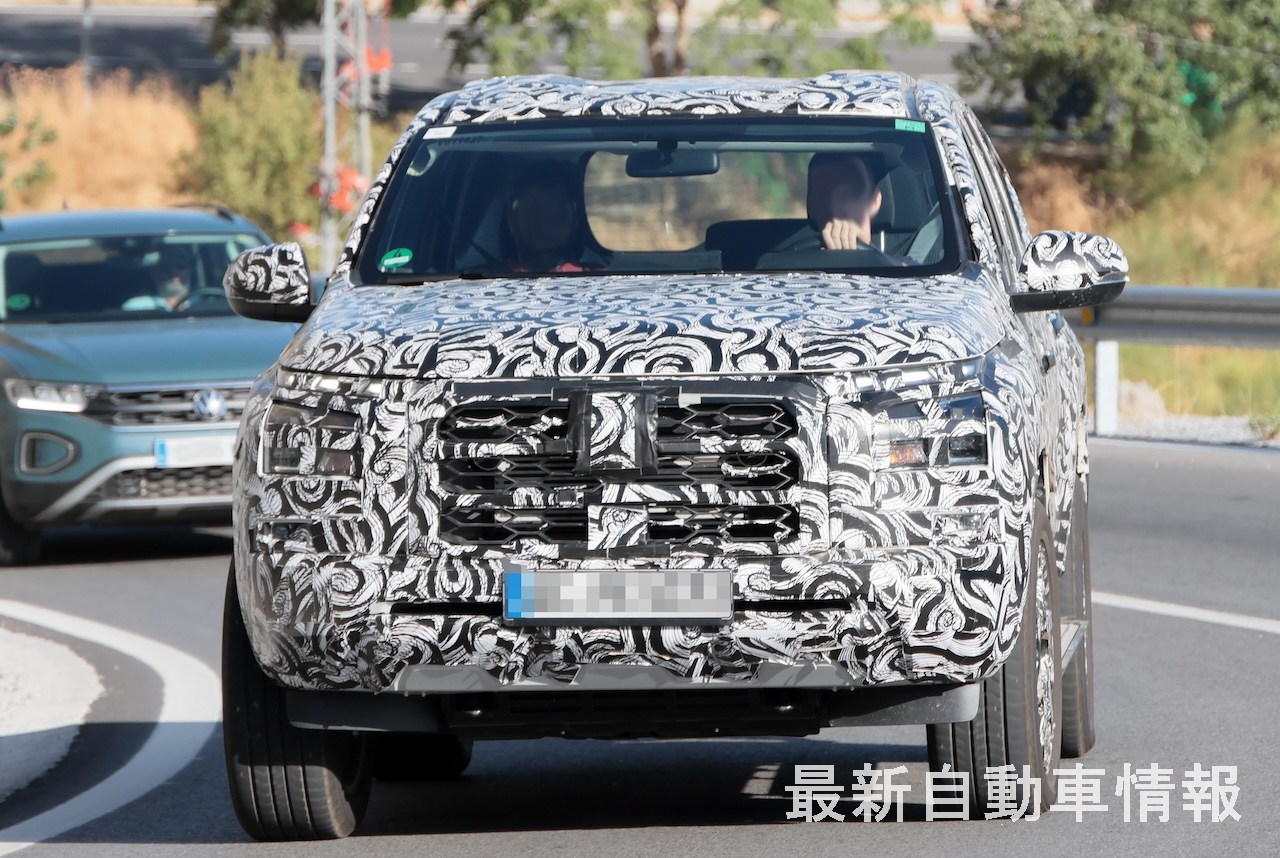
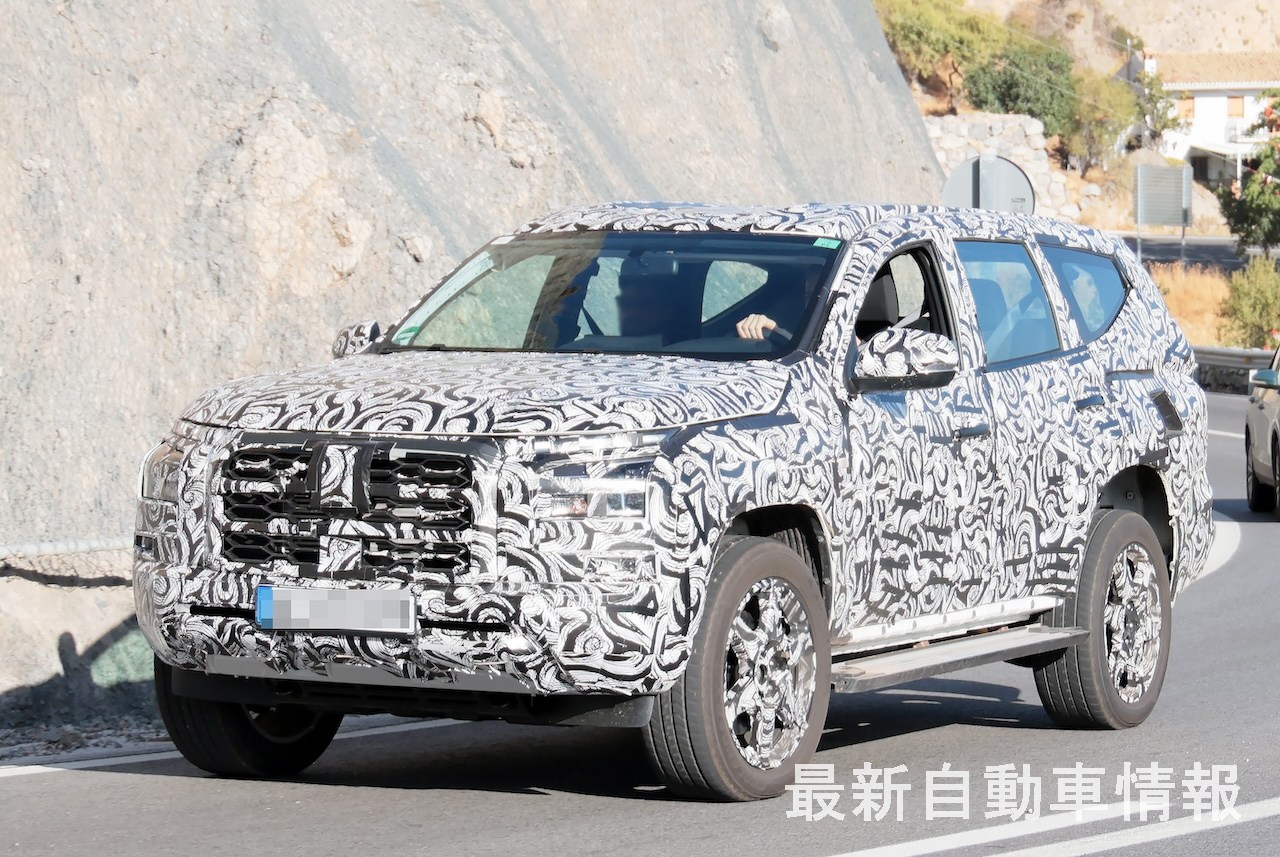
- The exterior design features a new generation “Dynamic Shield” that gives it a tough and powerful impression. It is also equipped with LED headlights and a skid plate.
- The body size has been expanded from the current model, to approximately 4,850 mm in length, 1,875 mm in width, and 2,850 mm in wheelbase, making it slightly larger than the Outlander PHEV.
- The spacious interior provides ample room, especially in the third row, and can accommodate seven passengers.
- The interior is equipped with the latest infotainment system with a large touchscreen and connected technology, improving usability and comfort.
- The interior trim uses chrome and woodgrain, giving it a dignified finish befitting a high-end SUV.
- The powertrain is equipped with a 2.4L inline 4-cylinder diesel turbo engine.
- This engine’s two-stage turbo system delivers a maximum output of 204ps and a maximum torque of 47.9kgm, delivering powerful driving performance.
- The transmission is mated to an 8-speed automatic.
- Fuel efficiency is expected to be around 13.5km/L, combining excellent driving performance with environmental friendliness.
- The driving system uses the electronically controlled 4WD “Super Select 4WD-II,” which allows you to choose between 2H, 4H, 4HLc, and 4LLc modes.
- There are seven drive modes available to suit a variety of road surfaces, including Normal, Eco, Gravel, Snow, Mud, Sand and Rock.
- Active Yaw Control (AYC) is also adopted to improve cornering performance.
- Safety features include collision mitigation braking (nighttime compatible), rear side vehicle detection warning, reversing vehicle detection warning, and pedal misapplication prevention assist.
- Adaptive cruise control is also included to help reduce driver fatigue.
- Prices are expected to start from around 5.5 million yen due to improvements in body size and equipment.
- The price range is set to be comparable to that of the Outlander PHEV, highlighting its appeal as a full-fledged SUV.
New Pajero Sport (Challenger) Fully redesigned with new-generation exterior design
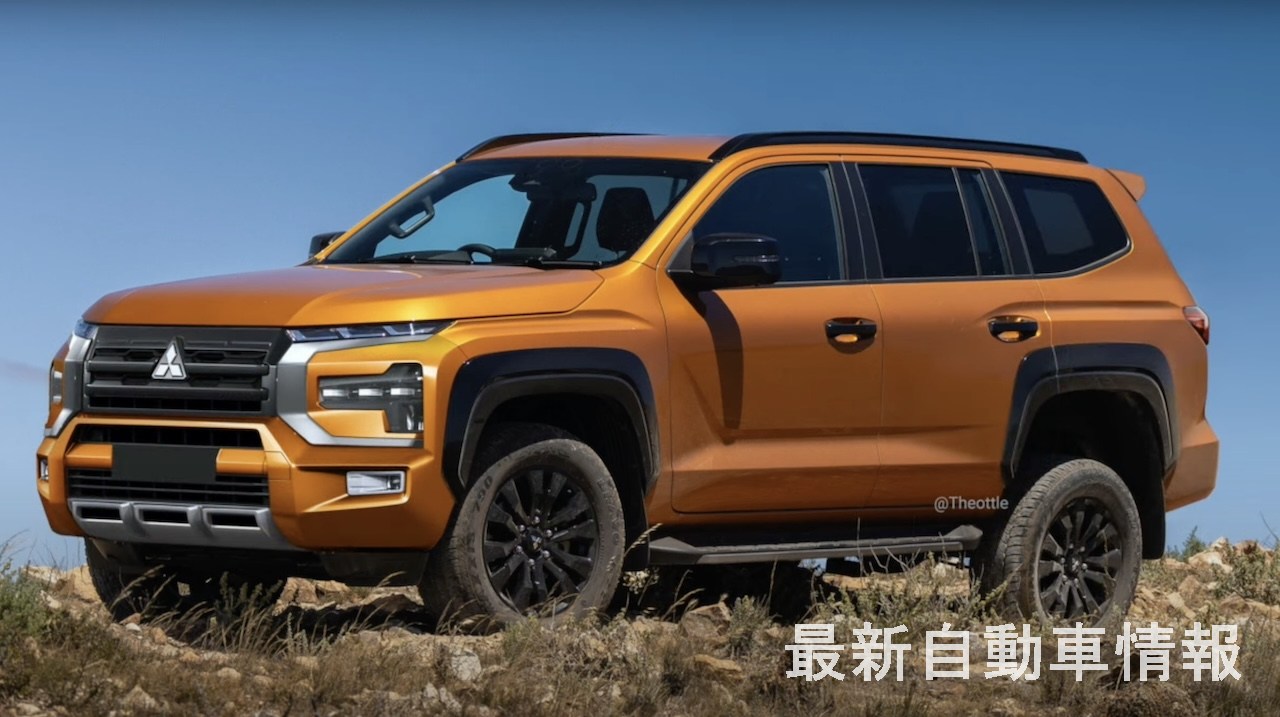
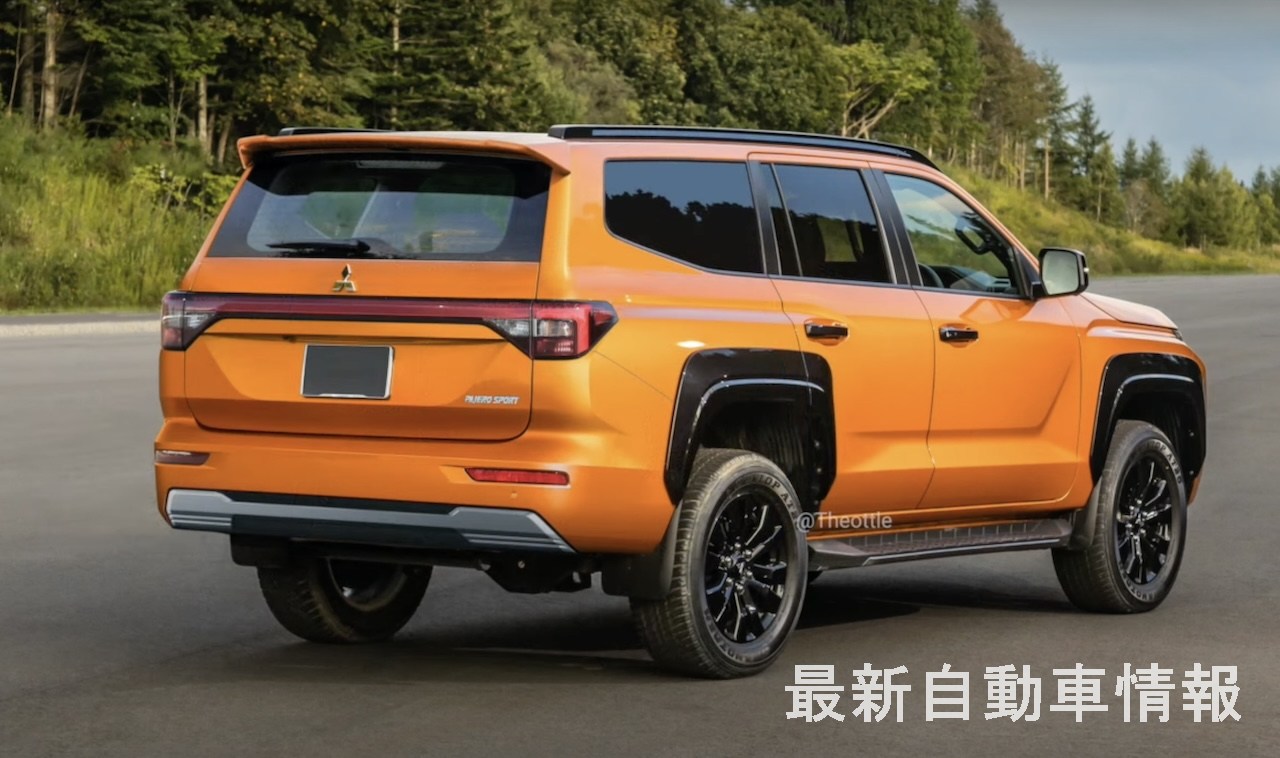
Mitsubishi Motors Pajero Sport
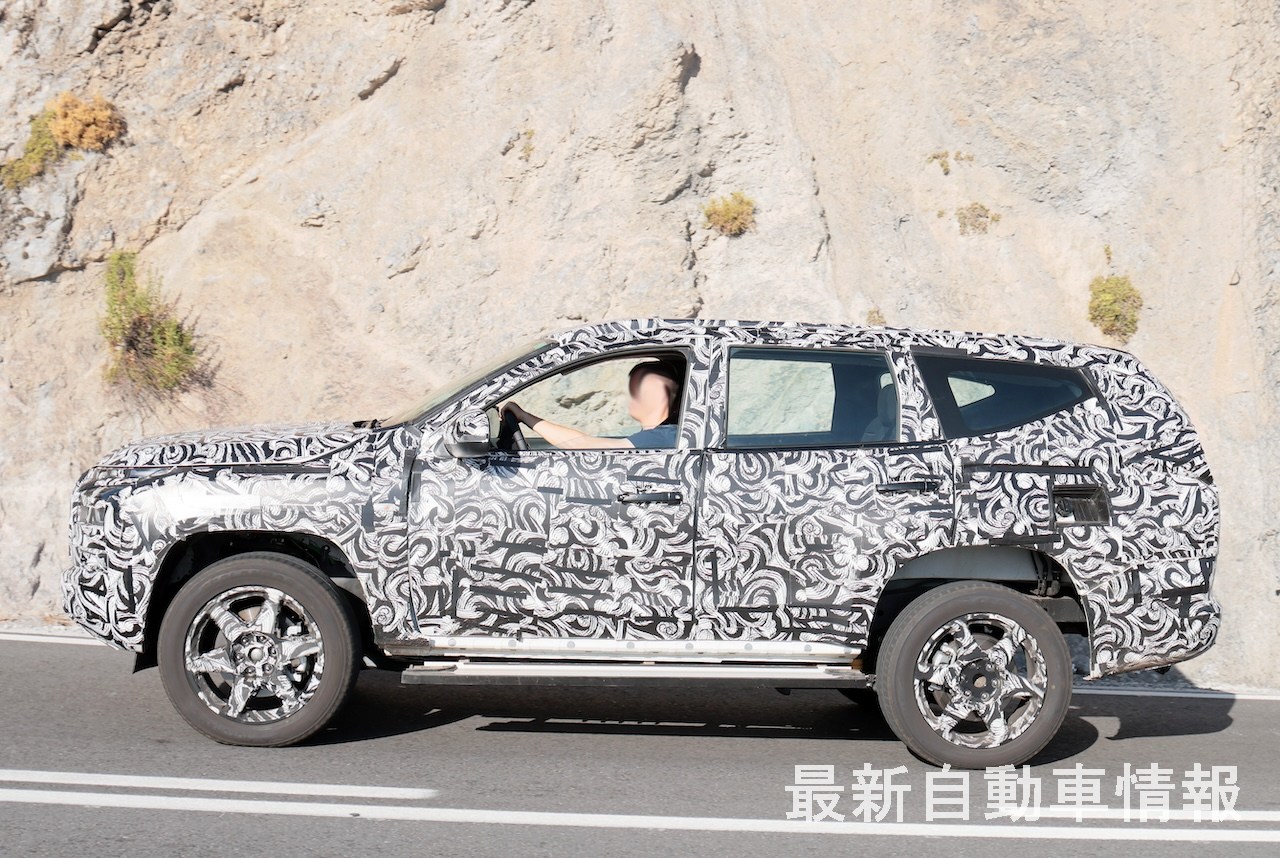
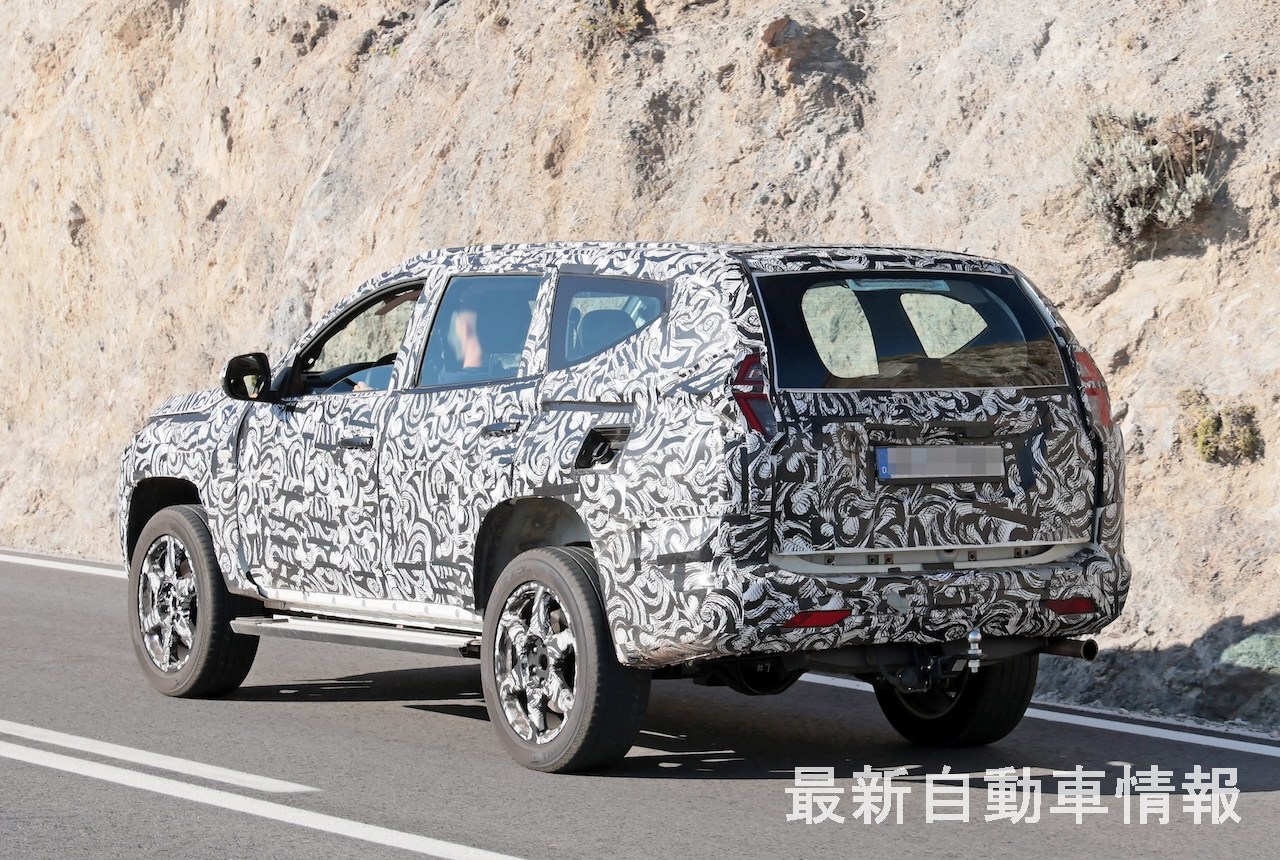
The exterior of the new Pajero Sport reflects Mitsubishi’s latest design concepts throughout, featuring tough styling that combines strength and refinement. The front face features the brand’s iconic “Dynamic Shield,” which, combined with LED headlights and a skid plate, expresses the robustness of a modern yet traditional SUV. The rear design emphasizes maximizing interior space while achieving a unified styling. Scoop images reveal parts of the triangular LED taillights reminiscent of the Lancer from the 1990s, suggesting a unique rear view that blends old and new elements.
New Pajero Sport (Challenger) Fully redesigned with a robust body structure
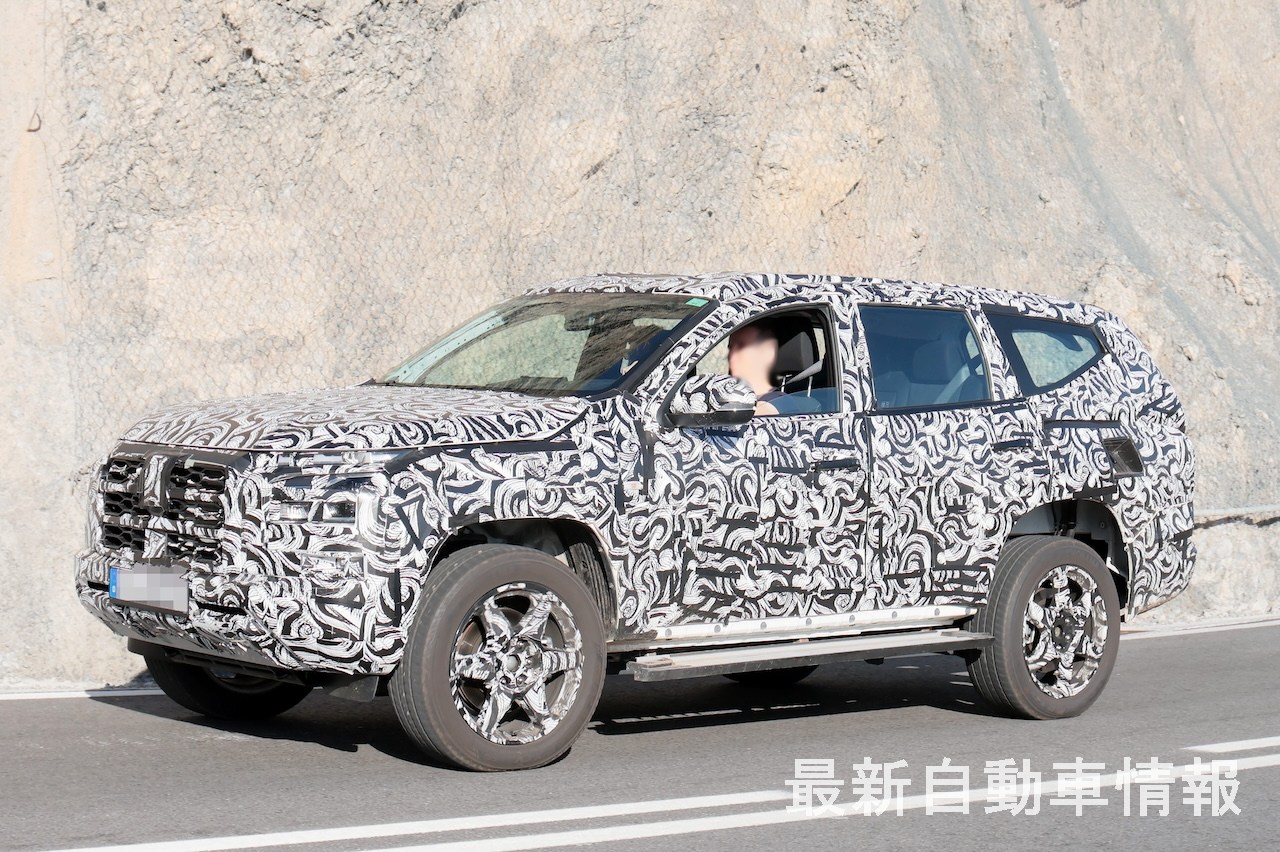
The vehicle’s body design shares the platform with the Triton pickup truck, which has been introduced to the Japanese market and has received rave reviews. This allows for a newly developed ladder frame with significantly increased rigidity. This frame’s cross-sectional area has been increased by 65% compared to the previous model, and by increasing the proportion of high-tensile steel used, bending and torsional rigidity have been dramatically improved. This not only provides the high durability required for rough terrain driving, but also a comfortable on-road ride. Combined with the expanded body size (4850mm long, 1875mm wide, 1800mm high, and 2850mm wheelbase) from the previous model, it ensures ample interior space, especially in the third row, allowing for comfortable travel even with multiple passengers. For reference, the current Pajero Sport’s body dimensions are 4785mm long, 1815mm wide, 1800mm high, and 2800mm wheelbase, indicating that the new model will be wider and more imposing. The body size is one size larger and more imposing than the Outlander PHEV sold in Japan (length 4710mm, width 1860mm, height 1740mm, wheelbase 2705mm).
New Pajero Sport (Challenger) Fully redesigned with the latest technology and a comfortable interior
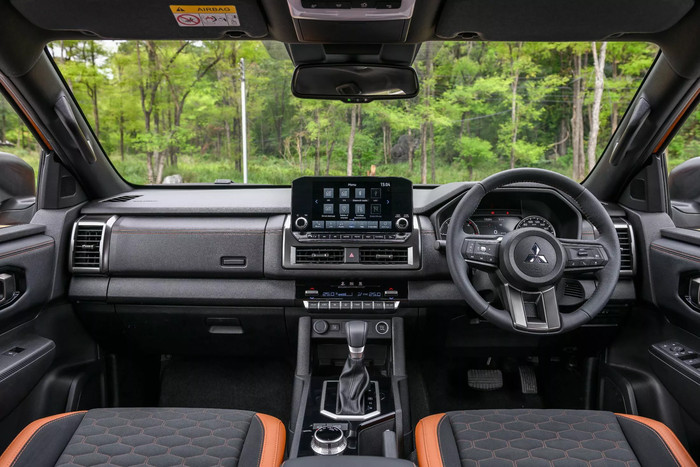
The interior of the new Pajero Sport is packed with the latest equipment and features, and is designed for ease of use. The infotainment system features a large touchscreen display that supports intuitive touch operation as well as voice recognition. This allows for smooth navigation, audio, and vehicle information checks. Connected technology also enables access to real-time traffic information and various online services, providing the driver with timely information they need. Physical controls have also been carefully considered. Similar to the Triton, key controls such as temperature control, fan speed, volume, and navigation are likely to feature physical buttons and dials, allowing for intuitive operation even while driving. The interior trim effectively incorporates chrome and woodgrain accents, creating a dignified and high-quality finish befitting a premium SUV. Combined with the increased interior space, this creates a comfortable living space for all occupants.
New Pajero Sport (Challenger) Fully redesigned with a powerful and efficient powertrain and outstanding driving performance
The new Pajero Sport will be equipped with a cutting-edge 2.4L inline-four-cylinder diesel turbo engine. This engine employs a two-stage turbo system that precisely coordinates two turbines according to engine speed and load conditions, delivering high power and ample torque across the entire engine speed range. Its powerful specifications, with a maximum output of 204 PS and maximum torque of 47.9 kgm, deliver powerful acceleration and ample driving comfort in any driving situation. This engine is paired with an eight-speed automatic transmission that can handle heavy loads, ensuring smooth and efficient power transfer, providing a comfortable driving experience from powerful starts to high-speed cruising. With expected fuel economy of around 13.5 km/L, the car combines high driving performance with environmental friendliness. A fuel-efficient and powerful diesel engine will be a great benefit to users in today’s world of rising fuel prices.
The driving system incorporates the culmination of Mitsubishi’s long-standing four-wheel drive technology. The Super Select 4WD-II electronically controlled 4WD system offers a variety of driving modes, including rear-wheel drive (2H), full-time 4WD (4H), center differential (4HLc), and low-geared (4LLc) for enhanced traction. Even during normal driving, the front-to-rear torque split is set at 40% front and 60% rear, providing stable traction and excellent cornering performance. Furthermore, the new Pajero Sport offers a wide range of driving modes to accommodate a wide range of road conditions, from on-road to off-road. Seven modes are available: Normal, Eco, Gravel, Snow, Mud, Sand, and Rock. By optimizing vehicle control for each road surface, the new Pajero Sport allows for safe and enjoyable driving. Additionally, the new Pajero Sport features Active Yaw Control (AYC), which enhances cornering performance. By slightly braking the inside front wheel when turning, the vehicle’s turning ability is improved, resulting in sharper handling.The combination of these driving systems and control technologies gives the new Pajero Sport the performance of a full-fledged SUV, demonstrating high stability and excellent off-road capability on any road surface and in any situation.
New Pajero Sport (Challenger) Fully redesigned with advanced safety features and attractive pricing
The new Pajero Sport is equipped with numerous cutting-edge safety systems to enhance driver and passenger safety. The highly accurate Collision Mitigation Braking System, capable of detecting pedestrians and cyclists even at night, helps prevent collisions or mitigate damage in the event of a collision. To prevent collisions with vehicles approaching from behind, which are common when changing lanes, the Rear Vehicle Detection Warning System (with Lane Change Assist) alerts the driver with a warning sound and a visual on the door mirrors. The Reverse Vehicle Detection Warning System helps with parking lot maneuvers, helping to prevent unexpected collisions when reversing. The Pedal Misapplication Prevention Assist, which prevents sudden acceleration caused by misapplication of the accelerator and brake pedals, enhances safety in urban areas and parking lots. The adaptive cruise control system also enhances long-distance and highway driving comfort. By maintaining a set distance between vehicles, the car follows the vehicle, reducing driver fatigue and supporting safer driving.
Pricing is expected to increase compared to the previous model due to the larger body size and the incorporation of the latest technology, but price increases are expected to be kept to a minimum by sharing parts with the Triton pickup truck. The specific price range is expected to start at 5.5 million yen, making it easy to compare with the Outlander PHEV (price range: 5,263,500 to 6,685,800 yen), sold in Japan as a premium SUV. Considering that the previous Pajero Sport was priced between 4,988,000 and 5,401,000 yen, the new Pajero Sport is likely to be priced at the same level as the Triton’s higher-end model, or slightly higher. Competitors include the Ford Everest (based on the Ranger) and Toyota Fortuner (based on the Hilux), both of which are expected to be released soon. However, the new Pajero Sport, bearing the Pajero name and featuring a genuine ladder frame structure, offers a distinctive appeal that sets it apart from these models.
History of the Mitsubishi Pajero Sport
The Pajero Sport is a mid-size SUV developed by Mitsubishi Motors as a global strategic vehicle. The first generation was sold in Japan as the Challenger, but is now known primarily in overseas markets. With its authentic ladder frame structure and excellent off-road performance, it has gained popularity as a reliable SUV. Here we will take a detailed look at the features of each model of the Pajero Sport from its birth to the present day.
- The origins and positioning of the Pajero Sport
- Transition from the first generation to the current model (third generation)
- Features, technology and design of each generation
- Names used around the world (Challenger, Montero Sport, etc.)
- Relationship with Pajero and Triton
What is the Pajero Sport?: Its origins and concept
The Pajero Sport is a mid-size SUV with a robust body developed based on the chassis (mainly ladder frame) of Mitsubishi’s globally best-selling pickup truck, the Triton (also known as the L200 and Strada). Positioned as a younger brother of the flagship Pajero model, or as a derivative model designed for tougher usage environments, it was launched with the aim of offering excellent off-road capability and durability at an affordable price.
First generation Pajero Sport/Challenger (1996-2008)
- Japanese name: Mitsubishi Challenger
- Overseas names: Pajero Sport, Montero Sport, Shogun Sport, Nativa, etc.
- Base vehicle: 2nd generation Pajero and Triton/Strada of the time
It debuted in Japan in 1996 as the “Challenger.” Its greatest feature is that it uses components from the second-generation Pajero, while adopting a sturdy ladder frame structure derived from pickup trucks. This has resulted in excellent off-road performance and durability.
The exterior had the same powerful look as the Pajero of the time, but also had a sportier, more urban feel. The interior emphasized functionality while pursuing passenger car-like comfort. Engines included a V6 gasoline engine and an in-line 4-cylinder diesel turbo engine, depending on the market.
The drive system was available in part-time 4WD and Super Select 4WD (SS4), which allowed the driver to switch between 2WD and 4WD while driving, making it suitable for serious off-road driving.
Sales in Japan ended in 2001, but production and sales continued in overseas markets under names such as “Pajero Sport,” making it a long-selling model that was produced until the late 2000s.
2nd generation Pajero Sport (2008-2015)
- Overseas name: Pajero Sport, Montero Sport, Nativa, etc. (not sold in Japan)
- Base vehicle: 3rd generation Triton/L200
Some time after the end of production of the first generation, the second generation was released in 2008 as a global strategic vehicle mainly for emerging markets and resource-rich countries. This generation has not been introduced in the Japanese market.
The base model is the third-generation Triton/L200, which was released in 2005. Continuing from the first generation, it uses a robust ladder frame structure. The exterior design incorporates Mitsubishi’s designs from that time, evolving into a more modern and sophisticated style. The interior has also been improved in terms of quality and equipment, enhancing comfort.
Engines varied depending on the market, but the main models were 2.5L/3.2L common rail diesel turbo engines (4D56, 4M41) and 3.5L V6 gasoline engines. Transmissions also evolved, and were combined with 4-speed automatic/5-speed automatic and 5-speed manual.
The Super Select 4WD (SS4) drive system continues to be used in many models, maintaining high off-road performance. Electronic control devices are also being introduced.
3rd generation Pajero Sport (2015-present)
- Overseas name: Pajero Sport, Montero Sport, Shogun Sport, etc. (Not sold in Japan)
- Base vehicle: 4th generation Triton/L200
The current third-generation model was unveiled for the first time in Thailand in 2015. Based on the fourth-generation Triton/L200, it is still on sale in many countries (as of April 2025).
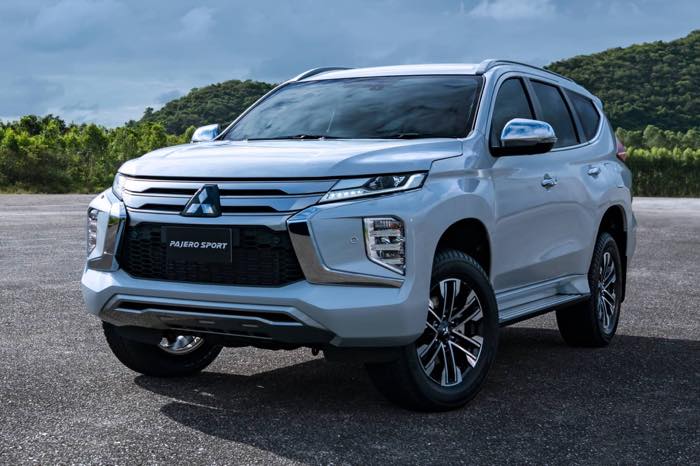
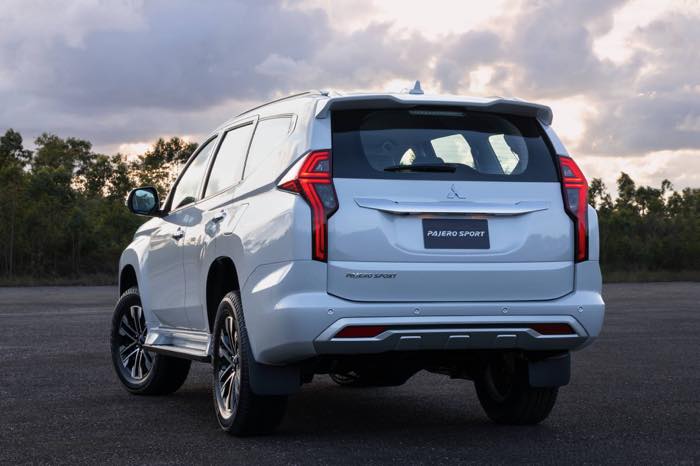
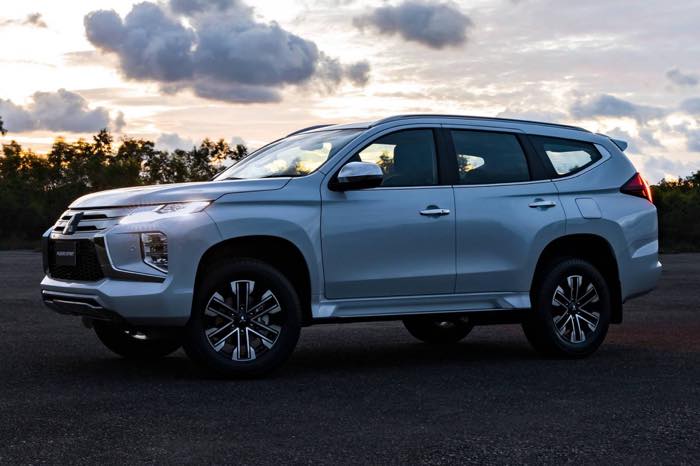
In terms of design, the front mask features Mitsubishi Motors’ design identity, “Dynamic Shield,” and has evolved significantly to create a sharper, more powerful impression. The adoption of LED headlights and taillights is also a distinctive feature. The interior has been further improved from the previous model, creating a modern, high-quality space. It is also equipped with a number of advanced features.
The engine is a newly developed 2.4L MIVEC clean diesel turbo engine (4N15 type), which combines excellent environmental friendliness with power performance. Another major topic is that it is paired with Mitsubishi’s first 8-speed automatic transmission.
The 4WD system is equipped with the further evolved “Super Select 4WD-II (SS4-II),” which has been newly added with an off-road mode selector (Gravel, Mud/Snow, Sand, Rock) and Hill Descent Control (HDC), significantly improving the vehicle’s ability to handle a variety of road conditions.
Safety equipment has also been significantly strengthened, and the car is equipped with advanced driver assistance systems (ADAS) such as a Forward Collision Mitigation Brake System (FCM), Unintended Start Prevention System (UMS), Rear Side Vehicle Warning System (BSW/LCA), and Adaptive Cruise Control (ACC). (The installed content varies depending on the grade and market.)
Pajero Sport
A minor change was made in 2019, with changes to the front design (an evolution of the Dynamic Shield), the meter panel being converted to LCD, and equipment being improved, further enhancing the product’s appeal.
The appeal of the Pajero Sport and its current state
The Pajero Sport is a mid-size SUV that has evolved with each generation in terms of design, comfort, environmental friendliness, and safety, with its core being excellent off-road performance and durability thanks to its robust ladder frame structure derived from pickup trucks. Known as the first Challenger in Japan, it has since become a global strategic vehicle, enjoying enduring popularity especially in Asia, Oceania, the Middle East, and Latin America.
Although it bears the “Pajero” name, the Pajero Sport has a close relationship with the “Triton” and has evolved in its own way. Its history can be said to be the history of Mitsubishi Motors’ SUV manufacturing, which has continued to meet the needs of users around the world who seek reliability and off-road performance.
New Pajero Sport (Challenger) Full Model Change: Hopes for a Revival in the Japanese Market
The all-new Mitsubishi Pajero Sport is scheduled for release in Japan in 2025. It’s unclear whether the beloved “Challenger” name will be revived or whether it will be introduced as an SUV version of the Triton. Regardless, the addition of a full-fledged SUV bearing the “Pajero” name to Mitsubishi’s lineup in Japan will be welcome news for many enthusiasts. Positioning the new Pajero Sport as a flagship model in the SUV market, where the company excels, is expected to further enhance the Mitsubishi brand’s presence. With a rugged body structure, powerful diesel engine, and a driving system with excellent off-road capabilities, the new Pajero Sport is sure to be an attractive option that meets a wide range of needs, from outdoor enthusiasts to families who frequently travel with large groups. Further details are expected to be announced in the lead-up to the 2025 launch.
Mitsubishi Motors