


Suzuki’s Indian subsidiary, Maruti Suzuki India, launched the new crossover SUV “FRONX” in India on April 24, 2023. The Japanese model “FRONX” is scheduled to be released around September 2024. Here, we compared the specs with Toyota’s popular model “Yaris Cross” in the same segment.
About the new Suzuki “Fronx”
Adopts Suzuki’s latest exterior design
Equipped with the latest safety equipment
The interior is equipped with the latest infotainment system.
The Suzuki Frontus is built on the latest Heartect platform. Its overall length is 3,995mm, width is 1,765mm, height is 1,550mm, and wheelbase is 2,520mm. It is 5mm longer, 20mm wider, and 50mm taller than the Suzuki Baleno, which has the same wheelbase.
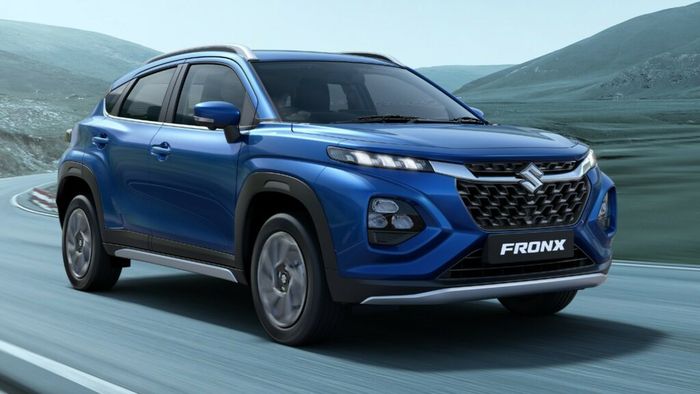
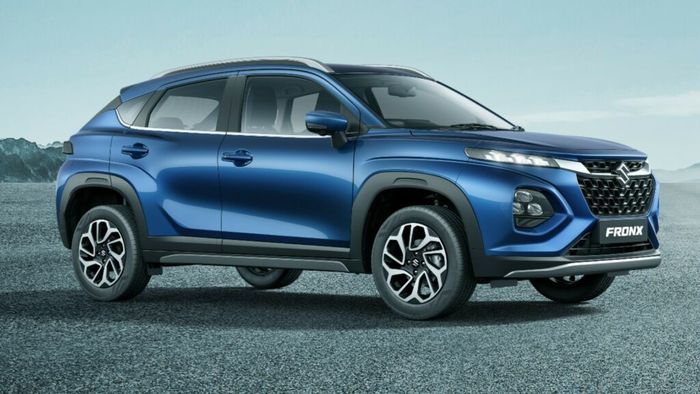
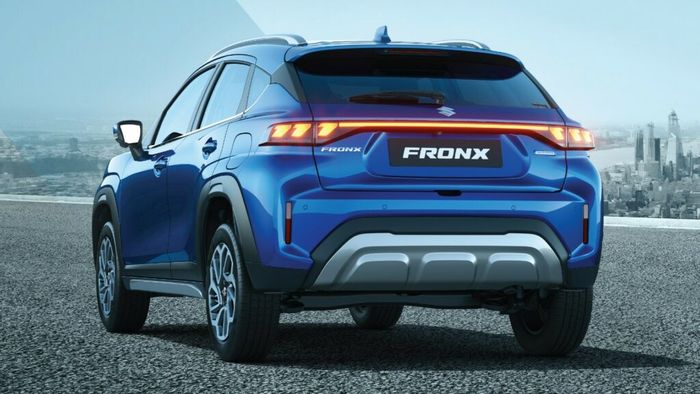
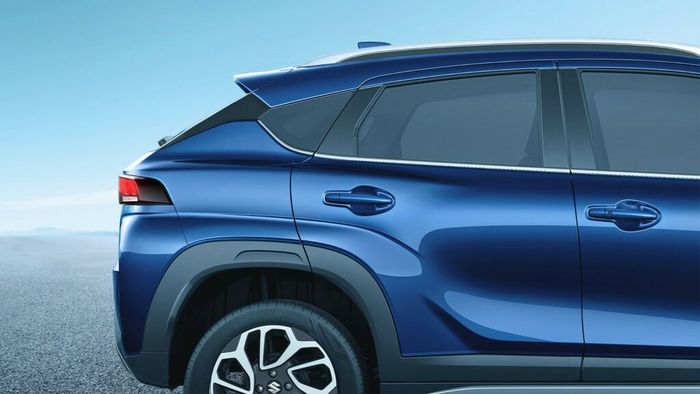
The front end resembles the Grand Vitara, with split headlights, a grille with chrome inserts, and an aluminum-style skid plate. It also features 17-inch aluminum wheels, pronounced fenders and rear shoulders, and a sporty profile. At the rear, a sloping rear window covered by a roof spoiler marks Suzuki’s first foray into the coupe-SUV trend. The model also features full-width LED taillights and a large aluminum-style skid plate that doubles as a diffuser.
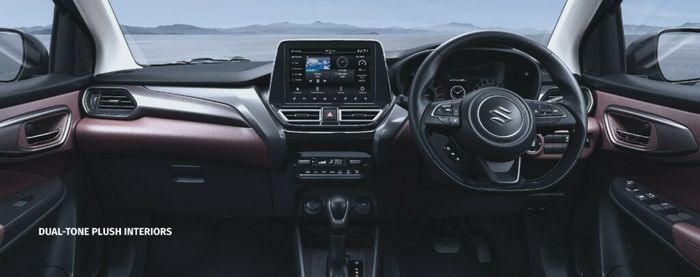
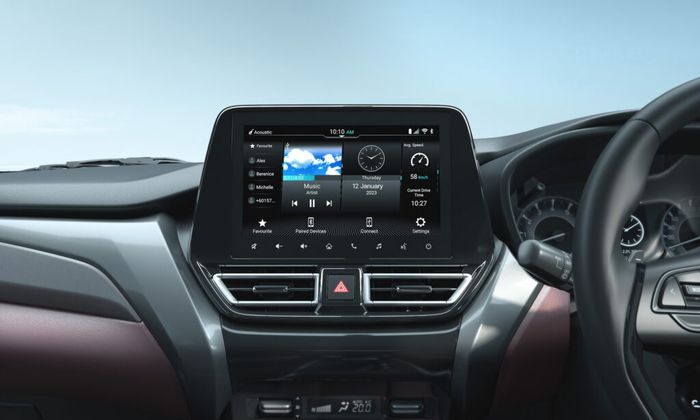
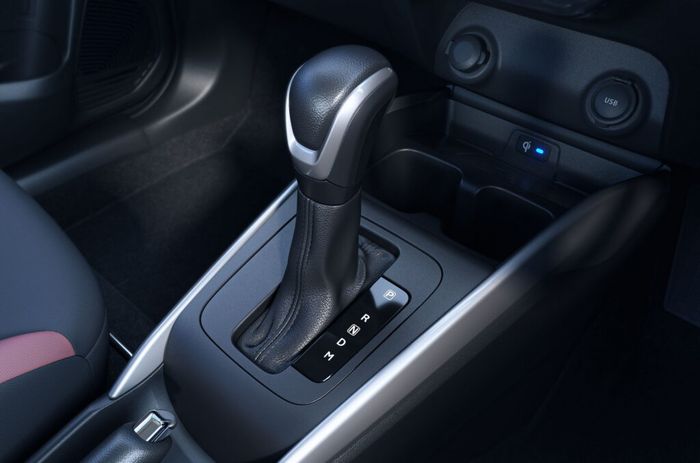
The interior features a dual-tone dashboard similar to that of the Suzuki Baleno, but with a slightly more premium feel thanks to forged metal-like matte finishes and high-gloss silver inserts. The 9-inch infotainment touchscreen is compatible with wireless Apple CarPlay and Android Auto. Other features include a head-up display, a 360-degree camera, a wireless charging pad, an Arkamys audio system, rear-seat air conditioning vents, six airbags, and a suite of connected car features.
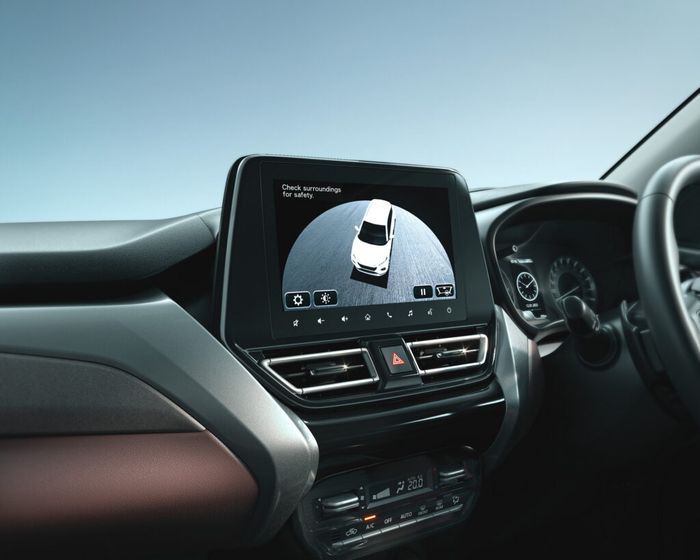
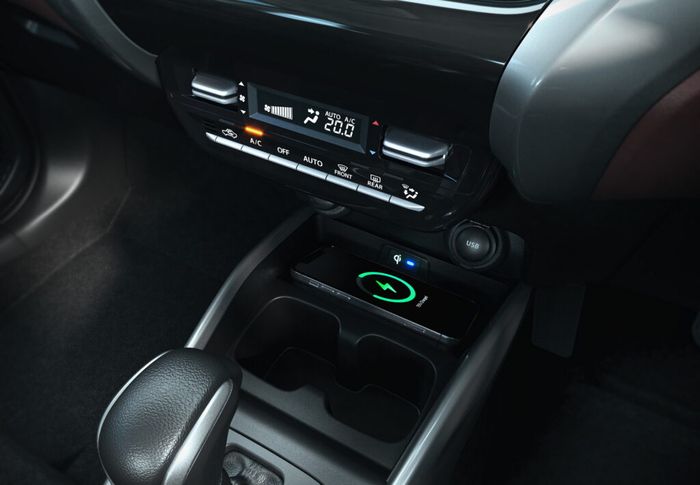
Suzuki’s new Frontier Japan model: a new compact crossover SUV to be released in September 2024

About the new Toyota Yaris Cross
Based on the new Yaris, it adopts the newly developed ” GA-B platform ” called TNGA (Toyota New Global Architecture) . It features a special exterior design and is a 3-number size SUV with a total length of 4,180 mm, total width of 1,765 mm, total height of 1,590 mm, and wheelbase of 2,550 mm. It also uses special 18-inch aluminum wheels.
Compared to the Yaris, the car is 240mm longer, 70mm wider, and 90mm taller, and its ground clearance is 30mm higher.
The engine uses the new, downsized THS II from the new generation “inline 3-cylinder 1.5L direct injection Dynamic Force Engine M15A type” model. There is also an E-Four (4WD) model, and the rear suspension exclusively for 4WD is a newly developed double wishbone type. The gasoline vehicle also uses the same engine and employs a “Direct Shift-CVT” with a launch gear .
It also comes equipped with the second-generation Toyota Safety Sense , an advanced preventative safety technology .
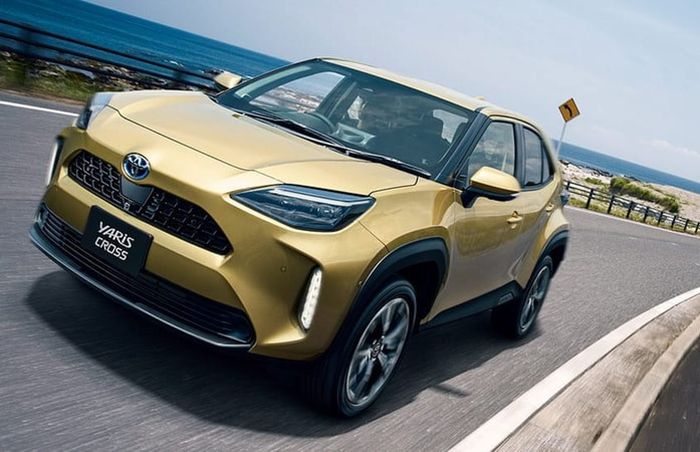
Yaris Cross
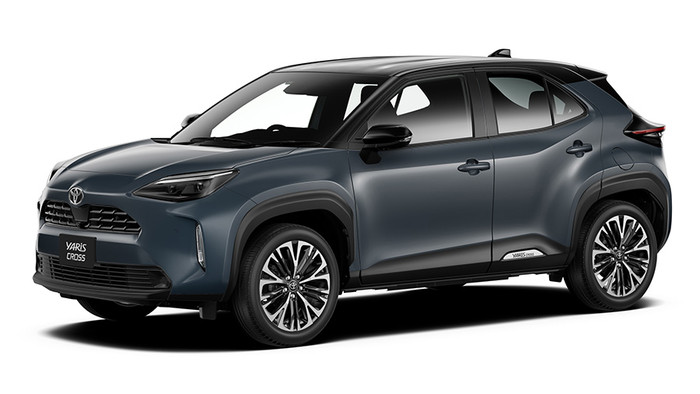
Suzuki “FRONX” VS Toyota “Yaris Cross” body size comparison
The Suzuki “Fronx” is smaller in body size, with a total length 185mm shorter, the same width, a total height 40mm lower, and a wheelbase 130mm shorter. There is a big difference in the total length, and the total height is also lower, which is a notable feature.
| Specifications | Fronx | Yaris Cross | difference |
|---|---|---|---|
| full length | 3,995mm | 4,180mm | -185mm |
| Overall width | 1,765mm | 1,765mm | ±0mm |
| Overall height | 1,550mm | 1,590mm | -40mm |
| Wheelbase | 2,520mm | 2,650mm | -130mm |
| Minimum turning radius | 4.9 to 5.0 m | 5.3m | -0.3m |
Suzuki Front
Yaris Cross
Personally, I find the unusual size of a Japanese car, with a total length of under 4,000mm and a width of 1,765mm, very appealing. The reason is that a width of 1,695mm or more looks cooler, and cars with a total length of under 4,000mm are easier to maneuver, with a minimum turning radius of 4.9-5.0m, so there should be fewer driving problems. Of course, since the width does not fit within the 5-number size, it will be interesting to see whether it will be accepted in Japan. There seems to be less awareness of vehicle width compared to the past, and popular models such as the Prius and Yaris Cross also have widths that do not fit within the 5-number size.
Suzuki “FRONX” vs Toyota “Yaris Cross” engine comparison
Gasoline engine comparison
| Specifications | Fronx | Yaris Cross |
|---|---|---|
| engine | 1.2L inline 4-cylinder DualJet engine |
Inline 3 1.5L + motor M15A-FXE type |
| Maximum power | 66kW (90ps) | 88kW (120ps) / 6,600rpm |
| Maximum torque | 113Nm (11.5kgm) | 145Nm (14.8kgm) / 4,800rpm~5,200rpm |
transmission |
6AT | CVT |
| Drive system | 2WD (FF) | 2WD (FF) |
| WLTC mode fuel economy |
-km/L | 19.4-18.3km/L (2WD) 17.1-18.4km/L (4WD) |
| price | -circle | 1,907,000 yen to 2,571,000 yen |
Hybrid engine comparison
| Specifications | Fronx | Yaris Cross |
|---|---|---|
| engine | 1.0L direct injection turbo (mild hybrid) |
Inline 3 1.5L + motor M15A-FXE type |
| Maximum power | 74kW (100ps) | 67kW (91ps) / 5,500rpm |
| Maximum torque | 148Nm (15.1kgm) | 120Nm (12.2kgfm) / 3,800-4,800rpm |
| Motor maximum output |
2.3kw (3.1ps) / 1,000rpm |
Front: 59kW (80ps) Rear: 3.9kW (5.3ps) |
| Motor Max Torque |
50Nm (5.1kgm) / 100rpm |
Front: 141Nm (14.4kgm) Rear: 52Nm (5.3kgm) |
transmission |
6AT | Electric continuously variable transmission |
| Drive system | 2WD (FF) | 2WD/4WD (E-Four) |
| WLTC mode fuel economy |
Approximately 18km/L | 33.0-32.4km/L (2WD) 27.2km/L (4WD) |
| price | -circle | 2,295,000 yen to 3,156,000 yen |
Suzuki Front Points
The Fronx may have a low starting price. In India, the gasoline-powered model starts at 746,500 Indian rupees (approximately 1.34 million yen), while the hybrid model starts at 972,500 Indian rupees (approximately 1.74 million yen). This seems like a good deal considering its body size and design. However, since it’s a Japanese model, it’s expected to start at 1.98 million yen, considering the different equipment. The engine will be either a mild hybrid or a gasoline-powered engine, so fuel economy will differ compared to the Yaris Cross hybrid. Another attractive feature is the 1.0L direct-injection turbo (mild hybrid) engine in the Fronx, which offers a good deal on automobile tax, priced at 25,000 yen, the second-lowest price for a kei car.
Final words
The Yaris Cross hybrid model boasts excellent fuel economy, with a WLTC mode fuel economy of 32.4km/L. On the other hand, the Front is a mild hybrid, so its fuel economy is expected to be around 17km/L. This is because the XBEE, which has almost the same specifications, is 18.2km/L (2WD). This makes the Yaris Cross the winner in terms of fuel economy.
However, the Fronx has many attractive features, such as its small body size, design, and low tax rates thanks to its 1.0L engine. For many drivers, the Fronx will be an ideal choice. We are looking forward to the release of the Japanese model.