
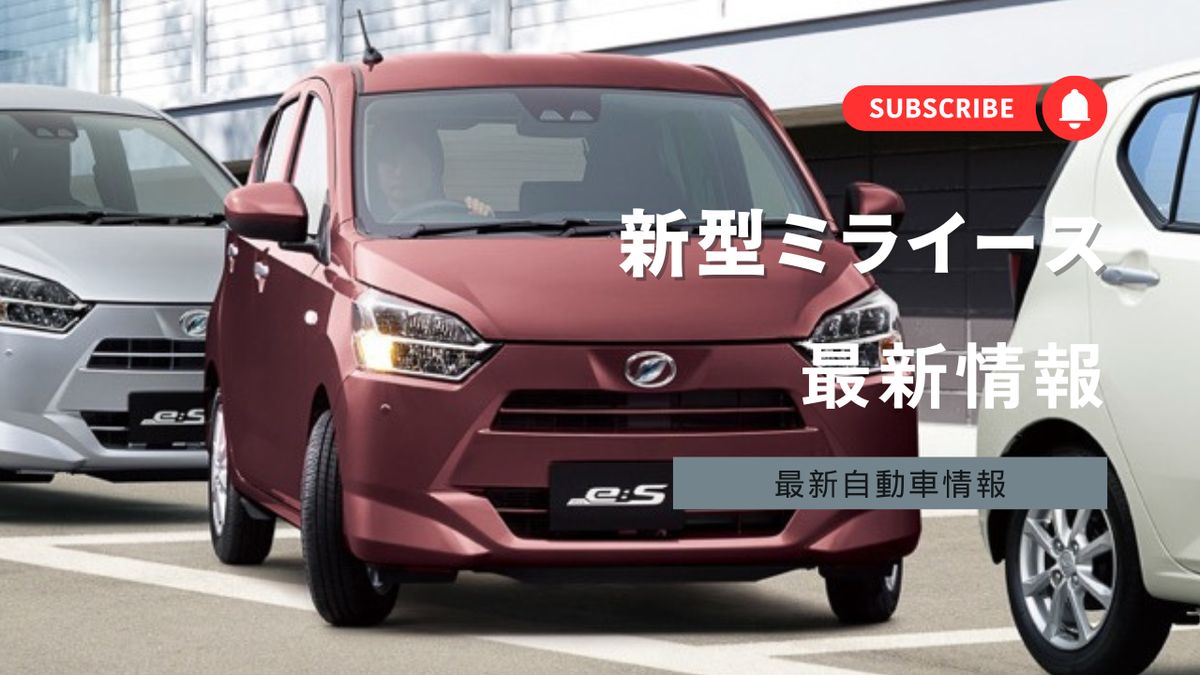
Known as Daihatsu’s entry-level model, the Mira e:S minicar has maintained constant popularity since its introduction thanks to its fuel efficiency and affordable price. The current model was released on May 9, 2017, and now it has been seven years since then. It was initially expected to undergo a full model change around the end of 2023 or 2024, but the Daihatsu Motor Co., Ltd. fraud scandal has caused delays to the plan. As a result, the full model change is now expected to occur around December 2025.
Release Date
- Release date extended to December 2025
It was initially said that the car would undergo a full model change between the end of 2023 and around 2024, but the actual release date is expected to be delayed due to Daihatsu’s inspection fraud scandal, recalls, and parts shortages. The full model change of the minicar “Move,” which was scheduled for release on July 3, 2023 , is also now aimed for a release in 2025, two years later than planned. Therefore, it seems unlikely that the Mira e:S will be released in 2024. Taking this into consideration, it is expected to be released between the second half of 2025 and the first half of 2026.
About the new Mira e:S full model change
The exterior incorporates a new design while maintaining the existing concept . The interior has also been completely redesigned , adopting a new platform, the “DNGA platform,” which improves bending rigidity and achieves overall weight reduction through the use of high-tensile steel and structural streamlining. Upper and lower bending rigidity has been improved by 30% compared to the previous model, and the high-tensile steel content of the upper body has also been increased by 10%. The new “D-CVT (Dual mode CVT)” transmission has been adopted , further reducing weight and improving fuel efficiency. The car also features a “9-inch smartphone-linked display audio” that allows smartphone operation. Furthermore, “Daihatsu Connect” has been adopted , which allows app operation and connection of the car navigation system to a smartphone . The latest advanced technology, “Next Generation Smart Assist,” has also been adopted .
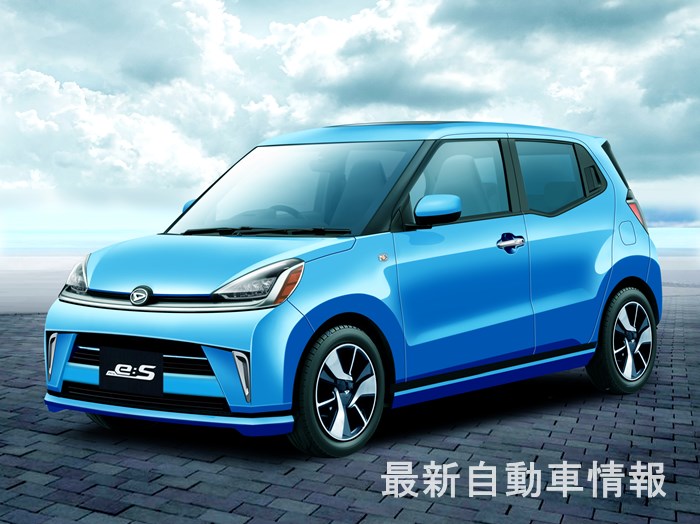
New Mira e:S predicted CG
- Adopting the latest exterior design
- New interior design
- The transmission uses a “D-CVT (Dual mode CVT)”
- Adopts Daihatsu’s ” DNGA platform “
- Adopts advanced technology “Next Generation Smart Assist”
New Mira e:S Fully redesigned car now comes standard with advanced technology “Next Generation Smart Assist”
Equipped with a stereo camera and two cameras. In addition, it is equipped with “Next Generation Smart Assist” which adds functions such as “ACC with full-speed tracking function (optional only for higher grades)”. It supports nighttime pedestrian detection and has a wider operating speed range than before. “Safety Support Car S (Wide)” (It is an eligible vehicle for Support Car S (Wide)).
Equipped with two corner sensors at the front and rear of the vehicle , the further evolved “Next Generation Smart Assist” helps avoid accidents in close calls while driving, supporting your safe driving. In addition to sonar sensors, the car is newly equipped with the world’s smallest stereo camera, which does not obstruct the driver’s field of vision or headroom. It accurately captures various information such as pedestrians, preceding vehicles, and obstacles, and warns the driver or activates emergency braking.
Collision Warning Function / Collision Avoidance Assist Brake Function ① Collision Warning (Vehicle-to-Vehicle, Pedestrian-to-Pedestrian) While driving, the camera detects vehicles or pedestrians ahead, and if it determines there is a risk of collision, it will sound a buzzer and display the warning in the meter.
② Primary Braking (Vehicle-to-Pedestrian) If the system determines there is a risk of collision, it will automatically apply light brakes (primary brakes) to urge the driver to avoid the collision.
③ Damage Reduction Brake Assist (Vehicle-to-Pedestrian) If the driver applies the brakes while the primary braking function is activated, the brake assist will activate and increase braking force.
④ Emergency Braking (Vehicle-to-Pedestrian) If the system determines that a collision is unavoidable, it will apply heavy brakes (secondary brakes) to slow down the vehicle, avoiding a collision or reducing damage.
Lane Departure Prevention Function: If the vehicle is about to deviate from its lane without using its turn signal, the system will warn the driver with a buzzer and a display on the meter, prompting them to take action. It will also assist with steering to bring the vehicle back into the lane.
If the preceding vehicle departure notification function is disabled and the driver does not notice that the preceding vehicle has started moving and does not start moving, a buzzer will sound and a display will appear on the meter to notify the driver.
AT False Start Prevention Control + False Start Prevention with Brake Control ① Forward False Start Prevention Control If the stereo camera detects an obstacle such as a vehicle or wall within 4m ahead and the accelerator pedal is pressed with the shift position in “forward”, the engine output will be limited to prevent sudden acceleration. ② Rear False Start Prevention Control If the sonar sensor built into the rear bumper detects an obstacle such as a wall within 2-3m behind and the accelerator pedal is pressed with the shift position in “reverse”, the engine output will be limited to prevent sudden acceleration. Brake control has also been added.
The high beam assist stereo camera detects the brightness of oncoming vehicle headlights and automatically switches between high and low beams. This allows you to drive with high beams without having to switch between them, allowing you to drive safely at night even on roads with few streetlights.
Adaptive Driving Beam: When driving with high beams on, if an oncoming vehicle is detected, the light is automatically blocked only in the area of the oncoming vehicle.
Sign Recognition Function When the stereo camera detects a no entry sign, a notification is displayed in the meter.
New Mira e:S Fully redesigned with the advanced technology “Smart Assist Plus” option
ACC (Adaptive Cruise Control) with full-speed following function: The stereo camera detects the speed and distance of the vehicle ahead, maintains the distance and speed between vehicles, and follows the vehicle ahead, controlling it until it comes to a stop.
Lane Keep Control: The stereo camera detects the lane and assists steering to keep the vehicle in the center of the lane.
Parking assistance function “Smart Panorama Parking Assist” A first for a minicar, the left and right cameras detect the white lines of parking spaces and assist with steering operations in addition to voice and on-screen guidance.
Side View Lamps When turning right or left at night, auxiliary lights that illuminate the left and right directions are turned on in addition to the normal headlights, brightly illuminating the direction in which the steering wheel is turned.
Smart Assist Comparison
| Functional Systems | Smart Assist II |
Smart Assist III |
Next-generation Smart Assist |
|
|---|---|---|---|---|
| method | Laser radar + monocular camera |
Stereo camera | Stereo camera | |
| Automatic Braking Pedestrian |
– Warning only (below 50km/h) |
◯ |
◯ (50km/h or less) |
|
| Automatic braking collision avoidance |
◯ |
◯ |
◯ (30km/h or less) |
|
| Automatic braking damage reduction |
◯ |
◯ |
◯ (80km/h or less, 50km/h or less for pedestrians ) |
|
| False start prevention front/rear |
◯ | ◯ (Brake control) |
||
| Lane Departure Warning | ◯ | |||
Notice of advance start |
◯ | |||
| Auto high beam or adaptive high beam system |
– | ◯ | ◯ | |
| Sign recognition function | – | – | ◯ | |
| Corner Sensor | – | – | ◯ | |
| Smart Assist Plus |
Lane Keeping Control |
– | – | ◯ |
ACC with full-speed tracking function |
– | – | ◯ | |
| Smart Panorama Parking |
– | – | ◯ | |
| Panoramic Monitor |
– | – | ◯ | |
| Side view lamp |
– | – | ◯ | |
New Mira e:S Full Model Change Specifications
| Specifications | New Mira e:S |
|---|---|
| full length | 3,395mm |
| Overall width | 1,475mm |
| Overall height | 1,630mm |
| Wheelbase | 2,455mm |
| engine | 658cc inline 3 DOHC engine |
| Maximum power | 38kW (52ps) / 6,900rpm |
| Maximum torque | 60Nm (6.1kgm) / 3,600rpm |
| transmission | D-CVT |
| Drive system | 2WD/4WD |
About Mira e:S
The first and second generations were fully redesigned approximately every five and a half years, and the second generation has been on sale since May 2017. Assuming a full model change occurs every five to six years, it seems likely that the full model change will occur between early 2023 and the end of 2023 .
Sales began on September 20, 2011
Developed under the concept of a “third eco-car” that anyone can easily drive, the car features e:S technology, which has improved fuel economy by 40% compared to previous models through a redesign of the vehicle structure to reduce vehicle weight, an improved transmission, and an improved engine. The engine employs improved compression ratios and injector atomization to enhance combustion efficiency, while meticulous refinements, such as the i-EGR system, minimize mechanical loss. The car boasts excellent fuel economy of 30km/L in the JC08 test cycle for 2WD and 27km/L for 4WD. Further refinements were made on July 9, 2014, improving fuel economy to 35.2km/L for 2WD and 32.2km/L for 4WD models , respectively.
The name of the car comes from “Mira” being the Italian word for “envy,” and “e:S” being a combination of “Energy Saving Technology,” a new technology developed by Daihatsu, and “eco & smart.”
Released on May 9, 2017
Daihatsu released a fully redesigned Mira e:S on May 9, 2017. It features a D-monocoque (lightweight, high-rigidity body). A minor change was made to the new Tanto/Tanto Custom , released on November 30, 2016. The Mira e:S also features Smart Assist III, first installed on the Tanto. It features the world’s smallest stereo camera, spaced 80mm apart from the left and right cameras. It also features pedestrian detection and a wider operating speed range than before. It’s equipped with two corner sensors, one at the front and one at the front. It’s also lighter by approximately 80kg (from 730kg in the previous model to a maximum of 650kg). Aerodynamic performance has been improved, achieving a Cd value of 0.32. Exterior parts, such as the front fenders, tailgate, and C-pillar garnish, are made of plastic for weight reduction, and the transmission and engine have been improved. While JC08 mode fuel economy remains unchanged at 35.2km/L compared to the previous model, actual fuel economy has improved.
LED headlamps and LED taillamps are standard on the G “SAIII” and X “SAIII”. Eco power generation control, pre-stop eco idling stop, scroll-type air conditioning compressor, and “seat heater (driver’s seat/passenger seat)” are exclusive to the G “SAIII”. The first light vehicle to feature a “switch-type back door opener” on the back door.
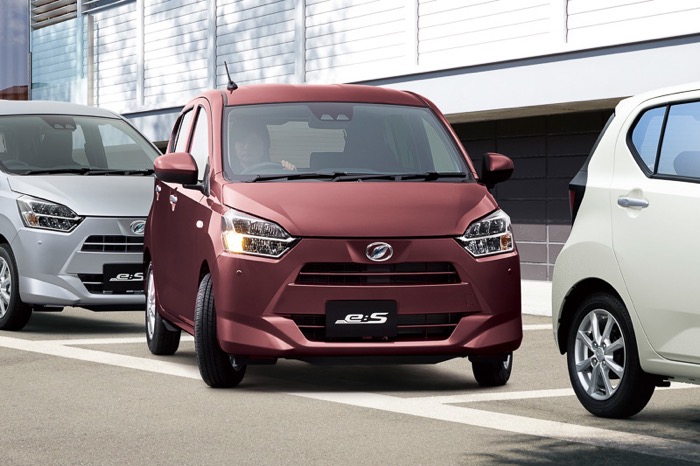
The minimum turning radius is 4.4m, the same as the previous model.
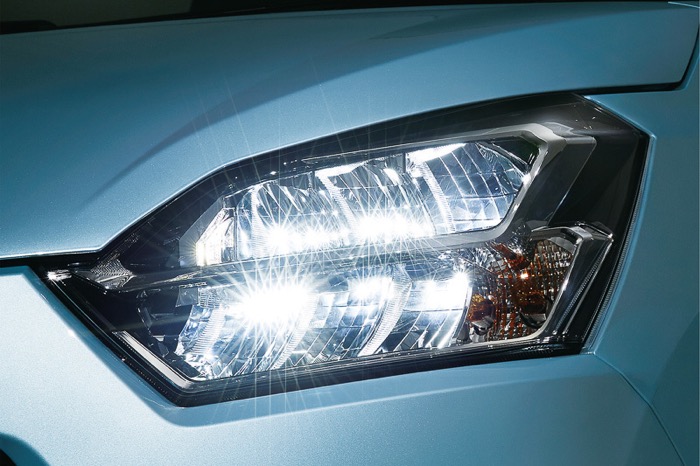
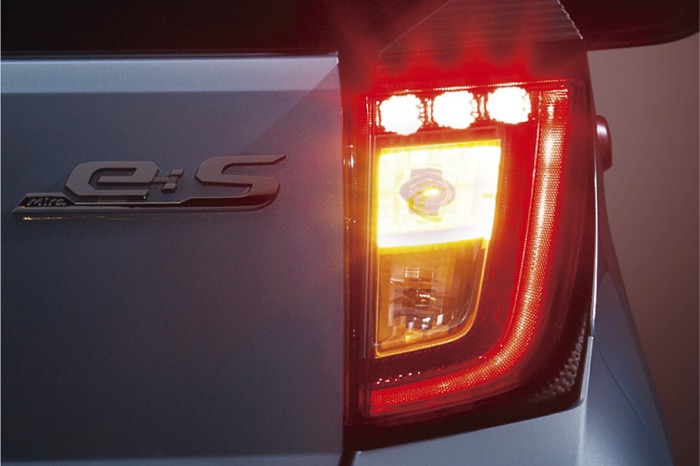
LED headlamps and LED taillamps are standard on the G “SAIII” and X “SAIII” models. Eco power generation control, pre-stop eco idling stop, scroll-type air conditioning compressor
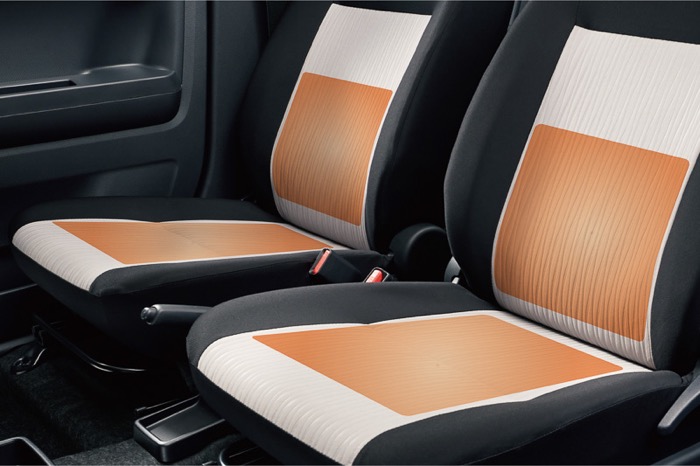
“Seat heater (driver’s seat/passenger seat)” is an exclusive feature for the G “SAIII”
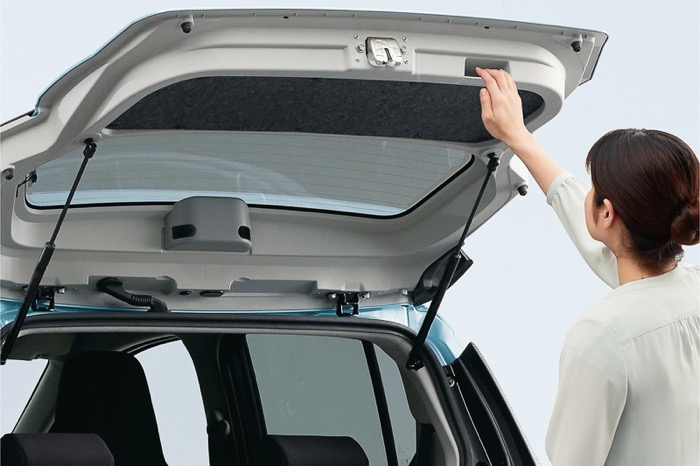
The first minicar to feature a switch-type tailgate opener on its tailgate.
Mira e:S price and grade 2021 model
| Model | engine | transmission |
Drive system | price |
|---|---|---|---|---|
| B | Inline 3-cylinder DOHC 0.66L | CVT | 2WD (FF) | 860,200 yen |
| B “SAⅢ” | 926,200 yen | |||
| L | 893,200 yen | |||
| L “SAⅢ” | 959,200 yen | |||
| L “SAⅢ 10th Anniversary Edition” |
975,700 yen | |||
| X “SAⅢ” | 1,102,200 yen | |||
| X “Limited SAⅢ” | 1,118,700 yen | |||
| G “SAⅢ” | 1,232,000 yen | |||
| G “Limited SAⅢ” | 1,248,500 yen | |||
| B | 4WD | 992,200 yen | ||
| B “SAⅢ” | 1,058,200 yen | |||
| L | 1,025,200 yen | |||
| L “SAⅢ” | 1,091,200 yen | |||
| L “SAⅢ 10th Anniversary Edition” |
1,100,000 yen | |||
| X “SAⅢ” | 1,234,200 yen | |||
| X “Limited SAⅢ” | 1,243,000 yen | |||
| G“SAⅢ | 1,364,000 yen | |||
| G “Limited SAⅢ” | 1,372,800 yen |
A word from the editorial department
I think the current Mira e:S model is a well-made product packed with many selling points. With this full model change, the introduction of the DNGA platform, adoption of the next-generation Smart Assist, and the inclusion of advanced equipment are expected. This will give the new Mira e:S excellent fuel economy and safety performance, making it an even more attractive car for many users. However, due to issues such as Daihatsu’s inspection fraud, the actual release date may be delayed, so it’s important to keep an eye on the latest information. We will keep you updated as new information becomes available.