
This article summarizes the commercial EV models of minicars that have been announced up until 2024. Surprisingly, many models from Toyota, Honda, Nissan, Suzuki, Mitsubishi, and Daihatsu have been announced by 2023. We hope this information will be helpful when making your purchase.
Demand for light vehicles and commercial EVs
Light commercial EVs offer the maneuverability you expect from a vehicle (minimum turning radius of 5m or less)
Ensures necessary luggage space performance and load capacity.
It is also very quiet when driving and when starting and stopping, so it can be used safely even in residential areas.
The powerful driving performance that only a motor-driven EV can provide makes it possible to carry heavy loads with ease .
While maintaining the cargo space and load capacity required for a light commercial van, the powerful driving performance of a motor-driven EV makes it possible to carry heavy loads with ease.It is also very quiet when driving, starting, and stopping, making it safe to use in residential areas, including early mornings and late nights.
Japan Post has already begun fully introducing electric vehicles (EVs) and electric motorcycles into its delivery fleet since 2019. Mitsubishi Motors’ Minicab -MiEV Van is used for delivery work, while Honda’s BENLY e: electric motorcycle is used, and these vehicles are becoming more common sights around Tokyo. Yamato Transport began testing Honda’s new N-VAN e: in June 2023 for delivery operations. Light commercial EVs, in particular, are needed for their maneuverability in delivery operations.
About Honda’s new light commercial EV “N-VAN e:”
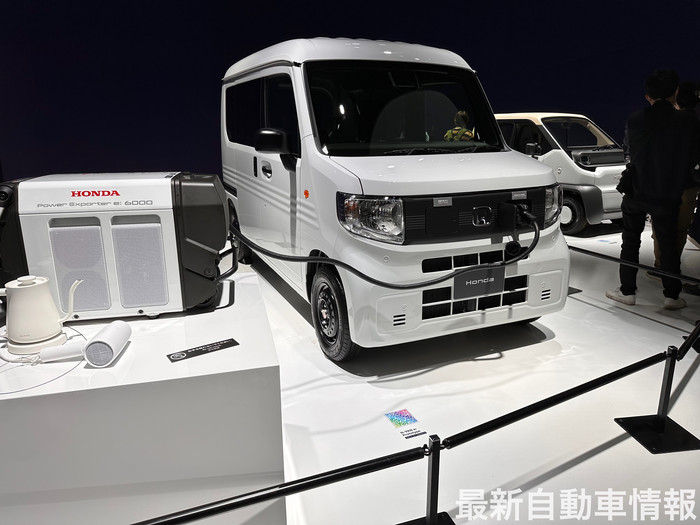
Honda plans to release the new N-VAN e:, a light commercial EV (electric vehicle) , in April 2024. The car was exhibited at the JAPAN MOBILITY SHOW 2023, which was held mainly at Tokyo Big Sight .
The exterior follows the design of the conventional N-VAN, but uses “recycled bumper material” made from recycled bumpers from used cars for the front grille and other parts, demonstrating Honda’s commitment to a circular economy.
The interior has been designed to be more convenient, with an easy-to-use square space, flexible storage that can be used to suit different needs, and functions such as the air conditioning controls and shift position switch concentrated on the driver’s side.
The N-VAN’s distinctive features of cargo capacity and space value as a commercial vehicle remain intact in the EV version, the N-VAN e:, and is packaged to be easy for anyone to drive. A slimmer battery installed under the cargo floor, a flat and low floor, and a high ceiling have been made possible, resulting in a spacious and large-capacity cargo space. By making the floor flat from the passenger seat to the rear seats, it is possible to load long items. Furthermore, the large opening created by eliminating the center pillar on the passenger side makes it easier to load and unload items of various sizes from the side. All types come standard with advanced safety driver assistance functions, and it is the first light commercial van to be equipped with side curtain airbags as standard for the driver and passenger seats.
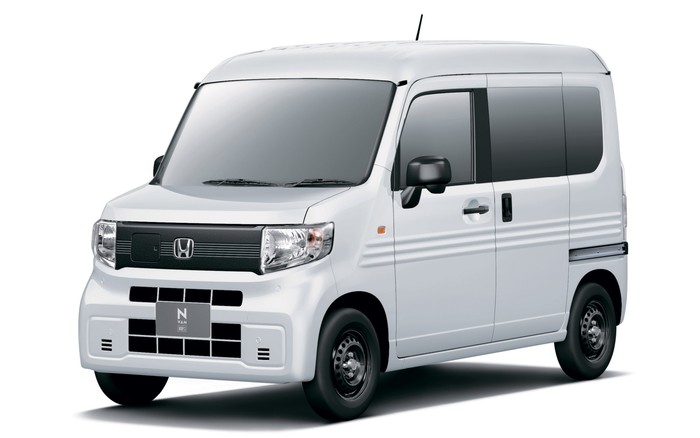
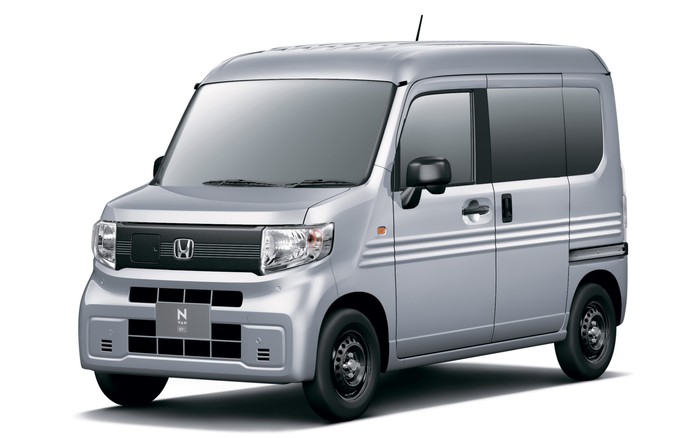
The power unit has a smaller electric axle, a large-capacity, thin battery, and concentrated high-voltage components to ensure the luggage space and practical cruising range required for a commercial vehicle. The vehicle was developed with a target range of over 210km in WLTC mode, which is sufficient for delivery work. In addition, an ECON mode has been set up to reduce the power consumption of the air conditioner, contributing to an extension of the practical cruising range.
It is compatible with standard 6.0kW chargers, which allows for faster charging. Charging takes approximately five hours, so if you charge overnight, you can start using it the next day fully charged. Also, for ease of use while charging, the charging lid is located at the front of the vehicle, so you can get in and out of the car and open and close the doors without having to worry about the charging cord when charging or supplying power.
By using the Honda Power Supply Connector, an AC external power supply connector, the N-VAN e: battery can be used to power electrical appliances with a total capacity of up to 1,500W, making it easy to extract electricity even during power outages or disasters.
Using the Honda Remote Control App on a smartphone, users can remotely set the pre-departure timer, charging standby time, maximum current, maximum charging amount, and external power supply lower limit SOC, contributing to comfortable travel, reduced electricity costs, and maximizing driving range.
| Specifications | N-VAN e: | |
|---|---|---|
| full length | 3,395mm | |
| Overall width | 1,475mm | |
| Overall height | 1,815 to 1,880 mm | |
| Wheelbase | 2,520mm | |
| engine | electric motor | |
| Maximum power | 64ps | |
| Maximum torque | 18.5kgm | |
| WLTC mode cruising range | 210km | |
| Normal charger (6.0kW output) | Approximately 5 hours | |
| fast charging | 30 minutes (up to 80%) | |
▼For more details, please refer to this article.
→ Honda’s new light commercial “N-VAN”-based light commercial EV (electric vehicle) with a cruising range of 200km and a price starting from 1 million yen will be released in spring 2024.
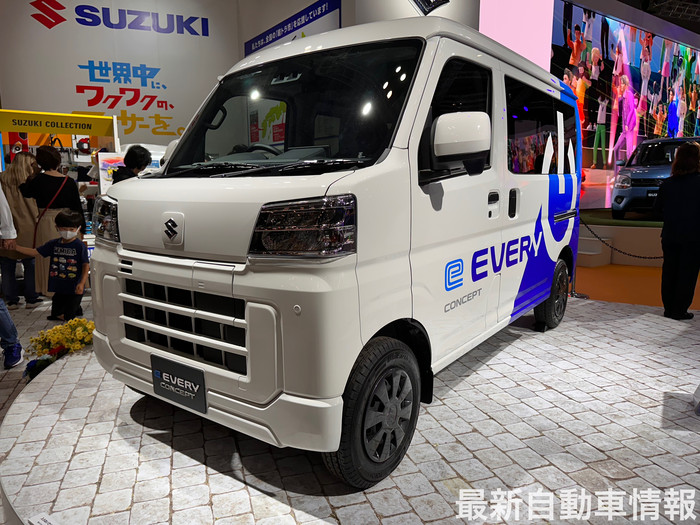
About the new Suzuki “e-Every”
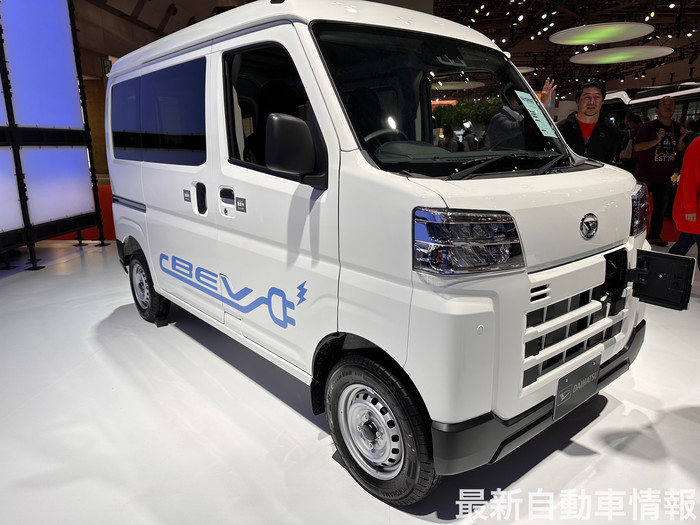
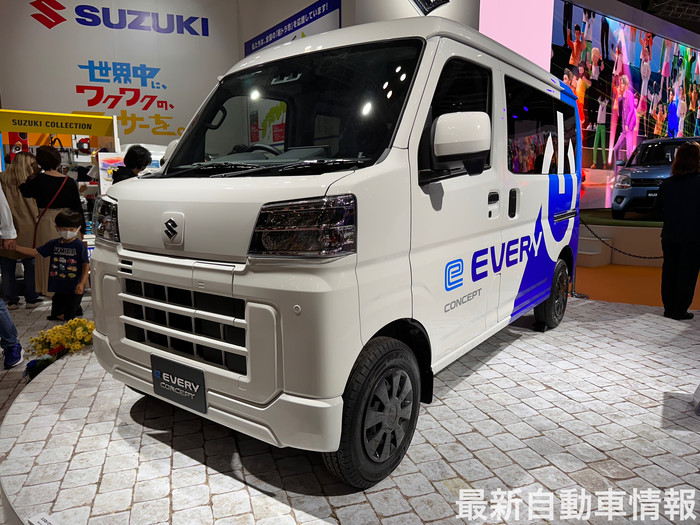
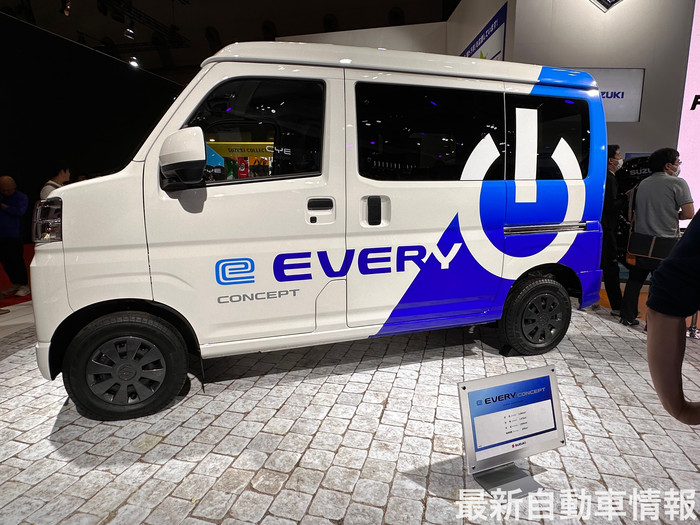
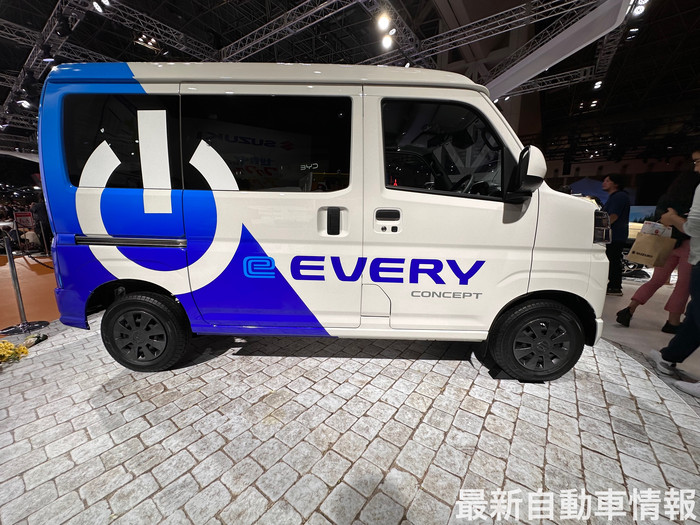
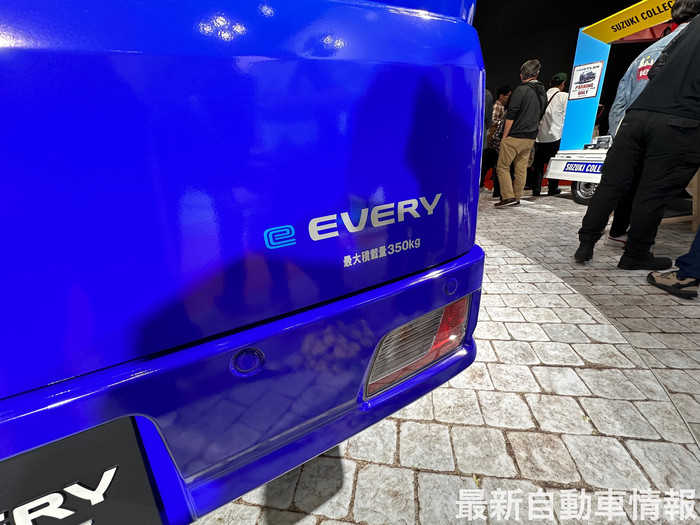
Suzuki will add the “e-every” battery EV (BEV) model that uses “e-SMART ELECTRIC” to its lineup of new “Every.” It was exhibited at the “JAPAN MOBILITY SHOW 2023,” which was held mainly at Tokyo Big Sight .
To introduce the BEV commercial light van, Suzuki and Daihatsu will combine their know-how in manufacturing small cars with Toyota’s electrification technology to jointly develop a BEV system suitable for light commercial vehicles. Daihatsu will produce the vehicles, and Suzuki, Daihatsu, and Toyota will each introduce them by the end of fiscal year 2023. Suzuki will have the “EVERY EV,” Daihatsu the “HIJET CARGO EV,” and Toyota the “PIXIS VAN EV,” and the vehicles are expected to have a range of around 200km per charge.

For more details, please refer to this article.
→ Finally, Suzuki, Daihatsu, and Toyota jointly develop a new battery EV commercial light van to be introduced in fiscal 2023
About Mitsubishi’s new Minicab EV
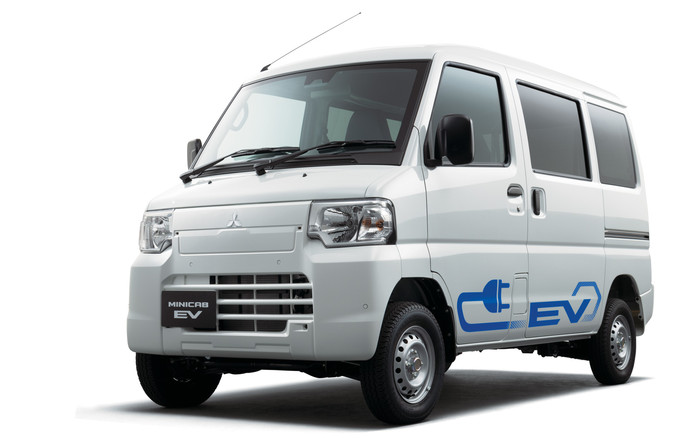
Mitsubishi will begin sales of the new Minicab EV, a minivan-type commercial electric vehicle, on December 21, 2023. Based on the Minicab-MiEV, the vehicle has been significantly improved by making the most of the know-how gained from the development and maintenance of the vehicle, improving the driving range and equipping it with safety and functional features.
The Minicab EV is a minivan-type commercial electric vehicle. Its new-generation electric components, including the motor and drive battery, extend its range per charge to 180km (WLTC mode), approximately 35% more than the previous model. A standard charge of AC 200V (15A) takes approximately 7.5 hours, meaning that if you charge it after work, you can start work the next day fully charged. Rapid charging allows for a full charge of 80% in approximately 42 minutes. The new motor generates a maximum torque of 195Nm from the start, enabling smooth, powerful driving even when heavily loaded, ensuring stress-free and brisk driving, a characteristic of electric vehicles. The adoption of a new motor inverter and an integrated structure achieve even quieter operation than the previous model, allowing for unobtrusive driving even in the early morning or late night hours. While achieving improved mileage and enhanced safety features compared to the previous model, the Minicab EV maintains the same retail price.
The safety features include Mitsubishi e-Assist, a preventive safety technology that includes a Forward Collision Mitigation Braking System (FCM), a Lane Departure Warning System (LDW), Automatic High Beams (AHB), and an Unintended Start Prevention System (UMS) for forward movement. The safety features have been improved to make the car compatible with the Suppo Car S Wide standard. The car also features Hill Start Assist (HSA), which prevents the vehicle from rolling back when starting on a steep slope.
An accessory outlet (AC100V, max. 1500W) is located on the rear of the floor console, allowing you to draw power from the vehicle at any time. This allows you to use electrical appliances that consume a lot of power, even in emergencies such as disasters.
| Specifications | Minicab EV |
|---|---|
| full length | 3,395mm |
| Overall width | 1,475mm |
| Overall height | 1,915mm |
| Wheelbase | 2,390mm |
| ground clearance | 165mm |
| motor | electric motor |
| Maximum power | 31kW (42ps) |
| Maximum torque | 195Nm (20kgm) |
| Drive system | FF/4WD |
For more details, please refer to this article.
→ Mitsubishi’s new “Minicab EV” has evolved significantly, adopting a new generation EV system with a range of 180km. It will be released on December 21, 2023.
Nissan’s new “Clipper EV”
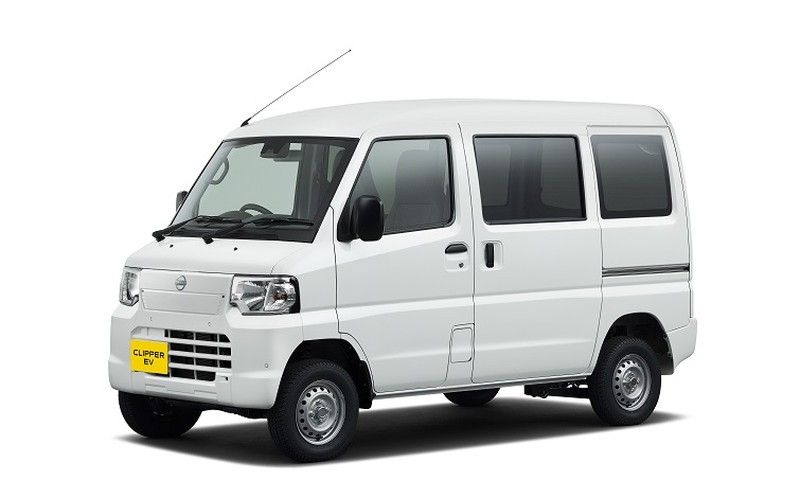
Nissan will release the new Clipper EV, a light commercial electric van, on February 12, 2024. The commercial electric vehicle (EV) Clipper EV will be sold based on a vehicle supplied by Mitsubishi Motors on an OEM basis.
clipper ev
By installing the battery in the center under the floor and achieving a low center of gravity, the vehicle reduces the shaking and bouncing sensations typical of light commercial vans and achieves a comfortable ride and handling stability. The vehicle has a maximum range of 180km (WLTC mode) . Using rapid charging, it can be charged up to 80% in approximately 42 minutes, and with normal charging it takes approximately 7.5 hours to fully charge, so if you charge it at home or work after work, you can use it the next day fully charged. The luggage compartment has a maximum load capacity of 350kg, and by eliminating protruding wheelhouses and steps when folding down the rear seats, it meets the needs of a light commercial van, such as ease of loading and unloading luggage.
The interior features a digital speedometer with larger indicators for improved visibility, and the switches on the center console have been laid out for easy viewing at a glance, improving operability. Type A and Type C USB charging ports are also available. The pre-air conditioning starter function in the keyless entry system allows the driver to turn on the car’s air conditioning from outside before getting in, even during rapid or normal charging.
| Specifications | Clipper EV |
|---|---|
| full length | 3,395mm |
| Overall width | 1,475mm |
| Overall height | 1,915mm |
| Wheelbase | 2,390mm |
| ground clearance | 165mm |
| motor | electric motor |
| Maximum power | 31kW (42ps) |
| Maximum torque | 195Nm (20kgm) |
| Drive system | FF/4WD |
| WLTC mode cruising range – driving distance on one charge |
Up to 180km |
For more details, please refer to this article.
→ Nissan’s new light commercial EV van “Clipper EV” will be released on February 12, 2024.
Toyota’s new “Pixis Van”
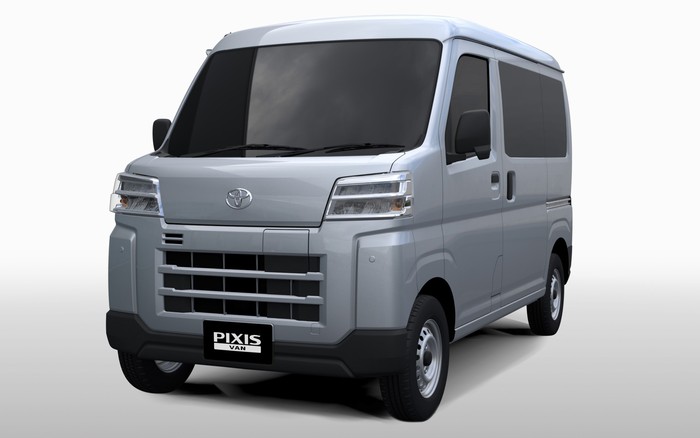
To introduce the BEV commercial light van, Suzuki and Daihatsu combined their know-how in making small cars with Toyota’s electrification technology to jointly develop a BEV system suitable for light commercial vehicles. Daihatsu will produce the vehicles, and Suzuki, Daihatsu, and Toyota plan to introduce them by the end of fiscal year 2023. Suzuki will have the “EVERY EV,” Daihatsu the “HIJET CARGO EV,” and Toyota the “PIXIS VAN EV.” With an expected range of around 200km per charge, the vehicles are currently under development with the aim of meeting the needs of customers in the delivery industry and other sectors.
PIXIS VAN EV
About the new Daihatsu “e-Hijet Cargo”
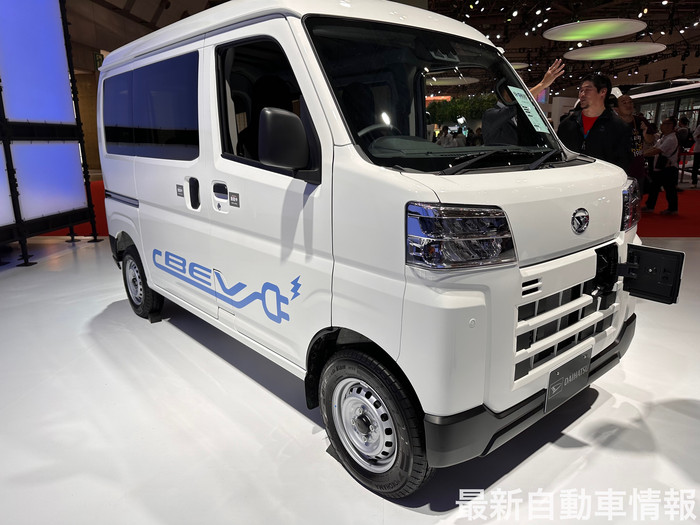
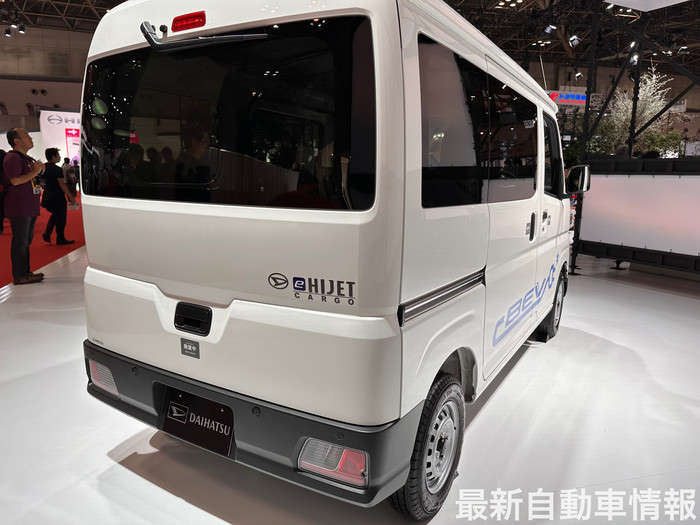
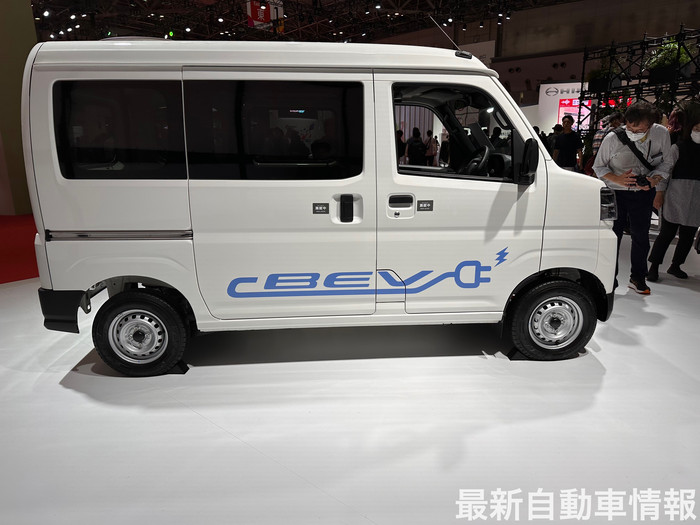
Daihatsu will add the “e-HIJET CARGO,” a battery electric vehicle (BEV) model that uses “e-SMART ELECTRIC,” to its “Hijet Cargo” lineup. The model was exhibited at the “JAPAN MOBILITY SHOW 2023,” which was held mainly at Tokyo Big Sight .
To introduce the BEV commercial light van, Suzuki and Daihatsu will combine their know-how in manufacturing small cars with Toyota’s electrification technology to jointly develop a BEV system suitable for light commercial vehicles. Daihatsu will produce the vehicles, and Suzuki, Daihatsu, and Toyota will each introduce them by the end of fiscal year 2023. Suzuki will have the “EVERY EV,” Daihatsu the “HIJET CARGO EV,” and Toyota the “PIXIS VAN EV,” and the vehicles are expected to have a range of around 200km per charge.
For more details, please refer to this article.
→ Finally, Suzuki, Daihatsu, and Toyota jointly develop a new battery EV commercial light van to be introduced in fiscal 2023
summary
Many light commercial EV models have been announced for 2024, but most will be released in 2024. Furthermore, the driving distance per charge is approximately 200km in WLTC mode, and they have been developed based on city driving. Of these, the one with the longest range is Honda’s N-VAN e:, but it’s unclear which model will sell the most. We’ll keep you updated as new information becomes available.