
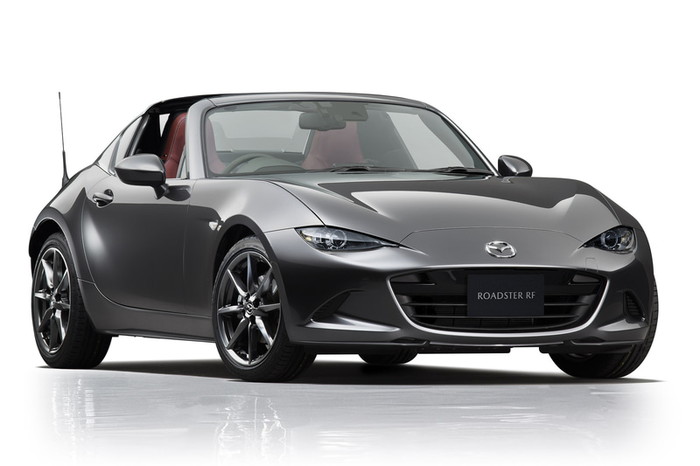
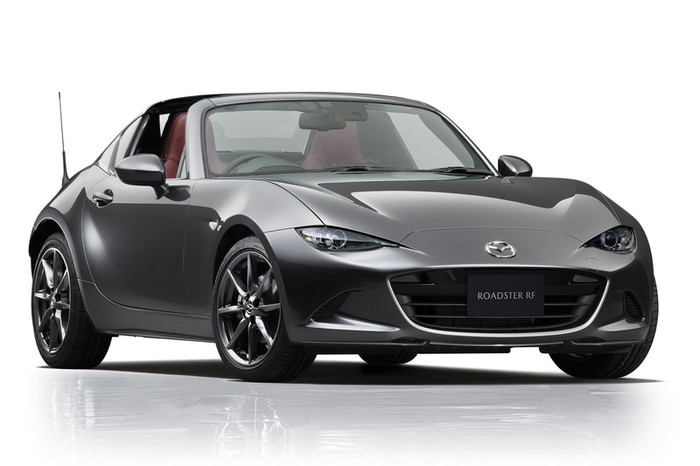
Mazda conducted an investigation into all 2,403 vehicle type approval application tests during the investigation period, based on a request from the Ministry of Land, Infrastructure, Transport and Tourism (MLIT) on January 26, 2024, to conduct an investigation into the existence of fraudulent practices in vehicle type approval applications. As a result of the investigation, we confirmed fraud in a total of five tests across two test categories, and reported this to the MLIT on May 30. For three previously produced vehicles (Atenza, Axela, and Atenza/MAZDA6), test vehicle tampering was found in the crash tests, and for two currently produced vehicles (Roadster RF and MAZDA2), engine control software was rewritten in the power output tests. The fraudulent practices discovered this time affect 150,878 production units and 149,313 sales units.
Fraud Overview
Falsification of crash test vehicles for three previously produced vehicles
In certification tests for occupant protection in frontal collisions, there has been a track record of airbags being detonated at a specified time using an external device, rather than spontaneously detonating when a collision is detected by an on-board sensor.
| Car model name | destination | Production period | actual production | Sales period | Sales performance |
|---|---|---|---|---|---|
| Atenza (improved model) |
Japan | November 2014 – April 2018 |
29,547 units | January 2015 to May 2018 |
29,505 units |
| Axela (improved model) |
Japan | August 2016 – February 2019 |
46,067 units | September 2016 to March 2019 |
46,046 units |
| Atenza/MAZDA6 (improved model) |
Japan | April 2018 – April 2024 |
22,094 units | From June 2018 | 21,641 units |
Rewriting engine control software for output testing on two currently produced vehicles
In certification testing for the onboard power output of gasoline engines, output tests should have been conducted using engine control software in the same state as that used in mass-produced vehicles, but tests were conducted using control software with part of the ignition timing correction function disabled.
| Car model name | destination | Production period | actual production | Sales period | Sales performance |
|---|---|---|---|---|---|
| Roadster RF (improved model) |
Japan | From June 2018 | 10,930 units | From July 2018 | 10,760 units |
| MAZDA2 (1.5L gasoline engine , improved model) |
Japan | From June 2021 | 42,240 units | From June 2021 | 41,361 units |
Based on the results of this investigation, shipments of the affected models, the Roadster RF and Mazda2, which are currently in production, have been temporarily suspended since May 30th.
Causes of fraud
- Lack of a system to check whether testing is conducted in compliance with certification regulations, and a lack of a governance system
- Inadequate procedures for conducting tests in accordance with certification regulations
- Lack of facilities that can consistently meet testing requirements in accordance with certification regulations
Measures to prevent recurrence
- Reorganization of governance and mechanisms to check whether testing is conducted in compliance with certification regulations
- Review, educate, and practice procedures to ensure proper testing in accordance with certification regulations
- Strengthening the development of facilities that consistently meet testing conditions in accordance with certification regulations
“We would like to once again offer our deepest apologies for the great inconvenience caused to all Mazda stakeholders, including our customers, business partners, and dealerships. Mazda regards this incident as a serious problem, and will take responsibility as a member of management to work hard to prevent a recurrence so that similar incidents do not occur in the future,” the company said.
Toyota News Release
https://newsroom.mazda.com/en/publicity/release/2024/202406/240603a.html