

Daihatsu’s new “Thor” will undergo its first full model change and is expected to be released in 2027. It’s a compact car with a 5-number registration size, popular for its spacious interior. Its affordable price point also ensures its long-standing popularity. The current model was released in November 2016, and eight years have passed since its release. It was originally scheduled for a full model change at the end of 2023 or 2024. However, due to the Daihatsu Motor Co., Ltd. fraud scandal that arose in December 2023 , this plan appears to have been delayed. This meant that the release was expected to be in 2025. However, the Nikkan Jidosha Shimbun has reported that the new car development project has been significantly revised, with the release date now expected to be after June 2027. It will be exciting to see how the car evolves over the course of approximately 11 years.
About the new Thor full model change
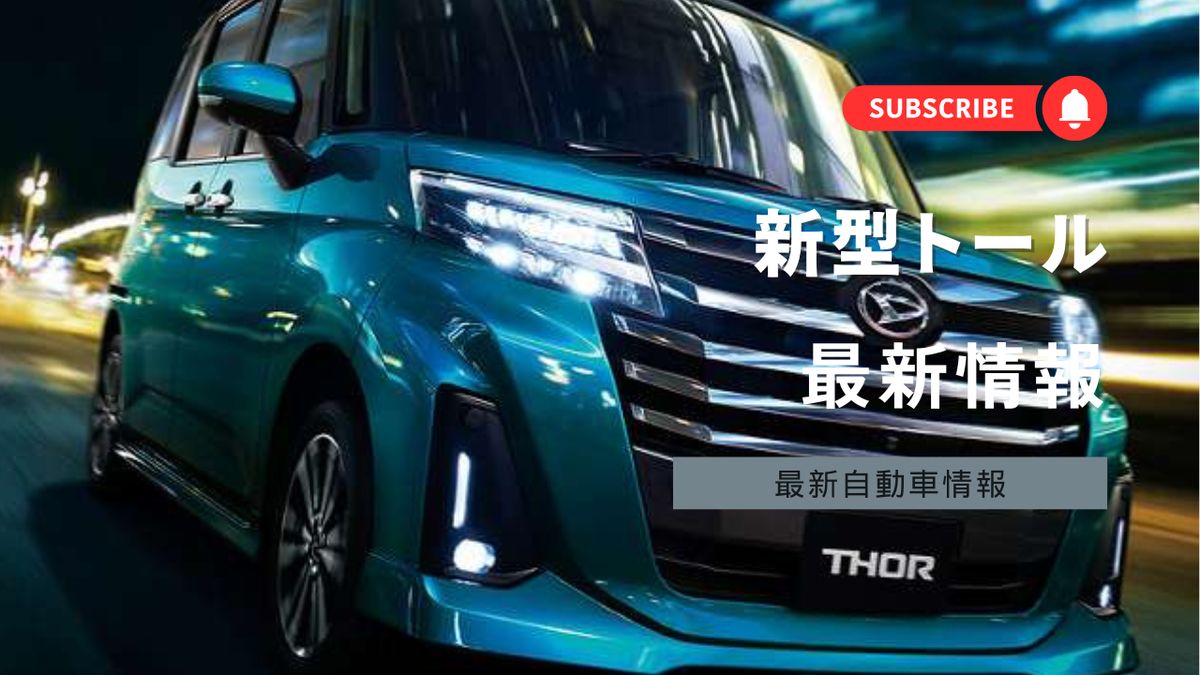
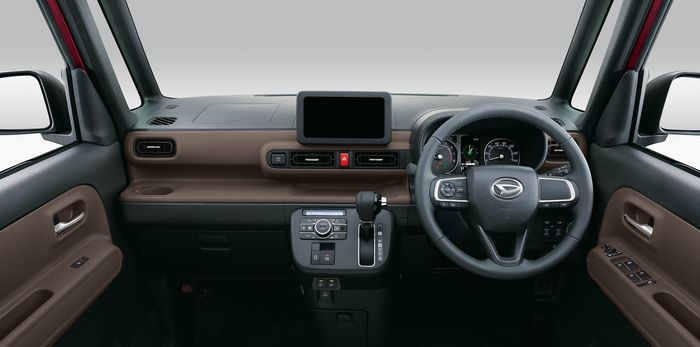
The exterior design will be revamped while maintaining the same concept, with the front bumper having a more distinctive design. It is expected to feature a large radiator grille and ” signature lamps ” that are DRLs (daytime running lights) . The interior will also be completely revamped, with a redesigned instrument panel that will improve usability and increase storage space . It will also feature a ” 10.5-inch smartphone-linked display audio ” that will allow apps compatible with “SmartDeviceLink,” “Apple CarPlay,” and “Android Auto” to be operated on the display. An “electric parking brake” and “auto brake hold” will also be adopted.
The car will be equipped with Daihatsu Connect , a service that links car navigation systems with smartphones, and Daihatsu’s DNGA platform . The hybrid system will also feature e-SMART HYBRID , and the latest technology will include the Next Generation Smart Assist .
- The latest exterior design.
- New interior design
- 9-inch smartphone-linked display audio
- Equipped with “electric parking brake” and “auto brake hold”.
- It uses Daihatsu’s ” DNGA platform .”
- Adopts advanced technology “Next Generation Smart Assist”
- The lineup includes hybrid models with the “e-SMART HYBRID” system.
About the new Thor exterior full model change
The basic concept is thought to be the same. As it will be a tall wagon type that fits within the 5-number size, the body size is expected to be approximately 3,730mm in length (+30mm), 1,670mm in width (+25mm), 1,735mm in height (+0mm), and 2,520mm in wheelbase (+30mm). This should allow for more interior space by slightly increasing the wheelbase, length, and width. In addition, the front bumper will have a more emphasized design, and if a large radiator grille and “signature lamps” (DRLs) are adopted, the design will be completely revamped, which could make it an even more popular model.
New Thor Fully Redesigned Interior
The interior has also been completely redesigned, and a 10.5- inch smartphone-linked display audio system has been adopted. Apps compatible with SmartDeviceLink, Apple CarPlay, and Android Auto can be operated on the display. The car also features Daihatsu Connect , a service that connects car navigation systems to smartphones.
Move Canvas
About the new Toyota Thor Hybrid “e-SMART HYBRID” system
Like the Rocky Hybrid, which was released on November 1, 2021, the hybrid system uses the e -SMART HYBRID . The e-SMART HYBRID system is composed of a newly developed 1.2L inline 3-cylinder engine (WA-VEX) + motor , with the engine used exclusively for generating electricity. It uses a series hybrid system that uses that electricity to run 100% on the motor . The small displacement allows for a simple structure and compact size. This hybrid system is strong at low and medium speeds, making it suitable for small cars that are frequently used for city driving. It achieves incredible fuel efficiency of 27.0km/L (2WD) in WLCT mode.
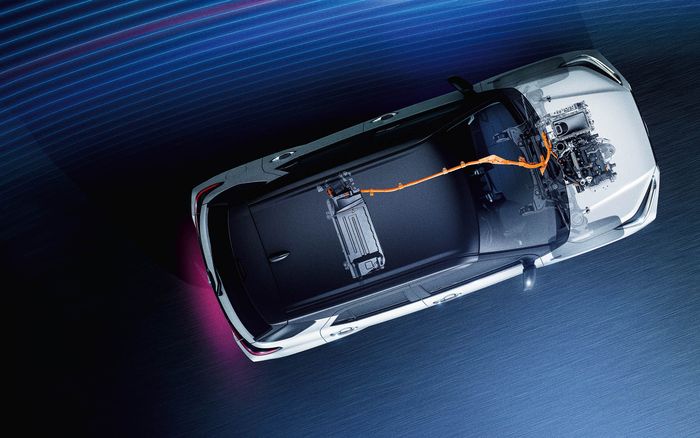
The generator engine is a 1.2L inline three-cylinder engine (WA-VEX) with a maximum output of 60kW (82ps) at 5,600 rpm and 105Nm (10.7kgfm) at 3,200-5,200 rpm. The drive motor delivers a maximum output of 78kW (106ps) and a maximum torque of 170Nm (17.4kgm). The torque allows for driving that takes advantage of the motor’s characteristics. Vehicle speed can be controlled solely by operating the accelerator. The vehicle is equipped with a “Smart Pedal (S-PDL)” system, which reduces the frequency of switching from accelerator to brake during repeated acceleration and deceleration in city streets and downhill sections, reducing driver burden and providing a more comfortable ride. With this engine, fuel economy in the WLCT mode is expected to be around 27.0km/L .
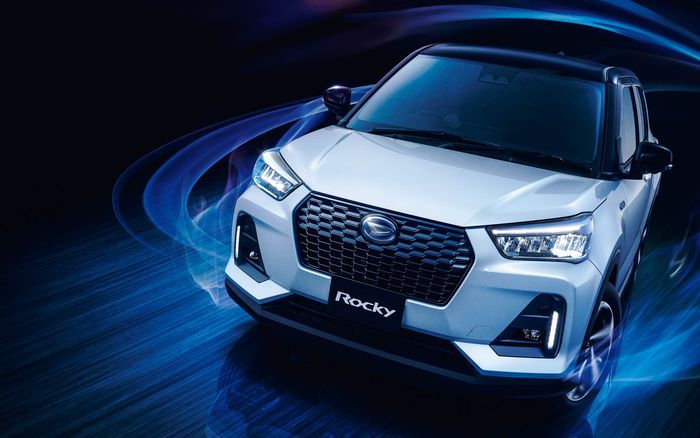
Thor’s advanced technology “Next Generation Smart Assist” comes standard
“Smart Assist” is equipped with two cameras. It also comes with “Next Generation Smart Assist” which adds functions such as “ACC with full-speed tracking function” and “Lane Keep Assist.” It uses a stereo camera, supports pedestrians, and has a wider operating speed range than before. “Safety Support Car S (Wide)” (This vehicle is eligible for the “Safety Support Car S (Wide)” scheme.)
Equipped with two corner sensors at the front and rear of the vehicle , the further evolved “Next Generation Smart Assist” helps avoid accidents in close calls while driving, supporting your safe driving. In addition to sonar sensors, the car is newly equipped with the world’s smallest stereo camera, which does not obstruct the driver’s field of vision or headroom. It accurately captures various information such as pedestrians, preceding vehicles, and obstacles, and warns the driver or activates emergency braking.
Collision Warning Function / Collision Avoidance Assist Brake Function ① Collision Warning (Vehicle-to-Vehicle, Pedestrian-to-Pedestrian) While driving, the camera detects vehicles or pedestrians ahead, and if it determines there is a risk of collision, it will sound a buzzer and display the warning in the meter.
② Primary Braking (Vehicle-to-Pedestrian) If the system determines there is a risk of collision, it will automatically apply light brakes (primary brakes) to urge the driver to avoid the collision.
③ Damage Reduction Brake Assist (Vehicle-to-Pedestrian) If the driver applies the brakes while the primary braking function is activated, the brake assist will activate and increase braking force.
④ Emergency Braking (Vehicle-to-Pedestrian) If the system determines that a collision is unavoidable, it will apply heavy brakes (secondary brakes) to slow down the vehicle, avoiding a collision or reducing damage.
Lane Departure Prevention Function: If the vehicle is about to deviate from its lane without using its turn signal, the system will warn the driver with a buzzer and a display on the meter, prompting them to take action. It will also assist with steering to bring the vehicle back into the lane.
If the preceding vehicle departure notification function is disabled and the driver does not notice that the preceding vehicle has started moving and does not start moving, a buzzer will sound and a display will appear on the meter to notify the driver.
AT False Start Prevention Control + False Start Prevention with Brake Control ① Forward False Start Prevention Control If the stereo camera detects an obstacle such as a vehicle or wall within 4m ahead and the accelerator pedal is pressed with the shift position in “forward”, the engine output will be limited to prevent sudden acceleration. ② Rear False Start Prevention Control If the sonar sensor built into the rear bumper detects an obstacle such as a wall within 2-3m behind and the accelerator pedal is pressed with the shift position in “reverse”, the engine output will be limited to prevent sudden acceleration. Brake control has also been added.
The high beam assist stereo camera detects the brightness of oncoming vehicle headlights and automatically switches between high and low beams. This allows you to drive with high beams without having to switch between them, allowing you to drive safely at night even on roads with few streetlights.
Adaptive Driving Beam: When driving with high beams on, if an oncoming vehicle is detected, the light is automatically blocked only in the area of the oncoming vehicle.
Sign Recognition Function When the stereo camera detects a no entry sign, a notification is displayed in the meter.
Thor equipped with advanced technology “Smart Assist Plus” option
ACC (Adaptive Cruise Control) with full-speed following function: The stereo camera detects the speed and distance of the vehicle ahead, maintains the distance and speed between vehicles, and follows the vehicle ahead, controlling it until it comes to a stop.
Lane Keep Control: The stereo camera detects the lane and assists steering to keep the vehicle in the center of the lane.
Parking assistance function “Smart Panorama Parking Assist” The left and right cameras detect the white lines of parking spaces and provide audio and on-screen guidance as well as steering assistance.
Side View Lamps When turning right or left at night, auxiliary lights that illuminate the left and right directions are turned on in addition to the normal headlights, brightly illuminating the direction in which the steering wheel is turned.
Smart Assist Comparison
| Functional Systems | Smart Assist II |
Smart Assist III |
Next-generation Smart Assist |
|
|---|---|---|---|---|
| method | Laser radar + monocular camera |
Stereo camera | Stereo camera | |
| Automatic Braking Pedestrian |
– Warning only (below 50km/h) |
◯ |
◯ (50km/h or less) |
|
| Automatic braking collision avoidance |
◯ |
◯ |
◯ (30km/h or less) |
|
| Automatic braking damage reduction |
◯ |
◯ |
◯ (80km/h or less, 50km/h or less for pedestrians) |
|
| False start prevention front/rear |
◯ | ◯ (Brake control) |
||
| Lane Departure Warning | ◯ | |||
Notice of advance start |
◯ | |||
| Auto high beam or adaptive high beam system |
– | ◯ | ◯ | |
| Sign recognition function | – | – | ◯ | |
| Corner Sensor | – | – | ◯ | |
| Smart Assist Plus |
Lane Keeping Control |
– | – | ◯ |
ACC with full-speed tracking function |
– | – | ◯ | |
| Smart Panorama Parking |
– | – | ◯ | |
| Panoramic Monitor |
– | – | ◯ | |
| Side view lamp |
– | – | ◯ | |
New Thor spec predictions
The new model features a 1.2L inline 3-cylinder direct injection engine and motor “e-SMART HYBRID.” The 1.0L inline 3-cylinder turbo engine has been discontinued and replaced with a 1.2L inline 3-cylinder engine.
| Specifications | New Thor Hybrid |
New Thor |
|---|---|---|
| full length | 3,700 to 3,705 mm | |
| Overall width | 1,670mm | |
| Overall height | 1,735mm | |
| Wheelbase | 2,490mm | |
| engine | 1.2L inline 3-cylinder direct injection engine + motor |
1.2L inline 3-cylinder engine |
| Maximum power | 60kW (82ps) / 5,600rpm |
64kW (87ps) / 6,000rpm |
| Maximum torque | 105Nm (10.7kgfm) / 3,200-5,200rpm |
113Nm (11.5kgfm) / 4,500rpm |
| Motor maximum output |
78kW (106ps) | – |
| Motor Max Torque |
170Nm (17.4kgm) | – |
transmission |
e-SMART HYBRID system |
CVT |
| Drive system | 2WD/4WD | |
| Minimum turning radius | 4.7 to 4.6 m | |
| Tire size | 195/60R17 | |
| Drive system | 2WD | 2WD |
| WLCT mode fuel economy | Approximately 27.0km/L | Approximately 16.8km/L |
Release Date
- The release date has been extended to June 2027 or later.
It was initially said that the car would undergo a full model change between the end of 2023 and around 2024, but the actual release date is expected to be delayed due to Daihatsu’s inspection fraud scandal, recalls, and parts shortages. The full model change of the minicar Move, which was scheduled for release on July 3, 2023 , has also been delayed by more than a year and is now aimed for release around April 2025. As a result, the Nikkan Jidosha Shimbun has reported that the Thor’s new car development project has been significantly revised, with the release date now set to after June 2027. Taking this into consideration, it is expected to be released after June 2027. The Roomy , which is supplied to Toyota on an OEM basis, is also expected to undergo a full model change at the same time.

Q&A regarding the new Thor full model change
When is the Thor scheduled for a full model change?
-
Initially, a full model change was expected around autumn 2024, but due to the impact of Daihatsu’s fraud scandal, this is expected to be delayed until after June 2027. The exact date has not yet been announced, but it is expected to be released within 2027.
What changes are expected in the next-generation Thor?
-
The next-generation Thor is expected to undergo a wide range of evolutions, including interior and exterior design, powertrain, and safety performance.
Will the Thor’s fuel efficiency improve after the full model change?
-
The addition of the hybrid model is expected to significantly improve fuel efficiency.
What direction will the exterior design of the next-generation Thor take?
-
Details are still unknown, but it is expected to have a more stylish and sophisticated design,
following the design trends of recent Toyota cars, and may incorporate sharp lines and three-dimensional shapes.
What is the expected price range for the Thor after the full model change?
-
The current model’s price range is around 1.55 million to 2.1 million yen, but the next model may see a slight increase in price due to the addition of a hybrid model and improved safety features.
Will the next-generation Thor be released as a hybrid vehicle?
-
There has been no official announcement at this time, but it is highly likely that a hybrid model will be added, and
it is highly likely that it will be equipped with Daihatsu’s e-SMART HYBRID system.
Will the rear sliding door of the next-generation Thor be improved?
-
Although details are unknown, improvements in usability and quietness are expected.
Further improvements in convenience are expected, such as the adoption of electric sliding doors and larger openings.
What changes can we expect to see in the interior of the Thor with its full model change?
-
The interior design is expected to be more refined and sophisticated, and
improvements in practicality are also expected, such as increased storage space and a wider variety of seat arrangements.
Will the fully redesigned Thor offer a more comfortable ride?
-
The new platform and improved suspension are expected to improve ride comfort
and quietness, making for a more enjoyable drive.
A word from the editorial department
I think the current Thor model is a well-made product packed with many selling points. With this full model change, the introduction of the DNGA platform, adoption of the e-SMART HYBRID, and the installation of advanced equipment are expected. This will give the new Thor excellent fuel economy and safety performance, making it an even more attractive vehicle for many users. However, due to issues such as Daihatsu’s inspection fraud, the actual release date may be delayed, so it is important to keep an eye on the latest information. We will keep you updated as new information becomes available.
We will let you know as soon as new information becomes available.
Daihatsu