

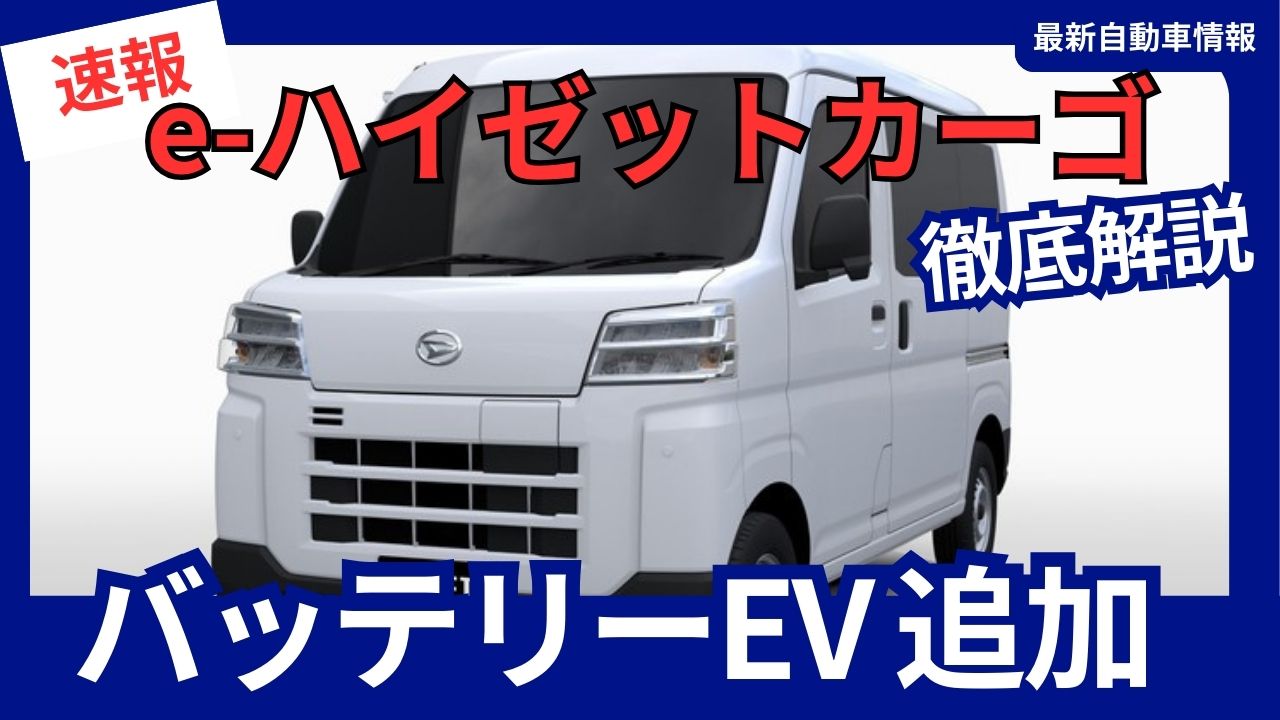
Daihatsu will add the new Hijet Cargo to its lineup with the addition of the e-HIJET CARGO, a battery electric vehicle (BEV) model that uses e-SMART ELECTRIC.
An application for the e-HIJET CARGO (trademark application 2022-068121) was submitted to the Japan Patent Office on June 14, 2022. An application for the e-SMART ELECTRIC (trademark application 2022-068122) was also submitted on the same day. The car was originally scheduled for release around December 2023, but the release was postponed due to a fraud scandal involving Daihatsu Motor’s certification procedures.
The “e-HIJET CARGO” was exhibited at the “JAPAN MOBILITY SHOW 2023” held at Tokyo Big Sight, attracting a lot of attention.
Daihatsu’s new “Hijet Cargo” partially improved BEV “e-Hijet Cargo”
To introduce the BEV commercial minivan, Suzuki and Daihatsu combined their minicar manufacturing know-how with Toyota’s electric vehicle technology to jointly develop a BEV system suitable for mini commercial vehicles. The vehicle was to be produced by Daihatsu, and Suzuki, Daihatsu, and Toyota were each scheduled to introduce it by the end of fiscal year 2023.
- Suzuki: EVERY EV
- Daihatsu: HIJET CARGO EV
- Toyota: PIXIS VAN EV
The expected range per charge is about 200km.
For more details, please refer to this article.
→ Finally, Suzuki, Daihatsu, and Toyota jointly develop a new battery EV commercial light van to be introduced in fiscal 2023
The vehicle was exhibited and unveiled at the JAPAN MOBILITY SHOW 2023, held mainly at Tokyo Big Sight, and I was able to see it up close, hear about its design and functions, and even take some photos.
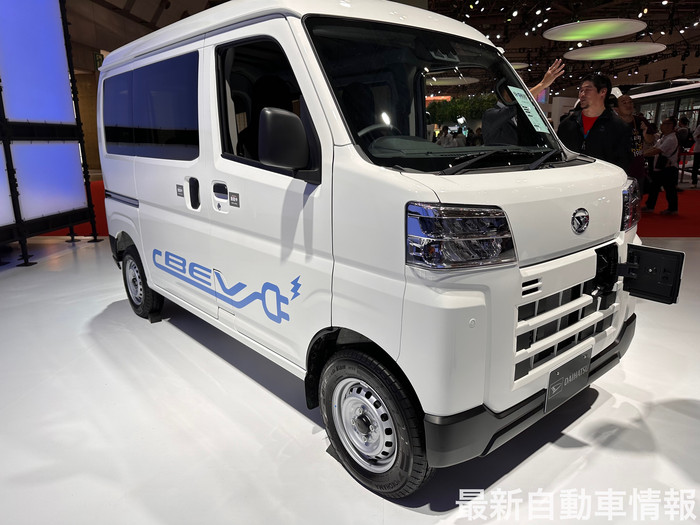
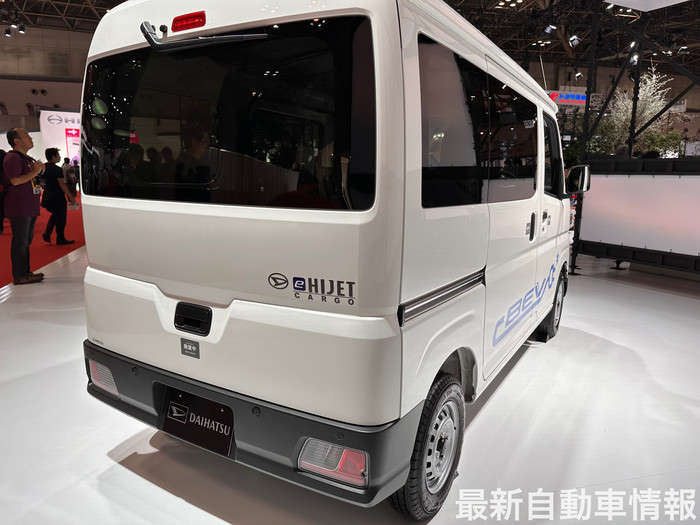
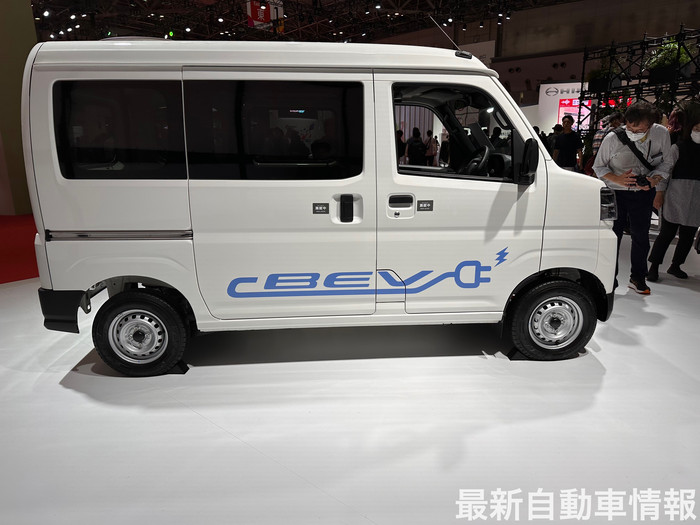
About the new Hijet Cargo full model change
The exterior design has been changed to a more square silhouette.
The new platform, DNGA (Daihatsu New Global Architecture) , has been adopted. The vehicle structure has been revised to reduce weight, with vertical bending rigidity improved by 30% compared to the previous model , and the upper body’s high-tensile strength ratio increased by 10% , resulting in a reduction in overall vehicle weight .
The transmission has been improved to include a newly developed CVT exclusively for FR vehicles , and the engine has also been improved. By adopting Japan’s first multi-spark (multiple ignition) system , the engine has improved combustion efficiency through an improved compression ratio and finer injector spray.
The interior features a 9-inch display audio . Apps compatible with SmartDeviceLink and Apple CarPlay can be operated on the display.
Equipped with advanced technology “Next Generation Smart Assist” .
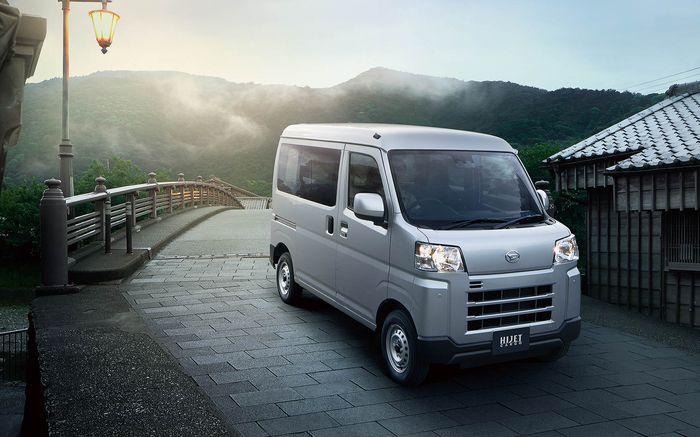
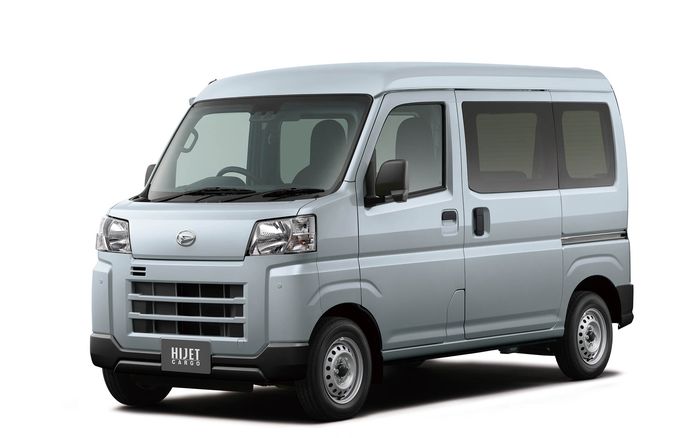
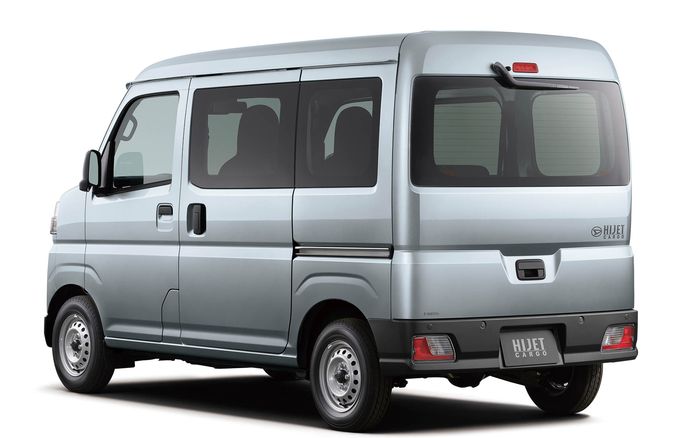
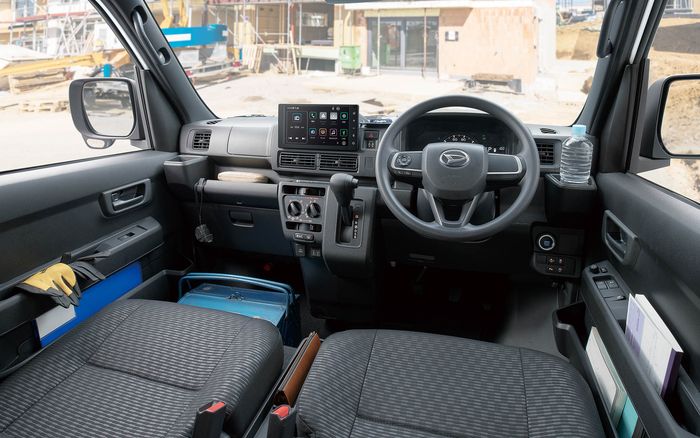
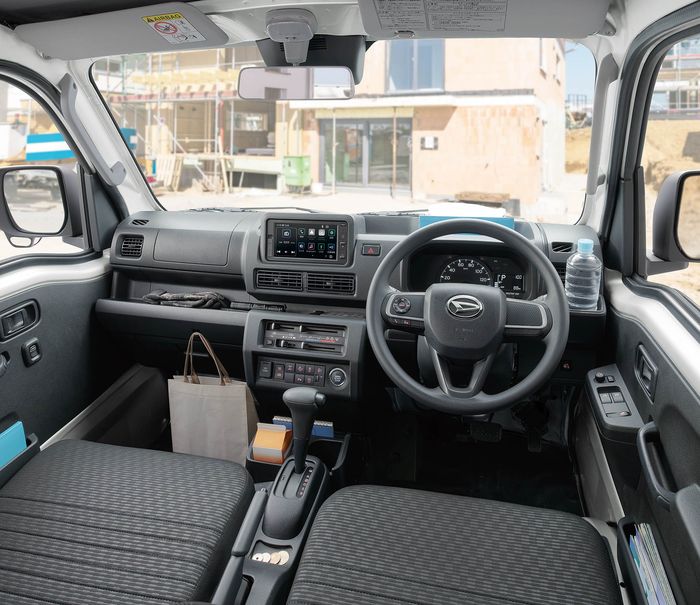
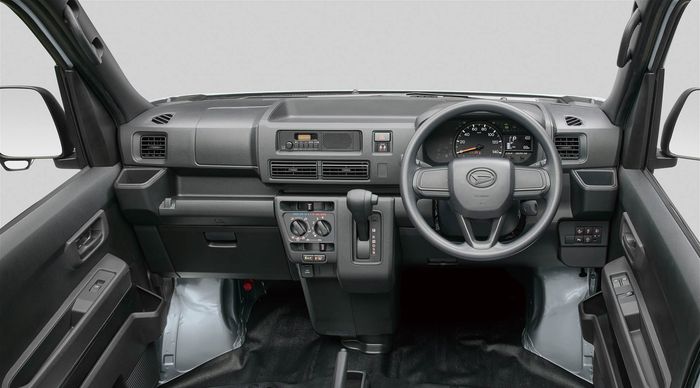
New Hijet Cargo equipped with advanced technology “Next Generation Smart Assist” as standard
Equipped with “Next Generation Smart Assist”. Adopts a stereo camera, responds to pedestrians, and has a wider operating speed range than before. “Safety Support Car S (Wide)” (Support Car S (Wide) eligible vehicle).
Equipped with two corner sensors at the front and rear of the vehicle , the further evolved “Next Generation Smart Assist” helps avoid accidents in close calls while driving, supporting your safe driving. In addition to sonar sensors, the car is newly equipped with the world’s smallest stereo camera, which does not obstruct the driver’s field of vision or headroom. It accurately captures various information such as pedestrians, preceding vehicles, and obstacles, and warns the driver or activates emergency braking.
Collision Warning Function / Collision Avoidance Assist Brake Function ① Collision Warning (Vehicle-to-Vehicle, Pedestrian-to-Pedestrian) While driving, the camera detects vehicles or pedestrians ahead, and if it determines there is a risk of collision, it will sound a buzzer and display the warning in the meter.
② Primary Braking (Vehicle-to-Pedestrian) If the system determines there is a risk of collision, it will automatically apply light brakes (primary brakes) to urge the driver to avoid the collision.
③ Damage Reduction Brake Assist (Vehicle-to-Pedestrian) If the driver applies the brakes while the primary braking function is activated, the brake assist will activate and increase braking force.
④ Emergency Braking (Vehicle-to-Pedestrian) If the system determines that a collision is unavoidable, it will apply heavy brakes (secondary brakes) to slow down the vehicle, avoiding a collision or reducing damage.
Lane Departure Prevention Function: If the vehicle is about to deviate from its lane without using its turn signal, the system will warn the driver with a buzzer and a display on the meter, prompting them to take action. It will also assist with steering to bring the vehicle back into the lane.
If the preceding vehicle departure notification function is disabled and the driver does not notice that the preceding vehicle has started moving and does not start moving, a buzzer will sound and a display will appear on the meter to notify the driver.
AT False Start Prevention Control + False Start Prevention with Brake Control ① Forward False Start Prevention Control If the stereo camera detects an obstacle such as a vehicle or wall within 4m ahead and the accelerator pedal is pressed with the shift position in “forward”, the engine output will be limited to prevent sudden acceleration. ② Rear False Start Prevention Control If the sonar sensor built into the rear bumper detects an obstacle such as a wall within 2-3m behind and the accelerator pedal is pressed with the shift position in “reverse”, the engine output will be limited to prevent sudden acceleration. Brake control has also been added.
The high beam assist stereo camera detects the brightness of oncoming vehicle headlights and automatically switches between high and low beams. This allows you to drive with high beams without having to switch between them, allowing you to drive safely at night even on roads with few streetlights.
Adaptive Driving Beam: When driving with high beams on, if an oncoming vehicle is detected, the light is automatically blocked only in the area of the oncoming vehicle.
Sign Recognition Function When the stereo camera detects a no entry sign, a notification is displayed in the meter.
Differences between “Smart Assist II”, “Smart Assist III” and “Next Generation Smart Assist”
| Functional Systems | Smart Assist II |
Smart Assist III |
Next-generation Smart Assist |
|---|---|---|---|
| method | Laser radar + monocular camera |
Stereo camera | Stereo camera |
| Automatic Braking Pedestrian |
– Warning only (below 50km/h) |
◯
(50km/h or less) |
◯ (50km/h or less) |
| Automatic braking collision avoidance |
◯
(20km/h or less) |
◯
(30km/h or less) |
◯ (30km/h or less) |
| Automatic braking damage reduction |
◯
(30km/h or less) |
◯
(80km/h or less, |
◯ (80km/h or less, 50km/h or less for pedestrians) |
| False start prevention front/rear |
◯ | ◯ | ◯ (Brake control) |
| Lane Departure Warning | ◯ | ◯ | ◯ |
Notice of advance start |
◯ | ◯ | ◯ |
| Auto high beam or adaptive high beam system |
– | ◯ | ◯ |
| Sign recognition function | – | – | ◯ |
| Corner Sensor | – | – | ◯ |
New Hijet Cargo specifications
| Specifications | New Hijet Cargo | New Hijet Cargo |
|---|---|---|
| Engine type | NA | turbo |
| full length | 3,395mm | 3,395mm |
| Overall width | 1,475mm | 1,475mm |
| Overall height | 1,890mm | 1,890mm |
| Wheelbase | 2,450mm | 2,450mm |
| engine | 660cc inline 3 DOHC engine |
660cc inline 3 DOHC turbo engine |
| Maximum power | 39kW (53ps) / 7,200rpm |
47kW (64ps) / 5,700rpm |
| Maximum torque | 60Nm (6.1kgm) / 4,000rpm |
91Nm (9.3kgm) / 2,800rpm |
| transmission | CVT | CVT |
| Drive system | FF/4WD | FF/4WD |
| JC08 mode fuel economy | 20.5km/L (2WD) 20.3km/L (4WD) |
19.7km/L (2WD) 19.0km/L (4WD) |
| WLTC mode fuel economy | 15.6km/L (2WD) 15.6km/L (4WD) |
14.7km/L (2WD) 14.7km/L (4WD) |
New prices for the Hijet Cargo
Daihatsu will revise the manufacturer’s suggested retail prices for its light commercial vehicles, the Hijet Cargo and Hijet Truck, and their special edition series, as shown in the table below, starting with production from July 2023.
| grade | engine | transmission |
Drive system |
Current price | New Price |
|---|---|---|---|---|---|
| Special | Inline 3-cylinder DOHC 0.66L |
5MT | 2WD | 1,045,000 yen | 1,100,000 yen |
| 4WD | 1,199,000 yen | 1,254,000 yen | |||
| CVT | 2WD | 1,100,000 yen | 1,155,000 yen | ||
| 4WD | 1,254,000 yen | 1,309,000 yen | |||
| Special Clean | CVT | 2WD | 1,122,000 yen | 1,177,000 yen | |
| 4WD | 1,276,000 yen | 1,331,000 yen | |||
| Deluxe | 5MT | 2WD | 1,155,000 yen | 1,215,500 yen | |
| 4WD | 1,309,000 yen | 1,369,500 yen | |||
| CVT | 2WD | 1,210,000 yen | 1,270,500 yen | ||
| 4WD | 1,364,000 yen | 1,424,500 yen | |||
| cruise | 5MT | 2WD | 1,232,000 yen | 1,298,000 yen | |
| 4WD | 1,386,000 yen | 1,452,000 yen | |||
| CVT | 2WD | 1,331,000 yen | 1,397,000 yen | ||
| 4WD | 1,485,000 yen | 1,551,000 yen | |||
| Cruise Turbo | Inline 3-cylinder DOHC 0.66L turbo |
CVT | 2WD | 1,452,000 yen | 1,529,000 yen |
| 4WD | 1,606,000 yen | 1,683,000 yen |
New prices for the Hijet Truck
| grade | engine | transmission |
Drive system |
Current price | New Price |
|---|---|---|---|---|---|
Vehicles without Standard Smart Assist |
Inline 3-cylinder DOHC 0.66L |
5MT | 2WD | 902,000 yen | 962,500 yen |
| 4WD | 1,034,000 yen | 1,094,500 yen | |||
| CVT | 2WD | 957,000 yen | 1,017,500 yen | ||
| 4WD | 1,111,000 yen | 1,171,500 yen | |||
| Standard | 5MT | 2WD | 968,000 yen | 1,028,500 yen | |
| 4WD | 1,100,000 yen | 1,160,500 yen | |||
| CVT | 2WD | 1,023,000 yen | 1,083,500 yen | ||
| 4WD | 1,177,000 yen | 1,237,500 yen | |||
| Standard “Agricultural Special” vehicle without Smart Assist |
5MT | 4WD | 1,061,500 yen | 1,122,000 yen | |
| CVT | 4WD | 1,138,500 yen | 1,199,000 yen | ||
| Standard “Agricultural Special” |
5MT | 4WD | 1,127,500 yen | 1,188,000 yen | |
| CVT | 4WD | 1,204,500 yen | 1,265,000 yen | ||
| High Roof Smart Assist not equipped vehicle |
5MT | 2WD | 918,500 yen | 979,000 yen | |
| 4WD | 1,050,500 yen | 1,111,000 yen | |||
| CVT | 2WD | 973,500 yen | 1,034,000 yen | ||
| 4WD | 1,127,500 yen | 1,188,000 yen | |||
| High roof | 5MT | 2WD | 984,500 yen | 1,045,000 yen | |
| 4WD | 1,116,500 yen | 1,177,000 yen | |||
| CVT | 2WD | 1,039,500 yen | 1,100,000 yen | ||
| 4WD | 1,193,500 yen | 1,254,000 yen | |||
| Extras | 5MT | 2WD | 1,133,000 yen | 1,199,000 yen | |
| 4WD | 1,287,000 yen | 1,353,000 yen | |||
| CVT | 2WD | 1,188,000 yen | 1,254,000 yen | ||
| 4WD | 1,342,000 yen | 1,408,000 yen | |||
| Jumbo Standard | 5MT | 2WD | 1,094,500 yen | 1,160,500 yen | |
| 4WD | 1,226,500 yen | 1,292,500 yen | |||
| CVT | 2WD | 1,149,500 yen | 1,215,500 yen | ||
| 4WD | 1,303,500 yen | 1,369,500 yen | |||
| Jumbo Extra | 5MT | 2WD | 1,243,000 yen | 1,320,000 yen | |
| 4WD | 1,397,000 yen | 1,474,000 yen | |||
| CVT | 2WD | 1,298,000 yen | 1,375,000 yen | ||
| 4WD | 1,452,000 yen | 1,529,000 yen |
For more details, please refer to this article.
→ Daihatsu to revise prices of light commercial vehicle “Hijet” from July 2023 production due to rising raw material prices
Daihatsu’s new BEV “e-Hijet Cargo” rival models
Other companies are also developing EV models of commercial light vehicles, and Honda will begin taking pre-orders for the new light commercial EV “N- VAN e: ” based on the light van ” N-VAN ” in May 2024, with the car scheduled to go on sale in the fall of 2024.
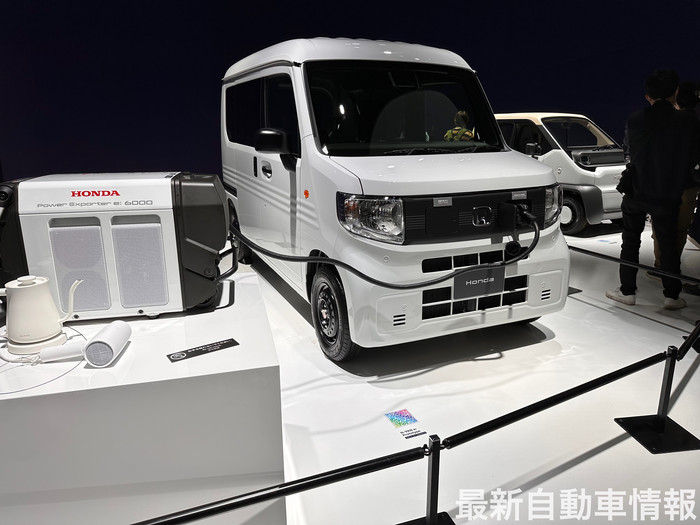
MEV-VAN Concept
Honda plans to roll out 30 types of EVs globally by 2030, and exhibited the “MEV-VAN Concept” equipped with a removable battery at the “JAPAN MOBILITY SHOW 2023.”
For more details, please refer to this article.
FY2024 Subsidy for Promoting the Introduction of Clean Energy Vehicles (EV, PHEV, FCEV) (CEV Subsidy)
With the availability of EV subsidies, the purchase price of the e-Hijet Cargo may be significantly reduced.
Subsidy budget: 129.1 billion yen
In order to promote the widespread adoption of clean energy vehicles, the FY2033 supplementary budget has been expanded to a subsidy budget of 129.1 billion yen. In order to realize GX in the automotive sector, it is necessary not only to improve vehicle performance, but also to “create an environment in which electric vehicles can be used sustainably.” For this reason, a new calculation method for subsidy amounts will be introduced in the FY2033 supplementary budget. Specifically, the subsidy recipients and amounts will be determined based on a comprehensive evaluation of manufacturers’ efforts based on “the value necessary to realize GX in the automotive sector,” such as vehicle performance, charging infrastructure development, after-sales service systems, and cooperation with local communities in the event of a disaster.
Subsidy amount
The amount of subsidy varies depending on the type of vehicle, fuel efficiency, etc., but for fiscal year 2024 (FY2023 supplementary budget), it is as follows:
| Vehicle type | Subsidy amount |
|---|---|
| Electric vehicles (EVs) | Up to 850,000 yen |
| Light electric vehicle (light EV) | Up to 550,000 yen |
| Plug-in hybrid vehicle (PHEV) | Up to 550,000 yen |
| Fuel Cell Vehicle (FCEV) | Up to 2.55 million yen |
Source: Clean Energy Vehicle Introduction Promotion Subsidy (CEV Subsidy)
A word from the editorial department
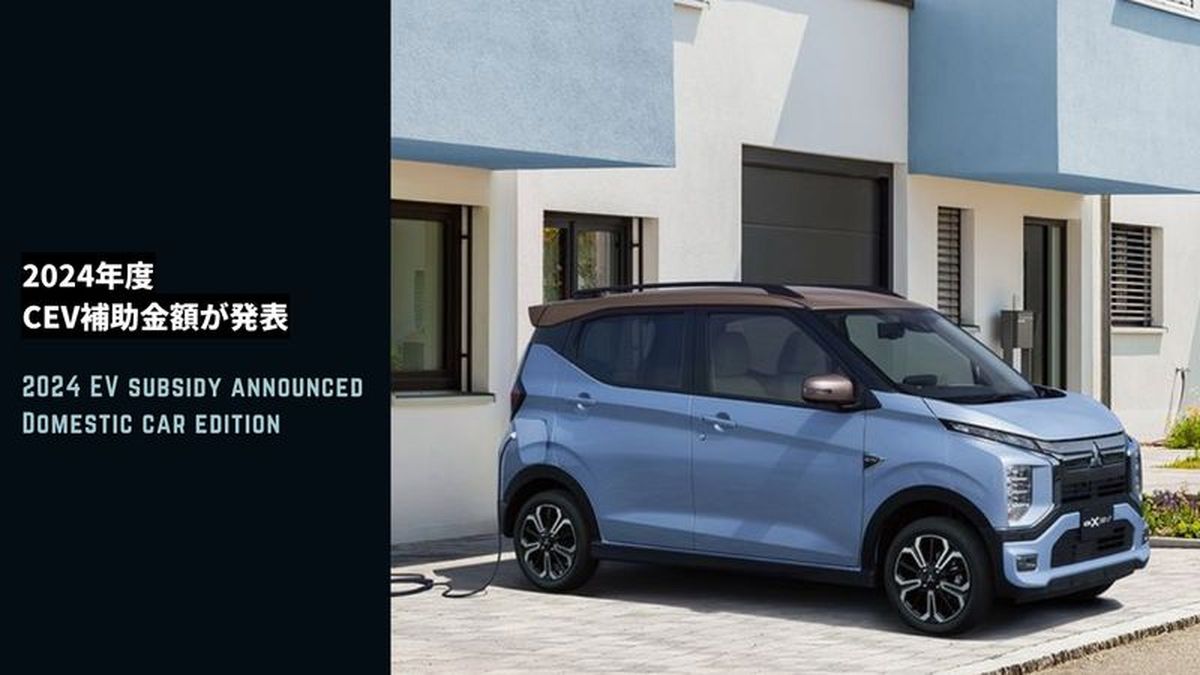
There is such high demand for commercial EVs that other companies, including Honda and Mitsubishi, will have them in their lineups by 2024. Keep an eye on the new world of EVs. We’ll keep you updated as new information becomes available.
Daihatsu news release
https://www.daihatsu.com/jp/news/2023/20230420-1.html
Daihatsu