
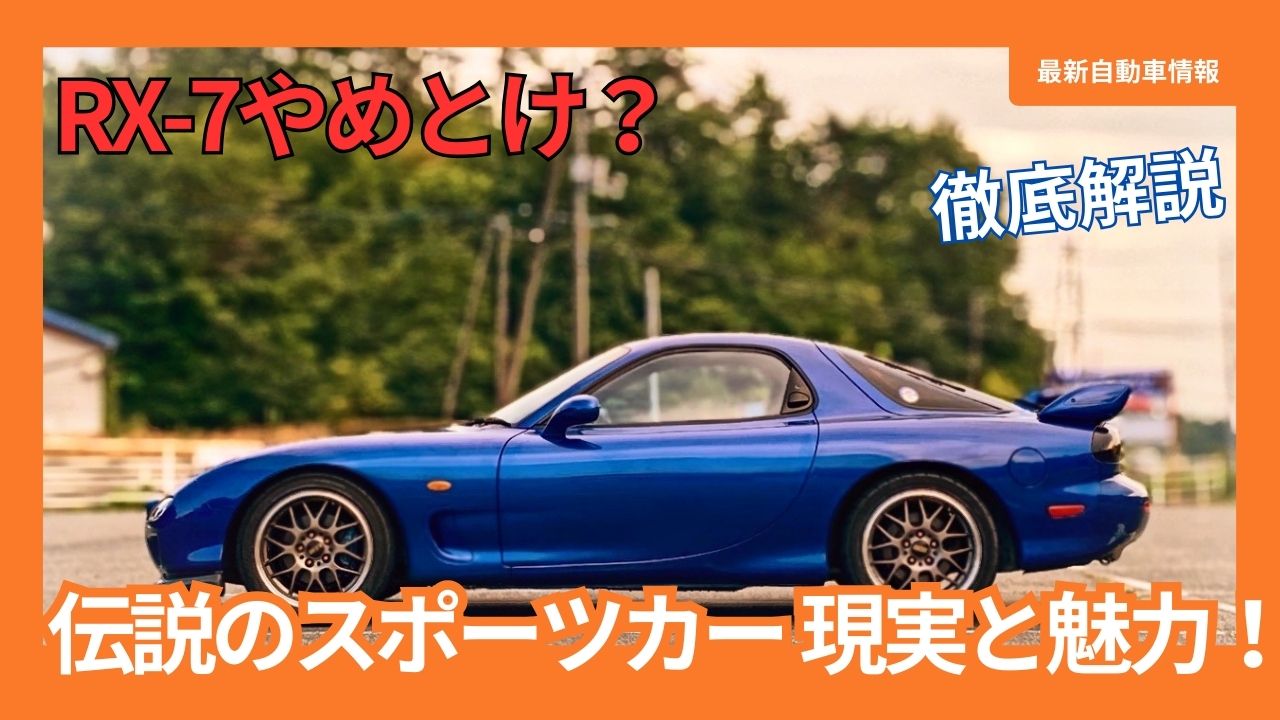
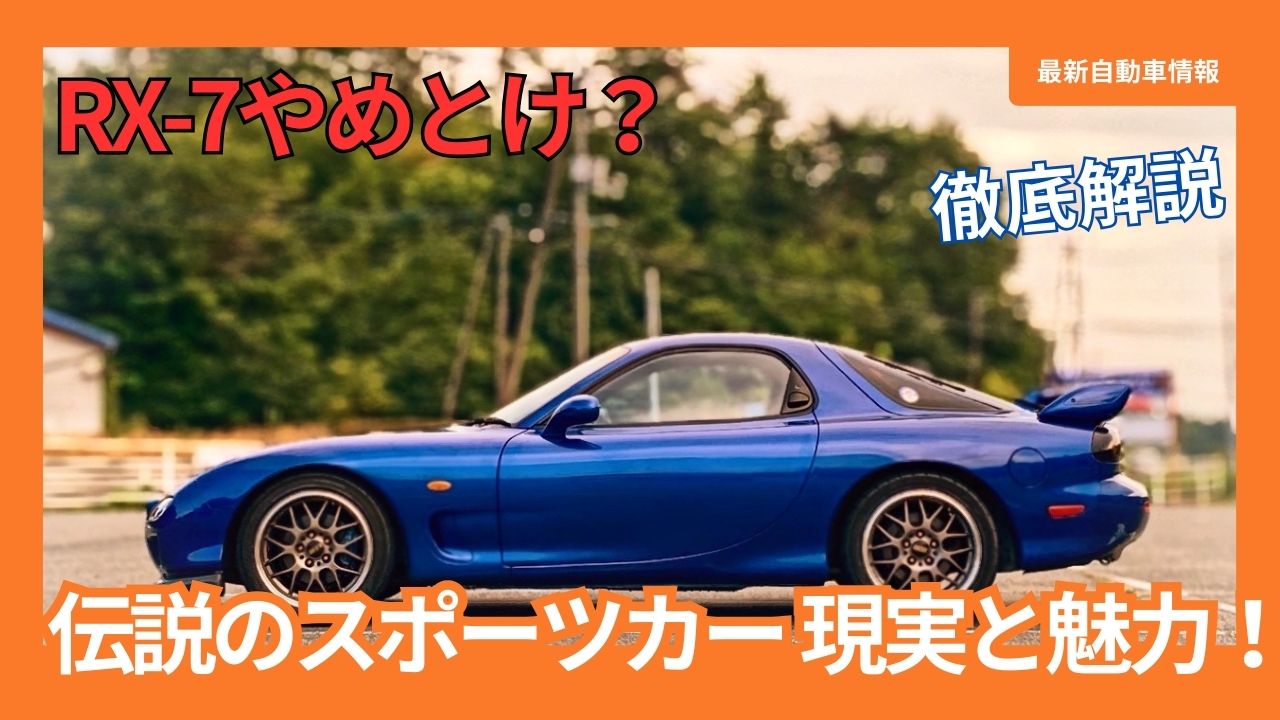
Mazda RX-7. The name makes the heart of many people, even those who aren’t car enthusiasts, flutter. With its retractable headlights, elegant form, and one-of-a-kind rotary engine, it truly is the symbol of Japan’s world-renowned sports car.
However, there are some voices online that say, “Don’t buy the RX-7.” Why is this? Is there any reason to give up on your dream of owning your dream sports car?
In this article, we’ll look back at the history of the RX-7 and delve deeper into its appeal, the realities of owning one, and why some people say “don’t buy it.”
What is the RX-7? ~The poster child for the rotary engine~
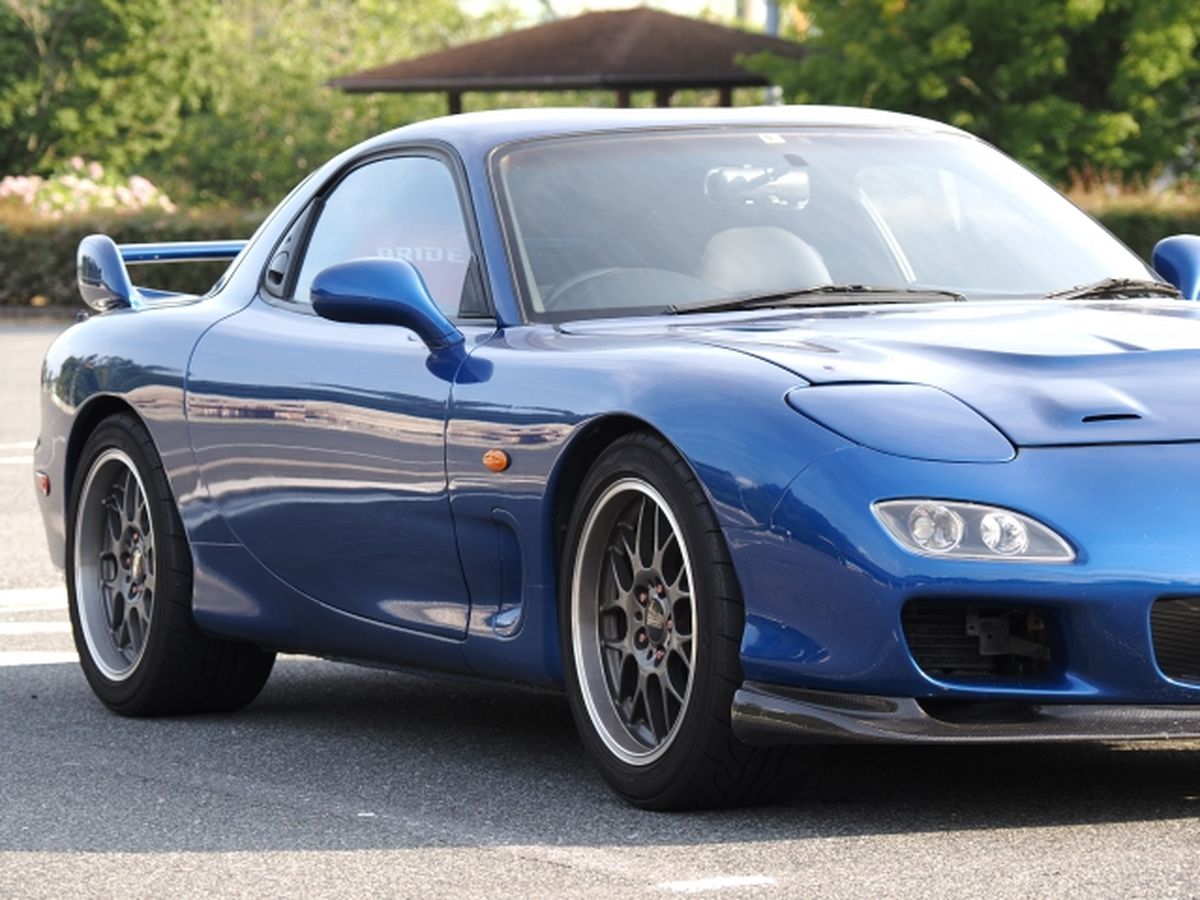
The RX-7 is a sports car that Mazda produced from 1978 to 2002. Its biggest feature is that it is equipped with a rotary engine instead of a reciprocating engine.
The rotary engine, which is small and lightweight yet delivers high power, has captivated many fans as the heart of the RX-7’s sporty driving.
The RX-7 is divided into three generations:
- First generation SA22C (1978-1985) : Features a compact and lightweight body. Equipped with a 12A rotary engine. First generation RX7 (SA22C)
- Second-generation FC3S (1985-1992) : A larger and more luxurious model than the first generation. Equipped with a 13B rotary engine. A turbo model was also introduced. Second-generation RX7 (FC3S)
- Third-generation FD3S (1991-2002) : With its beautiful streamlined body and excellent driving performance, it became synonymous with the RX-7. The 13B-REW engine equipped with sequential twin turbos produced 280 horsepower. Third-generation RX7 (FD3S)
In particular, the third-generation FD3S model was produced from 1991 to 1996 as an early model, followed by a mid-model from 1996 to 1998 and a late model from 1999 to 2002, undergoing repeated minor changes and continuing to evolve.
RX7 (FD3S) Late model
It gained worldwide popularity after appearing in the “Fast and Furious” film series, and is still loved by many fans today.
The appeal of the RX-7: a one-of-a-kind driving experience
The appeal of the RX-7 lies above all in its driving performance . The smooth acceleration that is unique to the rotary engine, which allows it to rev up to high revolutions, is something that cannot be experienced in other cars. The excellent handling performance of the FR (front engine, rear drive) layout has also captivated many drivers. Another attractive feature of the RX-7 is its styling .
The third-generation FD3S in particular has been loved throughout the ages for its beautiful design, featuring a flowing form and retractable headlights.
The reality of the RX-7: the difficulty of maintaining it
However, despite its appeal, the RX-7 presents high hurdles to ownership. First of all, maintenance costs are high. Due to its structure, the rotary engine consumes a lot of oil and requires regular maintenance. It also has poor fuel economy, which tends to increase fuel costs. Furthermore, parts are not easy to obtain. It has been over 20 years since the RX-7 was discontinued, and the supply of genuine parts is limited.
This can result in time-consuming and expensive repairs and maintenance.
Why do people say, “Don’t use the RX-7”?
The main reasons why people on the Internet say “Don’t get the RX-7” are as follows:
- High maintenance costs : As mentioned above, maintenance costs tend to be high due to poor fuel economy, high oil consumption, and the special engine that requires specialized knowledge for maintenance.
- Risk of breakdown : Rotary engines are known to be susceptible to heat and are prone to problems such as overheating and oil leaks. They are also at high risk of breakdown due to aging, which can lead to expensive repair costs.
- Difficulty in obtaining parts : Because production has been discontinued for some time, it can be difficult to obtain genuine parts. Second-hand parts are also available, but the condition and quality vary, and obtaining them can be a hassle.
- Environmental performance : Compared to modern cars, it is inferior in terms of environmental performance, such as compliance with exhaust gas regulations. This may be a reason for environmentally conscious people to hesitate to purchase it.
- Difficulty in everyday use : Because it was designed to pursue performance as a sports car, it has some inconveniences for everyday use, such as a stiff ride and a small interior space.
Is it really a good idea to avoid the RX-7?
So far, I’ve listed the negative aspects of the RX-7, but it’s still a car with a unique appeal. If you understand the reasons why people say “don’t buy it,” but still have a strong desire to drive an RX-7, it’s well worth owning.
If you own an RX-7, here are some things to keep in mind:
- Check the vehicle before you buy : Check the condition of the vehicle carefully and check the maintenance records and repair history before purchasing. It is important to buy from a reputable dealer.
- Regular maintenance : Rotary engines require regular maintenance, so have it carried out by a qualified repair shop.
- Plan your maintenance costs : Make sure you have a good plan for your maintenance costs, taking into account factors like poor fuel economy and repair costs.
- Love and passion : Your RX-7 needs a lot of care and attention to maintain. Drive it with love and passion.
A word from the editorial department
The RX-7 is a representative Japanese sports car equipped with a rotary engine. However, it also has some issues, such as high maintenance costs, the risk of breakdowns, and difficulty in obtaining parts. When considering purchasing an RX-7, it is important to understand these issues and still have a strong desire to drive it.
If you’re drawn to the RX-7 and are prepared to overcome the challenges, you’ll be guaranteed a fantastic driving experience.
RX-7