


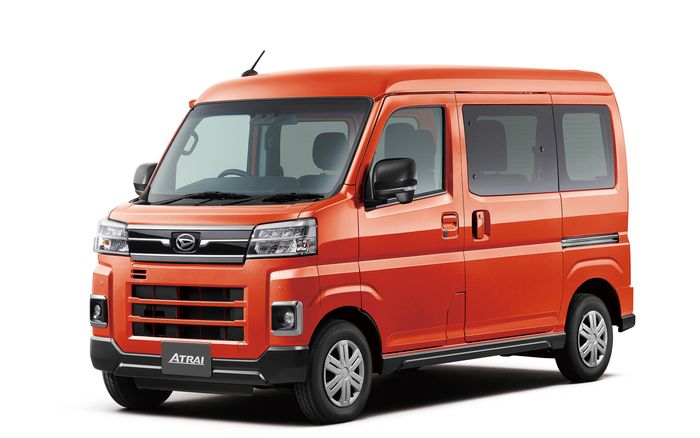
Daihatsu will make some improvements to the new Atrai and release it on November 5, 2024. This improvement will include strengthening safety equipment to comply with the latest regulations, and the price will also be revised. In this article, we will take a closer look at the appeal, design, performance, price, and more of the new Atrai.
About the new Atrai partial improvement 2024 model
In this improvement of the Atrai, two rear sonars have been added to the corner sensors (two in the front and four in the rear) to comply with the latest regulations . Furthermore, the price will be revised.
Price revision for the new Atrai (partially improved 2024 model)
Manufacturer’s suggested retail prices will be revised taking into account rising raw material prices, etc.
Atrai price 2024 price
| grade | engine | transmission |
Drive system |
Current price | New Price |
|---|---|---|---|---|---|
| X | Inline 3-cylinder DOHC 0.66L |
CVT | 2WD | 1,562,000 yen | 1,639,000 yen |
| 4WD | 1,716,000 yen | 1,793,000 yen | |||
| RS | 2WD | 1,672,000 yen | 1,760,000 yen | ||
| 4WD | 1,826,000 yen | 1,914,000 yen |
About the new Atrai full model change
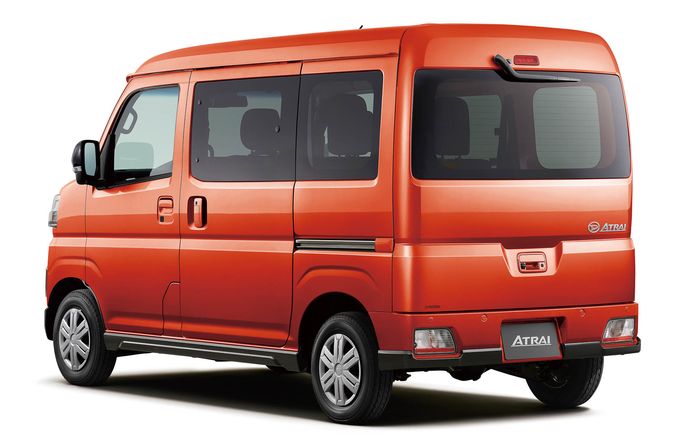
The car name was changed from “Atrai Wagon” to “Atrai . “
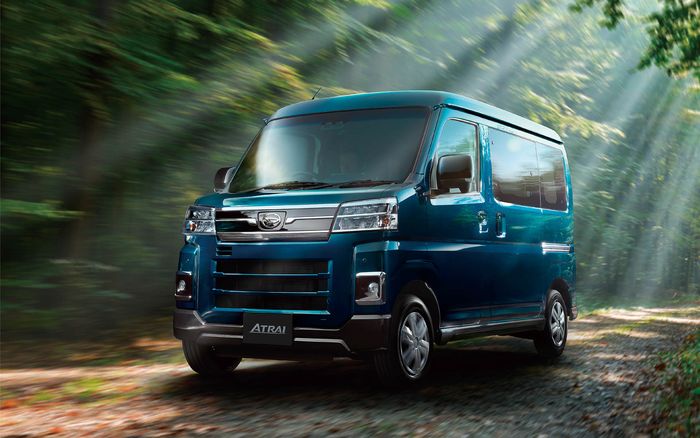
The exterior design has been changed to a more square silhouette.
The vehicle classification will be changed from a “5 number” for light passenger vehicles to a “4 number” for light freight vehicles .
The new platform, DNGA (Daihatsu New Global Architecture) , has been adopted. The vehicle structure has been revised to reduce weight, with vertical bending rigidity improved by 30% compared to the previous model , and the upper body’s high-tensile strength ratio increased by 10% , resulting in a reduction in overall vehicle weight .
The transmission has been improved to include a newly developed CVT exclusively for FR vehicles , and the engine has also been improved. By adopting Japan’s first multi-spark (multiple ignition) system , the engine has improved combustion efficiency through an improved compression ratio and finer injector spray.
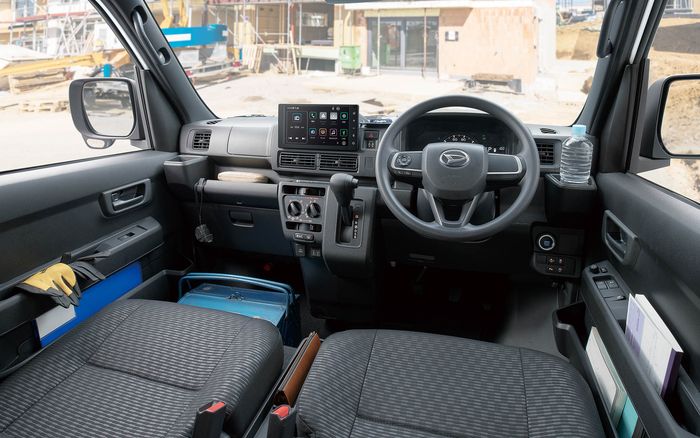
The interior features a 9-inch display audio system, which allows users to operate apps compatible with SmartDeviceLink and Apple CarPlay on the display.
“Smart inner mirror” is available as an option.
It features electric sliding doors on both sides.
Equipped with advanced technology “Next Generation Smart Assist” .
New Atrai equipped with advanced technology “Next Generation Smart Assist” as standard
Equipped with “Next Generation Smart Assist”. Adopts a stereo camera, responds to pedestrians, and has a wider operating speed range than before. “Safety Support Car S (Wide)” (Support Car S (Wide) eligible vehicle).
Equipped with two corner sensors at the front and rear of the vehicle , the further evolved “Next Generation Smart Assist” helps avoid accidents in close calls while driving, supporting your safe driving. In addition to sonar sensors, the car is newly equipped with the world’s smallest stereo camera, which does not obstruct the driver’s field of vision or headroom. It accurately captures various information such as pedestrians, preceding vehicles, and obstacles, and warns the driver or activates emergency braking.
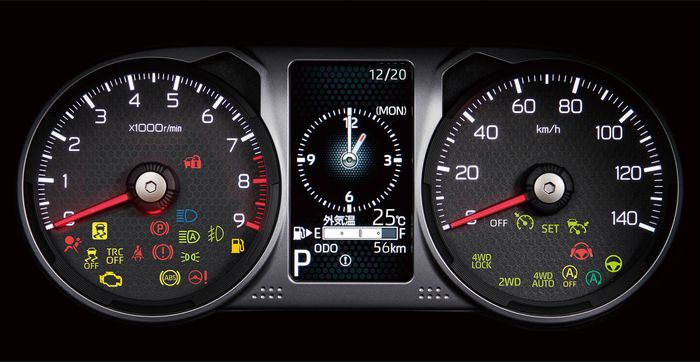
Collision Warning Function / Collision Avoidance Assist Brake Function ① Collision Warning (Vehicle-to-Vehicle, Pedestrian-to-Pedestrian) While driving, the camera detects vehicles or pedestrians ahead, and if it determines there is a risk of collision, it will sound a buzzer and display the warning in the meter.
② Primary Braking (Vehicle-to-Pedestrian) If the system determines there is a risk of collision, it will automatically apply light brakes (primary brakes) to urge the driver to avoid the collision.
③ Damage Reduction Brake Assist (Vehicle-to-Pedestrian) If the driver applies the brakes while the primary braking function is activated, the brake assist will activate and increase braking force.
④ Emergency Braking (Vehicle-to-Pedestrian) If the system determines that a collision is unavoidable, it will apply heavy brakes (secondary brakes) to slow down the vehicle, avoiding a collision or reducing damage.
Lane Departure Prevention Function: If the vehicle is about to deviate from its lane without using its turn signal, the system will warn the driver with a buzzer and a display on the meter, prompting them to take action. It will also assist with steering to bring the vehicle back into the lane.
If the preceding vehicle departure notification function is disabled and the driver does not notice that the preceding vehicle has started moving and does not start moving, a buzzer will sound and a display will appear on the meter to notify the driver.
AT False Start Prevention Control + False Start Prevention with Brake Control ① Forward False Start Prevention Control If the stereo camera detects an obstacle such as a vehicle or wall within 4m ahead and the accelerator pedal is pressed with the shift position in “forward”, the engine output will be limited to prevent sudden acceleration. ② Rear False Start Prevention Control If the sonar sensor built into the rear bumper detects an obstacle such as a wall within 2-3m behind and the accelerator pedal is pressed with the shift position in “reverse”, the engine output will be limited to prevent sudden acceleration. Brake control has also been added.
The high beam assist stereo camera detects the brightness of oncoming vehicle headlights and automatically switches between high and low beams. This allows you to drive with high beams without having to switch between them, allowing you to drive safely at night even on roads with few streetlights.
Adaptive Driving Beam: When driving with high beams on, if an oncoming vehicle is detected, the light is automatically blocked only in the area of the oncoming vehicle.
Sign Recognition Function When the stereo camera detects a no entry sign, a notification is displayed in the meter.
Differences between “Smart Assist II”, “Smart Assist III” and “Next Generation Smart Assist”
| Functional Systems | Smart Assist II |
Smart Assist III |
Next-generation Smart Assist |
|
|---|---|---|---|---|
| method | Laser radar + monocular camera |
Stereo camera | Stereo camera | |
| Automatic Braking Pedestrian |
– Warning only (below 50km/h) |
◯ |
◯ (50km/h or less) Pedestrians at night and during the day |
|
| Automatic braking collision avoidance |
◯ |
◯ |
◯ (30km/h or less) |
|
| Automatic braking damage reduction |
◯ |
◯ |
◯ (80km/h or less, 50km/h or less for pedestrians) |
|
| False start prevention front/rear |
◯ | ◯ (Brake control) |
||
| Lane Departure Warning | ◯ | |||
Notice of advance start |
◯ | |||
| Auto high beam or adaptive high beam system |
– | ◯ | ◯ | |
| Sign recognition function | – | – | ◯ | |
| Corner Sensor | – | – | ◯ | |
| ACC | – | – | ◯ | |
New Atrai specs
| Specifications | New Atrai Wagon |
|---|---|
| full length | 3,395mm |
| Overall width | 1,475mm |
| Overall height | 1,890mm |
| Wheelbase | 2,450mm |
| engine | 658cc inline 3 DOHC turbo engine |
| Maximum power | 47kW (64ps) / 5,700rpm |
| Maximum torque | 91Nm (9.3kgm) / 2,800rpm |
| transmission | CVT |
| Drive system | FR/4WD |
| JC08 mode fuel economy | 19.7km/L (2WD) 19.0km/L (4WD) |
| WLTC mode fuel economy | 14.7km/L (2WD) 14.7km/L (4WD) |
Daihatsu news release