
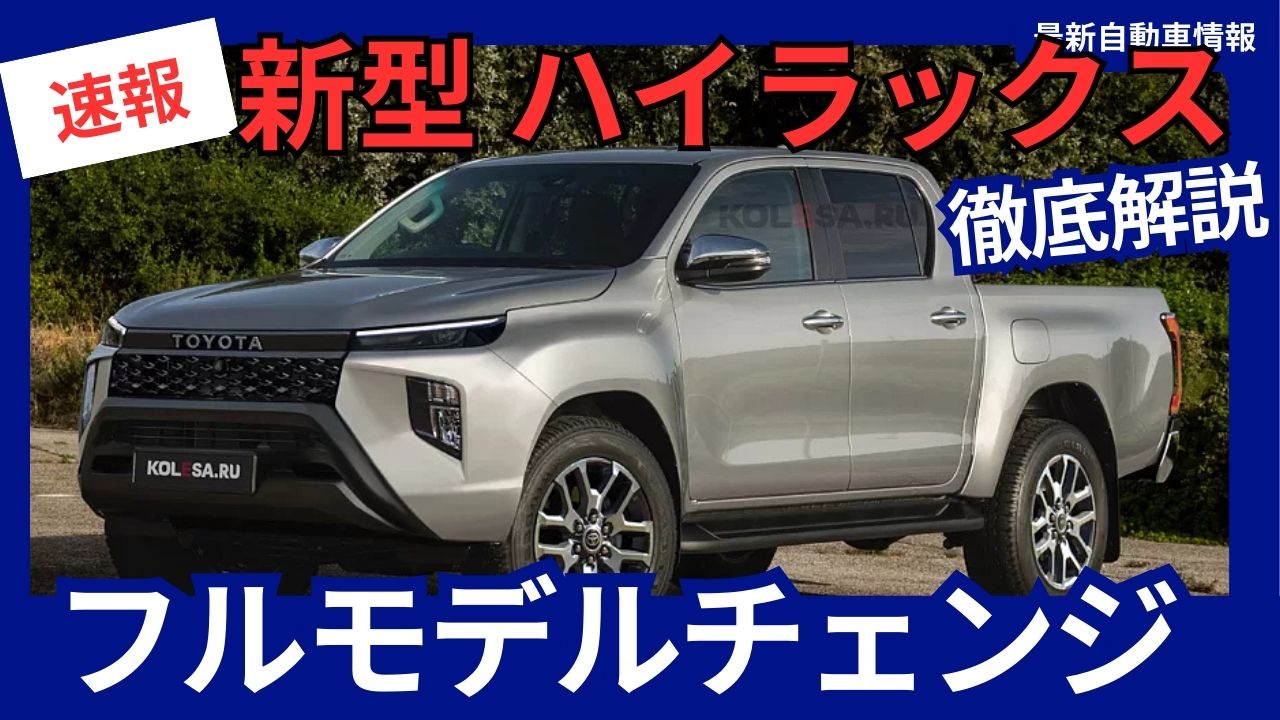
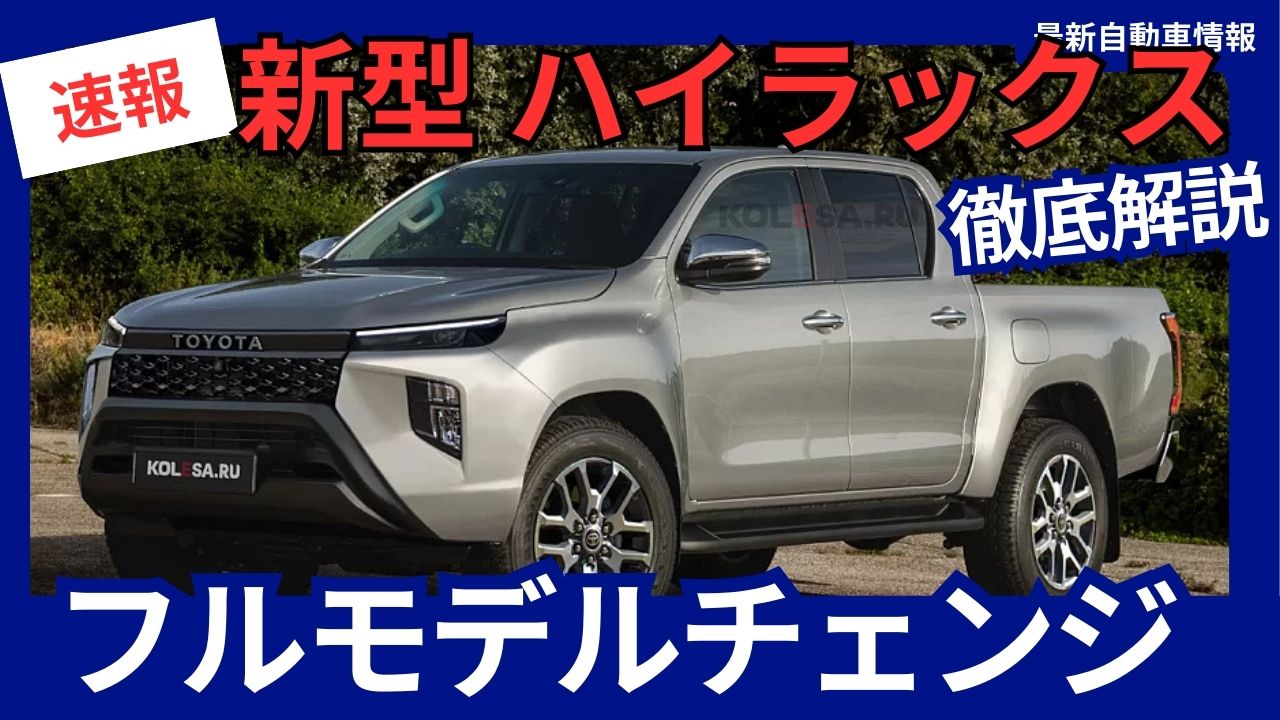
Toyota is undergoing a full model change of its Hilux pickup truck, scheduled for release in September 2026. The Hilux is beloved in approximately 180 countries and regions around the world and boasts an impressive track record of over 18 million units sold. While sales in Japan were discontinued in 2004, it was reintroduced in 2017 in response to the demands of its loyal fans, and has once again captivated many users with its toughness and practicality. The current eighth-generation model debuted in overseas markets in 2015, and is now reaching maturity in its lifespan. Meanwhile, information about the long-awaited full model change is attracting attention.
However, there is a possibility that the release date may change from the initial estimate. Due to the Toyota Industries Corporation certification fraud issue that came to light in February 2024, production and shipment of some models, including the Hilux, was halted. In October of the same year, the suspension of Hilux production was officially announced. This is likely to have an impact on the development and release schedule of the new model, and the release date, which was originally rumored to be September 2025, is currently unclear.
In this article, we’ll take a thorough look at the new Hilux, which will be reborn through a full model change, based on the information currently available, overseas scoops, and past model change cycles. We’ll take a closer look at the next-generation Hilux from every angle, including the expected evolution of the design, the revamped powertrain, improved fuel efficiency, the latest safety features, pricing, things to keep in mind when purchasing, and comparisons with rival vehicles.
Summary of information on the new Toyota Hilux full model change
- Full model change date: Initially expected to be September 2025, but due to the production suspension (from October 2024) following the Toyota Industries Corporation certification fraud issue, the release date is unclear/highly likely to be postponed (some say it will be after 2026). An official announcement of the resumption of production is pending.
- Concept: A fusion of toughness and refinement, with improved functionality, comfort, and safety.
- Sub-name: May be changed to “Hilux TRAVO” for overseas models.
- Exterior Design:
- The design is expected to evolve into a more modern and powerful one, possibly incorporating elements of the North American Tacoma.
- Front: Large, wide grille, thin or split headlights, three-dimensional bonnet.
- Rear: Tail lamp design changed, cargo bed usability and durability improved.
- Body size: Expected to be only minor changes from the current model (over 5.3m in length, over 1.8m in width).
- Structure: A new, highly rigid chassis is adopted, and lighter weight improves driving performance and fuel economy.
- Interior Design:
- A modern design with improved texture and functionality.
- Equipment: Large display audio (compatible with connected navigation), in-car Wi-Fi.
- Comfort features: Newly adopted electric parking brake and auto brake hold function .
- Livability: Improved quietness and ride comfort (although the stiffness typical of pickup trucks may remain).
- Powertrain:
- Diesel: Improved current 2.4L/2.8L engines (cleared certification issues, improved low-speed torque, improved fuel economy).
- Hybrid: The introduction of a diesel hybrid system is likely , and significant improvements in fuel economy and performance are expected.
- 4WD: The part-time 4WD system is retained, and electronic controls (A-TRC, differential lock, multi-terrain select, etc.) are enhanced to improve off-road performance.
- Fuel economy:
- Diesel model: An improvement from the current model (11.7km/L), expected to be around 12.5km/L to 14.0km/L (WLTC mode).
- Hybrid model: High fuel efficiency of 15.0km/L or more (WLTC mode) is expected.
- Safety performance:
- It is equipped with the latest generation preventive safety package, “Toyota Safety Sense.”
- Equipped with pre-crash safety (pedestrian and bicycle detection), lane tracing assist, radar cruise control (all-speed tracking), road sign assist, etc.
- Safety has been significantly improved with the addition of blind spot monitors, rear cross traffic alerts, and parking support brakes.
- price:
- It is expected to rise from the current model due to improved functionality and equipment .
- Estimated price range: 3.8 million to 5.5 million yen (varies depending on grade and hybrid specifications). The hybrid model may cost over 5 million yen.
- Purchase Notes:
- The release and reservation start dates have not yet been decided, so information gathering is required.
- Used car prices are on the rise due to the production suspension.
- The body size is large, making it subject to parking restrictions.
- For open decks (cargo areas), it is necessary to take measures against weather and theft and secure luggage (this can be done with covers, etc.).
- The ride is a bit stiff, typical of pickup trucks (especially when empty).
- Rival models:
- Mitsubishi Triton (new model, equipped with SS4-II)
- Isuzu D-MAX (Popular overseas, known for its durability)
- Relationship with Hilux Surf:
- It’s an SUV that’s different from the Hilux (pickup). It’s unlikely to be revived in Japan. The overseas model “Fortuner” is its de facto successor.
Toyota’s new Hilux full model change: Background and launch date: Impact of production suspension and new possibilities
Automobile model changes are made periodically to respond to technological advances and market demands. Global models like the Hilux are constantly exposed to competition, and a full model change is inevitable to maintain and improve product appeal. Looking at past model cycles, the Hilux has undergone a full model change approximately every 10 years. Considering that the current model was released overseas in 2015, it was thought natural that a new model would be released between 2025 and 2026.
However, the suspension of production due to the aforementioned Toyota Industries Corporation certification fraud issue is likely to have a major impact on this schedule. Naturally, the suspension of production lines will also cause delays in the development and production preparation of new models. As a result, the “September 2025 release” schedule reported by some media outlets is now looking more difficult to implement, with some predicting that preparations for the resumption of production will likely proceed within 2025, with the actual announcement and release likely to be delayed until 2026 or later.
On the other hand, this production hiatus can also be seen as a preparation period for the launch of a more complete model. In particular, with the issue of diesel engine certification coming into focus, it is expected that the next model will be equipped with a new, reliable engine that completely overcomes this issue.
Additionally, with the full model change, there is a possibility that the sub-name used in overseas markets will change. The current model is known as “Hilux REVO,” but it has been confirmed that a new trademark for ” Hilux TRAVO ” has been registered, and this may become the sub-name for the next model. At this point, it is unclear what “TRAVO” means, but it is reminiscent of words like “Travel” and “Traverse,” and it is possible that the name will express the Hilux’s off-road capabilities and adventurous spirit.
In any case, we will have to wait for Toyota to officially announce the production resumption schedule to know the exact release date of the new Hilux. We will update this page as soon as we receive the latest information.
Toyota’s new Hilux undergoes a full model change. Bold evolution of the exterior design: a fusion of toughness and refinement.
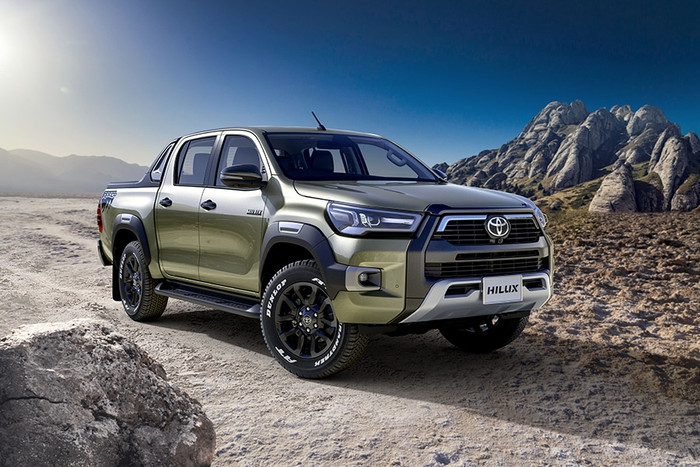
Hilux Z Revo Rocco
The exterior design of the new Hilux is expected to evolve to a more modern and powerful impression while retaining the image of the current model. Particularly noteworthy is the possibility that it may incorporate design elements from the Tacoma pickup truck sold in the North American market.
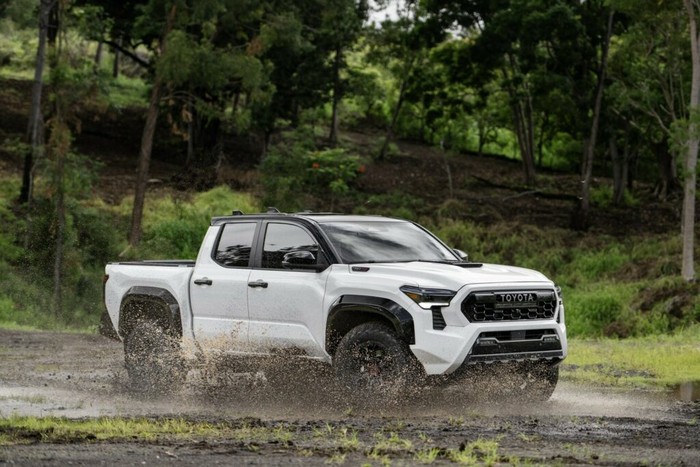
Tacoma
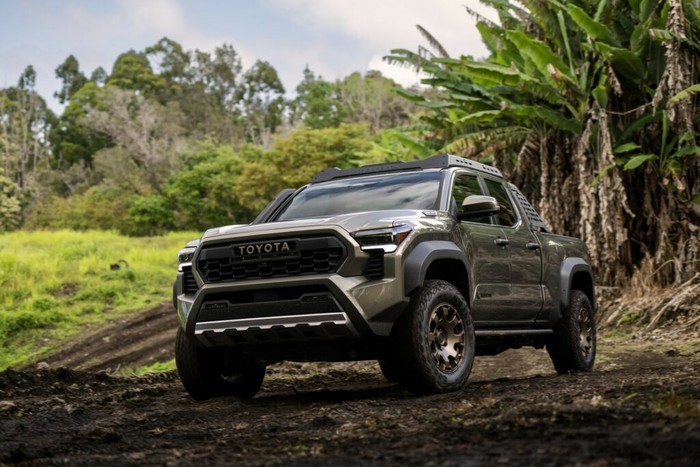
According to scoop images and leaked information spotted overseas, the front face is expected to undergo significant changes. It is said that a larger grille will be adopted that emphasizes a wider appearance than the current model, and that the headlights may be thinner or have a split design divided into upper and lower halves (daytime running lights placed at the top). This will create a sharp and advanced look, while also lowering the visual center of gravity and creating a sense of stability. The hood shape will also be changed to a more three-dimensional and thicker design, which is thought to emphasize the toughness of an off-road truck.
From the side view, the powerful fender lines and character lines express dynamism and robustness. In the rear section, the taillights have been redesigned to improve access and usability to the loading compartment, as well as to increase visibility from following vehicles. The design of the loading compartment gate and surrounding panels has also been revised, improving durability against scratches during work and leisure use.
It is believed that there will be no major changes to the body size from the current model (length 5340mm x width 1855mm x height 1800mm, wheelbase 3085mm). The expected size of the new model is likely to be only slightly larger, at around length 5350mm x width 1860mm x height 1800mm. This will allow it to maintain a certain degree of maneuverability in Japan’s road environment, while also achieving a large cargo space and stable driving performance.
Meanwhile, the latest knowledge will be applied to the body structure. The adoption of a newly designed, high-rigidity chassis will increase the torsional rigidity of the entire body, improving handling stability and collision safety. At the same time, the vehicle weight is expected to be reduced by expanding the use of high-tensile steel plates and using lightweight materials such as aluminum in the right places. The current model weighs approximately 2,080 kg (Z grade), but the new model may be able to reduce this to around 2,050 kg, which will greatly contribute to improved driving performance and fuel efficiency.
The color variations are also expected to be revamped to match the new body design. In addition to the popular standard colors of the current model, such as “Attitude Black Mica,” “Silver Metallic,” and “Super White II,” it is possible that new trends such as metallic blue and dark green, or matte colors (such as matte gray) that emphasize the off-road image, may be added.
Toyota’s new Hilux undergoes a complete model change. The interior and equipment have been completely revamped, significantly improving functionality and comfort.
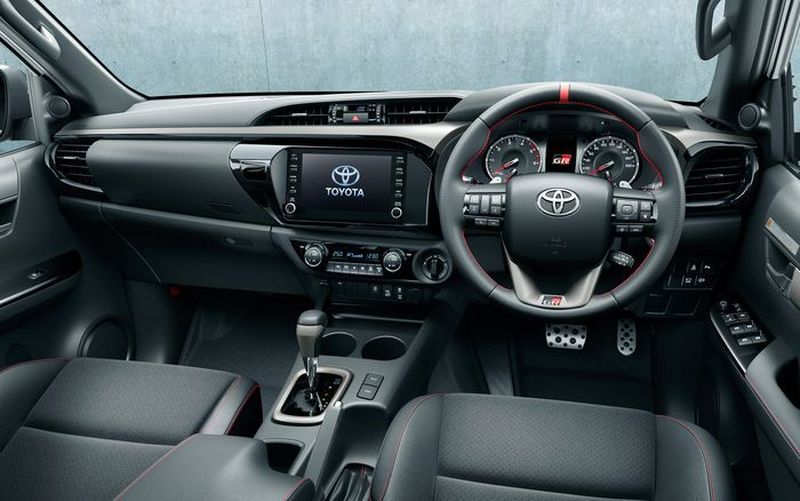
The interior of the new Hilux has undergone a major evolution, just like the exterior, and is expected to offer dramatic improvements in functionality and comfort. While it is a tough pickup truck, it will be designed to provide a comfortable space for everyday use and long-distance travel.
The instrument panel design, while based on a horizontal theme, has been revamped to be more modern and have a high-quality feel. The layout of switches has been revised to make them easier for the driver to operate, and the quality of materials has also been improved. The use of soft padding has been expanded, and it is expected that the interior will be highly satisfying both visually and tactilely.
One of the biggest advancements is the infotainment system. The center console is equipped with a large touchscreen display and is compatible with the latest connected services. Toyota’s unique “Connected Navigation” constantly obtains the latest map and traffic information via communication, providing optimal route guidance. In addition to compatibility with Apple CarPlay and Android Auto, the car also comes with in-car Wi-Fi, strengthening connectivity with smartphones and allowing for convenient music streaming and various apps while on the move.
In terms of comfort features, the long-awaited “electric parking brake” and “auto brake hold function” are expected to be adopted. This will reduce the burden of braking when waiting at traffic lights or in traffic jams, greatly improving convenience. In particular, the auto brake hold function, which is effective when stopping and starting on a slope, is a feature that has been requested by many users.
Comfort in the interior space is also an important point of evolution. The newly designed, high-rigidity chassis effectively suppresses vibrations and road noise from entering the cabin while driving. Measures against engine noise and wind noise have also been strengthened, significantly improving quietness. This means that drivers and passengers will be less tired and be able to relax even on long drives. The seat design and materials have also been revised to achieve both support and comfort.
The vehicle will have a seating capacity of five, similar to the current model, but the efficient design of the interior space may provide more legroom and head clearance in the rear seats. Storage space will also be provided in various places, taking into consideration everyday usability.
Toyota’s new Hilux full model change: powertrain evolution: diesel improvements and long-awaited hybrid introduction?
The powertrain, the heart of a pickup truck, is also expected to undergo major evolution in the new Hilux, with the goal being to achieve a high level of balance between reliability, power, and environmental friendliness.
First, regarding the main diesel engine, it is highly likely that the current model will feature an improved 2GD-FTV inline 4-cylinder 2.4L diesel turbo engine (maximum output 150ps/maximum torque 40.8kgm) and a 1GD-FTV inline 4-cylinder 2.8L diesel turbo engine (maximum output 204ps/maximum torque 51.0kgm *for some markets). In particular, to clear Toyota Industries Corporation’s certification issues, the exhaust gas purification system and control program will be revised, resulting in an even cleaner and more reliable unit. The improvements will further improve torque characteristics from low rpm, bringing out power when carrying heavy loads or driving off-road, while also improving fuel efficiency.
The biggest highlight of the new Hilux is the introduction of a hybrid system. In recent years, stricter environmental regulations and increased demands for fuel efficiency have led to a wave of electrification in the pickup truck category. Toyota is a world leader in hybrid technology, and has hybrid models in the Land Cruiser series as well. There is a strong possibility that this hybrid technology will also be introduced in the new Hilux.
What is expected is a “diesel hybrid” system that combines a diesel engine with a motor. By combining the powerful torque of the engine with the assistance of the motor, it will improve performance when starting and accelerating, while also achieving significant improvements in fuel efficiency. The system configuration will combine a 2.8L diesel turbo engine with a motor, and it is thought that the overall system will aim for performance that exceeds that of the current 2.8L diesel (for example, maximum output will remain at around 200ps, while torque will be further improved by motor assistance), as well as significant improvements in fuel efficiency (see below).
The main transmission will be a 6-speed automatic transmission (6 Super ECT) as in the current model, with a 6-speed manual transmission also available in some markets and grades. The AT will be improved to provide smoother and more efficient shift control.
The drivetrain will retain the traditional part-time 4WD system of the Hilux. Normally, the vehicle runs in rear-wheel drive (2WD), with the driver able to freely select 4WD (high speed: H4, low speed: L4) depending on road conditions. In addition to this system, a full range of electronic control devices will be added to further enhance off-road performance. These include Active Traction Control (A-TRC), which reduces tire spin on slippery surfaces and ensures driving force; a rear differential lock, which directly connects the left and right rear wheels to improve escape when the vehicle gets stuck in muddy or sandy terrain; and Multi-Terrain Select, which optimizes drivetrain control for off-road driving according to road conditions. This combination will enable the vehicle to deliver high performance in all situations, from comfortable on-road driving to tough off-road capability.
As mentioned above, the newly designed high-rigidity chassis and lightweight body will also contribute greatly to improved driving performance. Increased rigidity improves handling precision and responsiveness, while weight reduction leads to improvements not only in acceleration and fuel economy, but also in overall maneuverability. The suspension system is expected to follow the standard pickup truck format of double wishbones in the front and leaf springs in the rear, but the settings of each part have been revised to further improve the balance between on-road ride comfort and off-road durability and drivability.
Toyota’s new Hilux undergoes a full model change. Expectations are high for significant improvements in fuel economy: Will the hybrid effect be significant?
Amid growing interest in environmental performance, improving fuel economy is one of the key development goals for the new Hilux. The current model, equipped with a 2.4L diesel engine (AT), has a WLTC mode fuel economy of 11.7km/L, but the new model is expected to achieve even better fuel economy.
For diesel-engine models, fuel economy will improve through improvements in engine combustion efficiency, reduced friction, and lighter vehicle weight. WLTC mode fuel economy is expected to improve from 12.5km/L to around 14.0km/L. In particular, improvements to the urea SCR system will likely result in both improved emissions and fuel economy.
The biggest impact on improving fuel economy will be the introduction of a hybrid model. If a diesel hybrid system is adopted, significant improvements in fuel economy are expected due to the driving assistance provided by the motor and the effects of energy regeneration. While specific figures are still unknown, it is quite possible that fuel economy of over 15.0 km/L in WLTC mode will be achieved. This will be one of the best fuel economy performances for a pickup truck in its class, and will contribute greatly to reducing running costs.
With its large body and high off-road capabilities, combined with excellent fuel economy, the new Hilux will evolve into a model that meets user expectations in terms of economy and environmental performance.
Toyota’s new Hilux undergoes a full model change. Dramatic improvements in safety performance: Equipped with the latest “Toyota Safety Sense”
Safety performance is one of the most important factors when choosing a car today. The new Hilux comes equipped with Toyota’s latest active safety package, “Toyota Safety Sense,” which significantly enhances safety performance.
Toyota Safety Sense is expected to include the following advanced features:
- Pre-Collision Safety (PCS): Using a monocular camera and millimeter-wave radar, this system detects vehicles, pedestrians (day and night), and cyclists (daytime) ahead, and if there is a risk of collision, it will issue an alarm and apply brakes to help avoid a collision or mitigate damage. It is possible that the detection function for oncoming vehicles, crossing pedestrians, and cyclists when turning right or left at an intersection will also be strengthened.
- Lane Tracing Assist (LTA): Assists with steering to keep the vehicle in the center of the lane on highways, etc. When radar cruise control is in operation, it also functions to follow the vehicle ahead, reducing the burden on the driver.
- Radar cruise control (with full-speed following function): Uses millimeter-wave radar and a monocular camera to measure the distance to the vehicle ahead within a set speed, and follows the vehicle while maintaining an appropriate distance. It also supports stopping and starting, helping to reduce fatigue in traffic jams.
- Road Sign Assist (RSA): The camera recognizes roadside traffic signs (speed limit, stop sign, no entry, no deviation, etc.) and displays them on the meter display, helping to prevent the driver from overlooking them.
- Adaptive High Beam System (AHS) or Automatic High Beam (AHB): Detects headlights from preceding and oncoming vehicles and automatically adjusts the high beam range (AHS) or switches between high and low beams (AHB) to improve nighttime visibility.
In addition to these basic functions, the system also includes a range of features to enhance safety when parking and reversing.
- Blind Spot Monitor (BSM): Uses radar to detect vehicles traveling in adjacent lanes and alerts the driver by illuminating indicators mounted on the door mirrors, helping to ensure safe lane changes.
- Rear Cross Traffic Alert (RCTA): When reversing, radar detects vehicles approaching from the left or right rear and alerts the driver with an audible alarm and flashing indicators in the door mirrors. This is useful when pulling out of a parking space, etc.
- Parking Support Brake (PKSB): When parking or driving at low speeds, the system detects stationary objects in front and behind the vehicle, as well as approaching vehicles from behind, and applies braking control to help mitigate collision damage.
With these advanced safety features, the new Hilux supports the driver in a variety of situations, from everyday driving to highway driving and parking, and contributes to preventing accidents. In particular, for a pickup truck with a large body, BSM and RCTA, which cover blind spots, and PKSB, which assists with parking, are extremely effective features.
Toyota’s new Hilux undergoes a full model change. Pricing is a concern: Will it increase as performance improves?
The improved functionality and equipment that accompanies the full model change are expected to affect the vehicle price. The current Hilux price range (as of 2024, including consumption tax) is as follows:
- X grade: Approximately 3.52 million yen
- Z grade: Approximately 3.88 million yen
- Z “GR SPORT” grade: Approximately 4.31 million yen
The new Hilux will inevitably come with a price increase due to the inclusion of the latest safety features, infotainment systems, and possibly a hybrid system.
The expected price range for the new Hilux is as follows (including consumption tax):
- X grade (tentative name): 3.8 million to 4 million yen
- Z grade (tentative name): 4.2 million to 4.5 million yen
- Z “GR SPORT” grade (tentative name): 4.6 million to 5 million yen
- Hybrid specification (if added): 5 million to 5.5 million yen
The price increase for the entry-level model may be relatively small, but the higher-grade models with better equipment and the hybrid model, which may be newly introduced, are expected to increase in price by several hundred thousand yen from the current model. The hybrid model in particular will likely be priced in the 5 million yen range, as it will be equipped with an expensive battery, motor, and control system.
Of course, this is just a prediction at this point, and we will have to wait for the official announcement to know the final price. Prices will vary depending on the equipment and grade configuration, so it is important to check again as soon as detailed information is released.
Toyota’s new Hilux full model change: Important points to consider when purchasing: Production resumption date and Hilux-specific circumstances
There are a few things to keep in mind when considering purchasing the new Hilux.
First, there is uncertainty regarding the start date of reservations and delivery dates . As mentioned above, production of the Hilux is currently suspended, and reservations have been suspended. Until Toyota announces a specific schedule for resuming production, it is unclear when reservations for the new model will begin. While reservations for new vehicles typically begin three to six months before an official announcement, in the case of the Hilux, reservations will likely begin after production is scheduled to resume. Therefore, it is highly likely that reservations will not begin until late 2025 at the earliest. If you wish to purchase a vehicle, you should regularly check information from Toyota dealers and official websites. Furthermore, there may be backorders even after production resumes, so even if you make a reservation, you should be prepared for a considerable amount of time for delivery.
Next, let’s look at price trends in the used car market . Due to the impact of the production suspension, used Hilux prices have tended to soar. In particular, older models in good condition are being traded at prices close to or even higher than the price of a new car. You should carefully consider your budget and desired delivery date to see whether to wait for the release of the new model or choose a used car whose price is rising sharply. It is important to determine the best time to purchase by comparing the price of the new model.
Points to note (disadvantages) specific to pickup trucks
You also need to understand the points to be aware of (disadvantages) that are unique to the Hilux pickup truck.
- Body size and parking issues: The new Hilux is also expected to have a large body size, with a length of over 5.3m and a width of over 1.8m. It will likely be too large for a typical parking space in Japan, and securing a parking spot will be a challenge, especially in urban areas. It is often caught up in the size restrictions of coin parking lots, or unable to park in mechanical parking lots with width restrictions or multi-story parking lots with height restrictions, so it is essential to check the environment of the parking lots you will be using on a daily basis in advance.
- Usability of the cargo bed and countermeasures: The open deck (cargo bed), one of the biggest features of pickup trucks, allows you to load large or dirty items without worry, but there are a few things to keep in mind. First, since there is no roof, the cargo will get wet in the rain. Also, since the cargo is visible from the outside, there is a risk of theft. Furthermore, since the vibrations caused by driving can cause the cargo to move or fall, it must be securely secured with ropes or nets. To counter these issues, it is effective to install an optional “tonneau cover” (lid for the cargo bed) or “canopy/hardtop” (box-shaped cover that covers the cargo bed). It is best to consider which option suits your purpose and budget.
- Ride comfort: The Hilux’s rear suspension uses highly durable leaf springs to accommodate heavy loads. This has significant advantages in terms of off-road performance and durability, but on paved roads, especially where the road surface is very uneven, it can feel bumpy and some people find the ride to be stiff. In particular, when the cargo bed is empty, the rear is prone to bouncing (fluttering). While the new model’s suspension settings are expected to improve ride comfort, it’s important to be aware that the ride is somewhat stiff compared to passenger cars and SUVs. We recommend taking a test drive to see if it’s within your tolerance range.
Understanding these points and considering whether the Hilux suits your lifestyle and intended use is the key to increasing your satisfaction after purchasing.
Toyota’s new Hilux undergoes a full model change. Comparing it to Mitsubishi Triton and Isuzu D-MAX, its rivals
The Japanese pickup truck market is not dominated by the Hilux. There are strong rival models, each with its own unique character and appeal. When considering the new Hilux, it is important to compare it with these rivals.
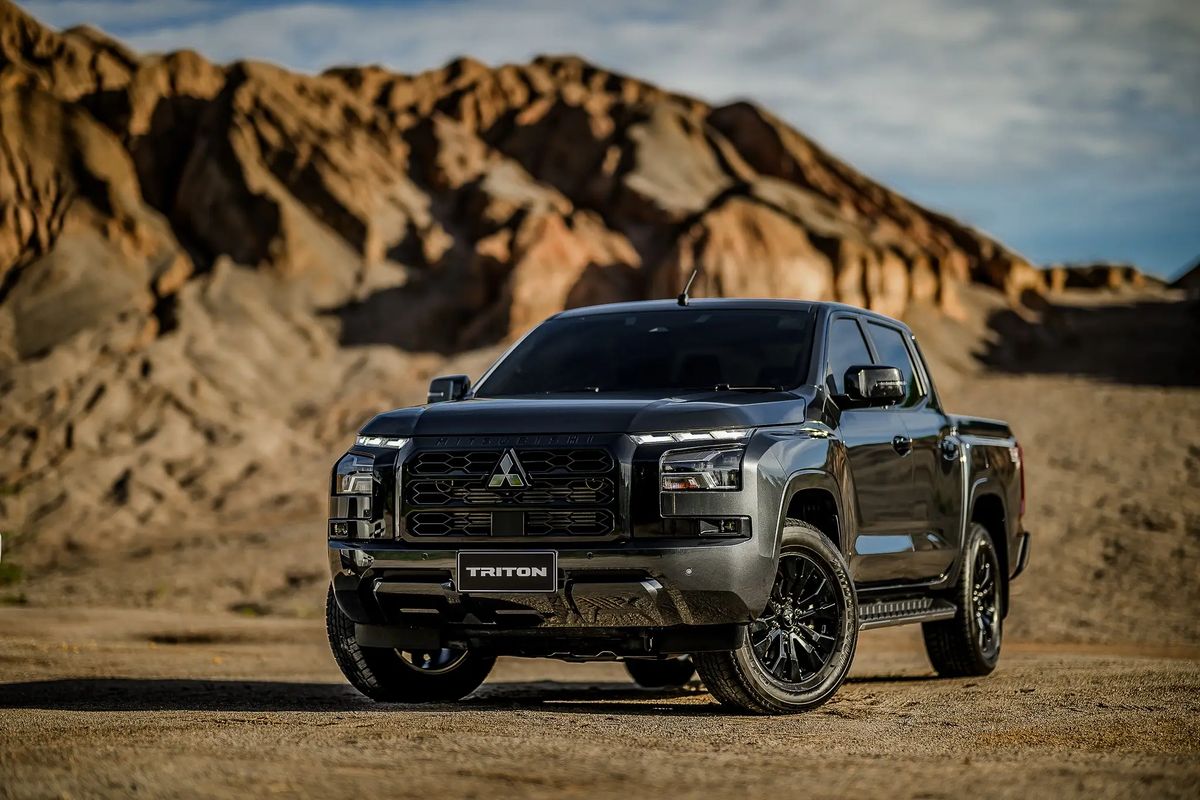
- Mitsubishi Triton: The new Triton, reintroduced to the Japanese market at the end of 2023, is arguably the Hilux’s biggest direct rival. Equipped with a newly developed ladder frame and a 2.4L clean diesel turbo engine (maximum output 204 hp/maximum torque 47.9 kgm), it combines powerful driving performance with comfort. Mitsubishi’s unique “Super Select 4WD-II (SS4-II)” system delivers high levels of off-road performance and on-road stability. The interior and exterior design is modern and powerful, and the car comes with a full complement of safety features. Priced at 4.98 million to 5.4 million yen (including consumption tax), it competes with the Hilux’s expected price range.
- Isuzu D-MAX: While not officially available in the Japanese market, the Isuzu D-MAX is immensely popular in Southeast Asian markets such as Thailand and Australia. Its robust construction, high durability, and reliability are a testament to the truck manufacturer’s extensive experience. While powertrains vary by market, a 1.9L or 3.0L diesel turbo engine is available. The design is tough and functional. While you may find it in Japan through parallel imports, it’s important to note that it’s not supported by authorized dealers.
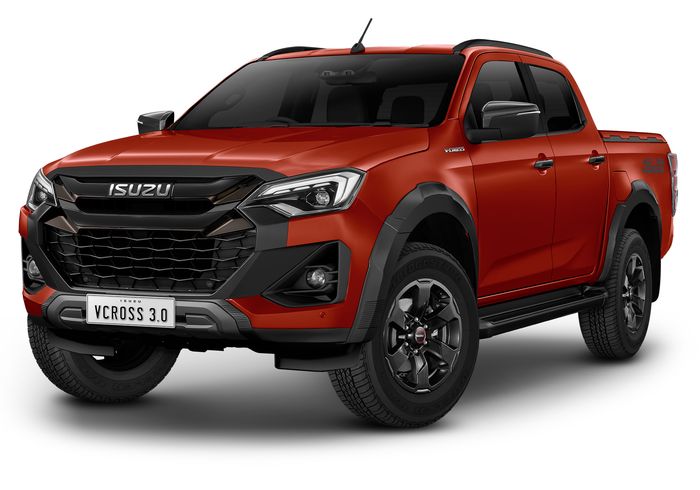
D-MAX V-CROSS
The new Hilux is likely to have advantages over these rivals, such as the reliability of the Toyota brand, an extensive sales and service network, and the latest Toyota Safety Sense and hybrid technology (if introduced). Meanwhile, rivals also have their own strengths, such as unique 4WD technology like the Triton’s SS4-II system and the D-MAX’s track record in harsh environments. We recommend taking into consideration your design preferences, the performance you prioritize, your budget, and other factors, and comparing the two vehicles through test drives, if possible.
Differences from the Hilux Surf and the possibility of its revival
When you hear the name Hilux, some people may think of the Hilux Surf. Although the Hilux and Hilux Surf have similar names, they are in different vehicle categories.
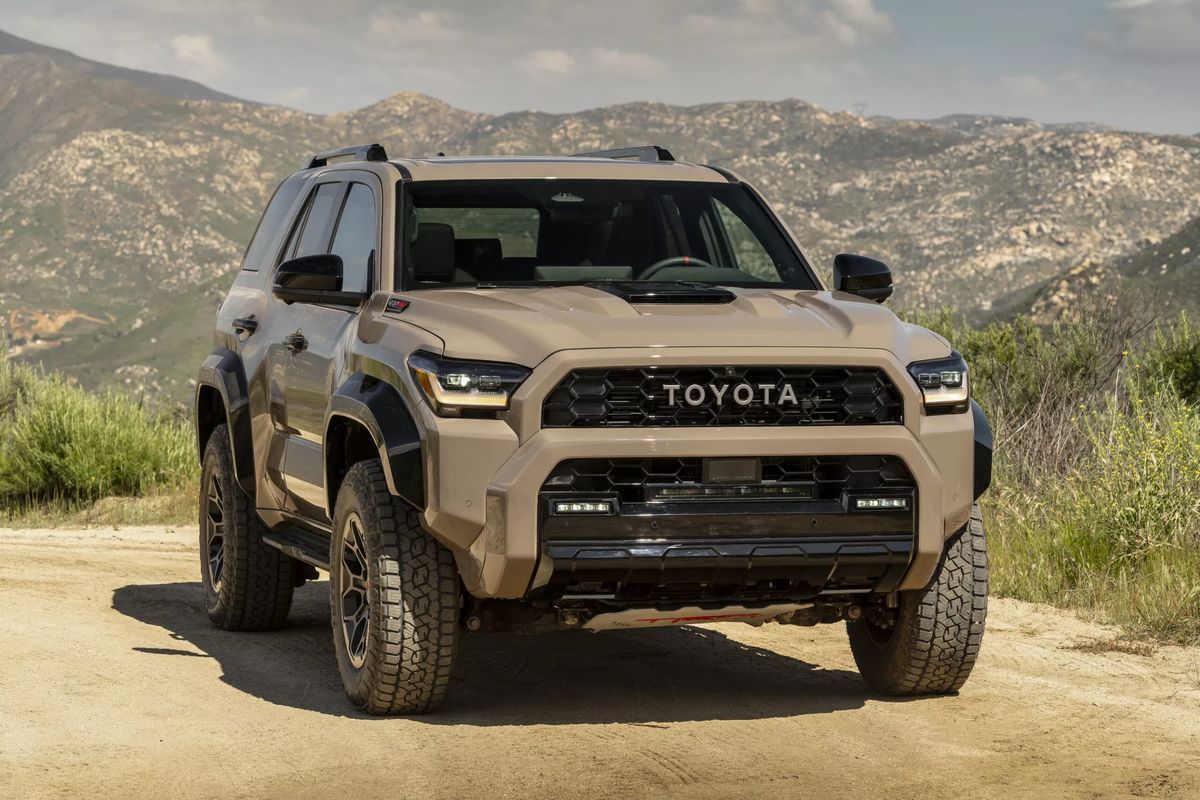
Fortuner
- Hilux: A pickup truck with a cargo bed.
- Hilux Surf: An SUV based on the Hilux chassis, with a wagon-type body that uses the cargo area as passenger space.
The Hilux Surf was once popular in the Japanese market, but is now discontinued. In overseas markets, a model called the Fortuner, an SUV based on the Hilux, is sold, and this can be considered the successor to the Hilux Surf. However, at present, there has been no official announcement from Toyota that the Hilux Surf or Fortuner will be introduced to the Japanese market. While SUVs remain popular, the Japanese market already has a large lineup of SUVs, such as the Land Cruiser Prado (the new Land Cruiser 250) and RAV4, so the revival of the Hilux Surf is unlikely.
The new Hilux will evolve solely as a pickup truck, but its design and the technology it incorporates may influence other Toyota SUVs in the future.
A word from the editorial department
The new Toyota Hilux, which is about to undergo a full model change, is expected to undergo major evolution in all aspects, from design, performance, equipment, safety, and environmental friendliness. The new model is packed with attractive features, including a new exterior that combines toughness and refinement, an interior that has enhanced functionality and comfort, an improved diesel engine and the possibility of introducing a long-awaited hybrid, and improved safety performance with the latest Toyota Safety Sense.
However, due to the impact of the suspension of production stemming from the Toyota Industries Corporation certification fraud scandal, the timing of its release remains unclear. It has been pointed out that the release date may be delayed from the second half of 2025 as originally expected to 2026 or later, and we await an official announcement from Toyota.
Prices are also expected to rise as the functionality improves, and attention will be focused on pricing, especially when a hybrid model is introduced. When considering a purchase, you should also take into account the Hilux’s unique body size, usability of the loading compartment, and ride comfort.
The new Hilux is the subject of much anticipation, but also of some uncertainty. Its developments will be one that not only pickup truck fans but many other car enthusiasts will be keeping a close eye on. We will need to continue to pay close attention as the latest information becomes available.
Toyota