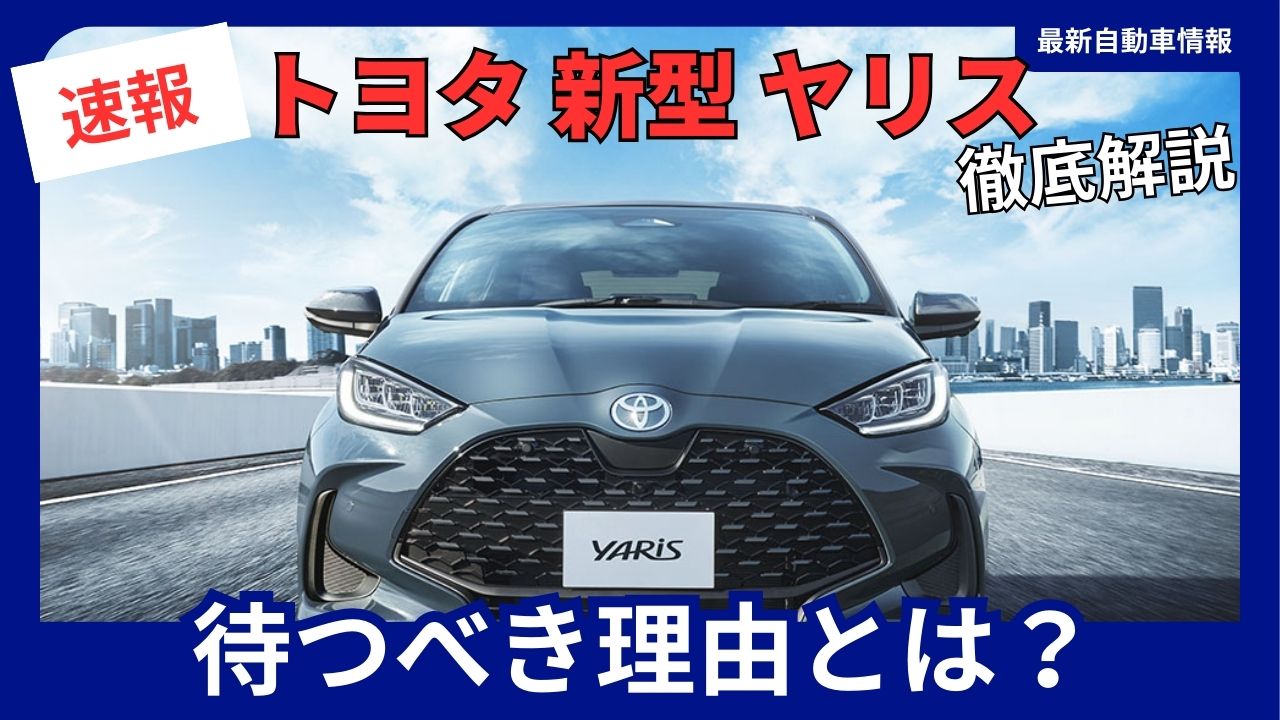

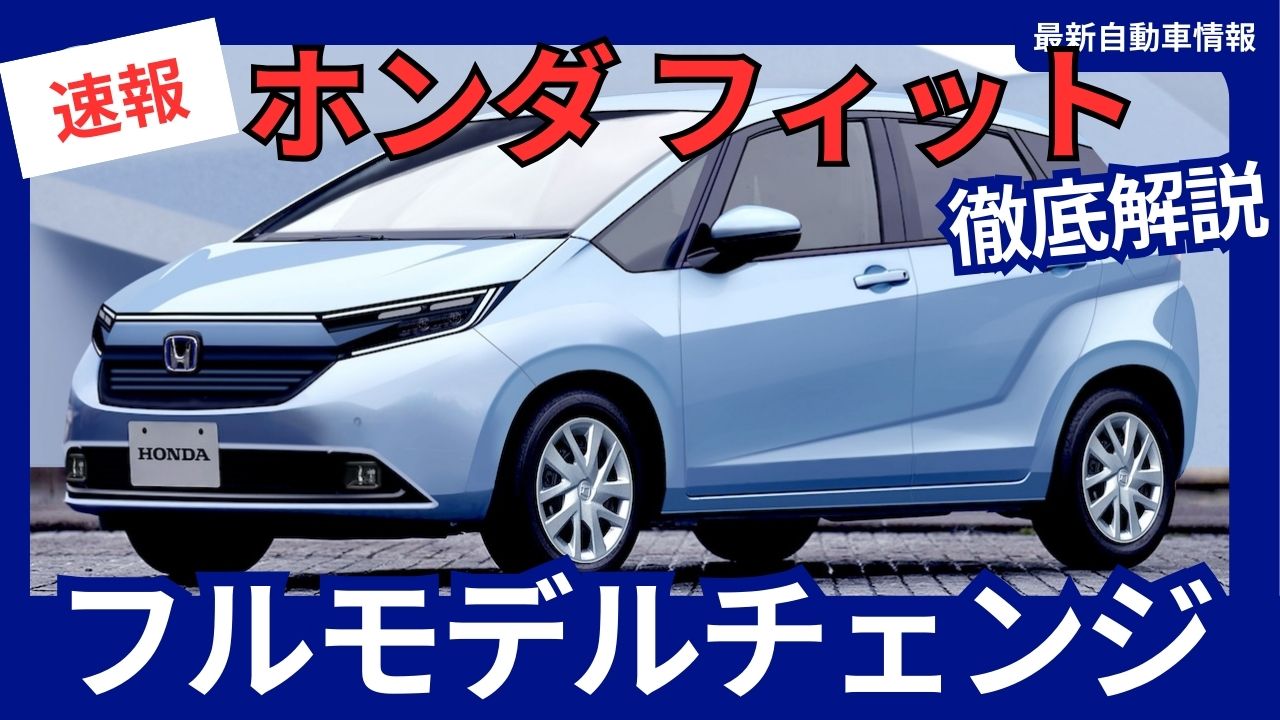
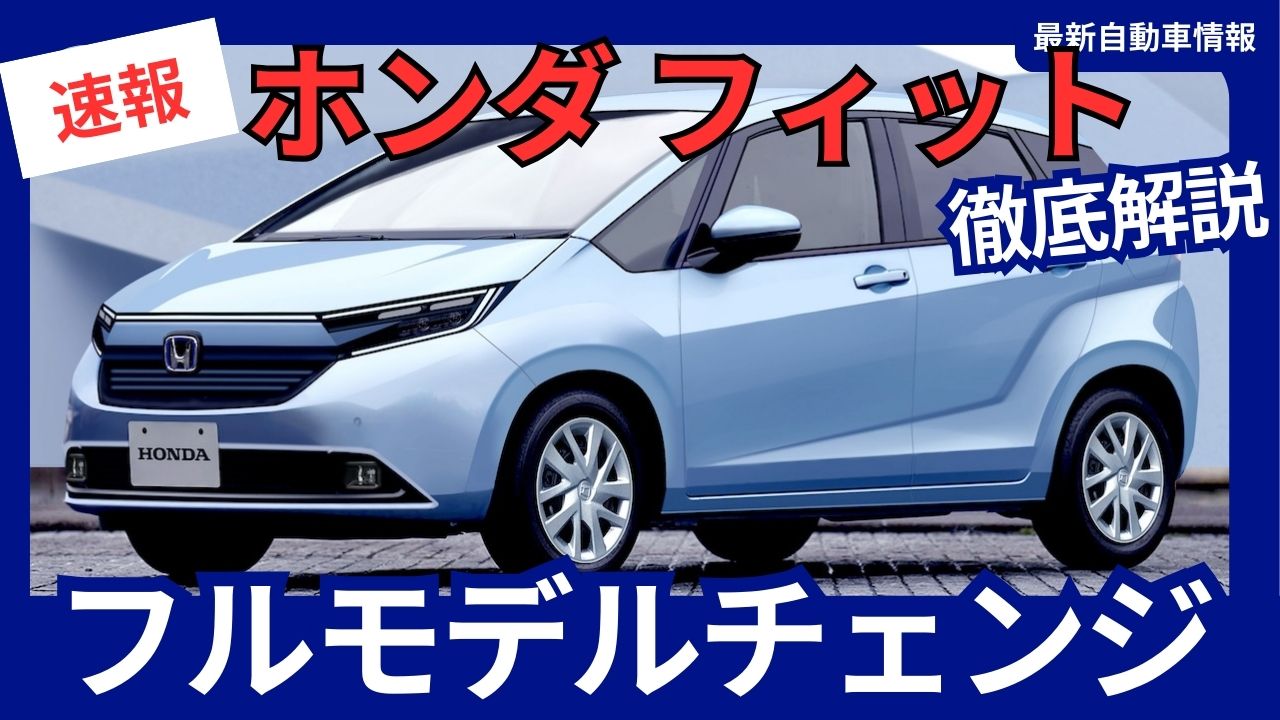
Honda will be fully redesigning the new Fit, releasing the fifth-generation Fit 5 in 2026. The previous generation Fit was released on February 14, 2020, and this will be the first full model change in six years.
The Honda Fit has long established itself as a flagship compact car in the Honda lineup. Its rich history continues to be beloved by many. Since its launch in 2020, the current, fourth-generation Fit 4 has garnered popularity for its size and practicality, perfectly suited to Japan’s road conditions. In 2022, it underwent a major facelift, including design changes and powertrain improvements, further enhancing its appeal. Now, car enthusiasts are eagerly anticipating the next generation, the fifth-generation Fit 5. Honda’s long-awaited new Fit 5 is more than just a model change; it is expected to redefine the concept of the compact car, truly symbolizing a new generation. The full model change is expected to bring significant improvements in every aspect, from exterior design to interior functionality, driving performance, fuel economy, and safety, and details are attracting attention. In this article, we’ll summarize the latest information currently available about the new Honda Fit 5 and thoroughly introduce its appeal and key improvements.
Summary of the new Honda Fit 5 (next model)
- Full model change: Honda’s flagship compact car, the Fit, is scheduled for a complete overhaul into the fifth-generation Fit 5. Driving performance, design, comfort, functionality, and safety have all been significantly improved.
- Concept: Moving from the current “friendliness” to a more “aggressive” and “high-quality” direction. Differentiating it from the N series of minicars, it emphasizes the appeal of a standard-sized compact car.
- Exterior:
- The design features a bumper that emphasizes width and slim headlights, giving it a new generation feel.
- The popular grades “RS” (Sports) and “CROSSTAR” (Crossover) are likely to continue to be available in the new model.
- Body Size:
- While maintaining the 5-number size, the overall length and wheelbase have been slightly increased (estimated: overall length 4050mm, wheelbase 2550mm).
- It combines expanded interior space with improved driving stability.
- interior:
- It is equipped with the latest infotainment system with a large 11.4-inch display (estimated).
- Improved convenience with cloud connectivity, wireless smartphone connectivity, and AI assistant support.
- The adoption of digital meters, an electric parking brake, and other features enhances the car’s advanced features.
- The quality of the interior materials has also been improved, creating a comfortable interior space.
- Powertrain:
- Gasoline vehicle: Improved 1.5L engine with increased power output (estimated: 125ps).
- Hybrid vehicle: The two-motor “e:HEV” has been improved to increase the output of the engine (estimated: 110ps) and motor (estimated: 135ps), resulting in a more powerful and quieter ride.
- Fuel economy:
- The aim is to improve fuel efficiency while also enhancing driving performance.
- Target fuel economy (WLTC mode/FF estimate): Gasoline vehicles 19.0km/L, Hybrid vehicles 32.5km/L.
- Safety equipment:
- The latest Honda Sensing system is expected to be standard equipment on all vehicles.
- Functions have been further enhanced and improved, including blind spot information, traffic jam assist, reverse exit support, and adaptive driving beam.
- price:
- The adoption of the latest equipment is expected to increase sales compared to the current model.
- The entry price is expected to start at around 1.8 million yen, but the higher grades may cost over 3 million yen.
- Release date: A release date of around 2026 is likely.
Honda’s new “Fit” full model change exterior
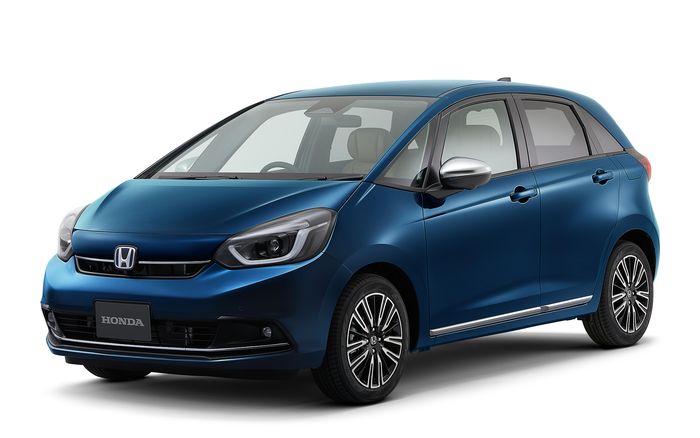
FIT4
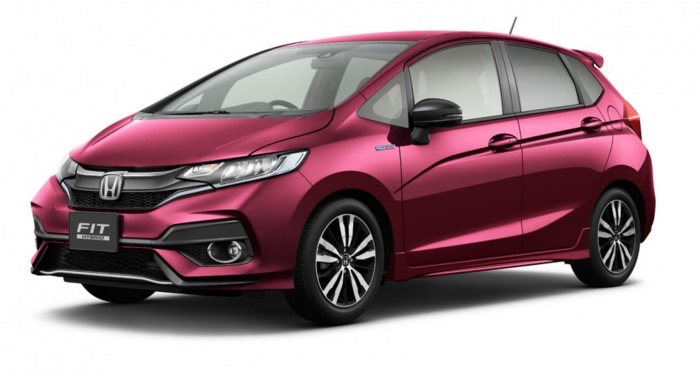
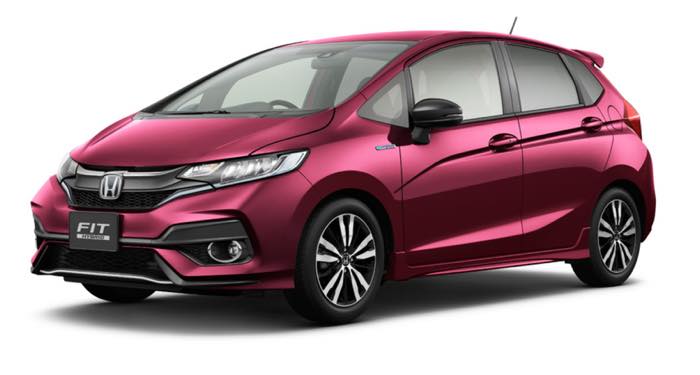
FIT3
The exterior design of the new Honda Fit 5 will inherit the concepts of “comfort” and “friendliness” of the current model, but is expected to evolve in a more dynamic and imposing direction that reflects the spirit of the times. A recent trend in automotive design has been to emphasize not just functionality, but also a strong and sophisticated appearance. The new Fit 5 will likely follow this trend and adopt a design that will appeal to a wider range of users.
A specific change is the design of the front mask. In stark contrast to the soft look of the current model, the new model will feature a bumper design that emphasizes its width and the latest sharp and slim LED headlights, giving it a more rugged and sporty impression. This may result in the front view being transformed into an aggressive one with a low center of gravity and a sense of stability. As for the side and rear views, the accents on the body panels and the treatment of the character lines are expected to express a sense of dynamism and quality.
Additionally, the development of popular variation models of the current model is also attracting attention. The Fit RS, which boasts sporty driving performance and exclusive design, and the Fit CROSSTAR, a crossover model that caters to active lifestyles, are likely to continue to be available in the new Fit 5 due to their popularity. These models will each feature exclusive aero parts, suspension, and interior and exterior decoration, creating a unique personality that differs from the standard model and will play an important role in meeting the diverse tastes of users. In addition to the evolution of the standard model’s design, the new Fit 5 is likely to have an attractive exterior lineup that will appeal to a wide range of users thanks to these unique variation models.
The benefits of expanding body size while maintaining the 5-number size
Looking at Honda’s lineup, the compact minivan “Freed,” which underwent a full model change in 2024, has grown in size to 4,310 mm in length and 2,740 mm in wheelbase. This makes the size gap between it and the Fit more pronounced than ever before. The new Fit 5’s larger body size not only further differentiates it from the Freed, but also plays an important role in differentiating it from kei cars (such as the N-BOX), which have been gaining popularity in recent years. While the convenience of kei cars is an appealing feature, the new Fit 5 emphasizes the added value of standard-sized compact cars, such as spaciousness, driving stability, and texture, thereby establishing a unique position and appealing to a wide range of users. Honda’s ingenious packaging technology, which pursues maximum space efficiency and driving performance within the constraints of the 5-number size, will likely be utilized in the new Fit 5.
Honda’s new “Fit” full model change interior
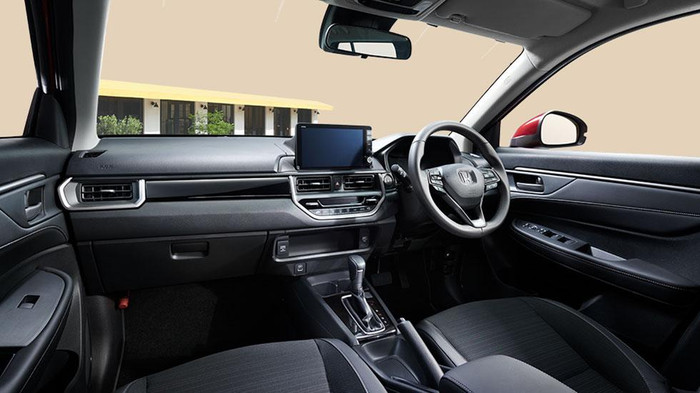

The interior of the new Fit 5 is expected to be reborn as a more modern and functional space in line with the evolution of the exterior design. Honda has always placed emphasis on good forward visibility and an open interior space with the Fit, and it is thought that the new model will maintain these merits while aiming to dramatically improve comfort and convenience through the introduction of advanced equipment.
At the heart of this will be a significantly evolved infotainment system. It’s highly likely that the center of the dashboard will feature an 11.4-inch display, larger than the current model. This large display will not only make the navigation screen easier to see, but will also dramatically improve the display and operability of various information. Furthermore, this system will go beyond being a simple display device; its connected functions are expected to be significantly enhanced. Linking with cloud services will enable real-time traffic information, weather forecasts, online map updates, and more. Smartphone connectivity will also be enhanced, with wireless compatibility for Apple CarPlay and Android Auto expected.
Also noteworthy is the inclusion of the latest AI assistant function. By responding to commands such as “OK, Honda,” drivers can adjust the temperature of the air conditioner, select music tracks, set destinations on the navigation system, and more, allowing them to use a variety of functions safely and intuitively while remaining focused on driving.
In terms of equipment, it is expected that the instrument panel will be fully digitalized, and that an electric parking brake and auto brake hold function will be adopted to streamline the shift area. These advanced features will not only improve operability, but will also contribute to creating a sophisticated atmosphere throughout the interior.
Another point not to be overlooked is the improved quality of the interior materials. The use of softer padding and high-quality decorative panels for the seat upholstery, door trim, dashboard, etc., has the potential to create a premium space that exceeds its class. In addition to practicality such as spaciousness and ease of use, the interior of the new Fit 5 has been enhanced with advanced technology and quality, and is sure to provide a comfortable and pleasant travel experience for all passengers.
Honda’s new “Fit” full model change: Safety features
Safety performance is one of the most important factors when choosing a car today. Honda is actively promoting its advanced safety driving support system, “Honda Sensing,” and the latest version is expected to be standard equipment on all grades of the new Fit 5. This will provide multifaceted support for safe driving and aim to reduce the risk of accidents.
The latest Honda Sensing system is expected to be installed, and in addition to the functions used in the current model, it is possible that even more advanced functions will be added. First of all, basic safety functions such as Collision Mitigation Braking System (CMBS), false start prevention function, pedestrian collision mitigation steering, road departure prevention function, and sign recognition function are expected to have further improved detection accuracy and operating range due to improved performance of sensors and cameras.
Adaptive cruise control (ACC), which reduces the burden of driving on expressways and motorways, will not only be equipped with a traffic jam following function, but may also have a new feature called ” Traffic Jam Assist” added. This is a function that automatically follows the vehicle ahead in traffic jams, stops, and starts automatically, significantly reducing driver fatigue.
Furthermore, the system is expected to enhance its support functions for checking the safety of areas behind the vehicle, which are prone to blind spots. ” Blind Spot Information ” detects vehicles traveling in adjacent lanes and alerts the driver with indicators on the door mirrors. ” Back-up Exit Support ” is a function that detects vehicles approaching from the left and right rear when backing out of a parking space and alerts the driver with an alarm and display.
Headlight systems that contribute to ensuring visibility at night will also continue to evolve. ” Auto High Beam ” detects preceding and oncoming vehicles and automatically switches between high and low beams, but we can also expect the adoption of an even more advanced ” Adaptive Driving Beam .” This function maintains the high beam while blocking only the light from preceding or oncoming vehicles, brightening a wider area while preventing dazzling other vehicles.
Other features include a “sudden acceleration suppression function” that prevents sudden acceleration caused by accidentally stepping on the accelerator pedal instead of the brake pedal, and a “parking sensor system” that detects obstacles around the vehicle when parking, helping to reduce “near misses” in everyday driving situations. With these advanced safety features, the new Fit 5 is expected to be a safer and more secure car not only for the driver, but also for passengers and those around them.
| System Equipment | fit |
|---|---|
| CMBS | ◯ (Daytime and nighttime pedestrians and bicycles) |
| False start prevention function | ◯ |
| Near-Collision Mitigation Braking | ◯ |
| Sudden acceleration control function | ◯ |
| Pedestrian Accident Reduction Steering | ◯ |
| Road departure prevention function | ◯ |
Adaptive Cruise Control (ACC) with traffic jam following function |
◯ |
| Lane Keeping Assist System (LKAS) |
◯ |
| Preceding vehicle departure notification function | ◯ |
| Sign recognition function | ◯ |
| False backward start prevention function | ◯ |
| Blind Spot Information |
◯ |
| Auto high beam | ◯ |
| Parking Sensor System | ◯ |
| Multi-view camera system | ◯ |
| Traffic Jam Assist (traffic jam driving assistance function) |
◯ |
Comparison of safety technology between the new and previous Fit models
| System Equipment | 4th generation Fit late model |
5th generation Fit (pre-facelift) |
|---|---|---|
| CMBS | ◯ (Daytime and nighttime pedestrians and bicycles) |
◯ (Daytime and nighttime pedestrians and bicycles) |
| False start prevention function | ◯ | ◯ |
| Near-Collision Mitigation Braking | – | ◯ |
| Sudden acceleration control function | – | ◯ |
| Pedestrian Accident Reduction Steering | ◯ | ◯ |
| Road departure prevention function | ◯ | ◯ |
Adaptive Cruise Control (ACC) with traffic jam following function |
◯ (approx. 0km/h~) |
◯ (approx. 0km/h~) |
| LKAS | ◯ | ◯ |
| Preceding vehicle departure notification function | ◯ | ◯ |
| Sign recognition function | ◯ | ◯ |
| False backward start prevention function | ◯ | ◯ |
| Blind Spot Information |
◯ (optional) |
◯ |
| Automatic high beam | ◯ | ◯ |
| Parking Sensor System | ◯ | ◯ |
| Multi-view camera system | – | ◯ |
| Traffic Jam Assist (traffic jam driving assistance function) |
– | ◯ |
Honda’s new Fit undergoes a full model change with the latest powertrain that combines power and environmental friendliness
The powertrain at the heart of the new Honda Fit 5 is expected to undergo major evolution in both driving performance and environmental friendliness. The current model underwent a minor change in 2022, changing the gasoline engine from the previous 1.3L to 1.5L, improving power performance, but the new Fit 5 is expected to be equipped with an even more improved, latest-generation engine.
The gasoline model is expected to use a unit based on the current 1.5L inline 4-cylinder engine, with improved efficiency and power output. Expected specifications include a maximum output of around 125ps, up from the current 118ps, and maximum torque of 14.5kgm, which may be tuned for easier handling. This will enable smooth everyday city driving and comfortable driving in a variety of situations, such as overtaking on the highway.
Meanwhile, the hybrid model, the culmination of Honda’s electrification technology, will be equipped with an evolved two-motor hybrid system, the “e:HEV.” The current e:HEV has been highly praised for its smooth motor-driven driving and excellent fuel economy, but the new model is expected to revise the efficiency of the entire system and improve the output of both the engine and motor. Specifically, engine output may increase from the current 106ps to 110ps, and motor output may increase from the current 123ps to 135ps. Maximum torque is also expected to be increased to around 26.0kgm from the motor, providing a powerful sense of acceleration from the moment you step on the accelerator and offering even more dynamic driving performance.
The evolution of this e:HEV system will not only make it more powerful, but will also contribute to improved fuel efficiency and quietness. Energy consumption will be reduced by expanding the speed range at which the motor can be used and improving engine efficiency. Furthermore, since there will be more situations where the car can be driven without unnecessarily increasing engine speed, the interior will be quieter, creating a more comfortable driving environment. Like the current model, the drivetrain will be front-wheel drive (FF), with a 4WD option expected to be available to improve stability on slippery surfaces like snow. With these latest powertrains, the new Fit 5 is likely to achieve performance befitting a next-generation compact car, combining exhilarating driving fun with environmental friendliness at a high level.
Aiming for a high level of both driving performance and fuel economy
One of the key points Honda is focusing on in developing the new Fit 5 is achieving both improved driving performance and excellent fuel economy. The adoption of the latest powertrain is key to achieving this goal.
When the engine displacement of the current gasoline vehicle model was increased from 1.3L to 1.5L in a minor change in 2022, the WLTC mode fuel economy for FF vehicles dropped slightly from 20.4km/L to 18.7km/L. This was a trade-off with improved power performance, but the new Fit 5 is thought to be aiming to improve fuel economy while also enhancing driving performance by improving engine efficiency and reducing the weight of the body. The target WLTC mode fuel economy is expected to be around 19.0km/L for the FF model with a 1.5L gasoline engine, a slight improvement from the current model.
On the other hand, the hybrid model (e:HEV) is likely to see even more significant improvements in fuel economy. The evolved e:HEV system is expected to achieve even greater fuel economy through improved energy regeneration efficiency and an expanded range of driving modes (EV driving range) that can be driven solely by the motor, while also achieving more efficient fuel economy. The current e:HEV model (FF) has a WLTC mode fuel economy of 30.2 km/L, but the new Fit 5 is expected to surpass this, reaching around 32.5 km/L. This is one of the best fuel economy performances in the compact car class, and will be a major attraction for environmentally conscious users.
The 4WD model is also expected to see improved fuel economy, just like the FF model, thanks to improvements in drivetrain efficiency. Compared to the current model’s fuel economy (1.5L gasoline 4WD: 16.6km/L, e:HEV 4WD: 25.4km/L), the new Fit 5 is expected to see improvements in both fuel economy and fuel economy.
In this way, the new Fit 5 aims to achieve excellent fuel economy without compromising the enjoyment of driving, both in gasoline and hybrid versions. It will provide economical benefits not only for everyday use but also for long-distance driving, enriching the car life of users.
Honda’s new “Fit” full model change: expected specs
| Specifications | fit | fit |
|---|---|---|
| full length | 4,055mm | 4,055mm |
| Overall width | 1,695mm | 1,695mm |
| Overall height | 1,515mm | 1,510mm |
| Wheelbase | 2,550mm | 2,550mm |
| engine | 1.3L i-VTEC engine |
1.5L i-VTEC engine + new i-MMD (e:HEV) |
| Maximum power | 72kW (98PS) / 6,000rpm |
72kW (98PS) / 5,600-6,400rpm |
| Maximum torque | 118Nm (12.0kgfm) / 5,000rpm |
127Nm (13.0kgfm) / 4,500-5,000rpm |
| Motor maximum output |
– | 80kW (109PS) / 3,500-8,000rpm |
| Motor Max Torque |
– | 253Nm (25.8kgfm) / 0-3,000rpm |
transmission |
CVT | Electric continuously variable transmission |
| Drive system | 2WD (FF) / 4WD |
2WD (FF) / 4WD |
| Passenger capacity | 5 people | 5 people |
| WLTC mode fuel economy | 20.2km/L (2WD) 18.2km/L (4WD) |
29.4km/L (2WD) 24.0km/L (4WD) |
Honda’s new “Fit” full model change: price range and release date
The new Fit 5 has undergone a major evolution through a full model change, but the price is likely to be a concern for many users. Considering the latest powertrain, an improved infotainment system, and the addition of the comprehensive safety equipment “Honda Sensing” as standard equipment, it is expected that the price will inevitably increase from the current model.
However, the Fit is an important mass-produced compact car that is a pillar of Honda’s sales. Therefore, they will want to avoid losing their competitiveness by significantly increasing the price. The entry-level model’s price may be strategically kept low, taking into consideration comparisons with rival models and appeal to first-time car buyers. Specific predictions are that the most basic gasoline model will start at around 1.8 million yen.
Looking at the current model’s price range (as of April 2025), the gasoline-powered “BASIC” starts at approximately 1.72 million yen, while the hybrid “e:HEV BASIC” starts at approximately 2.14 million yen. The top-of-the-line “e:HEV LUXE” 4WD model is priced at approximately 2.85 million yen. The new Fit 5 will see an increase in price ranges across the board, with well-equipped higher-grade models and the popular RS and CROSSTAR models potentially priced at or even exceeding 3 million yen. While the exact grade structure and equipment content are still unknown, it is likely that a price range will be available to meet a wide range of needs.
New Fit 2024 partial improvement price grade
| Model | engine | transmission |
Drive system |
Price (10%) |
|---|---|---|---|---|
| BASIC | 1.5L inline 4-cylinder DOHC engine |
CVT | 2WD | 1,720,400 yen |
| 4WD | 1,922,800 yen | |||
| HOME | 2WD | 1,985,500 yen | ||
| 4WD | 2,186,800 yen | |||
| CROSSTAR | 2WD | 2,292,400 yen | ||
| 4WD | 2,495,900 yen | |||
| LUXE | 2WD | 2,305,600 yen | ||
| 4WD | 2,506,900 yen | |||
| RS | 2WD | 2,153,800 yen | ||
| HOME BLACK STYLE |
2WD | 2,107,600 yen | ||
| 4WD | 2,311,100 yen | |||
| e:HEV BASIC | In-line 4-cylinder DOHC 1.5L+ i-MMD (e:HEV) |
Electric continuously variable transmission |
2WD | 2,138,400 yen |
| 4WD | 2,340,800 yen | |||
| e:HEV HOME | 2WD | 2,328,700 yen | ||
| 4WD | 2,533,300 yen | |||
| e:HEV CROSSTAR | 2WD | 2,627,900 yen | ||
| 4WD | 2,831,400 yen | |||
| e:HEV LUXE | 2WD | 2,643,300 yen | ||
| 4WD | 2,846,800 yen | |||
| e:HEV RS | 2WD | 2,541,000 yen | ||
| e:HEV HOME BLACK STYLE |
2WD | 2,450,800 yen | ||
| 4WD | 2,655,400 yen |
As for the long-awaited release date, current information suggests 2026 is the most likely date. This may change depending on the development schedule and the state of production preparations, but if all goes well, the full details will be revealed and the car is expected to be released to the market towards the end of 2025. With the new generation Fit 5, Honda aims to further increase its presence in the domestic compact car market and meet the increasingly diverse expectations of its users. We can’t wait for the official announcement and release.
About Fit
The Fit was released in June 2001 as the successor to the Logo. Compared to other models, it offers both excellent driving performance and fuel economy, and also has a large luggage space. The first and second generations underwent a full model change every six years and four months, while the second to third generation full model change took place every five years and 11 months, and the third to fourth generation full model change took place every six years and five months. In other words, a full model change every six years is the normal course of events.
First generation GD1/2/3/4 models
It was announced on June 21, 2001, and released on June 22. It uses the global small platform. A minor change was made on June 10, 2004.
Second generation GE6/7/8/9
A full model change was announced on October 18, 2007, and released on October 26. On November 21, 2007, it was selected as the 2007-2008 Japan Car of the Year. A minor change was made on October 8, 2010. A second minor change was made on May 24, 2012.
3rd generation GK3/4/5/6 type
A full model change was announced on September 5, 2013, and released on September 6. A minor model change was made on June 29, 2017, and released on June 30. The “Anshin Package” implemented in October 2014 was replaced with Honda’s advanced technology, “Honda SENSING,” in a minor change in June 2017, and safety improvements were also planned. In the 2018 partial improvement, the driver assistance system “Honda SENSING” was also made standard equipment on all models.
FIT 3
4th generation GR1/2/3/4/5/6/7/8 types
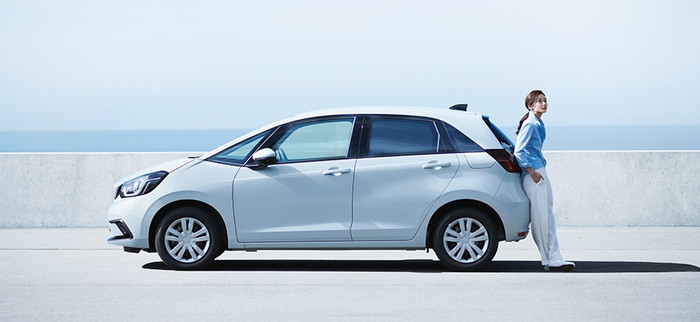
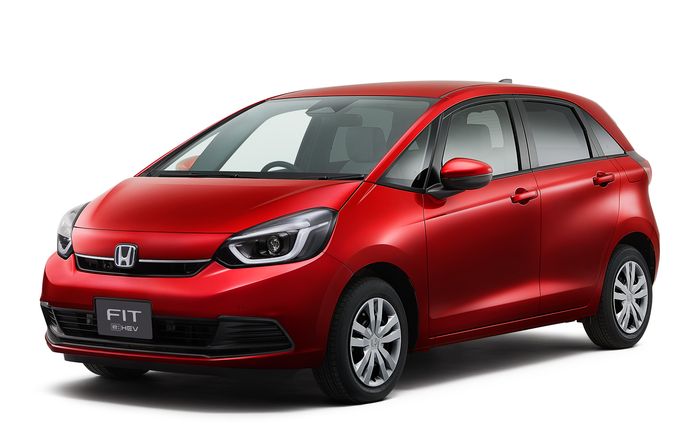
It was unveiled for the first time in the world at the 46th Tokyo Motor Show 2019 on October 23, 2019, and its main features were also announced. A full model change was officially announced on February 13, 2020, and it was released on February 14, 2020. As of March 16, 2020, approximately one month after its release, it was announced that the cumulative number of orders had reached 31,000 units, more than three times the monthly sales target (10,000 units). On June 4, 2021, it underwent partial improvements and a special 20th anniversary model was released . On October 7, 2022, it underwent minor changes and exterior design changes, and the RS model was released on November 10, 2022.
FIT4
FIT 2022
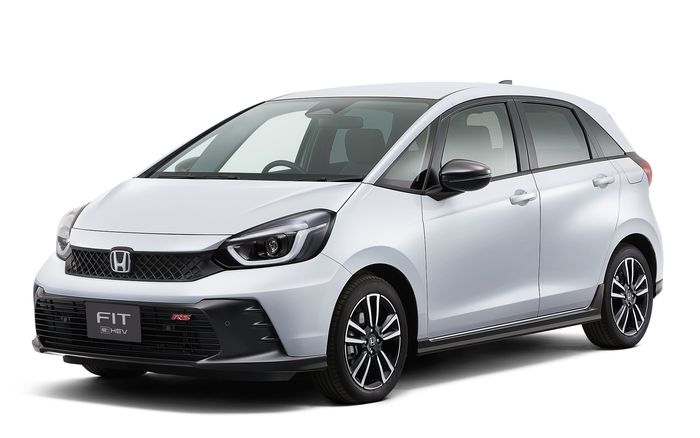
FIT 2022 RS
A word from the editorial department
Honda’s long-awaited fifth-generation compact car, the All-New Fit 5, is here. This full model change is more than just a generational change; it has the potential to set new standards in Japan’s compact car market. It boasts a more aggressive and refined exterior design; a spacious interior and stable driving experience thanks to an expanded size while maintaining the 5-number size; a state-of-the-art infotainment system with an AI assistant and large display; an evolved powertrain that combines high levels of power and fuel economy; and advanced safety features with the latest Honda Sensing system, which comes standard on all vehicles. The combination of all these elements promises to make the All-New Fit 5 a major step forward, surpassing the current model in every aspect, including design, comfort, functionality, driving performance, economy, and safety.
As the popularity of minicars continues to grow, Honda will likely use the new Fit 5 to reaffirm the value of standard compact cars, namely, ample space, driving performance that can handle long-distance travel, and comfort and safety provided by advanced technology. Derivative models such as the popular “RS” and “CROSSTAR” are expected to continue, and Honda is expected to expand its lineup to accommodate a variety of lifestyles.
The expected release date is 2026. Prices are expected to rise as the equipment becomes more comprehensive, but as a flagship model, they will likely be strategically priced. The new Fit 5 will likely be developed by Honda, pouring all of its technology and passion into it. Its arrival will no doubt bring new vitality to the Japanese car market and become an attractive option for many drivers. We’ll be keeping our eyes peeled for more details as the official announcement approaches.
Fit related articles
fit