


Nissan is undergoing a full model change of its mid-size SUV, the X-TRAIL, and plans to release it around August 2027.
The X-TRAIL is Nissan’s flagship mid-size SUV, and has been popular with many users for many years. The current T33 model, equipped with the second-generation e-POWER and the evolved 4WD system e-4ORCE, was launched in the Japanese market in July 2022. While retaining its tough gear concept, it combines the premium driving performance and advanced features of electrification, establishing a unique position in the SUV market. Sold overseas under the name Rogue, it is a model that is highly popular globally.
Now, we are beginning to hear the footsteps of a full model change that will see the X-Trail evolve into the next generation, the T34 model. Based on the information released by Nissan and the teaser images released, we can expect a major leap forward in design, powertrain, and advanced technology. In this article, we will take a closer look at the new X-Trail (T34 model) based on the information and predictions we have so far.
Summary of information on the new Nissan X-Trail (T34) full model change
- Full model change period
- Production of the sister car for North America, the Rogue (T34 model), is scheduled to begin in fiscal year 2026.
- The introduction of the new X-Trail (T34 model) for the Japanese market is expected to be about a year behind that of North America, and is currently seen as likely to be around fiscal 2027 .
- Exterior design
- The model will also undergo a full model change to the new “T34 type.”
- The released teaser images show the adoption of a large honeycomb-patterned grille , distinctive honeycomb-shaped daytime running lights (five lights on each side) placed on both sides of the grille , simple and compact triple-eye LED headlights , and single-character taillights that emphasize the vehicle’s wide appearance .
- Overall, we can expect a more advanced, sharper, and more striking design. It has also been suggested that the side window area may retain the design of the current model.
- Interior design
- The latest generation digital meter , a large infotainment display with Google built-in , and a large head-up display (HUD) will significantly improve digitalization and connectivity.
- The interior materials and decorations are expected to create a higher quality interior space than the current model.
- Powertrain
- Third generation e-POWER:
- A newly developed 1.5L engine is used for power generation .
- Fuel efficiency at high speeds will be improved by up to 15% compared to the current model.
- Improved system output (FF: 300ps / 4WD: 340ps predicted) and further improvements in quietness are also expected.
- The “e-Pedal Step” system, which controls acceleration and deceleration by operating the accelerator, will continue to be installed.
- e-4ORCE:
- The 4WD model is equipped with the further advanced e-4ORCE electric drive four-wheel control technology, which provides excellent driving stability and a comfortable ride.
- Plug-in Hybrid (PHEV):
- A new model based on the Mitsubishi Outlander PHEV is expected to be introduced .
- It employs a 2.4L engine and a front and rear twin-motor 4WD system, and is expected to have an EV driving range of over 80km .
- External power supply function (V2H/V2L) is also available.
- Gasoline turbo:
- There is a possibility that a model equipped with a 1.5L VC-Turbo engine will be available, but its introduction to the Japanese market has not yet been decided.
- Third generation e-POWER:
- fuel efficiency
- Models equipped with the third-generation e-POWER are expected to achieve fuel economy of approximately 21.0km/L (FF) and 19.5km/L (4WD) in WLTC mode, particularly due to improved fuel economy at high speeds.
- The PHEV model is expected to be highly economical, with fuel economy in the high 17km/L range in WLTC mode and an EV driving range of over 80km .
- Safety equipment and driving assistance technology
- ” 360° Safety Assist ,” which ensures safety around the vehicle in 360°, has been further improved.
- It also comes equipped with features such as an adaptive LED headlight system and an SOS call .
- Performance improvements will also be made to the highway single-lane driving assistance technology ” ProPilot (with Navi-Link function) .”
- In the future, it is expected that the car will be equipped with the next-generation ProPilot system (in collaboration with Wayve AI Driver) that utilizes AI (Nissan has announced that it will be installed in commercially available vehicles from 2027 onwards).
- The parking assistance system ” ProPilot Parking ” will also continue to be available.
- Body size and platform
- The body size is expected to change only slightly from the current model (T33 type) (overall length is expected to increase by approximately 10 mm, and overall height by approximately 5 mm).
- The platform has been updated to the latest generation (an evolved version of CMF-C/D), significantly improving body rigidity .
- This improves handling stability, ride comfort, quietness, and collision safety.
- Price Prediction
- Due to the evolution of the powertrain and improved equipment, the price is expected to increase by around 200,000 yen from the current model.
- The entry price for the e-POWER model will start from 3.7 million yen , while the PHEV model could be over 6 million yen .
- summary
- The new X-Trail (T34 model) is being developed as an important model that will drive Nissan’s electrification strategy and advanced technologies.
- The traditional Tough Gear concept is combined with an evolved e-POWER/PHEV, cutting-edge design, and advanced safety and driver assistance technologies, and is expected to significantly improve the overall product appeal.
When will the full model change take place? North America first, Japan around 2027?
There are multiple conflicting pieces of information regarding the release date of the new X-Trail, but judging from the latest information and past examples, it is highly likely that it will be introduced to the Japanese market around fiscal 2027.
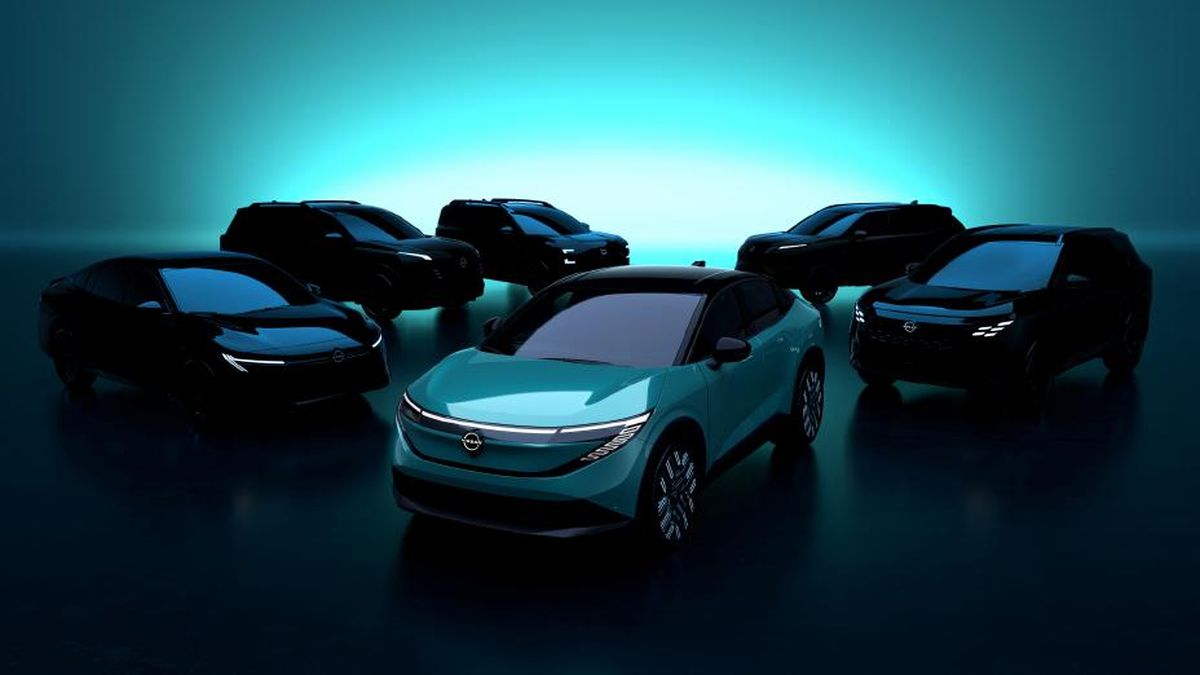
The basis for this is Nissan’s announcement regarding the Rogue, a sister model to the X-Trail, which it will be selling in the North American market. As 2025 approaches, Nissan has revealed specific plans for the Rogue. First, it has been revealed that a plug-in hybrid (PHEV) model of the Rogue will be released in fiscal year 2025. Based on the silhouette that has been released, this is believed to be an OEM model based on the Mitsubishi Outlander PHEV, which is also part of the Nissan Group. It will be interesting to see whether this Rogue PHEV will be sold alongside the next-generation T34 Rogue after its release, or whether it will be positioned as an early introduction.

NISSAN ROUGE PHEV

NISSAN ROUGE e-POWER
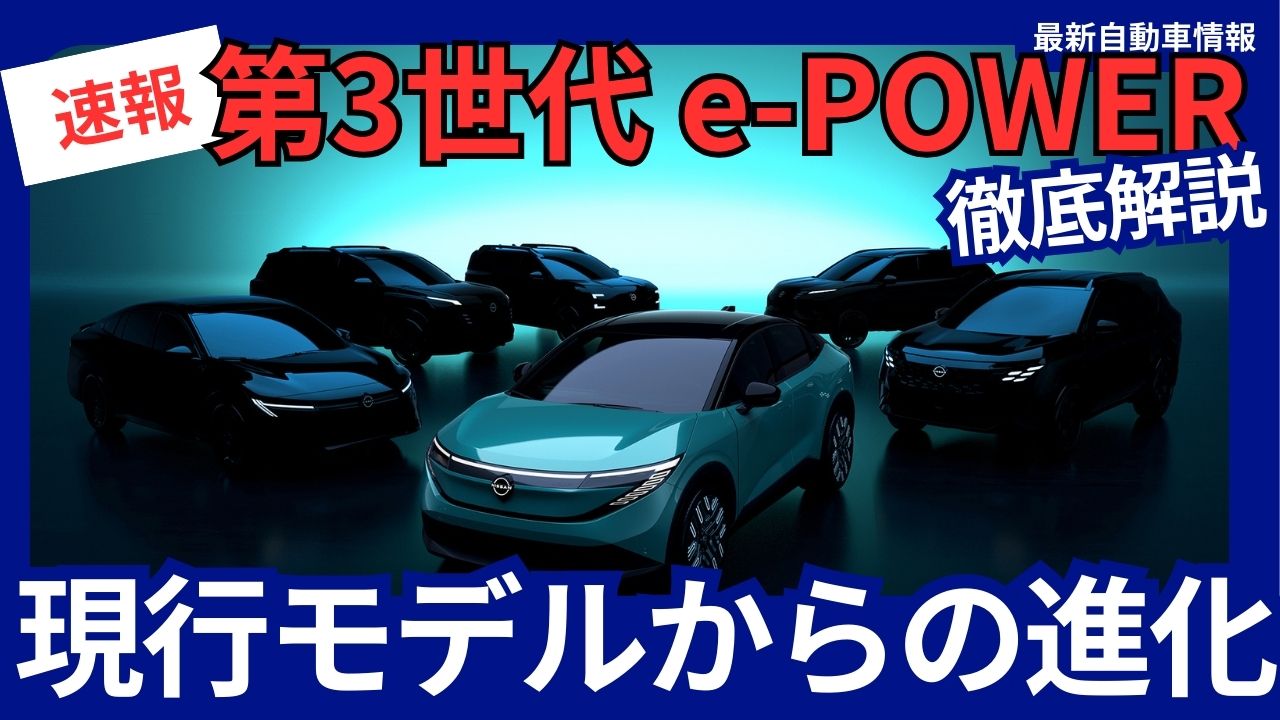
More importantly, in its financial results announcement in February 2025 and its announcement of its business plan “The Arc” in March of the same year, Nissan announced that it would begin production of the new Rogue in fiscal year 2026. Teaser images of this new Rogue, showing significant changes to its exterior design, have also been released, suggesting it is the next-generation model that has undergone a full model change, the T34 Rogue. It has also been clearly stated that the T34 Rogue will be equipped with the advanced third-generation e-POWER hybrid system, which will be discussed later.
So, when will the Japanese-spec T34 X-Trail be released? Looking at past examples, with the T33 model, there was a time lag of approximately one year and nine months between the release of the North American Rogue (October 2020) and the release of the Japanese X-Trail (July 2022). Additionally, the minor changes, including a facelift, implemented on the North American Rogue in October 2023 have not yet been applied to the Japanese-spec X-Trail as of April 2025. If this minor change were to be implemented in Japan in 2025, it would still be about one and a half to two years behind the North American version.
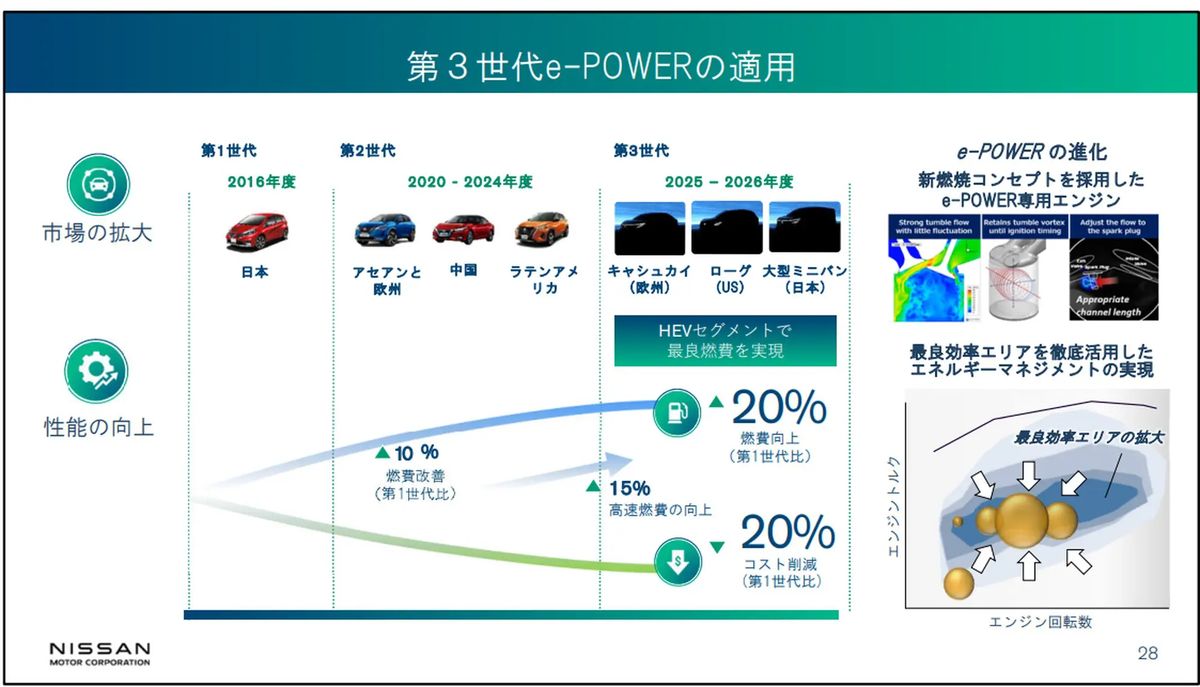
Given this background, it is estimated that the T34 Rogue e-POWER, which will begin production in North America in 2026, will be introduced to the Japanese market as the T34 X-Trail, about a year later than in North America, around 2027. The performance of the T34 Rogue in North America will be an important key in predicting when the Japanese model will be released.
Exterior design: Teaser images reveal bold changes
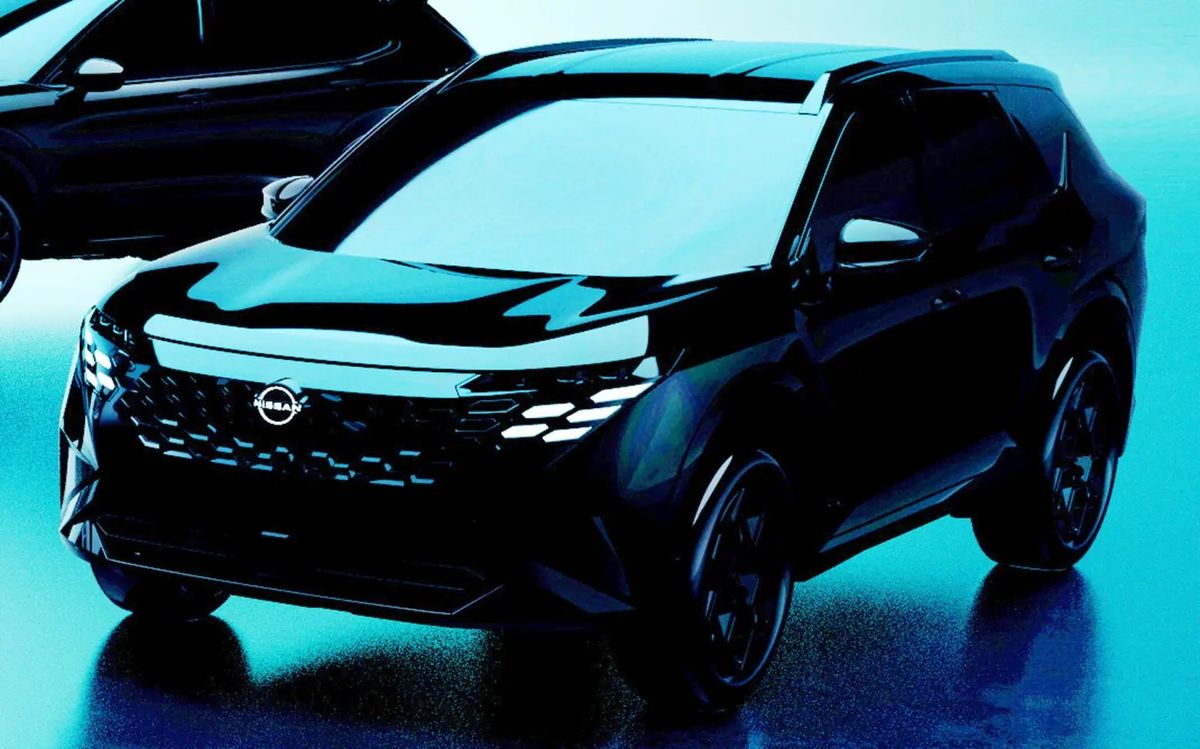
The released teaser images reveal that the exterior design of the new X-Trail (T34 model) will undergo a full model change, and will be a major evolution from the current T33 model, with a more advanced and imposing style. This is not just a minor change (facelift), but suggests that the model will be a new T34 series, and that it will literally be a full model change.
When analyzing the teaser image with the brightness adjusted, the elements that determine the impression of the front mask emerge. The first thing that catches the eye is the enlarged front grille. An intricate honeycomb pattern is used inside, giving it a sporty and modern impression. Of particular note are the daytime running lights located on both sides of the grille. These also use the same honeycomb shape as the grille, with five lights on each side, creating a very distinctive design. This will create a front face that exudes a strong personality that will be instantly recognizable as the new X-Trail (Rogue). Furthermore, the teaser image also reveals a glossy finish to the grille that appears to match the body color, suggesting the adoption of seamless expression, a recent design trend.
The headlamp unit will also be significantly changed. From the teaser image, it can be seen that “triple LED headlamps” with three light sources inside are being used. Compared to the current T33 model, the unit itself appears to have a simpler and more compact shape. In line with the design of these new headlamps, the shape of the hood also has a significantly different line than the current model.
Regarding the side view, only limited information can be gleaned from the teaser image, but it appears that there will be no major changes from the current T33 model, such as the shape of the side windows and the press lines on the doors. This suggests that the new X-Trail may also be using a method to reduce development costs by carrying over some of the body frame and panels, as seen in recent full model changes of Nissan vehicles (such as the Serena C28). However, it appears that the wheel design will have a distinctive pattern. Rather than the typical radial design, geometric lines reminiscent of squares and honeycombs can be seen, creating a sense of modernity even from the feet up.
A hint about the rear design can be found in the teaser image released in the business plan “The Arc” announced in March 2024. The image shows the adoption of “single-character taillights” that connect the left and right taillights. This is a recent trend in automotive design, emphasizing the sense of width and creating a modern and sophisticated rear view.
Taking all this information together, it appears that the new X-Trail (T34 model) will undergo a major redesign, particularly at the front and rear, and will be reborn as a sharper, more advanced SUV. While retaining the tough image of the current model, we can expect a design that combines urban sophistication with a futuristic feel.
Body size and platform: improved rigidity and utility
The body size of the new X-Trail (T34 model) will not change significantly from the current T33 model, and may be slightly enlarged while maintaining ease of handling. Some predicted figures include a total length of 4670mm (10mm larger than the current model) x total width of 1840mm (same as the current model) x total height of 1725mm (5mm larger than the current model), with a wheelbase of 2705mm (same as the current model). Changes of this magnitude will be readily accepted by users switching from the current model.
While the size change will be minor, the platform on which the vehicle is based is expected to undergo a major overhaul. It will likely use the latest CMF (Common Module Family) platform, likely an evolution of the CMF-C/D platform used in the current model. Body rigidity is expected to be significantly improved through the use of a larger proportion of high-tensile steel plates, a wider range of structural adhesives, and cutting-edge technologies such as laser screw welding.
Improving body rigidity brings about a variety of benefits. First, it improves handling stability. The vehicle’s response to steering operations improves, resulting in a more precise and linear handling feel. By suppressing twisting of the vehicle body when cornering, stability is increased, allowing the driver to enjoy driving with peace of mind.
Next, it improves ride comfort. A highly rigid body provides a solid foundation for the suspension to function more effectively. It firmly absorbs inputs and vibrations from the road surface, reducing the amount of unpleasant vibrations and noise that enter the cabin. This makes it possible to achieve both a flat, comfortable ride and a high level of quietness.
It also contributes to improved collision safety performance. The robust cabin structure effectively absorbs and disperses energy in the event of a collision, ensuring a survival space for occupants.
The platform renewal may also increase the degree of freedom in designing the interior and luggage space. Even if the body size does not change significantly, optimizing the packaging may result in an expanded living space, more usable luggage space, and more storage space. In particular, there are high hopes for improved comfort in the three-row seat model.
While the new X-Trail maintains its apparent size, the platform, which is an invisible part, has been revamped, and it is expected that the car’s basic performance, such as driving, comfort, safety, and usability, will be significantly improved.
Interior design: Pursuing comfort through digitalization and improved quality
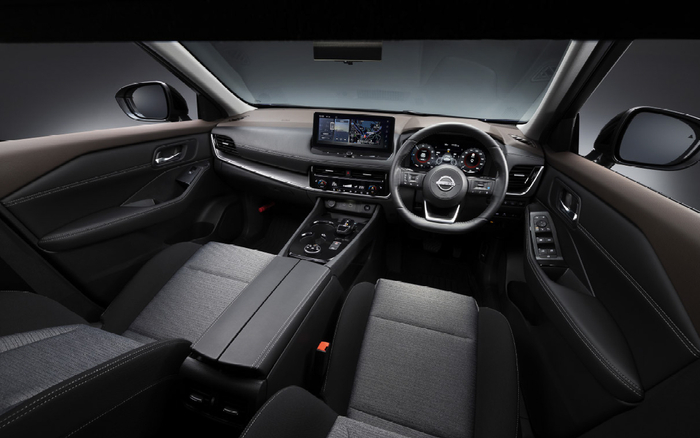
The interior of the new X-Trail (T34 model) is expected to significantly improve functionality and comfort through the active adoption of digital technology and improved texture, in line with the bold evolution of the exterior.
The core of the driver interface will likely be the latest-generation digital instrument cluster (digital meter) and a larger center infotainment display. The high-resolution digital meter will not only display basic information such as speed, engine rpm, and fuel economy, but is also expected to be able to display navigation guidance and the operating status of advanced driver assistance systems (ADAS) in a way that can be customized to suit the driver’s preferences. This will significantly improve visibility and the amount of information provided, helping the driver to concentrate on driving.
The large infotainment display located in the center is likely to be equipped with “Google Built-in.” This means that the in-car system alone will be able to provide navigation using Google Maps, voice control using the Google Assistant, and download apps from the Google Play Store, without the need to connect a smartphone. This will create a seamless connected experience and dramatically improve entertainment functions and information access. In addition to intuitive operation via the large touchscreen, voice control, which allows for natural dialogue, will also likely reduce the burden of operation while driving.
Additionally, we can expect to see the adoption of large head-up displays (HUDs) that project necessary information onto the windshield, such as speed, navigation guidance, and ADAS warnings, contributing to safer driving by minimizing driver eye movement.
The overall texture of the interior is also expected to be further improved from the current model. The expanded use of soft padding, stitching, metallic accents, and the effective placement of wood panels (or similar materials) will create a high-quality, comfortable cabin space. The seat materials and design have also been completely renewed, and it is expected that they will provide a comfortable seating experience that will reduce fatigue even on long drives. It will also be interesting to see how tough gear elements such as waterproof seats, a feature of the X-Trail, will be integrated into the modern design.
The utility performance that the X-Trail has traditionally excelled at, such as the spaciousness and ease of use of luggage space and the versatility of seat arrangements, may also be further improved by updating the platform and revising the packaging. In particular, there is a lot of interest, especially among families, in whether the three-row seating specification (seven-seater) available on the current model will be continued in the new model, and how its livability and usability will evolve.
Powertrain: Third-generation e-POWER and PHEV are the main pillars
The powertrain for the new X-Trail (T34 model) is expected to be a lineup that brings together the best of Nissan’s electrification technologies, with the evolved “third-generation e-POWER” and the newly introduced “plug-in hybrid (PHEV)” attracting particular attention.
Third-generation e-POWER: Efficiency and power combined
- Engine Efficiency: Designed specifically for E-POWER, it maximizes efficiency, sacrificing the low-rev range and focusing on the fuel-efficient range.
- Improved motor efficiency: The efficiency of the motor itself has also been improved by adopting an inverter that uses SIC.
- Improved fuel economy: Improved engine and motor efficiency results in a 15% improvement in fuel economy.
- Improved quietness: It is also quieter than the current model.
- Improved driving performance: The motor output is smoother, and the power feels stronger when accelerating.
- Other: The engine noise is quieter, making the car feel more refined while driving.
Nissan’s unique series hybrid system, e-POWER, will evolve into its “third generation” with the new X-Trail. The biggest feature is the adoption of a newly developed 1.5-liter engine dedicated to power generation. This new engine has been optimized for the e-POWER system, and Nissan has announced that it will improve fuel economy by up to 15% compared to the current second-generation e-POWER, particularly at high speeds, which was a challenge for the previous e-POWER system. This is expected to significantly improve fuel economy not only in urban areas, but also on long drives on the highway.
Not only will power generation efficiency be improved, but motor output may also be improved. Some information suggests that the system output will be 300ps for the FF (front-wheel drive) model and 340ps for the 4WD model, significantly exceeding the current model (204ps front, 136ps rear). If this is realized, it will result in more powerful and pleasurable acceleration when starting from a stop, and increased strength when overtaking from mid- to high-speed ranges, further enhancing driving pleasure.
Furthermore, the control of the e-POWER system will also evolve. It is possible that a control system will be introduced that detects the amount of road noise while driving and avoids starting the engine when the vehicle is quiet, and conversely, actively generates electricity when road noise is loud (for example, on rough roads or when driving at high speeds). This will effectively reduce the noise that enters the interior of the vehicle when the generator engine is running, further refining the quietness that is a characteristic of e-POWER.
The car is also expected to continue to feature “e-Pedal Step,” which allows smooth acceleration and deceleration simply by operating the accelerator pedal. By skillfully coordinating the hydraulic and regenerative brakes, the car will be able to concentrate on driving with greater peace of mind, not only in stop-and-go situations in urban areas, but also on winding roads, slippery snowy roads, and downhill slopes.
e-4ORCE: An evolved electric 4WD
The 4WD model, which also features independent drive motors for the rear wheels, will continue to use Nissan’s proprietary e-4ORCE electric drive four-wheel control technology. When combined with the third-generation e-POWER, this technology will further refine its control. By precisely and responsively controlling the torque of the front and rear motors, it delivers powerful and stable traction when starting and accelerating. When cornering, it improves line tracing, enabling smooth, precise cornering.
The true value of e-4ORCE lies not only in its acceleration performance, but also in its control during deceleration. By optimally controlling the amount of regenerative braking at the front and rear wheels during braking or when the accelerator is released, the vehicle’s pitching (leaning forward) is suppressed. This reduces head shaking for occupants, providing a flat, comfortable ride that is less likely to cause car sickness. The system effectively suppresses vehicle body shaking, especially when going over uneven roads or steps, providing a high-quality travel space. This technology not only provides excellent drivability on snowy and rough roads, but also greatly contributes to improved comfort in everyday driving situations.
Introduction of plug-in hybrid (PHEV) models
The new X-Trail is expected to have a new plug-in hybrid (PHEV) model. As mentioned above, this is likely to be an OEM model based on the system of the Mitsubishi Outlander PHEV, which is an alliance partner.
Specific specifications are expected to include a twin-motor 4WD system that combines a 2.4L inline 4-cylinder gasoline engine with powerful drive motors in the front and rear. The engine will be used primarily for generating electricity, but may also be involved in direct drive in efficient ranges such as high-speed driving. The battery capacity will be the same as that of the Outlander PHEV (current model), with a 20kWh class lithium-ion battery (some sources say 22.7kWh), and the EV-equivalent driving range (the distance that can be driven on electricity alone) is expected to reach over 80km in WLTC mode.
The greatest advantages of PHEV models are their economy and environmental friendliness, allowing them to cover the majority of daily driving on electricity alone, and the convenience of being able to charge from an external source. If you charge it at home or elsewhere, you can carry out everyday tasks such as commuting and shopping without using much gasoline. Another major attraction is that, thanks to the large-capacity battery, you can utilize the external power supply function (V2H/V2L) in times of disaster, allowing you to supply power to your home and use electrical appliances. In terms of driving performance, you can expect powerful, quiet, and smooth acceleration thanks to the twin motors, providing a high-quality ride that is different from the e-POWER model.
Possibility of a gasoline turbo model
Some information suggests that a pure gasoline engine model equipped with the 1.5L 3-cylinder VC-Turbo engine (maximum output 204ps, maximum torque 30.6kgm) currently available in the North American Rogue may also be available for the new X-Trail. This has the advantage of keeping vehicle prices lower compared to e-POWER and PHEVs, so it cannot be denied that it may be available to broaden the range of options. However, considering the direction of Nissan’s electrification strategy, it is quite possible that e-POWER and PHEVs will be the focus for the Japanese market, and that a gasoline model will be shelved. An official announcement is awaited.
Fuel efficiency: Third-generation e-POWER significantly improves highway fuel efficiency
The fuel economy of the new X-Trail (T34 model) is expected to steadily improve from the current model, particularly thanks to the evolution of its flagship third-generation e-POWER engine.
As officially announced by Nissan, the third-generation e-POWER features a newly developed 1.5L dedicated generator engine and optimized control, improving fuel efficiency at high speeds by up to 15% compared to the current model. This represents an improvement in efficiency in an area where the previous e-POWER was relatively weak, and will be a major benefit for users who frequently drive on highways.
While specific fuel economy targets are still only estimates, it’s believed that the third-generation e-POWER equipped models will achieve WLTC mode fuel economy of 21.0km/L for FF models and 19.5km/L for 4WD (e-4ORCE) models. Considering that the fuel economy of the current T33 X-Trail e-POWER is 19.7km/L for FF and 18.4km/L for 4WD (WLTC mode), the improvement is particularly large for the 4WD model, suggesting that both improved driving performance and improved fuel economy are being achieved. With regard to fuel economy in urban driving, improved power generation efficiency and optimized control will likely maintain figures at or above those of the current model, or even result in a slight improvement.
The new PHEV model will be based on the Mitsubishi Outlander PHEV (WLTC mode combined fuel consumption rate of 16.2km/L, EV driving range of 83-87km), and is expected to achieve a similar level of fuel economy, i.e., a fuel economy of around 17km/L in WLTC mode and an EV driving range of over 80km. Since the majority of daily travel will be covered by EV driving, this will be an excellent practical fuel economy.
If a pure gasoline turbo model (1.5L VC Turbo) is available, its fuel economy is expected to be around 14km/L in WLTC mode. This is based on the figures for the current North American Rogue.
Overall, the fuel economy of the new X-TRAIL varies depending on the powertrain option, but the flagship third-generation e-POWER is expected to achieve significant improvements in highway fuel economy in particular. This is expected to evolve the car into an SUV that offers excellent fuel economy in all situations, from city streets to highways.
Safety equipment and driver assistance technology: expectations for the next generation of ProPilot
Safety performance is one of the most important factors when choosing a car these days. The new X-Trail (T34 model) is equipped with Nissan’s latest safety technology and driver assistance systems, and is expected to achieve the highest level of safety performance in its class.
First, as a basic safety feature, an even more advanced version of the “360° Safety Assist (All-Directional Driving Assist System)” will be installed, which detects dangers in a 360° range around the vehicle and helps avoid collisions or mitigate damage. This includes collision damage mitigation braking (for vehicles, pedestrians, bicycles, and intersections), pedal misapplication prevention assist, lane departure warning/prevention assist, rear-side collision prevention assist, and reverse vehicle detection warning. Improved performance of sensors such as millimeter-wave radar and cameras will expand detection accuracy and operating range, supporting the driver in a wider range of situations.
The Adaptive LED Headlight System, which contributes to ensuring visibility at night, may also be equipped with more advanced features. By detecting oncoming and preceding vehicles and automatically and precisely controlling the high beam range, it will always ensure a bright field of view while preventing dazzling other vehicles.
An “SOS Call (automatic emergency notification system)” that will connect you to a specialized operator in the event of an accident or sudden illness and help coordinate with the police and fire department will also likely become standard equipment.
The core of the driver assistance technology is the “ProPilot” single-lane driving assistance technology for highways. ProPilot with Navi-Link function, which is also installed in the current X-Trail, is expected to evolve further, with smoother and more natural acceleration and deceleration control, speed control on curves and junctions, and lane change assistance functions.
Another area of interest is the possibility of the car being equipped with “Next Generation ProPilot” in the future. Nissan is collaborating with the British AI company Wayve to develop advanced driver assistance technology that utilizes deep learning. This technology, called “Wayve AI Driver,” aims to recognize and judge complex traffic situations like a human driver, and provide autonomous driving assistance in a wider range of environments, including public roads. Nissan has announced that it will integrate this technology with “Ground Truth Perception,” which combines high-precision LiDAR sensors, and aims to equip it in production vehicles from fiscal 2027 onwards.
Considering the release date of the T34 X-Trail (estimated to be around 2027), it is unclear whether the next-generation ProPilot system will be installed from the start, but we can certainly expect it to be installed in an update during the model’s lifespan or in the future. If this becomes a reality, it will significantly reduce the burden of driving not only on highways but also in congested urban areas, dramatically improving the comfort and safety of travel.
The parking assistance system also continues to be equipped with ProPilot Parking, which automatically controls the steering, accelerator, brakes, shifting, and even the parking brake, providing strong support for drivers who are not good at parking.
In this way, the new X-TRAIL aims to provide the driver and passengers with the highest level of peace of mind and comfort by combining the latest active safety technologies with advanced driver assistance systems.
Price forecast: Balance between improved equipment and rising prices
Due to the full model change, the price of the new X-Trail (T34 model) is expected to increase from the current model. Some sources say that the overall price will increase by around 200,000 yen.
The main factors behind the price increase include:
- Powertrain evolution: The adoption of the third-generation e-POWER and the newly introduced PHEV system may be more expensive than the current second-generation e-POWER. In particular, since the PHEV is equipped with an expensive, large-capacity battery, the price range will likely be set higher than the e-POWER model.
- Abundant advanced equipment: The adoption of the latest digital meters, large infotainment systems (Google built-in), head-up displays, and advanced safety driving support systems (ProPilot, etc.) will lead to increased costs.
- Improving the quality of interior and exterior: Renewing the design and using higher quality materials will increase manufacturing costs.
- Rising raw material and transportation costs: The impact of recent global price increases may also be reflected in vehicle prices.
The current price range for the T33 X-Trail (as of April 2025, including consumption tax) is approximately 3.51 million yen (S 2WD) to 5.33 million yen (AUTECH ADVANCED Package 4WD) for the e-POWER model. Assuming a price increase of around 200,000 yen, the entry price for the new X-Trail e-POWER will start from the 3.7 million yen range, with higher grade and PHEV models likely to be in the late 5 million yen range or even exceed 6 million yen.
Of course, this is only a prediction at this point, and the actual pricing will ultimately be determined based on the trends of competing models (Toyota RAV4/Harrier, Honda ZR-V, Mazda CX-5/CX-60, Subaru Forester/Outback, Mitsubishi Outlander, etc.) and market conditions.
Nissan will need to convince users by highlighting the value that justifies the price increase, namely the attractive design, improved driving performance, enhanced advanced equipment, improved fuel economy, etc. In particular, the appeal of electric powertrains such as the third-generation e-POWER and PHEV, as well as advanced technologies such as the next-generation ProPilot, which is expected to be installed in the future, will likely be key factors in determining price competitiveness.
History of the Nissan X-Trail
First generation (T30 model) released in November 2000
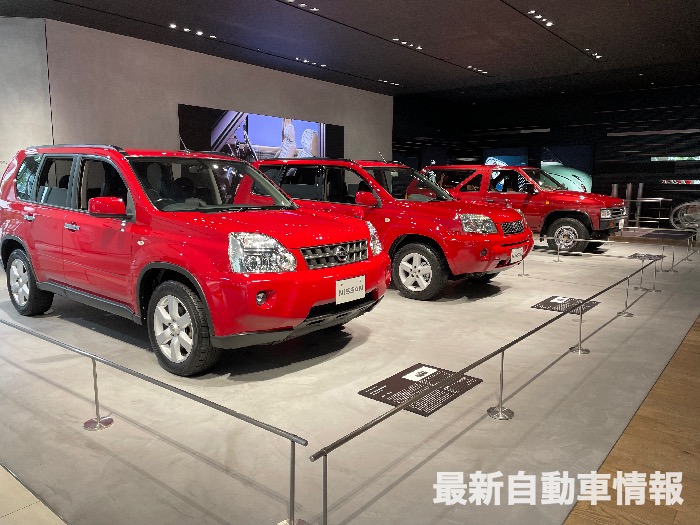
X-TRAIL
- It is a mid-size crossover SUV. Concept: “A comfortable and fun four-wheel drive vehicle for 2 million yen that is practical.”
- Features: Washable luggage space, off-road capability
- Best-selling in its class for four consecutive years
Second generation (T31 model) released in August 2007
- Improved driving performance and interior based on the first generation
- Increased body size
- Engines: 2.0L gasoline, 2.5L gasoline, 2.0L diesel
3rd generation (T32 model) released in December 2013
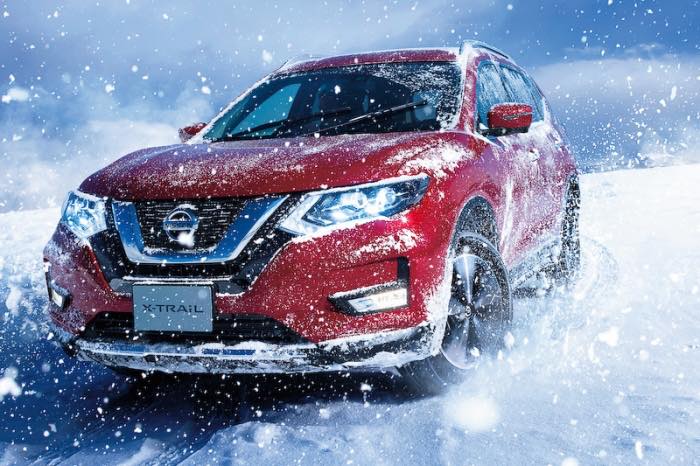
X-TRAIL
- Major changes to the exterior design
- In addition to the two-row, five-seater model, a three-row, seven-seater model has been added.
- Engine: 2.0L gasoline, hybrid
4th generation (T33 model) released in July 2022
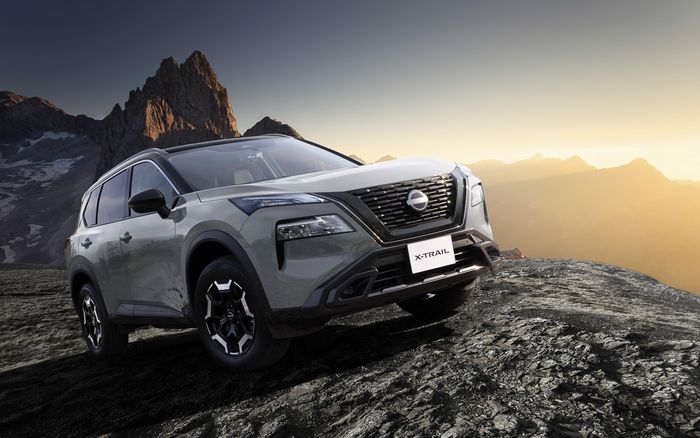
X-TRAIL
- Equipped with the new generation e-POWER
- Adopts e-4ORCE (electric drive four-wheel control technology)
- Equipped with the advanced driver assistance system “ProPilot”
July 2025 (planned)
- Minor changes
- Adopts new generation design “Digital V-Motion”
- 12.3-inch touchscreen display
- Nissan’s first car with built-in Google
others
- Sold overseas under the name “Rogue”
- Production will be handled by Nissan Motor Kyushu
A word from the editorial department
The full model change of the next-generation Nissan X-Trail, the T34 model, is not just a simple model change, but is expected to be an important step that symbolizes Nissan’s electrification strategy and advanced technology.
Production in the North American market (Rogue) is expected to begin in 2026, and specific information is beginning to emerge, including the release of teaser images hinting at its appearance. Based on past examples, the Japanese market is expected to see an introduction around 2027, but there are high expectations for the evolutionary details of the car.
The exterior will be reborn with a more advanced and imposing design, featuring a honeycomb grille, distinctive daytime running lights, triple LED headlights, single-character taillights, etc. The interior will also see significant improvements in functionality and connectivity, with digital meters, a large display with Google built-in, and a head-up display.
The core of the powertrain is the third-generation e-POWER, equipped with a newly developed 1.5L engine that improves highway fuel economy by up to 15%, and the newly introduced Mitsubishi Outlander-based PHEV. This is combined with the evolved electric 4WD e-4ORCE to provide a powerful, smooth ride that is also environmentally friendly.
In terms of safety, in addition to the latest “360° Safety Assist” and “ProPilot,” the company is also considering installing the “Next Generation ProPilot” that utilizes AI in the future, aiming to achieve the highest level of safety and comfort in its class.
The improved body rigidity achieved through the platform renewal enhances handling stability, ride comfort, quietness, and collision safety, raising the basic performance of the SUV.
Although prices are expected to rise, the key will be whether the new X-Trail can offer value that is commensurate with the price. In the crowded mid-size SUV market, what kind of individuality and appeal will the new X-Trail offer to capture the hearts of users?
The new X-Trail (T34 model) carries on the tradition of being a tough gear while moving towards the future with electrification and advanced technology. We can’t wait for its official announcement and arrival on the Japanese market. Let’s keep an eye out for further information to be released in the future.
Nissan News Release