



The all-new Nissan Leaf is expected to be released in Japan as early as October 2025. Rumor has it that the global EV pioneer will undergo a major transformation into a crossover, but what’s interesting is its size and the extent of its evolution. Here, we’ll delve into the appeal of the new Leaf by thoroughly comparing its predicted size with that of the current Leaf, as well as potential rivals like the Nissan Sakura mini-EV, the Tesla Model 3, and even the popular Toyota Prius hybrid.

Nissan New Leaf (Fully Redesigned) Size Summary (Prediction)
- New Leaf vs. current Leaf
- The new model will have a crossover SUV style and is expected to be taller.
- The overall length and width are likely to be the same as the current model or slightly wider.
- The adoption of the latest EV platform (CMF-EV) has extended the wheelbase, which is expected to significantly improve interior space, especially comfort in the rear seats.
- The luggage space will also be expanded, potentially improving usability.
- The lower center of gravity and optimized battery position are expected to improve driving performance and stability.
- New Leaf vs. Compact Car/EV
- It is significantly larger than the Sakura (light EV), but more compact than the Aria.
- Compared to the Prius (hybrid), the overall height is higher, but the overall length is expected to be at the same level, so it will likely remain easy to handle in urban areas.
- New Leaf vs Tesla Model 3
- It will be slightly more compact than the Model 3 and may be a size more suited to Japanese road conditions.
Features of the new Leaf
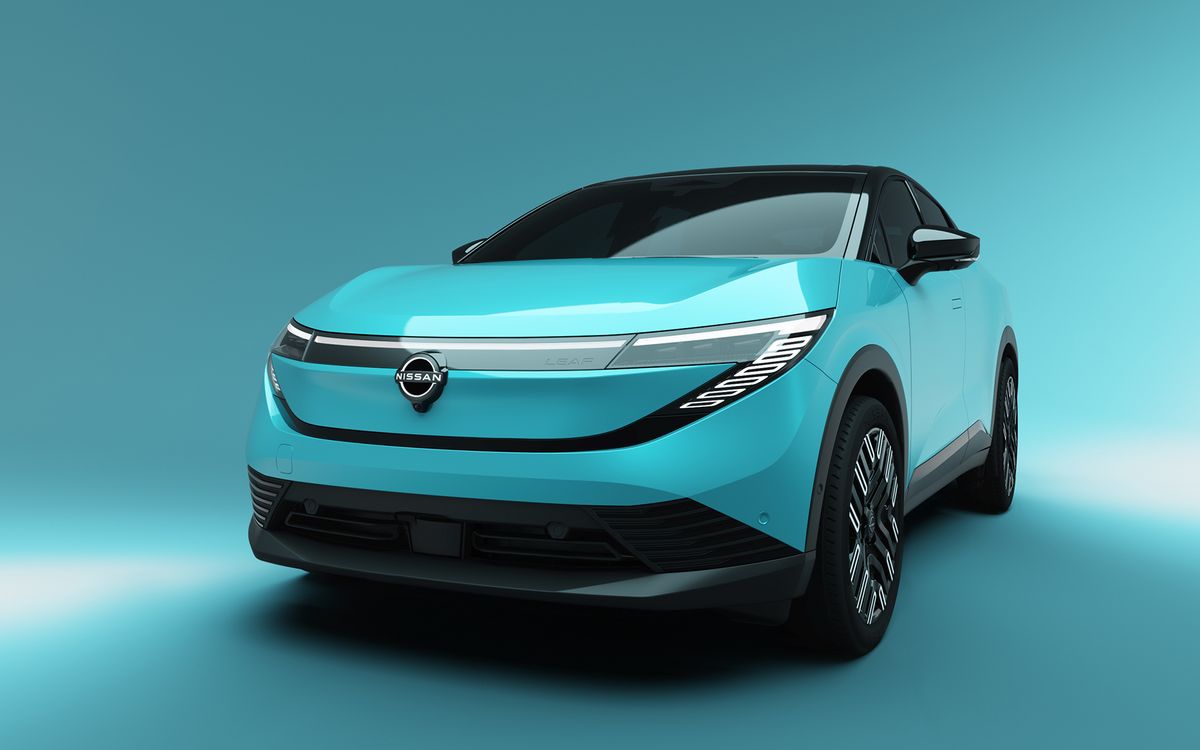
NISSAN NEW LEAF
- A bold change from the traditional hatchback to the trendy crossover style.
- It uses the latest EV platform, “CMF-EV,” shared with the Ariya.
- Advances in battery technology and improved efficiency have significantly increased the range (WLTC mode 66kWh battery: 500km, 91kWh battery: 650km).
- Improved driving performance thanks to a more powerful and smoother motor.
- Equipped with the evolved “ProPilot 2.0” and the latest connected services.
- A more spacious, high-quality interior space and user-friendly luggage space.
- It features a 12.3-inch dual display.
- Advanced and stylish interior and exterior incorporating Nissan’s latest design language.
The new Leaf is recommended for these people!
- Those who want to achieve both environmental performance and practicality at a high level
- People who are interested in the latest EV technology and driver assistance systems
- Those looking for an EV with ample interior space and luggage space that can be used by families or for weekend leisure activities
- Those who want both ease of driving in urban areas and peace of mind on long-distance drives
- Those who want to drive a crossover EV with an advanced and stylish design
New Leaf vs. Current Leaf: What will the size and specs be like? (Predictions)
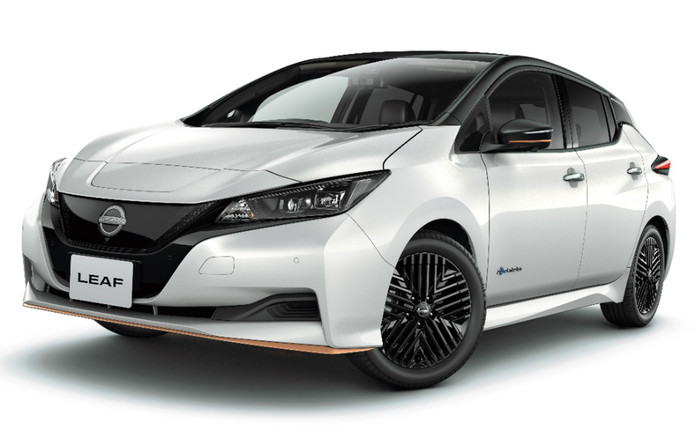
First, let’s compare the size of the current Leaf, which will serve as the base model, with that of the new Leaf, which is expected to undergo a full model change. The new Leaf is expected to be developed based on the latest EV-specific platform, “CMF-EV,” which is also used in the Ariya. This will significantly extend the wheelbase compared to the current model, and it is expected that the interior space, especially the legroom in the rear seats, will be significantly larger. The design will be changed from a hatchback to a crossover style, and while the overall height will be higher, the center of gravity will be lowered by efficiently placing the battery under the floor, which is expected to improve driving stability. The overall length and width will likely be the same as the current model, or slightly larger.
Basic spec comparison (estimated) Note: The figures below are all estimates by the editorial department and may differ from the actual figures announced.
| item | Current Leaf (60kWh) | New Leaf | Differences from the current model (estimated) |
|---|---|---|---|
| full length | 4,480mm | 4,360mm | -120mm |
| Overall width | 1,790mm | 1,810mm | +20mm |
| Overall height | 1,560mm | 1,550mm | -10mm |
| Wheelbase | 2,700mm | 2,690mm | -10mm |
| Motor maximum output | 160kW (218ps) | 160kW (218ps) | +0kW |
| Motor Max Torque | 340Nm (34.7kgm) | 350Nm | +10Nm |
| Battery capacity | 60kWh | 75.1kWh | +15.1kWh |
| Cruising range (WLTC) | 450km | Approximately 520km | +70km |
| Drive system | FWD | FWD | – |
| Tire size | 215/50R17 | 235/45R19 | (inch up) |
| Vehicle weight | 1,680 kg | 1,750 kg | +70kg |
| Luggage capacity | 435L | 420L | -15L |
| Crew capacity | 5 people | 5 people | – |
| Expected price range | From 4.8 million yen | From 5.2 million yen | +400,000 yen and up |
Differences in body size
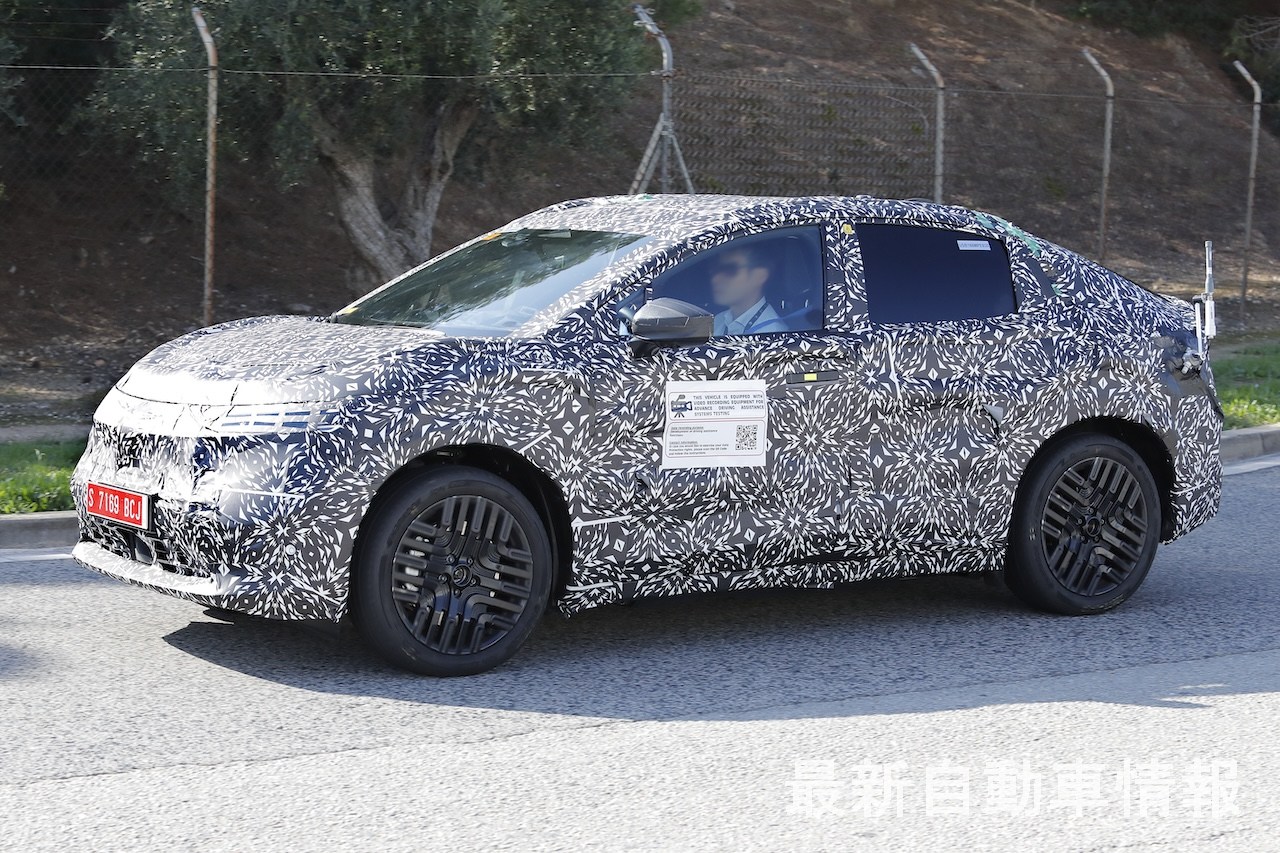
Nissan Leaf
The new Leaf is expected to be taller due to the change to a crossover style. On the other hand, the adoption of the CMF-EV platform will significantly extend the wheelbase and shorten the front and rear overhangs, giving it a relaxed and balanced proportion. (Here is an image comparing the silhouettes of the new Leaf and the current Leaf.)
Comparison of indoor space
The extension of the wheelbase is expected to contribute mainly to the expansion of legroom in the rear seats. The current model already had ample space, but the new model will be even more spacious, allowing five adults to ride comfortably. The flat floor is also expected to be retained.
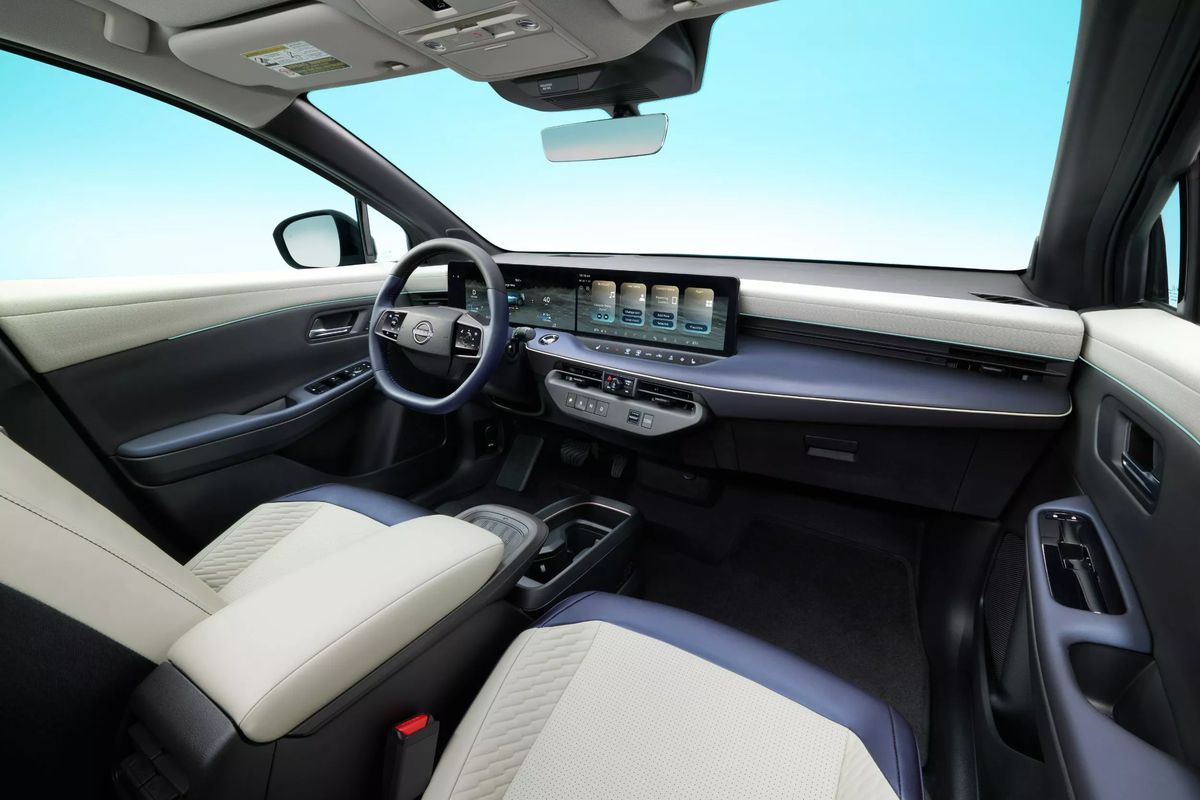
Cargo space comparison
The luggage space capacity remains almost unchanged due to the expansion of the body size and optimization of packaging. The shape of the opening and floor height have also been revised, and it is expected that the design will make it easier to load and unload luggage.
Range and performance
Thanks to advances in battery technology and improvements in energy efficiency, the WLTC driving range is expected to exceed 500km, exceeding the current model. The motor output will also be improved, providing a more powerful and responsive acceleration feel. The e-4ORCE electric drive all-wheel control technology featured in the Ariya is also expected to be available.
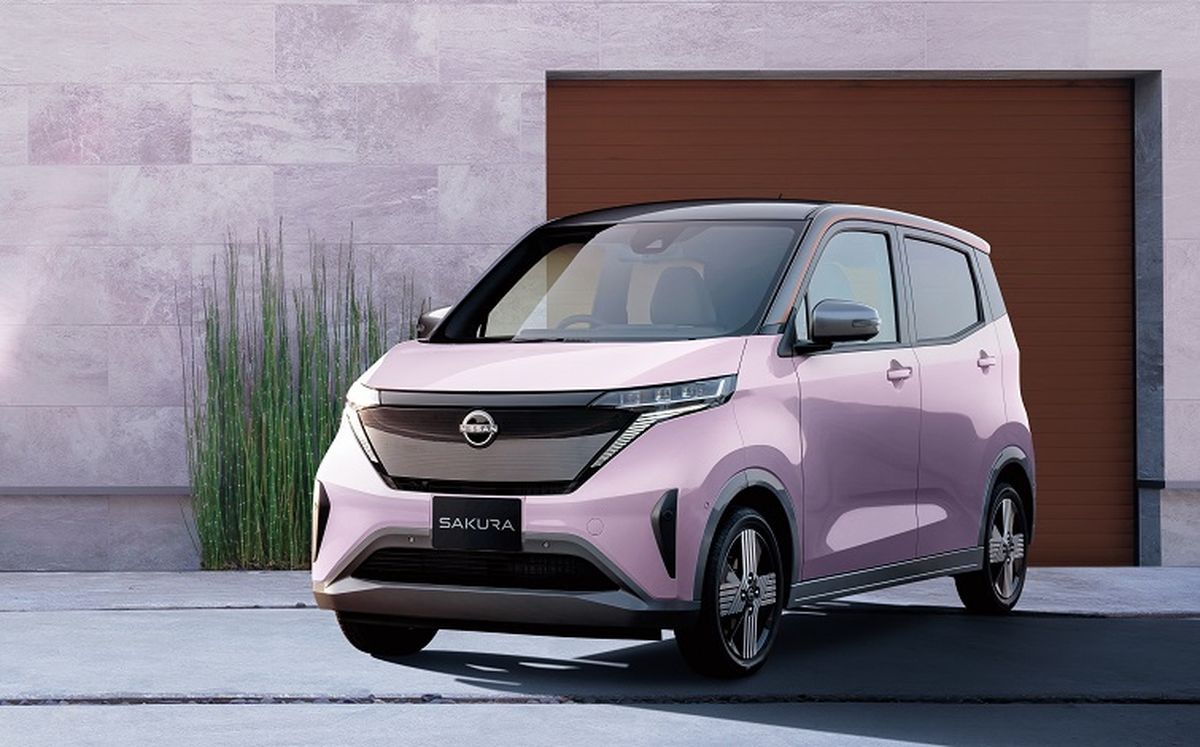
Size comparison between the new Leaf and Nissan Sakura (estimated)
SAKURA
Next, let’s compare the new Leaf with the Nissan Sakura, a light EV.
| Specifications | Nissan Sakura | New Leaf | Difference with Sakura (prediction) |
|---|---|---|---|
| full length | 3,395mm | 4,360mm | +965mm |
| Overall width | 1,475mm | 1,810mm | +335mm |
| Overall height | 1,655mm | 1,550mm | -105mm |
| Wheelbase | 2,495mm | 2,690mm | +195mm |
The Sakura is very compact as it complies with the kei car standard, but the new Leaf is significantly larger, approaching the size of a C-segment car. The class you should choose depends on your intended use and the number of passengers.
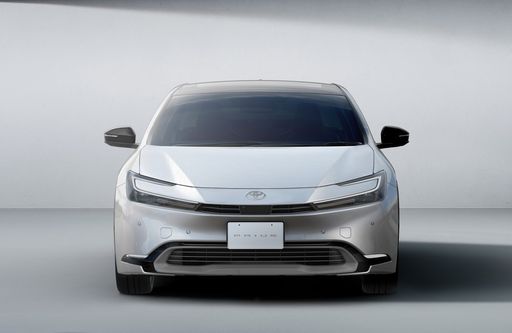
Size comparison between the new Leaf and Toyota Prius (estimated)
Prius
Let’s compare it with the popular hybrid car, the Prius.
| Specifications | Toyota Prius | New Leaf | Difference with Prius (estimated) |
|---|---|---|---|
| full length | 4,600mm | 4,360mm | -240mm |
| Overall width | 1,780mm | 1,810mm | +30mm |
| Overall height | 1,430mm | 1,550mm | +120mm |
| Wheelbase | 2,750mm | 2,690mm | -60mm |
The new Leaf is significantly shorter than the Prius, and is expected to be easier to handle. At the same time, it is wider and has a sufficient height for a crossover.
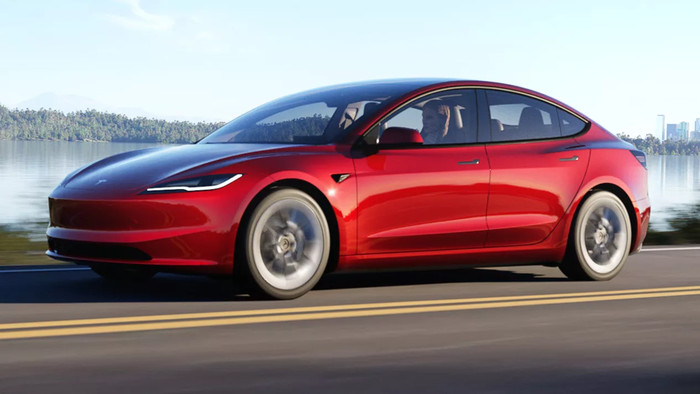
New Leaf vs Tesla Model 3: Popular EV Showdown! (Prediction)
Model 3
Finally, let’s compare it with the Tesla Model 3, a globally popular EV.
| Specifications | Tesla Model 3 | New Leaf | Difference with Model 3 (estimated) |
|---|---|---|---|
| full length | 4,720 mm | 4,360mm | -360mm |
| Overall width | 1,850 mm | 1,810mm | -40mm |
| Overall height | 1,441 mm | 1,550mm | +109mm |
| Wheelbase | 2,875 mm | 2,690mm | -185mm |
Compared to the Model 3, the new Leaf is more compact in every respect, and its size is more suited to Japan’s road conditions.
Who is the new Leaf recommended for? (Prediction)
The new Leaf inherits the high level of perfection that the previous Leaf possesses as an EV, while evolving into a crossover style is expected to improve design and space utility. The adoption of the CMF-EV platform promises advancements in all areas, including driving performance, range, interior space, and advanced technology. Specifically, it is recommended for the following people:
- For those who are environmentally conscious and looking for a practical EV: A range that can handle everything from everyday use to long-distance travel, and easy-to-use packaging.
- For those interested in the latest technology: the evolved driving assistance system “ProPilot” and connected functions.
- Family users: With expanded rear seat space and luggage space, it is suitable for use by families.
- For those with an active lifestyle: The crossover style is perfect for outdoor pursuits and other hobbies.
- For those who value design: The advanced and stylish exterior and interior incorporate the latest Nissan design.
The new Leaf combines EV technology cultivated over many years with the latest platform and trendy crossover style, making it the next-generation standard EV and an attractive choice that will meet the expectations of many users.
A word from the editorial department
The new Leaf, which is expected to undergo a full model change, is not just a simple model change, but is also aiming to offer new value by taking a major turn towards a crossover EV. The expected specs and size suggest that it has the potential to evolve into a well-balanced EV that can combine everyday usability with weekend leisure activities. We can’t wait for the official announcement.