
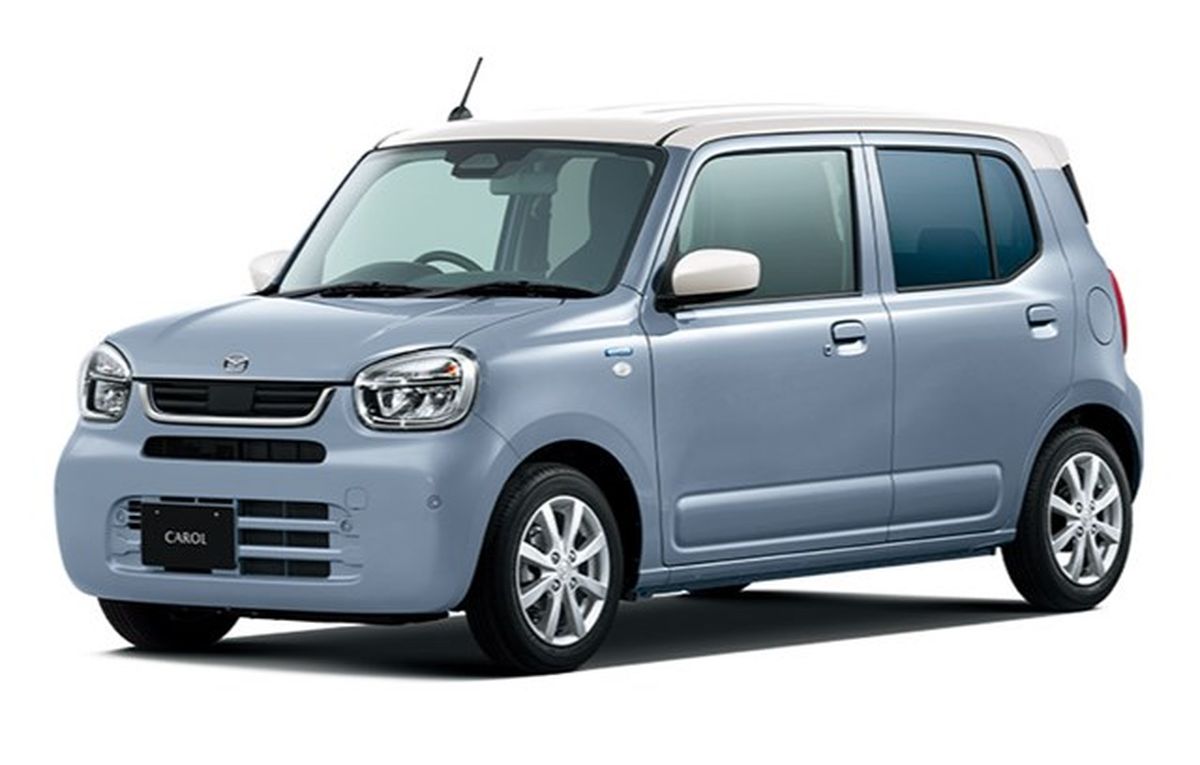
On July 24, 2025, Mazda announced a major facelift for its entry-level minicar, the Carol. The price starts at 1,222,100 yen, and the car boasts significant improvements in fuel economy and safety features.
The Carol is positioned as an OEM model for the Suzuki Alto, and is a core part of Mazda’s light vehicle lineup. This major minor change has seen some fascinating advancements, including improved aerodynamic performance through the adoption of a new design and the addition of the latest safety equipment, the Dual Sensor Brake Support II, as standard equipment.
In this article, we will thoroughly provide all the information necessary for those considering purchasing the new Carol, from detailed changes to price, fuel efficiency, and comparisons with competing models.
Main changes in the 2025 major minor change
Mazda Carol
Renewed exterior design
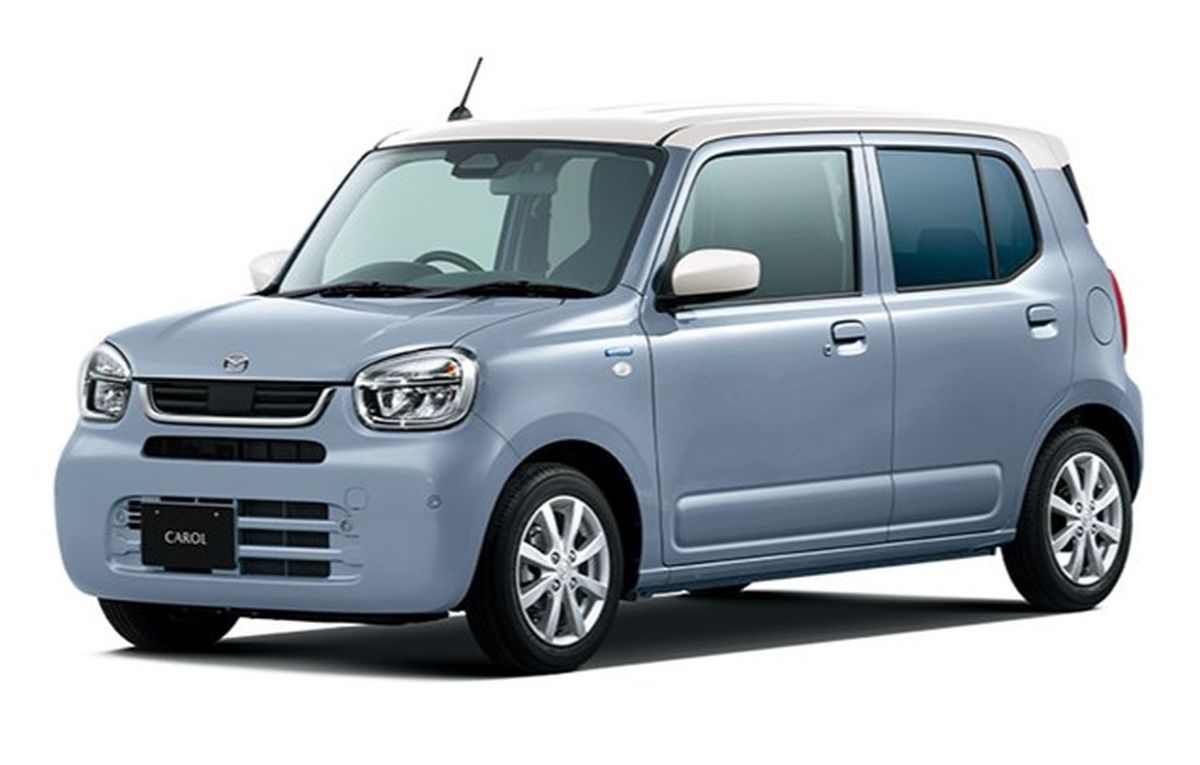
The most notable change in this major minor change is the adoption of a new exterior design . By placing a grille above the conventional air intake, it gives a sportier and more masculine impression.
Improved aerodynamic performance: The addition of new front and rear bumpers and a roof end spoiler has significantly improved aerodynamic performance, contributing to improved fuel economy.
New body color added: A new “Foggy Blue Pearl Metallic Two-Tone Color (Beige Roof)” has been added to the body color palette, providing even more stylish options.
Significantly improved safety equipment
Dual Sensor Brake Support II: The previous “Dual Camera Brake Support” has evolved into the latest “Dual Sensor Brake Support II”, providing more accurate safety support.
Standard features include:
- Low-speed brake support (forward/reverse)
- Parking sensors (front and rear)
- Departure notification function (preceding vehicle/signal change)
- Lane departure prevention function
- Sign recognition (stop, no entry, red light)
Price and grade structure
Price list for the new Carol
| grade | Drive system | Price (tax included) |
|---|---|---|
| C (Enecharge) | FF | 1,222,100 yen |
| C (Enecharge) | 4WD | 1,353,000 yen |
| G (Enecharge) | FF | 1,354,100 yen |
| G (Enecharge) | 4WD | 1,485,000 yen |
| HYBRID C (mild hybrid) | FF | 1,326,600 yen |
| HYBRID C (mild hybrid) | 4WD | 1,457,500 yen |
| HYBRID G (mild hybrid) | FF | 1,494,900 yen |
| HYBRID G (mild hybrid) | 4WD | 1,614,800 yen |
Grade structure changes
The range has been expanded from the previous three grades to four, and all grades are now available with 4WD. Of particular note is the new addition of 4WD to the top hybrid grade.
Engine/Powertrain
Engine details
Enecharge model
- In-line 3-cylinder 660cc “R06A” engine
- Maximum output: 46ps
- Maximum torque: 5.6kgm
- Transmission: CVT
Mild hybrid model
- In-line 3-cylinder 660cc “R06D” engine
- Maximum output: 49ps
- Maximum torque: 5.9 kgm
- Motor output: 2.6ps/4.1kgm
- Transmission: CVT
Technical features
Evolution of the R06D engine The R06D engine installed in the mild hybrid model incorporates the following advanced technologies:
- Dual Injection System
- Cooled EGR
- Rapid Combustion Technology
- High compression ratio
These technologies have enabled improvements in thermal efficiency over a wide range.
Improved fuel efficiency
WLTC mode fuel economy
- Ene-charge model : 25.8km/L (before improvement: 25.2km/L)
- Mild hybrid model : 28.2km/L (before improvement: 27.7km/L)
Factors behind improved fuel economy
- Improved aerodynamic performance : New bumper shape and roof spoiler reduce air resistance
- Improved engine efficiency : Optimized combustion efficiency through the latest engine technology
- Lightweighting : Optimizing vehicle weight by reviewing materials
Comparison with competing models
Main competitors
- Suzuki Alto (base vehicle)
- Daihatsu Mira e:S
- Nissan Dayz
- Mitsubishi eK Wagon
Carol’s Advantage
fuel efficiency
- Mild hybrid model achieves 28.2km/L
- Top-class fuel economy for minicars
safety equipment
- The latest “Dual Sensor Brake Support II” is standard equipment on all vehicles.
- Comprehensive parking assistance functions
Price competitiveness
- Entry model starts from 1.22 million yen
- A wide range of 4WD models are also available
Indoor space and convenience
Interior dimensions
Expanding the space
- Indoor width: +25mm
- Indoor height: +45mm
- Head clearance: Front seat +39mm, rear seat +27mm
- Shoulder room: +21mm in front seats, +19mm in rear seats
Storage and loading capacity
Plenty of storage space
- Drink holders (driver’s seat and passenger seat)
- Center pocket
- Floor console tray
- Rear seat drink holders (2)
- Shopping Hook
Loadspace
- Ground clearance of luggage compartment opening: 660mm (-30mm compared to previous model)
- Luggage compartment opening height: 710mm (20mm higher than previous model)
- Luggage floor length: 425mm (normal), 1,225mm (with rear seats folded)
Interior and equipment
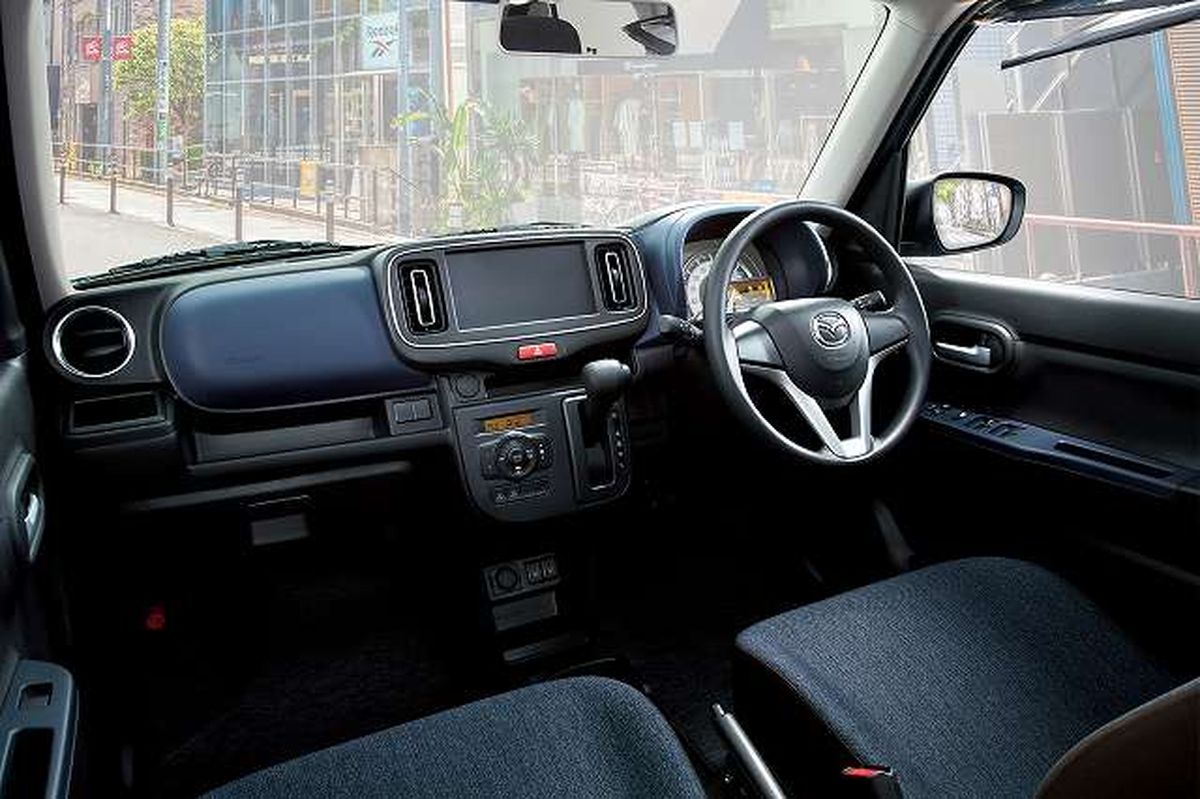
Mazda Carol
Seats and interior materials
Newly developed seat coverings are made with a newly developed fabric that resembles denim, achieving a bias pattern reminiscent of twill weave and a warp thread expression with varying shades. The use of brown on the back enhances the design.
Comfortable equipment
Standard equipment
- CVT (all vehicles)
- electric power steering
- Air conditioning
- Power windows
High-grade equipment
- Head-up display
- Omnidirectional monitor
- Curtain airbags
Safety performance
Advanced safety technology
Dual Sensor Brake Support III
- High-precision detection using a monocular camera and laser radar
- Pedestrian and cyclist detection
- Available day or night
Other safety features
- False start prevention function
- Lane Departure Warning
- High beam assist function
- Preceding vehicle departure notification function
Collision safety performance
Airbag system
- Driver and passenger airbags (standard equipment)
- Side airbags (optional)
- Curtain airbags (high grade)
How to choose when purchasing and recommended grades
Key points when selecting an engine
Those who are recommended for the Ene-Charge model
- Want to reduce initial costs
- Low annual mileage (approximately 8,000km or less)
- Looking for simple functionality
Those who are recommended for the mild hybrid model
- Emphasize fuel efficiency
- I want to experience the latest technology
- High annual mileage (approximately 8,000km or more)
Drive system selection
FF model
- Emphasis on fuel efficiency
- Want to reduce initial costs
- Mainly used on flat ground
4WD model
- Frequently driving on snowy or rough roads
- Emphasis on security
- Use in mountainous areas
Maintenance and running costs
Estimated annual maintenance costs
Tax matters
- Light vehicle tax: 10,800 yen/year
- Automobile weight tax: 6,600 yen/year (eco-car tax reduction applied)
- Compulsory automobile liability insurance: Approximately 12,000 yen/year
Fuel costs (when driving 10,000 km per year)
- Ene-charge model: Approximately 58,000 yen
- Mild hybrid model: Approximately 53,000 yen
Maintenance costs
- Regular inspection: Approximately 15,000 yen/year
- Consumable replacement: Approximately 20,000 yen/year
Future outlook
Electrification initiatives
The Suzuki Carol, based on the Suzuki Alto, is also expected to see further advancements in electrification technology in the future, with expectations rising to include the development of more advanced electrification technology rather than the current mild hybrid system.
Evolution of safety technology
As autonomous driving technology advances, more advanced driver assistance systems are expected to be installed. It is expected that safety technologies will be further advanced than the current “Dual Sensor Brake Support II.”
summary
The new Carol, which underwent a major minor change in 2025, has the following major appeal:
Main improvements
- Improved fuel economy : Mild hybrid model achieves 28.2km/L
- Enhanced safety features : The latest “Dual Sensor Brake Support II” is standard on all vehicles
- Design evolution : New exterior design creates a bold impression
- Expanded grade structure : Abundant choices with four grades
- All grades are 4WD compatible : Meeting diverse needs
Recommended purchase points
- Cost performance : Attractive pricing starting from 1.22 million yen
- Fuel economy : Top-class fuel economy among minicars
- Safety performance : Comprehensive advanced safety equipment comes as standard
- Practicality : Compact yet user-friendly space design
In the minicar market, the new Carol combines practicality and economy, making it an attractive choice that can be recommended to a wide range of people as a first or second car.