


This time, we’ll be researching and ranking the most fuel-efficient passenger cars on sale in Japan as of 2025. As gasoline prices continue to rise, fuel efficiency is becoming an increasingly important factor when choosing a car. Coupled with growing environmental awareness, fuel-efficient, economical cars are attractive to many people.
With gasoline prices continuing to rise, fuel economy is one of the most important factors when choosing a car. In this article, we’ll introduce the top 20 most fuel-efficient cars on the market as of 2025, ranked based on actual fuel economy data and WLTC test cycle fuel economy. From hybrids to minicars, find the fuel-efficient car that best suits your needs.
Basic knowledge of fuel economy: Difference between WLTC mode and actual fuel economy
What is WLTC mode fuel economy?
WLTC mode fuel economy is an international fuel economy measurement method that was introduced in October 2018. It consists of three modes – “urban,” “suburban,” and “highway” – with an average distribution of driving, and is measured under conditions closer to actual driving than the conventional JC08 mode fuel economy.
Difference from actual fuel consumption
Actual fuel economy refers to fuel economy under actual driving conditions. It is common for actual fuel economy to be 20-30% lower than the WLTC mode fuel economy due to factors such as air conditioning use, traffic congestion, and driving style.
Differences between WLTC mode and JC08 mode fuel economy
Test vehicle weight
In the JC08 mode, a uniform 110 kg is added to the vehicle weight to account for the driver and other factors. In the WLTC mode, in addition to the 100 kg assumed for the driver, a portion of the weight that can be carried other than the driver is added. Calculations are based on 15% for passenger cars and 28% for small freight vehicles. The weight of passengers and cargo other than the driver is taken into account.
Increased percentage of time spent running with cold starts
Fuel efficiency varies greatly depending on whether the engine is cold or warm. In the JC08 mode, the ratio was 25% for cold starts and 75% for warm starts, but in the WLTC mode, the measurement was changed to 100% cold starts. This is stricter and closer to realistic fuel efficiency.
Reduced idling time ratio
Idling time has been reduced from 29.7% in the JC08 mode to 15.4% in the WLTC mode, taking into account the increasing popularity of hybrid vehicles and idling stop devices.
WLTC mode measurement in 4 types
In addition to WLTC mode fuel economy, it is now mandatory to display fuel economy for each driving environment, such as “urban,” “suburban,” and “highway,” in catalogs, etc.
- “WLTC” A driving mode consisting of average usage time allocation for each mode
- “WLTC-Low” urban mode
- “WLTC-Medium” suburban road mode
- “WLTC-High” highway mode
Change average speed and maximum speed
The average speed increases from 24.41 km/h in JC08 mode to 36.57 km/h in WLTC mode, and the top speed increases from 81.6 km/h in JC08 mode to 97.7 km/h in WLTC mode.
▼For more details, please refer to this article.
→ Ministry of Land, Infrastructure, Transport and Tourism, Ministry of Economy, Trade and Industry, WLTC mode fuel economy, an internationally unified test method, will be made mandatory in October 2018.
The benefits of choosing fuel-efficient domestic cars
Choosing a fuel-efficient vehicle is not only economically beneficial, but also environmentally friendly.
- Save on fuel costs: A fuel-efficient car is good for your budget as it saves you money on gas.
- Reduced environmental impact: Low carbon dioxide emissions contribute to preventing global warming.
- Long range: Reduces the number of times you need to refuel, making long-distance driving more comfortable.
Fuel efficiency ranking criteria
This ranking is based on the “WLTC mode fuel economy” established by the Ministry of Land, Infrastructure, Transport and Tourism. WLTC mode fuel economy is measured under conditions that are closer to real-world driving, such as in urban areas, suburban areas, and on highways.
Why adopt the WLTC mode?
Many people may be wondering what the difference is between this and the “JC08 mode fuel economy” that has been used until now. In addition to the “WLTC mode” fuel economy, an internationally unified fuel economy test method that will be mandatory for new vehicles from October 2018, it will also be mandatory to display fuel economy figures for each driving environment, such as “urban,” “suburban,” and “highway,” in catalogs, etc.
While automobile fuel economy has improved in recent years, it has been pointed out that actual fuel economy is up to 40% lower than that shown in catalogs, etc. This discrepancy is caused by differences in driving environment and driving methods, etc.
Therefore, in order to enable car users to understand fuel economy closer to actual driving conditions depending on their individual usage conditions, it will be made mandatory to display fuel economy for each driving environment, such as “urban,” “suburban,” and “highway,” in catalogs, etc., in addition to the WLTC mode fuel economy that will be mandatory for new cars from October 2018. This will enable customers to know which cars have good energy-saving performance according to their driving environment.
[2025 Latest] Top 20 Fuel-Efficient Cars
Based on actual fuel consumption data and the latest WLTC mode fuel consumption, we will introduce the top 20 most fuel-efficient cars currently on sale in 2025.
Fuel-efficient car rankings
| Ranking | Manufacturer | Car name | grade | WLTC mode fuel economy | Actual fuel consumption estimate | Body Type |
|---|---|---|---|---|---|---|
| 1st place | Toyota | Yaris | Hybrid X 2WD | 36.0km/L | 31.4km/L | compact |
| 2nd place | Toyota | Aqua | X 2WD | 34.6km/L | 26.0km/L | compact |
| 3rd place | Toyota | Prius | U 2WD | 32.6km/L | 24.5km/L | sedan |
| 4th place | Toyota | Yaris Cross | Hybrid X 2WD | 30.8km/L | 23.8km/L | SUV |
| 5th place | Toyota | Corolla | Hybrid G 2WD | 30.2km/L | 23.6km/L | sedan |
| 5th place | Honda | fit | e:HEV Basic 2WD | 30.2km/L | 23.5km/L | compact |
| 7th place | Toyota | Corolla Sport | Hybrid G”X” 2WD | 30.0km/L | 23.2km/L | hatchback |
| 8th place | Toyota | Corolla Touring | Hybrid X 2WD | 29.5km/L | 22.8km/L | wagon |
| 9th place | Toyota | Sienta | Hybrid X 2WD | 28.8km/L | 22.5km/L | minivan |
| 10th place | Nissan | Notes | X 2WD | 28.4km/L | 22.2km/L | compact |
| 11th place | Suzuki | Alto | Hybrid X 2WD | 27.7km/L | 25.8km/L | Light vehicle |
| 12th place | Toyota | Rise | Hybrid X 2WD | 28.0km/L | 24.1km/L | SUV |
| 13th place | Daihatsu | Rocky | Hybrid X 2WD | 28.0km/L | 27.0km/L | SUV |
| 14th place | Lexus | LBX | AWD | 27.7km/L | 21.5km/L | SUV |
| 15th place | Suzuki | Alto Lapin | 2WD all cars | 26.2km/L | 24.1km/L | Light vehicle |
| 16th place | Lexus | UX | UX250h 2WD | 26.3km/L | 20.8km/L | SUV |
| 17th place | Honda | Vezel | e:HEV X 2WD | 26.0km/L | 20.5km/L | SUV |
| 18th place | Suzuki | Wagon R | Hybrid FX-S 2WD | 25.2km/L | 23.8km/L | Light vehicle |
| 19th place | Honda | Freed | e:HEV G 2WD | 25.6km/L | 20.2km/L | minivan |
| 20th place | Daihatsu | Mira e:s | 2WD all cars | 25.0km/L | 22.5km/L | Light vehicle |
Ranking Analysis
- Toyota’s strength : Toyota accounts for 10 of the top 20 models
- The advantages of hybrids : Many of the top models are hybrids
- Light vehicles perform well : High fuel efficiency thanks to light weight
- Advances in SUVs : Even SUVs, which were previously considered to have poor fuel economy, now achieve high fuel economy
Fuel efficiency ranking by body type
Light Car Division TOP 5
| Ranking | Manufacturer | Car name | WLTC mode fuel economy | Features |
|---|---|---|---|---|
| 1st place | Suzuki | Alto | 27.7km/L | Mild hybrid |
| 2nd place | Suzuki | Alto Lapin | 26.2km/L | Stylish design popular with women |
| 3rd place | Suzuki | Wagon R | 25.2km/L | Combining practicality and design |
| 4th place | Suzuki | Spacia | 25.1km/L | A representative super height wagon |
| 5th place | Daihatsu | Mira e:s | 25.0km/L | Achieving high fuel efficiency at a low price |
Alto/Carol
Coming in at number one in the ranking of light vehicles with the best fuel economy is the Alto. With a fuel economy of 25.0km/L, it’s one of the best for a light vehicle, while also keeping the base price low, making it a truly eco-friendly car. It’s equipped with a mild hybrid system, which uses deceleration energy to generate electricity to power the motor during acceleration and assist the engine. The second-placed Carol is an OEM version of the Alto.
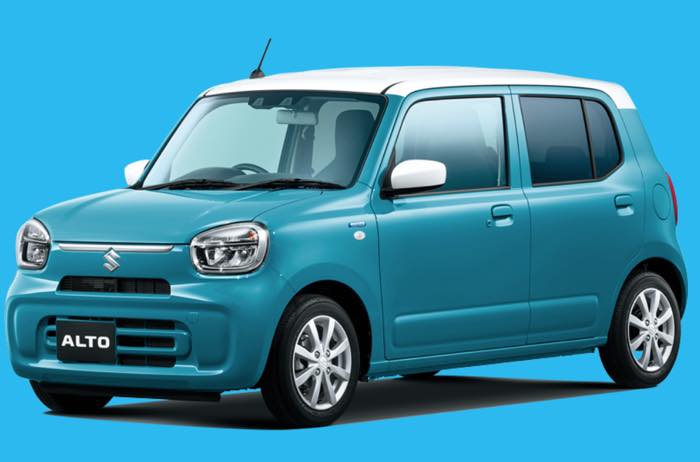
Alto
Compact Car Category Top 5
| Ranking | Manufacturer | Car name | WLTC mode fuel economy | Features |
|---|---|---|---|---|
| 1st place | Toyota | Yaris | 36.0km/L | Best fuel economy of all models |
| 2nd place | Toyota | Aqua | 34.6km/L | A representative hybrid-only vehicle |
| 3rd place | Honda | fit | 30.2km/L | Equipped with e:HEV system |
| 4th place | Nissan | Notes | 28.4km/L | The e-POWER system is a distinctive feature |
| 5th place | Suzuki | Swift | 25.4km/L | Achieving both driving pleasure and fuel economy |
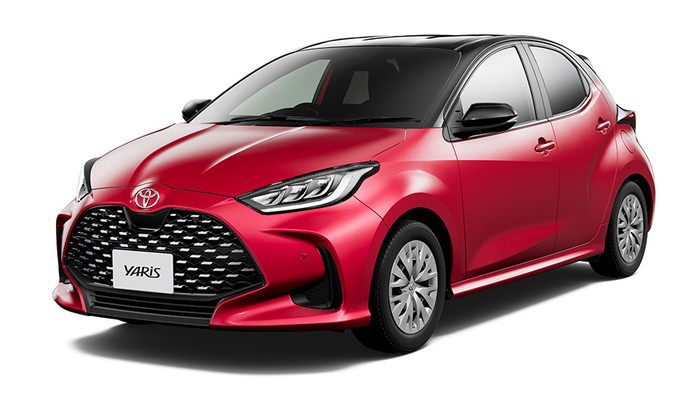
Toyota Yaris
Toyota Aqua
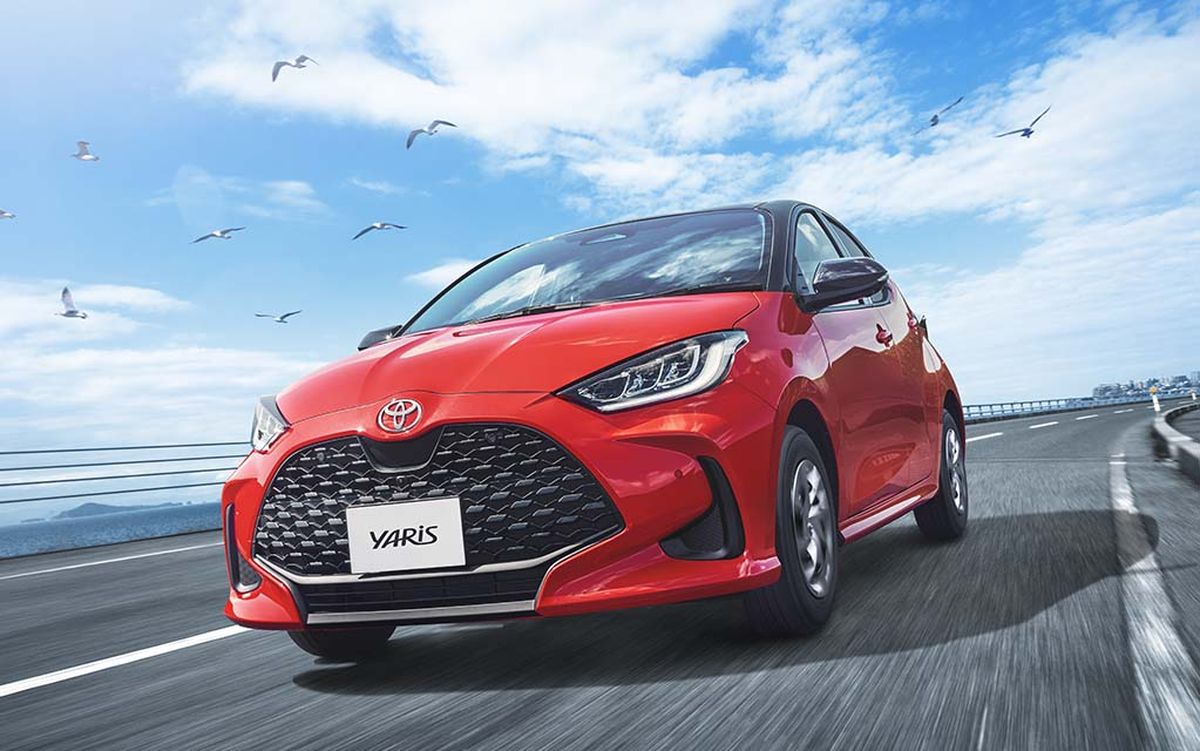
Coming in at number one in the ranking of fuel-efficient cars is the Yaris. This popular compact car boasts top-level fuel economy for a hybrid vehicle, at 36.0km/L, while also offering a nimble ride. The wide range of body colors and dynamic styling are also part of the appeal of the Yaris. Another recommended feature of the Yaris is that it comes standard with an advanced preventative safety package on most grades, helping to keep you safe on highways and in parking lots.
SUV category TOP5
| Ranking | Manufacturer | Car name | WLTC mode fuel economy | Features |
|---|---|---|---|---|
| 1st place | Toyota | Yaris Cross | 30.8km/L | The fuel-efficient compact SUV |
| 2nd place | Toyota | Rise | 28.0km/L | Joint development with Daihatsu |
| 2nd place | Daihatsu | Rocky | 28.0km/L | Sister car of the Raize |
| 4th place | Lexus | LBX | 27.7km/L | Lexus’ first compact SUV |
| 5th place | Lexus | UX | 26.3km/L | Premium compact SUV |
Minivan category TOP 5
| Ranking | Manufacturer | Car name | WLTC mode fuel economy | Features |
|---|---|---|---|---|
| 1st place | Toyota | Sienta | 28.8km/L | A classic compact minivan |
| 2nd place | Honda | Freed | 25.6km/L | High fuel economy despite three rows of seats |
| 3rd place | Toyota | Noah | 23.4km/L | Equipped with the latest hybrid system |
| 4th place | Toyota | Voxy | 23.0km/L | Noah’s sister car |
| 5th place | Nissan | Serena | 20.6km/L | Adopts e-POWER system |
Sedan category TOP 5
| Ranking | Manufacturer | Car name | WLTC mode fuel economy | Features |
|---|---|---|---|---|
| 1st place | Toyota | Prius | 32.6km/L | Synonymous with hybrid cars |
| 2nd place | Toyota | Corolla | 30.2km/L | The world’s best-selling model |
| 3rd place | Toyota | Corolla Axio | 27.8km/L | A classic compact sedan |
| 4th place | Honda | Accord | 23.8km/L | High fuel economy despite being a high-end sedan |
| 5th place | Lexus | ES | 22.3km/L | Premium Sedan |
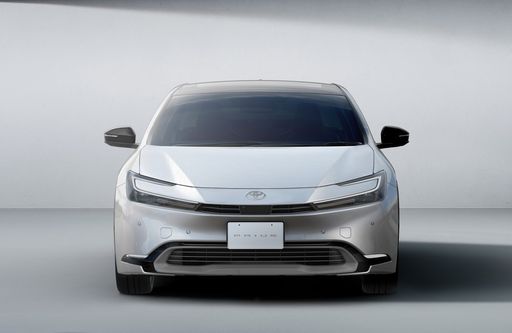
Toyota Prius
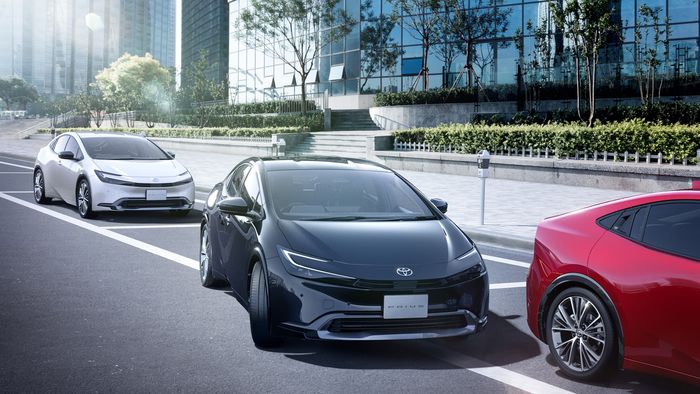
Prius
The Prius, ranked third in Toyota’s fuel-efficient car rankings, boasts a fuel efficiency of 32.6km/L. This low fuel consumption is achieved through a variety of innovations. The Prius is equipped with numerous features to improve fuel efficiency, including an efficient engine, a design that reduces air resistance, and selectable driving modes. In addition to its low fuel consumption, the car also offers a comfortable ride. Its lightweight body, low center of gravity, and reduced shock during driving all contribute to increased stability and ease of driving.
How to choose a fuel-efficient car
1. Consider the environment
City-center use
- Hybrid cars are the most effective
- The motor assists when stopping and starting at traffic lights
- Recommended vehicles: Yaris, Aqua, Prius
Mainly highway use
- Even with gasoline vehicles, there may be little difference in fuel economy.
- Diesel cars are also an option
- Recommended vehicles: Corolla Touring, Mazda CX-30
Using both
- Hybrid cars are all-purpose
- Recommended car models: Fit, Note
2. Balance between body size and purpose
Living alone/Couple
- Light cars and compact cars
- Recommended car models: Alto, Yaris
Family
- Minivans and SUVs
- Recommended vehicles: Sienta, Yaris Cross
3. Balance between price and fuel efficiency
Emphasis on initial cost
- Lightweight gasoline-powered vehicles
- Daihatsu Mira e:S, Suzuki Alto
Emphasis on long-term costs
- Hybrid car
- Toyota Yaris, Aqua
Explanation of fuel efficiency improvement technologies
Hybrid system
Toyota Hybrid System (THS)
- Optimal control of engine and motor
- Representative models: Prius, Yaris, Aqua
Honda e:HEV
- Motor-based driving system
- Representative models: Fit, Vezel
Nissan e-POWER
- The engine is used only for generating electricity, and the drive is 100% motorized
- Representative models: Note, Serena
mild hybrid
structure
- A small motor assists the engine
- Equipped with ISG (generator with motor function)
- Representative models: Suzuki Alto, Wagon R
Other fuel efficiency improvement technologies
CVT (Continuously Variable Transmission)
- Always maintains optimum engine speed
- Greatly contributes to improved fuel efficiency
Idling stop
- Automatically shuts off the engine when the vehicle is stopped
- Reduce fuel consumption
Lightweight Technology
- Use of high-tensile steel plates
- Use of resin parts
Improved aerodynamic performance
- Improved Cd value (air resistance coefficient)
- Installing the under cover
Fuel-efficient driving techniques
The basics of eco-driving
- Slow starting and acceleration
- Step on the accelerator slowly
- Don’t increase engine speed too much
- Driving at a constant speed
- Using Cruise Control
- Avoid sudden acceleration and deceleration
- Early braking
- Utilizing engine braking
- Regenerative braking is effective in hybrid vehicles
Maintenance points
Regular inspection
- Engine oil change
- Air filter cleaning and replacement
- Spark plug replacement
Tire maintenance
- Maintaining proper tire pressure
- Choosing eco-friendly tires
Vehicle weight reduction
- Removal of unnecessary baggage
- Fill up with fuel only as needed
Summary of choosing a fuel-efficient car
Recommended car models by purpose
Anyway, fuel efficiency is the priority
- 1st place: Toyota Yaris (36.0km/L)
- 2nd place: Toyota Aqua (34.6km/L)
Cost-effectiveness
- 1st place: Suzuki Alto
- 2nd place: Daihatsu Mira e:S
Family-friendly
- 1. Toyota Sienta (minivan)
- 2nd place: Toyota Yaris Cross (SUV)
Luxury-oriented
- 1st place: Lexus LBX (SUV)
- 2nd place: Lexus UX (SUV)
The pros and cons of fuel-efficient cars
merit
- Significant reduction in fuel costs
- Environmental Considerations
- tax incentives
- Extended range
Disadvantages
- The vehicle price is high
- High maintenance costs
- Battery replacement cost
Five types of taxes on cars: Is it more economical to have a good fuel economy?
Currently, there are five main types of taxes levied on cars . The tax system underwent major revisions in 2019, with the “Automobile Acquisition Tax” being abolished and replaced by an “Environmental Performance Tax.”
- Automobile tax / Light vehicle tax (once a year)
- Environmental performance tax (at the time of vehicle purchase)
- Automobile weight tax (vehicle inspection)
- Consumption tax (vehicle inspection, vehicle, fuel, maintenance)
- Gasoline tax/diesel transaction tax (refueling)
Among these, the “gasoline tax,” “environmental performance tax,” and “automobile weight tax” are tax benefits that are given to cars with good fuel economy. The “environmental performance tax” and “automobile weight tax” in particular offer significant benefits.
car weight tax
Standard car: When purchasing a new car (3 years) Automobile weight tax
When purchasing a new car, the first year is three years.
Eco-car tax reduction (automobile weight tax) for standard automobiles
For vehicles that were exempt from the eco-car tax reduction on automobile weight tax when newly registered between May 1, 2021 and April 30, 2023, the exemption will also be applied at the time of the first renewal inspection. When conducting renewal inspections or registering new used cars, the standard tax rate will be applied to cars that meet the current requirements for the eco-car tax reduction.
| Vehicle weight | Vehicles eligible for eco-car tax reductions , such as electric vehicles and fuel cell vehicles |
Vehicles eligible for the 25% eco-car tax reduction include gasoline and hybrid vehicles. |
Vehicles eligible for a 50% eco-car tax reduction: Gasoline and hybrid vehicles |
No eco-car tax reduction |
|---|---|---|---|---|
| Less than 500kg | duty free | 5,600 yen | 3,700 yen | 12,300 yen |
| 1,000kg or less | duty free | 11,200 yen | 7,500 yen | 24,600 yen |
| 1,500kg or less | duty free | 16,800 yen | 11,200 yen | 36,900 yen |
| 2,000kg or less | duty free | 22,500 yen | 15,000 yen | 49,200 yen |
| 2.500kg or less | duty free | 28,100 yen | 18,700 yen | 61,500 yen |
| 3,000kg or less | duty free | 33,700 yen | 22,500 yen | 73,800 yen |
Environmental performance
From October 1, 2019, automobile acquisition tax will be abolished and an environmental performance tax will be introduced. Hybrid cars will be exempt, but if you purchase a gasoline-powered car, you can expect to incur a fee.
Environmental performance
| Fuel efficiency, etc. | Registered vehicle | Light vehicle |
|---|---|---|
| Electric vehicles, etc. | Tax exemption | Tax exemption |
| ★★★★ and meets 2020 fuel economy standards + 30% |
Tax exemption | Tax exemption |
| ★★★★ and meets 2020 fuel economy standards + 20% |
Tax exemption | Tax exemption |
| ★★★★ and meets 2020 fuel economy standards + 10% |
1.0% | Tax exemption |
| ★★★★ and meets 2020 fuel economy standards |
2.0% | 1.0% |
| ★★★★ and meets 2015 fuel economy standards + 10% |
3.0% | 2.0% |
| Other than the above | 3.0% | 2.0% |
▼For more details, please refer to this article.
→ [2023] List of car tax types, automobile tax and environmental performance tax rates
*Based on the latest automobile information
Hybrid system types
Parallel system (mild hybrid)
The engine is always running, and the motor is used to assist. Generally, the motor output is low, and a small battery is used. The advantage is that fuel efficiency is improved without increasing the unit price too much. It is often used in light vehicles.
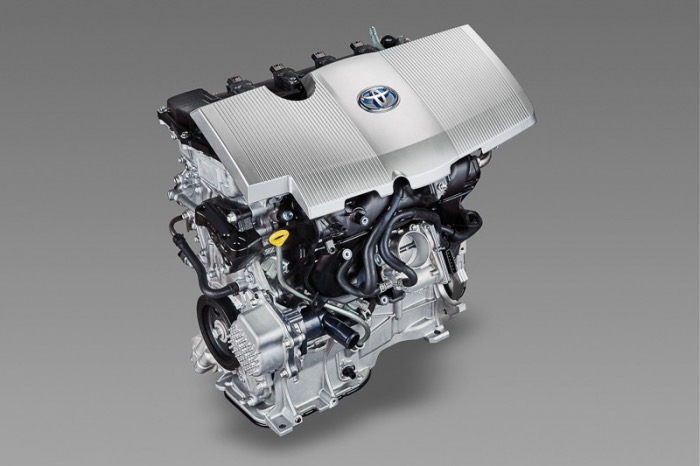
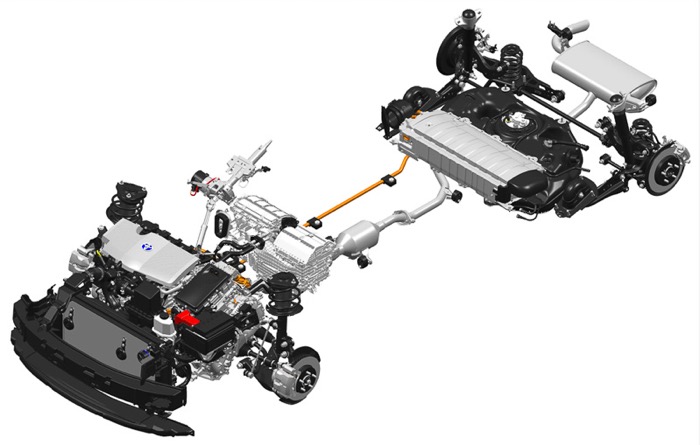
Split system/series-parallel system (strong hybrid, hybrid, PHEV)
The engine is used for both power generation and driving. Basically, the motor drives the vehicle when it starts moving, and the engine starts at a certain speed, reducing engine power and improving fuel efficiency. The base price is higher than that of gasoline models.
The engine is used for both power generation and driving. It was first adopted by Toyota’s Prius. Toyota vehicles generally use the split system.
Series system (range extender, different names used by different companies)
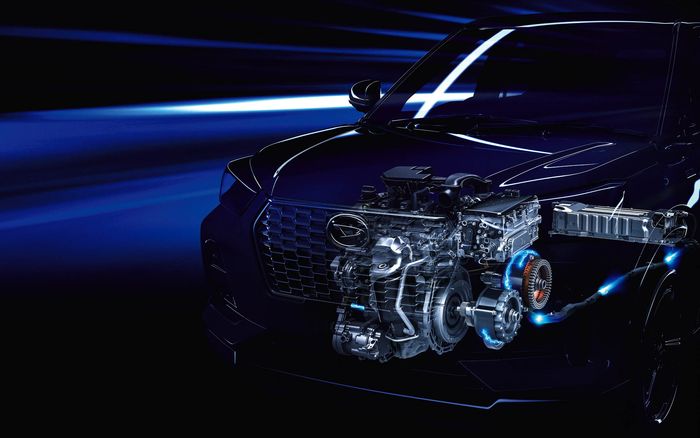
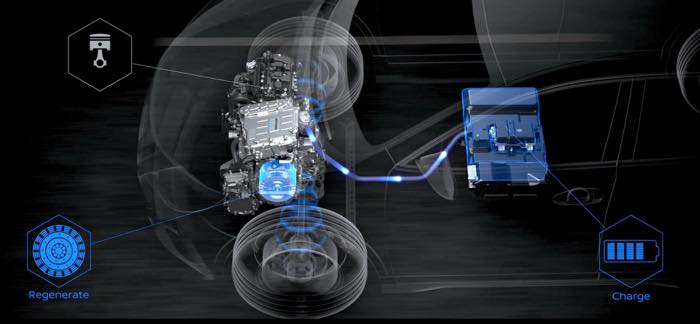
The engine is used solely to generate electricity and the vehicle is driven solely by the motor. When electricity is insufficient, the engine generates electricity. In other words, it can be said to be an electric vehicle (BEV) that does not require charging. The driving sensation is that of an electric vehicle itself, with distinctive driving characteristics and the ability to accelerate and decelerate using only the accelerator pedal. It is also possible to derive it from an electric vehicle (BEV).
The engine is used solely for generating electricity and the vehicle is driven solely by the motor. Examples include Nissan’s “e-POWER” and Daihatsu’s “e-SMART HYBRID.”
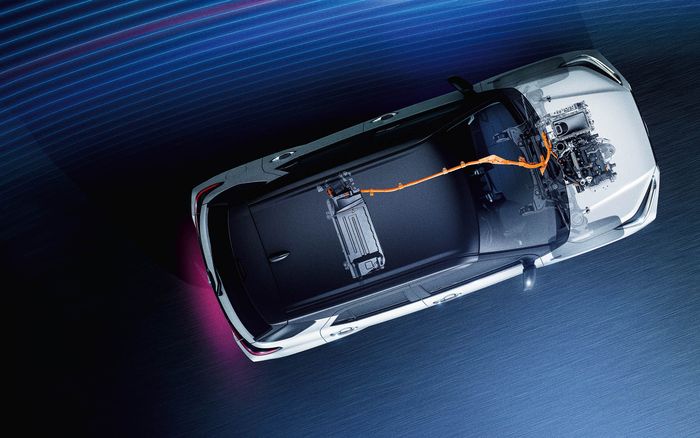
e-SMART HYBRID
e-POWER
▼For more details, please refer to this article.
→ Hybrid system types, adopted by various companies, summary, there are various mechanisms, summary of adopted car models
How to choose a car model
We’ve explained the three types of hybrids, and while choosing a hybrid car does mean the vehicle will be more expensive , it also comes with many benefits, such as government tax incentives, loan interest rates, insurance, resale value, and fuel economy. If you’re looking for a model closer to a futuristic EV, choose the series system, or the established and time-tested split system. If you’re looking for a more affordable option, go for the parallel system. As we move toward a carbon-neutral era, choosing a hybrid car over a gasoline model offers many long-term benefits, including better resale value and fuel economy. We hope this information will be helpful when making your purchase.
A word from the editorial department
Fuel efficiency trends in 2025
Automakers will continue to develop fuel-efficient technologies, with progress expected in the following areas:
- Expanding electrification : increasing options for HVs, PHVs, and EVs
- Lightweight technology : Reducing vehicle weight by adopting new materials
- Aerodynamic performance : Further improvement in Cd value
- Engine efficiency : Technology development aiming for 50% thermal efficiency
When choosing a fuel-efficient car, it’s important to consider not only the catalog fuel economy but also the actual fuel economy, and to choose a model that suits your usage environment and budget. Use the rankings and selection tips introduced in this article as a reference to find the fuel-efficient car that’s best for you.
Among standard cars, hybrid vehicles boast overwhelmingly low fuel consumption. Toyota cars, in particular, dominate the rankings due to their advanced technology. Recently, the number of cars that are not only fuel-efficient but also good to drive has increased, and the evolution of cars shows no signs of stopping. Fuel efficiency is improving year by year for both minicars and standard cars as a whole, and the options are expanding. In addition to fuel efficiency, it is important to compare and consider various factors such as design, price, and performance to choose the car that is best for you.
Nowadays, many companies have a wide range of hybrid models in their lineup, but even the term “hybrid” can mean a variety of different systems. We’ve put together a detailed summary of the differences between them. We hope that this information will help you understand the differences and advantages before making your purchase.