
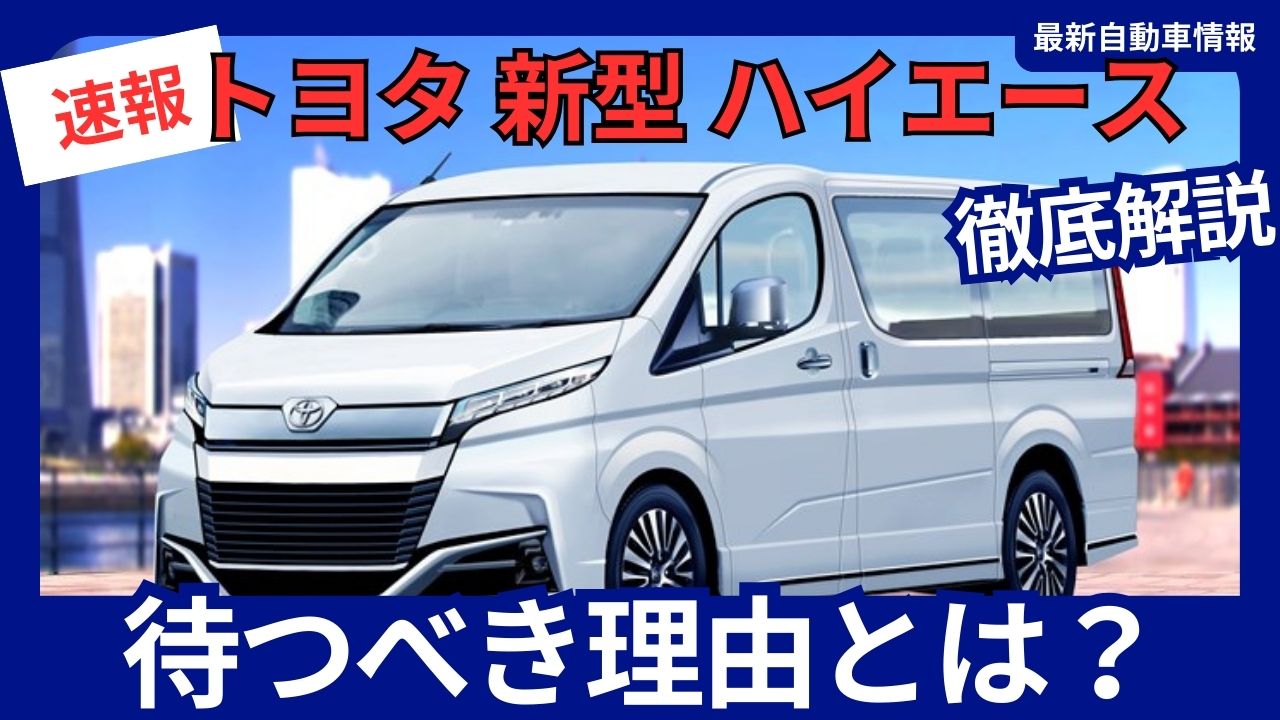
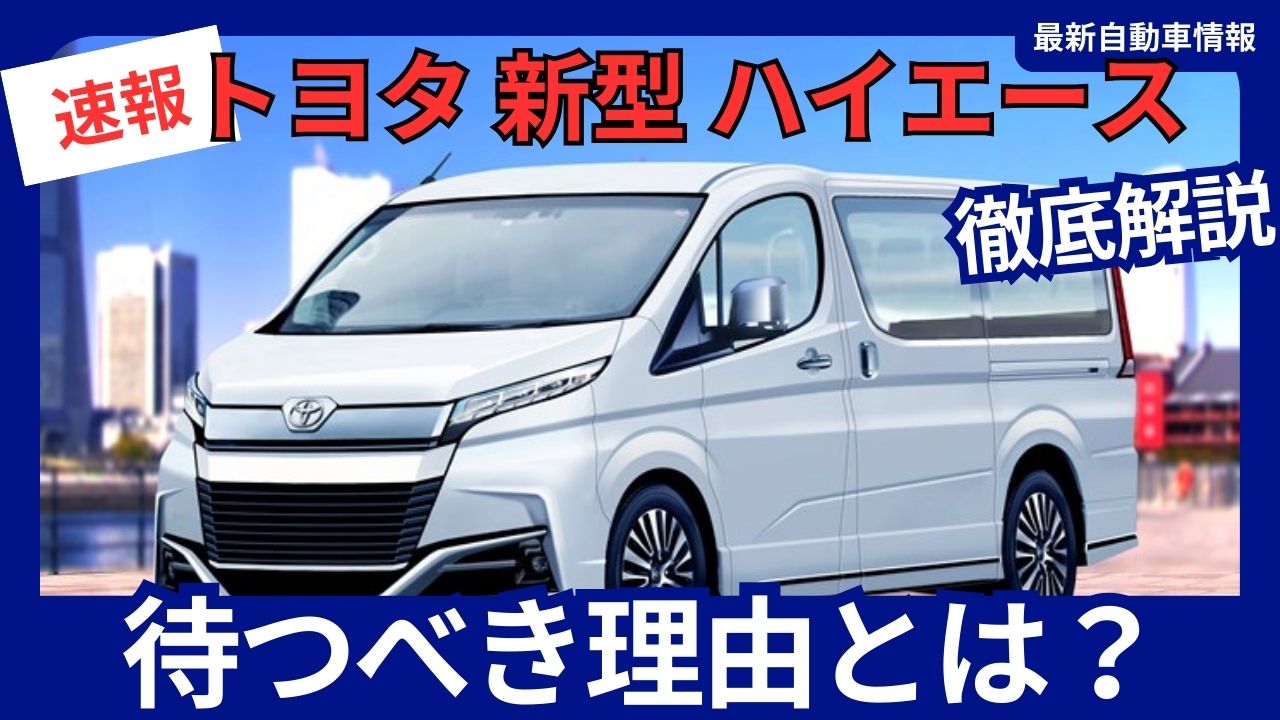
The Toyota Hiace (200 series) has been beloved for over 20 years since 2004. This legendary vehicle has enjoyed overwhelming support in the Japanese commercial vehicle market, and now it’s time for it to evolve into the next generation. The full model change, scheduled for sometime between 2026 and 2027, will not be just a minor update. It will be a revolution, with a dramatic change from a cab-over to a semi-bonnet, the inclusion of hybrid technology, and the introduction of groundbreaking safety technology.
So, should you wait for the new Hiace to arrive, or go ahead and buy the current model? This article provides a detailed analysis based on the latest information to help you make your decision.
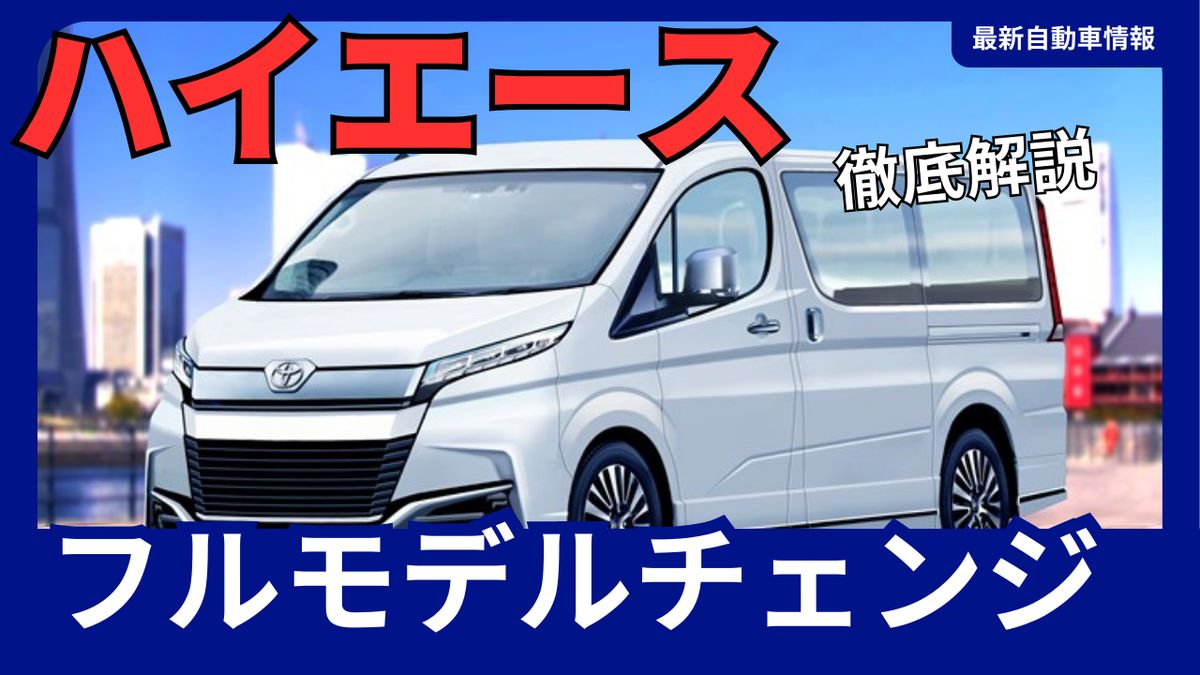
Latest information on the new Hiace full model change
Release date: From mid-2026 to early 2027
Based on Toyota Auto Body’s official announcement regarding changes to its production structure, the new Hiace is expected to be released in fiscal 2026, or at the latest by the first half of 2027. The conversion of the Inabe Plant in Mie Prefecture from Alphard and Vellfire production to a commercial vehicle-only plant is thought to be closely related to the establishment of a production structure for the new Hiace.
Release date considered certain
- Official announcement: Fall 2026
- Sales start: Spring 2027
- Full-scale mass production: Around summer 2027
Platform: Commercial vehicle version of TNGA
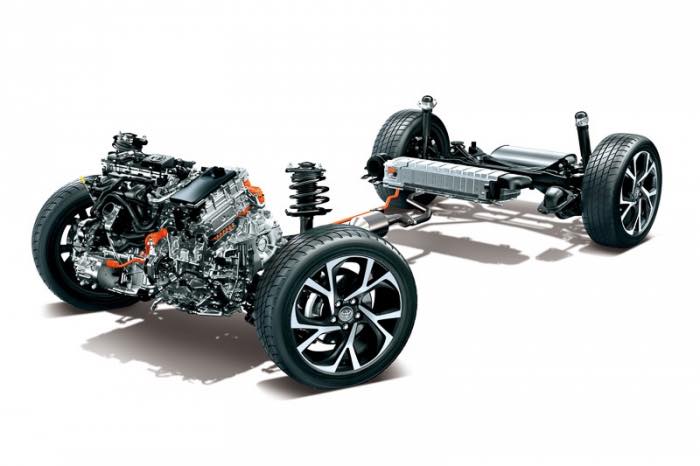
The new Hiace will adopt the commercial vehicle version of Toyota’s next-generation platform, “TNGA (Toyota New Global Architecture).” This is expected to result in significant performance improvements, including:
Benefits of the TNGA platform
- Approximately 30% improvement in body rigidity
- Improved driving stability through a lower center of gravity
- Improved fuel efficiency
- Significantly improved collision safety performance
What changes with the semi-bonnet?
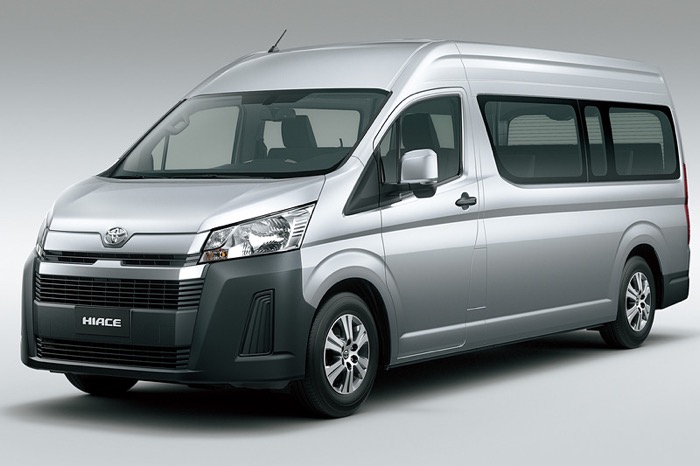
New Hiace overseas model
The biggest change: from cab-over to semi-bonnet
The biggest change to the new Hiace is the fundamental change to the engine layout, which has been changed from the previous cab-over type where the engine was located under the driver’s seat to a semi-bonnet type where the engine room is located in the front.
Advantages of semi-bonnet
1. Revolutionary improvement in safety
- Securing a crushable zone
- Significantly improved occupant protection in frontal collisions
- Improved pedestrian protection
- Performance equivalent to overseas safety standards (Euro NCAP 5 stars)
2. Greatly improved comfort
- Significantly reduces engine heat entering the vehicle interior
- Reduced engine noise and vibration
- Reduces fatigue during long driving periods
- Improved temperature environment at the feet
3. Improved maintainability
- Improved access to the engine room
- Improving efficiency of daily inspection work
- Reduced maintenance costs
Disadvantages of semi-bonnet
Impact on indoor space
- Slightly shortened cargo space length (from the current 3m to around 2.8m)
- Increase in overall length (expected to be about 5m)
- Possibility of increasing the minimum turning radius
Powertrain Innovation
Main engine: 2.8L clean diesel
The main powertrain for the new Hiace is expected to be the 2.8L inline 4-cylinder diesel engine that is also installed in the Land Cruiser Prado.
2.8L diesel engine specs (estimated)
- Maximum output: 177PS/3,400rpm
- Maximum torque: 45.9 kgf・m/2,400 rpm
- Transmission: 6-speed automatic
- Estimated fuel economy: 13.5km/L (WLTC)
Hybrid system installed
The installation of a hybrid system will be a groundbreaking development for commercial vehicles.
Hybrid system details (estimated)
- Base: 2.8L diesel engine
- Motor output: Approximately 26 horsepower
- Improved torque across the entire system
- Fuel efficiency improvement: 15-20% improvement expected
Stepping towards electrification: BEV concept also unveiled
The GLOBAL HIACE BEV CONCEPT, unveiled at the 2023 Japan Mobility Show, points to a future direction towards fully electrified vehicles.
BEV concept features
- Total length: 5,280mm
- Overall width: 1,950mm
- Overall height: 1,990mm
- Minimum turning radius: 5.5m
- Luggage length: Approximately 3.5m
Significant improvement in safety performance
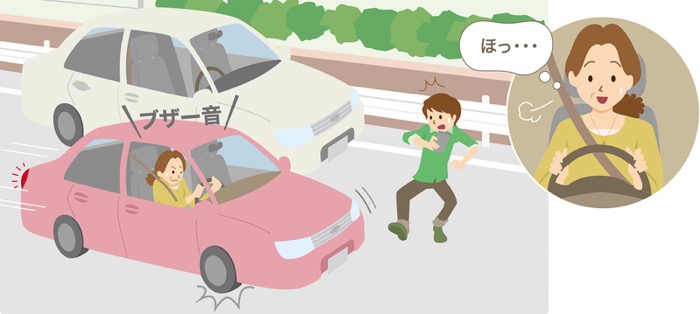
Toyota Safety Sense
The latest version of Toyota Safety Sense is standard on all vehicles.
The new Hiace will come standard with the latest Toyota Safety Sense system on all grades.
Main safety features
- Pre-crash safety (against vehicles, pedestrians, and bicycles)
- Lane Tracing Assist
- Radar cruise control (all speeds)
- Automatic high beam
- Road Sign Assist
New forecasting function
- Detects oncoming vehicles and pedestrians when turning right at an intersection
- Emergency steering assistance
- Driver emergency response system
- Reversing brake support
A strategy to sell both current and new models
Continued sales of the 200 series Hiace
Toyota is expected to continue selling the current 200 series alongside the new 300 series for a certain period of time even after the launch of the new model.
Reason for concurrent sales
- Consideration for users who prioritize a 3m luggage compartment length
- Diversification of price ranges
- Gradual migration support for existing users
- Stabilizing production and sales systems
Different uses depending on the target
Users who are suitable for the 300 series (new model)
- A business that prioritizes safety
- Users seeking comfort and quietness
- Vanlife/Leisure Use
- Companies seeking the latest technology
Users who are suitable for the 200 series (current model)
- A cargo space length of 3m is essential
- Businesses that want to reduce initial investment
- Emphasis on traditional usability
- Hope to utilize abundant aftermarket parts
Price forecasts and market impact
Expected price range for the new Hiace
Based on the latest information, the estimated price range for the new Hiace is as follows:
Price range forecast
- Entry model: from 2.5 million yen
- Mid-range model: 3 million to 3.8 million yen
- High-end grade: 4 million to 5 million yen
- Hybrid model: +approximately 500,000 yen
Impact on current models
Trends of current models before and after the new model announcement
- 2025: Possible release of final special edition model
- First half of 2026: Sales will be limited to stock.
- Late 2026: Production to end
Should I wait or should I buy now? Decision criteria
Cases where you should wait for the new model
If any of the following apply to you, we recommend you wait for the new model:
- Safety is our number one priority
- Often carries family members
- Minimize the risk of accidents
- Expected to reduce insurance premiums
- Seeking comfort and quietness
- Frequent long-distance travel
- Van life and outdoor activities
- Emphasis on reducing passenger fatigue
- Seeking the latest technology
- Hybrid fuel economy improvement
- Utilizing advanced driver assistance technology
- Want a vehicle with a future
- have time to spare
- No problem with current car until 2027
- There is no urgent need to update the vehicle
Cases where you should buy the current model now
If any of the following apply to you, we recommend purchasing the current model.
- A luggage compartment length of 3m is required
- The main task is transporting long items.
- Compatibility with existing loading systems
- Emphasis on ease of use of cab-over type
- Want to reduce initial investment
- Choosing a car based on price
- Prioritize cash flow
- Want to shorten the depreciation period?
- Utilizing a wide range of aftermarket parts
- Purchase with customization in mind
- Utilizing existing parts assets
- Maintaining relationships with specialists
- Urgent vehicle renewal required
- Breakdown and deterioration of current vehicles
- Increase in vehicles due to business expansion
- Reasons why we can’t wait until 2027
Intermediate options
Leasing and rental
- Leasing the current model until the new model is released
- Assuming vehicle replacement in a short period of time
- Prepare for transition to a new model while keeping initial investment low
Advantages and disadvantages of different purchase timing
Purchase the current model by 2025
merit
- Large inventory to choose from
- A wide range of aftermarket parts
- Proven reliability
- Relatively stable prices
Disadvantages
- A sense of obsolescence after the new model was announced
- Decline in resale value
- Lack of the latest safety technology
Purchase the current model in the first half of 2026
merit
- Possibility of final special edition vehicle
- Expect bigger discounts
- Clearance price buying opportunity
Disadvantages
- Limited options
- Concerns about changes to after-sales service system
- The impact of new product information on purchasing intentions
Purchase a new model after 2027
merit
- Enjoying the latest technology
- Significant safety improvements
- Future-proof vehicles
- Improved fuel economy
Disadvantages
- High initial purchase price
- Risk of initial defects due to new model
- Possibility of extended delivery times
Recommended patterns by industry and application
Transportation and delivery industry
Large parcel delivery
- Recommendation: Continue with the current model
- Reason: It is necessary to ensure a luggage compartment length of 3m.
Home delivery/small parcel delivery
- Recommended: Wait for the new model
- Reason: Great benefits of improved fuel efficiency and safety
Construction and engineering industry
Material Handling
- Recommended: Current model
- Reason: Emphasis on loading capacity, cost priority
Moving to the site
- Recommendation: Consider new model
- Reason: Improved comfort and safety
Tourism and transportation industry
Recommended: Wait for the new model
- Reason: Passenger comfort and safety directly affect service quality
Personal and family use
Camping and Outdoors
- Recommended: Wait for the new model
- Reason: Significantly improved comfort improves the leisure experience
Hobbies/DIY
- Recommendation: Select according to the application
- Reason: If you prioritize loading capacity, go for the current model, but if you prioritize comfort, go for the new model.
Predicted impact on the used car market
Current model used car market price
Trend forecast before and after the new model announcement
- 2025: Market stability continues
- First half of 2026: Gradual decline begins
- Late 2026: Major price adjustment
- 2027 and beyond: Stability at the bottom
Buying and selling timing strategies
Selling your current vehicle
- Best timing: Sometime in 2025
- Next best: Until spring 2026
- Avoid: Right after a new model is released
Buying a current model used car
- Best time to buy: Late 2026 onwards
- Pros: After a significant price drop
- Important point: Check the after-sales service system
Future outlook for the new Hiace
Electrification Roadmap
Phase 1 (around 2027)
- Diesel, gasoline, hybrid
Phase 2 (around 2030)
- PHEV (plug-in hybrid) added
Phase 3 (around 2035)
- Full-scale introduction of BEVs (fully electric vehicles)
Deployment of autonomous driving technology
Level 2 (2027)
- Advanced Driver Assistance Systems
Level 3 (around 2030)
- Autonomous driving in limited areas
Level 4 (2035 and beyond)
- Highly Automated Driving System
Frequently asked questions
Q1: How much difference is there in luggage capacity between the new model and the current model?
A1: The semi-bonnet design is expected to reduce the trunk length from the current 3m to approximately 2.8m. However, it is possible that overall usability and loading efficiency will improve.
Q2: Until when will after-sales service be available for the current model?
A2: Generally, parts will continue to be supplied for about 10 years after production ends. If production of the current model ends in 2026, service is expected to continue until around 2036.
Q3: What is the expected delivery time for the new model?
A3: In the early stages of a new car, we recommend allowing six months to a year for delivery.
Q4: Are maintenance costs higher for hybrid models?
A4: It may be slightly more expensive initially, but the reduced load on the engine may reduce overall maintenance costs in the long run.
Q5: Is there any assistance available for switching from the current model to the new model?
A5: There has been no official announcement, but we expect to see trade-in campaigns and the like.
Summary: Support your choices
The new full model change of the Toyota Hiace is a major change that occurs once every 20 years. Many exciting improvements are planned, including improved safety with the introduction of a semi-bonnet, the inclusion of hybrid technology, and the standardization of the latest safety equipment.
Those who should wait for the new model
- Prioritizing safety and comfort
- Vanlife/Leisure Use
- Interest in the latest technology
- We have the time to wait until 2027
How to choose the current model
- A cargo compartment length of 3m is required for business purposes
- It is important to keep initial investment low
- Abundant aftermarket parts available
- Urgent vehicle renewal required
The key is to comprehensively consider your purpose, budget, and timing. The track record and reliability of the current model, which has been loved as a commercial vehicle for over 20 years, and the future potential of the new model equipped with innovative technology, both have their own value.
We hope that the information in this article will help you make the best decision for you. Until the official announcement of the new Hiace, please continue to check the latest information and prepare to make a better decision.