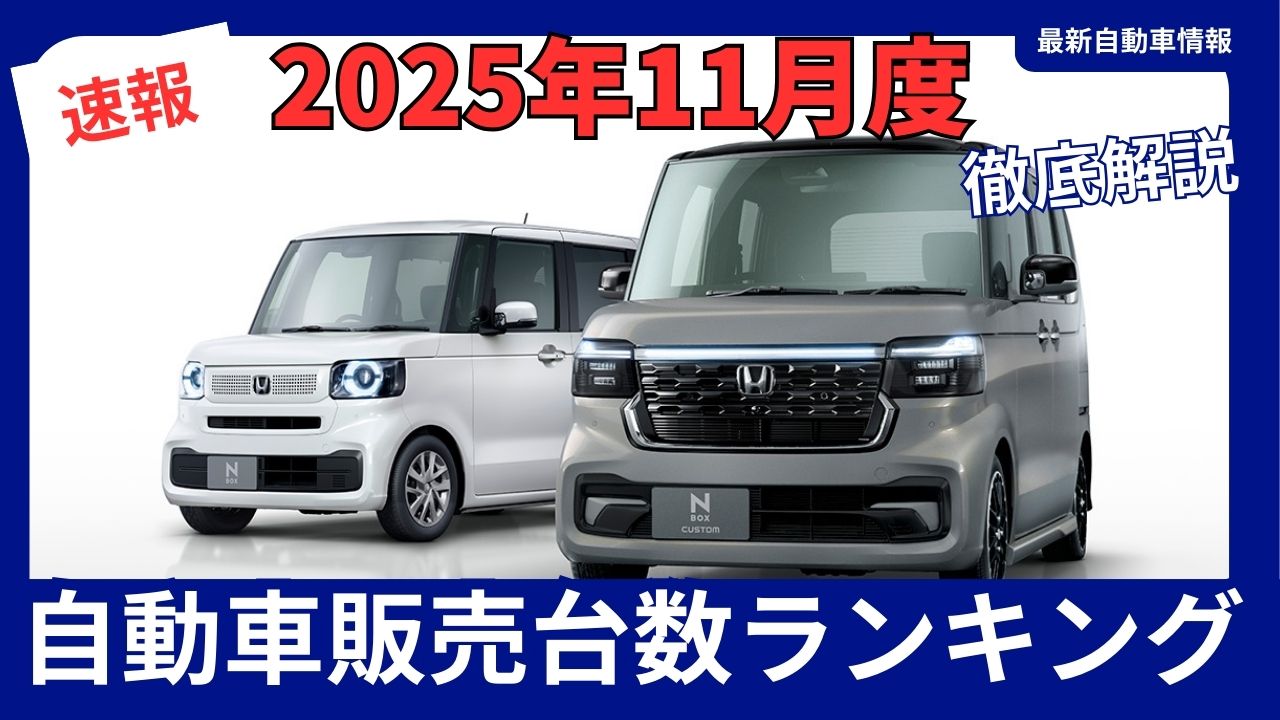


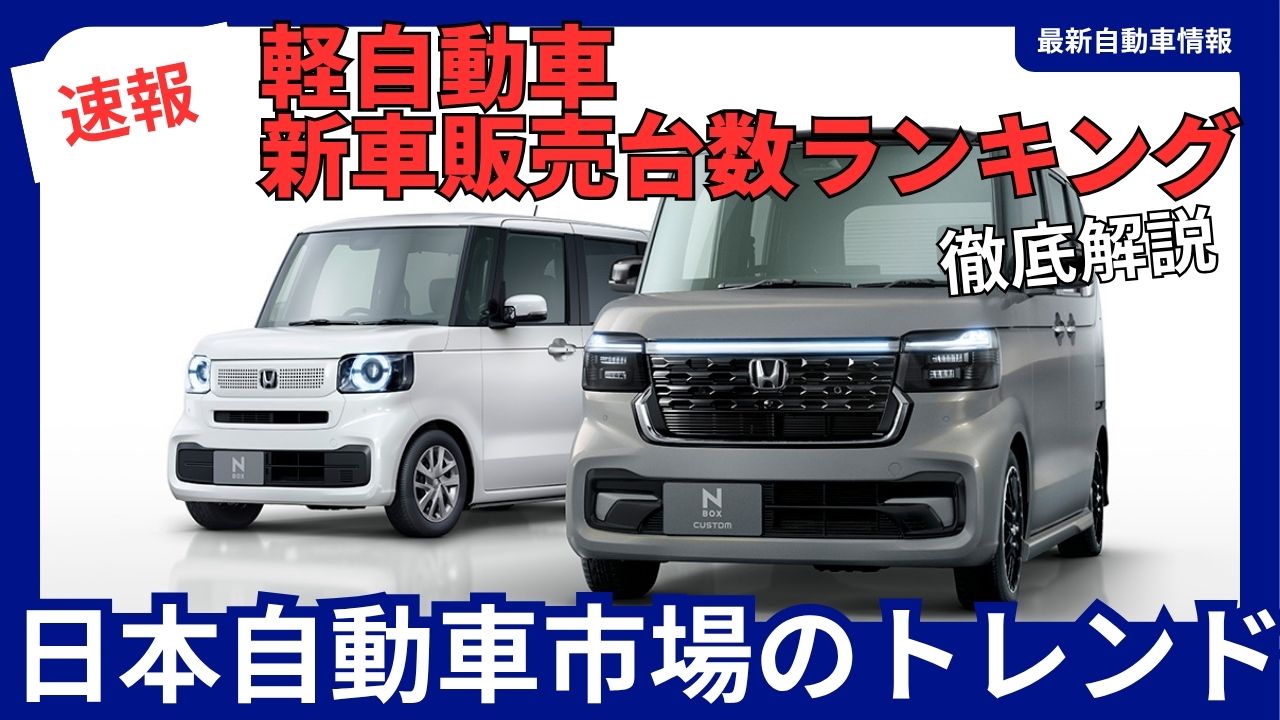
As of September 2025, Japan’s minicar market is at a new turning point. According to the latest data released by the Japan Light Motor Vehicle Association, while the Honda N-BOX remains the king of the market, there are many noteworthy developments, including the astonishing comeback of the Daihatsu Move.
In this article, we will thoroughly analyze light vehicle sales data for September 2025 and the first half of 2025 from April to September, and provide a detailed explanation of the latest trends and future prospects in the light vehicle market.
Detailed analysis of new minicar sales rankings for September 2025
Top 20 Monthly Sales
| Ranking | Car model name | Sales volume | Manufacturer | Year-on-year comparison | Vehicle category |
|---|---|---|---|---|---|
| 1st place | N-BOX | 21,717 units | Honda | 87.0% | Super height wagon |
| 2nd place | Spacia | 16,407 units | Suzuki | 103.7% | Super height wagon |
| 3rd place | Move | 13,506 units | Daihatsu | 351.3% | Height wagon |
| 4th place | Tanto | 11,457 units | Daihatsu | 97.9% | Super height wagon |
| 5th place | Hustler | 7,993 units | Suzuki | 99.5% | Crossover |
| 6th place | Wagon R | 6,742 units | Suzuki | 93.7% | Height wagon |
| 7th place | Alto | 5,394 units | Suzuki | 90.1% | sedan |
| 8th place | Days | 5,257 units | Nissan | 101.6% | Height wagon |
| 9th place | Delica Mini/eK | 5,020 units | Mitsubishi | 83.8% | Super height wagon |
| 10th place | Luke’s | 4,824 units | Nissan | 64.8% | Super height wagon |
Point of Interest 1: The N-BOX’s status as the absolute champion
Factors behind N-BOX’s market dominance
Even in September 2025, the Honda N-BOX maintained its leading position with an overwhelming sales volume of 21,717 units. Although there is a slight decrease of 87.0% compared to the same month last year, the difference with the second-placed Spacia is more than 5,000 units, demonstrating its absolute presence in the minicar market.
Why the N-BOX continues to be chosen
- Largest interior space in its class : spaciousness and usability that go beyond the boundaries of a minicar
- Advanced safety features : Honda SENSING is standard on all vehicles
- Wide variety of options: Custom, Modulo X, and more
- High resale value : Highly popular in the used car market
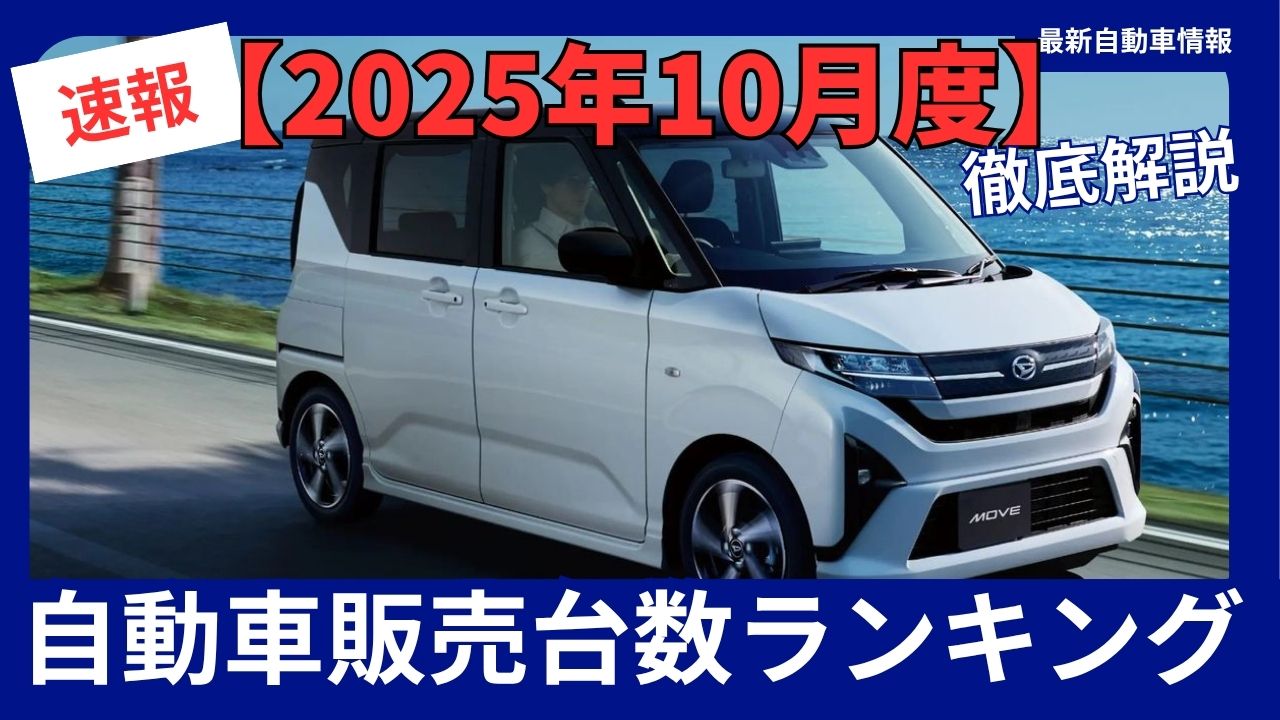
Highlight 2: The amazing revival of the Daihatsu Move
A huge increase of 351.3% compared to the same month last year
The most notable feature of this year’s ranking is the dramatic comeback of the Daihatsu Move, which recorded an astonishing 351.3% increase in sales of 13,506 units compared to the same month last year, jumping straight up to third place.
The background to the revival of the Move
- Effects of new model introduction : Latest safety features and improved fuel efficiency
- Strengthening price competitiveness : Significant improvement in cost performance
- Expanding sales channels : Strategic strengthening of dealer network
- Renewing the brand image : Strengthening appeal to younger generations
Market trends by category
Intensifying competition in the super height wagon market
| Car model name | Sales volume | Market Share | Year-on-year comparison |
|---|---|---|---|
| N-BOX | 21,717 units | 35.2% | 87.0% |
| Spacia | 16,407 units | 26.6% | 103.7% |
| Tanto | 11,457 units | 18.6% | 97.9% |
| Delica Mini/eK | 5,020 units | 8.1% | 83.8% |
| Luke’s | 4,824 units | 7.8% | 64.8% |
Total: 59,425 units (approximately 60% of all light vehicles)
Analysis of cumulative sales rankings for the first half of 2025 (April to September)
Top 20 in cumulative sales for the first half of the year
| Ranking | Car model name | Total sales | Manufacturer | YoY comparison | monthly average | Market Share |
|---|---|---|---|---|---|---|
| 1st place | N-BOX | 97,958 units | Honda | 95.8% | 16,326 units | 17.8% |
| 2nd place | Spacia | 79,805 units | Suzuki | 99.5% | 13,301 units | 14.5% |
| 3rd place | Move | 60,513 units | Daihatsu | 337.1% | 10,086 units | 11.0% |
| 4th place | Tanto | 55,165 units | Daihatsu | 101.8% | 9,194 units | 10.0% |
| 5th place | Hustler | 43,346 units | Suzuki | 100.6% | 7,224 units | 7.9% |
| 6th place | Wagon R | 36,390 units | Suzuki | 93.4% | 6,065 units | 6.6% |
| 7th place | Alto | 29,504 units | Suzuki | 88.0% | 4,917 units | 5.4% |
| 8th place | Luke’s | 29,433 units | Nissan | 93.3% | 4,906 units | 5.3% |
| 9th place | Delica Mini/eK | 28,916 units | Mitsubishi | 107.6% | 4,819 units | 5.3% |
| 10th place | Mira | 26,163 units | Daihatsu | 114.2% | 4,361 units | 4.8% |
| 11th place | Jimny | 24,251 units | Suzuki | 120.6% | 4,042 units | 4.4% |
| 12th place | Taft | 21,336 units | Daihatsu | 104.9% | 3,556 units | 3.9% |
| 13th place | Days | 20,889 units | Nissan | 88.3% | 3,482 units | 3.8% |
| 14th place | N-WGN | 14,875 units | Honda | 90.3% | 2,479 units | 2.7% |
| 15th place | Every Wagon | 10,093 units | Suzuki | 100.3% | 1,682 units | 1.8% |
| 16th place | N-ONE | 9,441 units | Honda | 107.5% | 1,574 units | 1.7% |
| 17th place | Flair Wagon | 6,454 units | Mazda | 91.0% | 1,076 units | 1.2% |
| 18th place | Sakura | 6,141 units | Nissan | 60.7% | 1,024 units | 1.1% |
| 19th place | Pixis | 4,852 units | Toyota | 151.1% | 809 units | 0.9% |
| 20th place | Flair Crossover | 2,520 units | Mazda | 80.7% | 420 units | 0.5% |
Key trends revealed in first-half data
Only the N-BOX has exceeded 100,000 units
In the first half of 2025, the N-BOX was the only vehicle whose cumulative sales exceeded the 100,000 unit mark, demonstrating the diversification of the entire minicar market and the expansion of consumer choices.
Daihatsu’s revival and Suzuki’s stability
| Manufacturer | Total number of major vehicle models | Market Share | Features |
|---|---|---|---|
| Suzuki | Approximately 223,000 units | 40.5% | A balanced product lineup |
| Daihatsu | Approximately 163,000 units | 29.6% | Significant market share expansion due to the revival of the Move |
| Honda | Approximately 122,000 units | 22.2% | Stable growth thanks to N-BOX dominance |
| Nissan | Approximately 56,000 units | 10.2% | Progressing electrification strategies |
| Mitsubishi | Approximately 29,000 units | 5.3% | Delica Mini performing well |
Strategy analysis by manufacturer
Suzuki: Overwhelming product power and lineup
Factors behind Suzuki’s successful market strategy
In the first half of 2025, Suzuki will hold an overwhelming 40.5% share of the minicar market.
Factors behind success
- Wide range of segment coverage : Available in all categories from sedans to SUVs
- Pursuit of originality : One-of-a-kind products such as the Hustler and Jimny
- Cost performance : A product lineup with an excellent balance of price and quality
- Technological innovation : Promoting the spread of mild hybrids
Division of roles for major vehicle models
| Car model name | role | target | Market position |
|---|---|---|---|
| Spacia | Main products | Family demographic | A rival to the N-BOX |
| Hustler | Differentiated products | Active demographic | A one-of-a-kind crossover |
| Wagon R | Volume products | Practicality-oriented group | A synonym for light vehicles |
| Alto | Entry product | Price-conscious demographic | Entry-level minicar model |
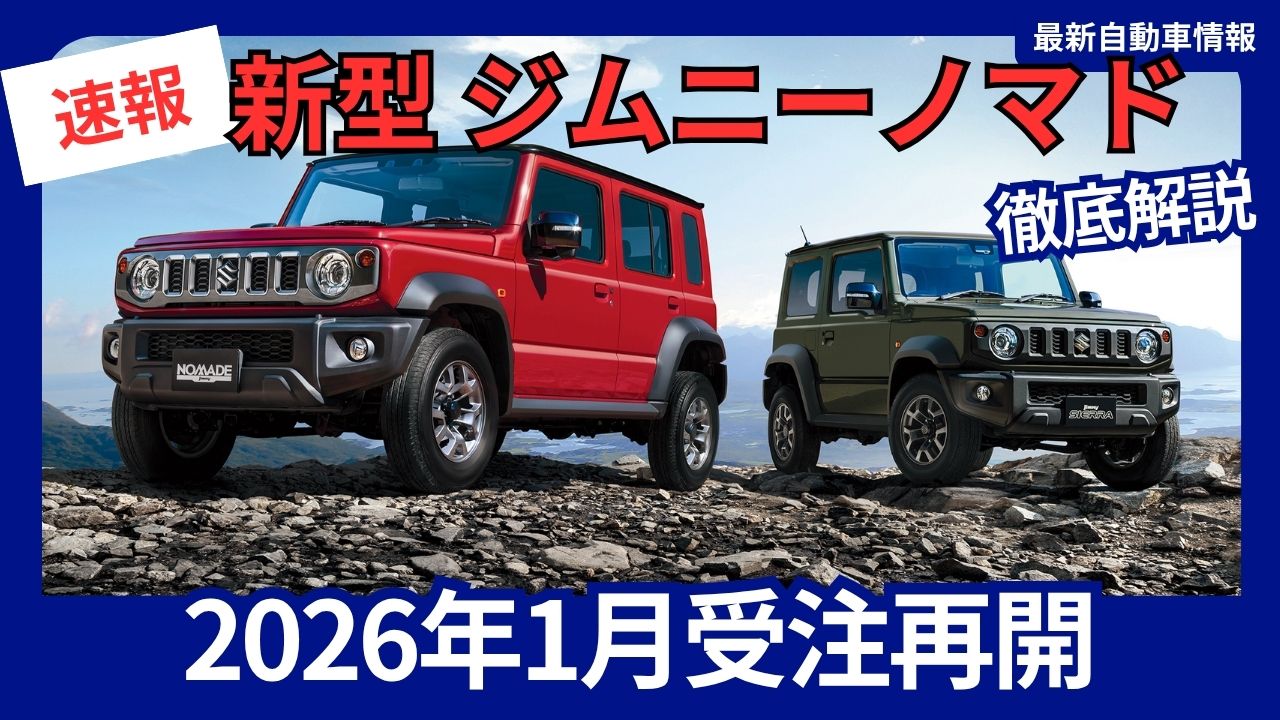
| Jimny | Brand image products | Interest-oriented group | The world’s only light off-road vehicle |
Daihatsu: A comeback with the revival of the Move
Daihatsu’s revival strategy
Daihatsu is showing clear signs of recovery, led by the Move, which showed an astonishing growth of 337.1% compared to the same period last year.
Background to the revival
- Significant improvement in product appeal : Improved safety features and fuel efficiency
- Reviewing pricing strategy : Strengthening price competitiveness with competitors
- Renewal of brand strategy : Strengthening approach to younger generations
- Improving sales strategies : Optimizing dealer network utilization
Honda: The merits and demerits of concentrating on the N-BOX
Current state of dependence on N-BOX
Honda’s light vehicle business continues to be highly dependent on the N-BOX.
| Car model name | Sales volume | Honda minicar market share |
|---|---|---|
| N-BOX | 97,958 units | 80.3% |
| N-WGN | 14,875 units | 12.2% |
| N-ONE | 9,441 units | 7.7% |
Future challenges
- Diversifying product lineup : Strengthening products other than the N-BOX
- Entering new categories : Expanding into new areas such as SUV types
- Responding to electrification : EV strategy for minicars
Trend analysis by vehicle category
Trends in the super height wagon market
Market size and competitive situation
Super height wagons are the largest segment, accounting for approximately 60% of the minicar market.
| Car model name | First half sales volume | Segment share | Features |
|---|---|---|---|
| N-BOX | 97,958 units | 36.4% | Overwhelming interior space |
| Spacia | 79,805 units | 29.6% | Ease of use |
| Tanto | 55,165 units | 20.5% | Open design |
| Delica Mini/eK | 28,916 units | 10.7% | Mitsubishi-like strength |
| Luke’s | 29,433 units | 10.9% | Nissan’s advanced technology |
Growth of the crossover and SUV market
Growing preference for SUVs even among light vehicles
| Car model name | Sales volume | YoY comparison | Features |
|---|---|---|---|
| Hustler | 43,346 units | 100.6% | A pioneering presence |
| Jimny | 24,251 units | 120.6% | A full-fledged off-roader |
| Taft | 21,336 units | 104.9% | Simple SUV style |
Strong demand in the commercial vehicle market
Stable demand for light vehicles for work
| category | Main car models | First half sales volume | Features |
|---|---|---|---|
| Light van | Hijet Cargo/Atrai | 38,369 units | The standard for commercial vans |
| Light van | Every | 28,633 units | High loading capacity |
| Light truck | Hijet Truck | 43,570 units | A staple in the agricultural and construction industries |
| Light truck | Carry | 24,516 units | Ease of use |
Status of electrification initiatives
Current status of the light vehicle EV market
Light EV sales (first half of 2025)
| Car model name | Sales volume | Manufacturer | YoY comparison | Features |
|---|---|---|---|---|
| Sakura | 6,141 units | Nissan | 60.7% | Pioneer in the light EV market |
| eK Cross EV | 572 units | Mitsubishi | 57.2% | Sakura’s sister car |
| Minicab EV/MiEV | 531 units | Mitsubishi | 38.0% | Commercial light EV |
Issues in the light EV market
- Range limitations : concerns about everyday use
- Charging infrastructure : compatibility with light vehicle users
- High price : Price difference with gasoline vehicles
- Subsidy Dependence : Risk of Policy Change
Future market forecasts and key points
Predictions for the second half of 2025
Factors behind changes in the market environment
- Impact of new vehicle launches
- Strategic launch of new models by each manufacturer
- Intensifying competition due to full model changes
- Introducing a model equipped with new technology
- Accelerating electrification
- Expanded launch of new mini EV models
- The spread of hybrid technology
- Progress in the development of charging infrastructure
- Diversifying consumer needs
- Adapting to lifestyle changes
- Increasing demands for safety performance
- Rising environmental awareness
Strategic outlook for each manufacturer
Suzuki’s development forecast
- Further evolution of existing models
- Taking on new categories
- Phased introduction of electrification technologies
Daihatsu’s comeback strategy
- Horizontal expansion of successful moves
- Improved product appeal for all vehicle models
- Continue to renew the brand image
Honda’s Diversification Strategy
- Strengthening products other than the N-BOX
- Considering entry into new segments
- Expanding the use of electrification technology
Changes in consumer purchasing behavior
Changes in the criteria for selecting a light vehicle
Traditionally emphasized elements and current trends
| Priority | Previously (up to 2020) | Present (2025) | Future predictions |
|---|---|---|---|
| 1st place | price | Safety performance | Total Cost of Ownership |
| 2nd place | fuel economy | indoor space | Environmental performance |
| 3rd place | maintenance cost | Ease of use | Connectivity |
| 4th place | Handling | fuel efficiency | Autonomous driving function |
| 5th place | design | design | Brand Value |
Purchasing trends by age group
Young people (20s and 30s)
- Emphasis on design
- Coloring that looks great on social media
- Interest in advanced equipment
Middle-aged (40s-50s)
- A balance between practicality and economy
- Emphasis on ease of use for the whole family
- High interest in safety performance
Elderly people (60s and older)
- Emphasis on ease of driving
- Safety equipment
- Comprehensive after-sales service
Regional market trends
Demand gap between urban and rural areas
Characteristics of urban areas (Tokyo metropolitan area and Kansai area)
- The popularity of super height wagons
- A trend towards emphasis on design
- High interest in electrification
Regional characteristics
- Strong demand for commercial vehicles
- Emphasis on practicality and economy
- High demand for 4WD models
Trends in popular car models by region
| region | 1st place | 2nd place | 3rd place | Features |
|---|---|---|---|---|
| Tokyo metropolitan area | N-BOX | Spacia | Tanto | Design-focused |
| Kansai area | N-BOX | Spacia | Move | Price-conscious |
| Tohoku and Hokkaido | N-BOX | Jimny | Spacia | 4WD demand |
| Kyushu and Okinawa | N-BOX | Tanto | Hustler | Emphasis on practicality |
Summary: Current status and outlook for the minicar market in 2025
Key Findings
Analysis of the rankings for new minicar sales for September 2025 and the first half of the year reveals the following key points:
- The N-BOX remains the undisputed champion : Continuing market dominance through overwhelming product appeal
- Daihatsu’s dramatic comeback : Significant market share recovery led by the Move
- Suzuki’s stable strength : Maintaining a high market share through a well-balanced product lineup
- Challenges of electrification : Sluggish growth in the light EV market and future potential
- Diversifying consumer needs : Growing interest in safety and environmental performance
Future outlook
The minicar market is undergoing a period of major change due to the following factors:
Accelerating technological innovation
- Progress in standardization of safety equipment
- Phased introduction of electrification technologies
- Expanded connectivity features
Intensifying market competition
- Technological development competition among manufacturers
- Trends of new entrants
- Continuing price competition
Changing consumer attitudes
- Rising environmental awareness
- Increasing demands for safety performance
- Responding to diversifying lifestyles
Expectations for each manufacturer
Suzuki : Expand market share by leveraging the strengths of a diverse product lineup
Daihatsu : Spread momentum from the revival of the Move to other models
Honda : Stabilize business foundation by strengthening products other than the N-BOX
Nissan and Mitsubishi : Establish unique positions by leveraging electrification technologies
There is no doubt that the minicar market will continue to play an important role in the Japanese automobile industry. The future course of competition will depend on each manufacturer’s technological innovation and ability to respond to consumer needs.