
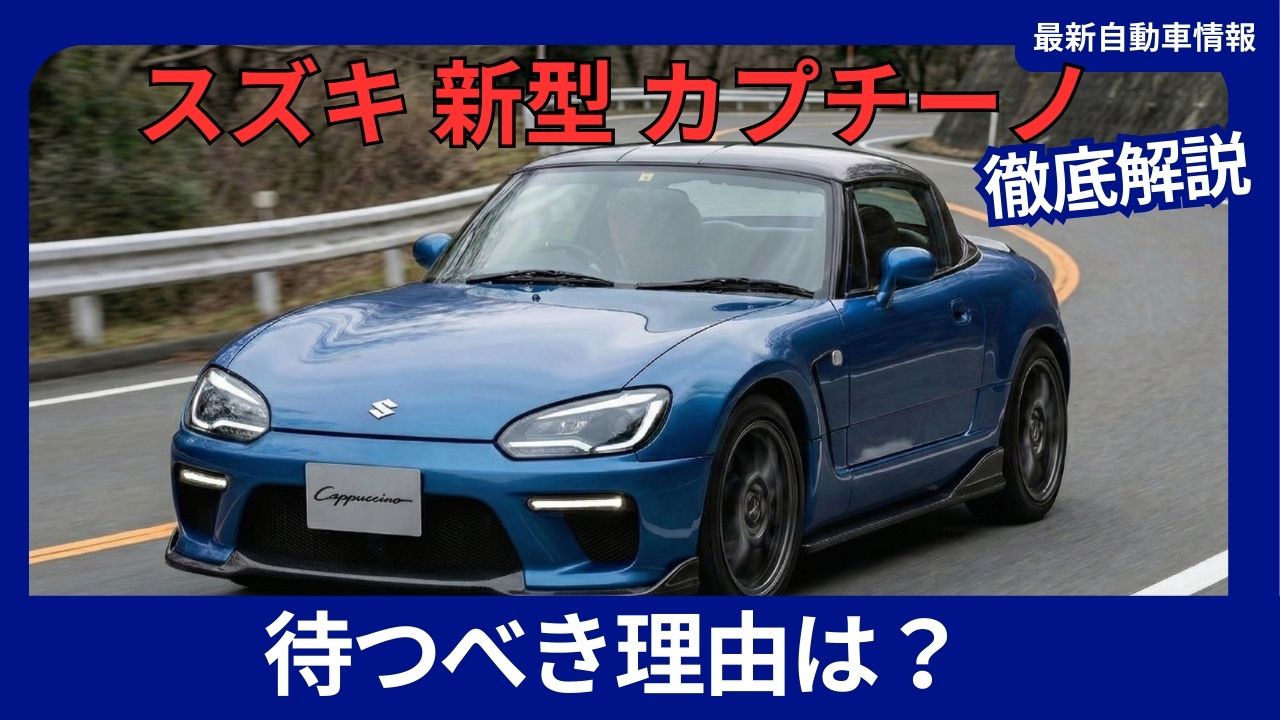
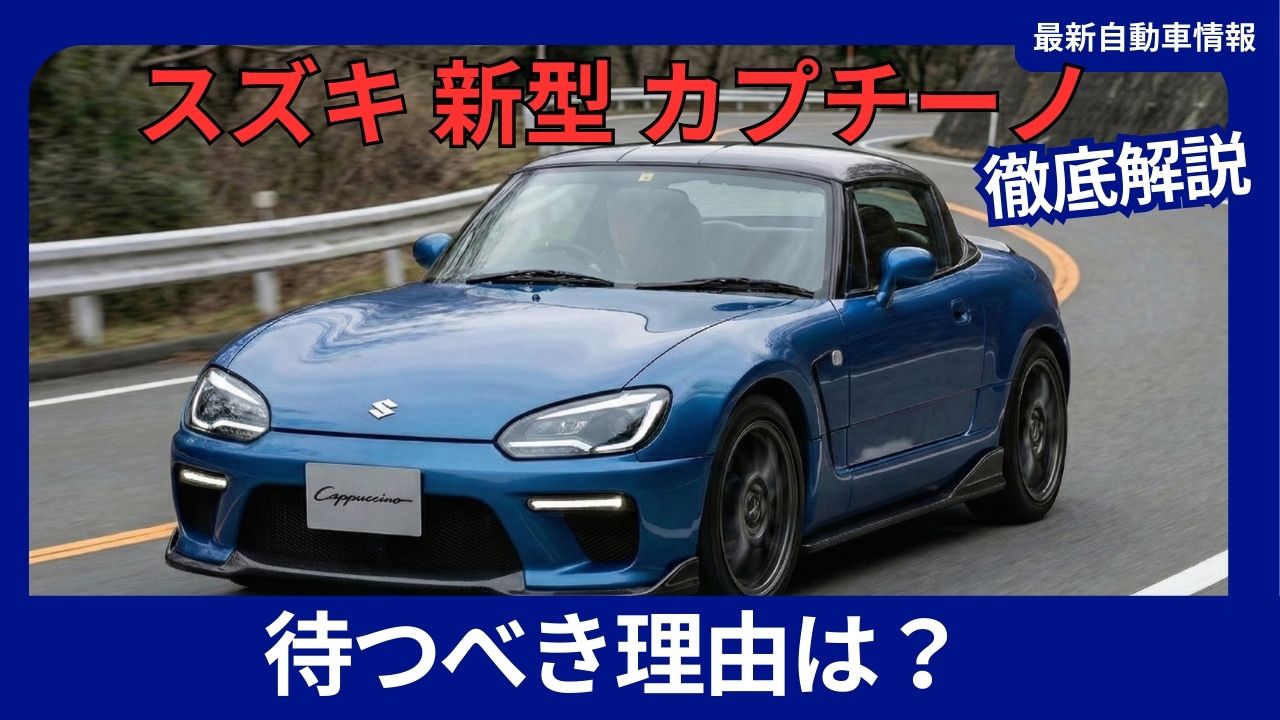
The Suzuki Cappuccino was launched in 1991 and production ended after just seven years. This one-of-a-kind light sports car, combining front-wheel drive and a three-piece open roof, still remains in the hearts of many fans.
Will the legendary light sports car be revived after 29 years?
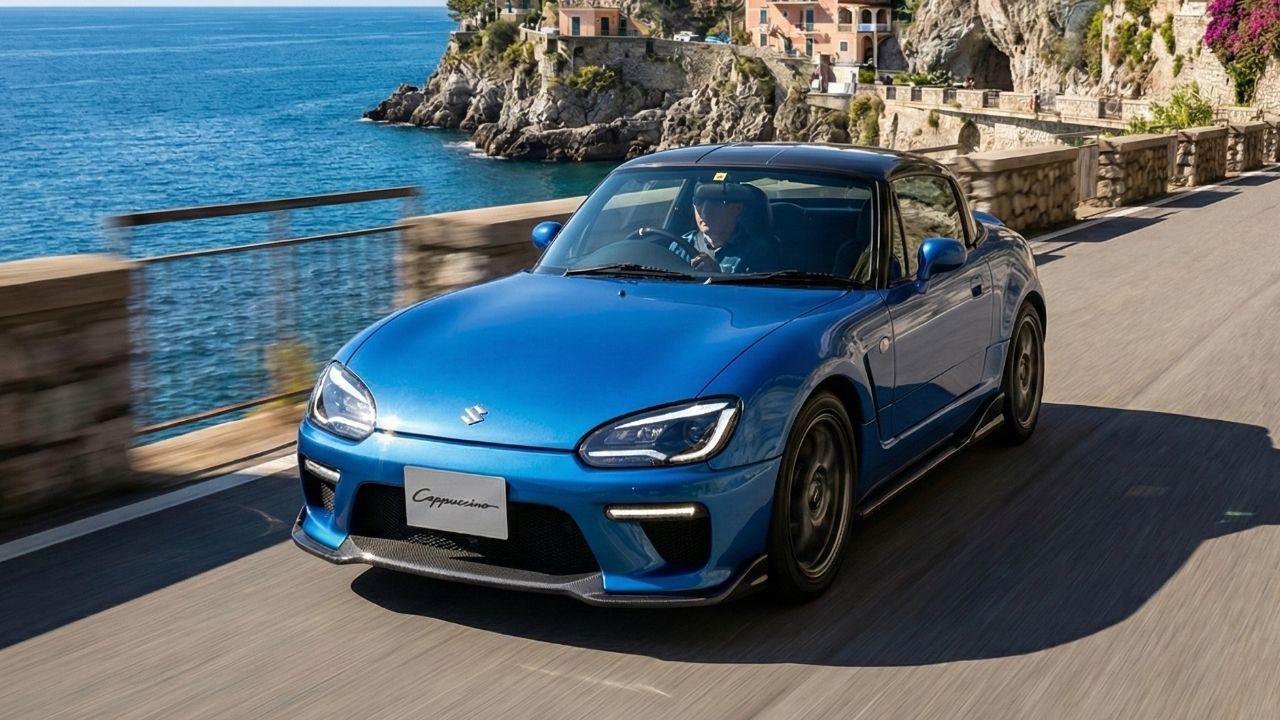
There is a growing possibility that the Cappuccino will finally be revived with a full model change in 2027. However, the new model will be changed from a light vehicle to a standard car, and the price is expected to rise significantly. Should you wait for the new Cappuccino to be released, or should you choose a used first-generation model or another sports car?
In this article, we will thoroughly explain the points to consider when considering purchasing the new Cappuccino, based on the latest information.
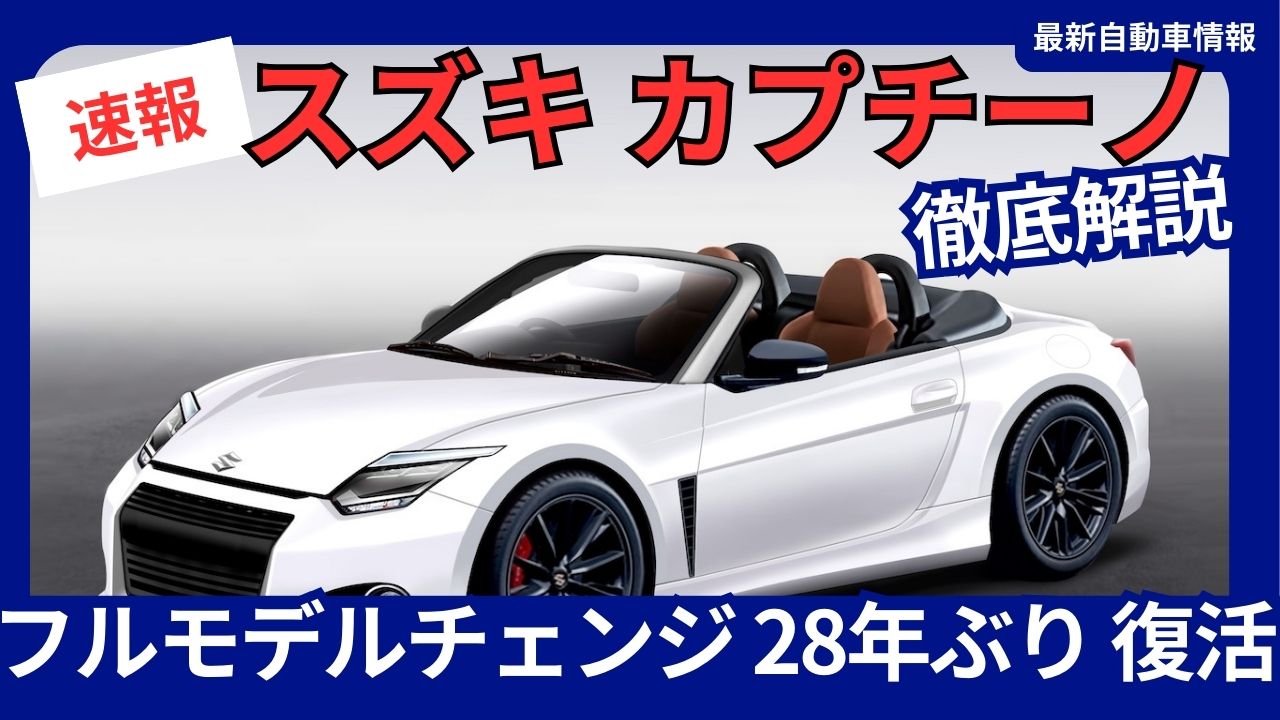
Latest information on the new Cappuccino: Possible release in 2027
Release date and official announcement outlook
According to multiple automotive media reports, Suzuki plans to release a new Cappuccino in 2027. The official announcement is likely to take place between the second half of 2026 and the first half of 2027, and the car is expected to make its debut at the Tokyo Auto Salon.
It was initially expected to be released in 2026, but due to a revision of the development schedule and changes in the market environment, it has been pointed out that the release date may be pushed back to 2027. This schedule adjustment is seen as a strategic decision to bring a more complete product to market.
However, there has been no official announcement from Suzuki yet, and the possibility that the plan will be frozen is not zero. There have been many cases in the past where development of sports cars has been canceled, so it is important to always check the latest information.
Collaborative relationship with Daihatsu and Toyota
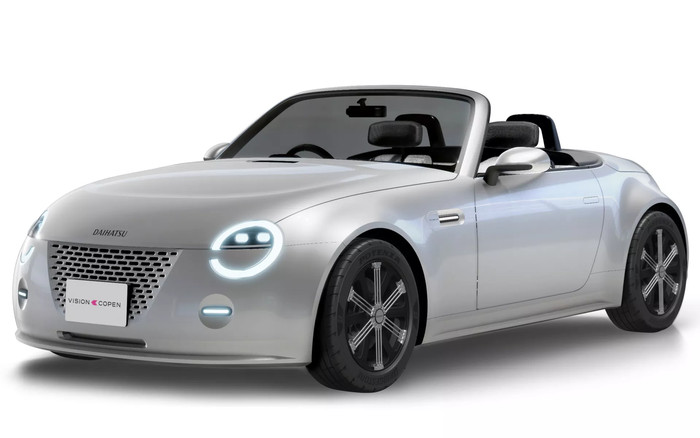
daihatsu vision copen concept
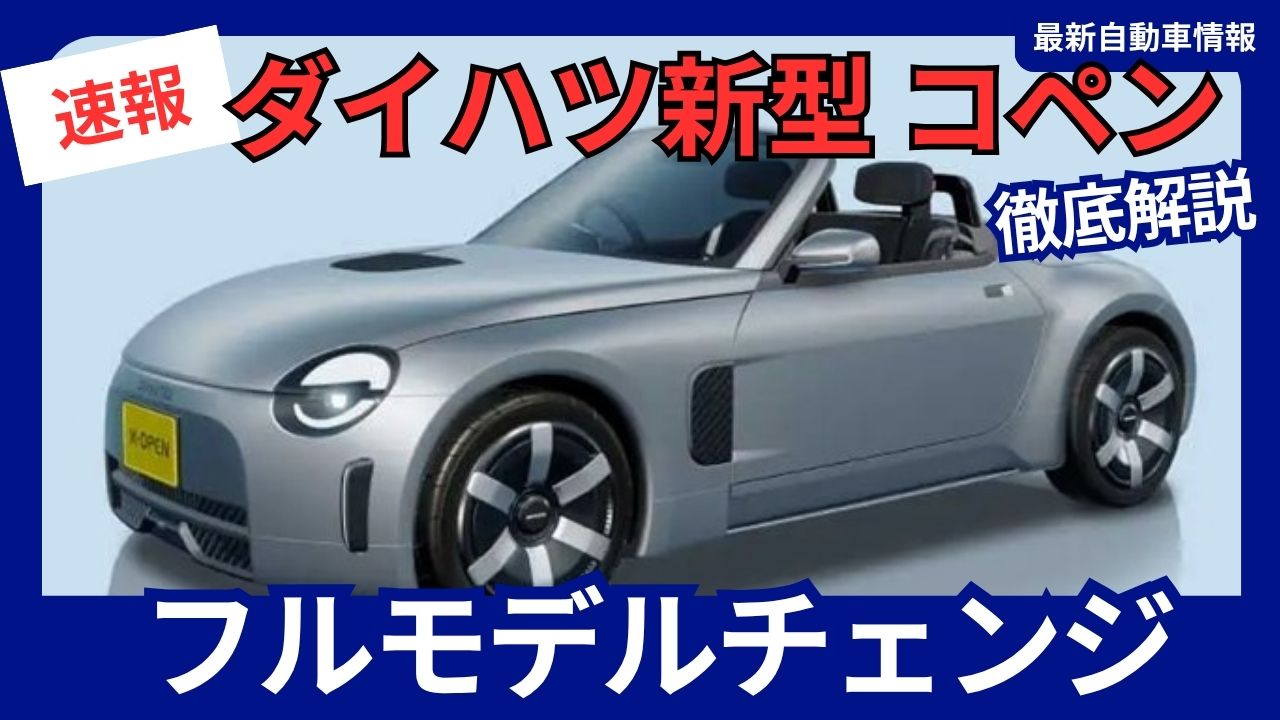
It’s worth noting that the new Cappuccino is being developed in collaboration with Daihatsu and Toyota. It shares its foundations with the VISION COPEN and K-OPEN Concept models unveiled by Daihatsu at the 2023 Japan Mobility Show, and is said to be related to Toyota’s S-FR project.

This collaboration between the three companies has increased the possibility of realizing a high-performance FR sports car while keeping development costs down. Development is thought to be progressing steadily with the aim of launching the car in 2027.
Benefits of launching in 2027
The delay in the release date to 2027 is not necessarily a negative factor. There are some potential benefits, such as:
Ensuring time for technological maturation
- More refined engine tuning
- Thorough refinement of chassis performance
- Equipped with the latest safety equipment and driving assistance systems
- Possibility of partial introduction of electrification technology
Adapting to market conditions
- Fully compliant with 2027 emission regulations
- Product planning based on the trends of competing models
- More accurate pricing and tiering
Detailed specifications of the new Cappuccino
Major changes: From a light vehicle to a regular vehicle
The biggest change to the new Cappuccino is the transition from light vehicle standards to standard vehicle standards, which allows for improved safety and the installation of more powerful engines.
Body size comparison with the first generation Cappuccino
| item | First generation Cappuccino (EA11R/EA21R) | New Cappuccino (prediction) |
|---|---|---|
| full length | 3,295mm | 3,835~3,895mm |
| Overall width | 1,395mm | 1,690~1,695mm |
| Overall height | 1,185mm | 1,215~1,265mm |
| Wheelbase | 2,060mm | 2,410~2,415mm |
| Vehicle weight | 690-700kg | Approximately 850-900kg (estimated) |
The overall length has been increased by approximately 600 mm and the overall width by approximately 300 mm, making it similar in size to the Suzuki Swift. This increase in size has improved collision safety performance and will enable it to meet modern safety standards.
Engine specs: 1.3L naturally aspirated engine
Powertrain specifications
- Engine type: Inline 3-cylinder 1.3L gasoline engine
- Maximum output: 115-120ps
- Maximum torque: 12.5-13.5kgm
- Transmission: 6-speed manual / 6-speed automatic
- Drive system: FR (rear-wheel drive)
- Estimated fuel economy: 16-17km/L (WLTC)
The first-generation Cappuccino was equipped with a 660cc turbo engine (64ps/10.5kgm), but the new model doubles the displacement. By adopting a naturally aspirated engine instead of a turbo, it achieves linear accelerator response and an engine feel that runs smoothly up to high rpm.
Its greatest appeal is the continuation of the FR drive system. With the engine mounted longitudinally at the front and driven by the rear wheels, it pursues the “fun of driving” that is unique to lightweight sports cars.
Possibilities unique to the 2027 model
With its release in 2027, it is possible that the car will be equipped with the latest technologies, such as:
- Adoption of a mild hybrid system
- Advanced variable valve timing mechanism
- Optimization of idling stop
- A more efficient fuel injection system
Exterior design: Modern sporty style
The design of the new Cappuccino is expected to retain the basic form of the first-generation long-nose, short-deck FR sports car, while incorporating modern elements.
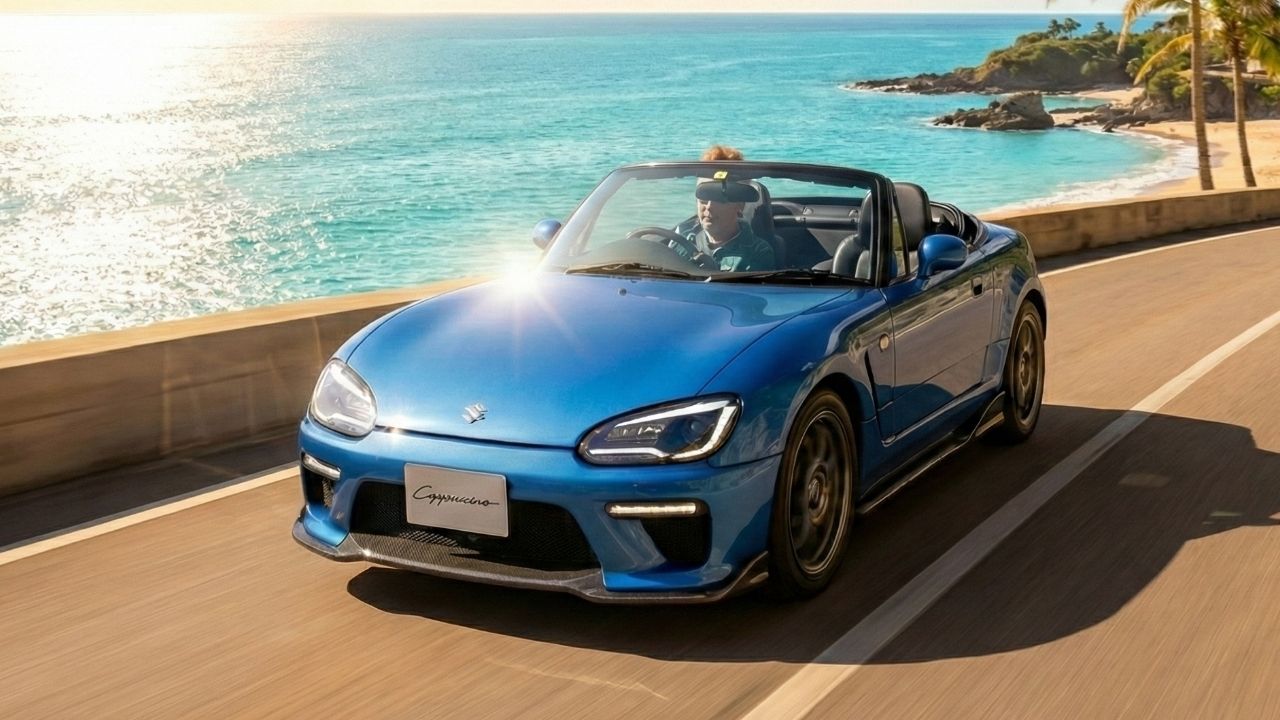
Design Features
- Sharp LED headlights (latest slim design)
- Front bumper that emphasizes width
- flared rear fender
- Electrically operated open-top roof
- Low vehicle height and elegant silhouette
- Body lines that take aerodynamic performance into consideration
The three-piece roof of the first-generation Cappuccino was manually removable, but the new model is expected to feature an electrically operated roof, allowing for more comfortable open-air driving.
As a 2027 model, it is expected to reflect the latest design language and incorporate advances in LED lighting technology and aerodynamics.
Interior: Equipped with the latest digital equipment
The interior of the new Cappuccino maintains a two-seater layout, but the increased body size significantly improves livability.
Expected equipment
- Full LCD digital meter cluster (12.3-inch class)
- Latest infotainment system (compatible with Apple CarPlay and Android Auto)
- Sports seats (emphasis on holding power)
- High-quality interior materials (soft padding, stitching)
- Driving assistance systems (collision mitigation braking, lane keeping assistance, etc.)
- Smartphone connectivity function
- Wireless Charging Pad
The first-generation Cappuccino had a very tight cockpit because it was a light car, but the new model is expected to have more space to enjoy sporty driving with ease.
We can expect the 2027 model to feature the latest connectivity features and an enhanced advanced driver assistance system (ADAS).
Price forecast for the new Cappuccino
Estimated price range: 2.8 million to 3.1 million yen
As for the price, which is the most important question, assuming a release date of 2027, it is expected to be around 2.8 million to 3.1 million yen, taking into account rising prices and technological advances.
Pricing Basis
- Toyota GR86: Approximately 3 million yen (as of 2025)
- Mazda Roadster: From approximately 2.8 million yen (as of 2025)
- Daihatsu Copen (current model): from approximately 2 million yen
Considering that the new car price of the first-generation Cappuccino was about 1.45 million yen, this is nearly double the price. However, if you take the following factors into consideration, it can be said that it actually offers excellent cost performance.
Why prices are rising
- Change from a light vehicle to a standard vehicle
- Increased development costs due to the installation of the latest safety features
- Development costs for FR-specific platforms
- Enhanced comfort features such as an electric roof
- Rising prices and labor costs (as of 2027)
- Equipped with the latest connectivity technology
- Costs of complying with 2027 emissions regulations
Considering that the GR86, a FR sports car in the same class, is priced from the 3 million yen range, the price range of 2.8 million to 3.1 million yen can be said to be relatively affordable.
Grade development forecast
- Base grade (6MT): Approximately 2.8 million yen
- High-grade (6MT): Approximately 2.95 million yen
- Base grade (6AT): Approximately 2.9 million yen
- High-grade (6AT): Approximately 3.05 million yen
- Special edition/limited model: from approximately 3.2 million yen
Should you wait for the new Cappuccino?: Key points to consider
Who should wait: The new model is recommended for these people
1. Those who want the latest safety equipment
The first-generation Cappuccino was built in the 1990s, so it falls short of modern safety standards. The new model is expected to come standard with the latest safety features expected in 2027, including a crash-safe body, airbags, electronic stability control, and automatic braking.
2. Those who want to enjoy open-top driving in greater comfort
With features like an electric roof, digital equipment, a comfortable interior, and smartphone connectivity, the new model is ideal for those looking for a sports car that can also be used on a daily basis.
3. Those who need manufacturer’s warranty and after-sales service
The benefits of buying a new car include a comprehensive warranty (3-year general warranty/5-year special warranty) and dealer support. If you want to drive a car with peace of mind for a long period of time, a new car is a better choice.
4. Those looking for a new FR sports car experience
With a 1.3L engine and modern chassis performance, you can experience a new driving experience that is different from the first generation. It is perfect for those who want to experience driving that incorporates the latest technology of 2027.
5. People who can afford to wait two years
The 2027 release date means there will be a waiting period of approximately two years from the end of 2025. For those who can continue to drive their current car during this time, or who have alternative means, it will be worth the wait.
People who should choose other options without waiting
1. People who need a sports car right away
If you can’t wait two years until 2027 and want to enjoy the sports car lifestyle right now, you should consider the current Roadster, a used S660, or the first-generation Cappuccino.
2. People on a budget
The market price for a used first-generation Cappuccino is around 500,000 to 2,000,000 yen, depending on the condition. You may be able to purchase one for less than half the price of a new model.
3. Those who value the maintenance costs unique to light vehicles
- Automobile tax: 10,800 yen for a light vehicle vs. 30,500 yen for a standard vehicle (1.3L)
- Vehicle inspection costs: Light vehicles are generally cheaper
- Tire size: Small size means low replacement costs
- Expressway tolls: Light vehicles are cheaper (some sections)
4. Those looking for an original light sports car experience
The combination of the first-generation Cappuccino’s lightweight body weighing less than 700 kg and FR turbo is one of a kind. This pure driving feel cannot be experienced with the new model.
5. People who enjoy customization and tuning
The first-generation Cappuccino has a wide range of aftermarket parts available, making it a popular base for customization. If you want to customize it to your liking, a used car is a better choice.
6. People who want to avoid release uncertainty
The 2027 release date has not yet been confirmed, so if you want to avoid the risk of changes or cancellations, you should choose a model that is already on the market.
You should also consider the possibility that it may not come out.
It is also impossible to ignore the fact that the search term “new Suzuki Cappuccino not coming out” appears frequently in multiple media outlets.
Risk factors for discontinuing development
- Profitability issues : Limited sales in the niche sports car market
- Responding to electrification : By 2027, companies will be focusing more on developing electric vehicles, making it difficult to invest in gasoline sports cars
- Costs of complying with safety regulations : The cost of meeting the latest safety standards for a small sports car is high
- Changes in business decisions : Plans may change due to changes in market conditions
- Carbon Neutral Policy : Environmental Regulations May Become Even Stricter by 2027
However, Suzuki has a track record of fully redesigning the Jimny for the first time in 20 years, and is a manufacturer that is willing to respond to the voices of its fans. It also shows a proactive stance toward sports and leisure, with plans to announce the Jimny Nomad (5-door Jimny) in 2025.
Comparison with competing models
When deciding whether to wait for the new Cappuccino, it’s also important to compare it with other competing sports cars.
Main competing models
1. Mazda Roadster (ND model)
- Price: From approximately 2.8 million yen
- Engine: 1.5L/2.0L naturally aspirated
- Drive system: FR
- Features: The world’s best-selling lightweight sports bike
Advantages : Already on the market, with a proven track record and reliability. Highly refined driving performance.
Disadvantages : Open-top only, no roof (except for the RF). Larger and heavier than the new Cappuccino.
2. Toyota GR86 / Subaru BRZ
- Price: Approximately 3 million yen
- Engine: 2.4L horizontally opposed 4-cylinder
- Drive system: FR
- Features: A genuine sports coupe
Advantages : More serious sporty driving is possible. High level of perfection.
Disadvantages : Not an open car. High price. More powerful than the new Cappuccino, but heavier.
3. Daihatsu Copen (current model)
- Price: Approximately 2 million yen
- Engine: 660cc turbo
- Drive system: FF
- Features: Open sports minicar
Advantages : Low maintenance costs. Equipped with an electric roof. Cheaper than the new Cappuccino.
Disadvantages : FF drive. There are times when you feel a lack of power. Limited livability due to light vehicle standards.
4. Honda S660 (discontinued)
- Used car market price: Approximately 2 million to 4 million yen
- Engine: 660cc turbo
- Drive system: MR (midship)
- Features: Mid-engine layout lightweight sports car
Advantages : Unique drive layout. Rare. Disadvantages
: Already out of production. Used prices are soaring. Prices may continue to rise.
5. Alpine A110 (Imported)
- Price: Approximately 8 million yen
- Engine: 1.8L turbo
- Drive system: MR
- Features: French lightweight sports
Advantages : A full-fledged mid-engine sports car with an exotic presence.
Disadvantages : The price is about three times that of the new Cappuccino. Maintenance costs are also high.
Positioning of the new Cappuccino
The new Cappuccino is likely to fall somewhere in between these rivals.
- Smaller and more affordable than the Roadster (expected)
- More spacious and faster than the Copen
- More compact and open than the GR86
- A successor to the S660 (although there is a difference between FR and MR)
- Much more affordable than the Alpine
In other words, it may be the only option that meets the needs of those who want to enjoy a full-fledged FR open sports car at an affordable price.
Market environment as of 2027
By 2027, the automobile market may be leaning even further toward electrification. In that context, gasoline-engine FR sports cars may become valuable. As the “last” small-displacement FR gasoline sports car, it may even have historical value.
Relationship with Swift Sport Evolution
When talking about the new Cappuccino, one thing that cannot be overlooked is the existence of the Swift Sport Evolution.
Possibility of platform sharing
Suzuki is currently developing a platform for a new generation of compact sports cars that focuses on performance. This platform could potentially support the following two vehicles:
- Swift Sport Evolution : A front-wheel drive hot hatch
- New Cappuccino : FR-drive open sports car
The strategy is to reduce development costs by sharing the same base, while giving each vehicle a different character by changing the drive system and body shape.
Separation of the two cars
- Swift Sport Evolution : Designed for everyday use, highly practical, and reasonably priced (estimated at around 2.5 million yen)
- New Cappuccino : Focused on pure sports driving, more hobby-oriented, and expensive (estimated at 2.8 million to 3.1 million yen)
With these two cars being released around the same time around 2027, Suzuki’s sports lineup could be significantly strengthened.
Expectations for synergistic effects
The combination of these two sports models is expected to produce the following synergistic effects:
- Improved brand image (reviving “the driving Suzuki”)
- Efficient use of technology development resources
- Cost reduction through parts standardization
- Accumulating sports car sales know-how through dealer networks
- Expanding the user base (accommodating both practical users and purists)
Pre-order start date and purchase preparation
Expected sales schedule
Assuming a release date of 2027, the following schedule is expected:
- Summer 2026 : Release of concept model/prototype
- Fall-Winter 2026 : Official announcement at the Japan Mobility Show
- Spring 2027 : Pre-orders begin
- Summer to Autumn 2027 : Delivery begins
Looking at the past examples of the Jimny and Swift Sport, popular models are often flooded with orders immediately after pre-orders begin, resulting in long wait times for delivery. At one point, the new Jimny saw customers waiting more than a year for delivery.
Preparations you can make now (as of the end of 2025)
There are still about two years until the 2027 release, but starting preparations now will give you an advantage.
1. Building a relationship with your nearest Suzuki dealer
Finding a trusted sales representative will help you stay up to date with the latest information and may even give you priority when booking.
- Visit the dealer regularly
- Inquire about new car information
- Have your current car inspected and serviced at a Suzuki dealership
- Subscribe to our email newsletter and official LINE account
2. Prepare a financial plan
- Prepare a down payment (save 500,000 to 1,000,000 yen)
- Pre-check for loan application
- Consider the best time to sell your current car
- Check the quote for optional insurance
Over two years, you can save about 35,000 yen per month to save up a down payment of 1 million yen.
3. Continuing to collect information
- Check the Suzuki official website
- Check the latest articles from automotive media (Car Sensor, Best Car, Response, etc.)
- Gathering information on social media (Twitter/X, Instagram, YouTube)
- Participating in Suzuki-related events (motor shows, test drives, etc.)
4. Test drive competing models
We recommend test driving competing models now to decide whether you should wait until 2027.
- Mazda Roadster
- Toyota GR86
- Daihatsu Copen
- First generation Cappuccino (if test drive available at used car dealership)
By experiencing it for yourself, you will be able to decide whether or not you should really wait for the new Cappuccino.
5. Maintenance of your current car
If you plan to keep driving your current car until 2027, make sure to maintain its value with proper maintenance.
- Regular inspection and maintenance
- Car wash and waxing
- Indoor cleaning
- Safe driving without creating a repair history
- Storage of vehicle inspection certificates and maintenance records
A review of the original Cappuccino
Before we consider the new model, let’s take a look back at what the original Cappuccino was like.
Development Concept
The name Cappuccino comes from the Italian word for espresso coffee with cinnamon, “cappuccino.” It was chosen to evoke the image of a “stylish drink with a slightly unusual flavor served in a small cup,” which was then applied to the small, open-top car.
Heisei ABC Trio
In the early 1990s, three light sports cars appeared one after the other in Japan.
- A utozam AZ-1 (Mazda): MR sports car with gull-wing doors
- Honda Beet: Mid-engine open sports car
- C appuccino (Suzuki): FR open sports car
These three cars were known as the “Heisei ABC Trio” and ushered in the golden age of light sports cars. When the new Cappuccino is released in 2027, 29 years from now, it will become a symbol of the revival of sports cars in the Reiwa era.
Technical features
1. FR layout
The Alto Works engine was mounted longitudinally, achieving a front midship configuration. The front-to-rear weight distribution was an ideal balance of 51:49. This FR philosophy will be carried over to the new model.
2. Four-wheel double wishbone suspension
The car is the first to feature a four-wheel double wishbone suspension in a minicar, achieving excellent handling performance. We expect the new model to offer suspension performance that is equal to or better than this.
3. Three-piece roof
The roof is a three-piece structure that can be removed and stored in the trunk, allowing for three styles: fully open, T-top, and fully closed. The new model is even more convenient with its electrified roof.
Further evolution with minor changes
In a minor change in 1995, the engine was changed to an all-aluminum K6A type, which significantly increased maximum torque from 8.7 kgm to 10.5 kgm, and reduced the vehicle weight by 10 kg to 690 kg.
This spirit of “constant evolution” will surely be carried over to the new model after 29 years.
Production volume and rarity
Only 26,583 units were produced over the seven years from 1991 to 1998. This rarity is one of the reasons why it still commands a high price on the used car market today.
The new Cappuccino will likely be produced in limited numbers as a niche sports car, and it may also have potential for future asset value.
Frequently Asked Questions (FAQ)
Q1: Will the new Cappuccino really be released in 2027?
A: Several reliable automotive media outlets predict a 2027 release, but there has been no official announcement from Suzuki yet. While there are likely development plans, they may change depending on market conditions and management decisions. We’ll have to wait for an official announcement in late 2026.
Q2: Why a standard car and not a minicar?
A: It is difficult to meet modern safety standards and collision safety performance with the limited size of a minicar. In particular, safety regulations are expected to become even stricter as of 2027. Also, it is thought that the transition to standard car standards was chosen to provide more ample power and comfort.
Q3: Should I buy a used first-generation Cappuccino now?
A: The average used price for a first-generation Cappuccino is around 500,000 to 2,000,000 yen, depending on the condition. Many of these vehicles are over 27 years old, so a thorough inspection is necessary before purchasing. It is important to choose a car with a clear maintenance history and no history of repairs. With two years until 2027, you could consider purchasing one as a stopgap until then, and then switching to a new model when it is released.
Q4: How much does it cost to maintain a new Cappuccino?
A: As this is a standard car (1.3L), the estimated annual maintenance costs are as follows:
- Automobile tax: 30,500 yen/year (subject to change as of 2027)
- Vehicle inspection fee: Approximately 100,000 to 120,000 yen/2 years
- Optional insurance: Varies greatly depending on age and grade (approximately 50,000 to 150,000 yen per year)
- Gasoline costs: Assuming a fuel efficiency of 16km/L and driving 10,000km per year, approximately 120,000 yen (depending on gasoline prices)
- Tire replacement: Approximately 60,000 to 80,000 yen (4 tires, once every 2 to 3 years)
The total annual maintenance costs are expected to be around 250,000 to 350,000 yen. Although the maintenance costs are higher than those of the first generation minicar, they are still at the standard level for a regular sports car in the same class.
Q5: When does booking start?
A: The official announcement is expected to be in the second half of 2026, with reservations expected to begin around spring 2027. As it is likely to be a popular model, we recommend contacting a dealer in 2026 so that you can process your reservations as soon as they open. If you let them know in advance that you’re interested in the new Cappuccino, you may be given priority when official information is released.
Q6: Is it worth waiting two years?
A: This depends on your personal circumstances and values. Please consider the following factors:
When is it worth the wait?
- I want the latest technology and safety equipment.
- I’m still attached to my current car and can keep driving it for another two years.
- I need time to save money
- I’m attracted to the value of this unique new FR open sports car
When to not wait
- I want a sports car now
- Unable to accept the uncertainty of the release
- Other options (Roadster, etc.) are satisfactory enough
Q7: Is there a possibility of electrification?
A: As of 2027, it is more likely that the car will be equipped with a mild hybrid system than a full EV. Full electrification would increase the vehicle weight and potentially diminish its appeal as a lightweight sports car, so it is likely that the gasoline engine-based powertrain will be maintained. However, there is a possibility that partial electrification technologies (regenerative braking, electric turbo, etc.) will be adopted.
Summary: Should you wait for the new Cappuccino or decide now?
The new Suzuki Cappuccino is a dream come true for Japanese car enthusiasts, potentially making a comeback after a 29-year hiatus. But whether you should wait until 2027 or act now depends on your priorities.
Who should wait for the new Cappuccino (until 2027)?
- Seeking the latest safety equipment and comfort
- Manufacturer’s warranty and after-sales service required
- Expect more ample power and driving performance
- I want to consider everyday use as well.
- I want the satisfaction that only a new car can provide.
- I’m still attached to my current car and can keep driving it for another two years.
- I want time to plan and save money
- The value of this “one-of-a-kind” new FR open sports car is appealing
People who should choose other options now
- I need a sports car right now
- I can’t wait two years
- I want to keep my budget low (first generation used cars are cheaper)
- Emphasis on the maintenance cost benefits of light vehicles
- Looking for an original light FR sports experience?
- I want to enjoy customizing and tuning
- Want to avoid the uncertainty of new model releases
- I am satisfied with the highly refined models already on the market (such as the Roadster).
The middle option: a “bridge” strategy
There are ways to make the most of the two-year period.
Pattern 1: “Preparation” with the original Cappuccino
- I just bought a good-condition first-generation Cappuccino (around 1-1.5 million yen).
- Enjoy the FR open sports car until 2027
- Switch to a new model when it is released (the first generation is rare and therefore unlikely to lose value)
Pattern 2: Save money with a practical car
- Save money on your current car for two years
- Save 40,000 yen per month to secure a down payment of 1 million yen
- Purchase with plenty of time when the new model is released
Pattern 3: Studying competing models
- Purchase a Roadster or GR86 and experience the charm of a FR sports car.
- Compare the new Cappuccino in 2027 and choose the one you really want
- Continue your sports car life without interruption
Final decision point
The arrival of the new Cappuccino is not yet 100% confirmed, but considering the partnership with Daihatsu and Toyota, the existence of the VISION COPEN concept, consistent coverage by multiple media outlets, and Suzuki’s aggressive stance toward sports and leisure with the announcement of the Jimny Nomad in 2025, it is not unlikely that it will actually happen.
My suggestion
- Continue gathering information until late 2026 to see if there will be an official announcement.
- At the same time, look for used first-generation cars and competing models : consider them if you find any good quality ones.
- Actively test drive competing models : Experience the Roadster, GR86, Copen, etc.
- Plan ahead and prepare your funds : Save 30,000-40,000 yen per month to cover either option.
- Building relationships with dealers : Regularly visit Suzuki dealers from 2026
The most important thing is to clarify what you want to enjoy in a sports car. The exhilaration of open-air driving, the handling unique to FR, and the agility of a lightweight body – the values that the Cappuccino has offered will never fade over the years.
Stay tuned for further updates from late 2026 to 2027 to see if the new Cappuccino will actually be released, and discover your own “driving pleasure.”
Hopes for the future, 2027
The year 2027 may mark a major turning point for the automotive industry. Electrification is accelerating, autonomous driving technology is becoming more widespread, and the very concept of the “car” is about to change.
It is precisely in these times that the value of the new Cappuccino, which pursues the “joy of driving,” “the heartbeat of the engine,” and “the feeling of interacting with the road through the steering,” may actually increase.
It’s possible that the new Cappuccino will go down in automotive history as the “last small-displacement, rear-wheel drive, gasoline sports car.”
Imagine yourself getting behind the wheel two years from now. Whether it’s a new Cappuccino, the original Cappuccino, or a different sports car, whatever your choice, those moments will surely enrich your life.
The latest information will be updated regularly.
The information in this article is current as of November 2025. We will update this article as soon as we have the latest information on the new Cappuccino. Please bookmark this article and check it regularly.
Related articles to read next
- Suzuki Jimny Nomad (5-door) detailed explanation
- Daihatsu New Copen 2027 Full Model Change Information
- Is there a chance that the Toyota S-FR will be revived? Latest status
- Swift Sport expected to be released in 2026
- The ultimate guide to the best sports cars to buy in 2027
- First-generation Cappuccino used car buying guide: points to note and checkpoints