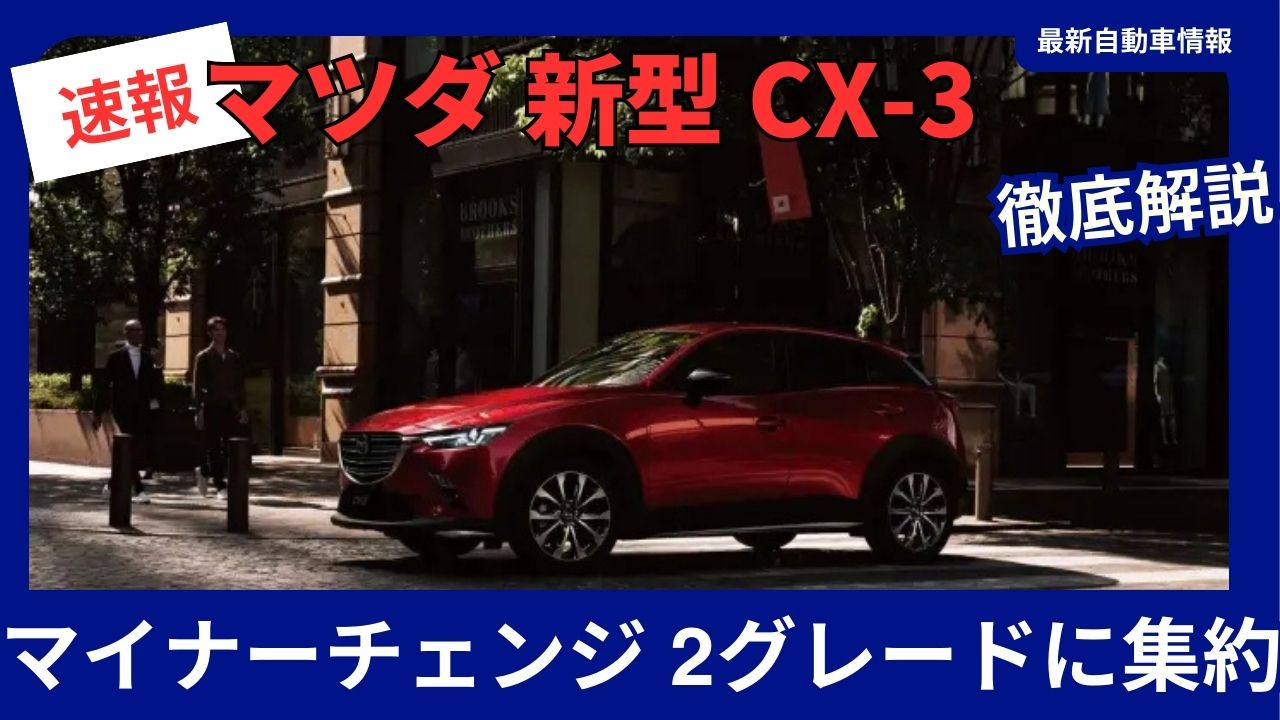


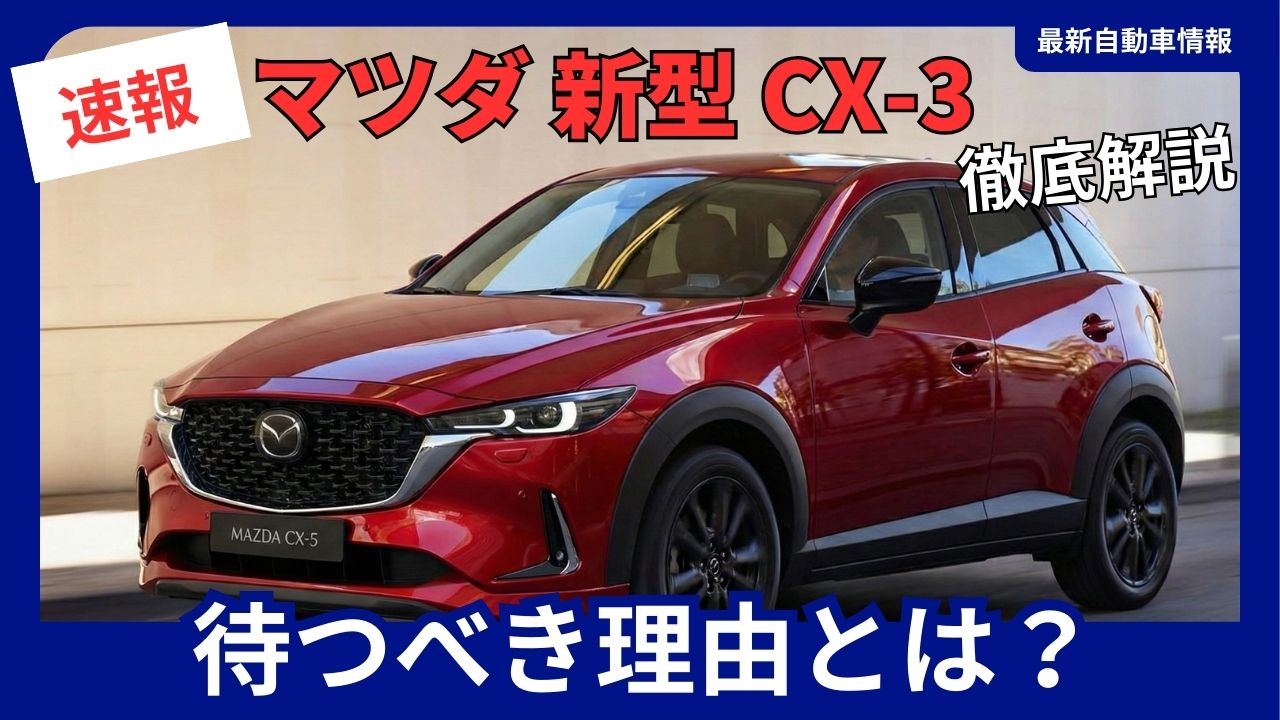
It’s becoming increasingly likely that Mazda’s compact SUV, the CX-3, will undergo a full model change in 2026. Eleven years have passed since the current model was released in 2015, and production has been moved to Thailand. Should you wait for the new CX-3, or should you buy the current model? This article provides detailed information for those considering purchasing one, based on the latest information.
Latest information on the full model change of the CX-3
Release date: Most likely late 2026
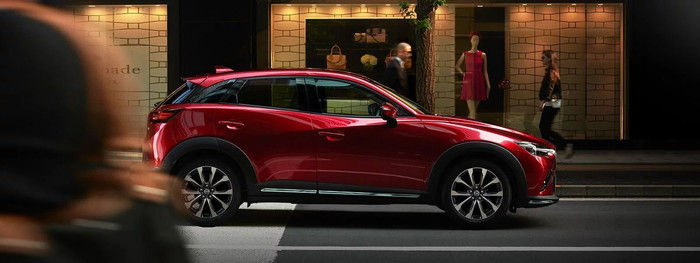
According to the electrification roadmap announced by Mazda at the “Multi-Solution Briefing 2025” held in March 2025, the introduction of the new CX-3 is suggested as a “compact SUV produced in Thailand.”
According to multiple sources, the second half of 2026 is the likely release date, with the current model expected to undergo its final annual update in 2025 before production ends around February 2026.
Production system: Re-imported model produced in Thailand
The current CX-3 production base was transferred from the Hofu Plant in Yamaguchi Prefecture to Thailand in June 2022, and the new model is expected to continue to be imported from Thailand. This is thought to be due to Mazda’s strategy of prioritizing the ASEAN market and ensuring cost competitiveness.
Design and appearance of the new CX-3
New generation design
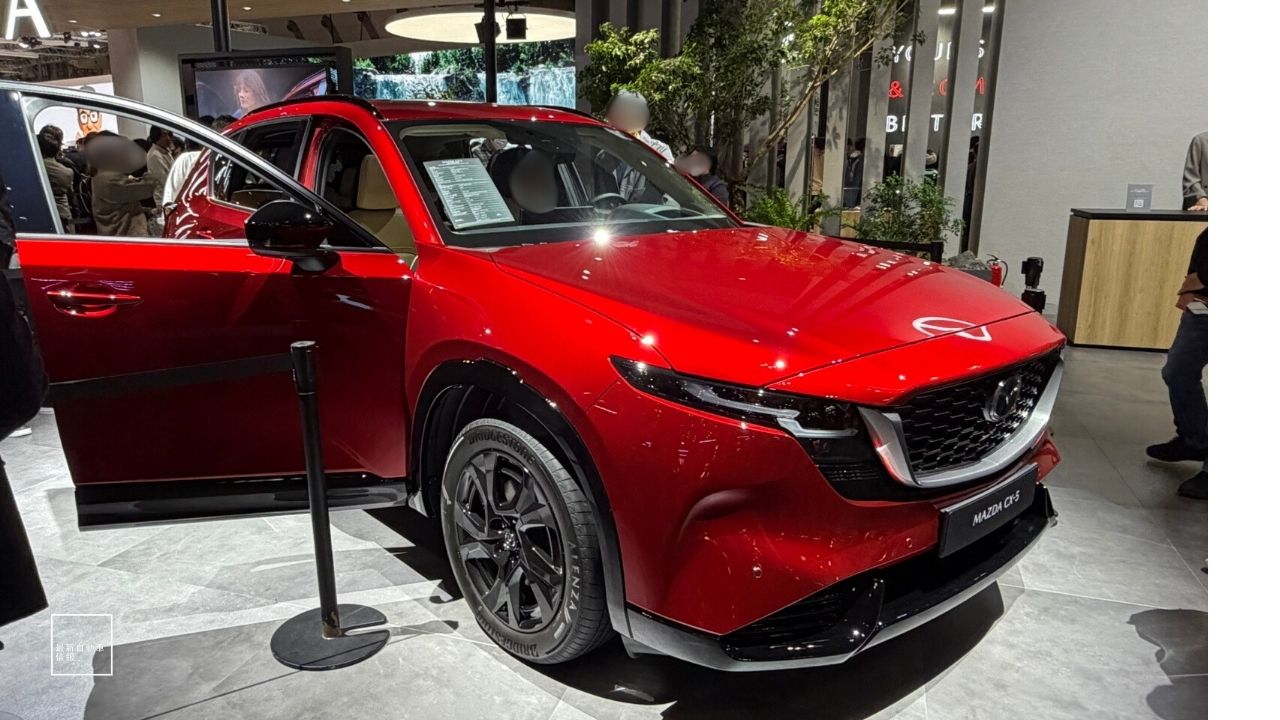
The exterior design of the new CX-3 will be significantly different from the current model, and is expected to adopt the latest design language shared with the higher-end CX-60 and the next-generation CX-5 .
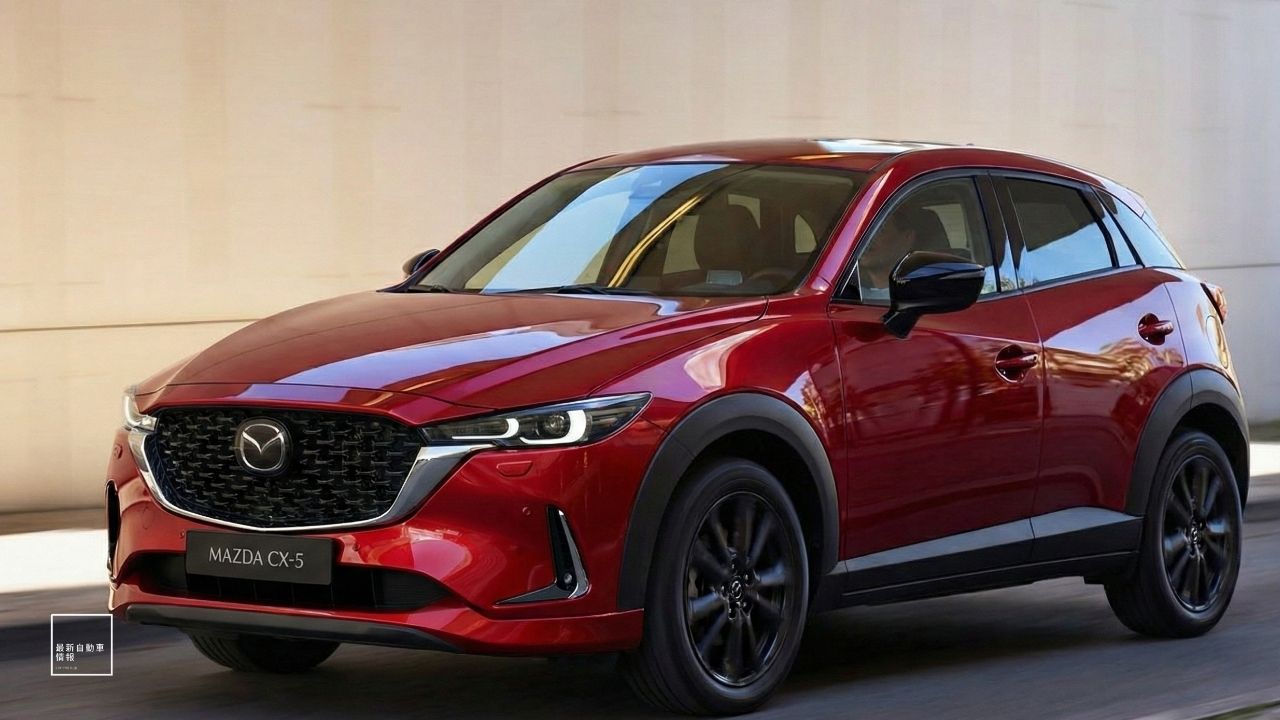
Mazda CX-3 predicted CG
Major design changes:
- Coupe-SUV style : The rear window is slanted to create a sporty silhouette.
- Elegant body lines : A further evolution of Mazda’s “KODO – Soul of Motion” design, with a smoother design
- Powerful accent : A dedicated guard is placed on the bottom of the vehicle to express the strength of an SUV.
- High-quality impression : More sophisticated styling while differentiating it from the CX-30
While the current model is a crossover based on a compact hatchback, the new model will have a stronger presence as a full-fledged SUV.
Body size and interior space
Increased comfort with larger size
The new CX-3 is expected to have a larger body size than the current model.
Estimated body size:
- Length x width x height: approx. 4,310 x 1,765 x 1,540 mm
- Wheelbase: Approximately 2,600 mm
Reference: Current model
- Length x width x height: 4,275 x 1,765 x 1,550 mm
- Wheelbase: 2,570mm
The overall length has been increased by approximately 35 mm and the wheelbase by approximately 30 mm, improving passenger comfort and luggage space in particular.
New generation platform
By adopting a new generation vehicle structural technology called SKYACTIV-VEHICLE ARCHITECTURE , high rigidity and excellent ride comfort are achieved, providing a superior driving feel.
Evolution of interior design
Significant improvement in texture and innovation
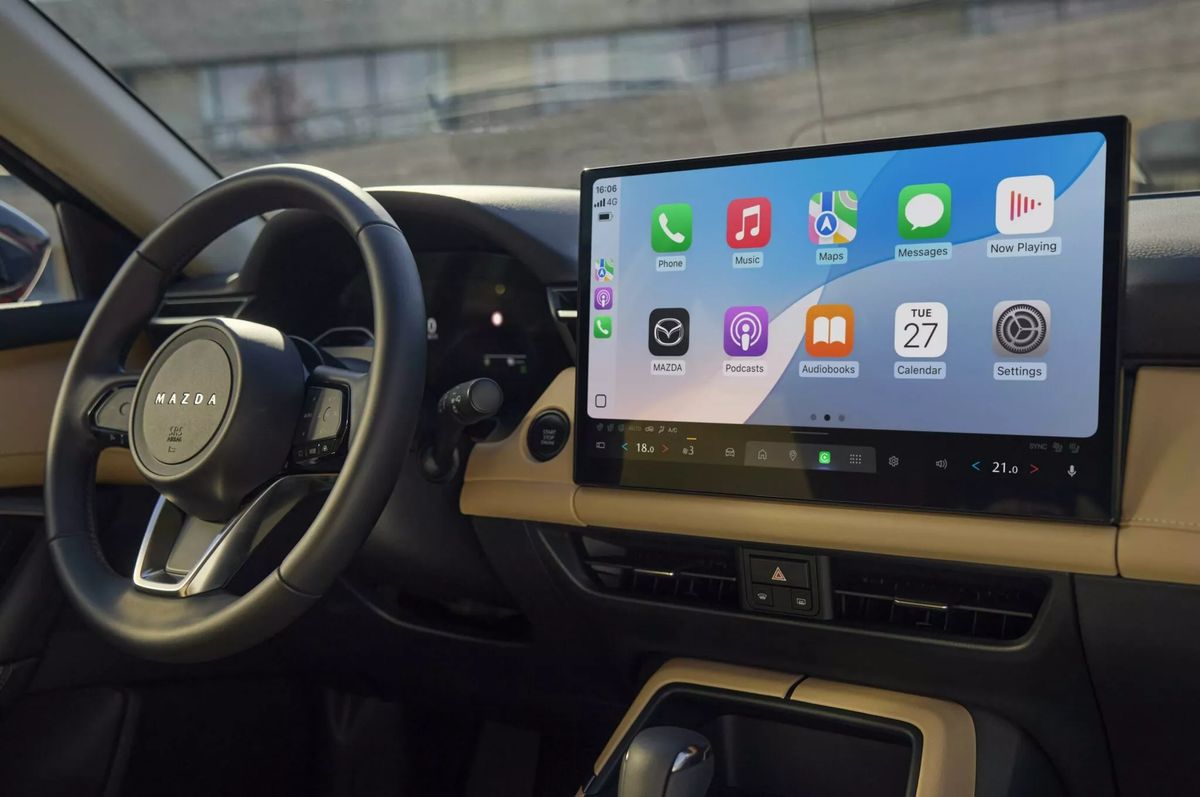
MAZDA CX-5
The interior of the new CX-3 is expected to be of high quality, combining the latest technology with high-quality materials.
Key interior features:
- Digital meter : The latest digital meter displays a wide range of vehicle information in an easy-to-understand manner
- Touch-enabled infotainment : A next-generation connectivity system with excellent operability
- Android Auto/Apple CarPlay compatible : Smartphone connectivity is standard equipment
- Minimalist design : Fewer operation buttons for a clean, light impression
- High-quality materials : High-quality trim and seat materials
The increased interior space provides greater comfort and practicality, from the rear seats to the luggage space.
Powertrain and fuel economy
Mild hybrid system standard on all vehicles
The new CX-3 will be equipped with the latest powertrain with improved environmental performance.
Expected powertrain lineup:
1. SKYACTIV-G 1.5 (gasoline + mild hybrid)
- Engine : Inline 3-cylinder 1.5L gasoline
- Engine output : Approximately 111ps/14.7kgm
- Motor output : approx. 6.5ps/6.2kgm
- Estimated fuel economy : Approximately 21km/L (WLTC)
2. SKYACTIV-D 1.5 (Diesel + Mild Hybrid)
- Engine : Inline 3-cylinder 1.5L diesel turbo
- Engine output : Approximately 105ps/25.5kgm
- Motor output : approx. 6.5ps/6.2kgm
- Estimated fuel economy : Approximately 26km/L (WLTC)
3. SKYACTIV-X 1.5 (high-end grade)
- Engine : Inline 3-cylinder 1.5L SKYACTIV-X
- Engine output : Approximately 145ps/18.5kgm
- Motor output : approx. 6.5ps/6.2kgm
- Estimated fuel economy : Approximately 23km/L (WLTC)
Transmission : 6-speed automatic or 6-speed manual.
Drive system : FF or 4WD.
Possibility of setting up a notable rotary PHEV model
The most noteworthy feature is the “Rotary-EV” plug-in hybrid, which uses a rotary engine as a generator.
Rotary-EV specs (estimated):
- System : Electric motor + 830cc rotary engine (for power generation only)
- Engine output : Approximately 72ps/11.4kgm
- Motor output : approx. 180ps/28.0kgm
- Total system output : approx. 170ps/26.5kgm
- Battery capacity : 17.8 kWh
- EV range : Approximately 107-110km
- Charging time :
- Normal charging: Approximately 1 hour 40 minutes
- Rapid charging: Approximately 25 minutes (20% → 80%)
- Total cruising range : Approximately 640 km (when using gasoline)
This rotary PHEV follows the “e-SKYACTIV R-EV” technology used in the MX-30, and takes advantage of the characteristics of the compact rotary engine, efficiently packaging it in the motor room.
It can be used as an EV on a daily basis, and when driving long distances, the rotary engine can generate electricity while driving, allowing you to enjoy the benefits of electrification without worrying about charging infrastructure.
Significant improvement in fuel economy
The current CX-3 diesel model has a fuel economy of 23.2km/L (FF), but the new model is expected to improve to approximately 26km/L thanks to the adoption of a mild hybrid system. The gasoline model is also expected to improve from the current 17.0km/L to approximately 21km/L .
Advanced safety equipment “i-ACTIVSENSE”
Equipped with the latest active safety technology
The new CX-3 will be equipped with the latest version of Mazda’s advanced safety technology package, i-ACTIVSENSE.
Main safety features:
- Advanced SCBS (with nighttime pedestrian detection function) : Improves pedestrian recognition accuracy at night
- Traffic Jam Assist (TJA) : Automatically controls acceleration, braking, and steering
- Forward Cross Traffic Alert (FCTA) : Advance warning of intersection dangers
- Rear Cross Traffic Alert (RCTA) : Improved safety when backing up
- Blind Spot Monitoring (BSM) : Detects vehicles behind and to the side
- Traffic Sign Recognition System (TSR) : Recognizes speed limit and other signs
- Lane Keeping Assist System (LAS/LDWS) : Prevents lane departure
- Adaptive LED Headlights (ALH) : Optimized nighttime visibility
- Driver Monitoring (DM) : Monitors the driver’s condition
With comprehensive safety equipment comparable to that of higher-end models, it achieves top-of-class safety performance.
Price range forecast
Although the price has increased from the current model, the equipment is well-equipped
The expected price range for the new CX-3 is as follows:
Estimated price:
- Gasoline model : Approximately 2.4 million to 2.8 million yen
- Diesel model : Approximately 2.8 million to 3.2 million yen
- SKYACTIV-X model : Approximately 3.2 million to 3.6 million yen
- Rotary PHEV model : Approximately 4 million to 4.5 million yen
Reference: Current model price (2024)
- 1.5L gasoline: 2,279,000 yen to 2,950,000 yen
- 1.8L Diesel: 2,796,000 yen to 3,434,000 yen
Due to the adoption of the latest equipment and electrification technology, a certain price increase from the current model is inevitable, but considering the equipment included, the price can be said to be reasonable.
In particular, the rotary PHEV model is expected to be priced at around 4.5 million yen as the top-of-the-line model, but the actual price may be kept down by applying subsidies.
Current CX-3 sales status and future
Sales volume is sluggish
Looking at the current sales situation for the CX-3, the situation remains tough.
Sales figures for 2024:
- Annual sales: 8,045 units
- Monthly average: Approximately 670 units
- Peak month (February): 1,418 units
- Minimum month (January): 143 units
Compared to Mazda’s SUV lineup, this figure is significantly lower than the CX-5 (approximately 9,997 units per six months) and CX-30 (approximately 5,529 units per six months), clearly showing the car’s struggles in the compact SUV market.
Production is scheduled to end in February 2026
According to information from multiple dealership sources, the current CX-3 will undergo its final annual improvement in 2025 , with production expected to end around February 2026 .
Comparison with competing models
The compact SUV market is a fierce battleground
The compact SUV market where the new CX-3 will be launched is a highly competitive area crowded with attractive models from Japan and abroad.
Main competitors:
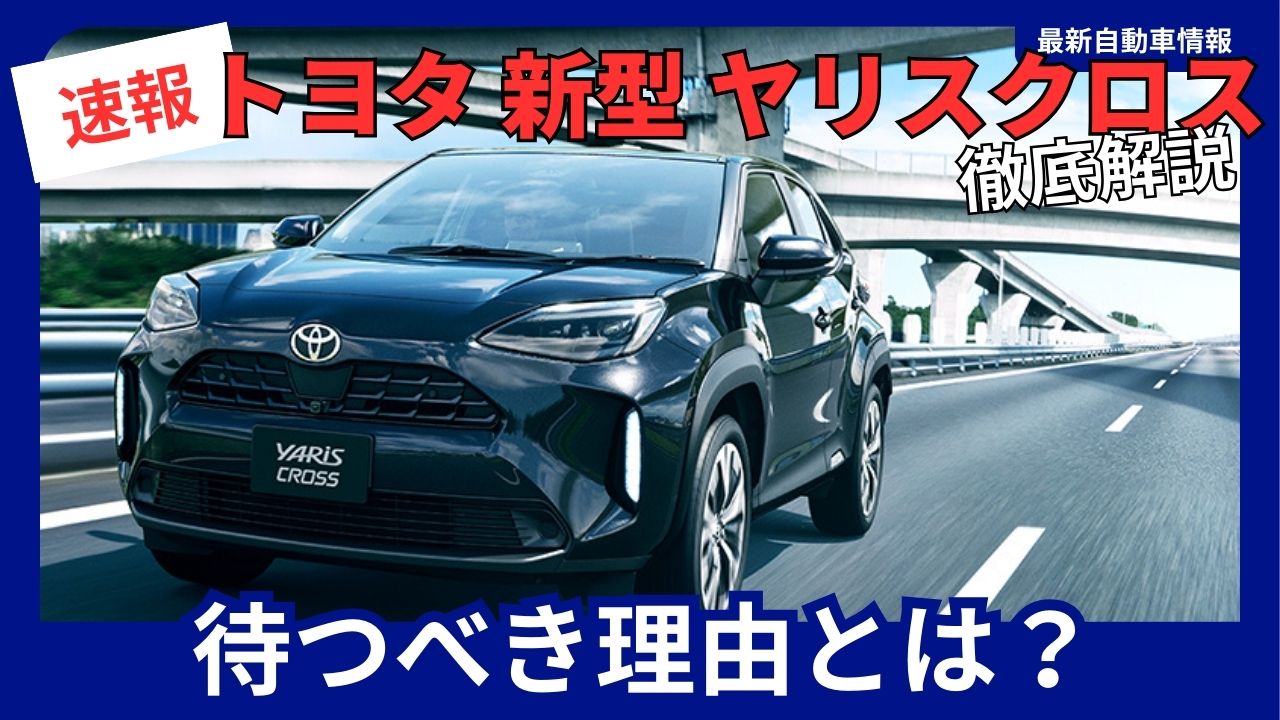
- Toyota Yaris Cross : Price from 1.89 million yen, hybrid version available
- Honda Vezel : Price starting from 2.39 million yen, equipped with e:HEV
- Nissan Kicks : Price from 2,990,000 yen, e-POWER only
- Subaru Crosstrek : Price starting from ¥2.66 million, AWD standard
Compared to these competitors, the new CX-3 will differentiate itself with its unique electrification technology, the Rotary PHEV , and Mazda’s signature high-quality driving performance and feel.
Should I wait for the new CX-3? Criteria for deciding when to buy
Cases to wait
We recommend waiting for the new model if any of the following apply to you:
- Emphasis on the latest technology : The rotary PHEV and the latest safety features are appealing
- Styling is important : Not satisfied with the design of the current model
- Emphasis on fuel efficiency : Expectations for improved fuel efficiency through mild hybrid
- No rush to purchase : Can afford to wait until late 2026-2027
- Interest in electrification : Interested in EVs and PHEVs, and have a charging environment
Cases where you should consider purchasing the current model
Buying the current model is an option if:
- Early delivery : I need a car right away
- Price-conscious : Possibility of getting a good deal before production ends
- Simplicity : Prefer simple powertrains over complex electrification technologies
- Emphasis on track record : Evaluate the reliability of current models with a 10-year sales track record
- Price negotiation : You can expect discounts during inventory clearance periods
Specific advice on when to buy
If you are considering purchasing in 2025:
- The 2025 model after the annual improvement is the best target
- As production nears its end, there is a possibility of price reductions due to inventory clearance.
- However, popular grades and colors may sell out early.
If you are waiting for a new model:
- Information gathering will begin around spring 2026, with a planned release in the second half of 2026.
- Consider the possibility that delivery times may be extended immediately after release
- If you want to avoid the initial lot, there are options after 2027
Frequently Asked Questions (FAQ)
Q1: When is the new CX-3 released?
A: There has been no official announcement yet, but the second half of 2026 is likely. Mazda’s electrification roadmap suggests the introduction of a “Thailand-made small SUV” in 2026.
Q2: Will the rotary PHEV really be installed?
A: It is expected to feature rotary PHEV technology, which has been proven in the MX-30, but this is not yet confirmed. However, it has been mentioned by multiple sources and is considered highly likely.
Q3: Until when can I purchase the current model?
A: It has been reported that production will end around February 2026. It will be possible to purchase it through 2025, but popular models may sell out early.
Q4: What are the major differences between the new model and the current model?
A: The main changes include a new design, an increased body size, the standardization of a mild hybrid, the addition of a rotary PHEV, and the inclusion of the latest safety equipment.
Q5: How much will the price increase?
A: Prices are expected to rise by around 200,000 to 500,000 yen from the current model. The rotary PHEV model in particular is expected to see a significant price increase of around 4.5 million yen, but the actual cost may be reduced with the application of subsidies.
Q6: Is the quality good since it is made in Thailand?
A: The current CX-3 will also be produced in Thailand from 2022, but Mazda’s quality standards are the same worldwide. The Thai plant is an important base for the ASEAN market, so there is no need to worry about quality.
Summary: Deciding whether to buy the new CX-3
The new Mazda CX-3 model is expected to undergo its first full model change in approximately 11 years in the second half of 2026. Significant improvements from the current model are expected, including new-generation design, electrification technology, and advanced safety features.
Those who should wait for the new model:
- Seeking the latest technology and design
- I’m attracted to the rotary PHEV
- Can wait until late 2026
Who should consider the current model:
- Early delivery required
- Prefer a simple powertrain
- I want to buy under favorable conditions
In any case, we recommend you wait for Mazda’s official announcement and make a decision based on your needs and budget. The new CX-3 is expected to be an attractive model that offers a new option in the compact SUV market.
The latest information is updated regularly, so we recommend that you also gather information from Mazda’s official website and dealerships.