

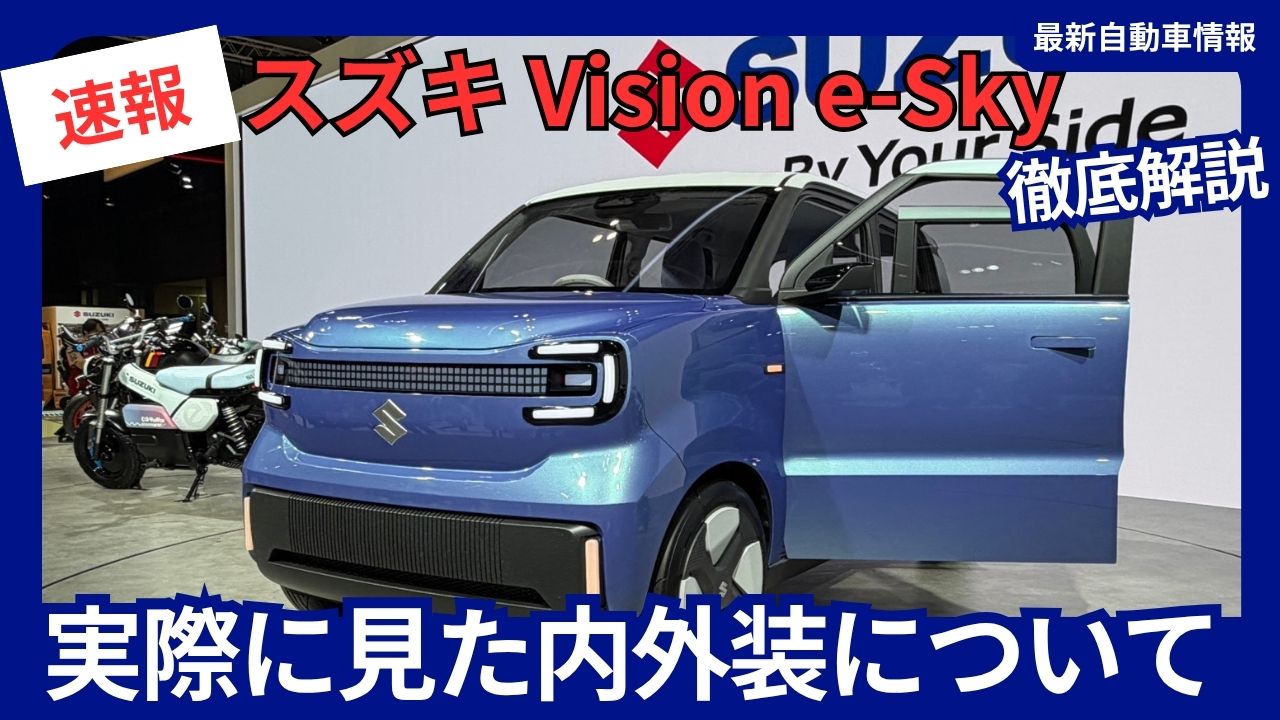
Suzuki made its world debut of the much-anticipated Vision e-Sky, a light passenger BEV (battery electric vehicle) concept model, at the Japan Mobility Show 2025. The car is targeted for commercial release in fiscal 2026, and as Suzuki’s first light passenger electric vehicle, it is generating great expectations.
Suzuki’s first mini-electric vehicle is scheduled to be released in 2026
This model is aimed at users who use minicars as their daily means of transportation, and was developed with the concept of “a ‘just right’ miniEV that fits into their lifestyle.” Responses on social media have been widespread, with comments such as “I’ll buy it immediately if it’s sold for under 3 million yen” and “This is the new face of the Alto in the age of electrification.”
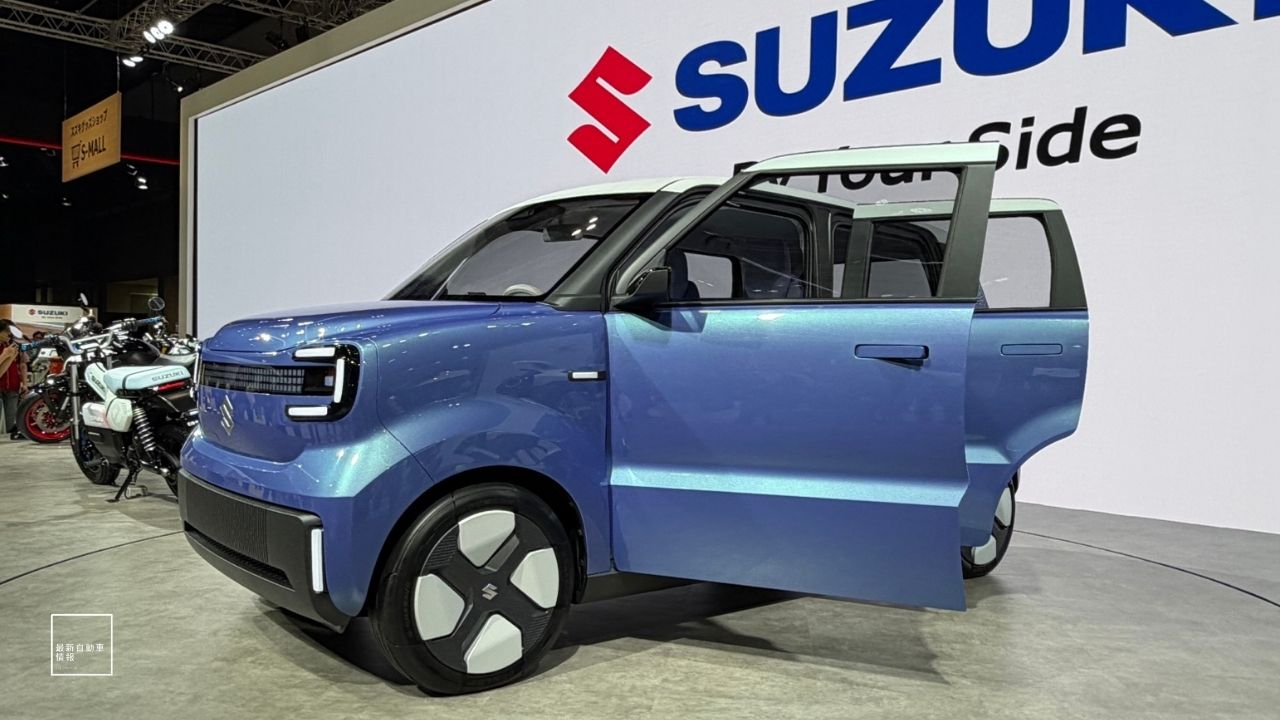
Vision e-Sky
Vision e-Sky specifications and basic information
Main specifications (reference values)
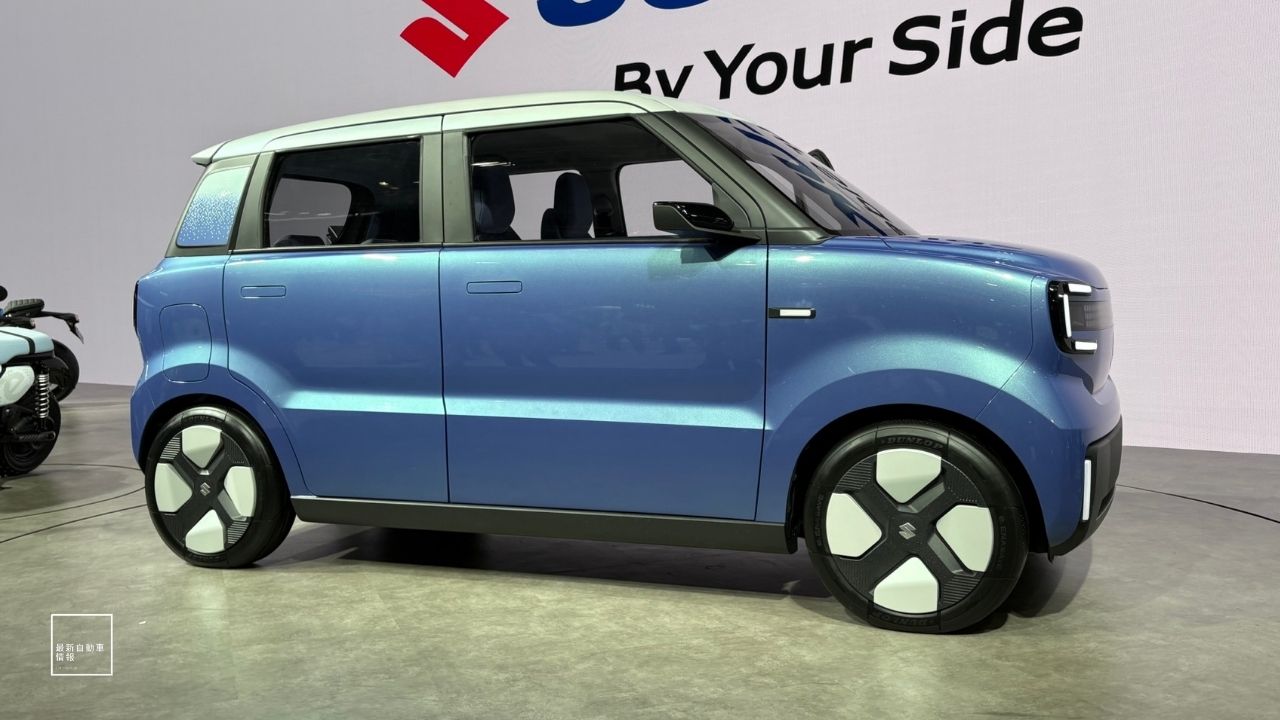
Vision e-Sky
- Total length : 3,395mm
- Overall width : 1,475mm
- Height : 1,625mm
- Cruising range : Approximately 270km or more (estimated value)
- Release date : Aiming for fiscal year 2026
- V2H function : Planned to be installed (capable of supplying household power)
The body size conforms to the standards for minicars, and is 80mm higher than its rival, the Honda N-ONE e: (total height 1,545mm). This design is expected to ensure a more spacious interior.
[Excellent Points] Vision e-Sky’s attractive points
1. A friendly and bright design concept
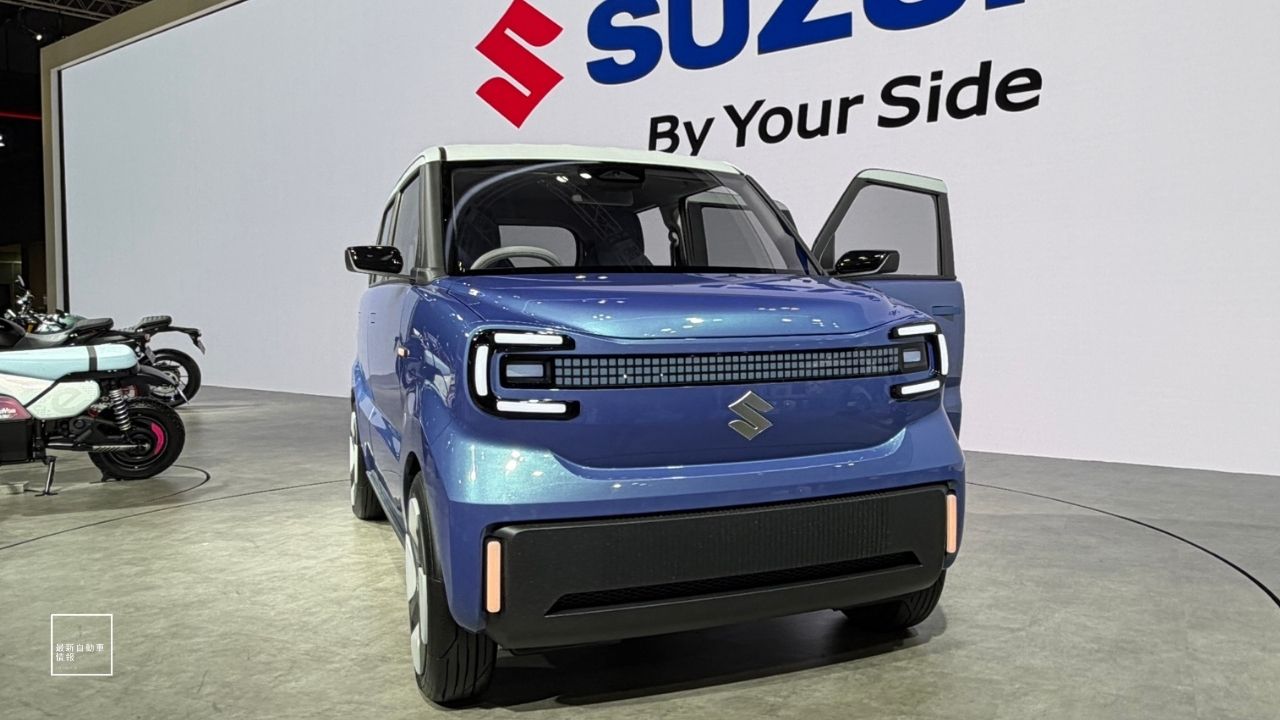
Vision e-Sky
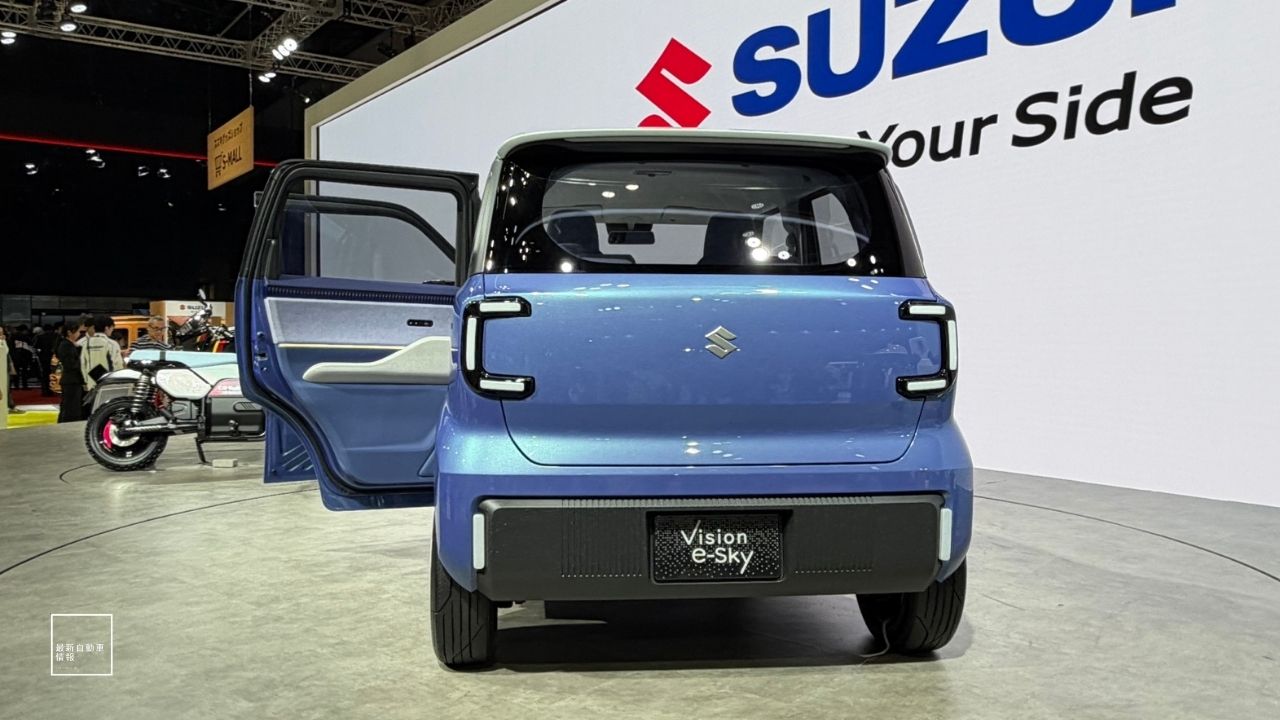
The Vision e-Sky, which has a design theme of “Unique, Smart, Positive,” is characterized by its friendly style that is typical of Suzuki, dispelling the stiff and cold impression that is common in conventional EVs.
Exterior design highlights:
- Simple and clean exterior design
- The distinctive three-line lighting design combines modernity with a friendly feel.
- A form that has presence but is not intimidating, evoking a positive feeling
- A characterful design that appeals to people of all ages and genders
According to a Suzuki representative, “We want to appeal to users who are considering switching from a conventional gasoline-powered minicar to an EV for the first time, and to users looking for an EV for everyday use as a second car.” The car has been designed throughout to make EVs feel more familiar.
Vision e-Sky
2. An interior space that combines openness and functionality
Interior design highlights:
- Floating design with integrated tray and monitor
- The blue and white gradation creates a refreshing feeling like the sky
- The bright and open interior space is designed to lift your spirits every time you ride.
- An environmentally friendly interior that actively uses sustainable materials
Of particular note is the use of sustainable materials for the seats and interior materials, and the vibrant floor mats are made of a single material rather than the conventional multi-layer structure, achieving both environmental friendliness and design.
3. Practical range and comprehensive functionality
The range of over 270km is slightly shorter than that of its rival, the Honda N-ONE e: (295km), but it is still a practical range that is sufficient for daily commuting, shopping, and short weekend trips.
Functional advantages:
- It is planned to be equipped with a V2H (Vehicle to Home) function, and will function not only as a means of transportation but also as a part of daily life infrastructure.
- Role as a “mobile storage battery” that provides household electricity
- Can also be used as an emergency power source in the event of a disaster
4. High level of perfection, with commercialization in mind
Although the Vision e-Sky exhibited at the Japan Mobility Show is a concept model, the aim is for it to be mass-produced in 2026, suggesting that the commercial model will likely have specifications similar to this concept.
There are also comments on social media saying that Suzuki has a tradition of releasing exhibited models almost as they are on the market, raising expectations that development is likely well underway.
[Disappointing Points] Issues and Concerns about Vision e-Sky
1. Range Competitiveness
The 270km range is sufficient for everyday use, but compared to competing models, it has the following issues:
- Honda N-ONE e: 295km (WLTC mode)
- Nissan Sakura: 180km (WLTC mode)
Although it is not as long as the N-ONE e:, it has a significantly longer range than the Sakura. However, the final specifications have not yet been decided, so it will be interesting to see how much it will improve in the actual commercial model.
2. Pricing is opaque
As the price has not yet been announced, it is not enough information to make a purchase decision. Considering that the rival Honda N-ONE e: is priced between 2,699,400 and 3,198,800 yen, the key point will be what pricing strategy Suzuki will adopt.
On social media, many people are saying, “If it’s under 3 million yen, I’ll buy it right away,” and depending on the price setting, there is potential for it to capture a large market.
3. Details of the EV powertrain haven’t been disclosed
Details of the powertrain, which are important for an EV, such as battery capacity, motor output, and charging performance, have not yet been made public. Once this information is made public, a more concrete evaluation will be possible.
4. Status of charging infrastructure
Important information from a practical standpoint, such as whether it supports fast charging or charging time, has not yet been revealed. As it is a model intended for everyday use, it is likely that normal charging at home will be the main method, but we are also curious about whether it will support fast charging when traveling long distances.
Potential of the next Wagon R EV
There is also speculation that the Vision e-Sky could be an electric version of the next-generation Wagon R or the new Hustler. In fact, given its wagon-class size and styling, it is highly likely that it will be positioned as an electric model of the Wagon R.
Relationship with Wagon R
- Body size within the light vehicle standard
- A concept focused on everyday use
- Friendly design orientation
- Designed to target a wide range of age groups
Suzuki President and CEO Toshihiro Suzuki stated, “We aim to create a light EV that will be loved as a means of transportation for everyday life, such as daily commuting, shopping, and short trips on the weekends.” This model can be said to take over the role previously played by the Wagon R in the age of electrification.
Comparative analysis with competitors
Comparison with Honda N-ONE e:
Vision e-Sky advantages:
- The overall height is 80mm higher, providing ample interior space.
- More open interior design
- Friendly exterior design
Advantages of N-ONE e:
- Range is 25km longer (295km)
- It is already on the market, and the price and actual performance are clear.
- Improved aerodynamic performance due to low overall height
Comparison with Nissan Sakura
Vision e-Sky advantages:
- Range is approximately 90km longer (270km vs 180km)
- More practical cruising range
- Open interior design
Sakura’s advantages:
- Has a proven track record in the market
- Information on the actual purchase price, including subsidies, is clear
Impressions and evaluation of the actual car
Experts and visitors who saw the vehicle at the Japan Mobility Show gave the following reviews:
Highly rated points:
- “The interior is very beautiful with a striking contrast between blue and white.”
- “The quality of the concept car is high, and I feel it’s close to being put on the market.”
- “It has a good balance of Suzuki-like friendliness and advanced technology.”
- “The stage footage at the exhibition makes it easy to imagine life with a Suzuki mini EV.”
Points of concern raised:
- “I would consider purchasing it depending on the final price.”
- “I’d be happy if the range could be extended a little more.”
- “I want to know more about the powertrain”
Summary: Will the Vision e-Sky become the favorite in the light EV market?
The Suzuki Vision e-Sky is attracting a lot of attention as an approachable and practical light electric vehicle that overturns the image of a “stiff and cold EV.”
comprehensive evaluation:
Advantages:
- Suzuki’s friendly design
- Practical cruising range of over 270km
- Open and eco-friendly interior
- Added value through V2H functionality
- High level of perfection with commercialization in mind
What I’m disappointed about and what I hope for in the future:
- Range is slightly shorter than competitors
- Pricing is unknown
- Powertrain details not disclosed
- Lack of information on charging performance
Suzuki has set a specific goal of commercialization in fiscal 2026, showing how serious it is about this vehicle. We await the announcement of the final pricing and detailed specifications, but if they can achieve a price range of “under 3 million yen,” there is no doubt that this vehicle will have a major impact on the mini EV market.
Attention will be focused on future updates on the Vision e-Sky, which could serve as the successor EV to the Wagon R or the new standard for light EVs.
Related information: