

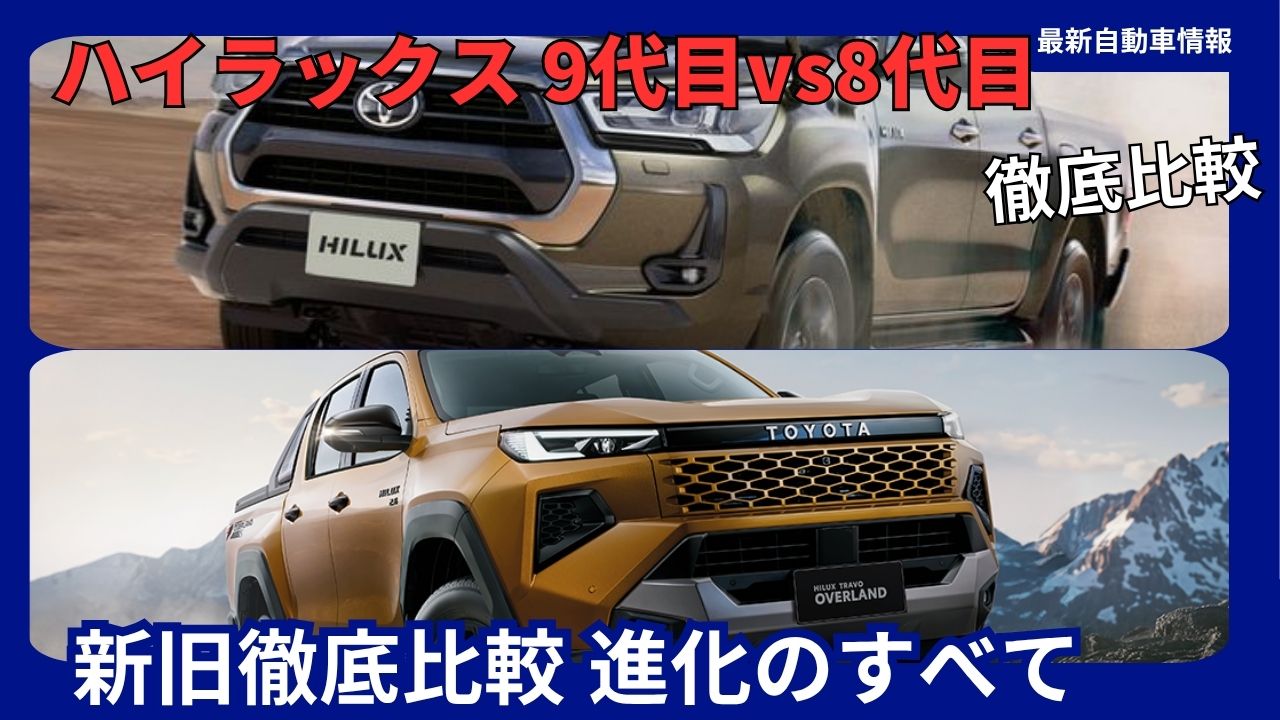
On November 10, 2025, Toyota Motor Corporation unveiled the new ninth-generation Hilux for the first time in the world in Bangkok, Thailand. This full model change, the first in about 10 years since the current eighth-generation model debuted in 2015, is not just a complete change; it has undergone significant evolution, with all of the design, powertrain, and equipment being completely renewed.
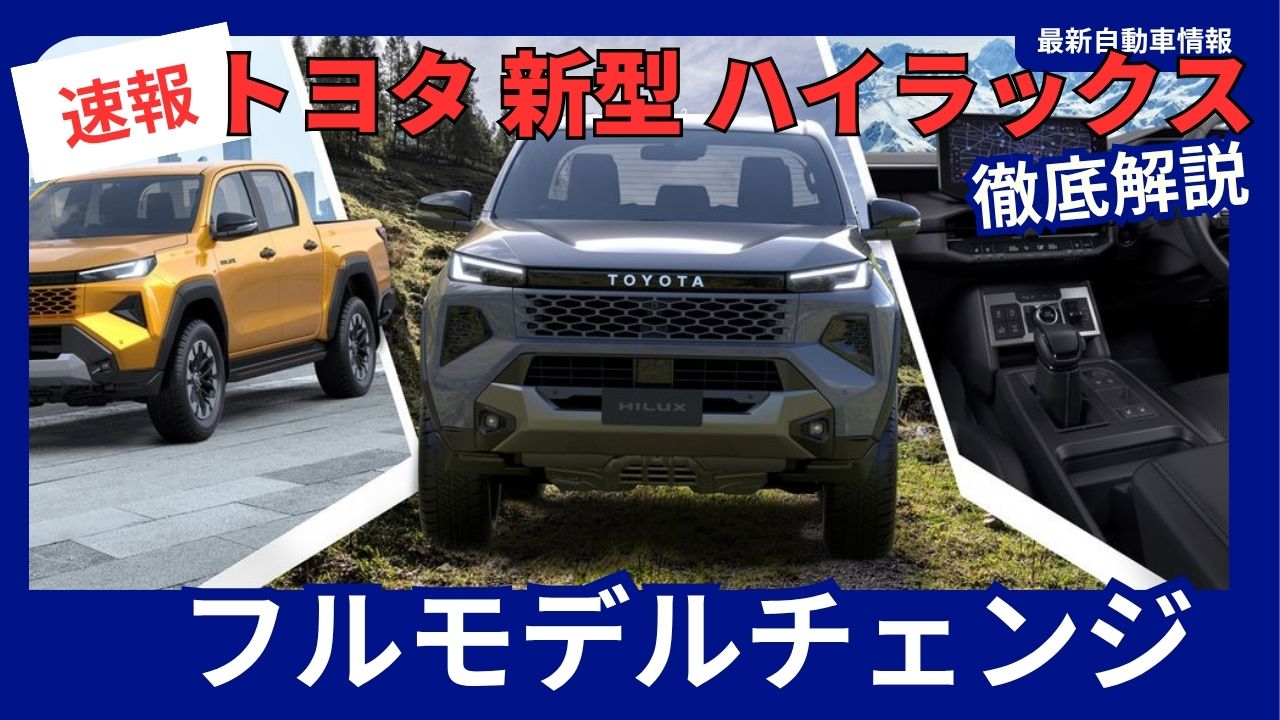
First complete overhaul in 10 years! The 9th generation is unveiled for the first time in the world
History of the 8th generation Hilux
The current eighth-generation Hilux was unveiled for the first time in the world in Thailand in May 2015, and went on sale in Japan in September 2017. As the seventh-generation model was not introduced in Japan, this was its long-awaited return to the Japanese market, attracting a great deal of attention.
Since its release, the eighth generation has undergone the following improvements:
- June 2019 : Minor change with new front design, Toyota Safety Sense standard equipment
- August 2020 : Special edition “Z”Black Rally Edition” added
- October 2021 : Sports grade “Z”GR SPORT” added
- December 2023 : Addition of the top grade “Z”Revo Rocco” (4,772,000 yen)
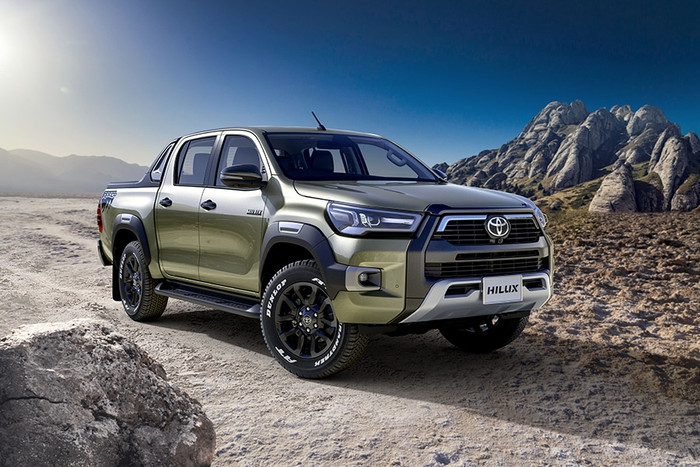
Hilux Z Revo Rocco
In particular, the 2023 Z “Revo Rocco” became a hot topic as a model that brought luxurious Thai-style equipment to Japan.
A thorough comparison of the old and new designs
Front Mask: From Hammerhead to “Cyber Sumo”
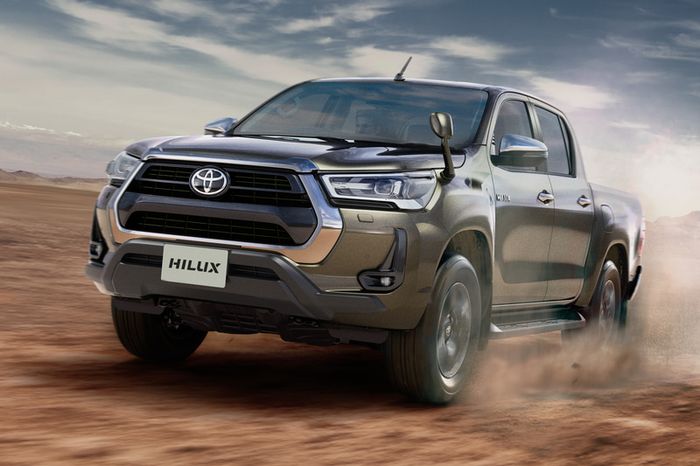
8th generation (old model)
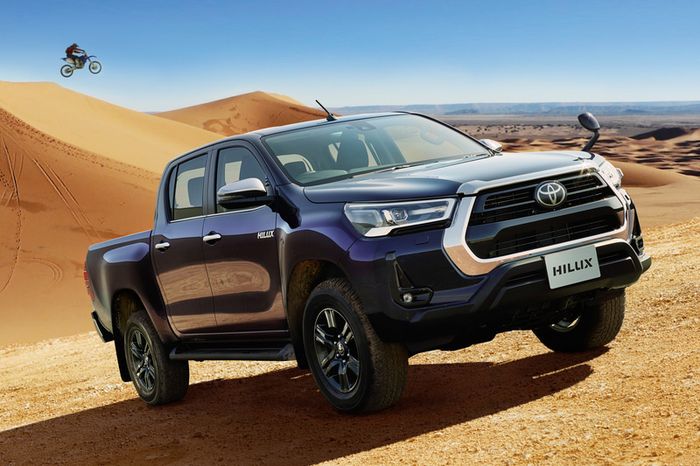
Hilux Z
- Large plated grille
- A powerful design called the Hammerhead
- Projector headlights (higher grade models have Bi-Beam LED)
- Large air intake at the bottom of the front bumper
9th generation (new model)
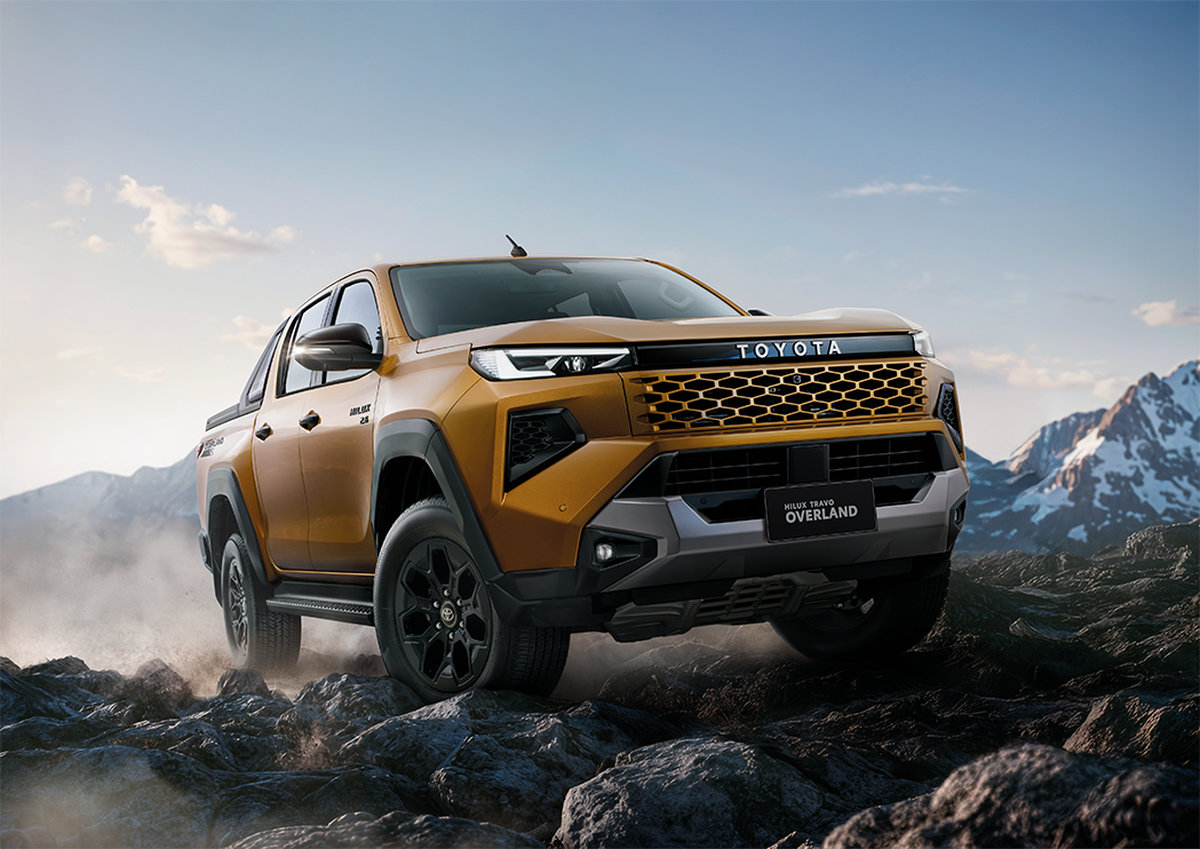
- Adopts the “Cyber Sumo” design theme
- Body-colored honeycomb grille (Corolla Cross/Crown Estate style)
- Slim LED headlights
- “TOYOTA” lettering badge on top of the grille
- “U”-shaped LED daytime running lights
- Angular bumper intakes and heavy-duty skid plates
Evaluation points:
While maintaining the strength of the eighth generation, the design has evolved into a more sophisticated and modern one. The BEV model in particular has a grille-less design that creates a futuristic feel.
Side view: The elegant proportions remain
8th generation (old model)
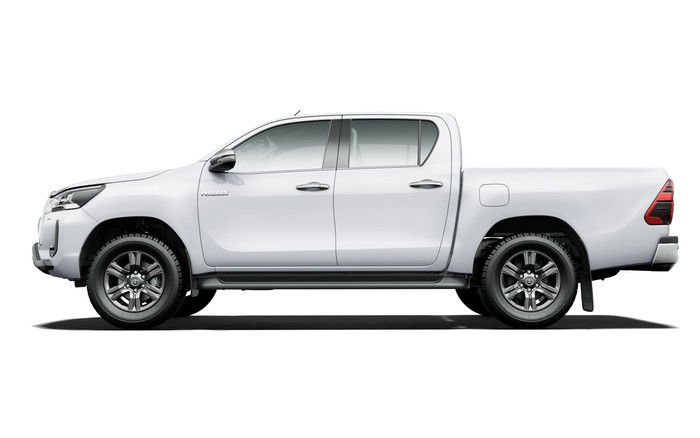
- Total length: 5,340mm
- Overall width: 1,855mm
- Overall height: 1,800mm
- Wheelbase: 3,085mm
9th generation (new model)
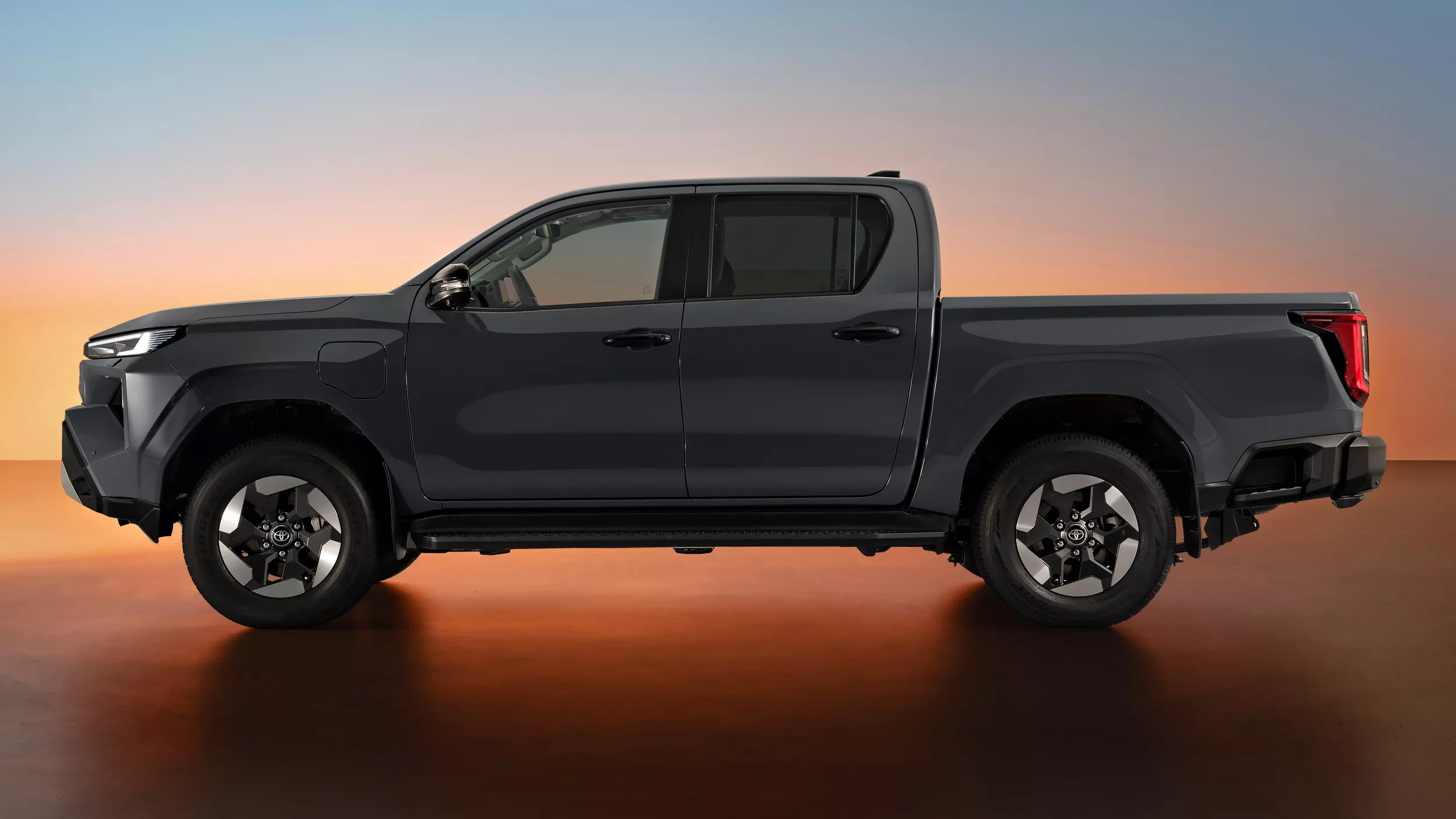
2025-toyota-hilux
- Total length: 5,320mm (-20mm)
- Overall width: 1,855mm (same)
- Overall height: 1,800mm (same)
- Wheelbase: 3,085mm (same)
The greenhouse, pillars and doors are carried over from the eighth-generation model, but redesigned front and rear fenders and boxy wheel arches give it a fresh look.
Rear design: Sharper and more sculpted
8th generation (old model)
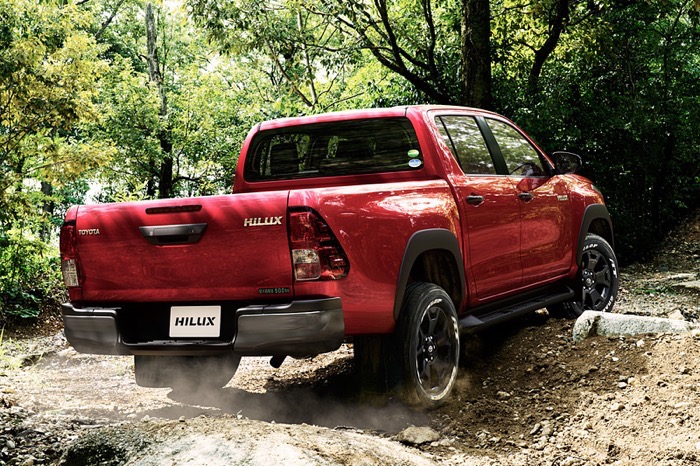
- Vertical taillights
- Simple bumper design
- “HILUX” logo placed on the tailgate
9th generation (new model)

Toyota-Hilux-Travo-e
- Sharp LED taillights
- More sculpted bumper design
- Modern and sporty look
Comparing the evolution of interior and equipment
Cockpit design: Latest equipment inherited from the Land Cruiser
Interior of the 8th generation (old model)
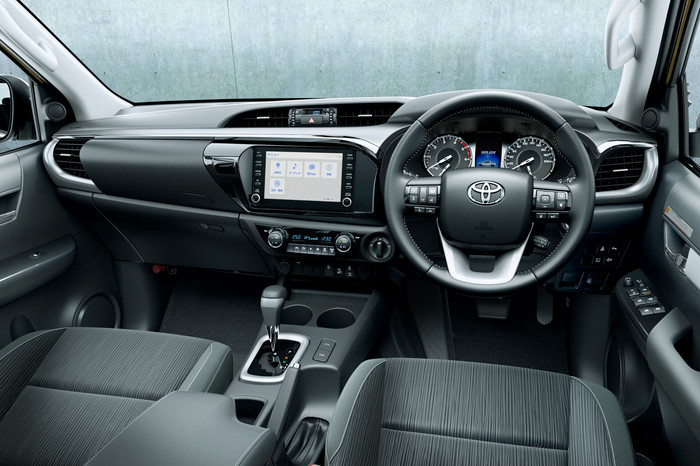
- 8-inch display audio (high-end grade)
- 4.2-inch TFT multi-information display
- Analog meter base
- Manual hand brake
- Relatively simple equipment
Interior of the 9th generation (new model)
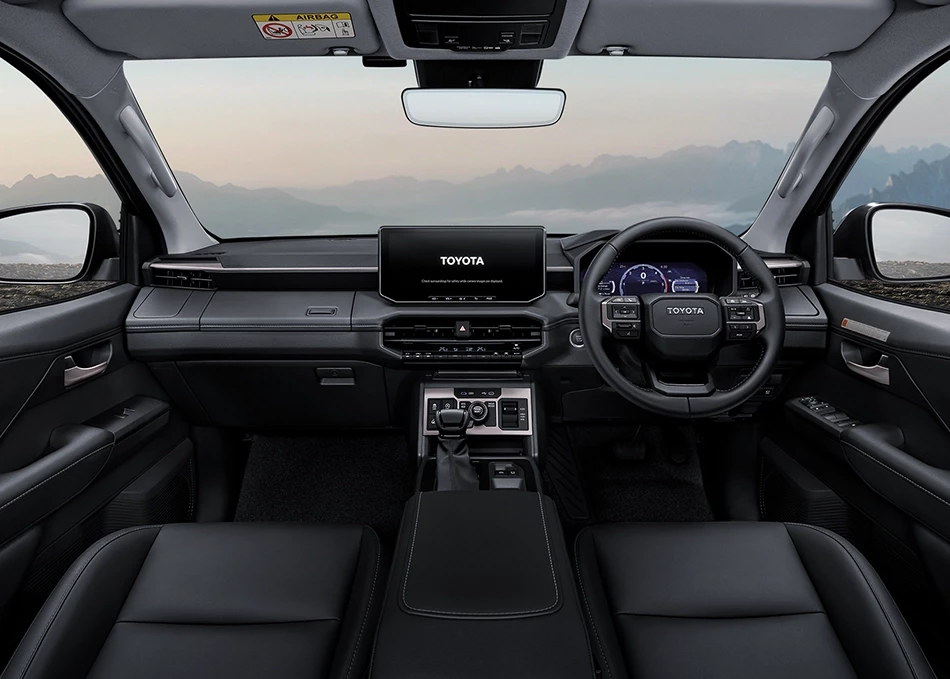
- 12.3-inch freestanding infotainment display
- 12.3-inch digital instrument cluster (7-inch on lower grades)
- Chunky steering wheel derived from the Land Cruiser
- Electric Parking Brake (EPB) + Auto Brake Hold (ABH)
- Compact shift knob
- Drive mode selector in the center console
- Double storage compartment on passenger side
- Dashboard-mounted cup holder
The biggest evolution point: Adoption of an electric parking brake
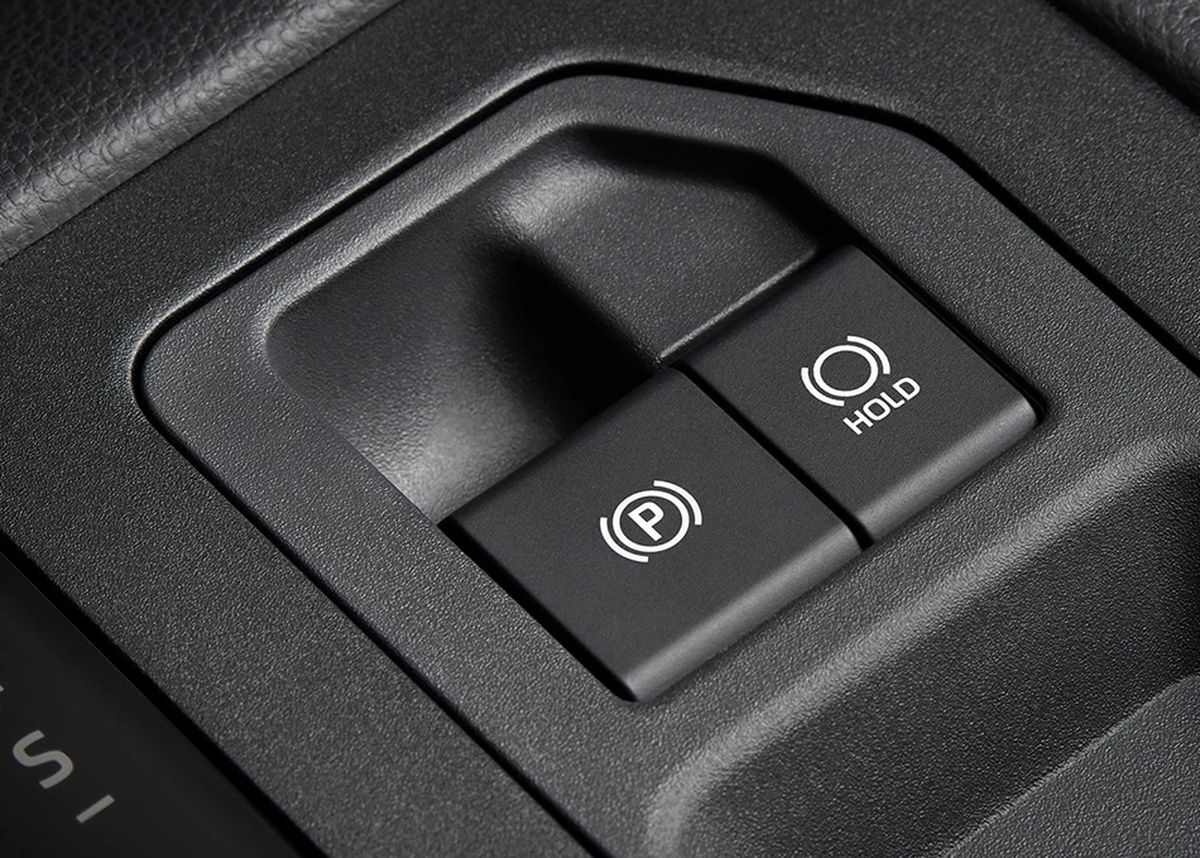
2025-toyota-hilux
Previously, the Hilux was equipped with a manual handbrake due to its commercial vehicle base, but the new model is the first to adopt an electric parking brake (EPB), which brings the following benefits:
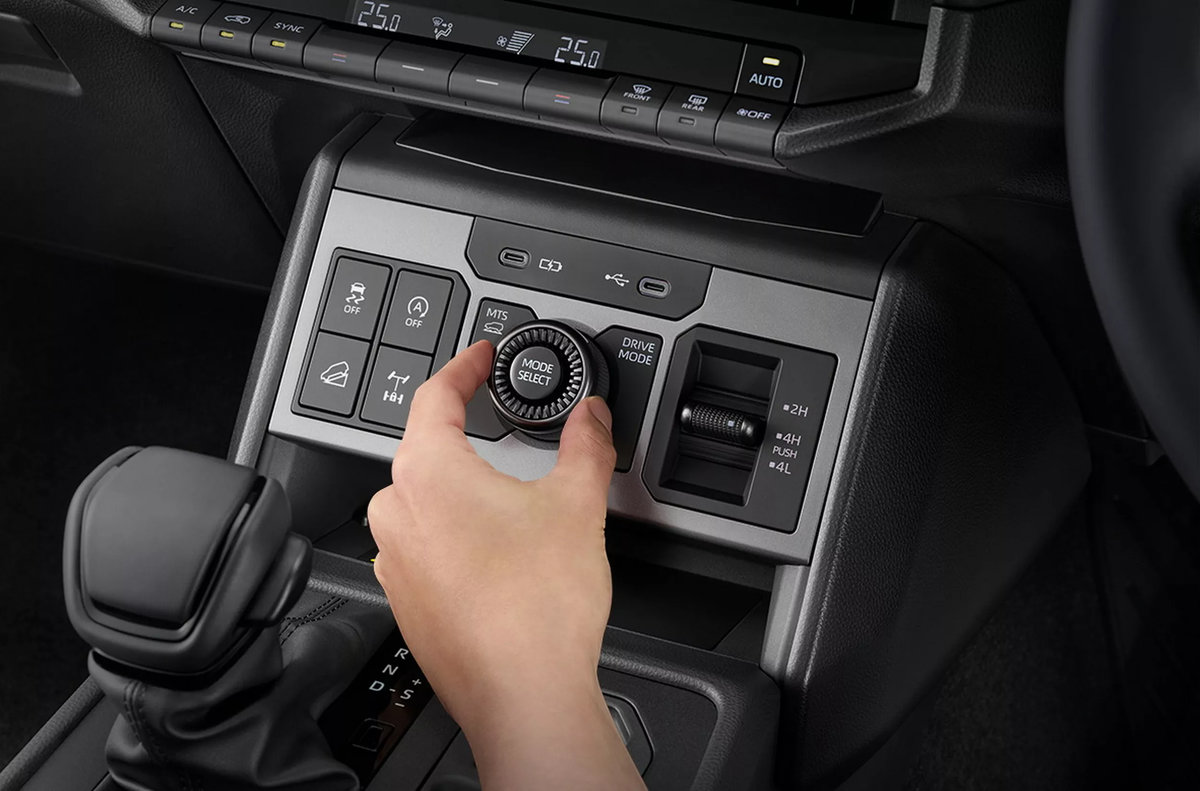
- Effective use of space in the center console
- Auto brake hold function improves convenience during traffic jams
- Achieving more passenger car-like comfort
- Differentiation from the Land Cruiser FJ and Hilux Champ
With this equipment change, the Hilux has evolved significantly from a “pickup car based on a commercial vehicle” to a “pickup car that can also be used as a luxury SUV.”
Powertrain Comparison: The Great Shift to Electrification
8th generation (old model) powertrain
2.4L diesel turbo engine (2GD-FTV)
- Maximum output: 110kW (150PS) / 3,400rpm
- Maximum torque: 400Nm (40.8kgm) / 1,600-2,000rpm
- Transmission: 6-speed AT (6 Super ECT)
- Drive system: Part-time 4WD
- Fuel economy: 11.7km/L (WLTC mode)
9th generation (new) powertrain lineup
Toyota’s “Multi-Pathway” strategy allows for five different powertrains to be offered.
diesel engine
2.8L inline 4-cylinder diesel turbo + mild hybrid
- Maximum output: 150kW (204PS) / 3,000-3,400rpm
- Maximum torque: 500Nm/1,600-2,800rpm
- Transmission: 6-speed automatic
- Drive system: Part-time 4WD
- Increased engine displacement (2.4L → 2.8L) significantly improves power and torque
- Adding a mild hybrid system improves fuel efficiency
2.7L inline 4-cylinder gasoline engine (continued)
- Detailed specifications will be announced in the future
BEV model “TRAVO-e” (completely new)
Dual electric motors + 59.2kWh battery
- Drive system: 4WD (front and rear dual motors)
- Front motor: 205Nm
- Rear motor: 269Nm
- Total system output: 196ps (144kW)
- Battery capacity: 59.2 kWh
- Range:
- 240km (WLTP mode)
- Over 300km (NEDC mode)
- Charging port: Left front fender
- Grill-less design
- Wheel with fairing
FCEV model (scheduled for 2028 and later)
- Hydrogen fuel cell electric vehicle
- Planned for release in Europe and Oceania
- Detailed specifications have not yet been announced
Powertrain comparison summary
| item | 8th generation (old model) | 9th generation (new model) |
|---|---|---|
| Diesel displacement | 2.4L | 2.8L |
| Maximum power | 150PS | 204PS |
| Maximum torque | 400Nm | 500Nm |
| hybrid | none | Mild HV added |
| BEV | none | New additions |
| FCEV | none | Planned addition in 2028 |
| Powertrain options | 1 type | 5 types |
Evolution of chassis and driving performance
8th generation (old model) chassis
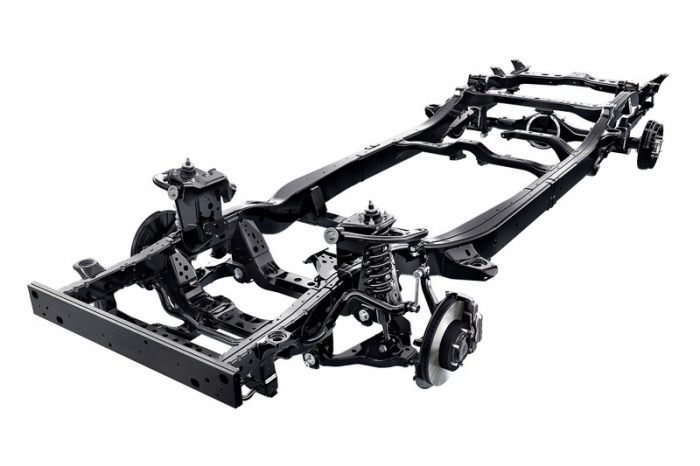
- IMV ladder frame platform
- FIRM (Frame with Integrated Rigidity Mechanism) structure
- Front: Double wishbone independent suspension
- Rear: Leaf spring type
- Manual power steering/hydraulic power steering
- Part-time 4WD (H4F/H4L/L4L)
9th generation (new) chassis
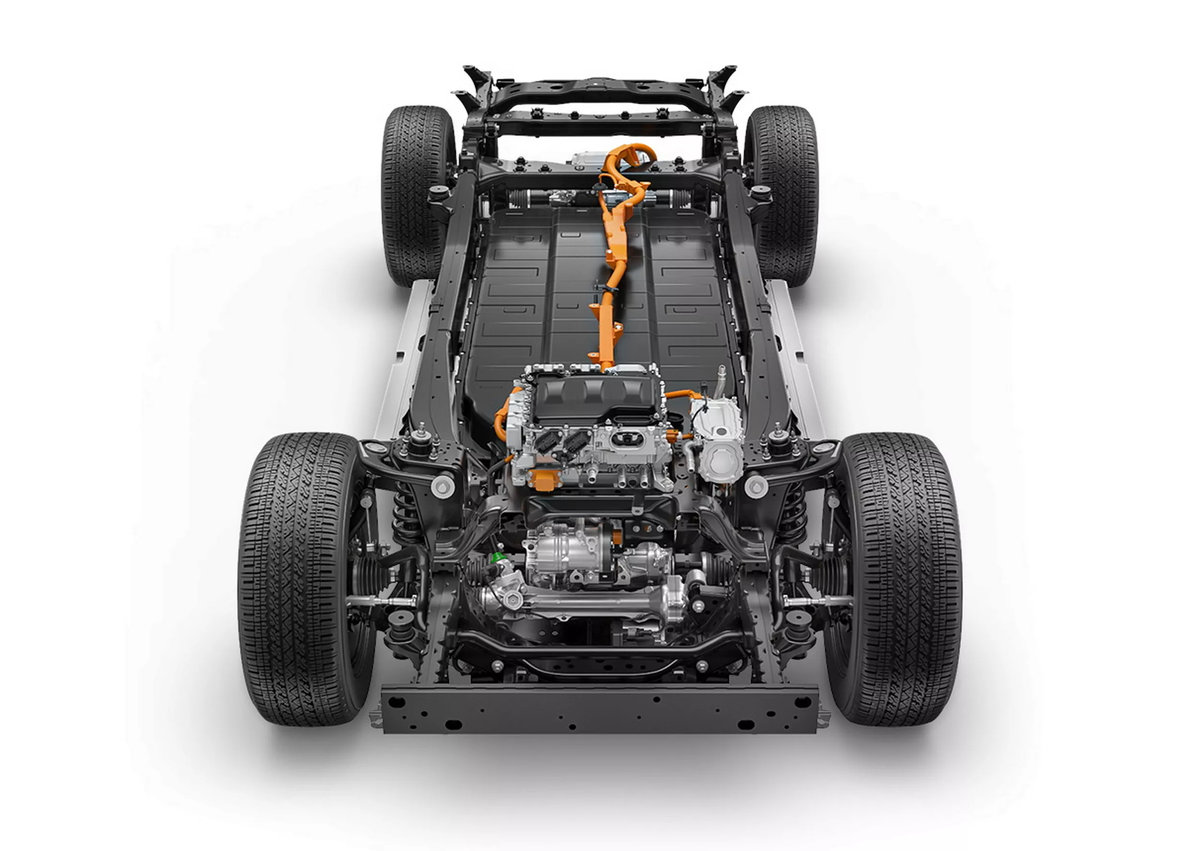
Toyota-Hilux-Travo-e
- Upgraded IMV ladder frame
- Electric power steering (EPS) adopted
- Front: Independent coil spring suspension (new design)
- Rear: Rigid axle, leaf spring type (improved)
- Two types of suspension tuning
- Tuned for heavy load transport and towing
- Tuned for comfort in everyday use
- Part-time 4WD system (high/low range)
- Rear locking differential as standard equipment
- Multi-Terrain Select System (optional)
Key points of evolution in driving performance
Enhanced body rigidity
The body rigidity, which was highly praised in the eighth generation, has been further improved, improving stability both on and off-road.
EPS adoption benefits
- More precise steering feel
- Fatigue reduction effect
- Support for future driver assistance technologies
Evolution of the suspension
Two types of tuning depending on the application provide optimal ride comfort for both commercial and family use.
Comparison of safety equipment and advanced technology
Safety features of the 8th generation (old model)
Toyota Safety Sense (2019 model or later)
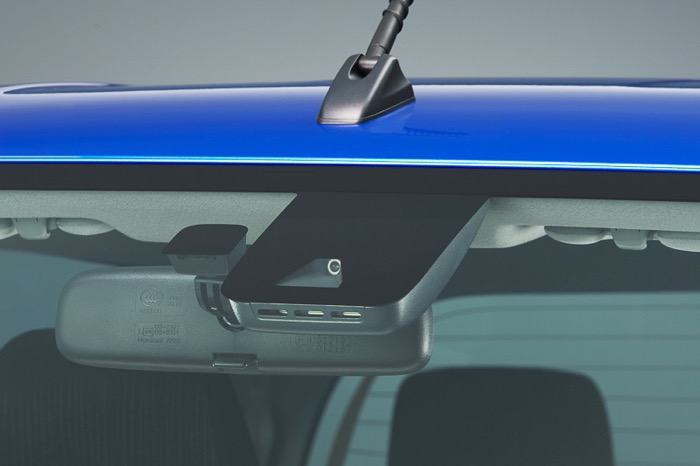
- Pre-crash safety (with pedestrian detection function)
- Lane Tracing Assist
- Radar cruise control
- Automatic high beam
- Road Sign Assist
Other equipment
- ICS (Intelligent Clearance Sonar)
- BSM (Blind Spot Monitor)
- RCTA (Rear Cross Traffic Alert)
9th generation (new) safety equipment
Toyota Safety Sense 3.0
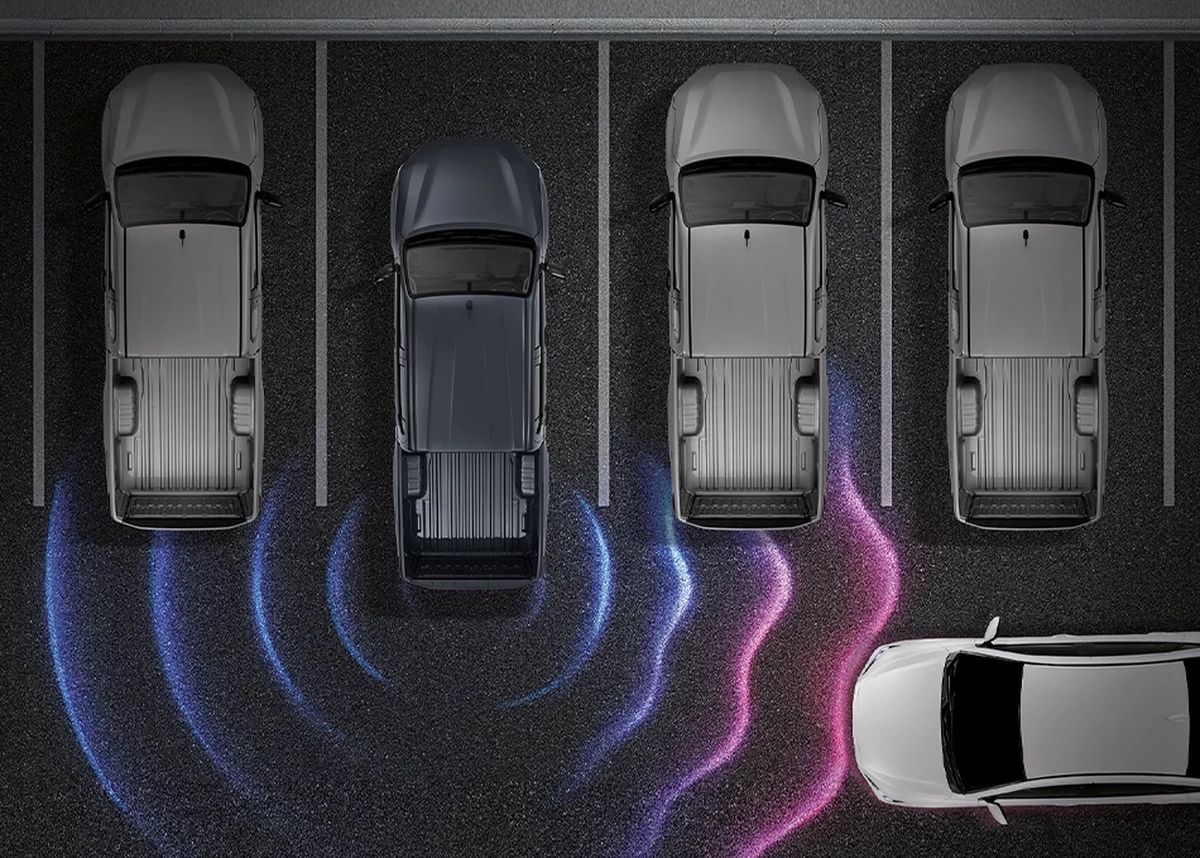
- “Significantly expanded” ADAS suite
- Same level of safety as passenger car lineup
- Detailed features will be announced in the future.
Visibility support system
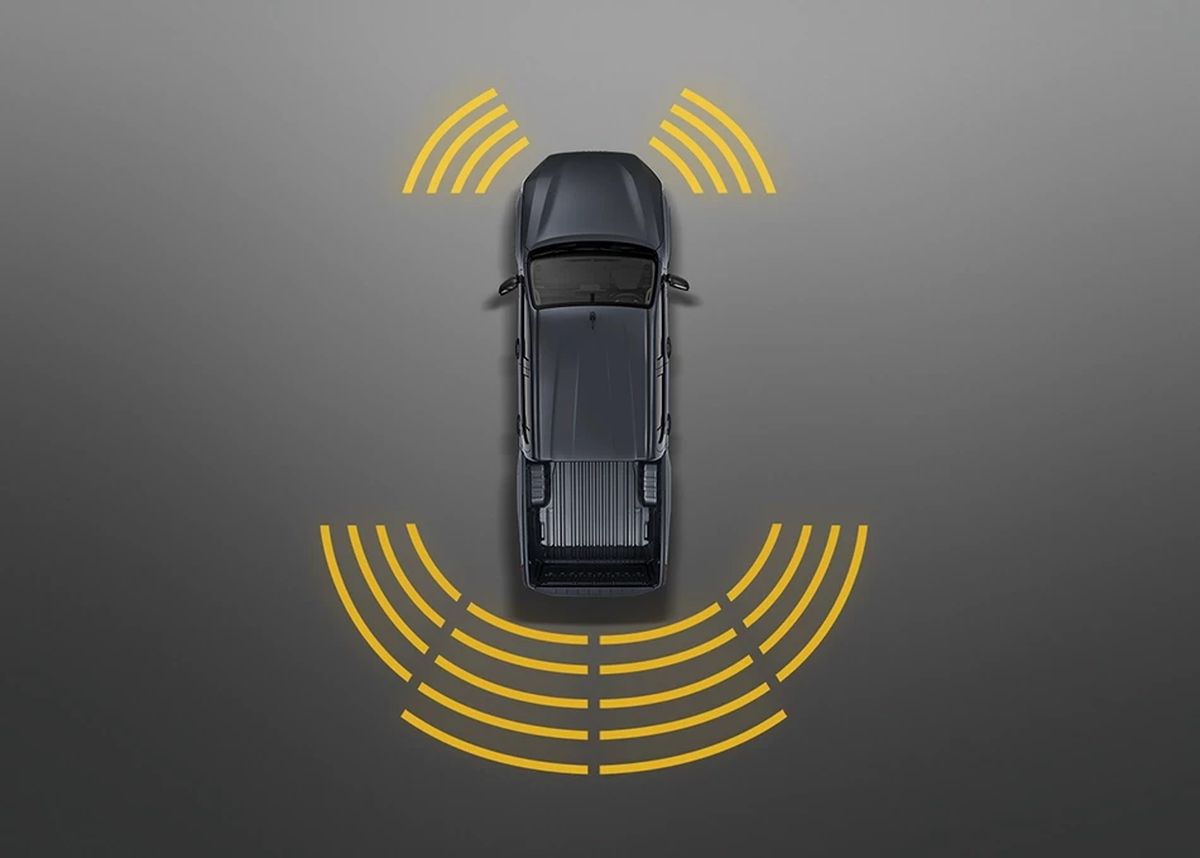
- Panoramic View Monitor (new)
- Multi-terrain monitor (new)
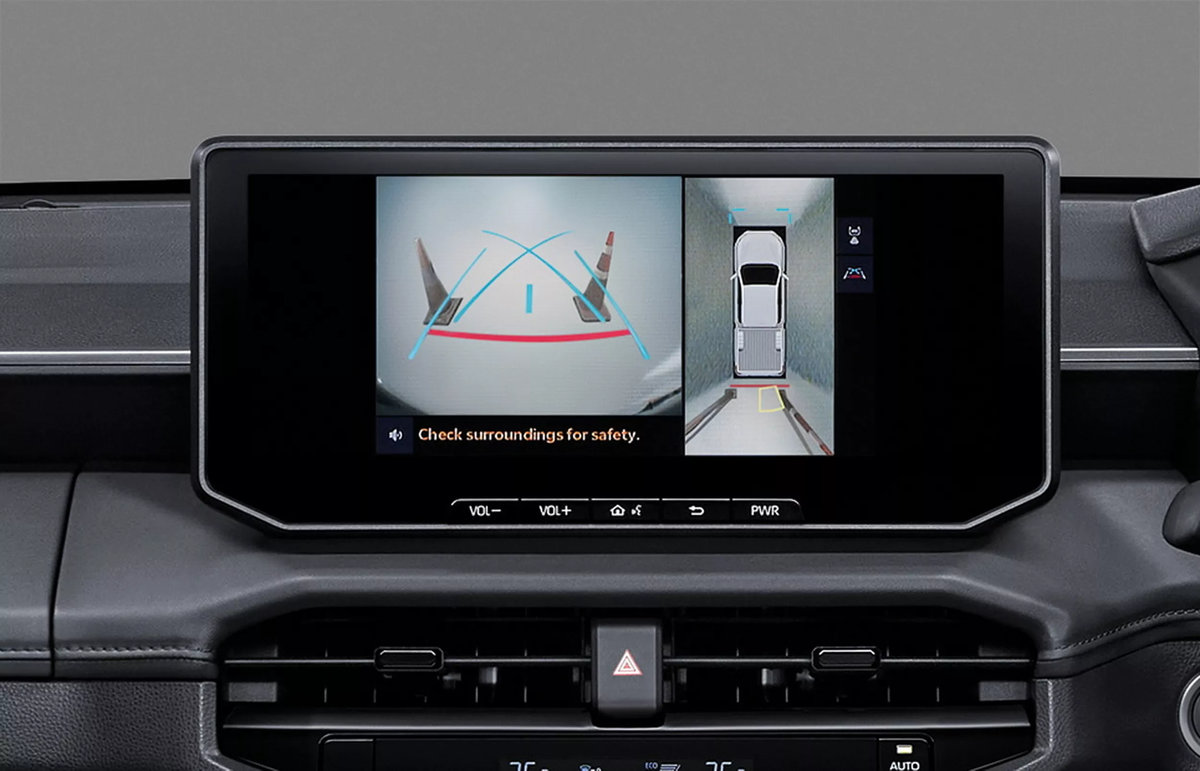
These features significantly improve maneuverability in tight spaces and safety when driving on rough roads.
Safety equipment comparison summary
| Equipment | 8th generation (old model) | 9th generation (new model) |
|---|---|---|
| Safety Sense | TSS | TSS 3.0 |
| Panoramic View | none | New additions |
| Multi-Terrain Monitor | none | New additions |
| ADAS | Basic Features | Great expansion |
Changes in grade structure and body type
Grade structure of the 8th generation (old model) Japanese model
Standard Grade
- X (entry grade)
- Z (standard grade): 4,072,000 yen
- Z “GR SPORT”: 4,312,000 yen (added in 2021)
- Z “Revo Rocco”: 4,772,000 yen (added in 2023, top-of-the-line)
Cabin Type
- Double cab only
- Single cab and extended cab are not available in Japan.
9th generation (new model) grade structure
Changing body type
- Concentrated on double cab only
- Single cab and extended cab models discontinued
- More specialized for family use
Thai spec grade configuration
Hilux Travo Prerunner & 4TREX series
- Smart MT/AT: Basic grade
- Premium MT/AT: Higher grade
- 4TREX Premium MT/AT: Off-road oriented model
- Price range: 1,029,000 to 1,090,000 baht
Hilux Travo Overland series (top-of-the-line)
- Overland AT: 1,102,000 baht
- Overland Plus AT: 1,176,000 baht
- 4TREX Overland AT: 1,292,000 baht
- 4TREX Overland Plus AT: 1,366,000 baht
Differences in equipment by grade
| grade | grill | headlights | fender | tire |
|---|---|---|---|---|
| Standard | Body color | Monocular LED | Body color | standard |
| 4TREX | Gloss Black | LED reflector | Unpainted Black | All-Terrain |
| OVERLAND | Gloss Black | All LED | Gloss Black | All-Terrain |
Spec comparison table
Body size comparison
| item | 8th generation (old model) | 9th generation (new model) |
|---|---|---|
| full length | 5,340mm | 5,320mm |
| Overall width | 1,855mm | 1,855mm |
| Overall height | 1,800mm | 1,800mm |
| Wheelbase | 3,085mm | 3,085mm |
| minimum ground clearance | 215mm | 224mm |
| Minimum turning radius | 6.4m | 6.3m |
Diesel engine spec comparison
| item | 8th generation 2.4L | 9th generation 2.8L |
|---|---|---|
| Engine displacement | 2,393cc | 2,755cc |
| Maximum power | 150PS/3,400rpm | 204PS/3,000-3,400rpm |
| Maximum torque | 400Nm/1,600-2,000rpm | 500Nm/1,600-2,800rpm |
| hybrid | none | Mild Hybrid |
| transmission | 6AT | 6AT |
| Fuel economy (WLTC) | 11.7km/L | Unreleased |
Towing and loading capacity comparison
| item | 8th generation (old model) | 9th generation (new model) |
|---|---|---|
| maximum towing capacity | 3,500kg | 3,500kg (estimated) |
| Loading platform length | 1,565mm | Expected to be maintained |
| Loading platform width | 1,380mm | Expected to be maintained |
| Maximum load capacity | 500kg | 500kg (estimated) |
Changes in price range
Price of the 8th generation (old model) Japanese model
- X: Approximately 3.4 million yen
- Z: 4,072,000 yen
- Z “GR SPORT”: 4,312,000 yen
- Z “Revo Rocco”: 4,772,000 yen (top class)
Estimated price of the 9th generation (new model)
Japanese model (scheduled for release in mid-2026)
- Diesel model to be introduced
- The domestic launch of the BEV model is undecided.
- Pricing to be announced in the future
Expected price range
- Entry grade: Around 4.2 million yen (+approximately 800,000 yen)
- High-end grade: 4.8 million to 5.2 million yen
- BEV model (if introduced): Around 6 million yen
Due to significant improvements in equipment, the adoption of an electric parking brake, and increased engine displacement, the price is expected to increase by around 500,000 to 800,000 yen compared to the 8th generation.
Summary: What’s changed between the old and new Hilux?
10 major evolutionary points
- Design : From Hammerhead to “Cyber Sumo” for a more modern look
- Electric parking brake : From manual to electric, usability greatly improved
- Display : Enlarged from 8 inches to 12.3 inches
- Digital meter : From analog to 12.3-inch digital
- Engine : 2.4L → 2.8L, power output increased by 54PS, torque increased by 100Nm
- Mild Hybrid : Improved fuel economy and acceleration
- BEV addition : New introduction of fully electric models
- EPS : More precise steering feel
- Safety equipment : TSS 3.0, Panoramic View, Multi-Terrain Monitor added
- Body type : Double cab only, specializing in families
Strengths inherited from the 8th generation
- Highly reliable ladder frame structure
- Excellent off-road performance
- 3,500kg towing capacity
- 500kg loading capacity
- Sold in over 195 countries worldwide
Advantages of the new model
- Electrified lineup : Environmentally friendly with the addition of BEV and FCEV
- Passenger car-like comfort features : electric parking brake, digital cockpit
- Advanced safety equipment : Passenger car-level ADAS
- Powerful engine : Increased displacement for 204 PS/500 Nm
- Two types of suspension tuning : Choose according to your needs
Advantages of the old model
- Price : 500,000 to 800,000 yen cheaper than the new model
- Simple structure : Durability and maintainability as a commercial vehicle
- Proven track record : 10 years of sales and reliability
- Used car market : Abundant supply and stable prices
The new model is recommended for these people
- People seeking the latest safety equipment
- People who want to use it for family use
- Those who want comfortable equipment such as an electric parking brake
- Those looking for a more powerful ride
- People who prioritize environmental performance (BEV model)
For these people, we recommend the older model (used).
- People who value cost performance
- People who prefer simple structures
- Those who want to buy immediately (the new model will be released in mid-2026)
- People who want to choose a car with a proven track record
Global rollout schedule
- Europe and Australia : From December 2025
- Asian market : 2026 and onwards
- Japan : Mid-2026 (diesel model)
- BEV adoption : Varies by market
- FCEV introduction : Europe and Oceania from 2028 onwards
Conclusion: A full model change packed with 10 years of evolution
The ninth-generation Toyota Hilux is a true full model change that fully incorporates modern elements such as electrification, comfort features, and advanced safety technology while maintaining the eighth-generation model’s essence as a “tough and reliable pickup truck.”
In particular, the adoption of the electric parking brake symbolizes the Hilux’s major evolution from a “commercial vehicle-based pickup” to a “pickup that can also be used as a luxury SUV.”
The addition of the BEV model signals the start of a full-scale wave of electrification in the commercial vehicle and pickup truck markets, and the launch of the FCEV model in 2028 will mark the culmination of Toyota’s “Multi-Pathway” strategy.
It will be released in Japan in mid-2026. The diesel model will be introduced first, but there are high hopes for the domestic introduction of BEV and FCEV models.
The Hilux boasts a cumulative sales record of over 28 million units in over 195 countries around the world, and with the ninth generation, this legend will write a new chapter.
Source :