

At the Honda Automobile Technology Workshop, held for members of the press, Honda unveiled for the first time innovative technologies for its next-generation electric vehicles, which are scheduled to be launched in the second half of the 2020s. The technologies announced this time are expected to have a major impact on the automotive industry as part of a comprehensive strategy that will be deployed on both hybrid and EVs.
In this article, we will take a detailed look at the three pillar technologies that Honda has announced: its next-generation mid-size platform, its large hybrid system, and its compact EV, the “Super-ONE Prototype.”
Honda’s electrification strategy for 2027 revealed Honda’s path to achieving carbon neutrality by 2050
Environment and safety are top priorities
Honda has set two ambitious goals for 2050:
- Achieving carbon neutrality across all products and corporate activities
- Achieving zero traffic fatalities involving motorcycles and automobiles
To achieve these goals, as announced at the Business Update held in May 2025, we are focusing on strengthening the competitiveness of EVs and hybrid vehicles, focusing on electrification and intelligence.
Pursuing the unchanging “joy of driving”
Even in the age of electrification, Honda continues to pursue the ” joy of driving ” that unites the driver and the car. Regardless of the powertrain, such as EV or hybrid, Honda aims to provide comfort and enjoyment not only to the driver but to all passengers, along with its human-centered design philosophy, ” M.M. philosophy (Man Maximum/Mechanism Minimum philosophy).”
Honda has set ” Enjoy the Drive ” as the value it provides with its four-wheel vehicles, based on this M・M philosophy and the joy of driving.
Next-generation medium-sized platform: Achieving both light weight and high rigidity
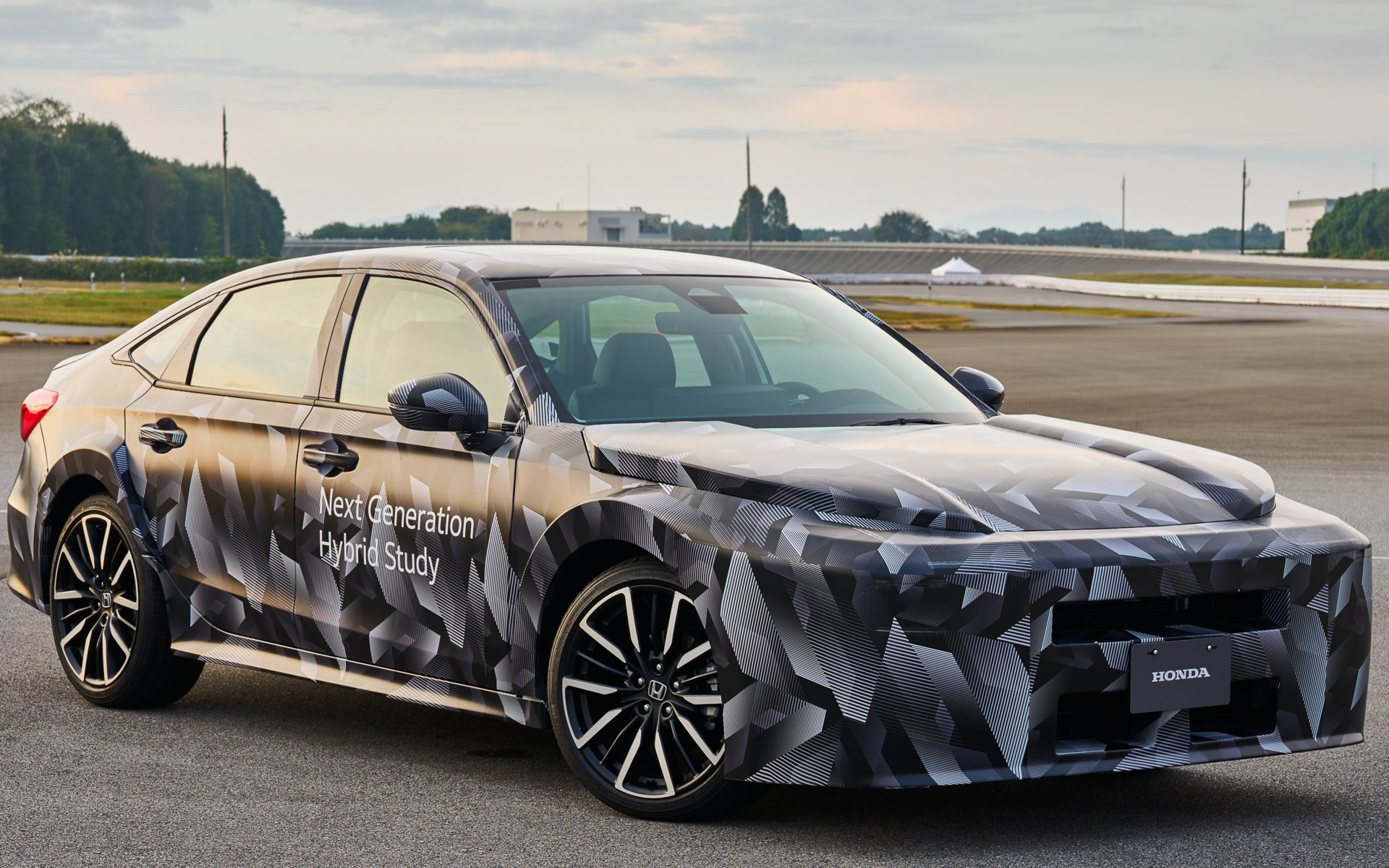
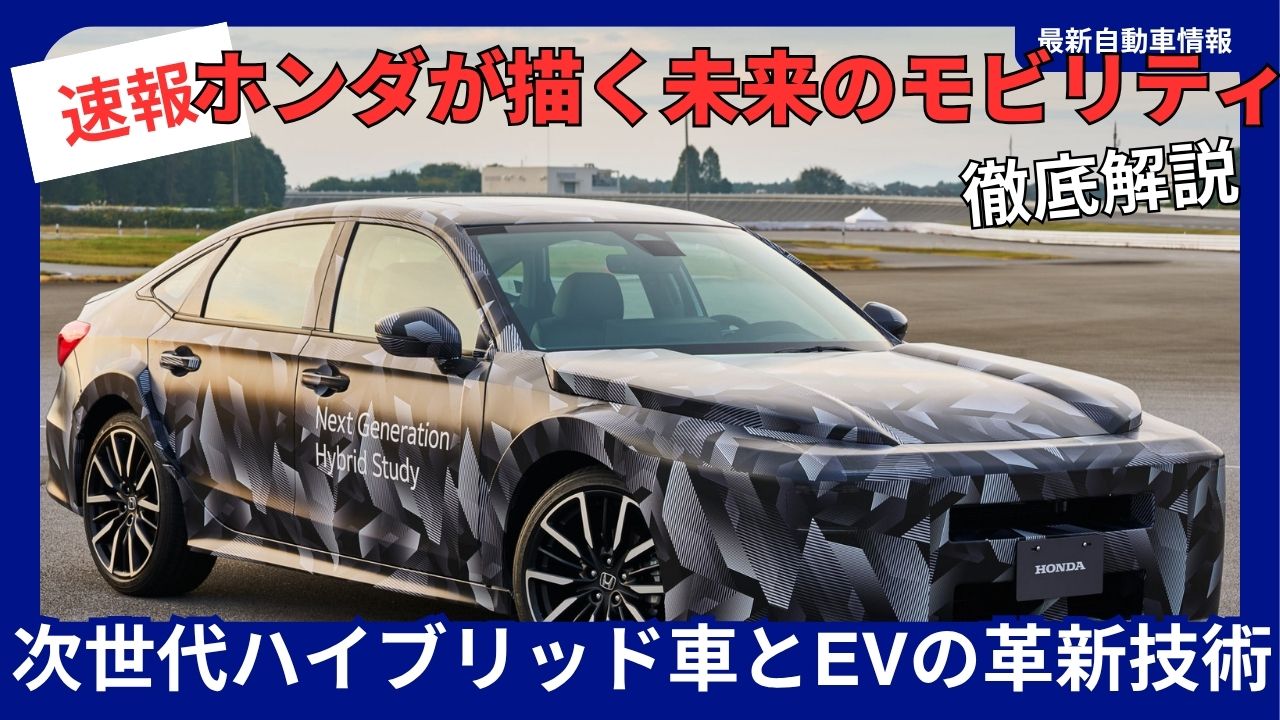
Next Generation Hybrid Study model
Innovative technologies expected to be introduced from 2027 onwards
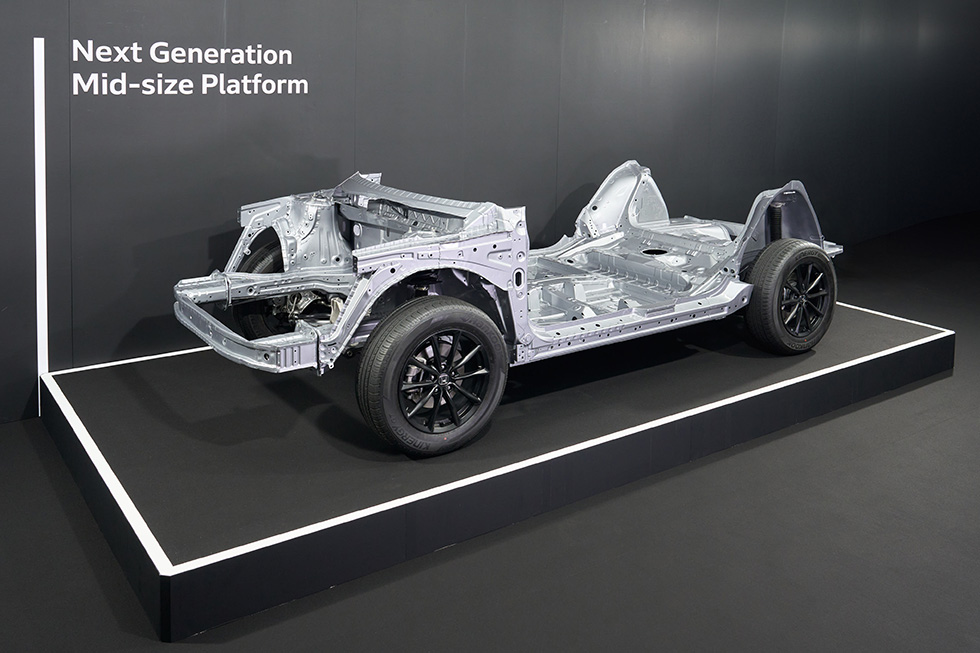
Honda will be making comprehensive advancements to the hybrid systems and the platforms on which they are installed for its next-generation hybrid vehicle lineup to be launched after 2027. The next-generation platform will combine a variety of innovative technologies, including technologies that achieve a high level of both high body rigidity and lightweight design, and a modular architecture that improves commonality.
What is the new steering stability management technology?
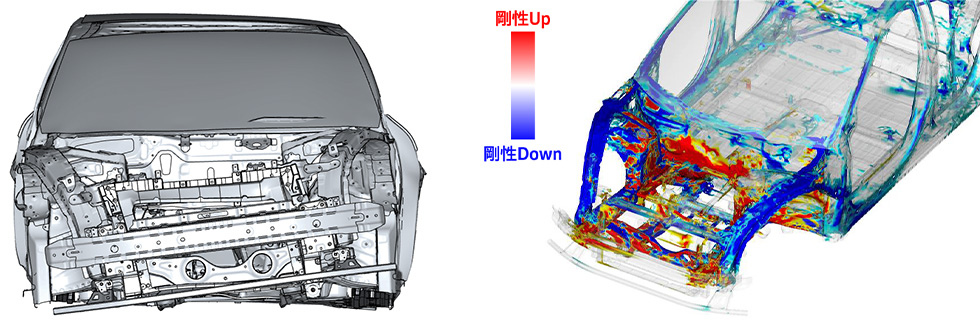
The biggest feature of the next-generation platform is the revolutionary technology known as ” New Steering Stability Management .” This technology has been established as a new indicator of handling stability, which influences dynamic performance.
Key features of the new steering and stability management system:
- Optimizing body rigidity to reduce vehicle weight
- By making the vehicle body bend when cornering, the load on the tires is controlled.
- Improved ground contact and unprecedented handling stability
- Provides a light and comfortable ride
This technology is also planned to be adopted in EV platforms, and will become a fundamental technology that supports Honda’s overall electrification strategy.
Approximately 90kg weight reduction achieved
By reviewing the vehicle structure and adopting new design methods, we have succeeded in reducing the weight of the hybrid vehicle platform by approximately 90 kg compared to the current model . This significant weight reduction achieves both driving enjoyment and fuel efficiency.
Modular architecture improves development efficiency
The next-generation platform employs a modular architecture that enables high compatibility across a variety of vehicle models.
Modular architecture features:
- Common areas such as the engine compartment and rear undercarriage
- Efficient development by creating unique parts such as the rear cabin
- The aim is to achieve 60% or more commonality in vehicles that use this platform.
- Efficiently produce a variety of unique models while keeping costs down
- Greatly improved development efficiency and productivity
Motion Management System
In line with the evolution of the platform, Honda will adopt the Motion Management System, which applies posture control developed through its unique robotics technology, to enable drivers to control the car exactly as they wish .
Furthermore, pitch control will be added to the Agile Handling Assist electronic control system, which currently supports smooth vehicle behavior during cornering and is used in models such as the Accord and Prelude .
Pitch control:
This technology controls deceleration G in accordance with steering input and increases front wheel grip by increasing front load. This helps the driver control the vehicle at will in any situation, regardless of road surface, and aims to further enhance the joy of driving.
Next-generation large-capacity hybrid system: V6 engine with fuel economy improvement of over 30%
Strategic development with an eye on the North American market
Honda is currently seeing increased demand for hybrid vehicles, and is positioning these as a product group that will play a central role in the transition period leading up to the widespread adoption of EVs, centered on next-generation models to be launched from 2027 onwards.
In particular, in the North American market , which is the main battlefield for hybrid vehicles , there is solid demand for large vehicles. Therefore, we are developing a hybrid system for large vehicles in the D segment and above that combines powerful driving performance, towing ability, and environmental friendliness , with the aim of launching it in the second half of the 2020s.
Highly efficient newly developed V6 engine
At this workshop, Toyota unveiled for the first time key technologies for its next-generation large-scale hybrid system, including a newly developed V6 engine designed to comply with strict environmental regulations, as well as a newly developed drive unit and battery pack that combine high efficiency and low cost at a high level.
Performance targets for next-generation large-scale hybrid systems:
- Fuel efficiency : By combining a next-generation V6 engine with an expanded fuel economy range with a highly efficient drive unit and applying next-generation energy management control, the company aims to improve fuel efficiency by more than 30% compared to gasoline-engine vehicles currently on the market in the same segment.
- Acceleration performance : By improving the efficiency of the engine and each drive unit and utilizing battery assist, the company aims to improve the full-throttle acceleration performance of the completed vehicle by more than 10% compared to gasoline-engine vehicles currently on the market in the same segment.
Balancing environmental friendliness and driving performance
To achieve a powerful and high-quality driving experience befitting the large vehicle segment, the engine and electric unit have been optimized for coordinated control, enabling the vehicle to comply with environmental regulations while also providing the powerful driving and towing performance desired by users at a high level.
Compact EV “Super-ONE Prototype”: Combining the best of EV and internal combustion engine
Scheduled for release in Japan, the UK and Asia from 2026
The mass-produced model of the ” Super-ONE Prototype ,” which was first unveiled at the Japan Mobility Show 2025 , is scheduled to be released in Japan from 2026, followed by the UK and other Asian countries where there is a high demand for small EVs.
Vehicle name by region:
- Japan/Asia/Oceania: “Super-ONE”
- Part of Asia Pacific: “Honda Super-ONE”
- UK: “Super-N”
Grand concept “e: Dash BOOSTER”
The grand concept of the Super-ONE Prototype is ” e: Dash BOOSTER .” By incorporating a variety of features that enrich the in-car experience, the aim is to evolve everyday travel into an exciting and uplifting experience.
A dedicated platform evolved from the N series
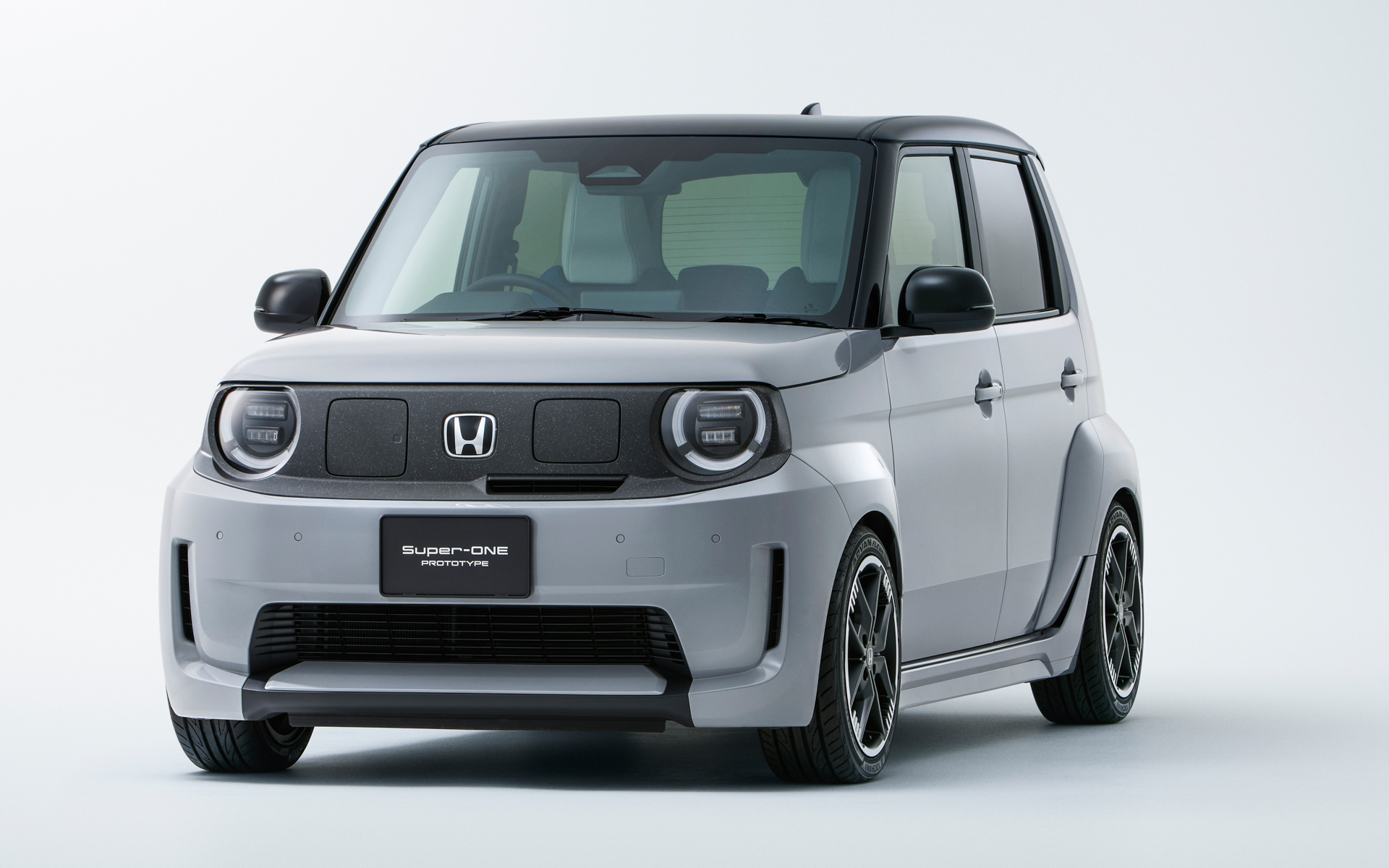
honda-super-one-prototype
The Super-ONE Prototype is based on the lightweight platform that has evolved as part of the N series, and has an increased overall width thanks to the adoption of a special chassis with wider treads and fenders.
Platform Features:
- The thin battery, a key component of the EV, is located in the center under the floor
- Concentration of heavy objects and a low center of gravity
- Lightest vehicle weight in its class for an A-segment compact EV
- A lower center of gravity than conventional gasoline-powered compact cars
- Quick response to driver inputs
- Maintains stable steering response even when driving in curves
- Providing confident handling performance at will
Equipped with innovative “BOOST mode”
The production model of the Super-ONE Prototype will be equipped with a specially developed driving mode called ” BOOST mode ,” a groundbreaking system that combines the advantages of both EVs and internal combustion engine vehicles.
BOOST mode features:
- Increased power output : Maximizing the performance of the power unit
- Virtual stepped shift control : Producing a sharp shift feeling just like an engine vehicle with a stepped transmission
- Active Sound Control : Reproduces the powerful engine sound
Virtual stepped shift control mechanism
Virtual stepped shift control calculates virtual engine speed and gear position in real time based on driving operations such as accelerator pedal operation, and driving conditions such as vehicle speed and vehicle behavior when cornering.
Virtually reproduced behavior:
- Optimal control of driving force and response for a driving experience that feels one with the car
- Shock caused by kickdown during acceleration
- Fuel cut-off behavior (temporarily stopping fuel supply to protect the engine and properly control the engine speed)
This allows the Super-ONE to combine the driving feel cultivated over many years of gasoline vehicle development with an EV, providing the unique joy of driving that combines the smooth, linear acceleration of an EV with the driving excitement of a gasoline vehicle.
Honda’s electrification strategy points to the future of the automotive industry
Dual strategy of hybrid and EV
The technologies announced this time clearly demonstrate Honda’s strategy for the era of electrification, focusing on both “hybrid vehicles” and “EVs.”
Positioning of hybrid vehicles:
- Core products for the transition period leading up to widespread adoption of EVs
- Particularly responding to demand for large vehicles in the North American market
- Focus on next-generation models from 2027 onwards
Positioning of EV:
- Full-scale rollout starting with small EVs
- Available in Japan, the UK and Asia from 2026
- Full-scale deployment of the Zero Series platform is also planned
Inheriting the M.M philosophy and the joy of manipulating
Honda has stated that regardless of the powertrain, it will continue to pursue its human-centered design philosophy of “M.M. philosophy” and “joy of driving.” This demonstrates Honda’s strong commitment to not just making environmentally friendly cars, but to continuing to build cars that are enjoyable for both the driver and passengers.
Points of differentiation from competitors
Comparison with Toyota
Toyota is also developing next-generation hybrid technology, but Honda sets itself apart by:
- New steering stability management improves driving quality
- Motion Management System that applies robotics technology
- Adoption of virtual step-shift control in EVs
Differences from European manufacturers
While European manufacturers are reassessing their EV-only strategies, Honda has pursued a dual-axis strategy of hybrid and EV from the start, building a system that can respond flexibly to changes in the market.
Benefits for consumers
For those considering purchasing a hybrid car
Next-generation hybrid vehicles offer the following benefits:
- Fuel efficiency : 30% or more improvement over the current model
- Driving performance : Acceleration performance improved by more than 10%
- Lightweight : Approximately 90 kg lighter for a more agile ride
- Reliability : Years of experience in hybrid technology
For those considering purchasing an EV
The Super-ONE has the following advantages as a compact EV:
- Lightest vehicle weight in its class
- A lower center of gravity than conventional gasoline vehicles
- A new driving experience with BOOST mode
- Available for purchase from 2026
Future development plans and schedule
2026
- Launch of Super-ONE mass-production model (Japan, UK, Asia)
From 2027 onwards
- Launch of hybrid vehicles using next-generation medium-sized platforms
- Launch of next-generation large-capacity hybrid vehicle into North American market
2050
- Achieving carbon neutrality
- Achieving zero traffic fatalities
Summary: Honda’s vision of the “joy of driving” in the age of electrification
The next-generation technology announced by Honda is not just about being environmentally friendly, but also conveys a strong determination to carry on the company’s DNA of “the joy of driving” into the era of electrification.
Recap of key points:
- Next-generation mid-size platform : New steering and stiffness management and a weight reduction of approximately 90 kg improve driving quality
- Large hybrid system : V6 engine achieves 30% improvement in fuel economy and 10% improvement in acceleration performance
- Super-ONE : An innovative compact EV that combines the driving feel of an internal combustion engine with that of an EV
Honda is steadily advancing technological development in preparation for the launch of its next-generation vehicles from 2027 onwards, and has made clear its commitment to continuing to provide “Enjoy the Drive” even in the age of electrification. Technological development that combines high levels of environmental friendliness and driving performance is expected to have a major impact on the entire automotive industry.
We will need to continue to keep an eye on further news about Honda’s next-generation technology.
Reference materials: