
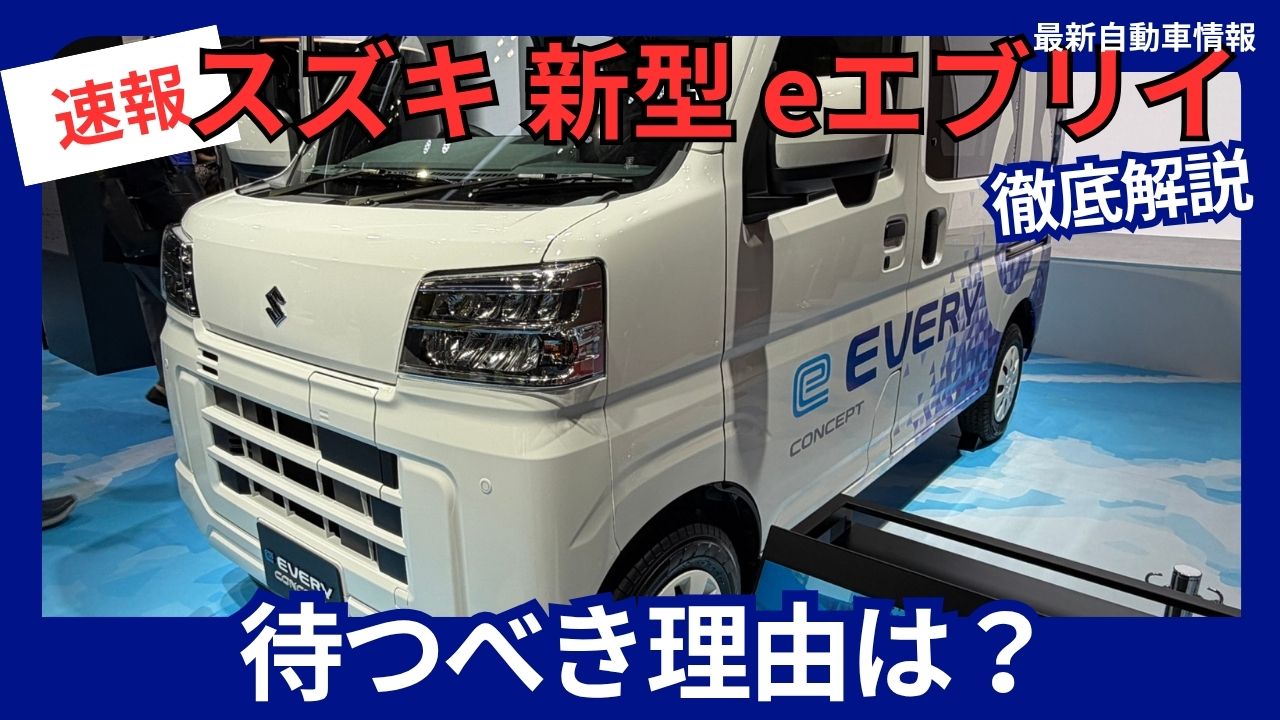
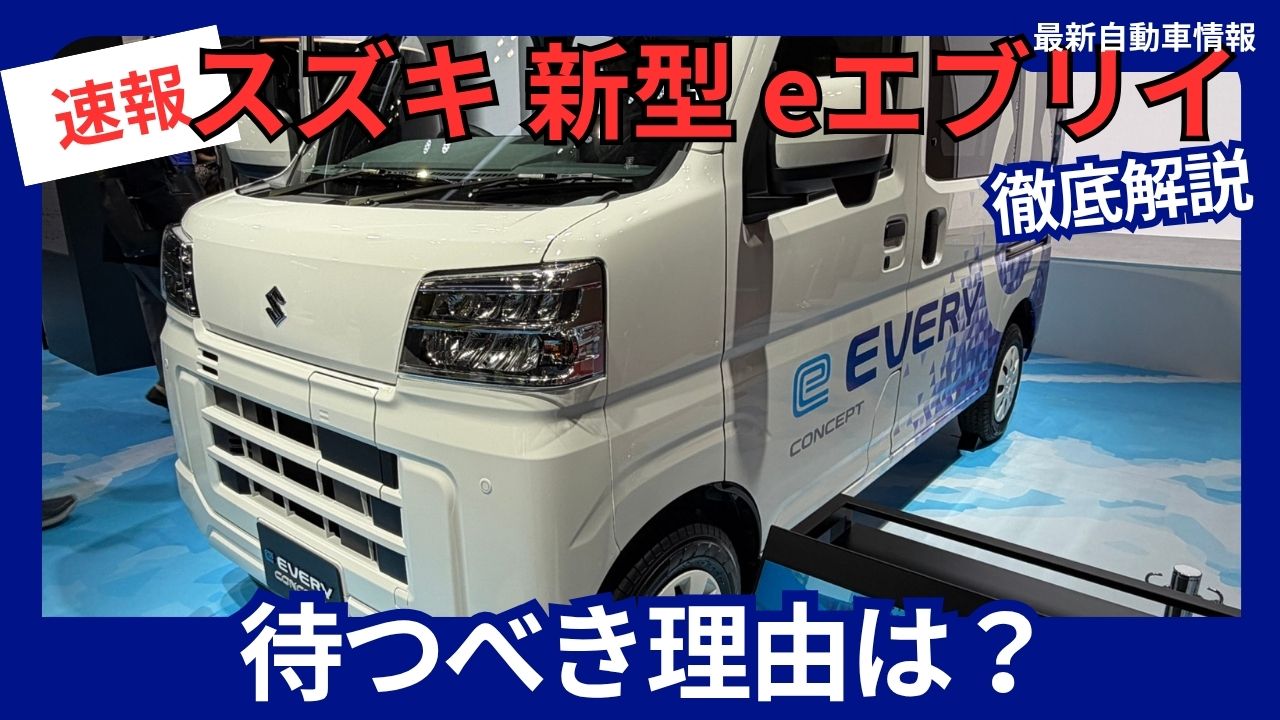
The release of Suzuki’s long-awaited electric vehicle, the “eEvery,” is fast approaching in 2026. Originally scheduled for release in fiscal 2023, this electric commercial light van was forced to be postponed due to Daihatsu’s certification fraud scandal. However, the exhibition of the “eEvery Concept” at the Japan Mobility Show 2025 made it clear that the car is steadily moving towards its release.
In this article, we will provide a thorough explanation of the latest information on the Suzuki eEvery, the differences between it and the current model, and how to decide whether or not you should wait to purchase it.
What is the Suzuki eEvery? A new-generation EV jointly developed by three companies
A light commercial EV realized through collaboration with Toyota and Daihatsu
The Suzuki eEvery is a commercial light van equipped with a BEV (battery electric vehicle) system, jointly developed by Suzuki, Daihatsu, and Toyota. By combining Suzuki and Daihatsu’s know-how in small car manufacturing with Toyota’s electrification technology, an EV system optimal for light commercial vehicles has been realized.
Daihatsu will be in charge of vehicle production, and Suzuki, Daihatsu, and Toyota will each sell the vehicle under their own brand names. Suzuki is expected to market it as the “eEvery,” Daihatsu as the “Hijet Cargo EV,” and Toyota as the “Pixis Van EV.”
The “eEvery Concept” unveiled at the Japan Mobility Show 2025
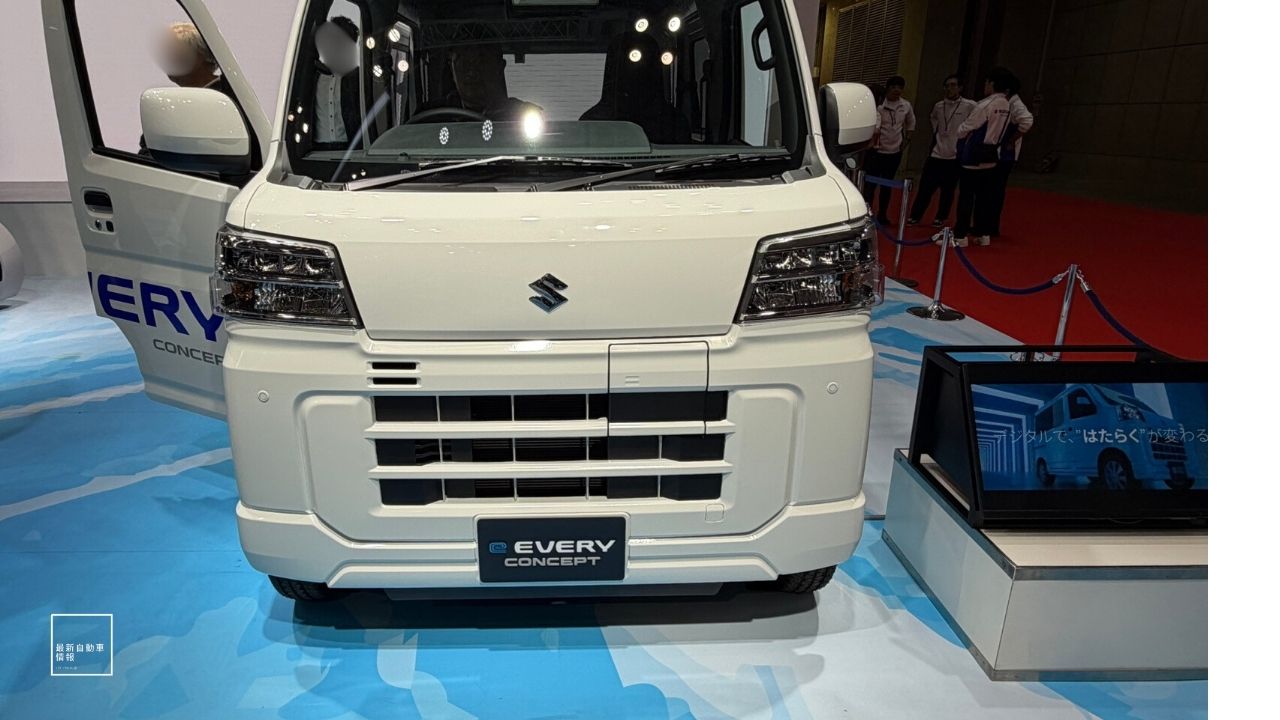
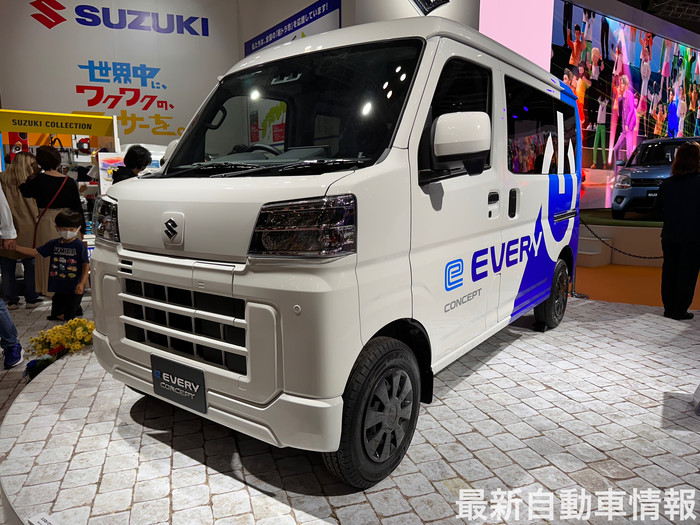
Suzuki exhibited the “eEvery Concept” at the 2025 Japan Mobility Show. This concept model features an exterior design that combines the solidity of a commercial vehicle with a futuristic digital feel.
An image video in collaboration with the fleet management service “SUZUKI FLEET” was also shown at the venue, and ways in which it can be used as a solution for corporate users were also proposed.
eEvery’s main specifications and features
Powertrain: Equipped with Toyota’s EV system
The Suzuki eEvery will be equipped with an EV system developed by Toyota. The main specifications are as follows:
Powertrain
- 1 electric motor
- Maximum output: 64ps
- Maximum torque: 18.0 kgm (approx. 177 Nm)
- Drive system: RWD (rear-wheel drive)
- Cruising range: Approximately 200km (WLTC mode)
The maximum torque is approximately 1.8 times that of the current turbo engine (9.7 kgm), providing powerful driving without hesitation even when fully loaded, even on slopes. The quietness and torqueful acceleration unique to an EV provide a comfortable driving environment for a variety of commercial uses, including delivery work and mobile sales.
Body size: The largest interior space within the minicar standard
Main specifications (reference values)
- Total length x width x height: 3,395mm x 1,475mm x 1,890mm
- Wheelbase: 2,430mm (estimated)
The design makes maximum use of the minicar standard, ensuring a large luggage space. While maintaining the same overall length and width as the current Every, the battery placement has been improved, resulting in a “slight reduction in luggage space,” according to the official announcement.
Smart battery placement: Minimizing impact on luggage space
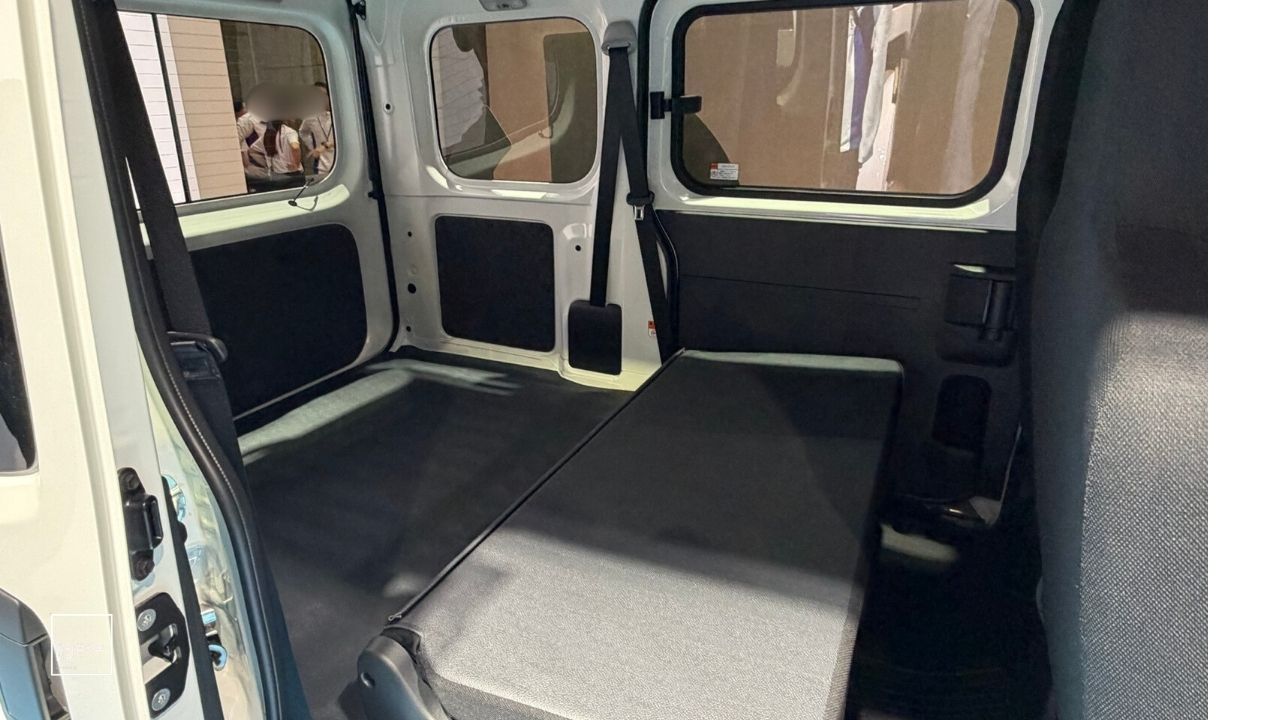
Suzuki explains that the biggest issue with EVs is the reduction in luggage space due to the battery, but that this has been minimized thanks to the eEvery’s unique battery placement technology. By efficiently placing the batteries under the floor and seats, the vehicle maintains the same loading capacity as a conventional minivan.
200km range: enough for a day’s work
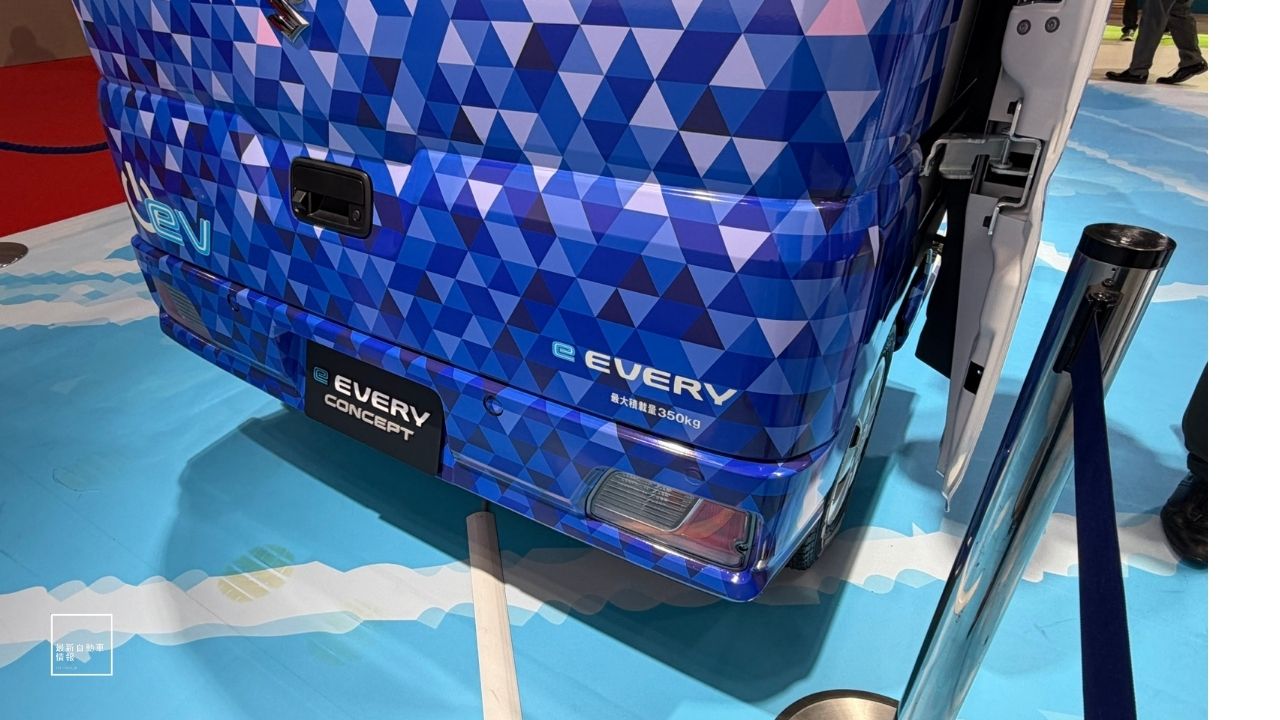
The vehicle has a driving range of approximately 200km (WLTC mode) when fully charged, and is optimized for commercial use where the daily driving distance is limited, such as last-mile transportation and local delivery.
The average daily driving distance of a typical light commercial vehicle is said to be around 50 to 100 km, so with a range of 200 km, you can complete a day’s work without having to worry about charging. By charging overnight, you can set off the next morning fully charged.
Charging port: Located in the front grille
The charging socket for the eEvery is located in the front bumper grille, in the same position as the fuel filler cap on conventional gasoline vehicles, improving operability at charging stations.
External power supply function: Use as a power source during disasters or on-site
The eEvery is expected to be equipped with an external power supply function (V2L: Vehicle to Load), which is expected to be useful not only as an emergency power source in the event of a disaster, but also as a mobile battery for power supply at construction sites and event venues.
This function will enable contributions to local communities and the creation of new business models.
Design: A fusion of commercial vehicle style and cutting-edge technology
Exterior: Suzuki’s unique bumper design
The base vehicle for the eEvery Concept is the Daihatsu Hijet Cargo, but the front bumper and grille feature Suzuki’s own unique design. While maintaining a sense of unity with the current Every, it adds cutting-edge design elements befitting an EV.
It features a design that expresses the solid and sturdy impression of a commercial vehicle, as well as a digital feel that is moving towards the future. The adoption of LED headlamps achieves both visibility and energy efficiency.
Interior: Practical design
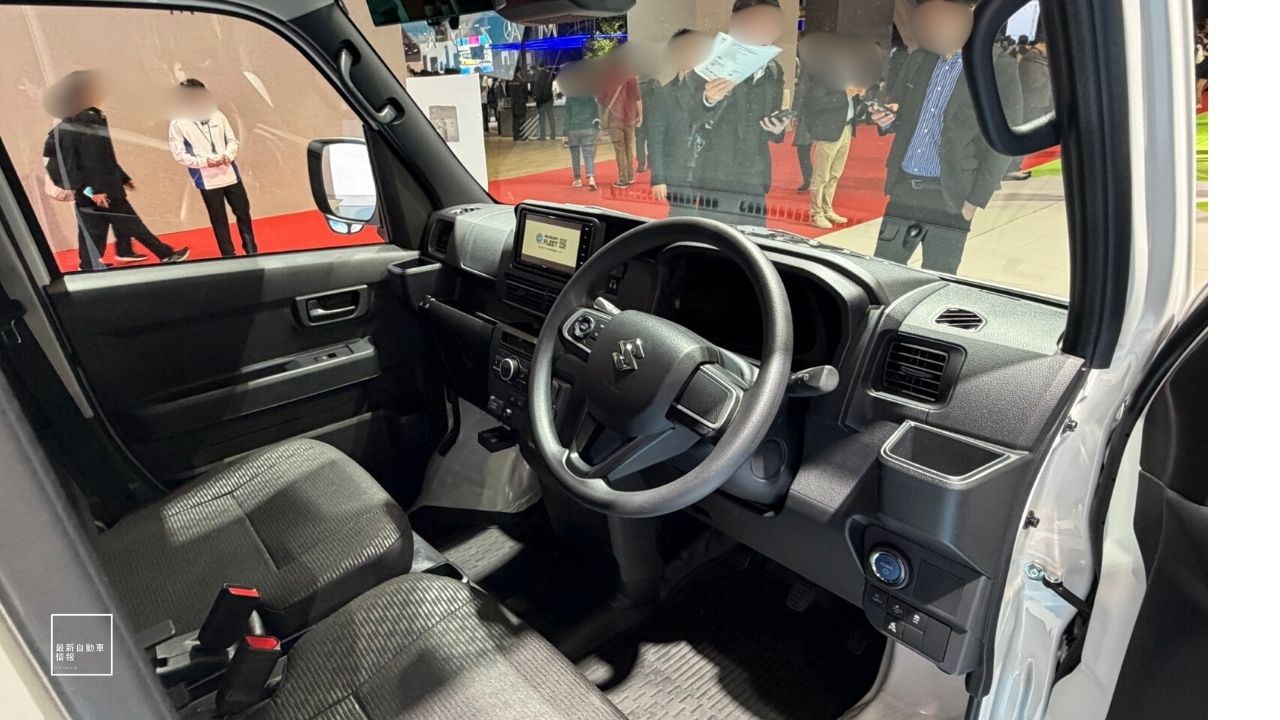
The interior is expected to be designed with ease of use as a commercial van as the top priority. Like the current Every, both the driver and passenger seats will have ample space, providing a comfortable space that will reduce fatigue even during long drives.
There is also ample storage space, including seatback tables and an under-instrument panel center box, making it easy to keep documents and tools organized.
Price estimate: Starting from around 2 million yen with subsidies
The vehicle price is expected to be in the early 2 million yen range.
The base price of the eEvery is expected to be in the low 2 million yen range, which is slightly higher than the top-of-the-line grade of the current Every Wagon (approximately 1.9 million yen).
CEV subsidies significantly reduce the actual burden
Under the CEV subsidy system for fiscal 2024, subsidies of up to 850,000 yen will be provided for light EVs. By utilizing this subsidy, it will be possible to reduce the actual cost to around 2 million yen.
Actual cost after utilizing subsidies (estimated)
- Vehicle price: Approximately 2.2 million to 2.4 million yen (estimated)
- CEV subsidy: -850,000 yen
- Actual cost: Approximately 1.35 to 1.55 million yen
Furthermore, if local governments add their own subsidies, the actual burden may be further reduced.
Advantageous running costs
EVs have significantly lower fuel (electricity) costs than gasoline, and maintenance costs are also reduced.
Running cost comparison (when driving 10,000 km per year)
Current Every (gasoline vehicle):
- Fuel economy: Approximately 16km/L
- Gasoline costs (assuming 170 yen/L): Approximately 106,000 yen/year
eEvery (EV):
- Electricity consumption: Approximately 6km/kWh (estimated)
- Electricity bill (assuming 30 yen/kWh): Approximately 50,000 yen/year
You can expect to save about 56,000 yen in fuel costs per year, which will translate into a cost savings of about 280,000 yen over five years. In addition, there is no need for maintenance costs such as oil changes, so the total cost of operation can be comparable to or even lower than that of a gasoline vehicle.
Target audience: Large companies to small and medium-sized businesses
Initially, the main target was large, environmentally conscious companies
Suzuki has positioned the e-Every’s initial main target as “large corporations that are committed to zero emissions.” For companies that are promoting ESG management and carbon neutrality, converting commercial vehicles to electric vehicles is an important measure.
By replacing their existing commercial vehicles with the e-Every, major logistics companies, telecommunications carriers, public organizations and others can reduce CO2 emissions and improve their corporate image.
Great benefits for small and medium-sized businesses
By utilizing subsidies, initial costs can be kept down, making this an EV commercial vehicle that is easy for small and medium-sized businesses to adopt. It is particularly suitable for the following types of businesses:
- Delivery and courier companies : Delivery routes are set daily, and a range of 200km is sufficient to cover them.
- Mobile vendors : Cooking equipment can be operated using the external power supply function
- Nursing care and welfare services : Providing a quiet, user-friendly transportation environment
- Equipment construction companies : Used as a power source on-site in addition to transporting tools and materials
Comparison with competing models: Differences with Honda N-VAN e:
Honda N-VAN e:: Already on the market
Honda is leading the light EV commercial van market with the launch of the N-VAN e: in October 2024. The N-VAN e: is attracting attention for its stylish design and high practicality.
Honda N-VAN e: Key Specifications
- Cruising range: Approximately 210 km (WLTC mode)
- Maximum output: 64ps
- Maximum torque: 183Nm
- Price: From approximately 2.43 million yen (before subsidies)
What differentiates the eEvery
The eEvery is expected to be differentiated from the N-VAN e: in the following ways:
- Price competitiveness : Cost reduction through joint development by the three companies has resulted in more competitive pricing
- Sales network : By selling under the three brands Suzuki, Daihatsu, and Toyota, purchases and after-sales service can be received anywhere in the country.
- Reliability : High reliability achieved through the combination of many years of commercial vehicle manufacturing know-how and Toyota’s EV technology
- Fleet Service : Integrated management service for corporations in collaboration with “SUZUKI FLEET”
What will change from the current Every?
Features of the current Every (2024 model)
The current Every, which underwent a major overhaul in February 2024, has the following features:
Powertrain
- Naturally aspirated engine: 49ps/6.1kgm
- Turbo engine: 64ps/9.7kgm
- Transmission: 5-speed manual, CVT, 4-speed automatic (PA grade only)
fuel efficiency
- Naturally aspirated 5-speed MT: 17.2km/L (WLTC mode)
- Naturally aspirated CVT: 16.4km/L
- Turbo CVT: 15.1km/L
Price range
- Every Van: Approximately 1.2 million to 1.67 million yen
- Every Wagon: Approximately 1.84 million to 1.93 million yen
Key points of evolution for the eEvery
- Zero emissions : Environmentally friendly with zero CO2 emissions
- Quiet operation : No engine noise means you don’t have to worry about disturbing neighbors even when delivering early in the morning or late at night.
- Torque performance : Maximum torque is increased by approximately 1.8 times, significantly improving acceleration performance on slopes and when fully loaded.
- Running costs : Fuel costs are reduced by about half, and maintenance costs are also reduced
- External power supply function : Can be used as a power source during disasters or on-site
How to use it compared to the previous Every
- Cases where the eEvery is suitable : Daily driving distance is less than 200km, charging facilities are available, and environmental friendliness is required
- Cases where a gasoline Every is suitable : those who drive long distances frequently, those who do not have a good charging environment, and those who want to keep initial costs down.
Should I wait for the eEvery? Points to consider when making a purchase decision
Who should wait: The eEvery is recommended for these people
If any of the following apply to you, we recommend you wait until the eEvery is released in 2026.
- Corporations that need to be environmentally conscious : Companies that have ESG management or zero emissions goals
- Limited daily driving distance : Delivery routes are set and drivers are limited to driving 100-150km per day
- A good charging environment : Charging equipment can be installed in company parking lots or at home.
- Prioritizing running costs : Prioritizing long-term fuel cost reduction
- Quietness is important : deliveries are often made early in the morning or late at night, and sales activities are often conducted in residential areas
- Want to utilize external power supply functions : Power is needed for mobile sales, construction sites, disaster response, etc.
People who should buy the current model without waiting
If any of the following apply to you, you would be better off purchasing the current gasoline Every.
- Frequent long-distance driving : Frequently driving over 200km a day
- Charging environment cannot be secured : Charging equipment cannot be installed in parking lots
- Want to keep initial costs down : Even with subsidies, the initial costs of an EV are a burden
- Vehicles needed immediately : reasons why waiting until 2026 is not an option
- Considering a used car : A new EV is too expensive
Release date: January 2026 likely
According to multiple sources, the eEvery is likely to be released in January 2026. The purpose of exhibiting it at the Japan Mobility Show 2025 is thought to be to gauge market reaction and raise awareness ahead of the release.
It is expected to be released in about a year, so we recommend that you make your decision based on the condition of your current vehicle and when it is time to replace it.
Future outlook: Expansion of the light EV commercial vehicle market
The second model following the Honda N-VAN e:
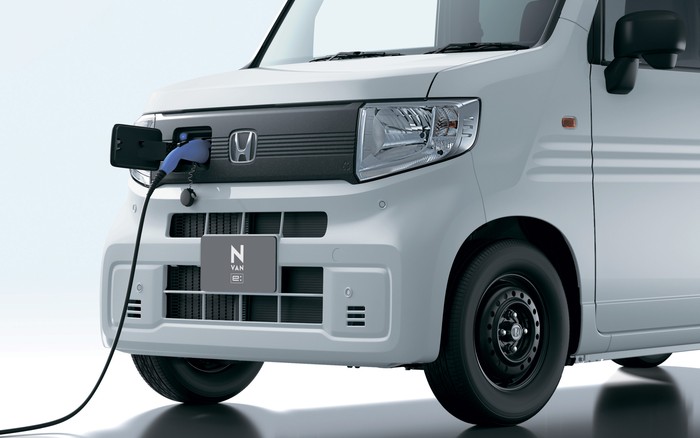
N-VAN e
The light EV commercial vehicle market took off in earnest with Honda’s release of the N-VAN e: in October 2024. The entry of the eEvery will further invigorate the market and expand options.
The significance of joint development by the three companies
By jointly developing the EV system, Suzuki, Daihatsu, and Toyota can spread development costs and increase price competitiveness through mass production. Another major advantage is that by selling under three brands, they can take advantage of the nationwide sales and service network.
Looking forward to future derivative models
The success of the eEvery is expected to lead to the development of other light commercial vehicle models that utilize the same EV system. The lineup is expected to expand to include the Carry EV light truck and a wagon model that is more passenger car-like.
Summary: eEvery is a leading candidate for the commercial EV market
The Suzuki eEvery is expected to be a leading candidate in the light EV commercial vehicle market, thanks to its high reliability and cost-effectiveness, which were jointly developed by the three companies, and its extensive sales and service network.
Summary of eEvery’s points
- High-quality EV system jointly developed with Toyota and Daihatsu
- A cruising range of 200km is sufficient for a day’s work
- Designed to minimize impact on luggage capacity
- Subsidies are available to purchase for as little as 2 million yen
- Running costs are about half that of a gasoline vehicle
- External power supply function expands new usage methods
- Scheduled for release in January 2026
For businesses looking to combine environmental friendliness with economic efficiency, the e-Every is a vehicle worth waiting for. However, we recommend carefully considering your own usage scenarios, such as driving range and charging environment, before making the optimal choice.
We will continue to update this page as new information becomes available. Please stay tuned for the latest information on the eEvery.