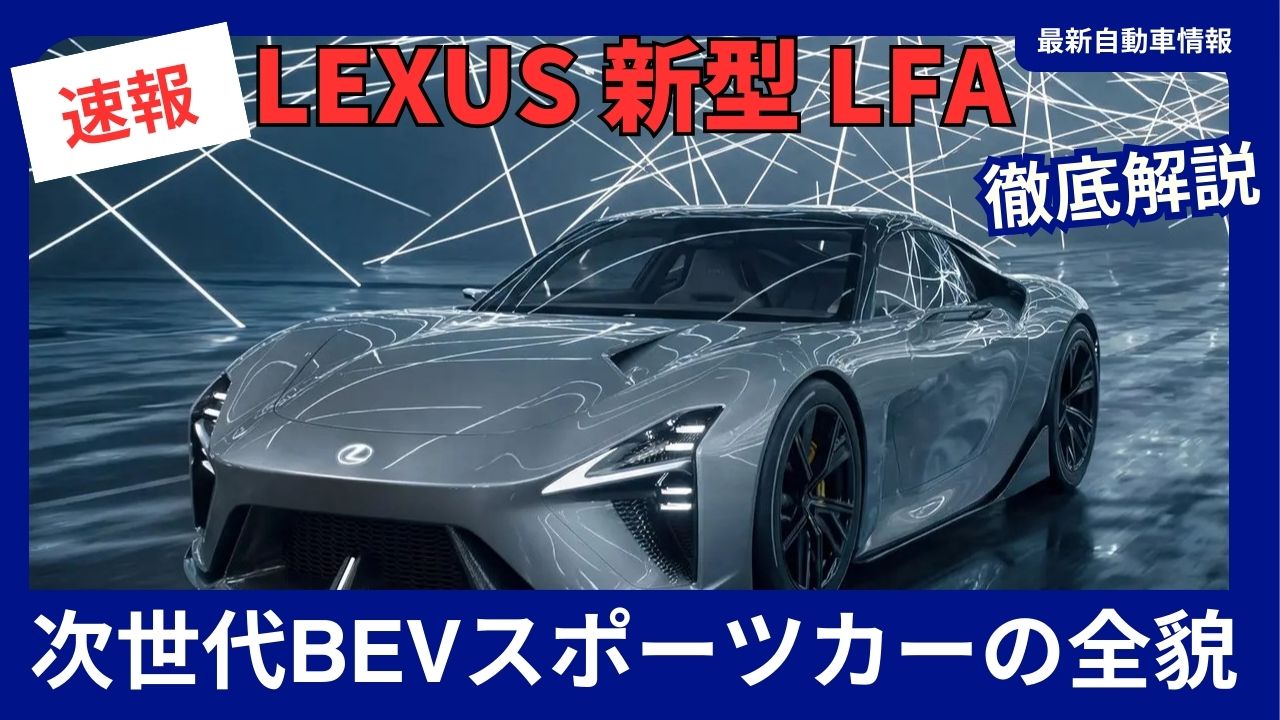

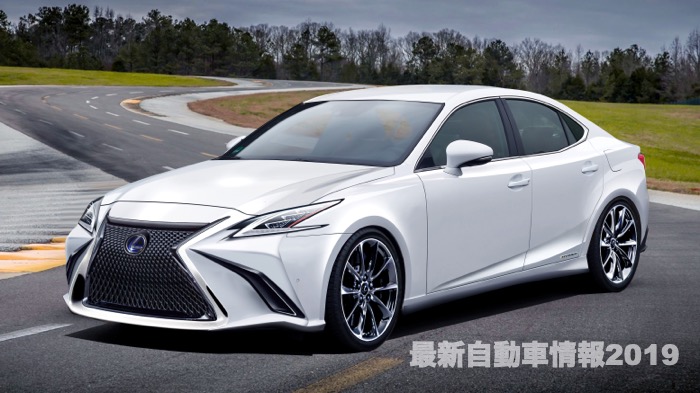
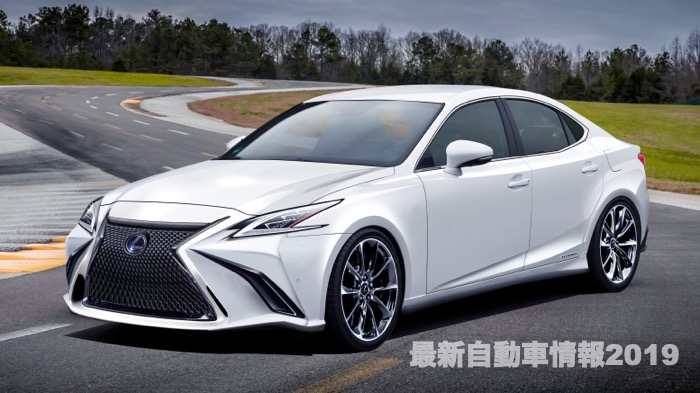
Lexus will fully redesign the new IS and release it around October 2027. The previous model was released on May 16, 2013, and this will be the first full model change in 14 years.
About the new LEXUS IS
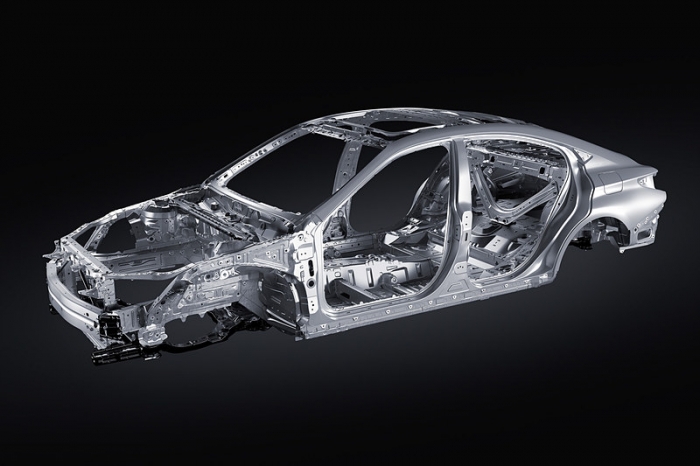
This full model change sees the adoption of the “TNGA (Toyota New Global Architecture)” for the first time in the IS series, and by expanding the use of laser screw welding and structural adhesives, as well as adopting a ring-shaped door opening structure, it has achieved both improved body rigidity and lighter weight compared to the previous model . The new generation engine, the “Dynamic Force Engine,” and the hybrid system will use a more compact THS II. Looking at the specifications and class, it is easy to imagine that this will be a great model, as it will be lighter and more compact than the LS and LC. The latest preventive safety package, the “Lexus Safety System +,” will be adopted . While the previous model did not have a hold function, this model will feature the now familiar ” electric parking brake & hold ” around the shift knob.
Evolution of the new LEXUS IS “Lexus Safety System +”
The improved performance of the monocular camera and millimeter-wave radar allows “Pre-Collision Safety” to detect cyclists during the day and pedestrians at night. “Radar Cruise Control” and “Lane Tracing Assist (LTA)” assist steering to keep the vehicle in the center of the same lane when using radar cruise control on expressways, etc. “Road Sign Assist (RSA)” uses a camera to read major road signs and displays them on the meter and head-up display. “Leading Vehicle Departure Notification (TMN)” notifies the driver when the vehicle ahead has started to depart by displaying a message on the meter and head-up display and sounding a buzzer .
Key Features of the Next-Generation Lexus Safety System + Installed in the New LEXUS IS
The system uses millimeter-wave radar and cameras to ensure excellent recognition performance and reliability. In addition to three preventive safety features – PCS with pedestrian detection, LDA, and AHB – it also comes equipped with radar cruise control.
| system | Next-generation Lexus Safety System+ |
Lexus Safety System + |
Lexus Safety System +A |
|---|---|---|---|
| Automatic high beam |
◯ | ◯ | ◯ |
Pre-crash safety system with collision avoidance support |
Daytime and nighttime pedestrian and bicycle |
◯ Daytime pedestrians |
◯ Daytime pedestrians |
| Lane Tracing Assist |
◯ | × | ◯ |
| Lane Change Assist |
× | × | ◯ |
| Lane Departure Alert |
Steering control White/yellow line detection Road edge detection Wandering alarm |
Steering control White line/yellow line detection Wobble alarm |
Steering control White line/yellow line detection Wobble alarm |
| Front Cross Traffic Alert |
× | × | ◯ |
| Road Sign Assist | ◯ | × | ◯ |
| Radar cruise control |
◯ | ◯ | ◯ |
| Leading vehicle departure notification | ◯ | × | ◯ |
The camera recognizes the white and yellow lines of the driving lane, and if it detects the possibility of lane departure, it alerts the driver with a buzzer, a display, and vibrations on the steering wheel, helping to avoid collisions caused by lane departure.In addition, some vehicles are equipped with “Lane Keeping Assist” (LKA), which controls the electric power steering and supports the driver’s steering operation to make it easier to stay within the lane.
Pre-crash safety with pedestrian recognition (pedestrians “daytime/night”, cyclists “daytime”) Pre-crash safety (PCS) is a collision avoidance support system with pedestrian detection function, and can detect cyclists during the day and pedestrians at night, helping to prevent accidents caused by lane departure.
Lane Departure Alert (LDA) with steering vibration function.
Adaptive High Beam System (AHS) optimizes headlamp light distribution to avoid directing high beams at vehicles ahead or oncoming vehicles.
Automatic High Beams Automatic High Beams (AHB) automatically switches between low and high beams to help ensure forward visibility at night.
Radar cruise control (with full-speed tracking function) Automatic high beam (AHB) automatically switches between low and high beams to help ensure forward visibility at night
Lane Tracing Assist When driving on a highway or expressway with radar cruise control activated, turning on the Lane Tracing Assist (LTA) switch provides steering assistance necessary to keep the vehicle in its lane.
Road Sign Assist (RSA) Automatic High Beam (AHB) automatically switches between low and high beams to help ensure forward visibility at night
TMN (Tomcat Movement Notification) – If the vehicle ahead starts moving, and your vehicle remains stationary, the color head-up display, multi-information display, and buzzer will alert you that the vehicle ahead has started moving.
ITS Connect safety driving support system The ITS Connect safety driving support system utilizes road-to-vehicle and vehicle-to-vehicle communications over the ITS-dedicated frequency (760MHz), and the Intelligent Clearance Sonar mitigates collisions caused by accidentally stepping on the accelerator or pressing it too hard. Preventive safety features have also been enhanced with the adoption of Rear Cross Traffic Auto Brake (RCTAB), which automatically applies brakes when there is a risk of collision with a vehicle approaching from the left or right rear when parking.
TMN (Tomcat Movement Notification) – If the vehicle ahead starts moving, and your vehicle remains stationary, the color head-up display, multi-information display, and buzzer will alert you that the vehicle ahead has started moving.
▼For more details, please refer to this article.
→ Lexus 2nd generation Lexus Safety System+ introduced in 2018 Comparison Changes
The new LEXUS IS adopts the newly developed LEXUS platform, the GA-C platform.
The new Lexus platform is based on a newly developed platform called TNGA (Toyota New Global Architecture). It has been completely revamped, adopting a newly developed platform called the GA-C platform. It has made significant advancements over the previous model, including achieving high aerodynamic performance . The body’s torsional rigidity has also been significantly improved compared to the previous model. In addition to the high rigidity and low center of gravity, the adoption of a double wishbone rear suspension and optimized geometry ensure high handling stability. The newly developed GA-C platform allows for a low-slung styling.
▼For more details, please refer to this article.
→ Summary of Toyota New Global Architecture (TNGA)
About the new LEXUS IS engine
The LEXUS IS300h will use a more compact THS II hybrid system, with significant changes including the battery position.
The engine model is equipped with the D-4S, a 2.5L inline 4-cylinder direct injection engine that achieves a maximum thermal efficiency of over 40%. The hybrid model also uses this engine, and employs a smaller and lighter hybrid system, the “High-Performance Multi-Stage THS II,” to improve fuel efficiency.
For gasoline vehicles
In addition to the powerful performance of a turbo engine, it also offers smooth acceleration and responsive driving. The new RX350 employs a newly developed 2.4L turbo engine and Direct Shift-8AT.
| Specifications | IS350 |
|---|---|
| engine | 2.4L direct injection turbo engine |
| Maximum power | 205kW (279PS) / 6,000rpm |
| Maximum torque | 430Nm (43.8kgmf) / 1,700-3,600rpm |
| transmission | Direct Shift-8AT |
| Drive system | 4WD |
| Fuel type | premium gasoline |
| WLTC mode fuel economy | 12.2km/L |
For hybrid vehicles
| Specifications | IS350h |
|---|---|
| engine | Inline 4-cylinder 2.5L direct injection engine + motor D-4S + motor (THS II) |
| Maximum power | 140kW (190PS) / 6,000rpm |
| Maximum torque | 243Nm (24.8kgmf) / 4,300-4,500rpm |
| Front motor maximum output |
88kw (120ps) |
| Front motor maximum torque |
202Nm (20.6kgm) |
| Rear motor maximum output |
40kW (54ps) |
| Rear motor maximum torque |
121Nm (12.3kgfm) |
| System Maximum Output | 179kW (243ps) |
| transmission | Electric continuously variable transmission |
| Drive system | 2WD/4WD (E-Four) |
| Fuel type | premium gasoline |
| WLTC mode fuel economy | 25km/L |
Toyota Hybrid System (THS II) for 2.5L engines
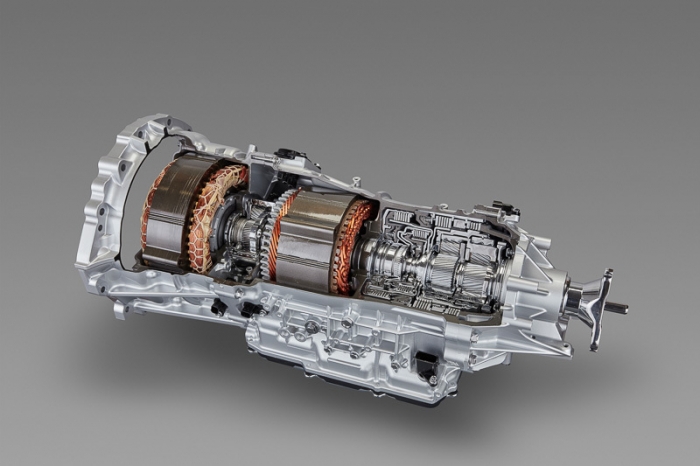
Toyota Hybrid System (THS II)
Inheriting the compact, lightweight, and low-loss technologies used in the fourth-generation Prius , the hybrid system for the 2.5L engine has been completely redesigned, and a new high-performance multi-stage THS II has been developed.
The 2.5L THS II achieves superior power performance and fuel economy at a high level through the synergistic effects of compact, lightweight, and low-loss technologies combined with the high combustion efficiency and high output of the new TNGA-based engine.
Multi-stage THS II delivers high starting acceleration and a direct feel that completely changes the image of hybrid vehicle driving. In addition to improving system efficiency at high speeds, it also enables intermittent engine operation at high speeds, improving fuel economy at high speeds.
The new IS will thus become the first Toyota vehicle to adopt TNGA in all aspects, including the powertrain, following the new Camry , which went on sale on July 10, 2017.
▼For more details, please refer to this article.
→ Summary of Toyota New Global Architecture (TNGA)
Predictive Eco-Drive (Hybrid System)
The car is equipped with predictive eco-driving, which is also installed in the LEXUS UX250h . The navigation system predicts when the car will slow down or stop, and controls the car to efficiently regenerate energy after the accelerator is released, charging the hybrid.
New LEXUS IS specifications
| Specifications | New LEXUS IS (IS350h) |
|---|---|
| full length | 4,680mm |
| Overall width | 1,810mm |
| Overall height | 1,430mm |
| Wheelbase | 2,830mm |
| engine | Inline 4-cylinder 2.5L direct injection engine + motor D-4S + motor (THS II) |
| Maximum power | 140kW (190PS) / 6,000rpm |
| Maximum torque | 243Nm (24.8kgmf) / 4,300-4,500rpm |
| Motor maximum output | 88kw (120ps) |
| Motor Max Torque | 202Nm (20.6kgm) |
| System Output | 179kW (243ps) |
| transmission | Electric continuously variable transmission |
| battery | Lithium-ion battery |
| Drive system | 2WD (FR) / E-Four (4WD) |
| Passenger capacity | 5 people |
| WLTC mode fuel economy | 25.2km/L |
| price | 4.5 million to 7 million yen |
▼For more details, please refer to this article.
→ Lexus New IS Big Minor Change World Premiere June 10, 2020
About the LEXUS IS series
The IS series began sales in 1999 with the IS200, a Lexus model of Toyota’s Altezza in Japan.
The second generation went on sale in 2005, but the 2L model was discontinued, the size became one size larger, the price range increased, and the target customer base changed.
The current third generation, which is the older model, went on sale on May 16, 2013. The 2L model was revived and the IS200t was released on July 23, 2015. A minor change was made on October 20, 2016, with changes to the front bumper design and interior design, changing the image. Some specifications were changed in October 2017. The turbocharged “IS200t” was renamed the “IS300”.
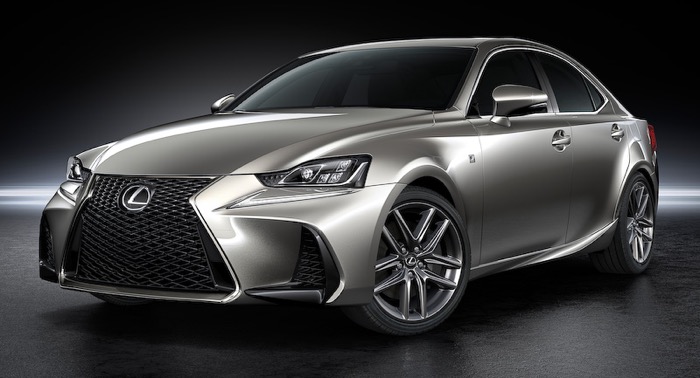
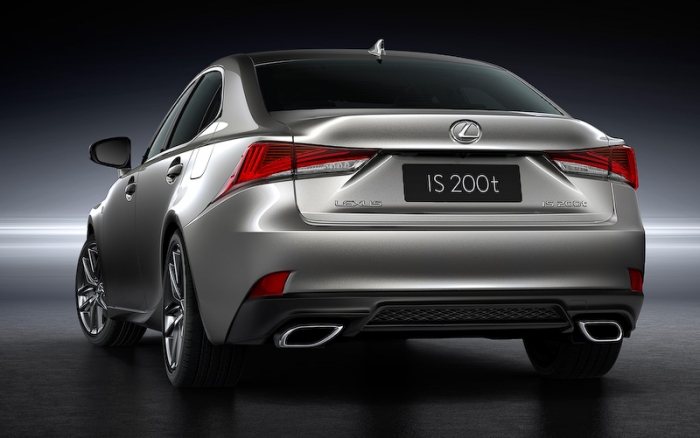
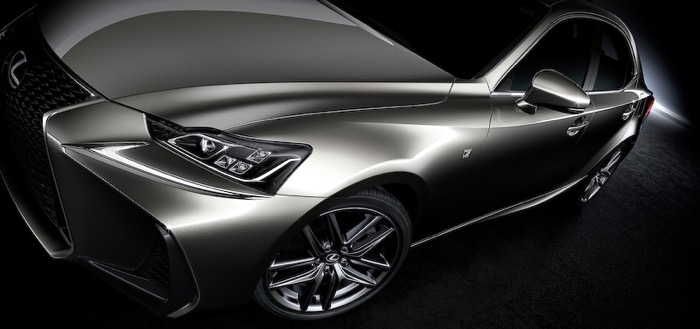
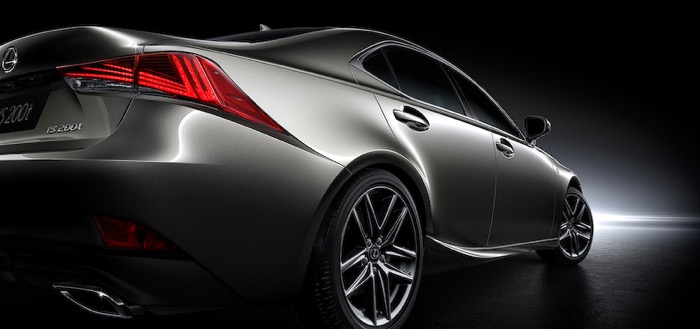
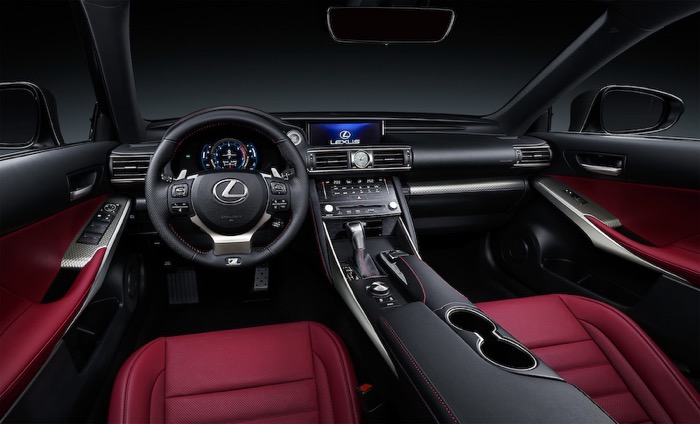
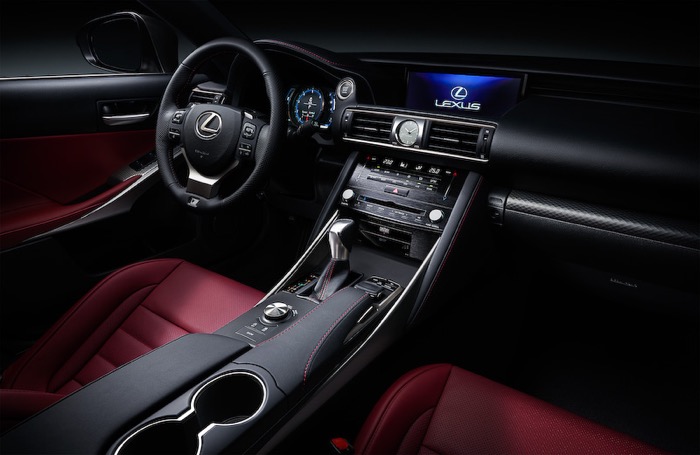
A major minor change was made to the car on November 5, 2020, and the special edition “F SPORT Mode Black” was released on the same day. The exterior design concept was “Agile & Provocative,” and the aim was to create an aggressive design with a wide and low stance that suggests driving performance and sharp character lines.
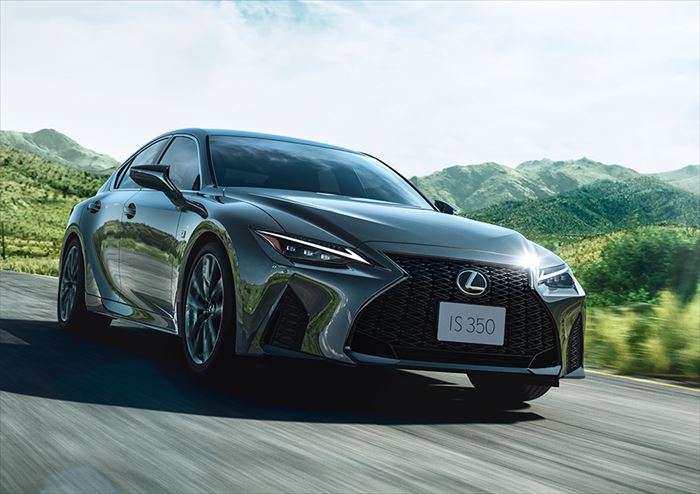
IS350 F SPORT
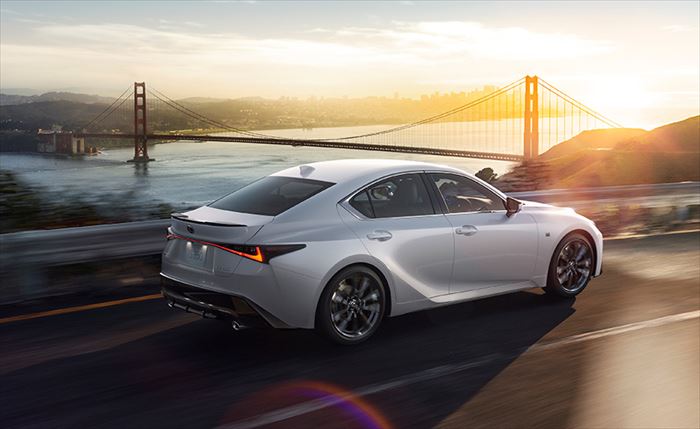
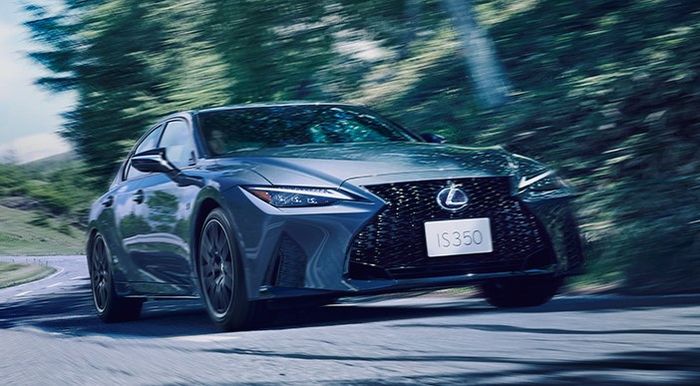
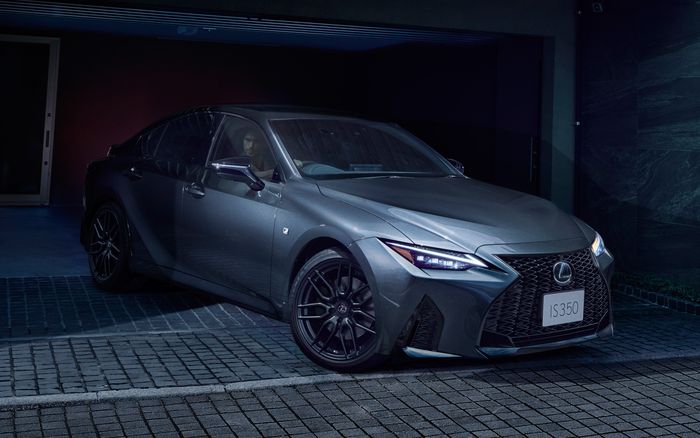
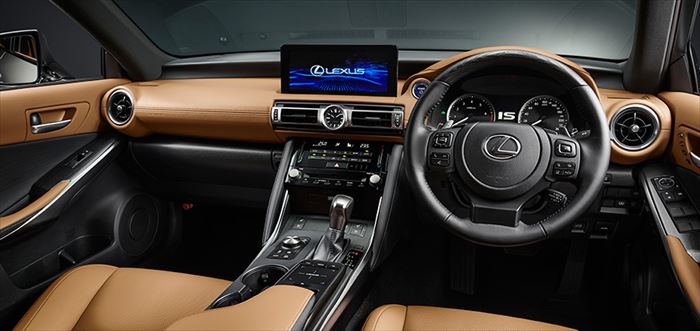
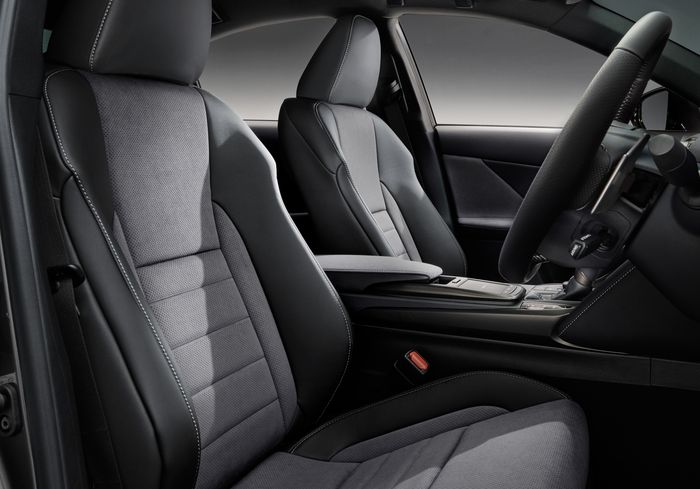
The adoption of thin headlights equipped with newly developed small and lightweight lamp units, the low-set grille area and correspondingly lowered side character lines, and the design of the rear end of the luggage compartment all express a low center of gravity.
▼For more details, please refer to this article.
→ Lexus new IS minor change released on November 5, 2020
We will let you know as soon as new information becomes available.
Lexus news release
https://global.toyota/jp/newsroom/lexus/32714640.html
Lexus IS series
Lexus