
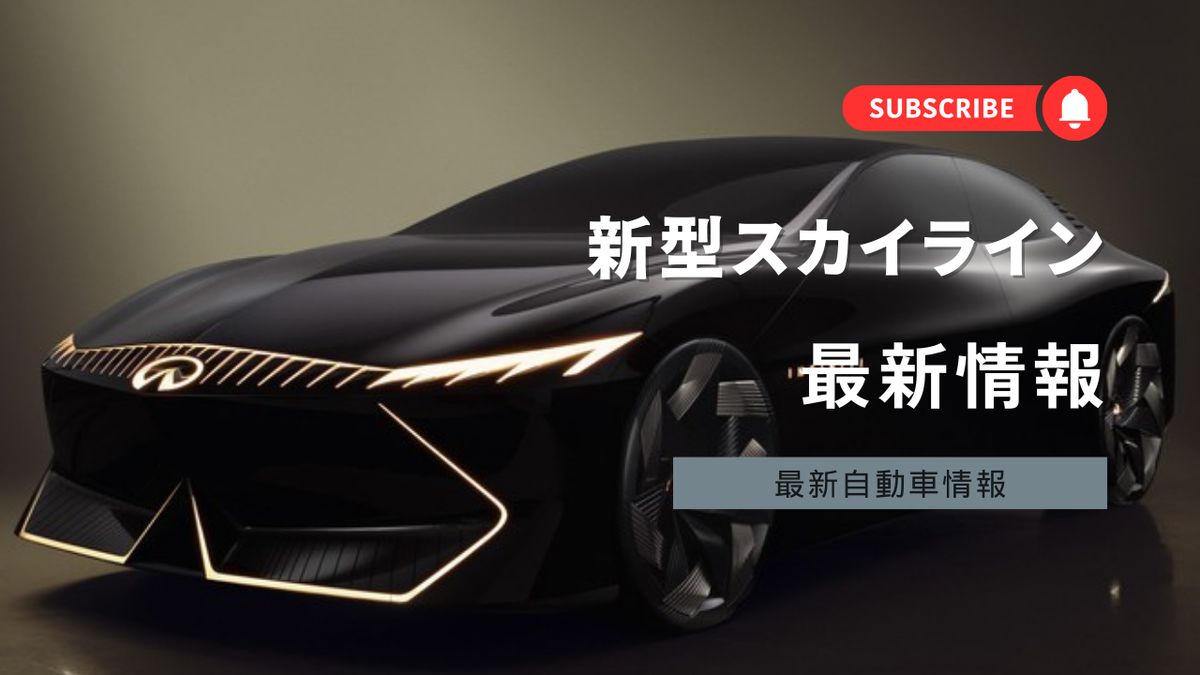
Nissan is expected to fully redesign its new Skyline (V38) sports sedan and release it around 2027. It’s said that a battery electric vehicle (BEV) model will also be included in the lineup this time. The current Skyline (V37) model has been on sale since February 26, 2014, marking the first full model change in 11 years. In Europe and the United States, it is sold under the Infiniti brand as the Infiniti Q50. On October 24, 2023, the EV concept car “Vision Qe” was unveiled as part of the company’s plan to electrify its product lineup. This is expected to be the next-generation Skyline (Infiniti Q50).
Nissan’s new Skyline full model change exterior
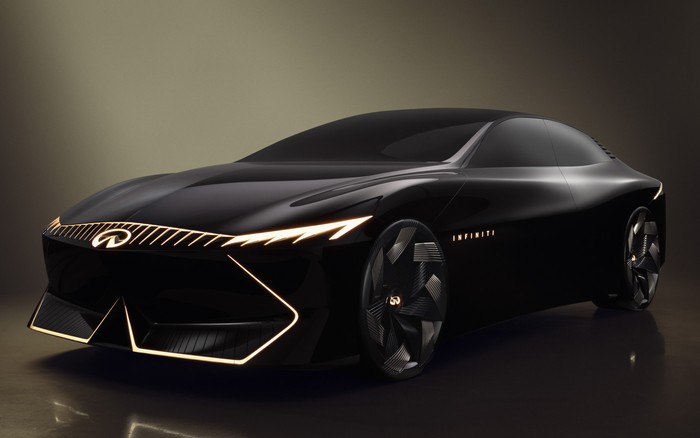
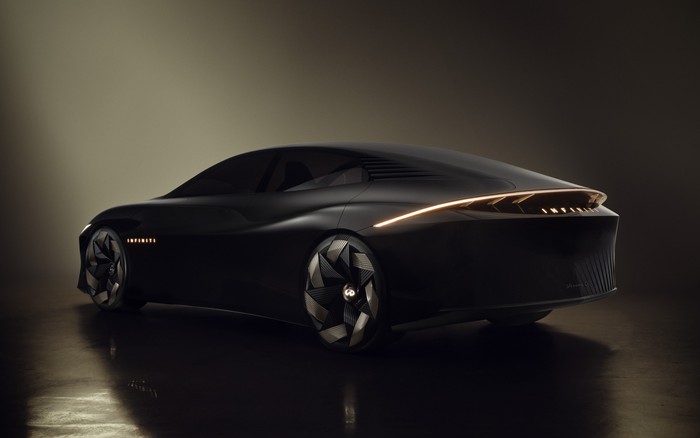
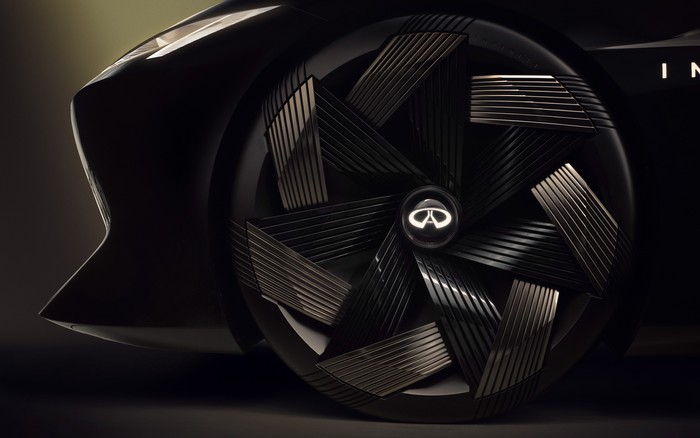
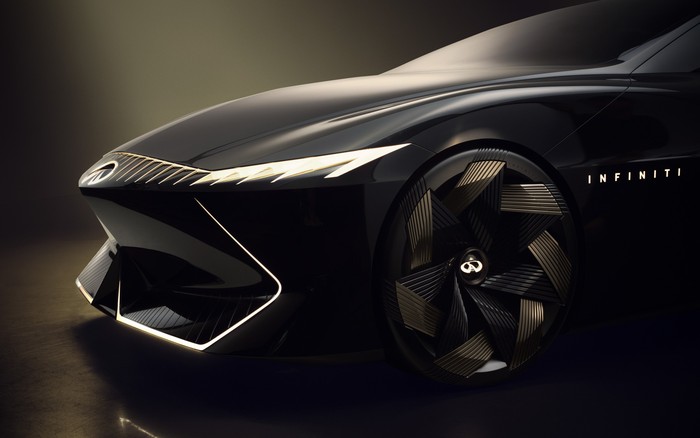
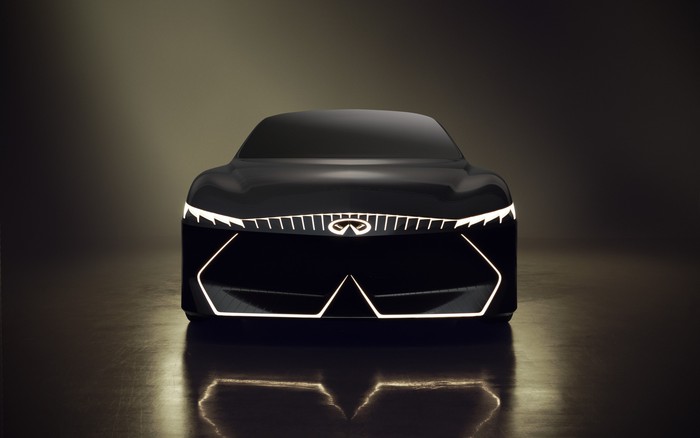
Judging from the Infiniti Vision Qe concept, it has a sleek, low and wide form, combined with a digital piano key light and striking machined-finish wheels, making it a very cutting-edge design.
EV concept car “Vision Qe”
The Infiniti Vision Qe Concept shows the design direction of Infiniti’s first EV, which will be produced at the Canton plant in the U.S. The concept combines a sleek, low and wide form with digital piano key lighting and striking machined-finish wheels.
▼For more details, please refer to this article.
→ Nissan Infiniti will unveil two new EV concept cars, the “Vision Qe” and “Vision QXe,” on October 25, 2023.
At the 46th Tokyo Motor Show 2019, the electric vehicle (EV) concept model ” NISSAN ARIYA CONCEPT ” was unveiled for the first time in the world, but in the case of the Ariya, it has been released on the market with a design that is almost identical to the concept model, so there is a high possibility that the “Skyline” will also be released with a similar design.
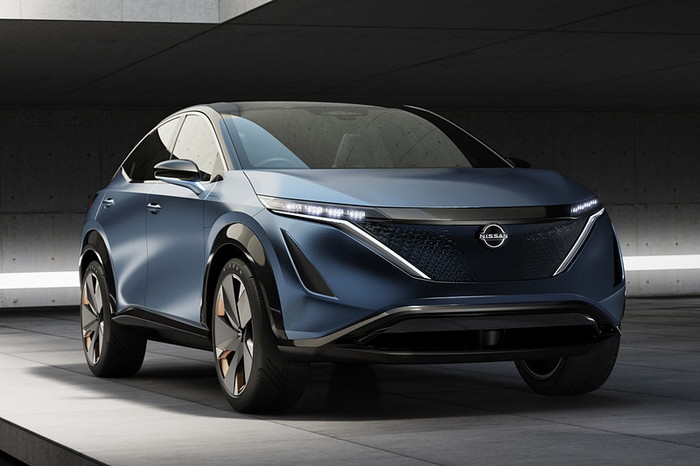
Aria concept
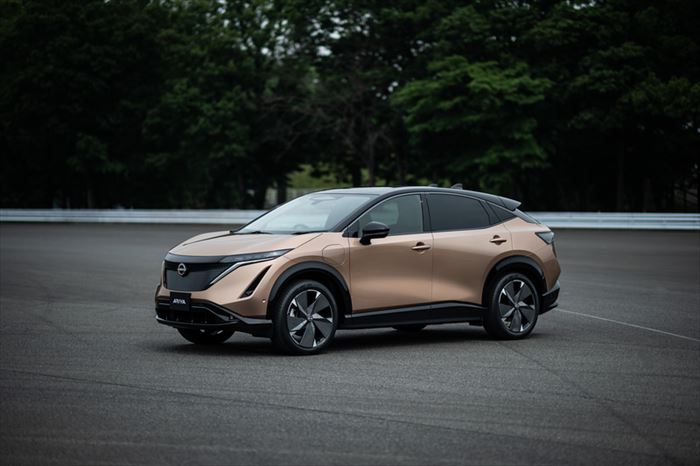
Nissan Ariya
The exterior design of the next-generation Skyline’s round 4-lamp taillights has been revealed
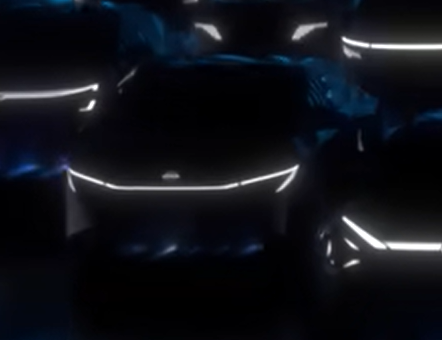
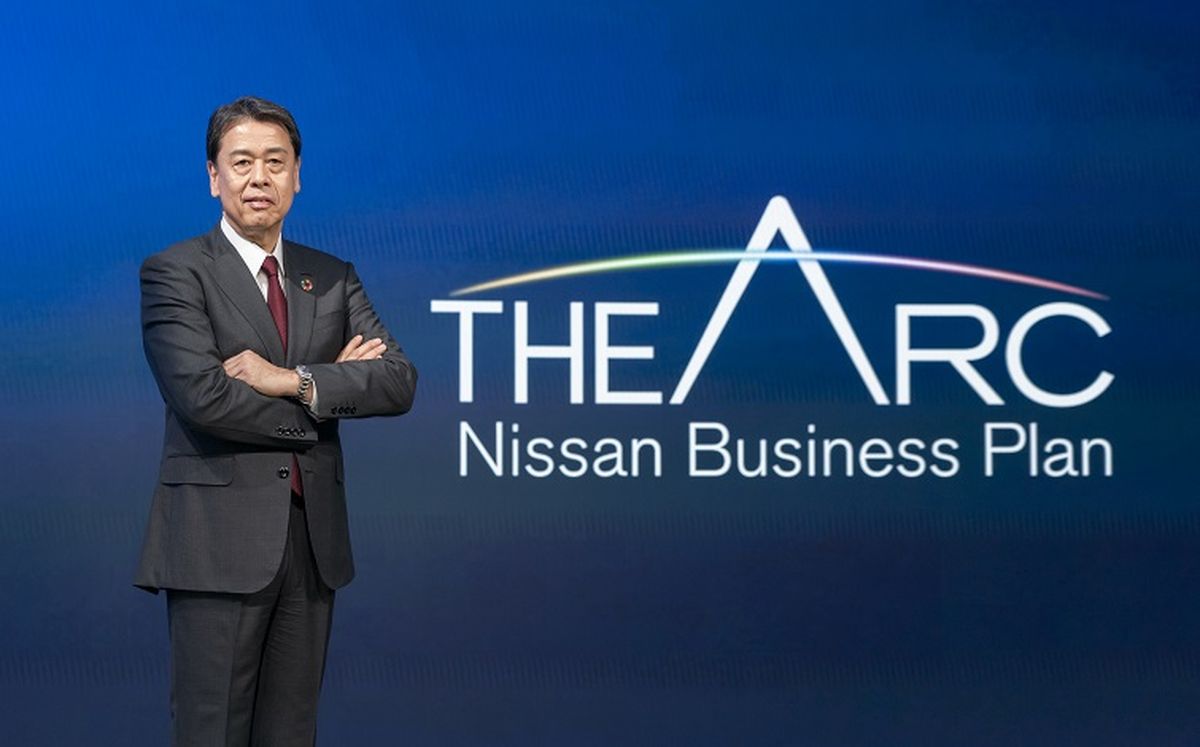
Nissan released a video showing the silhouettes of several new vehicles that are expected to be released in the future at a briefing on its new business plan, “The Arc,” held on March 25, 2024. One of the models was confirmed to feature four round taillights.
To give you a sneak peek at some of the highlights in this video, first of all, at around 0:16 in the opening video, there are a number of videos of Nissan models that have been related in the past, but in the bottom right corner you can see the Infiniti “Vision Qe” concept. The other models are production cars, but they are related to the 30 cars that are being introduced. The Infiniti “Vision Qe” concept is said to be the next Skyline, so this is a hint.
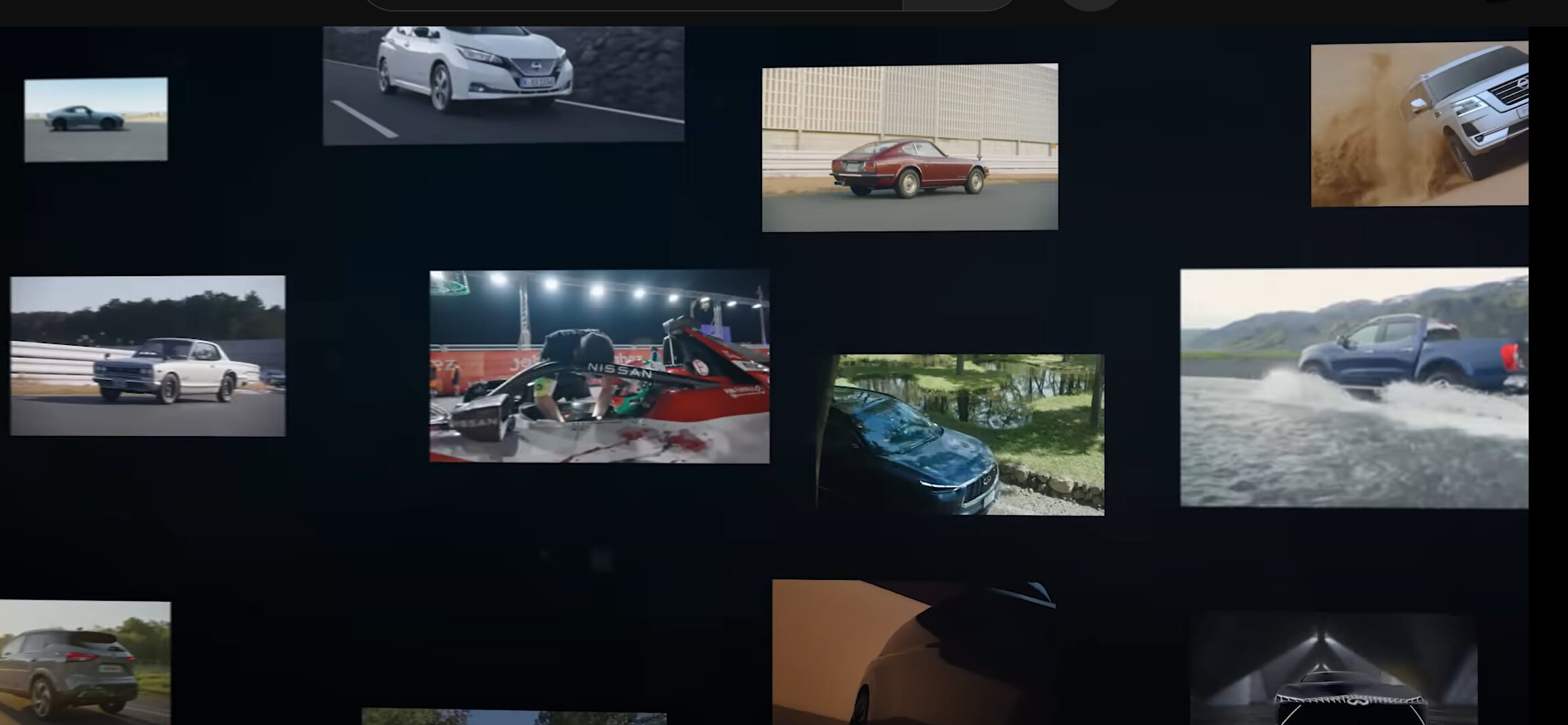
Furthermore, various car models are displayed, but the Skyline’s distinctive four-lamp round taillights are also shown, making it clear that the next-generation Skyline is included in the lineup.
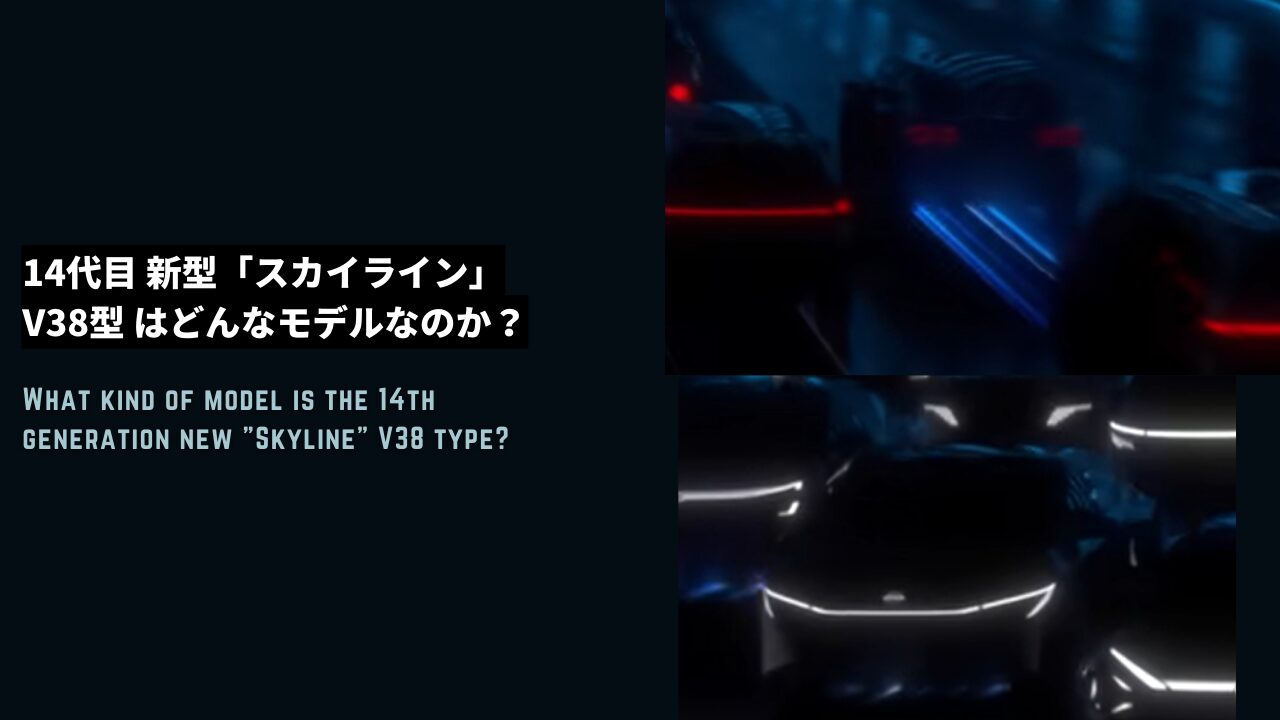
This means that if Nissan’s plans are correct, it will be released within the next three years.
Nissan’s new Skyline undergoes full model change, adopting a newly developed EV-specific platform (CMF-EV).
The Renault-Nissan-Mitsubishi Motors Alliance will adopt the newly developed CMF-EV platform, a platform designed specifically for EVs, which is expected to be adopted in more than 15 vehicle models by 2030, with annual production planned for up to 1.5 million units. This platform achieves a flat, spacious floor and relocates the air conditioning unit, which is conventionally located inside the vehicle, to the motor compartment, ensuring a spacious interior that is one size larger than the conventional body size. Furthermore, slim-design zero gravity seats and the generous use of sound-insulating materials, despite the fact that EVs are already quiet, will achieve unprecedented quietness.
Nissan’s new Skyline full model change interior
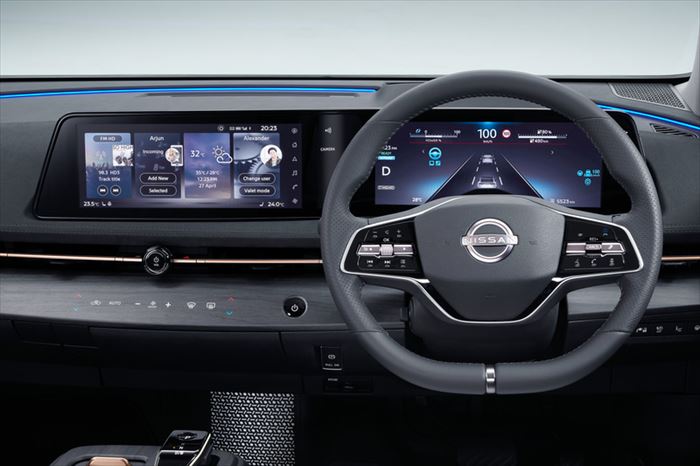
The interior features the same two 12.3-inch displays and wood-grain instrument panel found in the Ariya. This panel does not have conventional physical switches; instead, when the car is turned on, control switch icons for the air conditioning and other controls appear. These switches are not simply touch sensors, but haptic switches that vibrate so that you can feel the sensation of operating them even while driving.
NISSAN ARIYA
The center display can display maps, music information, and more, and can also be swiped to operate. Navigation routes and other information can also be displayed on the meter display, seamlessly connecting the two displays. Air conditioning and navigation can also be controlled by voice, and the car is equipped with a hybrid voice recognition function that allows natural language operation. This function supports driver operation by saying “Hello Nissan,” and an internet connection enables more natural language voice recognition. The Skyline also comes equipped with Amazon Alexa, a voice service provided by Amazon, which allows users to play music, check the weather forecast, call family and friends, and control smart home devices using only their voice.
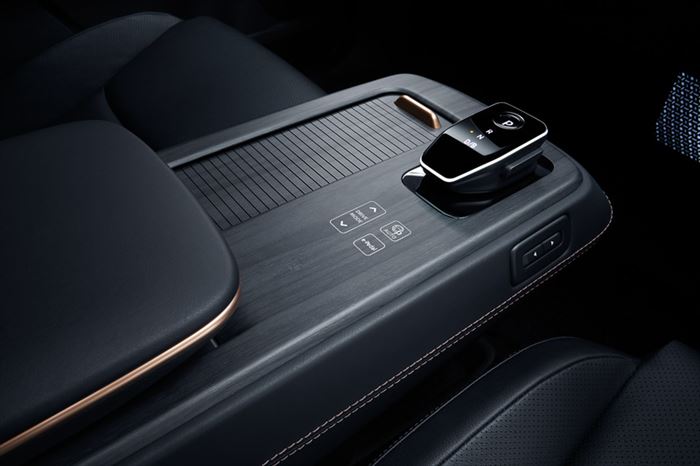
The wide center console can be electrically moved back and forth to suit the driver’s seat position. Above it is a newly designed shift knob with “Advanced Ambient Lighting,” and the center console is equipped with a Qi-standard wireless charger.
Nissan’s new Skyline undergoes full model change, adopting advanced driver assistance systems such as ProPilot 3.0
It is equipped with Nissan’s advanced driver assistance systems “ProPilot 3.0” and “ProPilot Remote Parking.” In addition, like the Leaf, it also comes with “ProPilot Parking.”
In 2019, the Skyline was released equipped with ProPilot 2.0, which is equivalent to Level 2 autonomous driving technology. Therefore, it is highly likely that the new Skyline will be equipped with ProPilot 3.0, which is equivalent to Level 3 autonomous driving technology.
ProPilot 2.0
ProPilot 2.0 utilizes seven on-board cameras, five radars, and 12 sonar sensors to detect white lines, signs, and surrounding vehicles. It also combines the navigation system with high-definition 3D map data to understand road conditions and maintain a state in which the driver can safely drive hands-free. The system displays the driver assistance status in real time on the meter display and head-up display, and also uses Advanced Ambient Lighting to indicate the ProPilot’s operating status. A driver monitor camera monitors the driver’s attention and issues an audible warning if necessary. It also promptly stops the vehicle when driving hands-free.
“ProPilot Parking” automatically detects available parking spaces and assists with parking maneuvers. It supports forward, reverse, and parallel parking, and parking can be done in three steps. “ProPilot Remote Parking” also has a function that allows you to operate the parking function from outside the vehicle.
Nissan’s new Skyline undergoes a full model change, featuring a newly developed EV powertrain
The newly developed EV powertrain will use the motor and battery installed in the Ariya. With a total battery capacity of 65kWh, maximum output will be 250kW and maximum torque will be 560Nm. On the other hand, with a total battery capacity of 90kWh, maximum output will be 290kW and maximum torque will be 600Nm. This will provide the same power as the previous Skyline, while also improving performance in 0-100km/h acceleration. The previous Skyline’s fastest acceleration was the Skyline 400R, which achieved a 0-100km/h time of 5.2 seconds (official Nissan time). However, with a 90kWh battery capacity and a maximum output of 290kW, the Ariya’s 0-100km/h time of 5.1 seconds will undoubtedly be the fastest ever.
A word from the editorial department
With the introduction of a new EV powertrain, the next-generation Skyline is expected to have astonishing performance that surpasses its predecessor. The adoption of the motor and battery performance proven in the Ariya will bring about dramatic improvements in acceleration and power. In particular, 0-100 km/h acceleration is expected to be the fastest ever, making a significant contribution to improving the Skyline’s sporty performance. This new evolution will enable the Skyline to offer an even more fantastic driving experience, further raising the expectations of fans.
▼For more details, please refer to this article.
→ Nissan 13th generation “Skyline” hybrid car orders closed
▼For more details, please refer to this article.
→ Nissan will announce the new “Skyline NISMO” and “Skyline NISMO Limited” on August 8, 2023.
summary
I have been thinking about a full model change for the Skyline, and currently Nissan has a sedan body type remaining for its electric vehicle models, along with the minicar Sakura, the compact car Leaf, and the crossover SUV Ariya. However, I believe that Skyline, which has the most history and is the most important name for Nissan, is the most suitable. Furthermore, since sedans are not popular in the market, if the Skyline lineup continues as a gasoline model, sales will undoubtedly decline. As a revival of the Skyline, the 14th generation is expected to be a BEV.
▼For more details, please refer to this article.
→ Nissan will announce the new “Skyline NISMO” and “Skyline NISMO Limited” on August 8, 2023.
▼For more details, please refer to this article.
→ Nissan’s new “Skyline” undergoes some specification changes and price revisions, and will be released at the end of October 2022
Related articles for the business plan “The Arc”
- Nissan Motor Co., Ltd. announces “The Arc” business plan, launching 30 new models over the next three years, toward realizing its long-term vision, “Nissan Ambition 2030.”
- What will happen to the Japanese model? Nissan’s new “Kicks” will undergo a full model change and adopt the latest “e-POWER” system, possibly to be released in 2025
- 2025 Infiniti QX80: A New Generation Model with 300% Increase in Torsional Rigidity, 3.5L Twin-Turbo, and ProPilot 2.1
- Nissan Micra to undergo full model change, successor to new compact EV, European model to be released in 2024
- Nissan’s new “Leaf” will undergo a full model change to become a third-generation crossover, to be released in October 2024
Nissan Skyline
https://www3.nissan.co.jp/vehicles/new/skyline.html
Nissan